- Home
- »
- Clothing, Footwear & Accessories
- »
-
Footwear Market Size, Share & Trends, Industry Report 2033GVR Report cover
![Footwear Market Size, Share & Trends Report]()
Footwear Market (2026 - 2033) Size, Share & Trends Analysis By Product (Athletic, Non-Athletic), By End User (Men, Women, Children), By Region (Europe, Europe, Asia Pacific, Latin America, Middle East & Africa), And Segment Forecasts
- Report ID: GVR-3-68038-396-6
- Number of Report Pages: 110
- Format: PDF
- Historical Range: 2021 - 2025
- Forecast Period: 2026 - 2033
- Industry: Consumer Goods
- Report Summary
- Table of Contents
- Interactive Charts
- Methodology
- Download FREE Sample
-
 Download Sample Report
Footwear Market Summary
The global footwear market size was estimated at USD 476.83 billion in 2025 and is projected to reach USD 675.56 billion by 2033, growing at a CAGR of 4.5% from 2026 to 2033. Rising disposable incomes, particularly across emerging economies, continue to fuel higher spending on footwear, with consumers increasingly gravitating toward luxury shoes market offerings and premium, limited-edition releases that align with aspirational lifestyles.
Key Market Trends & Insights
- By product, the non-athletic footwear led the market with a share of 66.11% in 2025.
- By end use, women’s footwear accounted for a share of 48.04% in 2025.
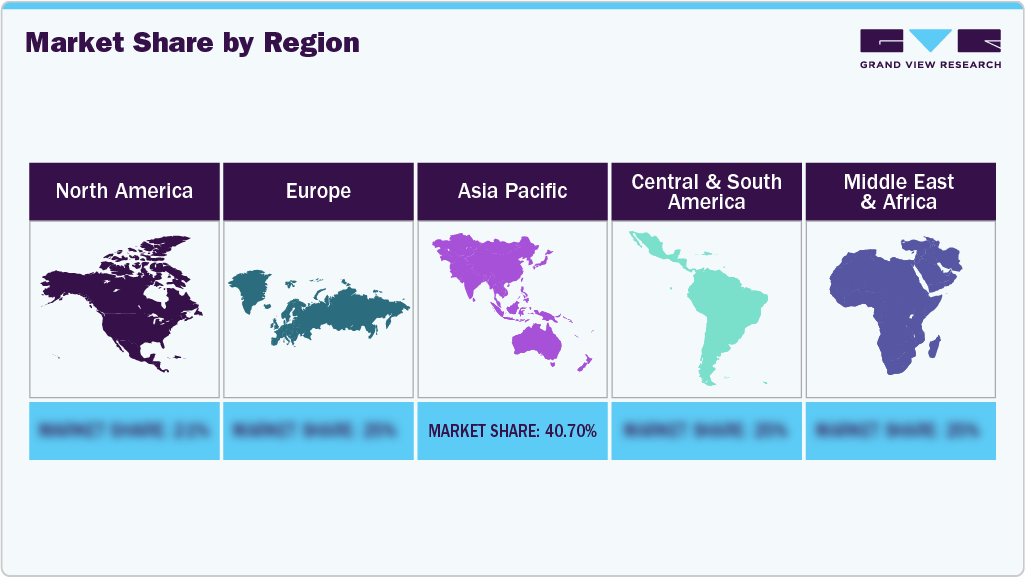
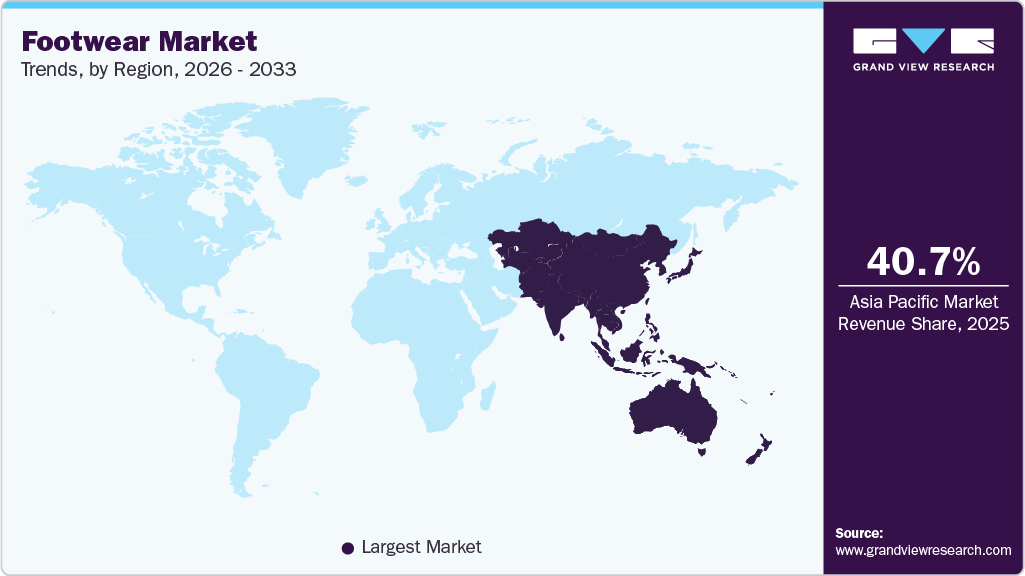
- By region, Asia Pacific held a market share of 40.70% in 2025.
Market Size & Forecast
- 2025 Market Size: USD 476.83 Billion
- 2033 Projected Market Size: USD 675.56 Billion
- CAGR (2026-2033): 4.5%
- Asia Pacific: Largest market in 2025
This trend is visible across the broader shoe market, where consumers are trading up within categories rather than purchasing purely for replacement needs. Premiumization is also influencing adjacent segments such as the leather footwear industry, as craftsmanship, material quality, and brand heritage gain importance in purchase decisions.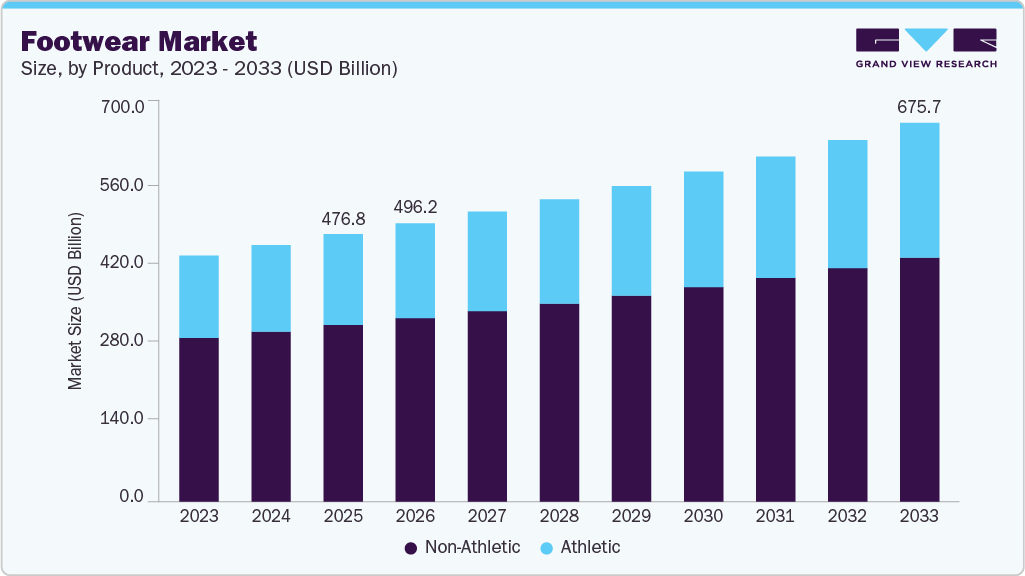
The global market continues to evolve as consumers place increasing emphasis on comfort, functionality, and long-term wearability across everyday, professional, and performance-driven use cases. Footwear is no longer viewed as a category reserved for specific occasions; instead, it is expected to perform across multiple environments such as work, commuting, travel, and leisure. This shift has expanded demand for ergonomic construction, shock absorption, breathability, and lightweight designs, encouraging brands to invest in advanced cushioning systems, sole engineering, and fit optimization. As a result, consumers are purchasing footwear more frequently across the casual footwear industry and performance segments, and are willing to pay premiums for products that deliver sustained comfort alongside durability.
The growing influence of social media, celebrity endorsements, and streetwear culture has further accelerated footwear consumption by positioning shoes as aspirational lifestyle products rather than purely functional items. For instance, in January 2026, Adidas announced the launch of a new footwear collaboration with Molly-Mae Hague, expanding its influencer-led design strategy. Teased ahead of a spring/summer 2026 release, the collection is expected to blend adidas’ signature footwear styles with Hague’s fashion-forward aesthetic. The partnership reflects the brand’s focus on engaging younger, style-conscious consumers through high-profile creator collaborations. Digital platforms have shortened trend cycles, enabling brands to drive urgency through limited releases and visually distinctive designs. This has had a particularly strong impact on the luxury shoes market, while streetwear culture continues to blur boundaries within the athletic footwear industry and the broader athletic shoe market, where sneakers are worn far beyond sports and fitness contexts.
At the same time, the growth of e-commerce and omnichannel retail has fundamentally reshaped how footwear is discovered and purchased across the footwear retail industry. Historically, footwear lagged other apparel categories online due to concerns around sizing and fit; however, advancements in virtual try-on tools, detailed product visualization, customer reviews, and flexible return policies have significantly reduced consumer hesitation. Digital channels now play a central role in driving sales across mainstream and niche segments, while physical stores increasingly function as experience hubs rather than sole points of sale. This shift has also supported customization-led demand in parts of the custom shoe market, where personalization tools are integrated into digital storefronts.
For instance, in February 2026, Crocs rolled out a new global brand campaign aimed at strengthening its appeal among younger consumers by emphasizing creativity, individuality, and personal style. The campaign marked a strategic shift in messaging, positioning Crocs as a platform for self-expression rather than just comfort-driven footwear. Rolled out across digital, social, and retail touchpoints, the initiative was designed to boost cultural relevance and deepen emotional connection with Gen Z and younger millennial audiences across key regions, including the European shoe market and select Asian markets.
Innovation in materials and manufacturing technologies has become a key competitive differentiator across the footwear ecosystem. Brands are adopting knitted uppers, advanced foams, recycled polymers, and bio-based materials to enhance performance while meeting sustainability expectations. These developments are closely linked to the footwear adhesive market, where manufacturers are developing high-strength, flexible, and environmentally compliant bonding solutions that support lightweight construction and multi-material designs. Adhesives now play a critical role in improving durability, comfort, and production efficiency, particularly as footwear designs become more complex and sustainability regulations tighten across global manufacturing hubs, including the Chinese shoe market.
Specialized footwear categories are also contributing meaningfully to overall market expansion. The medical footwear industry is growing as aging populations, rising incidence of diabetes, and increased awareness of foot health drive demand for therapeutic and orthopedic solutions. Similarly, the industrial safety footwear market benefits from stricter workplace regulations, pushing demand for protective shoes with reinforced toes, slip resistance, and chemical protection. In parallel, the tactical footwear industry continues to expand due to demand from defense, law enforcement, and outdoor professionals. For instance, in October 2025, Nike revealed official visuals for its upcoming Nike Mind footwear line, signaling a move toward science-led innovation that expands functionality beyond traditional athletic use. Across all these segments, from performance shoes to everyday categories such as the flip-flop market, innovation, comfort, and durability remain central purchasing criteria, reinforcing the footwear industry’s resilience and long-term growth potential.
Brand Market Share Insights
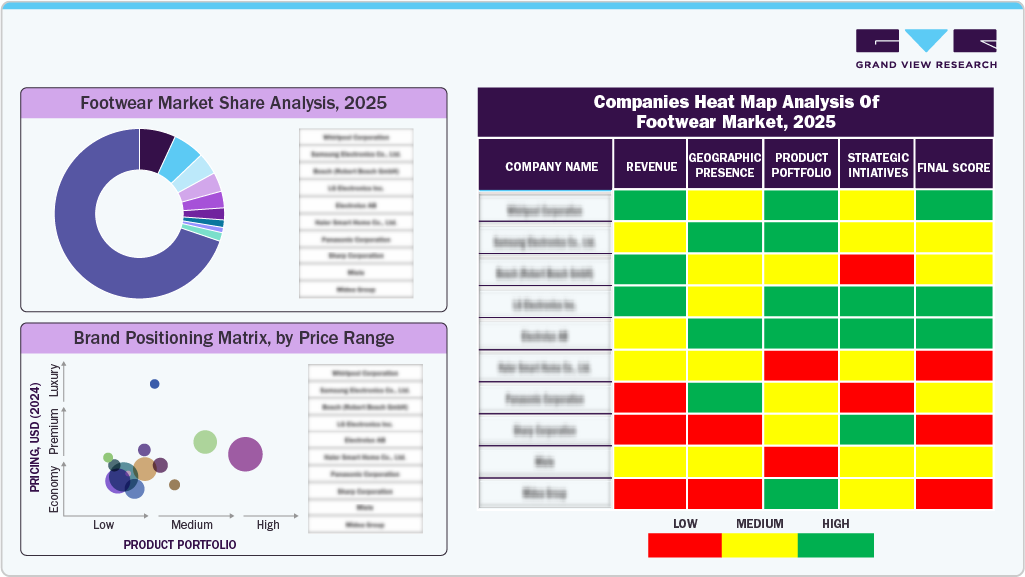
Established companies and emerging players create a competitive environment by focusing on product innovation, quality, and pricing strategies. Many manufacturers in the market are expanding their presence on online retail channels to tap into the growing trend of online shopping. Furthermore, these manufacturers are collaborating with influencers, actors, athletes, and other prominent figures to launch shoes to benefit from the influence and reach of these individuals.
Consumer Insights for Footwear
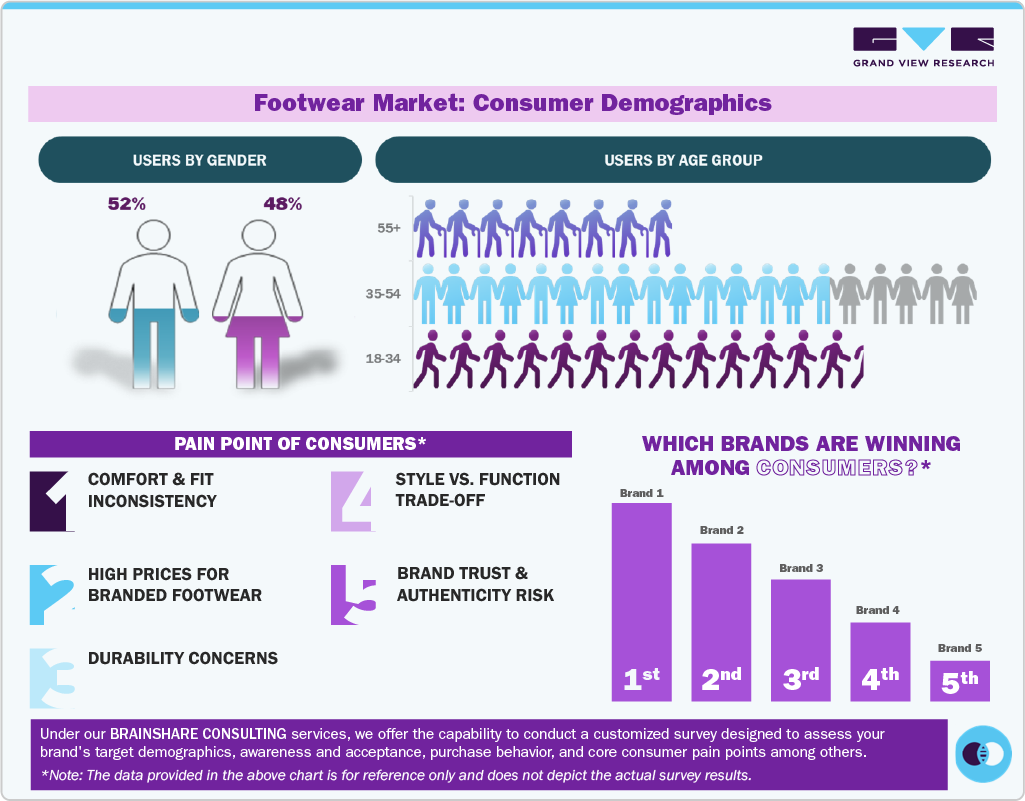
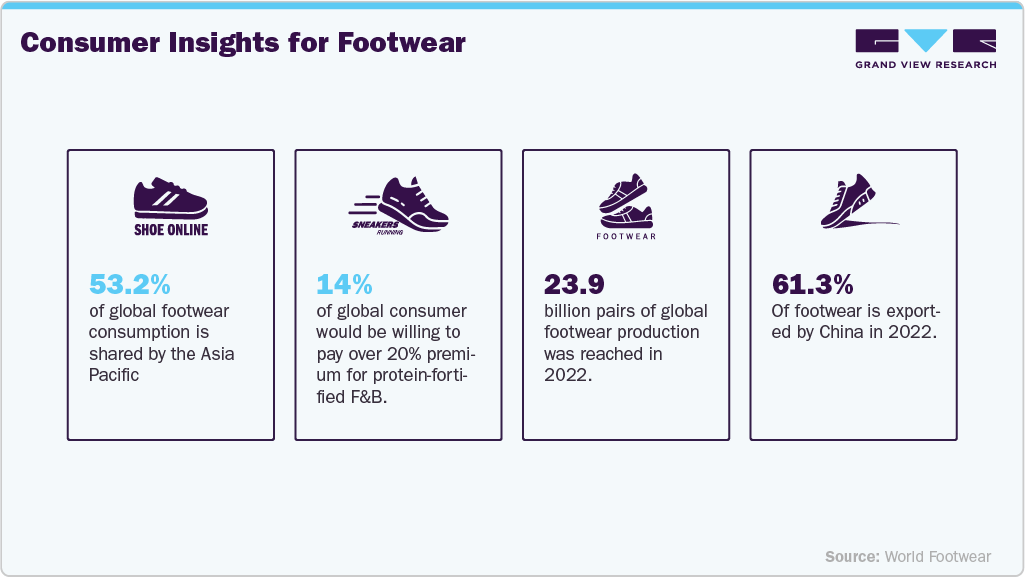
Consumers are becoming more environmentally conscious, leading to a growing demand for sustainable footwear options. With millions of pairs of shoes ending up in landfills annually, brands are under pressure to adopt eco-friendly practices. Major players in the global market, including Timberland, PUMA, and Adidas, are prioritizing sustainability initiatives by incorporating recycled materials and promoting circular economy principles. Manufacturers are increasingly seeking sustainable raw material footwear options to align with consumer preferences and address environmental concerns, driving the need for more sustainable product offerings in the market.
Advancements in 3D printing technology are revolutionizing shoe design and manufacturing processes in the footwear industry. Beyond rapid prototyping, 3D printing offers the potential for custom-made footwear and enhances the online shopping experience through immersive 3D modeling features. Brands are showcasing products with interactive 360-degree views, providing buyers with a comprehensive perspective before making purchasing decisions. This integration of 3D technology not only enhances product visualization but also offers a competitive edge to brands in the digital marketplace.
In August 2023, the AR Mirrors by ZERO10 animated the JD Sports x Nike Need it Now collection, enabling shoppers at JD Sports’ Times Square, New York, and State Street, Chicago, flagship stores to virtually try on 18 items. Some items were accompanied by additional AR enhancement effects, such as water droplets.
Online retailers are witnessing a surge in the purchase of casual and athletic footwear, emphasizing the importance of offering comfortable options that cater to evolving lifestyle needs. Brands that prioritize comfort and versatility in their product offerings are likely to resonate well with consumers seeking footwear for both work and leisure activities.
Customization is emerging as a key trend driving consumer engagement and brand loyalty in the market. Brands are leveraging this to create personalized experiences for buyers, tailoring product assortments based on customer preferences and market trends. Access to sales data enables brands to identify consumer needs and offer bespoke solutions, mimicking the personalized experience associated with DTC models. By offering customized footwear options, brands can differentiate themselves in the market and foster stronger relationships with buyers, enhancing overall brand appeal and competitiveness.
The market offers a broad range of opportunities for brands and manufacturers as they respond to evolving consumer priorities and category-specific demand drivers. One of the most prominent opportunities lies in the rising preference for sustainable and responsibly produced footwear, spanning luxury footwear, mass-market offerings, and functional categories. Consumers are increasingly drawn to products made with recycled materials, bio-based components, and ethically sourced inputs, creating scope for brands to differentiate through eco-conscious design and manufacturing. This sustainability push is also influencing adjacent segments such as the footwear adhesive market, where demand is growing for low-VOC, water-based, and durable bonding solutions that support cleaner production processes.
At the same time, shifting lifestyles and technological progress are creating sustained innovation opportunities across the athletic, industrial, and medical footwear industry. Athletic footwear continues to evolve with performance-driven features, ergonomic construction, and hybrid designs that blend sports functionality with everyday wear. Industrial and medical footwear segments are benefiting from rising workplace safety standards and healthcare employment growth, driving demand for protective, slip-resistant, and comfort-engineered shoes. Brands that invest in research, materials science, and user-centric design are well-positioned to address these specialized requirements while expanding their overall market share.
Cost optimization also remains a strategic opportunity for footwear companies. Access to cost-effective manufacturing hubs, combined with increased automation and process efficiency, allows brands to streamline production without sacrificing quality. Optimized supply chains and advances in materials, including adhesives and lightweight composites, enable faster production cycles and competitive pricing across both premium and functional footwear categories.
In addition, emerging markets continue to represent a significant growth avenue for the global footwear industry. Rising disposable incomes and urbanization are accelerating demand for branded products, including aspirational luxury footwear and high-performance athletic shoes. By tailoring product portfolios to regional preferences, strengthening local distribution networks, and investing in targeted marketing strategies, footwear brands can cater to untapped demand and establish long-term growth in high-potential markets.
Product Insights
The non-athletic accounted for a share of 66.11% of the global revenue in 2025. The non-athletic category consists of flats, heels, mules, sandals, sneakers, and boots, which can be worn on different occasions. A large number of niche, big market players, and designers worldwide have been contributing to this broad category of footwear, owing to the growing consumer inclination toward eco-friendly sneakers and footwear. Reduced use of water and plastics, coupled with constant efforts from various multinational corporations to shift toward sustainable types, has contributed to the rising adoption of sustainable footwear, thereby driving the demand for non-athletic footwear.
Flip flops are widely preferred for casual wear, beachwear, and home use due to their lightweight design and ease of use. The global flip-flop market is driven by affordability, comfort, and seasonal demand, making it one of the most volume-driven segments within the broader footwear industry. Consumer purchasing decisions are largely influenced by price sensitivity in mass segments, while brand image, durability, ergonomic comfort, and sustainable materials are gaining importance in mid-range and premium categories.
According to the World Footwear Yearbook, more than 24 billion pairs of shoes are manufactured each year, predominantly produced under exploitative conditions, with sneakers comprising the largest portion. This industry-wide production level underlines the urgent need for sustainable solutions. To address this need, manufacturers have been increasingly launching sustainable footwear made from recycled materials that are gaining popularity among environmentally conscious consumers. In August 2023, Allbirds, Inc. announced the launch of Courier, a vintage-inspired sneaker that features a layered design with unique stitching and overlays. The sneaker is made with sustainable materials such as Tencel Lyocell ripstop, organic cotton canvas, and the brand's SweetFoam midsole material, which is made from sugarcane-derived green EVA.
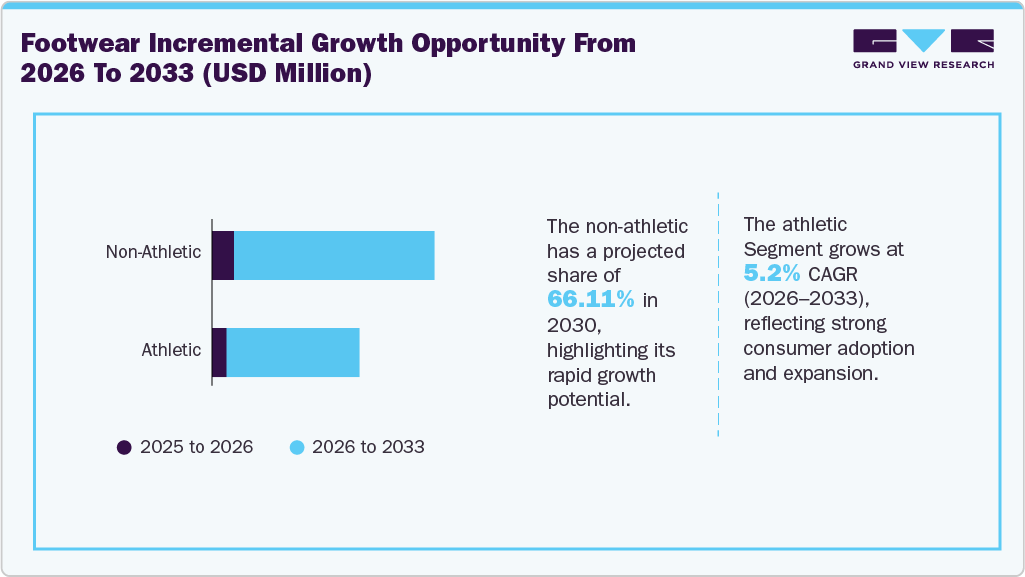
The athletic shoe market is projected to grow at a CAGR of 5.2% from 2026 to 2033. Athletic shoes are worn by people who are involved in outdoor activities, such as running, walking, gymming, and playing sports like basketball, volleyball, cricket, hockey, and golf. Athletic shoes provide comfort, flexibility, and traction on surfaces like roads and trails, as well as benefits like torsional stability, superior cushioning, and better protection for users. The demand for comfortable, lightweight, and fashionable sports shoes from professional players for use on wet, soft, and rough ground drives the growth of the athletic footwear industry. The increasing participation and inclination toward daily physical activities such as running, gymming, and cycling are the key factors driving the demand for athletic shoes across the globe.
Furthermore, there has been a significant surge in the popularity of athleisure wear, where athletic apparel is worn not just for sports but also for everyday activities. This trend has blurred the lines between performance and casual footwear, expanding the market for athletic shoes beyond traditional sports enthusiasts to a broader demographic of consumers seeking both comfort and style. Technological innovations in materials and design have also played a crucial role in driving the market for athletic footwear. Brands are continuously investing in research and development to create shoes that offer superior comfort, performance, and durability. Features such as lightweight construction, cushioning technologies, and enhanced stability contribute to the appeal of athletic footwear among consumers.
End User Insights
The women segment accounted for a share of around 48.04% of the global revenue in 2025. Comfort and functionality are key market drivers. With the increasing emphasis on wellness and self-care, women prioritize comfort without compromising style. This has led to a surge in demand for footwear brands that offer ergonomic designs, cushioned soles, and supportive features. Whether for daily wear, exercise, or special occasions, women seek footwear that provides both style and comfort to accommodate their busy and active lifestyles.
According to a survey conducted by MESH01 in the U.S. in 2023, consumers, including women, made their preferences regarding workplace footwear clear. A staggering 95% of respondents indicated that comfort was the top trait they desired in work shoes. Style (68%), durability (63%), and versatility (43%) were also significant considerations. Surprisingly, only 21% mentioned "degree of formality" as a crucial factor. Athletic styles were favored for the workplace, closely followed by casual options.
Furthermore, advancements in technology have revolutionized the design and manufacturing processes of women's footwear. Innovations such as sustainable materials, 3D printing, and customizable options have expanded the possibilities in shoe design, offering women more choices than ever before. Eco-conscious consumers are also driving the demand for sustainable and ethically sourced footwear options, prompting brands to incorporate eco-friendly practices into their production processes to meet the evolving preferences of environmentally aware consumers.
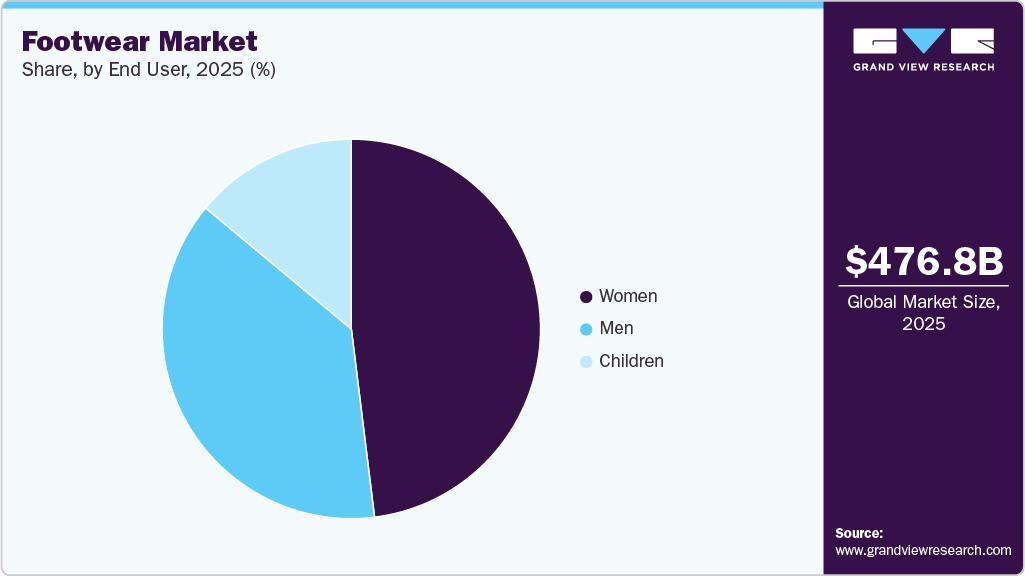
The children’s footwear segment is projected to grow at a CAGR of 4.4% from 2026 to 2033. Increasing participation of children in outdoor play, school sports, and organized physical activities such as football, athletics, skating, and trekking-style excursions has driven demand for footwear designed specifically for comfort, flexibility, grip, and foot protection. Parents are increasingly prioritizing age-appropriate designs that support natural foot development, durability for daily wear, and enhanced safety features, reinforcing demand across casual, sports, and school footwear categories.
In parallel, the rapid growth of e-commerce and digital-first retail platforms is accelerating the expansion of the children’s footwear industry. Online channels offer parents access to a wide assortment of sizes, styles, and price points, along with convenience features such as easy size guides, home delivery, and hassle-free returns, critical factors when shopping for fast-growing children. Digital platforms have also enabled brands to introduce customization options, character-themed designs, and subscription-based replacement models, while allowing emerging and niche players to compete alongside established brands. This shift toward online purchasing is intensifying competition, driving innovation in product design and retail experience, and contributing to sustained growth in the children’s footwear segment.
Regional Insights
The footwear market in North America accounted for a share of 25.27% of the global revenue in 2025. North American consumers tend to prioritize footwear that reflects current trends, personal style, and individual expression. As such, brands and retailers constantly innovate and introduce new designs, colors, and styles to cater to evolving fashion tastes and preferences. In addition, the growing focus on health and wellness plays a crucial role in driving the market. With an increasing awareness of the importance of foot health and comfort, consumers are seeking footwear that offers both style and functionality. This has led to a rise in demand for athletic and athleisure footwear, as well as comfortable and supportive shoes for everyday wear.
U.S. Footwear Market Trends
The footwear market in the U.S. is projected to grow at a CAGR of 3.9% from 2026 to 2033. Americans are often influenced by celebrities, social media influencers, and fashion designers, leading to changes in tastes and preferences in footwear styles. Whether it's sneakers, boots, sandals, or formal shoes, consumers seek out the latest styles and designs that reflect their individuality and lifestyle. Another significant driver is the increasing emphasis on health and wellness. With the growing awareness about the importance of foot health and comfort, consumers are increasingly seeking out footwear that not only looks good but also provides proper support and comfort. This has led to a rise in demand for shoes with advanced cushioning, ergonomic designs, and materials that promote breathability and moisture-wicking properties. Brands that prioritize comfort and functionality while still offering stylish options perform well in the market.
Canada footwear market is projected to grow at a CAGR of 4.3% from 2026 to 2033.The market for footwear in Canada is primarily driven by several key factors, including changing fashion trends, consumer preferences, and demographic shifts. As a highly fashion-conscious society, Canadians are often influenced by the latest styles and designs, leading to a constant demand for new footwear options. Whether it's casual sneakers, formal dress shoes, or outdoor hiking boots, Canadians are always on the lookout for footwear that not only reflects their personal style but also offers comfort and functionality. Moreover, the growing emphasis on health and wellness has contributed to the rise of athleisure footwear, as more Canadians prioritize comfortable and supportive shoes for everyday wear. This trend has been further accelerated by the increasing adoption of active lifestyles and participation in sports and fitness activities. As a result, brands offering innovative and performance-oriented footwear have seen significant growth in the Canadian market.
Europe Footwear Market Trends
The footwear market in Europe is projected to grow at a CAGR of 3.8% from 2026 to 2033. The rise of e-commerce has transformed the retail landscape, making it easier for consumers to access a vast array of footwear options online. This convenience factor has contributed to market growth, with online sales channels witnessing significant expansion in recent years. Brands and retailers are leveraging digital platforms to reach a broader audience, enhance customer engagement, and offer personalized shopping experiences, thereby driving sales and market penetration.
The UK footwear market is projected to grow at a CAGR of 4.1% from 2026 to 2033. Economic factors such as rising disposable incomes and changing consumer lifestyles have contributed to market growth in the UK. As consumers have more purchasing power, they are willing to invest in higher-quality footwear products that offer durability, comfort, and style. In addition, the rise of online retail channels has provided consumers with greater accessibility to a wide range of footwear options, enabling them to explore different brands, styles, and price points conveniently from their homes.
The footwear market in Germany is projected to grow at a CAGR of 4.3% from 2026 to 2033. Fashion trends play a crucial role in shaping the market in Germany. As a country with a strong fashion industry and a population that prides itself on individual style, there is a constant demand for innovative designs and trendy styles. This includes everything from casual sneakers to formal dress shoes, with consumers seeking footwear that reflects their personal taste and complements their wardrobe.
Asia Pacific Footwear Market Trends
The footwear market in the Asia Pacific is projected to grow at a CAGR of 5.1% from 2026 to 2033. The increasing penetration of e-commerce and digital platforms has significantly contributed to market expansion in the Asia Pacific. With the proliferation of smartphones and internet connectivity, consumers have greater access to a wide array of footwear options, leading to increased competition among both local and international brands. This digital transformation has also facilitated easier access to global fashion trends, driving consumer preferences toward more diverse and stylish footwear offerings.
Sustainable footwear has emerged as a significant trend within the global footwear industry, including the Asia Pacific region. With growing awareness of environmental issues and social responsibility, consumers are increasingly seeking footwear options that minimize their ecological footprint and promote ethical manufacturing practices.
China footwear market accounted for a share of 38.34% of the regional revenue in 2025. China's dominance in the global market is a significant factor driving the market in China. The country's vast manufacturing capacity, low labor costs, and extensive infrastructure have made it an attractive destination for footwear production. The increasing demand for footwear in both domestic and international markets, as well as government support for the industry, have contributed to the steady growth of the Chinese footwear industry. According to the statistics released by World Footwear, an initiative of the Portuguese Footwear, Components and Leather Goods Manufacturers' Association (APICCAPS) in 2022, China produces more than 50% of the world's footwear. In addition, China is also the largest consumer of footwear, accounting for approximately 20% of global footwear consumption.
The footwear market in India is projected to grow at a CAGR of 5.9% from 2026 to 2033. The market landscape in India has been drawing a lot of attention in recent years. Consumer purchasing behavior has been changing dramatically owing to the rise in disposable and per capita incomes. The impact of Western culture has also driven consumer behavior, which can be seen in the rising popularity of styles like Derby shoes made from full-grain Argentinian leather or reliable Oxford shoes.
Latin America Footwear Market Trends
The footwear market in Latin America is projected to grow at a CAGR of 4.4% from 2026 to 2033. The market benefits from the expansion of retail channels and e-commerce platforms. Increased accessibility to a wide range of footwear options through online shopping platforms has made it easier for consumers to browse and purchase footwear from the comfort of their homes. The proliferation of retail outlets and shopping malls in urban centers has further contributed to the accessibility and availability of footwear products in the region, driving market growth.
Middle East & Africa Footwear Market Trends
The footwear market in the Middle East & Africa is projected to grow at a CAGR of 4.7% from 2026 to 2033. In the Middle East, several local and international brands produce footwear to cater to the regional demand. These brands offer a wide range of styles, including traditional slip-on sandals, flip-flops with embellishments, and more contemporary designs. Footwear can be found in markets, shopping malls, and online platforms, allowing consumers to choose from a variety of options. Footwear like PVC has gained popularity across the Middle East, primarily owing to the region's warm climate, cultural practices, and lifestyle preferences. Many international PVC footwear brands cater to this regional market, such as Crocs, Inc., Havaianas, Decathlon SE, and Bata Corporation, along with local manufacturers like Al Jazira Plastic Industries.
Key Footwear Companies:
The following key companies have been profiled for this study on the footwear market.
- Nike, Inc.
- Adidas AG
- Puma SE
- Geox S.p.A
- Timberland
- SKECHERS USA, Inc.
- ECCO Sko A/S
- Crocs Retail, LLC
- Under Armour, Inc.
- Wolverine World Wide, Inc.
Recent Developments
-
In February 2026, Birkenstock introduced the Highwood Moc Lace Low, a new closed-shoe design that underscores its expertise beyond sandals and open footwear. The style blends Birkenstock’s signature comfort with moccasin-inspired aesthetics and practical, everyday wearability, aimed at expanding the brand’s presence in the broader footwear category. This launch reflects Birkenstock’s strategy to diversify its product range while staying true to its heritage of ergonomic design and quality craftsmanship.
-
In January 2026, ASICS rolled out a new global brand campaign centered on the link between physical activity and mental well-being, alongside the launch of its latest GEL-NIMBUS running shoe. The initiative reinforces ASICS’ positioning around movement as a driver of both body and mind health, while the new footwear model focuses on enhanced comfort and cushioning for runners. The combined launch reflects the brand’s strategy to align performance innovation with a broader wellness-led brand message.
-
In September 2025, Under Armour partnered with Unless to introduce a new set of regenerative footwear styles focused on lowering environmental impact. The collection applies regenerative materials and circular design principles to reduce waste and reliance on conventional inputs. The launch underscores Under Armour’s broader push to integrate sustainability-driven innovation into its performance footwear portfolio.
-
In March 2024, Timberland Pro broadened its product range to include footwear tailored for the hospitality sector. Through its specialized division for skilled trade professionals, Timberland launched the Burbank Collection, marking the brand's inaugural line of footwear designed specifically for workers in the restaurant and hotel sectors. The collection features industry-standard all-black designs meticulously crafted to prioritize comfort, durability, protection, and slip resistance.
Footwear Market Report Scope
Report Attribute
Details
Market size value in 2026
USD 496.24 billion
Revenue forecast in 2033
USD 675.56 billion
Growth rate
CAGR of 4.5% from 2026 to 2033
Actuals
2021 - 2025
Forecast period
2026 - 2033
Quantitative units
Revenue in USD million/billion, and CAGR from 2026 to 2033
Report coverage
Revenue forecast, company ranking, competitive landscape, growth factors, and trends
Segments covered
Product, end user, region
Regional scope
North America; Europe; Asia Pacific; Latin America; MEA
Country scope
U.S.; Canada; Mexico; Germany; UK; France; Italy; Spain: China; Japan; India; South Korea; Australia; Brazil; South Africa
Key companies profiled
Nike, Inc.; Adidas AG; SKECHERS USA, Inc.; Puma SE; Crocs Retail, LLC; Wolverine Worldwide, Inc.; ECCO Sko A/S; Under Armour, Inc.; Timberland; Geox S.p.A.
Customization scope
Free report customization (equivalent up to 8 analysts’ working days) with purchase. Addition or alteration to country, regional & segment scope.
Pricing and purchase options
Avail customized purchase options to meet your exact research needs. Explore purchase options
Global Footwear Market Report Segmentation
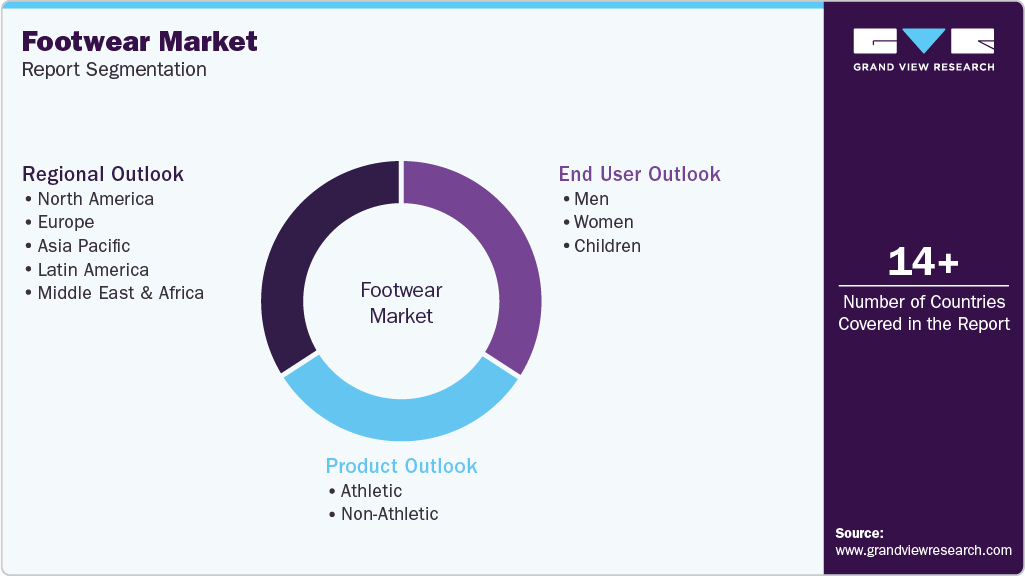
This report forecasts revenue growth at global, regional & country levels and provides an analysis of the latest trends and opportunities in each of the sub-segments from 2021 to 2033. For this study, Grand View Research has segmented the global footwear market based on product, end user, and region:
-
Product Outlook (Revenue, USD Million, 2021 - 2033)
-
Athletic
-
Running & Walking Shoes
-
Trekking & Hiking Shoes
-
Sports Shoes
-
-
Non-Athletic
-
Sneakers
-
Formal Shoes
-
Flip-flops
-
Loafers
-
Others
-
-
-
End User Outlook (Revenue, USD Million, 2021 - 2033)
-
Men
-
Women
-
Children
-
-
Regional Outlook (Revenue, USD Million, 2021 - 2033)
-
North America
-
U.S.
-
Canada
-
Mexico
-
-
Europe
-
Germany
-
UK
-
France
-
Italy
-
Spain
-
-
Asia Pacific
-
China
-
Japan
-
India
-
South Korea
-
Australia
-
-
Latin America
-
Brazil
-
-
Middle East & Africa
-
South Africa
-
-
Frequently Asked Questions About This Report
b. The global footwear market size was estimated at USD 476.83 billion in 2025 and is expected to reach USD 496.24 billion in 2026.
b. Some key players operating in the footwear market include Nike, Inc.; Adidas AG; SKECHERS USA, Inc.; Puma SE; Crocs Retail, LLC; Wolverine Worldwide, Inc.; ECCO Sko A/S; Under Armour, Inc.; Timberland; Geox S.p.A. and others
b. Key factors that are driving the market growth include the rise in disposable income, particularly in emerging economies, which has led to increased spending on footwear. Moreover, brands are launching limited-edition shoes and premium and luxury footwear for consumers aiming to live aspirational lifestyles.
b. The global footwear market is expected to grow at a compounded growth rate of 4.5% from 2026 to 2033 to reach USD 675.56 billion by 2033.
b. The non-athletic segment accounted for a share of 66.11% of the global revenue in 2025, as the non-athletic category consists of flats, heels, mules, sandals, sneakers, and boots, which can be worn on different occasions.


Share this report with your colleague or friend.
Need a Tailored Report?
Customize this report to your needs — add regions, segments, or data points, with 20% free customization.


ISO 9001:2015 & 27001:2022 Certified
We are GDPR and CCPA compliant! Your transaction & personal information is safe and secure. For more details, please read our privacy policy.
Trusted market insights - try a free sample
See how our reports are structured and why industry leaders rely on Grand View Research. Get a free sample or ask us to tailor this report to your needs.