- Home
- »
- Biotechnology
- »
-
Fetal Bovine Serum Market Size, Industry Report, 2033GVR Report cover
![Fetal Bovine Serum Market Size, Share & Trends Report]()
Fetal Bovine Serum Market (2026 - 2033) Size, Share & Trends Analysis Report By Application (Drug Discovery, Diagnostics), By End-use (CRO, Academic & Research Organizations), By Region (North America, Europe, Asia Pacific, Latin America, MEA), And Segment Forecasts
- Report ID: GVR-4-68040-071-2
- Number of Report Pages: 150
- Format: PDF
- Historical Range: 2021 - 2024
- Forecast Period: 2026 - 2033
- Industry: Healthcare
- Report Summary
- Table of Contents
- Interactive Charts
- Methodology
- Download FREE Sample
-
 Download Sample Report
Fetal Bovine Serum Market Summary
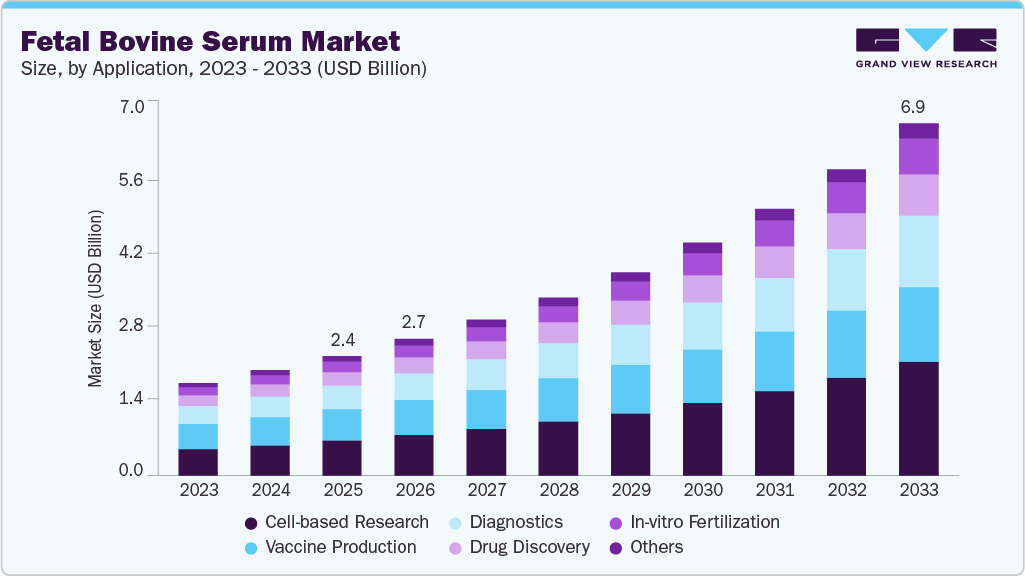
The global fetal bovine serum market size was estimated at USD 2.35 billion in 2025 and is projected to reach USD 6.91 billion by 2033, growing at a CAGR of 14.51% from 2026 to 2033. Factors such as the biopharmaceutical industry's expansion in developing countries and established markets are expected to fuel the demand for fetal bovine serum (FBS) in the forecast period.
Key Market Trends & Insights
- The North America fetal bovine serum market held the largest share of 37.41% of the global market in 2025.
- The fetal bovine serum industry in the U.S. is expected to grow significantly over the forecast period.
- By application, the cell-based research segment held the highest market share of 29.12% in 2025.
- Based on end use, the pharmaceutical & biotechnology companies segment held the highest market share in 2025.
Market Size & Forecast
- 2025 Market Size: USD 2.35 Billion
- 2033 Projected Market Size: USD 6.91 Billion
- CAGR (2026-2033): 14.51%
- North America: Largest market in 2025
- Asia Pacific: Fastest-growing market
Expanding Biopharmaceutical & Biotechnology IndustryThe growth of the global biopharmaceutical and biotechnology industry is a significant driver of demand in the FBS industry. FBS remains the gold standard supplement for cell culture media, providing vital nutrients, hormones, and growth factors supporting mammalian cells' survival and proliferation. Its applications span developing and producing biologics, vaccines, monoclonal antibodies, and recombinant proteins, therapeutic categories witnessing rapid adoption due to the rising burden of chronic diseases such as cancer, autoimmune disorders, and infectious diseases. As the biologics pipeline expands, the need for high-quality and consistent cell culture supplements is fueling steady consumption of FBS across research and commercial manufacturing settings.
Moreover, the increasing focus on advanced therapies such as cell therapy, gene therapy, and regenerative medicine has further heightened the importance of FBS in R&D and clinical-scale production. The surge in outsourcing to contract research and manufacturing organizations (CROs/CMOs) has also reinforced demand, as these entities rely on reliable and standardized inputs to support large-scale biologics production. These factors underscore how the expanding biopharmaceutical and biotechnology ecosystem acts as a central market driver for FBS, ensuring its sustained relevance despite the emergence of serum-free alternatives.
Rising Cell-Based Research
The increasing volume of cell-based research across life sciences is a key factor propelling the demand for FBS. Areas such as cell biology, genomics, proteomics, and metabolomics rely heavily on the availability of high-quality serum to sustain diverse cell lines under in vitro conditions. FBS provides an optimal combination of growth factors, hormones, carrier proteins, and lipids, essential for promoting cell viability, proliferation, and differentiation. As research becomes more complex and diverse, spanning basic biology to translational applications, FBS remains the most widely accepted and standardized supplement for maintaining reproducible laboratory results worldwide.
Moreover, the rise in functional genomics, disease modeling, and drug discovery studies has expanded the use of mammalian cell culture systems in academic, industrial, and clinical research environments. Universities, research institutes, and pharmaceutical companies increasingly depend on FBS to facilitate experiments ranging from gene expression studies to toxicity testing and biomarker discovery. With governments and private organizations investing heavily in life sciences research infrastructure, particularly in Asia-Pacific and emerging economies, the demand for reliable cell culture reagents such as FBS is expected to accelerate. This trend firmly positions rising cell-based research as a core driver for market growth.
Market Concentration & Characteristics
The degree of innovation in the FBS industry is moderate, as the core product has been long established, but suppliers are driving incremental advancements through improved processing methods, enhanced lot-to-lot consistency, and specialized variants such as heat-inactivated, dialyzed, or exosome-depleted serum. At the same time, innovation is emerging in the form of serum-free and chemically defined media that aim to address ethical concerns, batch variability, and supply chain limitations. However, adoption remains limited compared to FBS due to its unmatched biological richness and regulatory acceptance in cell culture applications.
The level of mergers and acquisitions (M&A) activity in the fetal bovine serum industry has been moderate in recent years, with strategic acquisitions aimed at expanding product portfolios and enhancing supply chain capabilities. For instance, in December 2021, Thermo Fisher, Inc. acquired PPD, Inc., a U.S.-based manufacturer of clinical research services to the pharma and biotech industry. These strategic moves reflect the industry's focus on strengthening capabilities in cell culture and regenerative medicine applications, areas where FBS remains a critical component.
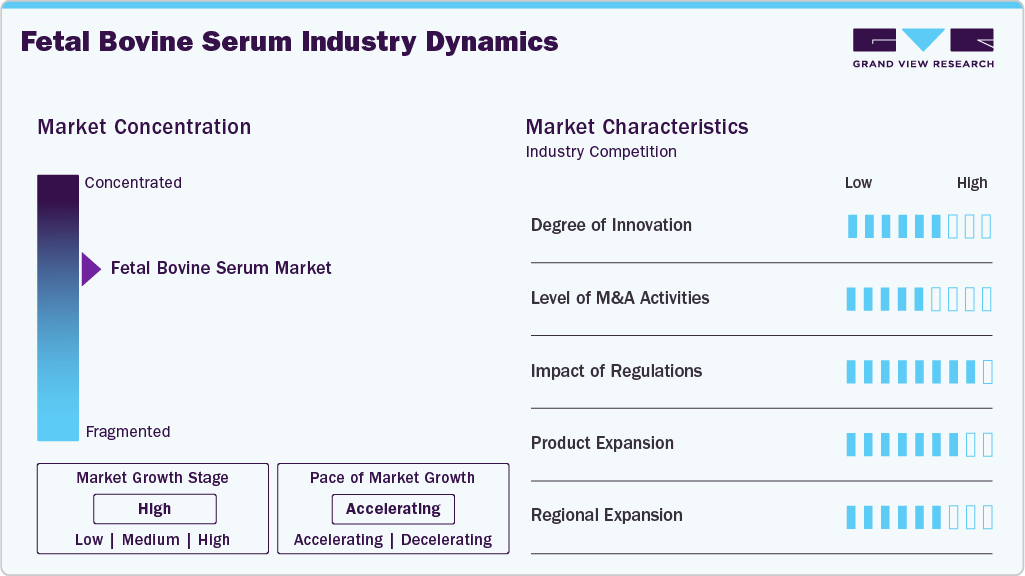
Regulations significantly impact the FBS industry, as strict guidelines govern the sourcing, quality, and safety of animal-derived products. Authorities such as the FDA and EMA require that FBS be obtained from healthy bovine herds, tested for contaminants, and processed under stringent quality control standards to ensure consistency for research and biopharmaceutical applications. Compliance with these rules can increase production costs and limit supply while encouraging the development of serum-free or chemically defined alternatives, shaping both market dynamics and innovation in cell culture technologies.
Product Expansion in the FBS industry is driven by the need to cater to diverse cell culture requirements and advanced research applications. Companies are introducing specialized FBS variants, such as heat-inactivated, charcoal-stripped, dialyzed, and exosome-depleted serum, to meet the specific needs of stem cell research, regenerative medicine, and vaccine production. Moreover, suppliers are expanding their portfolios with GMP-grade and serum-free compatible FBS to support clinical and industrial-scale applications. This product diversification enhances the usability of FBS across different cell types and research purposes and helps companies strengthen their market presence and address evolving customer demands in a highly competitive landscape.
Regional expansion in the fetal bovine serum industry is a key growth strategy for major suppliers aiming to tap into emerging life sciences hubs. Companies are increasing their presence in Asia-Pacific, Latin America, and the Middle East, regions witnessing rapid growth in biotechnology research, stem cell studies, and vaccine manufacturing. Establishing local distribution networks, production facilities, and partnerships with research institutions allows suppliers to ensure timely availability, regulatory compliance, and cost-effective supply of FBS. This geographic expansion broadens market reach and strengthens the company’s competitive positioning in regions with rising demand for cell culture products.
Application Insights
The cell-based research segment dominated the market in 2025, accounting for 29.21%. The rise in cell culture techniques in drug discovery, cancer research, stem cell research, and regenerative medicine, along with increased investments in biologics and cell therapy development, is expected to drive growth in this segment.
In vitro fertilization is expected to grow at the fastest CAGR over the forecast period. FBS provides essential nutrients, hormones, and growth factors necessary for embryo growth and development. It is often combined with other supplements, such as human serum albumin, to optimize embryo culture conditions and improve embryo quality. With an increasing number of IVF cycles being done globally, the demand for FBS is expected to grow in the coming years.
End Use Insights
Pharmaceutical and biotechnology companies held the highest market share of 39.65% in 2025 due to the increasing adoption of fetal bovine serum in drug development. Moreover, the increasing prevalence of chronic diseases like cancer demands elevated research activities, and the rising adoption of fetal bovine serum for this purpose by pharmaceutical and biotechnology companies is driving the segment's growth.
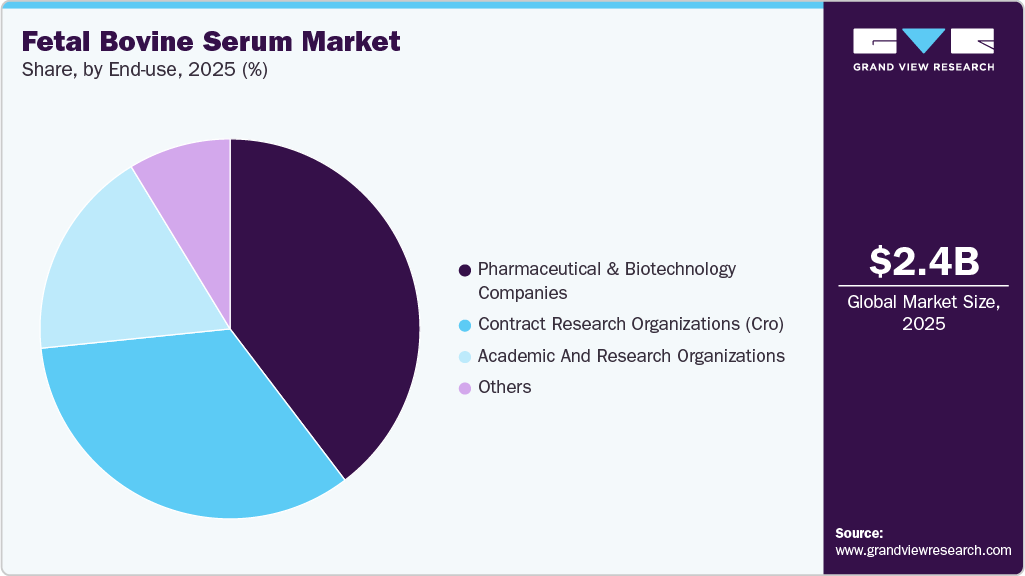
The contract research organizations (CRO's) segment is anticipated to register the fastest CAGR from 2026 to 2033. The adoption of CRO offers various benefits that will help the manufacturer conduct a successful clinical development program, representing lucrative growth opportunities for this segment over the forecast period. Factors such as better global reach, the presence of necessary resources, and easy delegation of duties and functions to the CRO drive the segment's growth. Due to these advantages, an increasing number of manufacturers are opting to hand over research programs to CRO's rather than doing it in-house, which is helping the segment gain significant growth and sustain a relatively stronger position in the market.
Regional Insights
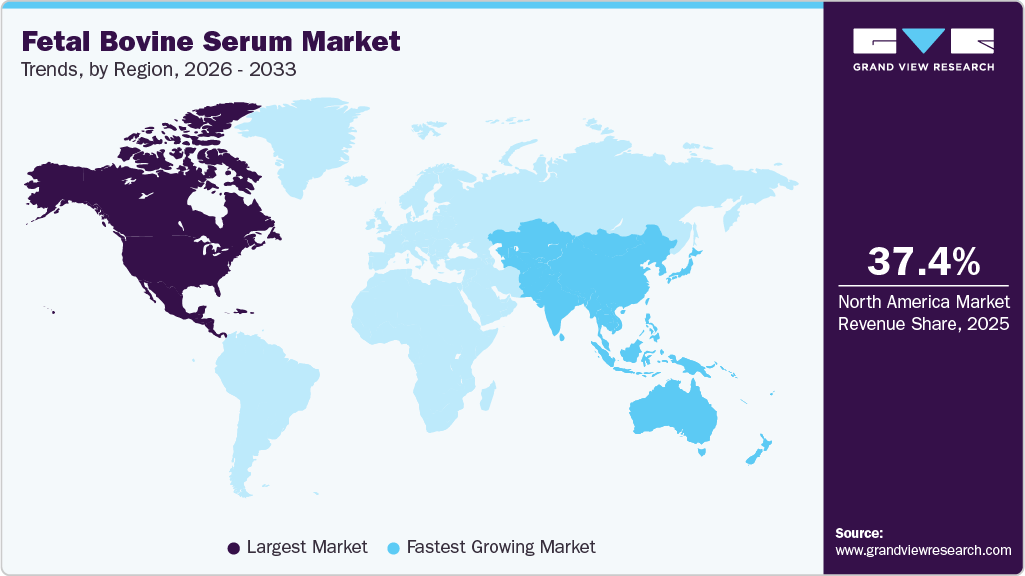
North America dominated the global fetal bovine serum market in 2025, with a share of 37.41%, owing to the region’s well-established biotechnology and biopharmaceutical industries. The presence of major research institutions, pharmaceutical companies, and advanced cell culture manufacturing facilities drives strong demand for high-quality FBS. Moreover, supportive government funding for life sciences research, widespread adoption of cell-based therapeutics, and a robust regulatory framework for biologics contribute to North America’s leading position in the global FBS market.
U.S Fetal Bovine Serum Market Trends
The fetal bovine serum market in the U.S. is experiencing robust growth, driven by substantial investments in biopharmaceutical R&D, particularly in cell-based therapies and vaccine development. The presence of leading research institutions and pharmaceutical companies bolsters the demand for high-quality FBS. Moreover, the U.S. is witnessing a surge in in-vitro fertilization (IVF) procedures, further fueling the need for specialized FBS products tailored to clinical applications.
Europe Fetal Bovine Serum Market Trends
The fetal bovine serum market in Europe is expanding steadily, with a notable emphasis on vaccine production and regenerative medicine. Countries like Germany and Italy are at the forefront of investing in advanced cell culture technologies. The region is also witnessing increased adoption of serum-free media alternatives, driven by ethical considerations and regulatory pressures. Moreover, the UK focuses on stem cell research, contributing to the growing demand for specialized FBS products.
The UK fetal bovine serum market is characterized by a strong emphasis on regenerative medicine and stem cell research. The country's commitment to advancing cell-based therapies is evident through increased funding and collaboration between academic institutions and biotech firms. This focus drives the demand for high-quality FBS to support complex cell culture processes.
The fetal bovine serum market in Germany is experiencing growth, primarily due to its strong biotechnology sector and emphasis on vaccine development. The country's regulatory environment supports using FBS in research and clinical applications, ensuring high standards and quality control. Moreover, Germany is exploring alternatives to traditional FBS, such as serum-free media, to align with ethical and sustainability goals.
Asia Pacific Fetal Bovine Serum Market Trends
The fetal bovine serum market in the Asia Pacific is expected to grow with the fastest CAGR of 16.0% over the forecast period, driven by increasing investments in biotechnology and pharmaceutical R&D. Countries like China, India, and Japan are expanding their research capabilities, leading to a higher demand for FBS in cell culture applications. Other factors include the rising number of academic institutes and clinical research organizations within the region.
China fetal bovine serum market is expanding quickly, supported by rising biopharmaceutical research and vaccine production. Growing clinical research activities and cell-based therapy development drive the need for a reliable FBS supply.
The fetal bovine serum market in Japan emphasizes regenerative medicine and stem cell research. Advanced research infrastructure and government support for innovative therapies fuel demand for high-quality FBS across academic and industrial research.
MEA Fetal Bovine Serum Market Trends
The fetal bovine serum market in the MEA is gradually expanding with investments in biotechnology and pharmaceutical research. Countries like the UAE and South Africa are developing research capabilities, boosting the demand for FBS in cell culture and related applications.
Kuwait fetal bovine serum market is in the early development stage, with growing interest in biotechnology research and the establishment of local research institutions. Collaborations with international partners are also supporting increased demand for FBS.
Key Fetal Bovine Serum Company Insights
The industry is characterized by several well-established players who maintain dominance through extensive product portfolios, strategic collaborations, and ongoing research and quality assurance investments. Leading companies such as Thermo Fisher Scientific Inc., Sartorius AG, Danaher Corporation, and Merck KGaA have secured significant market share by offering high-quality serum products, robust global distribution networks, and tailored solutions for diverse applications in cell culture, vaccine production, and regenerative medicine.
Companies like HiMedia Laboratories, Bio-Techne, PAN-Biotech, Atlas Biologicals, Inc., Rocky Mountain Biologicals, and Biowest are expanding their presence through innovative product lines, customized serum solutions, and enhanced customer support to meet the growing needs of research institutions, pharmaceutical manufacturers, and biopharmaceutical developers.
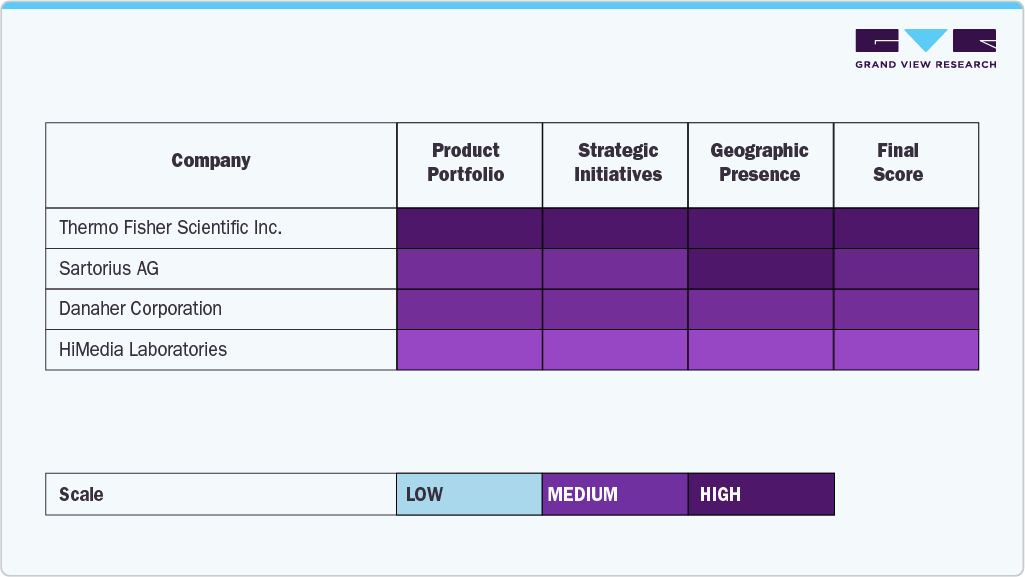
The market continues to be shaped by the convergence of established expertise and emerging innovation, focusing on lot-to-lot consistency, contamination control, and compliance with stringent regulatory standards. Strategic partnerships, acquisitions, and advancements in serum processing technologies fuel competition, while companies that integrate high-quality products with customer-centric solutions are best positioned to sustain growth. As demand for vaccines, cell-based therapies, and advanced research applications continues to rise, the FBS market will increasingly be influenced by commitments to safety, reliability, and ethical sourcing, defining the future trajectory of the industry on a global scale.
Key Fetal Bovine Serum Companies:
The following key companies have been profiled for this study on the fetal bovine serum market.
- Thermo Fisher Scientific Inc.
- Sartorius AG
- Danaher Corporation
- Merck KGaA
- HiMedia Laboratories
- Bio-Techne
- PAN-Biotech
- Atlas Biologicals, Inc.
- Rocky Mountain Biologicals
- Biowest
Recent Developments
-
In June 2025, Cytiva, headquartered under Danaher, allocated USD 1.6 billion through 2028 to expand bioprocessing manufacturing capacity across North America, Europe, and Asia, reinforcing its region-by-region strategy.
-
In November 2024, Gemini Bioproducts, LLC in the U.S., acquired Bio-Techne’s R&D Systems FBS product rights and inventory, securing Optima, Premium Select, and Premium brands to ensure continued customer supply.
-
In November 2024, Lonza announced the successful completion of its first GMP batch at the next-generation mammalian manufacturing facility in Portsmouth, USA. This milestone underscores Lonza's commitment to advancing cell and gene therapy manufacturing capabilities. The state-of-the-art facility is equipped with cutting-edge technology to support the production of complex biologics, enhancing Lonza's position in the contract development and manufacturing organization (CDMO) sector. The completion of the first GMP batch marks a significant step in meeting the growing demand for high-quality biologic therapies.
Fetal Bovine Serum Market Report Scope
Report Attribute
Details
Market size value in 2026
USD 2.68 billion
Revenue forecast in 2033
USD 6.91 billion
Growth rate
CAGR of 14.51% from 2026 to 2033
Base year for estimation
2025
Historical data
2021 - 2024
Forecast period
2026 - 2033
Quantitative units
Revenue in USD million/billion and CAGR from 2026 to 2033
Report coverage
Revenue forecast, company ranking, competitive landscape, growth factors, and trends
Segments covered
Application, end use, region
Regional scope
North America; Europe; Asia Pacific; Latin America; MEA
Country scope
U.S.; Canada; Mexico; UK; Germany; France; Italy,; Spain; Denmark; Sweden; Norway; India; China; Japan; Australia; South Korea; Thailand; Brazil; Argentina; Saudi Arabia; UAE; South Africa; Kuwait
Key companies profiled
Thermo Fisher Scientific Inc.; Sartorius AG; Danaher Corporation; Merck KGaA; HiMedia Laboratories; Bio-Techne; PAN-Biotech; Atlas Biologicals, Inc.; Rocky Mountain Biologicals; Biowest
Customization scope
Free report customization (equivalent up to 8 analyst’s working days) with purchase. Addition or alteration to country, regional & segment scope.
Pricing and purchase options
Avail customized purchase options to meet your exact research needs. Explore purchase options
Global Fetal Bovine Serum Market Report Segmentation
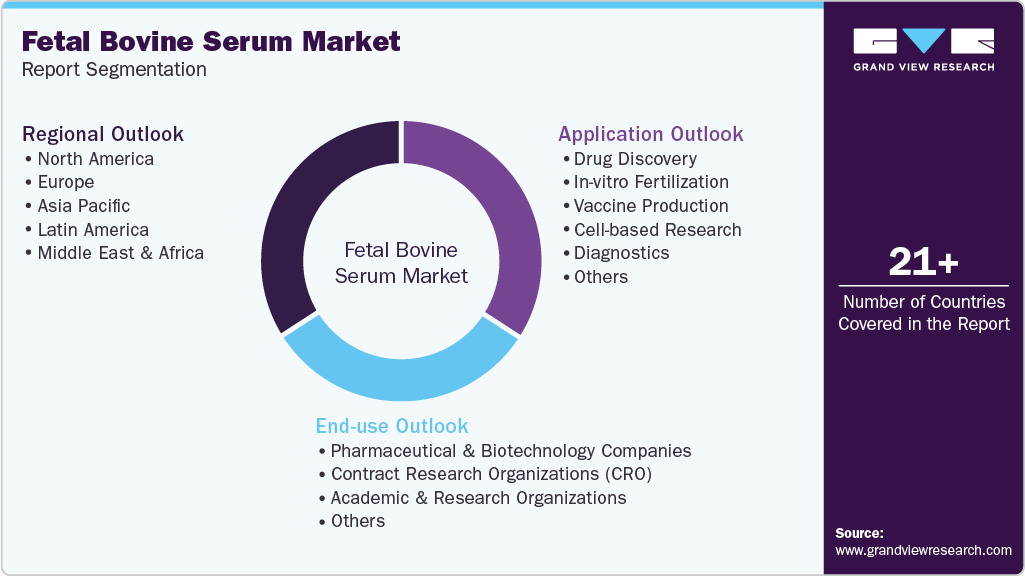
This report forecasts revenue growth and provides an analysis of the latest trends in each of the sub-segments from 2021 to 2033. For this report, Grand View Research has segmented the global fetal bovine serum market report based on application, end use, and region:
-
Application Outlook (Revenue, USD Million, 2021 - 2033)
-
Drug Discovery
-
In-vitro Fertilization
-
Vaccine Production
-
Cell-based Research
-
Diagnostics
-
Others
-
-
End Use Outlook (Revenue, USD Million, 2021 - 2033)
-
Pharmaceutical & Biotechnology Companies
-
Contract Research Organizations (CRO)
-
Academic & Research Organizations
-
Others
-
-
Regional Outlook (Revenue, USD Million, 2021 - 2033)
-
North America
-
U.S.
-
Canada
-
Mexico
-
-
Europe
-
Germany
-
UK
-
France
-
Italy
-
Spain
-
Denmark
-
Sweden
-
Norway
-
-
Asia Pacific
-
Japan
-
China
-
India
-
Australia
-
South Korea
-
Thailand
-
-
Latin America
-
Brazil
-
Argentina
-
-
Middle East and Africa (MEA)
-
South Africa
-
Saudi Arabia
-
UAE
-
Kuwait
-
-
Frequently Asked Questions About This Report
b. The global fetal bovine serum market size was estimated at USD 2.35 billion in 2025 and is expected to reach USD 2.68 billion in 2026.
b. Some key players operating in the fetal bovine serum market include Thermo Fisher Scientific Inc.; Sartorius AG; Danaher Corporation; Merck KGaA; HiMedia Laboratories; Bio-Techne; PAN-Biotech; Atlas Biologicals, Inc.; Rocky Mountain Biologicals; Biowest
b. Key factors that are driving the fetal bovine serum market growth include increasing Increasing R&D activities and expenditure for the introduction of new biopharmaceuticals along with the increasing application of FBS in drug discovery
b. The global fetal bovine serum market is expected to grow at a compound annual growth rate of 14.51% from 2026 to 2033 to reach USD 6.91 billion by 2033.
b. North America dominated the global fetal bovine serum (FBS) market in 2025, with a share of 37.41%, owing to the region’s well-established biotechnology and biopharmaceutical industries.


Share this report with your colleague or friend.
Need a Tailored Report?
Customize this report to your needs — add regions, segments, or data points, with 20% free customization.


ISO 9001:2015 & 27001:2022 Certified
We are GDPR and CCPA compliant! Your transaction & personal information is safe and secure. For more details, please read our privacy policy.
Trusted market insights - try a free sample
See how our reports are structured and why industry leaders rely on Grand View Research. Get a free sample or ask us to tailor this report to your needs.