- Home
- »
- Animal Health
- »
-
Equine Healthcare Market Size, Share, Industry Report 2033GVR Report cover
![Equine Healthcare Market Size, Share & Trends Report]()
Equine Healthcare Market (2026 - 2033) Size, Share & Trends Analysis Report By Product (Vaccines, Medicinal Feed Additives, Orthobiologics), By Indication, By Activity (Sports/Racing, Recreation), By Distribution Channel, By Region, And Segment Forecasts
- Report ID: GVR-4-68039-986-8
- Number of Report Pages: 150
- Format: PDF
- Historical Range: 2021 - 2025
- Forecast Period: 2026 - 2033
- Industry: Healthcare
- Report Summary
- Table of Contents
- Interactive Charts
- Methodology
- Download FREE Sample
-
 Download Sample Report
Equine Healthcare Market Summary
The global equine healthcare market size was estimated at USD 4.56 billion in 2025 and is projected to reach USD 10.40 billion by 2033, growing at a CAGR of 10.93% from 2026 to 2033. The industry is primarily driven by the increasing equine sports activities, growing prevalence of diseases in equine population, increasing equine sports activities, and growing uptake of horse insurance.
Key Market Trends & Insights
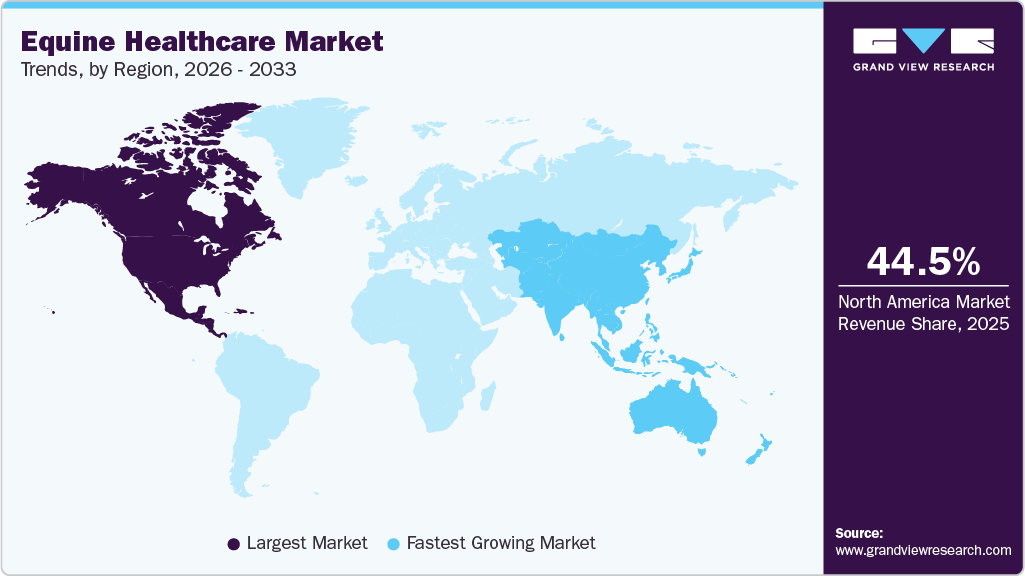
- North America equine healthcare market held the largest share of 44.47% of the global market in 2025.
- The Mexico equine healthcare market is steadily expanding, fueled by growing equine sports participation, heightened awareness of preventive care, and advancements in veterinary services.
- By product, the pharmaceuticals segment held the largest share of over 43.49% in 2025.
- By indication, the parasitic infections segment dominated the global market in 2025.
- Based on activity, the sports/ racing segment held the highest market share in 2025.
Market Size & Forecast
- 2025 Market Size: USD 4.56 Billion
- 2033 Projected Market Size: USD 10.40 Billion
- CAGR (2026-2033): 10.93%
- North America: Largest market in 2025
- Asia Pacific: Fastest growing market
Increasing awareness of feed quality and life-stage-specific nutrition is driving demand for specialized supplements and feed balancers. For instance, in September 2025, Simple System Horse Feeds launched Stud Balance +, a nutrient-rich feed balancer designed to support broodmares, stallions, and young horses with protein and calcium for growth, reproduction, and lactation needs.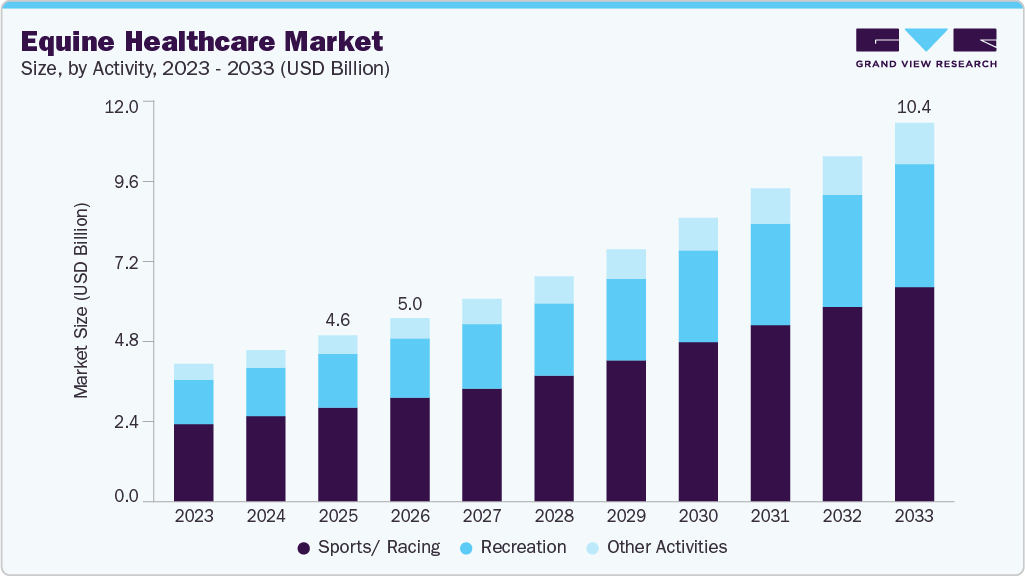
The growing number of competitive and recreational equestrian events, both nationally and internationally, is fueling the demand for high-quality equine care. For instance, according to an article published by The Association of Summer Olympic International Federations, in April 2025, the Fédération Equestre Internationale (FEI) took a significant step by signing two strategic Memoranda of Understanding (MoUs) with China’s leading media organizations, Xinhua News Agency and China Media Group (CMG). These agreements were formalized during a high-level visit by FEI President Ingmar De Vos and Secretary General Sabrina Ibáñez and aim to strengthen the promotion of equestrian sport through enhanced reporting, integrated media content, and exclusive programming rights.
This increased visibility and professionalization of equestrian sport is expected to directly drive the equine healthcare market. Greater media exposure and international competition participation raise awareness around horse performance, welfare, and injury prevention, thereby increasing demand for veterinary services, diagnostics, pharmaceuticals, vaccines, and advanced equine healthcare solutions. As Chinese athletes prepare for elite global events under heightened public and institutional scrutiny, investments in preventive care, sports medicine, rehabilitation, and nutrition for horses are likely to rise. Consequently, initiatives such as the FEI’s partnerships with Xinhua and CMG promote equestrian sport and act as a catalyst for long-term growth in the equine healthcare market by highlighting the importance of good quality medical care and welfare standards for performance horses.
Moreover, the growing prevalence of diseases among horses is creating sustained demand for advanced diagnostics, therapeutics, and preventive healthcare solutions. For instance, according to Equine Quarterly Disease Surveillance Report, published in June 2025, during the second quarter of 2025, the Equine Infectious Disease Surveillance (EIDS) system in the UK reported six outbreaks of Equine Herpes Virus-4 (EHV-4) respiratory infections, with two cases that occurred in May 2025 and four in June 2025, highlighting the ongoing vulnerability of the equine population to contagious respiratory diseases. Hence, the rising incidence of contagious diseases like EHV-4 drives horse owners, breeders, and trainers to increasingly invest in veterinary care, vaccination programs, routine health monitoring, and targeted therapeutics. The need to prevent outbreaks and minimize performance losses highlights the adoption of advanced diagnostic tools and preventive healthcare solutions. As a result, equine healthcare providers are seeing higher demand for both medical interventions and wellness products, supporting sustained growth in the market.
Disease outbreak in equine population in the U.S. & Canada by key states, 2025
Disease
Key State
Confirmed Cases
Equine Herpesvirus- Neurologic
Florida
2
Maryland
1
Minnesota
1
Oklahoma
1
Texas
11
Equine Herpesvirus- Respiratory
Kentucky
1
Tennessee
1
Equine Infectious Anemia
Colorado
1
Equine Influenza
Indiana
2
Strangles
British Columbia (Canada)
1
California
1
Florida
1
Michigan
1
Ontario (Canada)
15
Washington
1
Wisconsin
1
Source: Equine Disease Communication Center, Grand View Research
Market Concentration & Characteristics
The equine healthcare sector exhibits a moderate to high concentration, and the pace of the growth is accelerating. The industry is dominated by global players such as Zoetis, Arthrex Inc., and Boehringer Ingelheim International GmbH. These companies leverage strong R&D, broad portfolios, and global distribution networks to maintain competitiveness.
The equine healthcare industry is undergoing a major transformation, driven by advanced technological innovations that are redefining how veterinarians, horse owners, and equine researchers approach monitoring, diagnosis, and treatment. Tools such as telemedicine platforms enable remote consultations and timely medical guidance, while wearable devices provide continuous, real-time tracking of vital signs, movement, and performance metrics. These technologies enhance the precision and efficiency of care and support proactive health management, early disease detection, and optimized performance, fundamentally elevating standards of equine welfare and reshaping the industry landscape.
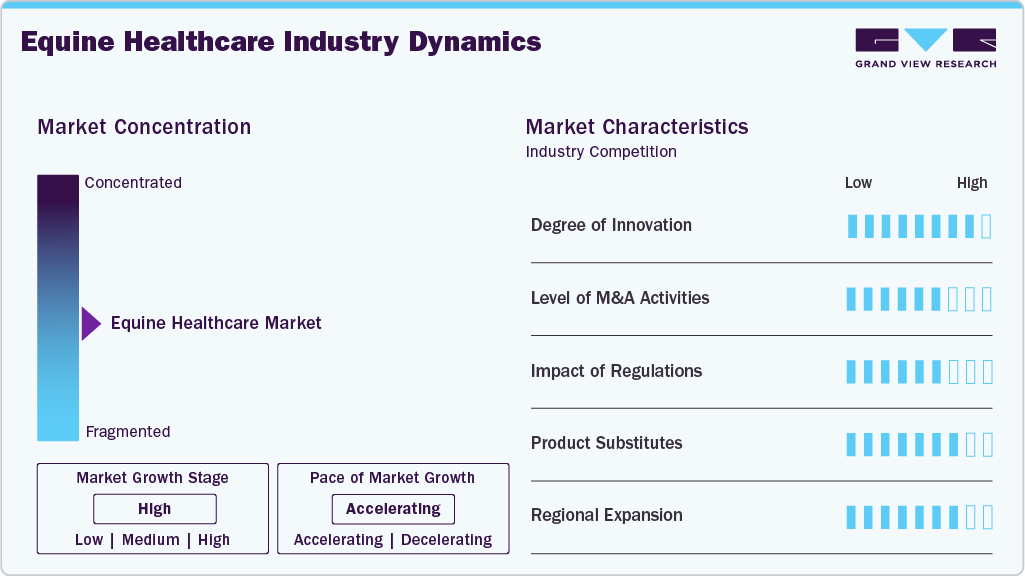
The industry is seeing a rise in M&A activity as major animal health companies and specialty veterinarian groups look to expand their geographic reach and portfolios through acquisitions. For instance, in October 2025, US-based Chewy entered a definitive agreement to acquire SmartEquine, strengthening its equine health portfolio and accelerating expansion across the United States through subscription-led, higher-margin wellness offerings strategies.
In equine medicine, regulations governing veterinarian practices, feed safety, and drug approvals are crucial. Strict laws governing medications, nutritional products, and biologics ensure safety and efficacy, but they also increase the cost of compliance. Government agencies and local veterinary associations set rules for the welfare, trade, and treatment of horses. These procedures influence market acceptance rates and mold product development plans.
The industry for horse healthcare is impacted by product substitutions; some owners frequently favor natural feeding, herbal medicines, and conventional therapy. Although conventional veterinary drugs are still required, the increasing need for all-encompassing care is driving the creation of hybrid treatments that blend pharmaceutical and natural components. This trend encourages companies to be innovative and offer integrated solutions that balance efficacy, safety, and owner preferences.
One of the most important growth strategies in the equine healthcare sector is regional development. Global firms are concentrating on expanding their presence in Latin America, Asia-Pacific, and the Middle East. Spending at veterinary clinics, horse ownership, and participation in sports are all increasing in these areas. Businesses can reach new markets and revenue streams by expanding distribution networks, establishing strategic partnerships with regional veterinary associations, and implementing localized production.
Product Insights
The pharmaceuticals segment held the largest share of 43.49% in 2025 due to its broad clinical relevance, routine usage, and direct link to everyday veterinary decision-making. Across therapeutic needs, pharmaceutical products address the most frequent and economically impactful health issues affecting horses, spanning pain, infection, inflammation, metabolic stress, gastrointestinal disorders, and procedural management. This wide scope positions pharmaceuticals as the first line of intervention across performance, breeding, and companion settings. Sustained disease exposure, intensive training environments, and increased animal movement are maintaining consistent treatment demand across regions. A growing emphasis on early intervention, symptom control, and functional recovery can be seen in the sector, which supports repeated and long-term pharmaceutical use. Product availability across injectable and oral formats further supports adoption in both clinical and field settings.
The orthobiologics segment is expected to grow at the fastest rate over the forecast period. The segment is growing owing to solutions that go beyond symptom control toward support of tissue repair and functional recovery. These therapies, such as platelet-rich plasma (PRP), stem cell-based products, and autologous serums, deliver concentrated biological factors that interact with the body’s natural healing systems to support tendon, ligament, and joint repair. For instance, the September 2025 article by Zoetis highlights the use of regenerative medicine devices like Pro-Stride APS and Restigen PRP in horses with Cushing's disease (PPID), showcasing that these autologous therapies can reduce inflammation and support joint health despite immunosuppression risks. The study demonstrates that stall-side processing of blood or bone marrow aspirate yields concentrated healing factors, improving outcomes in laminitis-prone PPID cases without triggering immune responses. This advances equine care by offering veterinarians targeted regenerative options for managing PPID-related musculoskeletal issues effectively.
Indication Insights
The parasitic infections segment dominated in 2025 and continues to demand significant clinical attention due to its high prevalence and impact on horse health, performance, and welfare. Gastrointestinal helminths, particularly strongyles and cyathostomins, are widespread and can cause anemia, colic, weight loss, and reduced nutrient absorption, directly affecting athletic performance and overall resilience. Recent studies highlight how parasite burdens may be influenced by coexisting conditions, such as severe asthma, demonstrating complex interactions between host immunity and infection dynamics. For instance, as per a February 2025 article by KER, researchers discovered that horses with severe equine asthma (SEA) shed significantly fewer internal parasite eggs than their healthy herdmates. The findings suggested a potential inverse relationship between allergies and parasitism, supporting theories like the hygiene hypothesis, where chronic parasite infections might actually suppress the development of allergic conditions.
The musculoskeletal disorders segment is emerging as the fastest CAGR over the forecast period, due to the high prevalence of tendon, ligament, joint, and bone injuries that significantly impact performance, training continuity, and career longevity in sport and working horses. Lameness and reduced athletic output remain primary clinical and economic concerns, prompting increased investment in early detection and intervention. Advanced diagnostics, including high-resolution imaging, objective gait analysis, and metabolomic profiling, are improving the precision and speed of diagnosis, allowing veterinarians to implement targeted treatment strategies more effectively.
Activity Insights
The sports/racing activities segment dominated the market in 2025 due to the high clinical intensity and continuous healthcare demand associated with competitive equine use. Racehorses and sport horses operate under sustained physical load, which increases the incidence of musculoskeletal injuries, exercise-induced cardiac events, respiratory strain, and metabolic imbalance. Research evidence highlights the link between intense exertion and exercise-associated sudden death, driving greater focus on cardiovascular screening and performance monitoring.
The recreation segment is expected to showcase the fastest growth rate of the forecast period since broader public interest in equine-assisted activities and leisure riding expands service demand. Recreational use includes therapeutic riding, wellness programs, and community engagement, which extend equine care beyond competition into holistic health and human well-being. Studies show equine interactions can reduce stress, improve emotional regulation, and support physical rehabilitation, which drives enrollment in equine-assisted services and allied veterinary support.
Distribution Channel Insights
Veterinary hospitals and clinics account for a dominant share in 2025. This channel serves as the primary point for diagnosis, treatment, and ongoing disease management. These settings handle complex conditions such as lameness, colic, reproductive disorders, and performance-related injuries, which require skilled veterinarians, advanced imaging, and surgical capability. Hospitals and clinics also play a central role in preventive care through vaccination programs, dental services, and routine health assessments. Rising awareness of equine welfare, higher spending on performance and companion horses, and increasing demand for early detection of health issues are some of the crucial market driving factors.
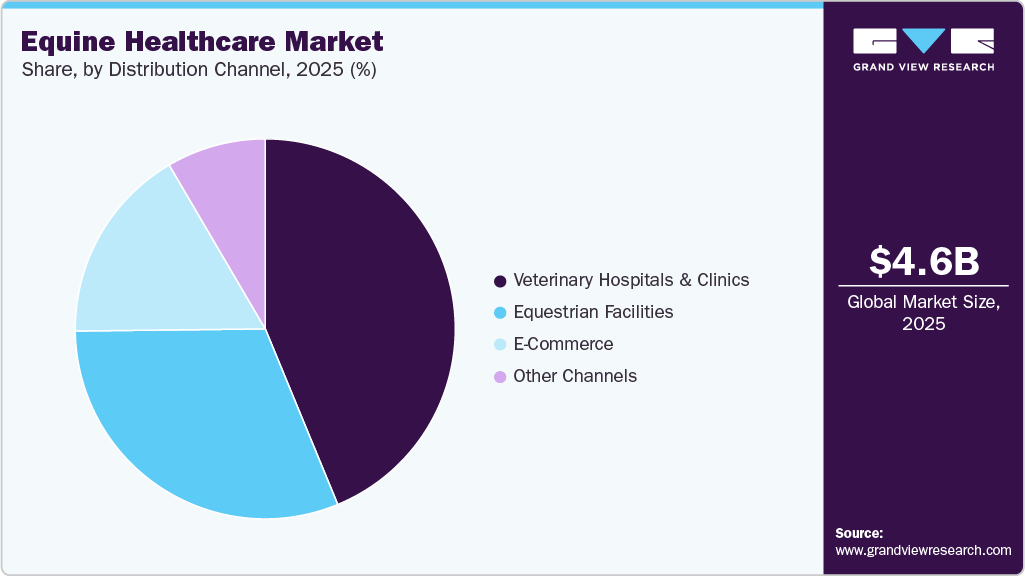
E-commerce is the fastest-growing segment in the equine healthcare market, owing to digital platforms improving access to products and broadening choice for owners and caregivers. Online sales of supplements, therapeutic aids, and routine care items have grown with major brands updating their digital presence and direct-to-consumer offerings. For instance, in April 2025, Farnam launched a refreshed brand identity that unifies its entire product portfolio under one master brand with updated packaging and a new loyalty program called Farnam Rewards. The rebrand aims to strengthen Farnam's market leadership in the competitive equine care industry.
Regional Insights
North America equine healthcare market held the largest revenue share of 44.47% in 2025, due to welfare spending, equestrian activities, and advancements in diagnostics and regenerative therapies. Dechra, Merck Animal Health, Boehringer Ingelheim, and Zoetis are important participants. Reflecting continuous innovation, TechMix bolstered its position in March 2025 with a redesigned product line and Colostru-Boost, a colostrum-based line that improves performance, well-being, and gastric ulcer support.
U.S. Equine Healthcare Market Trends
The equine healthcare market in the U.S. is moderately consolidated, dominated by a group of well-established multinational animal health companies alongside smaller specialty and niche players. Companies such as Zoetis, Merck Animal Health, Boehringer Ingelheim, Elanco, Dechra, and Vetoquinol maintain strong market positions through broad equine product portfolios covering vaccines, parasiticides, anti-inflammatory drugs, pain management solutions, and performance-enhancing therapeutics. Long-standing relationships with equine veterinarians, strong brand recognition, extensive field sales networks, and consistent investment in research and development enhance their competitive advantage.
Mexico equine healthcare market is witnessing steady growth, driven by increasing equine sports activities, rising awareness of preventive care, and modernization of veterinary services. Pharmaceuticals, including vaccines, parasiticides, and therapeutics, account for the largest market share, while diagnostic tools, digital health solutions, and performance-oriented supplements are emerging as high-growth segments. The market benefits from a substantial equine population and the traditional importance of horses in both rural and sporting contexts.
Europe Equine Healthcare Market Trends
The equine healthcare market in Europe is growing rapidly, driven by increasing horse ownership, rising awareness of equine welfare, and growing demand for advanced veterinary care, pharmaceuticals, and wellness solutions. Chronic conditions such as joint disorders, fractures, trauma, and lameness common in sport, leisure, and working horses have fueled demand for therapeutic interventions, preventive care, and surgical solutions. Market growth is also supported by broader trends in companion animal care, including obesity management and rehabilitation, which influence veterinary practices and service adoption.
Germany equine healthcare market is very much advanced as it corresponds to the country's rich equestrian tradition, large-scale participation in horse racing, show jumping, dressage, and leisure riding, among others. There is a strong need for vaccines, parasiticides, pharmaceuticals, diagnostics, and preventive care solutions because horse owners are increasingly concerned about long-term health, performance, and disease prevention. Veterinary services like diagnostic imaging, physiotherapy, and rehabilitation programs have become part of professional equine care, thereby promoting competition in the market for both products and services.
The equine healthcare market in France is functioning in one of the most formally structured equine systems in Europe. In such a system, healthcare decisions are closely linked to breeding programs, racing authorities, and national animal welfare standards. The veterinary intervention is not restricted to treatment only, but rather it is involved in breeding selection, fertility management, and health planning for the long term. This system generates continuous demand for preventive therapies, reproductive health solutions, and condition-specific treatments instead of intermittent care.
Asia Pacific Equine Healthcare Market Trends
The equine healthcare market in Asia Pacific is expected to grow at the fastest CAGR over the forecast period, attributed to several factors, including the rise in equine welfare awareness, the growing number of people involved in equestrian sports, and the development of the veterinary infrastructure in China, Japan, India, and Australia. Furthermore, the government programs encouraging the care of animals, the implementation of biosecurity, and the conduct of disease monitoring are also contributing to the market growth.
Japan equine healthcare market is characterized by the presence of high-value sport horses, long-established racing practices, and the cultural attitude of respect for animals that regard careful, long-term treatment as the only way to go. Horse owners and professional trainers top the list with preventive medicine, injury prevention, reproductive health, and performance optimization, among their priorities. The availability of advanced veterinary services like diagnostics, rehabilitation, and specialized therapies has become common in routine care, which shows a change from the practice of treating to the management of health issues through prevention.
The market for equine healthcare in India is very diverse, and it shows the variety of India's equine population and cultural practices. Horses in India have different kinds of usage, such as in ceremonials and religious activities, among animals for agricultural labor in the countryside, and in races and recreational riding in city centers. This scenario results in a market with different levels of healthcare demand; for instance, basic vaccinations and dewormers are widely used in rural areas, whereas veterinarians are slowly introducing performance-oriented treatments, diagnostics, and preventive programs for sport and racing horses in city hubs.
Latin America Equine Healthcare Market Trends
The equine healthcare market inLatin America is witnessing steady growth, fueled by increasing horse populations and the region’s strong equestrian culture. The rise of competitive equestrian sports and recreational riding has also spurred demand for performance support products, rehabilitation therapies, and nutraceuticals. Both global and local players influence the rivalry among companies in Latin America. International firms enter the market with a wide range of products and highly qualified talent. In contrast, domestic manufacturers take care of the demand of the regions by providing cost-effective and accessible solutions.
Brazil equine healthcare market is gaining momentum gradually, supported by rising awareness of preventive care, increasing professionalization of horse owners, and expansion of equestrian sports. Companies that combine regional knowledge with high-quality products and services, alongside education and veterinary training, are well-positioned to capture the market's potential.
Middle East & Africa Equine Healthcare Market Trends
The equine healthcare market in MEA is gaining traction due to increased investments in horse breeding, equestrian sports, and animal welfare. Professional stables as well as private owners are going for preventive measures, which consist of regular vaccinations, parasite control, and proper nutritional management. Furthermore, specialized care for performance horses, which includes rehabilitation therapies and advanced diagnostics, is gradually being adopted, especially in the high-value equestrian regions of the world.
Saudi Arabia equine healthcare market is driven by significant investments in specialized equine clinical infrastructure, reflecting the importance of horses in racing, breeding, and cultural heritage. Advanced equine hospitals in regions such as Riyadh and Qassim provide comprehensive services including diagnostics, surgery, emergency care, and reproductive medicine. These facilities are equipped with modern imaging technologies, surgical suites, and intensive care units, supporting both performance horses and leisure equines.
Qatar equine healthcare market is highly advanced and closely aligned with the country’s strong emphasis on horse breeding, racing, and elite equestrian sports. Veterinary oversight and animal health governance are supported by national agricultural and animal health authorities, ensuring strict disease surveillance, vaccination compliance, medication control, and regulated movement of horses for competition and international trade. These frameworks support both local equine populations and Qatar’s active participation in global equestrian events.
Key Equine Healthcare Company Insights
Major players such as Zoetis Services LLC, Dechra, Boehringer Ingelheim, and Arthex.Inc holds substantial market share, supported by extensive product portfolios, global distribution networks, and robust regulatory compliance. Their growth is fueled by innovations in recombinant and vector-based vaccines, expansion into emerging markets, and strategic M&A activities. However, competition is shaped by regulatory challenges, high R&D expenses, and stricter antibiotic regulations, while emerging and regional companies are gaining traction with cost-efficient, targeted solutions addressing local disease needs and resource limitations.
Key Equine Healthcare Companies:
The following key companies have been profiled for this study on the equine healthcare market.
- Zoetis Services LLC
- Arthrex Inc.
- Dechra
- Boehringer Ingelheim International GmbH
- Ceva Sante Animale
- Heska Corporation
- Merck & Co. Inc
- Esaote SPA
- IDEXX Laboratories, Inc.
- Covetrus Inc.
- Elanco
- Cargill
Recent Developments
-
In December 2025, US-based Zomedica launched an equine progesterone assay on its TRUFORMA platform, expanding point-of-care reproductive diagnostics for veterinarians and breeders across North America to improve breeding efficiency outcomes.
-
In October 2025, Covetrus entered an agreement for Chewy to acquire its SmartEquine business, allowing Covetrus to focus on core veterinary technology, software, and service solutions.
-
In June 2025, bioMérieux introduced VETFIRE, a ready-to-use PCR kit for equine infectious respiratory diseases, providing accurate results in under 20 minutes and simultaneous detection of seven pathogens with advanced, high-sensitivity PCR technology.
Equine Healthcare Market Report Scope
Report Attribute
Details
Market size value in 2026
USD 5.03 billion
Revenue forecast in 2033
USD 10.40 billion
Growth rate
CAGR of 10.93% from 2026 to 2033
Historical period
2021 - 2025
Forecast period
2026 - 2033
Quantitative units
Revenue in USD million/billion and CAGR from 2026 to 2033
Report coverage
Revenue forecast, company ranking, competitive landscape, growth factors, and trends
Segments covered
Product, indication, activity, distribution channel, region
Regional scope
North America; Europe; Asia Pacific; Latin America; MEA
Country scope
U.S.; Canada; Mexico; UK; Germany; France; Italy; Spain; Denmark; Sweden; Norway; Japan; China; India; Australia; South Korea; Thailand; Brazil; Argentina; South Africa; Saudi Arabia; UAE; Kuwait; Qatar; Oman
Key companies profiled
Arthrex Inc.; Boehringer Ingelheim International GmbH; Zoetis Services LLC;Dechra; Ceva Sante Animale; Heska Corporation; Merck & Co. Inc; Esaote SPA; IDEXX Laboratories, Inc.;Covetrus; Elanco; Cargill
Customization scope
Free report customization (equivalent up to 8 analysts working days) with purchase. Addition or alteration to country, regional & segment scope.
Pricing and purchase options
Avail customized purchase options to meet your exact research needs. Explore purchase options
Global Equine Healthcare Market Report Segmentation
This report forecasts revenue growth at global, regional, and country levels and provides an analysis of the latest industry trends in each of the sub-segments from 2021 to 2033. For this study, Grand View Research has segmented the global equine healthcare market report based on product, indication, activity, distribution channel, and region:
-
Product Outlook (Revenue, USD Million, 2021 - 2033)
-
Pharmaceuticals
-
Parasiticides
-
Anti-infectives
-
Anti-inflammatory & Analgesics
-
Other Pharmaceuticals
-
-
Vaccines
-
Medicinal Feed Additives
-
Orthobiologics
-
Diagnostics
-
Diagnostic Test Kits
-
Diagnostics Equipment
-
-
Software & Services
-
Practice Management Software
-
Imaging Software
-
Telehealth Software
-
Other Software
-
-
Others
-
-
Indication Outlook (Revenue, USD Million, 2021 - 2033)
-
Musculoskeletal Disorders
-
Parasitic Infections
-
Equine Herpes Virus
-
Equine Viral Arteritis (EVA)
-
Equine Influenza
-
West Nile Virus
-
Tetanus
-
Other Indications
-
-
Activity Outlook (Revenue, USD Million, 2021 - 2033)
-
Sports/ Racing
-
Recreation
-
Other Activities
-
-
Distribution Channel Outlook (Revenue, USD Million, 2021 - 2033)
-
Veterinary Hospitals & Clinics
-
E-commerce
-
Equesterian Facilities
-
Other Channels
-
-
Equine Healthcare Market Regional Outlook (Revenue, USD Million, 2021 - 2033)
-
North America
-
U.S.
-
Canada
-
Mexico
-
-
Europe
-
UK
-
Germany
-
France
-
Italy
-
Spain
-
Denmark
-
Sweden
-
Norway
-
-
Asia Pacific
-
Japan
-
India
-
China
-
South Korea
-
Australia
-
Thailand
-
-
Latin America
-
Brazil
-
Argentina
-
-
Middle East and Africa (MEA)
-
South Africa
-
Saudi Arabia
-
UAE
-
Kuwait
-
Qatar
-
Oman
-
-
Frequently Asked Questions About This Report
b. Some key players operating in the equine healthcare market include Arthrex Inc., Boehringer Ingelheim International GmbH, Zoetis Services LLC, Dechra, Ceva Sante Animale, Heska Corporation, Merck & Co. Inc, Esaote SPA, IDEXX Laboratories, Inc., Covetrus, Elanco, and Cargill.
b. Key factors that are driving the market growth include increasing equine sports activities, growing prevalence of diseases in equine population, increasing equine sports activities, and growing uptake of horse insurance.
b. The global equine healthcare market size was estimated at USD 4.56 billion in 2025 and is expected to reach USD 5.03 billion in 2026.
b. The global equine healthcare market is expected to grow at a compound annual growth rate of 10.93% from 2026 to 2033 to reach USD 10.40 billion by 2033.
b. North America accounted for the largest market share of 44.47% in 2025. This dominance can be due to welfare spending, equestrian activities, and advancements in diagnostics and regenerative therapies.


Share this report with your colleague or friend.
Need a Tailored Report?
Customize this report to your needs — add regions, segments, or data points, with 20% free customization.


ISO 9001:2015 & 27001:2022 Certified
We are GDPR and CCPA compliant! Your transaction & personal information is safe and secure. For more details, please read our privacy policy.
Trusted market insights - try a free sample
See how our reports are structured and why industry leaders rely on Grand View Research. Get a free sample or ask us to tailor this report to your needs.