- Home
- »
- Medical Devices
- »
-
Dental Inlays And Onlays Market Size, Industry Report, 2033GVR Report cover
![Dental Inlays And Onlays Market Size, Share & Trends Report]()
Dental Inlays And Onlays Market (2026 - 2033) Size, Share & Trends Analysis Report By Restoration Type (Inlays, Onlays (Partial Crowns)), By Material Type (Ceramic, Composite Resin, Metal Alloy), By Manufacturing Technique, By End-use, By Distribution Channel, By Region, And Segment Forecasts
- Report ID: GVR-4-68039-975-7
- Number of Report Pages: 120
- Format: PDF
- Historical Range: 2021 - 2025
- Forecast Period: 2026 - 2033
- Industry: Healthcare
- Report Summary
- Table of Contents
- Segmentation
- Methodology
- Download FREE Sample
-
 Download Sample Report
Dental Inlays And Onlays Market Summary
The global dental inlays and onlays market size was estimated at USD 4.19 billion in 2025 and is projected to reach USD 9.28 billion by 2033, growing at a CAGR of 10.4% from 2026 to 2033. The market is primarily driven by the increasing prevalence of dental caries and tooth damage, which raises the demand for durable restorative treatments.
Key Market Trends & Insights
- North America dominated the dental inlays & onlays market with the largest share of 38.23% in 2025.
- The dental inlays & onlays market in the U.S. accounted for the largest market revenue share in North America in 2025.
- By restoration type, the onlays (partial crowns) segment led the market with the largest revenue share of 60.00% in 2025.
- By materials type, the ceramic segment led the market with the largest revenue share of 57.60% in 2025.
- By manufacturing technique, the conventional laboratory fabrication segment led the market with the largest revenue share of 65.70% in 2025.
Market Size & Forecast
- 2025 Market Size: USD 4.19 Billion
- 2033 Projected Market Size: USD 9.28 Billion
- CAGR (2026-2033): 10.4%
- North America: Largest market in 2025
- Asia Pacific: Fastest growing market
Growing adoption of digital dentistry and CAD/CAM systems enables faster and more precise fabrication of indirect restorations, further supporting market growth.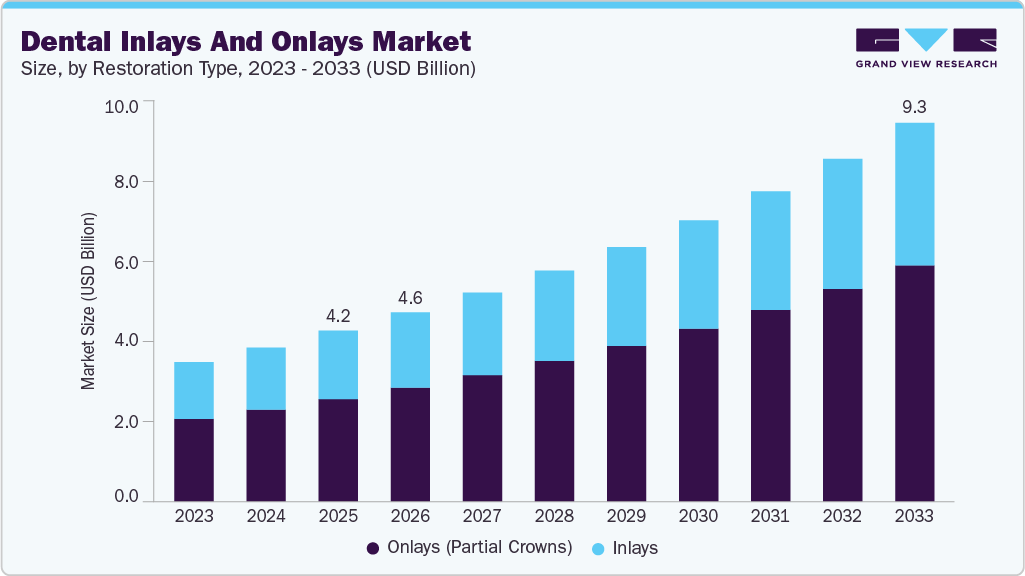
Rising Prevalence of Dental Caries and Tooth Damage
The growing prevalence of dental disorders, including tooth decay, tooth loss, and tooth extraction, is a key driver of the dental inlays & onlays market. According to the World Health Organization (WHO), published in March 2025, nearly 7% of adults aged 20+ and around 23% of those aged 60+ experience complete tooth loss, increasing the need for implants. A report by Humble Memorial Dental published in February 2025 states that 3.5 billion individuals suffer from oral diseases globally, with cavities affecting over 90% of adults and gum disease impacting nearly half of those aged 30 and above. This rising disease burden, such as tooth loss, cavities, and gum disease, is anticipated to significantly increase the demand for intraoral diagnostic imaging for early detection, treatment planning, and post-procedural monitoring.
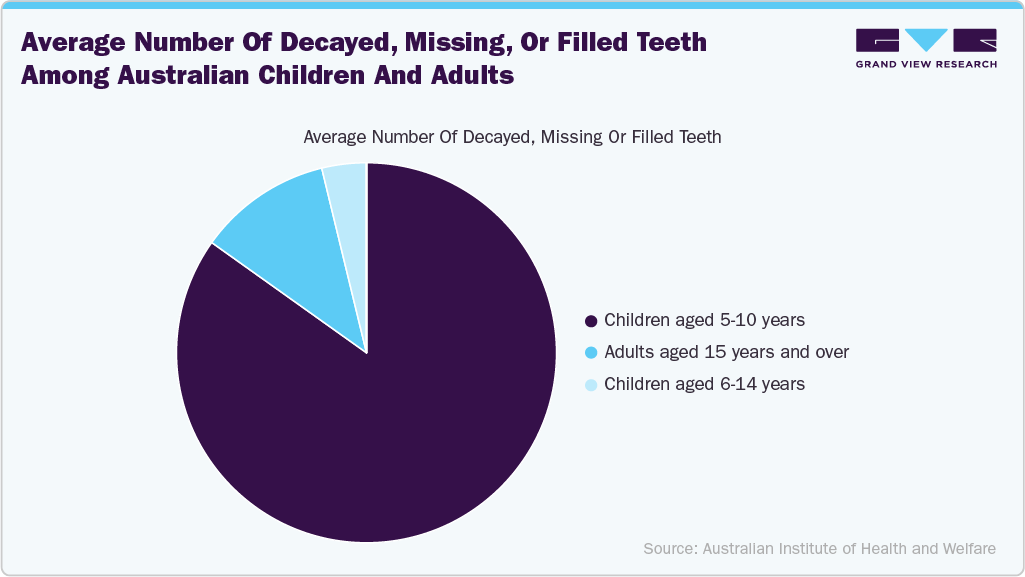
The graph indicates that tooth decay and missing teeth are prevalent among adults in Australia, increasing the need for dental inlays and onlays to support restorative treatment planning and tooth structure preservation. In addition, the high incidence of caries and orthodontic conditions among children and adolescents necessitates restorative interventions, including inlays and onlays, for early treatment and long-term tooth conservation. Dental restorative procedures such as inlays and onlays are generally considered after skeletal growth completion, typically around 15 years for girls and 17–18 years for boys, further supporting restorative treatment demand in late adolescence and adulthood.
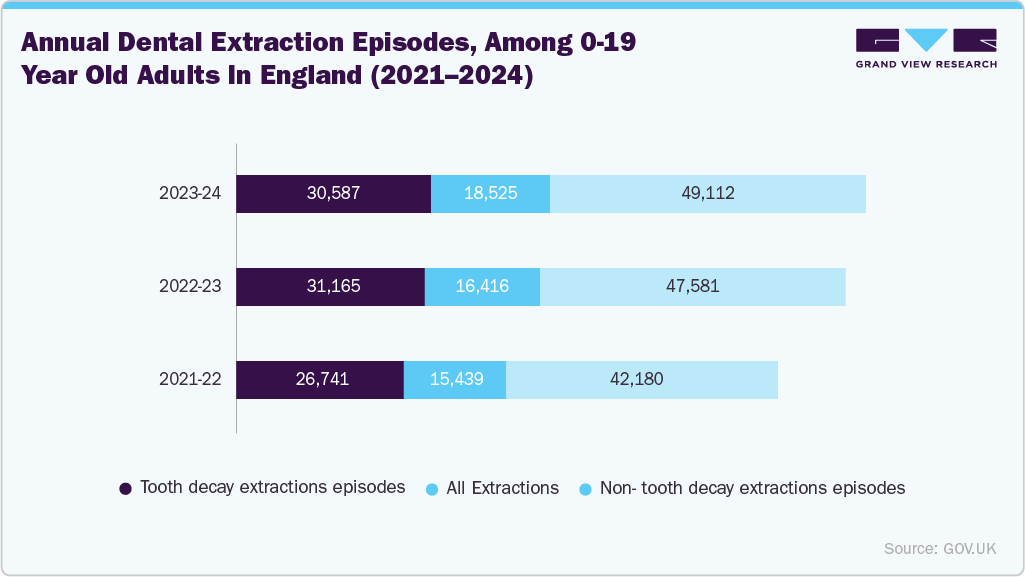
Moreover, according to data published by the UK Government, NHS hospitals in England recorded 49,112 tooth extraction episodes among individuals aged 0 to 19 in the financial year ending 2024, representing a 3% increase compared to the previous year. This rising trend in tooth extractions underscores the growing need for dental inlays and onlays to support restorative treatments, replacement of damaged tooth structures, treatment planning, and long-term dental rehabilitation following tooth damage or restorative procedures.
Furthermore, the burden of tooth loss is substantial among the older population, increasing the need for restorative dental procedures such as dental inlays and onlays to preserve remaining tooth structure and restore function. Supportive reimbursement and coverage policies are also contributing to higher utilization of advanced dental treatments, thereby increasing demand for indirect restorative solutions. For instance, a study published by the National Library of Medicine in September 2024 reported that expanded dental care coverage for older adults in Korea resulted in a 13.5% increase in partial denture use and a 60.5% rise in dental implant procedures among individuals aged 65 years and above. As restorative procedures often require durable and minimally invasive treatment options to repair damaged teeth, these trends are expected to support the adoption of dental inlays and onlays among the aging population.
Increasing Demand for Aesthetic Dental Restorations
The growing demand for aesthetic dental restorations is strongly driven by the high global burden of oral diseases and the increasing need for restorative dental treatments that not only restore function but also improve dental appearance. According to the World Health Organization, oral diseases affect approximately 3.5 billion people worldwide, making them the most prevalent non-communicable diseases globally. The organization also reports that untreated dental caries alone affects around 2.5 billion people, highlighting a large population requiring restorative dental care, including crowns, veneers, and tooth-colored fillings that are commonly designed to provide aesthetic outcomes alongside functional restoration (WHO, Global Oral Health Status Report, published 18 November 2022).
Market Concentration & Characteristics
The dental inlays and onlays market is in a medium growth stage with a steadily accelerating pace, driven by the increasing demand for conservative restorative treatments that preserve natural tooth structure while improving durability and aesthetics. The shift toward minimally invasive dentistry has significantly increased the adoption of indirect restorations such as ceramic and composite inlays and onlays, which are designed to replace damaged tooth structure without requiring full crowns. In addition, the rising global burden of dental caries and tooth damage continues to expand the patient pool requiring restorative procedures.
Innovation in the dental inlays and onlays space is progressing through advancements in restorative materials and digital manufacturing technologies. Modern restorative materials such as lithium disilicate ceramics, zirconia, and resin-based composites provide improved strength, wear resistance, and aesthetic properties compared with traditional materials. Digital workflows using intraoral scanners and CAD/CAM milling systems enable precise fabrication of customized restorations with improved marginal fit and faster treatment timelines. These innovations enhance clinical outcomes and increase the adoption of indirect restorations in restorative dentistry.
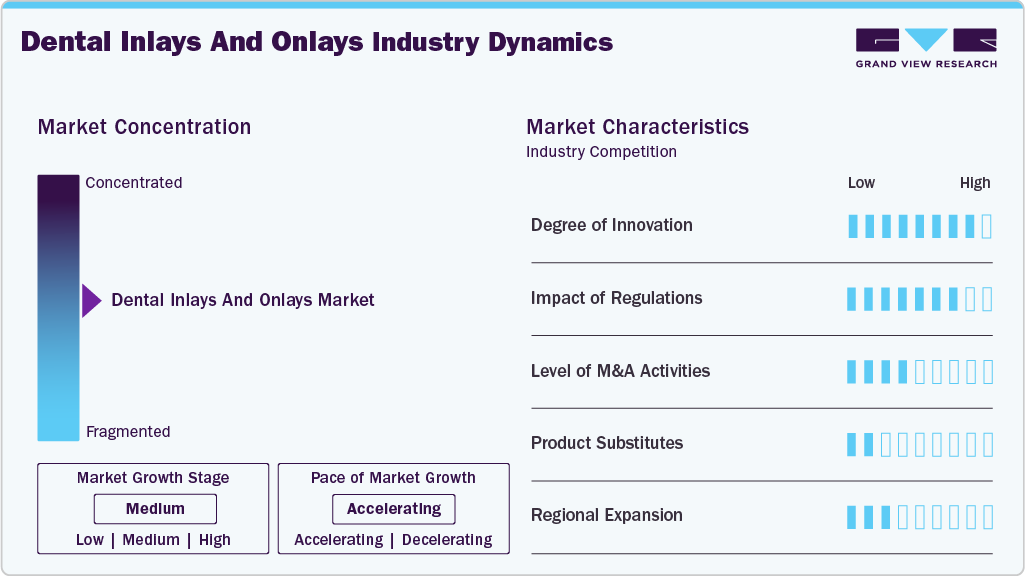
Regulatory oversight plays a key role in shaping the dental restorative materials market. Authorities such as the U.S. Food and Drug Administration (FDA) and the European Medicines Agency/CE regulatory framework regulate dental restorative materials and CAD/CAM systems as medical devices, requiring manufacturers to demonstrate safety, performance, and biocompatibility. Compliance with international standards for dental materials and medical devices influences product development, approval timelines, and post-market surveillance, encouraging manufacturers to invest in continuous material improvements and validated manufacturing processes.
The primary alternative to dental inlays and onlays is the use of full dental crowns, particularly when tooth damage is extensive and requires complete coverage to restore structural integrity. In cases where the tooth is severely compromised and cannot be restored, tooth extraction followed by dental implants or fixed dental bridges may be considered. However, these procedures are generally more invasive and require greater removal of natural tooth structure, making inlays and onlays a preferred option when sufficient tooth structure remains.
Mergers and acquisitions activity in the dental inlays & onlays market remains moderate and strategically focused. Leading dental companies typically pursue acquisitions that strengthen their portfolios in digital dentistry platforms, restorative materials, and CAD/CAM technologies. These transactions are primarily aimed at expanding product offerings, enhancing digital workflows, and improving integration between restorative materials and digital fabrication systems.
Adoption of advanced restorative dental procedures is expanding globally as dental infrastructure improves and access to oral healthcare services increases. While North America and Europe remain key markets due to well-established dental care systems and high patient awareness of aesthetic dentistry, emerging markets in Asia-Pacific, the Middle East, and Latin America are experiencingrising demand for restorative dental treatments. Improvements in dental clinic infrastructure, increasing availability of trained dental professionals, and the growing adoption of digital dentistry technologies are contributing to the expanding use of inlays and onlays in these regions.
Restoration Type Insights
The onlays (partial crowns) segment dominated the dental inlays & onlays market with a share of 60.00% in 2025, driven by the increasing preference for minimally invasive restorative treatments that preserve natural tooth structure while restoring weakened cusps. Compared with full crowns, onlays require significantly less removal of healthy tooth material, making them a conservative treatment option for moderate tooth damage. Evidence supporting this trend is reported in the systematic review and meta-analysis “Onlays/Partial Crowns versus Full Crowns in Restoring Posterior Teeth” published in Head & Face Medicine (2022), which found that full crown preparation removes 67.5–75.6% of tooth structure, whereas onlays remove only 35.5–46.7%, highlighting their conservative advantage.
The inlays segment is projected to grow moderately, supported by the growing adoption of indirect restorative procedures that offer improved durability and structural reinforcement compared with direct fillings. Inlays restore internal tooth surfaces without covering cusps, allowing preservation of healthy enamel while improving long-term restoration strength. Supporting clinical evidence is reported in the systematic review “Survival and Success Rate of Restoration Post Endodontic Treatment” published in Clinical, Cosmetic and Investigational Dentistry (2025), which found that indirect restorations such as inlays demonstrate 3-year survival rates of approximately 82.7%–99.1%, reinforcing their effectiveness in restorative dentistry.
Material Type Insights
The ceramic segment dominated the dental inlays & onlays market with a share of 57.60% in 2025, supported by the high durability, superior aesthetics, and long clinical survival of ceramic restorative materials such as lithium disilicate and glass-ceramics. These materials provide strong fracture resistance and natural tooth-like translucency, making them widely preferred for indirect restorations in posterior teeth. Clinical evidence supports this advantage: the 2024 retrospective study “Clinical Performance of Bonded Partial Lithium Disilicate Restorations” published in the Journal of Dentistry reported survival rates of about 99.2% and success rates of 97.6% for lithium disilicate partial restorations, demonstrating their reliability in restorative dentistry.
The composite resin segment in the dental inlays & onlays market is expected to grow moderately over the forecast period, driven by lower treatment cost, improved mechanical properties, and easier repairability compared with ceramic restorations. Composite materials have improved significantly in strength and wear resistance, increasing their clinical use for indirect restorations in moderate cavities. Supporting evidence is reported in the clinical study “Clinical Longevity of Indirect Composite Resin Inlays and Onlays” published in European Journal of Dentistry (2022), which found that indirect composite resin restorations achieved a long-term success rate of about 85% after a 9-year follow-up, confirming their acceptable durability in restorative dentistry.
Manufacturing Technique Insights
The conventional laboratory fabrication segment dominated the dental inlays & onlays market with a share of 67.70% in 2025 due to its long-established clinical reliability and widespread use in restorative dentistry. Laboratory-fabricated restorations allow highly precise customization, accurate marginal fit, and strong mechanical performance, which are critical for long-term restoration success. The presence of well-established dental laboratory networks and skilled technicians further supports the continued adoption of conventional fabrication methods. Additionally, these techniques are widely used for complex restorative cases where high precision and controlled manufacturing processes are required.
The digital CAD/CAM segment in the dental inlays & onlays market is expected to grow at the fastest rate over the forecast period due to the increasing adoption of digital dentistry technologies across dental clinics and laboratories. CAD/CAM systems enable digital scanning, computer-aided design, and automated milling of restorations, significantly improving precision and efficiency. These systems also reduce treatment turnaround time and support streamlined clinical workflows. As dental practices increasingly integrate digital technologies to enhance productivity and treatment accuracy, demand for CAD/CAM-based restoration fabrication continues to expand.
End Use Insights
The dental clinics segment dominated the dental inlays & onlays market in 2025, supported by the high concentration of dentists and the widespread availability of primary restorative dental procedures in clinic-based settings. Dental clinics are the primary point of care for routine restorative treatments such as fillings, crowns, and inlays/onlays, which drives patient volumes in these facilities. Academic research shows that the majority of dentists practice in clinic settings, strengthening their role in delivering restorative procedures and sustaining the segment’s dominance in dental treatment delivery.
The dental specialty centers segment is expected to grow at the fastest rate due to increasing demand for advanced restorative and complex dental procedures requiring specialized expertise. Specialty centers provide focused services such as prosthodontics, endodontics, and advanced restorative treatments, which are often required for complicated dental cases. As the prevalence of oral diseases and complex restorative needs increases, more patients are referred from general dental clinics to specialty centers, supporting the rapid expansion of specialized dental care facilities.
Distribution Channel Insights
Dental distributors led the dental inlays & onlays market, accounting for the largsest revenue share in 2025, supported by their extensive distribution networks and established relationships with dental clinics and laboratories. Distributors play a critical role in supplying restorative materials, dental ceramics, composite resins, and digital dentistry equipment to a large base of dental professionals. Their ability to provide product variety, efficient logistics, and after-sales support enables manufacturers to reach broader clinical markets. This well-developed distribution infrastructure strengthens the role of distributors in dental product procurement and supply.
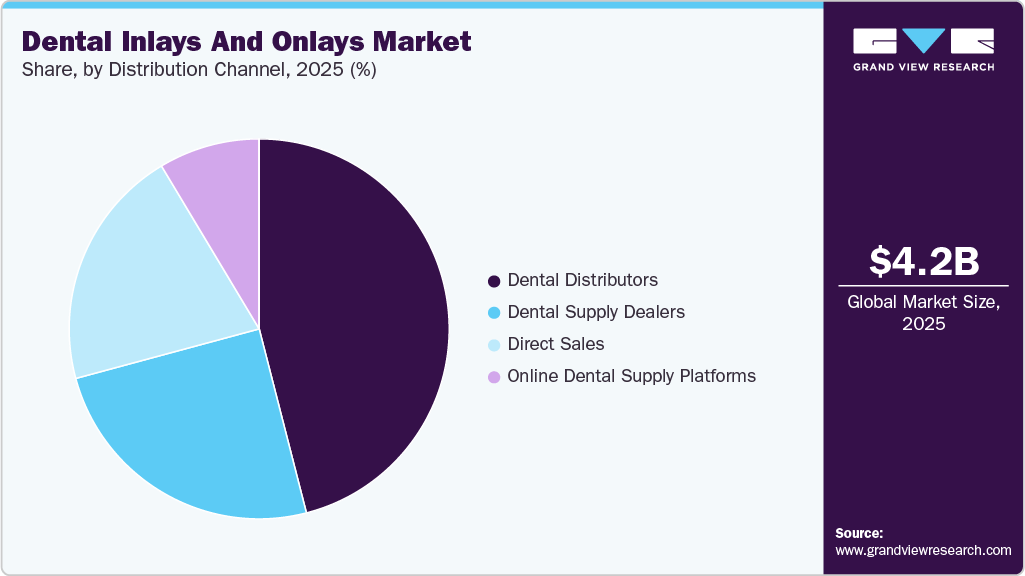
The online dental supply platforms segment is expected to grow at the fastest CAGR over the forecast period due to the increasing digitalization of dental procurement and the growing preference of clinics and laboratories for convenient online purchasing channels. Online platforms enable dental professionals to compare products, access a wide range of restorative materials, and place orders with faster delivery and transparent pricing. The expansion of e-commerce in healthcare procurement and increasing adoption of digital supply chains are encouraging dental practices to shift toward online purchasing models, accelerating the growth of online dental supply platforms.
Regional Insights
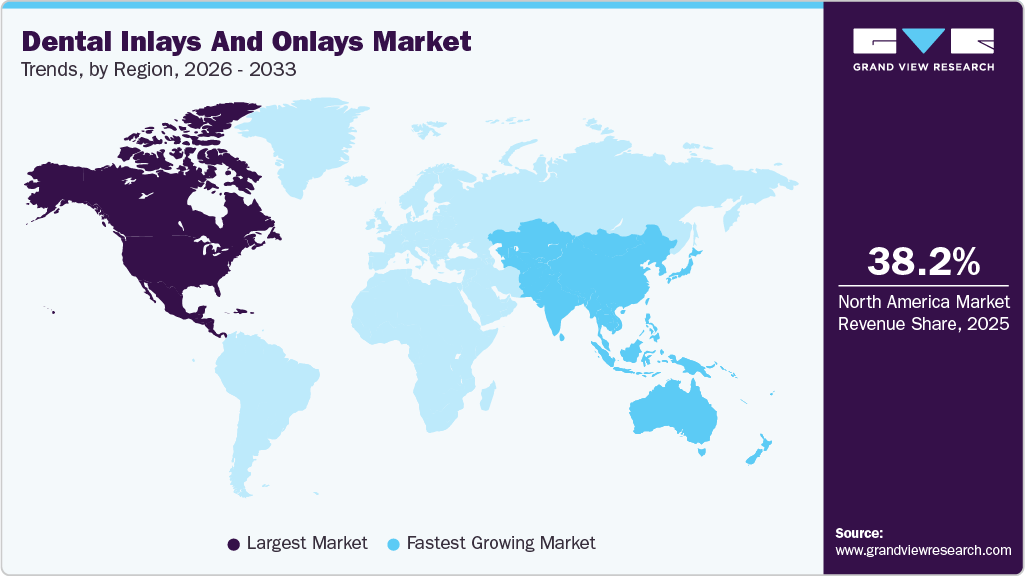
The North America dental inlays & onlays market dominated the global market and accounted for the largest revenue share of 38.23% in 2025. Market leadership is supported by well-established dental care infrastructure, high adoption of aesthetic and minimally invasive restorative procedures, and strong availability of advanced dental technologies such as CAD/CAM systems. The region benefits from high patient awareness regarding cosmetic dentistry, widespread dental insurance coverage, and strong adoption of digital dentistry workflows. Moreover, the growing prevalence of dental caries and tooth damage, combined with increasing demand for durable tooth-colored restorations, continues to drive procedural volumes across dental clinics and specialty dental centers.
U.S. Dental Inlays And Onlays Market Trends
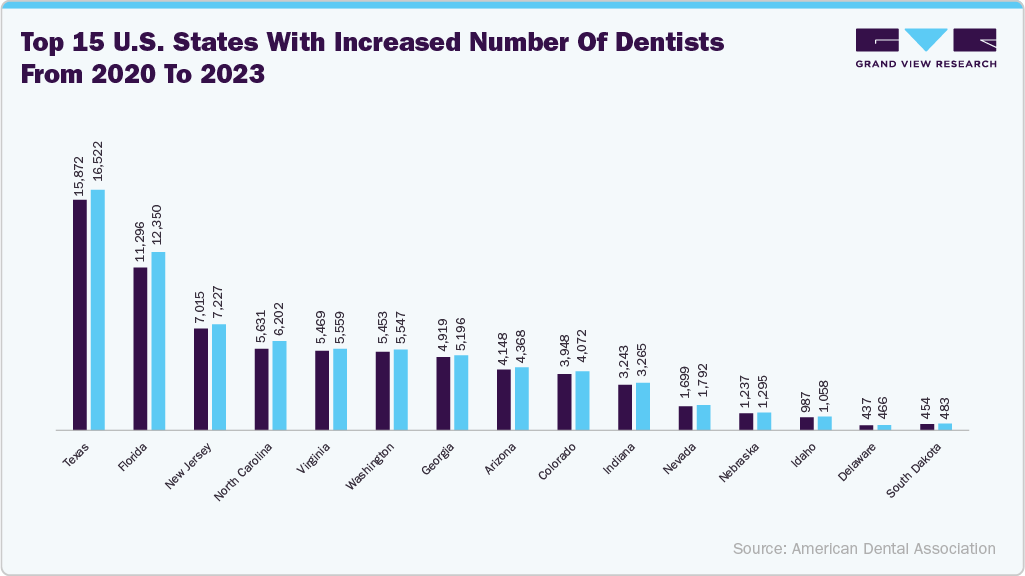
The U.S. represented the largest contributor to the North America dental inlays & onlays market in 2025, driven by high utilization of restorative dental procedures, strong adoption of digital dentistry technologies, and increasing patient demand for aesthetic dental restorations. According to the Centers for Disease Control and Prevention (CDC), around 90% of adults aged 20–64 years have experienced dental caries, highlighting a significant need for restorative treatments such as inlays, onlays, and crowns. Increasing integration of chairside CAD/CAM systems, intraoral scanners, and advanced ceramic restorative materials is further supporting the adoption of customized indirect restorations across dental clinics and specialized restorative centers.
The growing number of practicing dentists expands access to restorative dental care and increases the capacity to perform procedures such as fillings, crowns, inlays, and onlays. As the dental workforce grows, more patients receive timely treatment for dental caries and structural tooth damage, supporting the adoption of indirect restorative solutions such as inlays and onlays. A larger workforce also accelerates the integration of digital dentistry technologies and advanced restorative materials, further supporting the use of durable and aesthetic restorations in routine dental practice.
This workforce growth meets the rising demand driven by aging populations and the increasing prevalence of oral diseases, supporting sustained market expansion for dental inlays and onlays in the U.S. Older adults are more susceptible to tooth decay, worn restorations, and structural tooth damage, which often require indirect restorative treatments such as inlays and onlays. According to Vintage 2024 Population Estimates released by the United States Census Bureau, the U.S. population aged 65 and older increased by 3.1% to reach 61.2 million, while the population under 18 declined by 0.2% to 73.1 million between 2023 and 2024, highlighting the growing elderly population likely to require restorative dental care.
Europe Dental Inlays And Onlays Market Trends
The Europe dental inlays & onlays market held a substantial revenue share in 2025, supported by strong public healthcare systems, high standards of dental care, and increasing adoption of aesthetic restorative procedures. Growing patient awareness regarding oral health and cosmetic dentistry, along with rising demand for long-lasting tooth-colored restorations, is contributing to market growth. The region also benefits from early adoption of advanced restorative materials such as lithium disilicate ceramics and zirconia, as well as increasing integration of digital dentistry technologies within dental practices.
Dental inlays & onlays market in Germany represented a leading market within Europe in 2025, supported by advanced dental healthcare infrastructure, high levels of dental care utilization, and strong adoption of digital dentistry technologies. The country benefits from a large network of specialized dental clinics and laboratories equipped with CAD/CAM manufacturing capabilities. Additionally, Germany’s emphasis on technological innovation, precision dentistry, and high clinical standards continues to drive demand for customized indirect restorations such as ceramic inlays and onlays.
The UK dental inlays & onlays market is supported by increasing awareness of aesthetic dentistry and rising demand for minimally invasive restorative procedures. Expanding adoption of digital dentistry technologies, including intraoral scanning and CAD/CAM-based restoration fabrication, is supporting clinical efficiency and treatment precision. Additionally, increasing emphasis on preventive and restorative oral healthcare within both public and private dental practices is contributing to growing adoption of advanced restorative solutions.
Rising levels of dental disease further reinforce the need for restorative care. According to the Office for Health Improvement and Disparities, in May 2023, there were 42,180 hospital episodes of tooth extractions among children and young people aged 0–19 years in England, of which 26,741 cases (63%) were primarily caused by dental caries. The data also showed an 83% increase in caries-related tooth extraction episodes compared with 2020–2021, with the highest rate recorded in Yorkshire and the Humber (378 per 100,000 population) and the lowest in the East Midlands (71 per 100,000 population), while the national average was 205 per 100,000 population. This growing burden of dental decay highlights the increasing need for timely restorative interventions that can preserve natural teeth and prevent progression to severe damage or extraction.
Dental inlays & onlays market in France benefits from strong dental care infrastructure and increasing adoption of aesthetic restorative treatments. Rising demand for durable and natural-looking dental restorations, combined with the integration of advanced ceramic materials and digital manufacturing technologies, continues to support steady market growth. Increasing patient preference for conservative restorative procedures that preserve natural tooth structure is also contributing to expanding demand for inlays and onlays.
Asia Pacific Dental Inlays And Onlays Market Trends
The Asia Pacific dental inlays & onlays market is expected to grow at the fastest rate over the forecast period. Growth is supported by expanding dental care infrastructure, increasing awareness of oral health, rising disposable incomes, and growing demand for cosmetic dental procedures. Rapid expansion of private dental clinics and increasing adoption of digital dentistry technologies are further supporting the adoption of indirect restorative procedures across major economies in the region.
Dental inlays & onlays market in Japan represented a leading market within Asia Pacific in 2025, supported by advanced dental technology adoption, high standards of clinical precision, and strong utilization of restorative dental treatments. The country benefits from a well-developed dental healthcare system and early adoption of innovative restorative materials and digital workflows, which support demand for customized indirect restorations such as inlays and onlays.
Dental cavities remain a key factor driving restorative treatment demand in Japan. When decay becomes too extensive for fillings but does not require crowns, dentists commonly use inlays and onlays to restore tooth structure while preserving natural enamel. According to the Ministry of Health, Labour and Welfare, the 2024 School Health Survey reported cavity prevalence of 20.74% in kindergarteners, 32.89% in elementary students, 26.50% in junior high students, and 34.70% in high school students, indicating continued demand for restorative dental procedures.
The China dental inlays & onlays market is driven by expanding dental healthcare infrastructure, increasing patient awareness of aesthetic dentistry, and rapid growth in private dental clinics. Rising disposable incomes and growing demand for cosmetic dental procedures are contributing to increased adoption of high-quality indirect restorations. Additionally, increasing investments in digital dentistry technologies are supporting the expansion of advanced restorative treatments across the country.
Middle East & Africa Dental Inlays And Onlays Market Trends
The Middle East & Africa dental inlays & onlays market is experiencing gradual growth, supported by expanding dental healthcare infrastructure and increasing investments in advanced dental technologies. Rising awareness of oral health and growing demand for aesthetic dental treatments are contributing to market expansion, particularly across major urban healthcare centers and private dental clinics.
Dental inlays & onlays market in Saudi Arabia represents a key growth market within the MEA region, supported by significant healthcare investments, expanding private dental care networks, and increasing adoption of advanced dental technologies. Growing demand for cosmetic dentistry and restorative dental procedures is contributing to increased adoption of high-quality restorative materials and customized dental restorations.
The Kuwait dental inlays & onlays market is supported by ongoing healthcare modernization initiatives and increasing demand for aesthetic dental procedures. Growth is driven by expanding dental clinic infrastructure, rising patient awareness of oral health and cosmetic dentistry, and improving access to advanced restorative dental technologies.
Key Dental Inlays And Onlays Company Insights
Key companies operating in the global dental inlays & onlays market include Dentsply Sirona Inc., Ivoclar Vivadent AG, 3M Company, Kuraray Noritake Dental Inc., GC Corporation, COLTENE Group, VITA Zahnfabrik among others. Leading participants maintain competitiveness through continuous innovation in restorative materials and digital dentistry technologies. Companies are increasingly focusing on advanced ceramic materials, improved adhesive systems, and integration with CAD/CAM workflows to enhance restoration precision, durability, and aesthetics. Strategic partnerships with dental laboratories, investments in digital dentistry platforms, and strong global distribution networks remain key strategies supporting market expansion and product differentiation in the restorative dentistry segment.
Key Dental Inlays And Onlays Companies:
The following key companies have been profiled for this study on the dental inlays and onlays market.
- Ivoclar Vivadent
- GC Corporation
- Hunan Vsmile Biotechnology Co., Ltd.
- Bloomden Bioceramics
- Dentsply Sirona
- VITA Zahnfabrik
- Kuraray Noritake Dental
- Kulzer GmbH
- Kerr Corporation
- COLTENE Group
- Shofu Dental
- Zirkonzahn
- Amann Girrbach
- BISCO Dental
- Glidewell
- Solventum (3M)
- HASS Bio
- Upcera
- VOCO GmbH
Recent Developments
-
In September 2025, SprintRay acquired the dental product portfolio of EnvisionTEC (formerly part of Desktop Health), including over 200 patents and its trademarked cDLM technology. This strategic move integrates high-performance materials such as Flexcera nanoceramic resin into SprintRay’s ecosystem. The acquisition strengthens SprintRay’s leadership in the dental laboratory market while enabling cross-platform material validation for both chairside and lab-based 3D printing workflows.
-
In September 2025, Dentsply Sirona launched an expanded AI-powered CEREC workflow and the CEREC Go milling unit to accelerate single-visit dentistry. The update integrates DS Core with automated AI margin detection and design proposals, reducing manual input for restorations. CEREC Go provides a compact, "plug-and-play" wet-grinding solution capable of producing high-quality composite and hybrid ceramic inlays or onlays in approximately two minutes, significantly increasing clinical throughput.
-
In August 2025, Dentsply Sirona expanded its CEREC Tessera line with the Abutment Block, designed for chairside fabrication of hybrid abutments and screw-retained crowns. Featuring Advanced Lithium Disilicate (ALD), it offers 700+ MPa strength and a 4.5-minute firing time. The launch includes Calibra Abutment Resin Cement to ensure high-strength, opaque bonding for aesthetic implant restorations.
Dental Inlays And Onlays Market Report Scope
Report Attribute
Details
Market size value in 2026
USD 4.63 billion
Revenue forecast in 2033
USD 9.28 billion
Growth rate
CAGR of 10.4% from 2026 to 2033
Base year for estimation
2025
Historical data
2021 - 2024
Forecast period
2026 - 2033
Quantitative units
Revenue in USD million/billion, and CAGR from 2026 to 2033
Report coverage
Revenue forecast, company ranking, competitive landscape, growth factors, and trends
Segments covered
Restoration type, materials type, manufacturing technique, end use, distribution channel, region
Regional scope
North America; Europe; Asia Pacific; Latin America; Middle East & Africa
Country scope
U.S.; Canada; Mexico; UK; Germany; France; Italy; Spain; Denmark; Sweden; Norway; Japan; China; India; Australia; South Korea; Thailand; Brazil; Argentina; South Africa; Saudi Arabia; UAE; Kuwait
Key companies profiled
Ivoclar Vivadent; GC Corporation; Hunan Vsmile Biotechnology Co., Ltd.; Bloomden Bioceramics; Dentsply Sirona; VITA Zahnfabrik; Kuraray Noritake Dental; Kulzer GmbH; Kerr Corporation; COLTENE Group; Shofu Dental; Zirkonzahn; Amann Girrbach; BISCO Dental; Glidewell; Solventum (3M); HASS Bio; Upcera; VOCO GmbH.
Customization scope
Free report customization (equivalent up to 8 analysts working days) with purchase. Addition or alteration to country, regional & segment scope.
Pricing and purchase options
Avail customized purchase options to meet your exact research needs. Explore purchase options
Global Dental Inlays And Onlays Market Report Segmentation
This report forecasts revenue growth at global, regional, and country levels and provides an analysis of the latest industry trends in each of the sub-segments from 2021 to 2033. For this study, Grand View Research has segmented the global dental inlays and onlays market report based on restoration type, material type, manufacturing technique, end use, distribution channel, and region:
-
Restoration Type Outlook (Revenue, USD Million, 2021 - 2033)
-
Inlays
-
Onlays (Partial Crowns)
-
-
Material Type Outlook (Revenue, USD Million, 2021 - 2033)
-
Ceramic
-
Zirconia (Zirconium Dioxide)
-
Glass-Ceramics
-
Lithium Disilicate
-
-
Composite Resin
-
Microfilled Composite
-
Hybrid Composites
-
Others (Nanocomposite)
-
-
Metal Alloy
-
High Noble Gold
-
Noble Gold
-
Others (Base Metal Alloys)
-
-
Hybrid & Bioactive Materials
-
Resin-Ceramic Hybrids
-
Bioactive/Ion-Releasing Materials
-
-
-
Manufacturing Technique Outlook (Revenue, USD Million, 2021 - 2033)
-
Conventional Laboratory Fabrication
-
Digital CAD/CAM
-
Chairside CAD/CAM
-
Lab CAD/CAM
-
-
-
End Use Outlook (Revenue, USD Million, 2021 - 2033)
-
Dental Clinics
-
Hospitals
-
Dental Specialty Centers
-
-
Distribution Channel Outlook (Revenue, USD Million, 2021 - 2033)
-
Direct Sales
-
Dental Distributors
-
Dental Supply Dealers
-
Online Dental Supply Platforms
-
-
Regional Outlook (Revenue, USD Million, 2021 - 2033)
-
North America
-
U.S.
-
Canada
-
Mexico
-
-
Europe
-
UK
-
Germany
-
France
-
Italy
-
Spain
-
Denmark
-
Sweden
-
Norway
-
-
Asia Pacific
-
Japan
-
China
-
India
-
Australia
-
South Korea
-
Thailand
-
-
Latin America
-
Brazil
-
Argentina
-
-
Middle East & Africa
-
South Africa
-
Saudi Arabia
-
UAE
-
Kuwait
-
-
Frequently Asked Questions About This Report
b. The dental inlays and onlays market size was estimated at USD 4.19 billion in 2025 and is expected to reach USD 4.63 billion in 2026.
b. The dental inlays & onlays market is projected to grow at a CAGR of 10.42% from 2026 to 2033 to reach USD 9.28 billion by 2033.
b. Based on restoration type, onlays (partial crowns) segment dominated the dental inlays & onlays market in 2025.
b. Key companies in the global dental inlays & onlays market include Ivoclar Vivadent, GC Corporation, Hunan Vsmile Biotechnology Co., Ltd., Bloomden Bioceramics, Dentsply Sirona, VITA Zahnfabrik, Kuraray Noritake Dental are some of the major players in the dental inlays & onlays market
b. The dental inlays & onlays market is driven by the increasing prevalence of dental caries and tooth damage, which raises the demand for durable restorative treatments. Growing adoption of digital dentistry and CAD/CAM systems enables faster and more precise fabrication of indirect restorations, further supporting market growth.


Share this report with your colleague or friend.
Need a Tailored Report?
Customize this report to your needs — add regions, segments, or data points, with 20% free customization.


ISO 9001:2015 & 27001:2022 Certified
We are GDPR and CCPA compliant! Your transaction & personal information is safe and secure. For more details, please read our privacy policy.
Trusted market insights - try a free sample
See how our reports are structured and why industry leaders rely on Grand View Research. Get a free sample or ask us to tailor this report to your needs.