- Home
- »
- Consumer F&B
- »
-
Dairy Alternatives Market Size & Share, Industry Report 2033GVR Report cover
![Dairy Alternatives Market Size, Share & Trend Report]()
Dairy Alternatives Market (2025 - 2033) Size, Share & Trend Analysis Report By Source (Soy, Almond, Rice), By Product (Milk, Yogurt, Cheese), By Distribution Channel (Supermarket & Hypermarkets, Convenience Stores), By Region, And Segment Forecasts
- Report ID: GVR-1-68038-070-5
- Number of Report Pages: 122
- Format: PDF
- Historical Range: 2021 - 2024
- Forecast Period: 2026 - 2033
- Industry: Consumer Goods
- Report Summary
- Table of Contents
- Interactive Charts
- Methodology
- Download FREE Sample
-
 Download Sample Report
Dairy Alternatives Market Summary
The global dairy alternative market size was estimated at USD 36.83 billion in 2025 and is projected to reach USD 95.91 billion by 2033, growing at a CAGR of 12.7% from 2026 to 2033. The dairy alternative industry is growing as the prevalence of milk allergies among consumer’s increases.
Key Market Trends & Insights
- Asia Pacific dominated the global dairy alternatives market with the largest revenue share of 46.10% in 2025.
- The dairy alternatives industry in China accounted for the largest market revenue share in the Asia Pacific in 2025.
- By source, the soy segment led the market with the largest revenue share of 34.58% in 2025.
- By product, the milk segment led the market with the largest revenue share of 67.41% in 2025.
- By distribution channel, the supermarkets & hypermarkets segment led the market with the largest revenue share of 39.02% in 2025.
Market Size & Forecast
- 2025 Market Size: USD 36.83 Billion
- 2033 Projected Market Size: USD 95.91 Billion
- CAGR (2026-2033): 12.7%
- Asia Pacific: Largest market share in 2025
Furthermore, changing dietary preferences and the rising popularity of vegan diets are expected to drive dairy alternative industry expansion during the forecast period.According to the data published in April 2023 by the National Library of Medicine, approximately 65% of the global population is lactose intolerant. In addition, consumption data published by the U.S. Department of Agriculture (USDA) indicates that plant-based milk accounted for approximately 16% of total retail milk sales value in the United States in 2024, up from 8% in 2018.
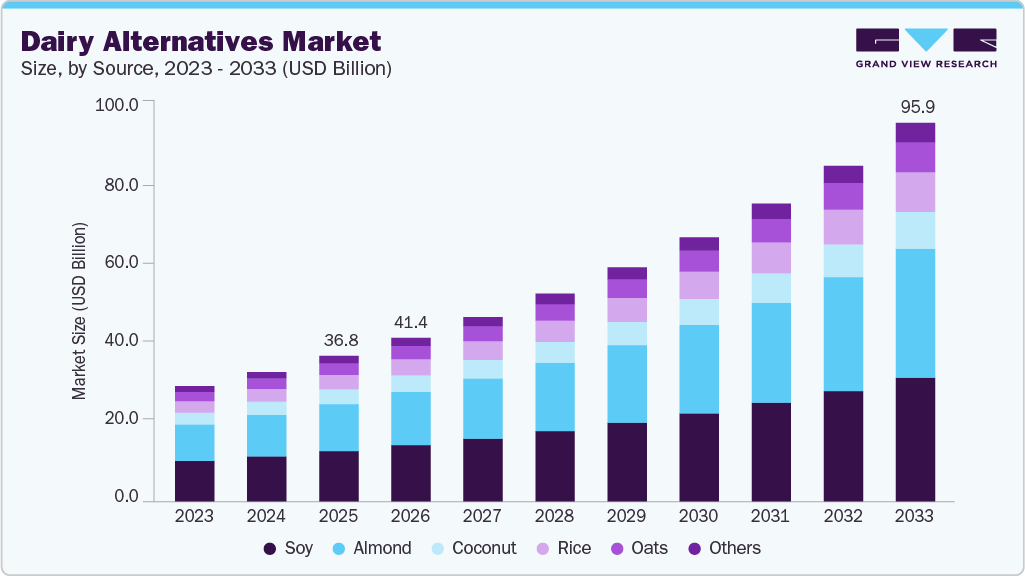
The growing prevalence of lactose intolerance and milk allergies is expected to be a major driver of the dairy alternatives industry during the forecast period. Lactose intolerance, a genetic condition, is particularly common among Southeast Asian populations. Consumers affected by this condition often turn to lactose-free, plant-based alternatives to enhance their intake of calcium and vitamins. In addition, increasing health consciousness among consumers and rising disposable incomes in both developed and developing countries are anticipated to further fuel the demand for dairy alternatives during the forecast period.
Increasing consumer awareness of a healthy diet, coupled with rising demand for foods lower in cholesterol and fat, is expected to open new avenues for the market players over the projected period. Lactose intolerance is a very common disorder in the world, and over 60% (according to the World Health Organization) of the global population has some level of milk allergy.
Over 30 million American adults are lactose intolerant. The pattern of primary lactose intolerance appears to have a genetic component, and specific populations show high levels of intolerance, such as approximately 95% of Asians, 60-80% of African Americans and Ashkenazi Jews, 80-100% of American Indians, and 50-80% of Hispanics. Lactose intolerance is least common among people of northern European origin, with a prevalence of only about 2%.
According to the National Institutes of Health (NIH), over 80% of the Southeast Asian population suffers from lactose intolerance, and this number is increasing with the increasing population in the region. As a result, the demand for lactose-free products such as soymilk, almond milk, coconut milk, oat milk, and rice milk is expected to grow over the forecast period. In addition, the growing popularity of lactose-free food products, such as desserts, snacks, yogurt, and cheese, is expected to positively impact the growth of the dairy alternatives industry.
Consumer Insights for Dairy Alternatives
The rising prevalence of dairy allergies and lactose intolerance among the global population fuels the dairy alternatives industry. For instance, according to the data published by the National Institute of Diabetes and Digestive and Kidney Diseases (NIH), about 68% of the world population has lactose malabsorption.
In addition, the increasing adoption of vegan and plant-based diets, driven by health, ethical, and environmental concerns, is further propelling the growth of the dairy alternatives industry. Consumer awareness of the health benefits of plant-based products, combined with innovations in alternative dairy offerings such as almond, oat, and soy milks, is expanding the dairy alternatives industry. Moreover, rising disposable incomes, especially in developed and emerging markets, along with greater availability and accessibility of these products, are driving the growing demand for dairy alternatives.
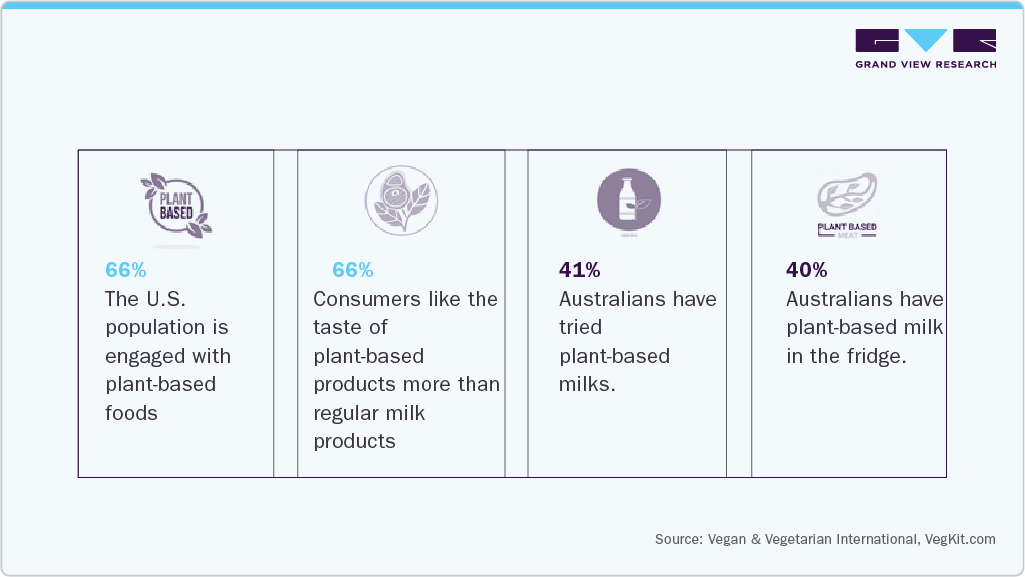
Plant-based milk remained the largest segment of the dairy alternatives category, accounting for nearly 67% of the total plant-based dairy sector. The institute also reported that nearly 42% of households in the United States purchased plant-based milk at least once in 2023, reflecting widespread consumer acceptance and mainstream adoption.
In addition, data from the National Health Service (NHS) confirm that lactose intolerance affects approximately 1 in 10 adults in the United Kingdom, which has led to increased adoption of lactose-free and plant-based dairy substitutes. This health-driven shift has been reinforced by government dietary guidance promoting diversified protein sources and reduced saturated fat intake.
Market Concentration & Characteristics
The global dairy alternatives industry has witnessed significant innovation in recent years, with companies continually developing new plant-based products that mimic dairy's taste, texture, and nutritional profile. For instance, in August 2023, Chobani, LLC introduced a creamy pumpkin-spiced flavored oat drink made with whole oat grains called Chobani Oat Milk Pumpkin Spice. The new product is vegan-friendly, rich in calcium, and free of dairy and lactose.
The dairy alternatives sector has seen a growing trend of mergers and acquisitions, as large food and beverage companies acquire smaller plant-based brands to tap into the growing demand. For instance, in October 2024, Rude Health, a plant-based milk firm, was acquired by Finland-based company Oddlygood. Through this acquisition, Oddlygood aims to become a leading company in the UK in the dairy alternatives industry.
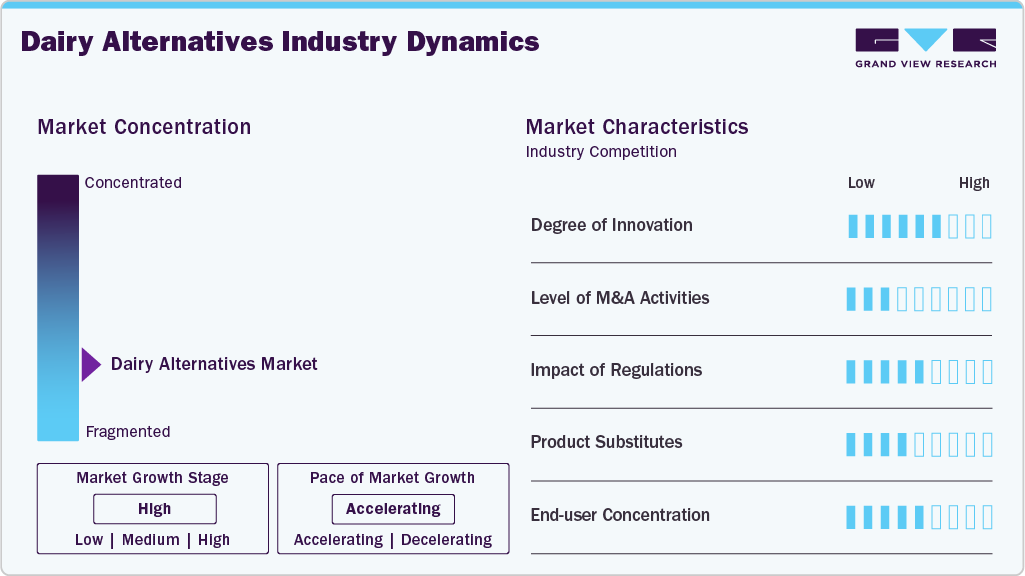
The regulation of dairy alternatives varies for each region and country. In regions like the EU and the U.S., regulations require clear labeling of plant-based dairy alternatives to distinguish them from traditional dairy. Regulations also cover ingredient sourcing, allergen labeling, and sustainability claims, which can vary from region to region. In Canada, Section B.08.003 of the Food and Drug Regulations (FDR) states that milk: “shall be the normal lacteal secretion obtained from the mammary gland of the cow, genus Bos.” In Europe, milk and milk products are regulated by the European Union (EU), which has banned the addition of carrageenan, an almond milk additive, in infant formulas. EU member states currently have varying definitions of lactose-free, but the EU is working on a uniform standard under the Food Information for Consumers (FIC) regulations.
The dairy alternatives industry faces competition from traditional dairy as well as other substitutes such as nut milk, hemp milk, rice milk, and even lab-grown dairy products. However, the demand for plant-based substitutes is rising due to health, ethical, and environmental concerns, especially among vegan, lactose-intolerant, and environmentally-conscious consumers. Key players are introducing innovative formulations of non-dairy products. For instance, in February 2023, PlantBaby launched organic macadamia milk under its Kiki milk portfolio.
The dairy alternatives industry is increasingly concentrated across various consumer segments. The global market shows a higher concentration in developed regions such as North America and Europe, where health trends and veganism are on the rise. However, emerging markets are beginning to see increased demand due to growing awareness and adoption of plant-based lifestyles, expanding the global dairy alternatives industry.
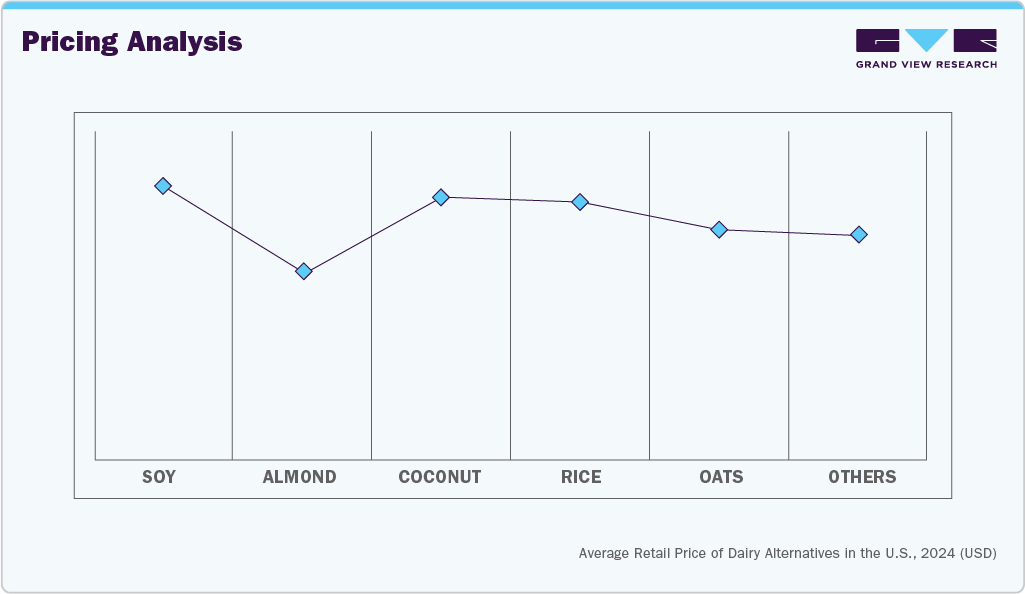
The pricing analysis of dairy alternatives in the U.S. indicates that these products generally command a premium over traditional dairy products due to the use of specialized ingredients such as almonds, oats, soy, and coconut. Plant-based milk, yogurt, and cheese are the most widely available, with pricing influenced by factors such as the type of plant base, nutritional content, ingredient quality, and brand positioning. Plant-based butter and ice cream, often marketed as dairy-free and lactose-free options, vary in price depending on formulation and added health benefits, such as probiotics or fortified vitamins.
Source Insights
The soy segment led the market with the largest revenue share of 34.58% in 2025. The segment focusing on soy is anticipated to expand, as soymilk accounts for a significant share of dairy alternatives consumed globally and is regarded as a traditional staple in East Asian diets. The growth of this segment is expected to be driven by the nutritional benefits of soy, particularly its higher protein content compared to other dairy alternatives.
Moreover, soy farming requires less water, resulting in lower eutrophication than other crops such as oats and almonds. In addition, increasing awareness regarding lactose intolerance and milk allergies is likely to positively influence the global demand for soymilk. The health benefits of soymilk include reduced cholesterol levels, reduced cancer risk, and reduced obesity. Furthermore, it contributes to better cardiovascular health and lowers the likelihood of various issues related to post-menopause.
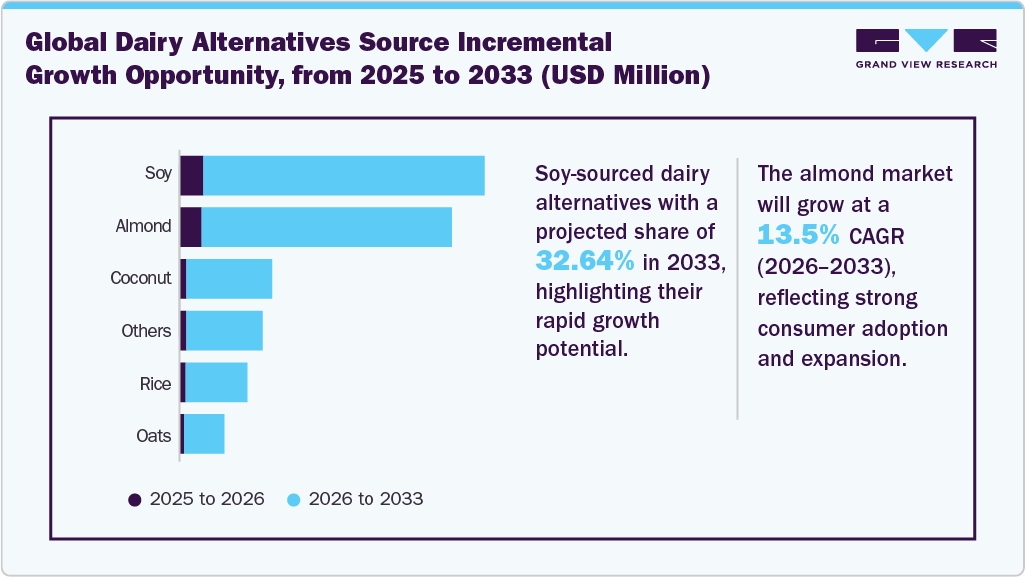
The almond segment is projected to grow at the fastest CAGR of 13.5% from 2026 to 2033. Almonds are the second most popular dairy alternative, owing to their high Vitamin B content, which boosts the body's metabolism and helps it burn fat and calories more effectively. Almonds are a rich source of protein, vitamin E, calcium, magnesium, and vitamin B, and they contain essential minerals such as iron, phosphorus, zinc, and copper that help control blood pressure, improve blood oxygenation, and protect the body against disease.
Coconut-based products are becoming a significant driver in the dairy alternatives industry, due to their unique flavor profile, nutritional benefits, and appeal to those with dietary restrictions. Coconuts are rich in healthy fats, particularly medium-chain triglycerides (MCTs), and are perceived as beneficial for heart health and weight management.
The oats source market is projected to grow at a CAGR of 13.0% from 2026 to 2033. Oats have emerged as a leading source of dairy alternatives in the market, driven by their mild flavor, creamy texture, and nutritional benefits. The increasing shift toward vegan food and drinks and rising awareness about dairy substitutes have fueled the demand for oat milk and products in the food and beverage industry globally. The key players are introducing new dairy-alternative products made from oats to meet rising demand.
Product Insights
The milk segment led the market with the largest revenue share of 67.41% in 2025. The growing demand for plant-based milk in the U.S. market is driven by a combination of health, environmental, and ethical factors. The growing elderly population has led to a preference for milk-based dairy alternatives in developed regions such as North America and Europe. However, concerns about the health effects of soymilk, particularly for breast cancer survivors, may slow market growth. On the other hand, the rising demand for low-calorie foods, along with the increasing popularity of plant-based nutritional products, is expected to drive the demand for milk-based dairy alternatives in the coming years. For instance, according to the published data, plant-based milk has a high repeat purchase rate of 75%, while vegan milk contributes 35% of the plant-based food market.
The ice cream market is projected to grow at the fastest CAGR of 14.2% from 2026 to 2033. The growing demand for dairy-free desserts, such as soy, rice, almond, and coconut-based ice creams, is anticipated to drive the market growth in the coming years. As consumers increasingly shift towards low-calorie desserts made from soy and almond milk, the demand for plant-based ice cream products is expected to rise. According to the data published by The Good Food Institute Europe, the plant-based ice cream unit sales between 2020 and 2022 increased by 15%. To enhance the flavor, various flavoring and masking agents have been developed, making these ice creams more appealing to taste-conscious consumers. In addition, these ice creams are priced lower than their dairy counterparts, attracting both lactose-tolerant individuals and the vegan population. With these factors in play, the market for dairy-alternative ice cream is poised for significant growth over the forecast period. The key players are introducing new products in the category to cater to changing consumer preferences. For instance, in February 2023, Valsoia, an Italian company known for its plant-based products, introduced an exciting range of vegan gelato inspired by traditional Italian flavors.
Distribution Channel Insights
The supermarkets & hypermarkets segment led the market with the largest revenue share of 39.02% in 2025. The rising investments by international retailers aiming to establish a presence in the rapidly expanding market, the growth of domestic retailers seeking to expand their customer base, and the increasing purchasing power of consumers in developing economies are expected to boost the presence of hypermarkets and supermarkets in these regions. For instance, foreign retailers such as Lotte Shopping and Central Group are investing in building hypermarkets and supermarkets in Vietnam to attract shoppers.
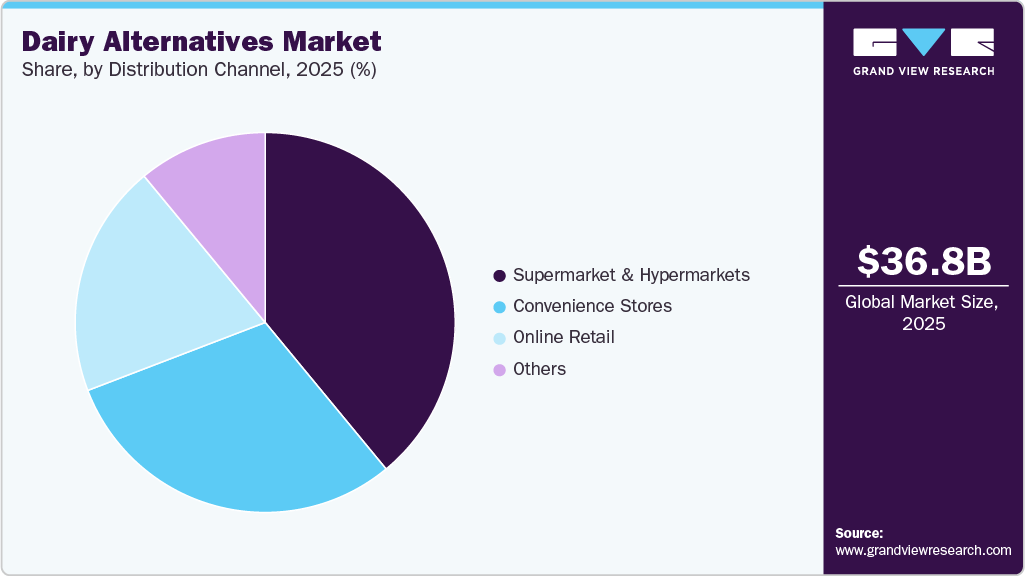
The online segment is projected to grow at the fastest CAGR of 13.9% from 2026 to 2033. Sales of dairy alternatives through online channels are expected to grow the most in the coming years. Factors such as the increasing number of internet users, easy access to a variety of brands, busy lifestyles, 24/7 product availability, the convenience of shopping, and the wide selection of products are driving the global sales of dairy alternatives online. In addition, the ability for customers to compare prices, browse numerous brands, and read customer reviews is further boosting online sales. The presence of discussion forums, discounts and offers, easy payment options, and various promotional strategies is also expected to contribute to the market growth during the forecast period.
Regional Insights
The dairy alternatives market in North America is anticipated to grow at a significant CAGR during the forecast period. The growing consumer demand for plant-based products with high nutritional value is projected to positively influence the market growth. The rising prevalence of milk intolerance in North America is expected to boost the demand for non-dairy alternatives like soymilk and almond milk. North America is anticipated to hold a significant market share during the forecast period, driven by the growing popularity of innovative plant-derived products. Consumers in the region are increasingly choosing non-dairy options over cow's milk, as these alternatives offer superior nutritional benefits and lower calorie content. This increasing demand is encouraging the key companies in the region to introduce new products in the category. For instance, in March 2025, Danone expanded its plant-based portfolio under the Silk brand by introducing a new line of high-protein oat milk and plant-based yogurt alternatives across the U.S. and Canada.
U.S. Dairy Alternatives Market Trends
The dairy alternatives market in the U.S. accounted for the largest market revenue share in North America in 2025. The Dairy Farmers of America, which represents over 30% of milk producers in the United States, reported that a decline in milk sales led to a USD 1.45 drop in the average milk price, driven by the growing popularity of soy, oat, nut, and other milk alternatives in grocery stores, coffee shops, and other outlets nationwide.According to the National Institute of Diabetes and Digestive and Kidney Diseases (NIH), approximately 36% of Americans experience lactose malabsorption. The U.S. market is expanding amid growing health concerns. In addition, the dairy alternatives industry in the U.S. is benefiting from innovations in product offerings, including fortified alternatives with added nutrients, enhanced taste profiles, and dairy-free cheese and yogurt options.
Europe Dairy Alternatives Market Trends
The dairy alternatives market in Europe is anticipated to grow at a significant CAGR during the forecast period. The increasing demand for plant-based products with high nutritional value is anticipated to drive the market growth in Europe. The rising prevalence of milk allergies and health concerns related to harmful additives in dairy products is expected to further boost the demand for dairy alternatives like soymilk, almond milk, and rice milk, among others. According to the data published, approximately 54% of European consumers prefer plant-based milk. The dairy alternatives industry in Europe is expected to grow due to the rising demand for healthy food and beverage options in the region. Dairy alternative beverages are frequently consumed as substitutes for traditional dairy drinks.
The UK dairy alternatives market held a substantial market share in Europe in 2025. Plant-based milk has moved into the mainstream, with more than 1 in 10 of Pret-a-Manger's hot drinks in the UK now made with dairy alternatives, particularly organic rice-coconut milk and soy milk. The perception of milk as a healthy food is being challenged due to growing concerns over the use of bovine antibiotics, increasing awareness of animal cruelty, and a rise in lactose intolerance diagnoses. In 2025, plant-based milk adoption in the UK continues to grow and is now considered mainstream consumption. According to recent market data, just under 35% of UK households now buy plant-based milk products, and oat milk alone makes up about 40% of plant-milk volume in Britain, with supermarket sales rising year-on-year.
The dairy alternatives market in Germany is projected to experience significant growth due to the increasing demand for plant-based products from consumers. Rising health concerns have shifted consumer preferences toward lactose-free, low-fat, and plain soy-based products in the region. Soymilk has been a prominent product segment in Germany dairy alternatives industry. In addition, almond milk is expected to capture a larger share of the German market, driven by the increasing popularity of other non-dairy beverages, such as rice and oat drinks, which are expected to positively influence industry growth.
Asia Pacific Dairy Alternatives Market Trends
Asia Pacific dominated the global dairy alternatives market with the largest revenue share of 46.10% in 2025 and is projected to grow at the fastest CAGR during the forecast period. The growing consumer awareness about health and nutrition, combined with the rising prevalence of lactose intolerance in the Asia Pacific population, has led to a surge in the consumption of plant-based milk products in recent years. In addition, ongoing innovations in dairy alternatives are expected to further drive the Asia Pacific dairy alternatives industry growth in the region in the near future. Almond-based dairy alternatives have gained popularity in the Asia Pacific in recent years, driven by the various health benefits of almonds, including their ability to lower blood sugar levels, cholesterol, and blood pressure, among others.
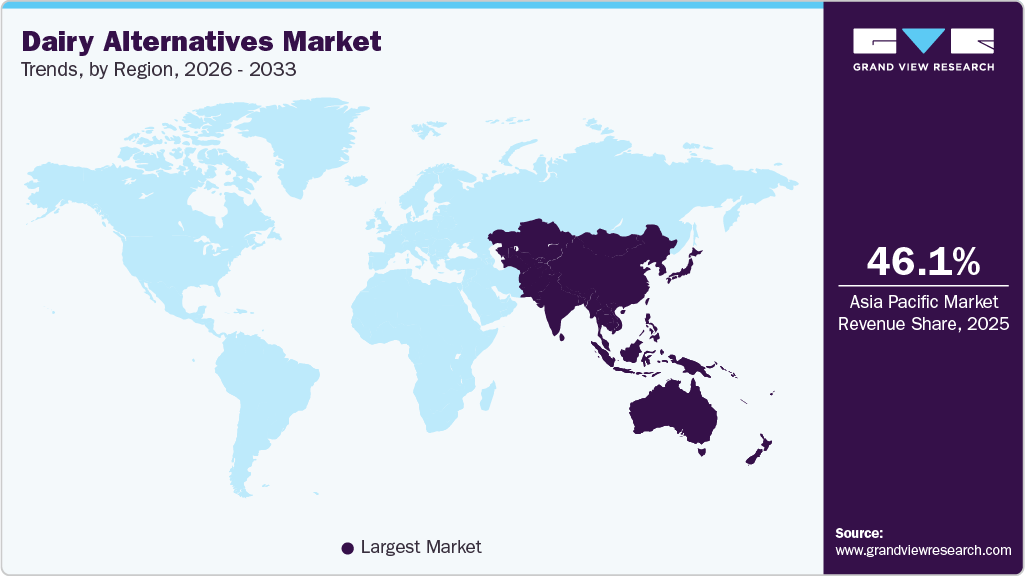
The dairy alternatives market in China accounted for the largest market revenue share in the Asia Pacific in 2025, due to the increasing demand for plant-based products. Due to a series of food safety scandals, parents are placing greater emphasis on infant nutrition and the quality of milk formula. Rising disposable incomes and growing awareness of infant allergies are expected to fuel the growth of the China market in the coming years. In addition, increasing health concerns are driving consumer preference for lactose-free, low-fat, and gluten-free dairy alternative products.
The Australia dairy alternatives market is anticipated to grow at a significant CAGR during the forecast period. Consumers are increasingly choosing dairy alternatives over traditional milk products for food and beverage applications due to the health benefits. According to the data published in July 2024, about 25% of the population in Australia is lactose intolerant. The rising consumer preference for foods free from chemicals and additives is expected to drive market growth in the coming years. Soy has been extensively used in Australia for producing dairy alternatives in recent years. The growing demand for soy-based beverages, known for their nutritional benefits, such as reducing the risk of cholesterol, cancer, and obesity, is likely to further fuel Australia market growth during the forecast period. This increased demand and changing preferences are encouraging key players to introduce new products.
The dairy alternatives market in India is expanding at a rapid pace, as the growing lactose intolerant population in India is driving consumers to seek dairy-free alternatives to traditional dairy products, thereby fueling the market growth during the forecast period. In addition, the increasing adoption of vegan diets and heightened consumer awareness about the importance of reducing animal cruelty are expected to further accelerate the growth of the India dairy alternatives industry in the coming years.
Latin America Dairy Alternatives Market Trends
The dairy alternatives market in Latin America is growing. Rising health concerns and the growing popularity of the nutritional benefits of dairy alternatives in food and beverage applications are expected to drive market growth. The global decline in dairy product consumption is likely to affect dairy intake in the Central and South American markets. In addition, consumers in the region are expected to increasingly opt for flavorful, nutritious dairy alternative products in the coming years. In addition, emerging countries such as Brazil, Argentina, Chile, and Venezuela are expected to offer significant growth opportunities for companies operating in the region.
Middle East & Africa Dairy Alternatives Market Trends
The dairy alternatives market in the Middle East and Africa is projected to experience significant growth during the forecast period, driven primarily by increasing consumer awareness of the product benefits and the rising demand for plant-based products. Saudi Arabia is expected to be a key market due to its growing population and rising disposable income. However, the expanding dairy industry in the region may pose a challenge to the market growth over the forecast period.
Key Dairy Alternatives Company Insights
Many brands in the global dairy alternatives industry have identified untapped opportunities within their product lines and are taking steps to address these market gaps. This often involves developing new product designs or marketing campaigns to meet consumer needs and preferences better.
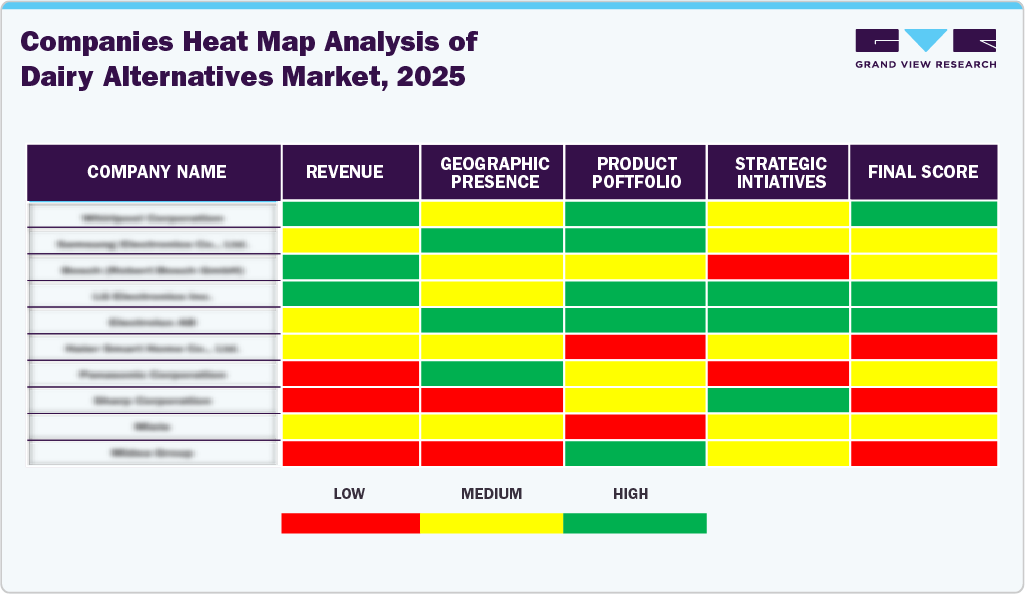
Key Dairy Alternatives Companies:
The following key companies have been profiled for this study on the dairy alternatives market.
- Chobani, LLC
- Danone S.A.
- Hain Celestial
- Daiya Foods
- Eden Foods
- NUTRIOPS, SL
- Earth’s Own
- SunOpta
- Melt Organic
- Oatly AB
- Blue Diamond Growers
- Ripple Foods
- Vitasoy International Holdings Ltd
- Organic Valley
- Living Harvest
Recent Developments
-
In January 2025, Organic Valley expanded its product line to oat-based creamers and launched organic oat-based creamers sourced from organic farms based in the U.S. The new creamers will be available across the U.S. in 3 variants: vanilla, caramel, oatmeal cookie, and cinnamon spice.
-
In October 2024, SunOpta expanded Dream Oat Milk to an additional 6,700 stores across North America through collaborating with an unnamed large coffee chain.
Dairy Alternatives Market Report Scope
Report Attribute
Details
Market value size in 2026
USD 41.44 billion
Revenue Forecast in 2033
USD 95.91 billion
Growth rate
CAGR of 12.7% from 2026 to 2033
Base year for estimation
2025
Historical data
2021 - 2024
Forecast period
2026 - 2033
Quantitative units
Revenue in USD million/billion, and CAGR from 2026 to 2033
Report coverage
Revenue forecast, company ranking, competitive landscape, growth factors, and trends
Segments covered
Source, product, distribution channel, region
Regional scope
North America; Europe; Asia Pacific; Latin America; and Middle East & Africa
Country scope
U.S.; Canada; Mexico; Germany; UK; France; Italy; Spain: China; Japan; India; Australia; Brazil; Argentina; South Africa
Key companies profiled
Chobani, LLC; Danone S.A.; Hain Celestial; Daiya Foods; Eden Foods; NUTRIOPS, SL; Earth’s Own; SunOpta; Melt Organic; Oatly AB; Blue Diamond Growers; Ripple Foods; Vitasoy International Holdings Ltd; Organic Valley; Living Harvest
Customization scope
Free report customization (equivalent up to 8 analysts’ working days) with purchase. Addition or alteration to country, regional & segment scope.
Pricing and purchase options
Avail customized purchase options to meet your exact research needs. Explore purchase options Global Dairy Alternatives Market Report Segmentation
This report forecasts revenue growth at the regional and country levels and provides an analysis of the latest industry trends and opportunities in each of the sub-segments from 2021 to 2033. For this study, Grand View Research has segmented the global dairy alternatives market report based on the source, product, distribution channel, and region:
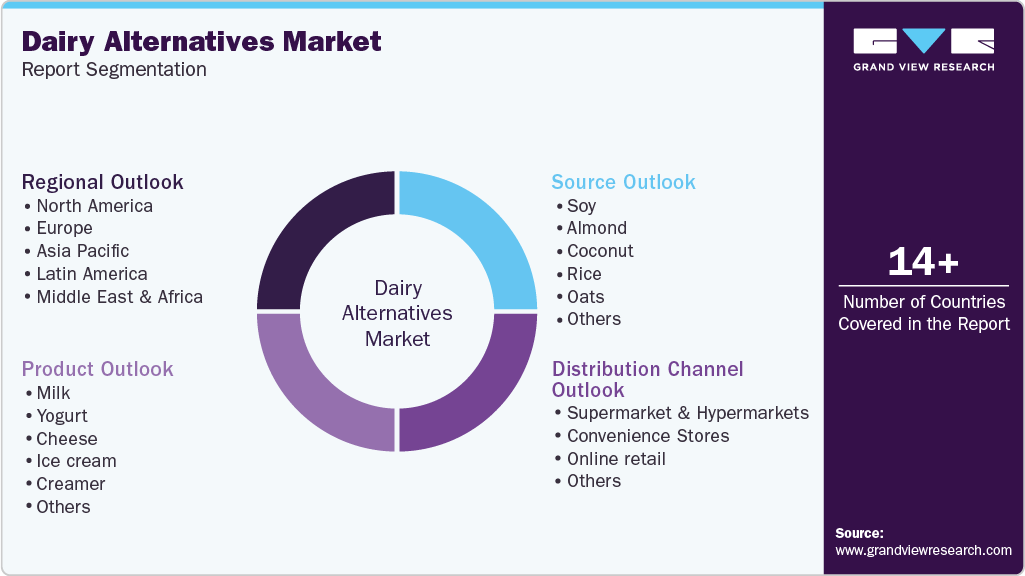
-
Source Outlook (Volume, Tons; Revenue, USD Million, 2021 - 2033)
-
Soy
-
Almond
-
Coconut
-
Rice
-
Oats
-
Others
-
-
Product Outlook (Volume, Tons; Revenue, USD Million, 2021 - 2033)
-
Milk
-
Yogurt
-
Cheese
-
Ice cream
-
Creamer
-
Others
-
-
Distribution Channel Outlook (Volume, Tons; Revenue, USD Million, 2021 - 2033)
-
Supermarket & Hypermarkets
-
Convenience Stores
-
Online retail
-
Others
-
-
Regional Outlook (Volume, Tons; Revenue, USD Million, 2021 - 2033)
-
North America
-
U.S.
-
Canada
-
Mexico
-
-
Europe
-
Germany
-
UK
-
France
-
Italy
-
Spain
-
-
Asia Pacific
-
China
-
Japan
-
India
-
Australia
-
-
Latin America
-
Brazil
-
Argentina
-
-
Middle East & Africa
-
South Africa
-
-
Frequently Asked Questions About This Report
b. The global dairy alternatives market was estimated at USD 36.83 billion in 2025 and is expected to reach USD 41.44 billion in 2026.
b. The global dairy alternatives market is expected to grow at a compound annual growth rate of 12.7% from 2026 to 2033 to reach USD 95.91 billion by 2033.
b. The soy segment dominated the dairy alternatives market with a share of 35.08% in 2023. Drinking soy milk is popular as an alternative therapy among women to increase estrogen levels, which is further expected to drive the market.
b. Some of the key market players in the dairy alternatives market are Chobani, LLC, Danone S.A., Hain Celestial, Daiya Foods, Eden Foods, NUTRIOPS, SL, Earth’s Own, SunOpta, Melt Organic, Oatly AB, Blue Diamond Growers, Ripple Foods, Vitasoy International Holdings Ltd, Organic Valley, and Living Harvest
b. The market growth is fueled by the increasing prevalence of milk allergies among consumers. Moreover, the changing dietary preferences and the rising popularity of vegan diets are expected to drive market expansion during the forecast period. Additionally, increasing health consciousness among consumers and rising disposable incomes in both developed and developing countries are anticipated to further fuel the demand for dairy alternatives industry growth.
b. Asia Pacific dominated the dairy alternatives market with a share of 45.80% in 2025, driven by the growing consumer awareness about health and nutrition, combined with the rising prevalence of lactose intolerance in the Asia Pacific population, has led to a surge in the consumption of plant-based milk products in recent years.


Share this report with your colleague or friend.
Need a Tailored Report?
Customize this report to your needs — add regions, segments, or data points, with 20% free customization.


ISO 9001:2015 & 27001:2022 Certified
We are GDPR and CCPA compliant! Your transaction & personal information is safe and secure. For more details, please read our privacy policy.
Trusted market insights - try a free sample
See how our reports are structured and why industry leaders rely on Grand View Research. Get a free sample or ask us to tailor this report to your needs.