Creatine Supplements Market Summary
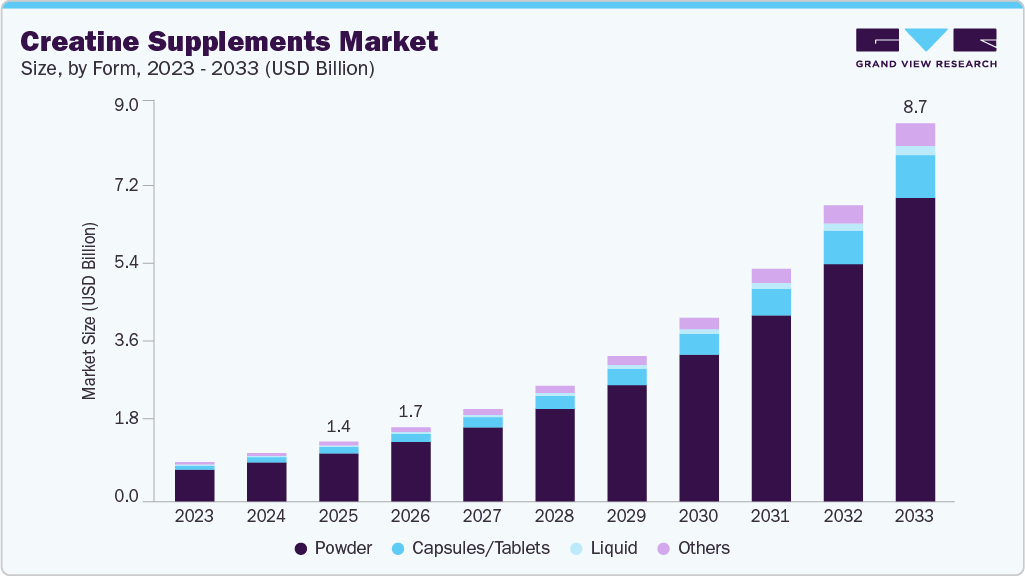
The global creatine supplements market size was estimated at USD 1.37 billion in 2025 and is projected to reach USD 8.68 billion by 2033, growing at a CAGR of 26.2% from 2026 to 2033. Increasing awareness of fitness and the benefits of creatine supplementation for improving athletic performance, muscle mass, and strength is driving market growth.
Key Market Trends & Insights
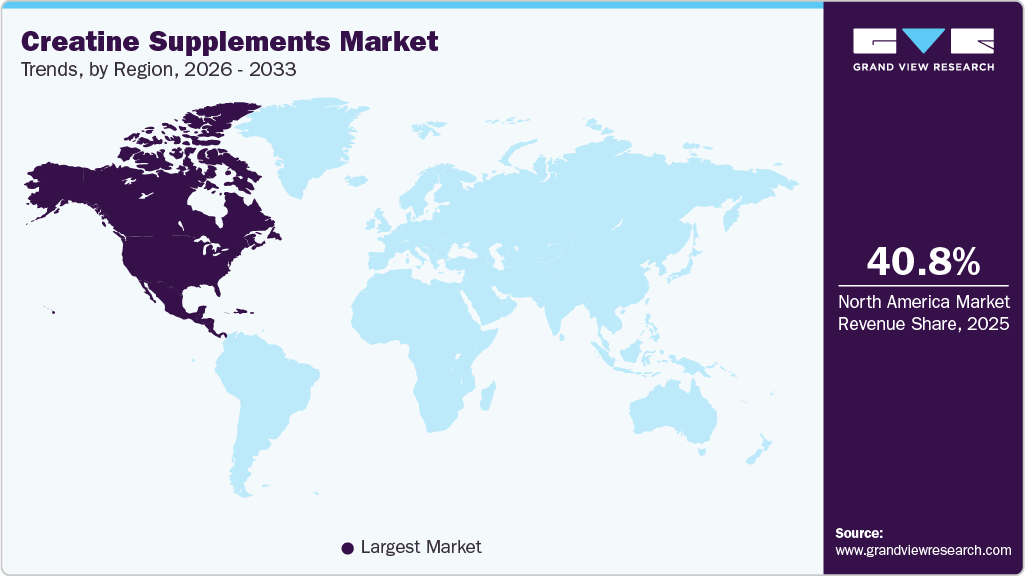
- North America led the market with a share of 40.8% in 2025.
- By form, the powdered segment led the market, accounting for a share of 80.4% in 2025.
- By distribution channel, the online segment led the market, with a share of 37.6% in 2025.
Market Size & Forecast
- 2025 Market Size: USD 1.37 Billion
- 2033 Projected Market Size: USD 8.68 Billion
- CAGR (2026-2033): 26.2%
- North America: Largest market in 2025
As sedentary lifestyles and unhealthy diets contribute to the rise in lifestyle diseases such as diabetes, cardiovascular diseases, obesity, and cancer, there is a growing emphasis on health and fitness. Creatine supplements are widely used in the sports and fitness industry to enhance athletic performance, increase muscle mass, and improve strength. Creatine is a naturally occurring compound found in muscle cells and is also present in various foods, particularly in red meat and seafood. The primary role of creatine in the body is to help produce energy during high-intensity exercise or heavy lifting. Given its efficacy and safety, creatine supplements have gained immense popularity among athletes, bodybuilders, and fitness enthusiasts.
Creatine stands as one of the most established and renowned ingredients in sports nutrition. Athletes have relied on creatine for years to enhance exercise capacity and performance, increase muscle mass, and aid in muscle recovery. Despite the introduction and adoption of newer ingredients in the sports nutrition market over the years, the demand for creatine has remained consistently robust and even grown.
Creatine is backed by substantial research demonstrating its effectiveness across various sports nutrition endpoints. The benefits of creatine are extensive, encompassing enhanced force and power output, increased strength and anaerobic threshold, and improved workout capacity.
The exercise preferences of active millennial men and women significantly influence the demand for creatine supplements. As Millennials increasingly participate in high-intensity and endurance activities, creatine supplements have become an essential part of their fitness regimens. A study by Glanbia PLC found that strength training and CrossFit are the most common forms of exercise among active millennial men, with 24% engaging in these activities. These forms of exercise are known for their high intensity and demand substantial muscular strength, endurance, and recovery. Creatine is renowned for its ability to enhance muscle strength, power output, and recovery, making it an ideal supplement for strength training and CrossFit. The increasing demand for creatine supplements among millennial men is driven by their desire to improve performance, increase muscle mass, and reduce recovery time.
The exercise preferences of active millennials, including strength training, CrossFit, running, cycling, swimming, and holistic fitness activities, create a substantial market for creatine supplements. The specific benefits of creatine, such as enhanced muscle strength, power, endurance, and recovery, align perfectly with the fitness goals and routines of millennial men and women. As these demographics continue to prioritize fitness and seek effective ways to enhance their performance, the demand for creatine supplements is expected to grow, driving the overall expansion of the creatine supplements industry.
Form Insights
The powdered creatine supplements market segment accounted for the largest revenue share of 80.4% in 2025. Powdered creatine supplements are driving significant growth in the market due to their convenience, versatility, and effectiveness. These supplements are easy to use, typically mixed into water or shakes, making them convenient for consumption before or after workouts. They offer a customizable dosage, allowing users to adjust their intake based on their specific fitness goals and body requirements, appealing to athletes and fitness enthusiasts alike.
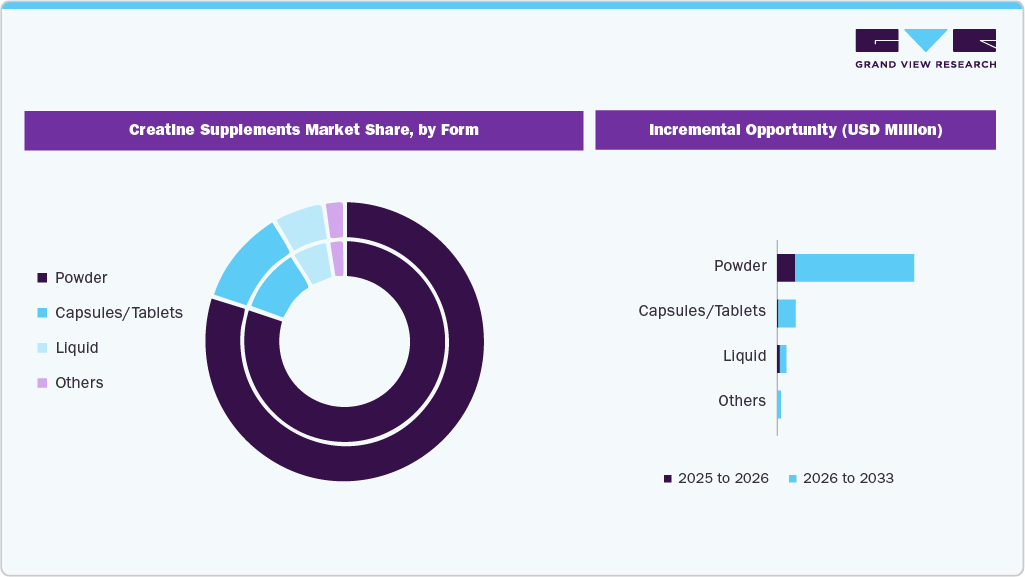
The capsule/tablet creatine supplements market segment is expected to grow at a CAGR of 26.6% from 2026 to 2033. Capsules and tablets of creatine supplements are growing rapidly due to their convenience, precise dosage control, portability, and expanding form offerings. These factors collectively contribute to their appeal and widespread adoption among consumers seeking effective and hassle-free ways to support their fitness goals and overall well-being.
Distribution Channel Insights
Sales through online retail stores accounted for a revenue share of 37.6% in 2025. These platforms offer unmatched convenience, allowing consumers to browse, compare, and purchase creatine supplements from the comfort of their homes or on the go via mobile devices. The extensive form selection available online enables consumers to explore various brands and formulations, read reviews, and make informed purchasing decisions tailored to their specific needs. Competitive pricing, frequent discounts, and bulk purchase options online appeal to price-conscious consumers seeking value.
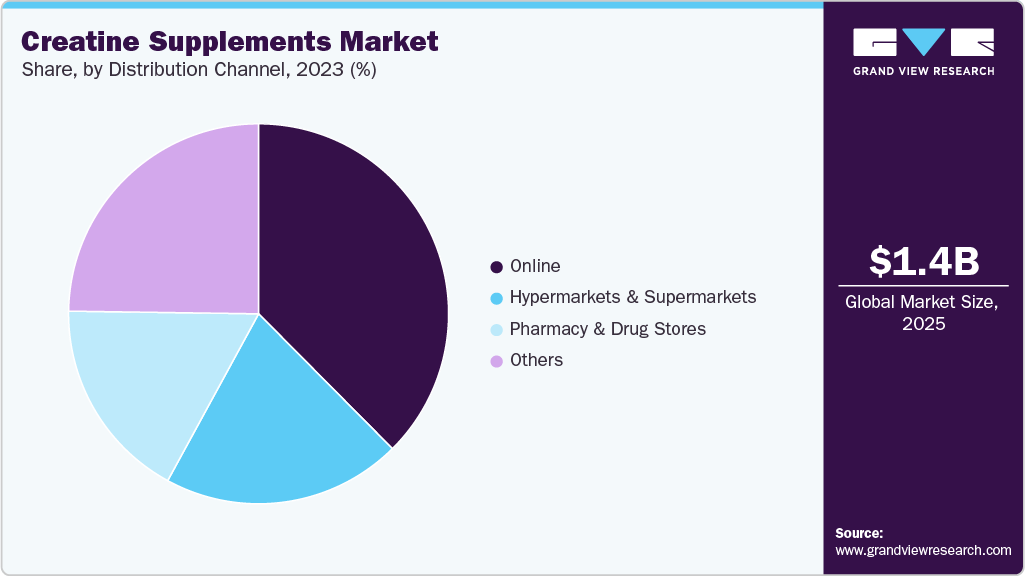
Sales of creatine supplements through hypermarkets & supermarkets are expected to grow with a CAGR of 26.2% from 2026 to 2033. Hypermarkets and supermarkets often allocate significant shelf space to health and wellness products, including sports nutrition supplements such as creatine. This visibility enhances form accessibility and exposure to a broader consumer base, including casual fitness enthusiasts and new users exploring supplement options. These retail channels benefit from established trust and credibility among consumers. Shoppers often perceive hypermarkets and supermarkets as reliable sources of quality forms, including dietary supplements. This trust factor is crucial in influencing purchase decisions, especially for health-related forms.
Regional Insights
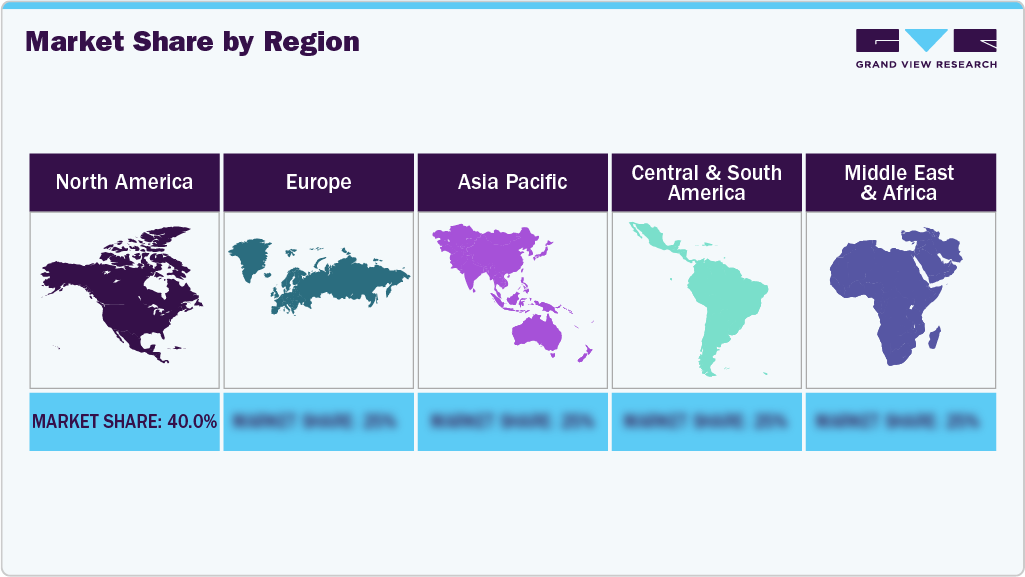
The North America creatine supplements industry accounted for a revenue share of 40.8% in 2025. North America, particularly the United States, has a robust sports and fitness culture deeply ingrained in its society. This culture promotes a high level of awareness and adoption of sports nutrition supplements, such as creatine, among athletes, fitness enthusiasts, and the general population seeking health and performance benefits.The region boasts a strong presence of leading manufacturers, distributors, and retailers specializing in sports nutrition forms. This infrastructure supports extensive form availability and accessibility across various retail channels, including specialty health stores, online platforms, and mainstream retail outlets.
U.S. Creatine Supplements Market Trends
The creatine supplements industry in the U.S. is expected to grow at a CAGR of 29.5% from 2026 to 2033. This growth is driven by several factors that are increasing interest in creatine supplements. These include rising healthcare costs, regulatory changes in food laws impacting form claims and labeling, rapid advancements in science and technology, a growing geriatric population, and a heightened focus on achieving wellness through dietary practices. In March 2023, the U.S. Food and Drug Administration (FDA) launched a new webpage called the Dietary Supplement Ingredient Directory. This directory allows the public to look up ingredients used in dietary supplements and find information about the FDA's actions and communication regarding each ingredient. The directory aims to be a one-stop shop for ingredient information that was previously scattered across different FDA web pages.
Europe Creatine Supplements Market Trends
The Europe creatine supplements industry is expected to grow at a CAGR of 16.8% from 2026 to 2033. The increasing availability of creatine supplements through various distribution channels, including online retail platforms, specialty stores, and pharmacies, has improved accessibility for consumers across Europe. This ease of access has further contributed to the market's expansion. Growing technological innovation in the nutraceuticals sector offers new opportunities in the European region for the creatine supplements market. The Federation of European Nutrition Societies (FENS) funds and invests in various nutritional food and nutricosmetic businesses. The federation operates and nurtures the growth of such businesses in 26 countries in the region.
Asia Pacific Creatine Supplements Market Trends
The Asia Pacific creatine supplements industry is expected to grow at a CAGR of 28.3% from 2026 to 2033. The Asia Pacific market is anticipated to witness increasing demand for creatine supplements as key participants are introducing their brands in the untapped markets of Southeast Asia. China, Japan, and India are among the largest markets for creatine supplements in Asia Pacific, owing to the presence of a large consumer base.Japan and Australia have experienced heightened awareness regarding the health benefits of creatine supplements over the years, which is expected to strengthen the regional market growth over the forecast period.
Key Creatine Supplements Company Insights
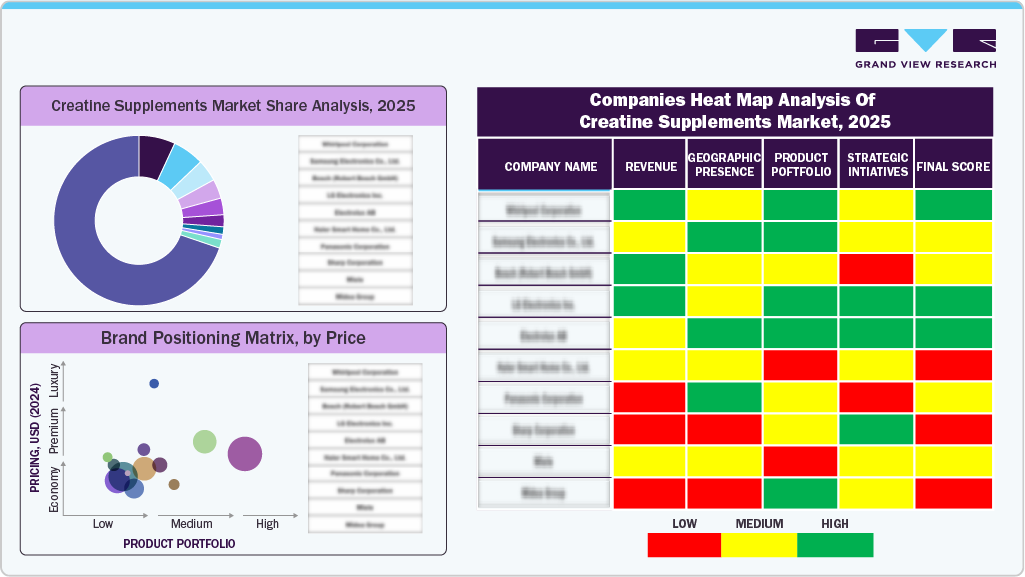
The global creatine supplements market is characterized by the presence of numerous well-established players such as Glanbia PLC, GNC Holdings Inc., Ajinomoto, The Hut Group (Myprotein), Weider Global Nutrition, BSN, and others. Market players in the creatine supplements industry face fierce competition, particularly among the top manufacturers with varied form offerings. These companies boast extensive distribution networks that enable them to effectively serve a broad customer base across regional and international markets.
Key Creatine Supplements Companies:
The following key companies have been profiled for this study on the creatine supplements market.
- Glanbia PLC
- GNC Holdings Inc.
- Ajinomoto
- The Hut Group (Myprotein)
- Weider Global Nutrition
- BSN
- MUSCLETECH
- Nutrex Research Inc.
- Allmax Nutrition
- GAT WHP
Recent Developments
-
In January 2026, GNC launched a revamped 2026 creatine lineup that keeps its classic 5 g Pro Performance Creatine Monohydrate at the center while adding three new science-based products GNC Pro Performance Creatine + HMB, Beyond Raw Creatine MonoPhate, and GNC AMP Creabolic to target strength, recovery, and high-intensity performance with clinically studied doses, rigorous quality testing, and formats ranging from unflavored powders to flavored options for both everyday and advanced athletes.
-
In Jan 2024, Ascent Protein, a prominent figure in the sports nutrition sector, unveiled Ascent Clean Creatine, a new form aimed at enhancing athletic performance. This addition enriches Ascent's extensive lineup of essential sports nutrition forms, which already include whey protein, plant protein, pre-workout formulas, and micellar casein. This launch underscores Ascent's commitment to providing athletes with a comprehensive selection of high-quality nutrition solutions.
Creatine Supplements Market Report Scope
|
Report Attribute
|
Details
|
|
Market size value in 2026
|
USD 1.70 billion
|
|
Revenue forecast in 2033
|
USD 8.68 billion
|
|
Growth rate
|
CAGR of 26.2% from 2026 to 2033
|
|
Actuals
|
2021 - 2025
|
|
Forecast period
|
2026 - 2033
|
|
Quantitative units
|
Revenue in USD million/billion and CAGR from 2026 to 2033
|
|
Report coverage
|
Revenue forecast, company ranking, competitive landscape, growth factors, and trends
|
|
Segments covered
|
Form, distribution channel, and region
|
|
Regional scope
|
North America; Europe; Asia Pacific; Central & South America; Middle East & Africa
|
|
Country scope
|
U.S.; Canada; Mexico; Germany; UK; France; Italy; Spain; China; Japan; India; South Korea; Australia & New Zealand; Brazil; South Africa
|
|
Key companies profiled
|
Glanbia PLC; GNC Holdings Inc.; Ajinomoto; The Hut Group (Myprotein); Weider Global Nutrition; BSN; MUSCLETECH; Nutrex Research Inc.; Allmax Nutrition; GAT WHP
|
|
Customization scope
|
Free report customization (equivalent up to 8 analysts working days) with purchase. Addition or alteration to country, regional & segment scope.
|
|
Pricing and purchase options
|
Avail customized purchase options to meet your exact research needs. Explore purchase options
|
Global Creatine Supplements Market Report Segmentation
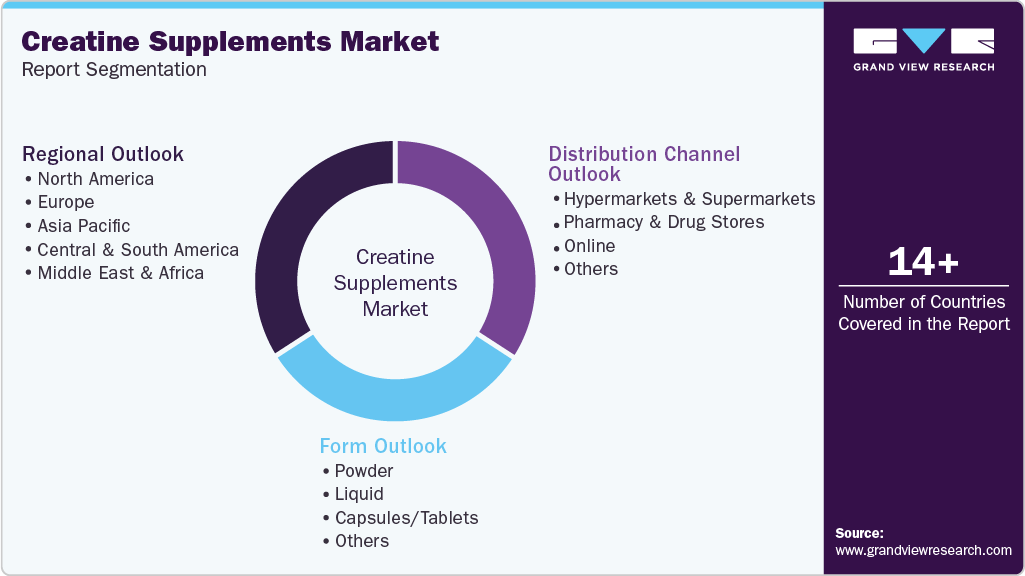
This report forecasts revenue growth at the global, regional & country levels and provides an analysis of the latest industry trends and opportunities in each of the sub-segments from 2021 to 2033. For this study, Grand View Research has segmented the global creatine supplements market report based on form, distribution channel, and region:
-
Form Outlook (Revenue, USD Million, 2021 - 2033)
-
Powder
-
Liquid
-
Capsules/Tablets
-
Others
-
Distribution Channel Outlook (Revenue, USD Million, 2021 - 2033)
-
Regional Outlook (Revenue, USD Million, 2021 - 2033)
-
North America
-
Europe
-
UK
-
Germany
-
France
-
Italy
-
Spain
-
Asia Pacific
-
China
-
Japan
-
India
-
South Korea
-
Australia & New Zealand
-
Central & South America
-
Middle East & Africa
Frequently Asked Questions About This Report
b. Some key players operating in the creatine supplements market include Glanbia PLC, GNC Holdings Inc., Ajinomoto, The Hut Group (Myprotein), Weider Global Nutrition, BSN, and others.
b. Key factors that are driving the market growth include increasing awareness of fitness and the benefits of creatine supplementation for improving athletic performance, muscle mass, and strength is driving market growth.
b. The global market for creatine supplements was estimated at USD 1.37 billion in 2025 and is expected to reach USD 1.70 billion in 2026.
b. The global creatine supplements market is expected to grow at a compounded growth rate of 25.3% from 2026 to 2033 to reach USD 8.68 billion by 2033.
b. North America dominated the global creatine supplements market with a share of 38.0% in 2025 due to the higher level of awareness and adoption of sports nutrition supplements like creatine among athletes, fitness enthusiasts, and the general population seeking health and performance benefits

 Download Sample Report