- Home
- »
- Animal Health
- »
-
Companion Animal Genetics Market, Industry Report, 2033GVR Report cover
![Companion Animal Genetics Market Size, Share & Trends Report]()
Companion Animal Genetics Market (2026 - 2033) Size, Share & Trends Analysis Report By Animal, By Type (Genetic Disease Testing, Genomics), By Distribution Channel (Private, Public), By Region (North America, Europe, Asia Pacific, Latin America, MEA), And Segment Forecasts
- Report ID: GVR-4-68040-726-6
- Number of Report Pages: 150
- Format: PDF
- Historical Range: 2021 - 2024
- Forecast Period: 2026 - 2033
- Industry: Healthcare
- Report Summary
- Table of Contents
- Segmentation
- Methodology
- Download FREE Sample
-
 Download Sample Report
Companion Animal Genetics Market Summary
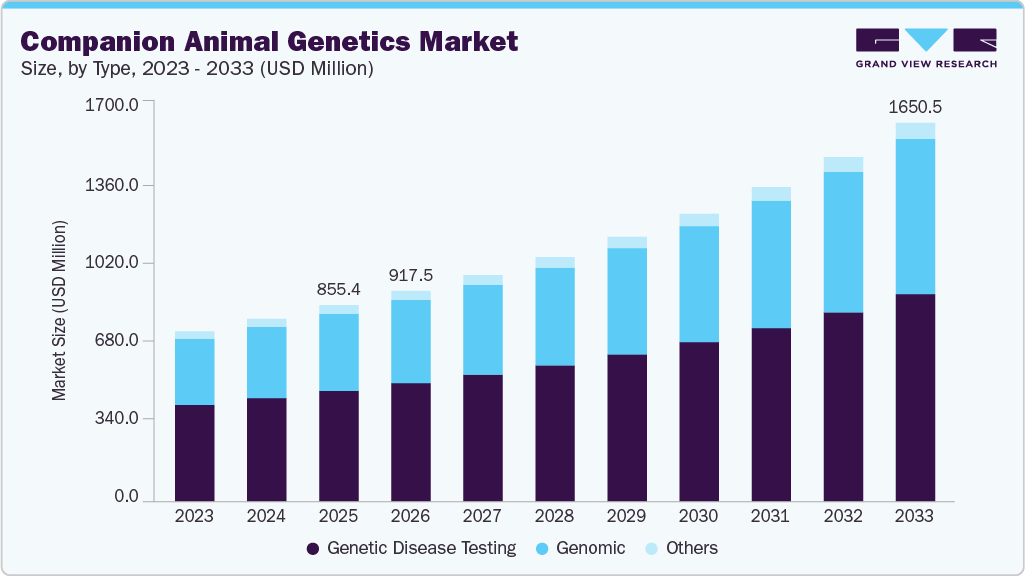
The global companion animal genetics market size was estimated at USD 855.4 million in 2025 and is projected to reach USD 1,650.5 million by 2033, growing at a CAGR of 8.7% from 2026 to 2033. The companion animal genetics industry is significantly growing, driven by rising pet humanization and preventive care trends, the expansion of direct-to-consumer (DTC) models, and the rising incidence of hereditary and breed-specific disorders.
Key Market Trends & Insights
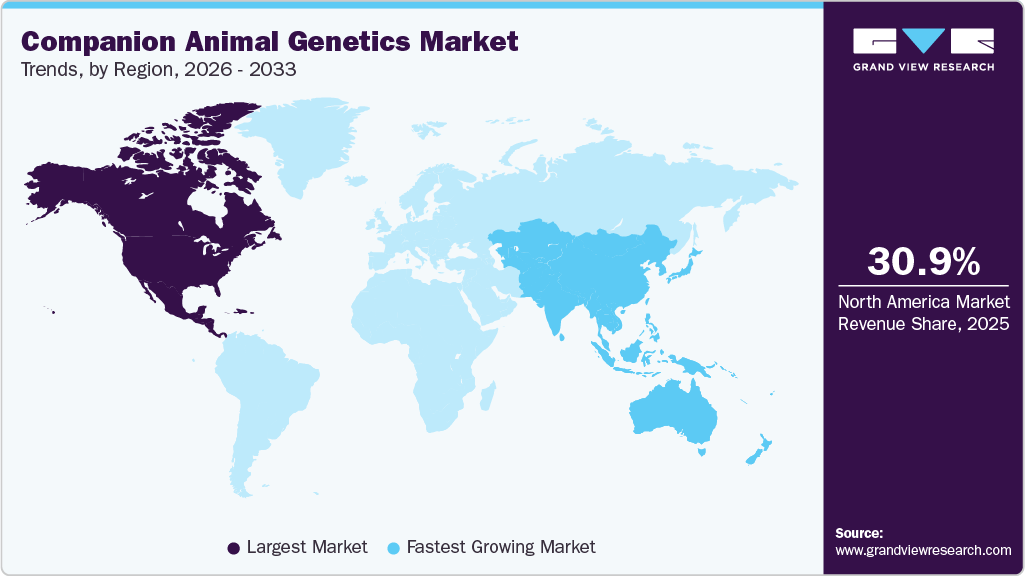
- North America dominated the global companion animal genetics market with the largest revenue share of 30.9% in 2025.
- The companion animal genetics industry in the U.S. accounted for the largest revenue share in North America in 2025.
- By type, the genetic disease testing segment led the market with the largest revenue share of 56.3% in 2025.
- By animal, the dogs segment led the market with the largest revenue share of 49.3% in 2025.
- By distribution channel, the private segment accounted for the largest market revenue share in 2025.
Market Size & Forecast
- 2025 Market Size: USD 855.4 Million
- 2033 Projected Market Size: USD 1,650.5 Million
- CAGR (2026-2033): 8.7%
- North America: Largest market in 2025
- Asia Pacific: Fastest growing market
The growing prevalence of hereditary and breed-specific conditions in dogs and cats is a major driver for companion animal genetics. Popular purebred breeds often carry genetic predispositions to disorders such as hip dysplasia, cardiomyopathies, and inherited cancers. As of December 2020, the Online Mendelian Inheritance in Animals (OMIA) database documented 784 single-locus diseases or traits in dogs and 361 in cats that had been genetically explained.Pet owners and breeders are increasingly using genetic testing to identify carriers, reduce the risk of passing on defective genes, and improve long-term health outcomes. This proactive approach not only enhances animal welfare but also reduces veterinary costs associated with treating chronic conditions. The heightened awareness of genetic disorders is fueling the adoption of companion animal genetics across global markets.
The growth of direct-to-consumer genetic testing kits has transformed access the companion animal genetics. Companies like Embark and Wisdom Panel offer easy-to-use at-home kits that provide insights into breed composition, ancestry, and health risks without requiring a veterinary visit. Rising e-commerce penetration and digital marketing have amplified consumer awareness and adoption. Subscription models and integrated wellness recommendations are further enhancing customer engagement and retention. By democratizing access to genetic information and linking it to preventive healthcare, the DTC approach significantly widens market reach and drives consistent growth within the companion animal genetics industry.
Pet owners increasingly view companion animals as family members, driving demand for personalized healthcare. This shift has boosted the adoption of genetic testing to detect hereditary conditions, predict disease risks, and ensure long-term well-being. Preventive healthcare is gaining traction, with pet parents opting for DNA tests to make informed decisions about nutrition, breeding, and lifestyle management. Moreover, increasing awareness of breed-specific disorders in dogs and cats has accelerated early adoption of genetic solutions. This trend, coupled with higher spending on veterinary services, remains a strong growth driver for the companion animal genetics industry.
In addition, the biobanks such as Mars Petcare Biobankrepresent a major step in companion animal genetics by creating a longitudinal resource of genomic, clinical, and lifestyle data. Linking genetic information to health outcomes enables early disease detection, personalized care, and preventive strategies. This unprecedented dataset offers researchers and the veterinary sector a crucial opportunity to advance precision medicine, identify new genetic markers, and drive innovation in pet healthcare.
Mars Pet Care Biobank Key Features
Aspect
Details
Purpose
Longitudinal study to improve understanding of pet health, disease development, diagnosis, prevention, and individualized care.
Scale
Aims to recruit 20,000 healthy cats and dogs (10,000 per species) over 10 years.
Data Collected
Clinical, genetic, lifestyle, physiological, and health data, including genomic and other biological samples.
Open Access
Genome data will be made publicly accessible, creating one of the largest open pet genome resources.
Goal
Detect early signs of disease, uncover health patterns, and support preventive and precision veterinary medicine.
Research Use
Supports scientific discovery, new genetic insights, and future health innovations for cats and dogs.
Source: Mars, Inc.
Market Concentration & Characteristics
The companion animal genetics industry is moderate to highly concentrated, with a mix of global leaders and specialized niche players. Large companies such as Zoetis, Antech Diagnostics (Mars Inc.), and Embark Veterinary hold strong market positions due to broad product portfolios, advanced genomic technologies, and established distribution networks. Their dominance is reinforced by strategic partnerships with veterinary clinics and hospital chains that integrate genetic testing into standard care. However, the market also includes emerging and regional players offering breed-specific, cost-effective tests, creating competitive fragmentation. Thus, the industry is concentrated among a few dominant players, but innovation keeps the space dynamic.
The companion animal genetics industry is experiencing strong growth, driven by rapid technological innovation and increasing investment in advanced genomic tools. Companies are actively adopting next-generation sequencing, comprehensive genomic screening panels, and AI-based data interpretation to improve diagnostic accuracy and enable personalized treatment approaches. For instance, in March 2026, MiDOG Animal Diagnostics introduced a single Whole Genome Sequencing assay capable of simultaneously detecting bacteria, fungi, parasites, antimicrobial resistance genes, and virulence factors. This development marked a key advancement in veterinary diagnostics, as it integrated multiple analytical capabilities into a single test, strengthening clinical decision-making and reinforcing the role of precision medicine in companion animal healthcare.
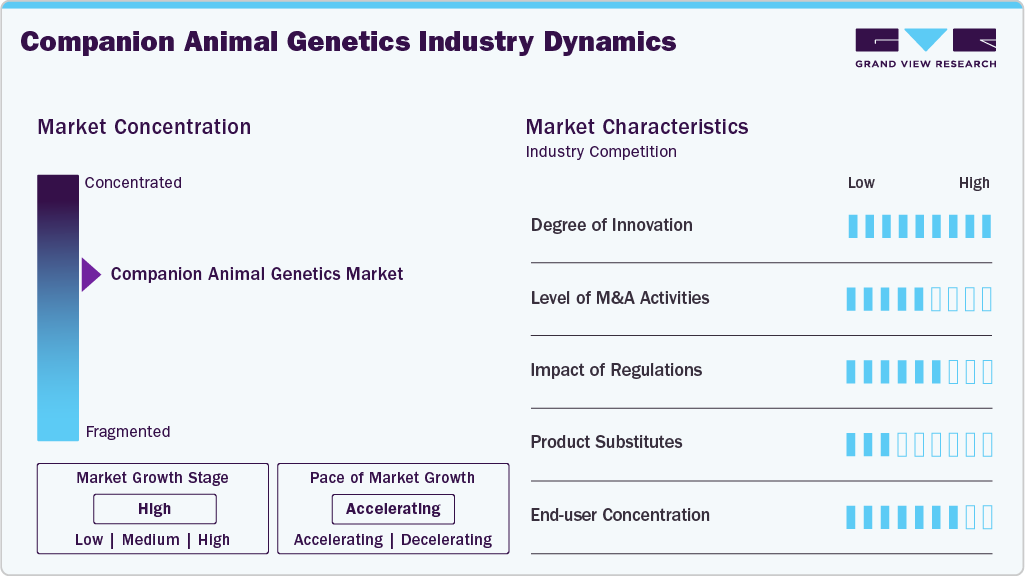
M&A activity in the companion animal genetics industry remains moderate to high, as companies are acquiring specialized genomics businesses to expand capabilities and strengthen their portfolios. For instance, in 2026, Zoetis entered into an agreement to acquire Neogen’s animal genomics business for approximately USD 160 million, enhancing its precision animal health offerings through advanced genomic technologies and data-driven insights across livestock and companion animals.
Regulation in the global companion animal genetics industry is evolving and varies across regions. Most countries classify genetic testing as a service with limited regulatory oversight. Regulatory bodies are increasing scrutiny on data privacy, accuracy of diagnostic claims, and the role of veterinary supervision. These developments are shaping compliance requirements and are likely to extend approval timelines, potentially restricting rapid market entry for new participants.
Substitution risk in the global companion animal genetics industry remains low to moderate. Conventional veterinary diagnostics, such as imaging and blood tests, support disease detection but do not provide predictive or hereditary risk insights. Genetic testing provides early identification of disease risk and breed-specific health information. Pet owners are increasingly accepting these tools, strengthening demand and limiting the effectiveness of traditional diagnostic substitutes.
End-user concentration in the global companion animal genetics industry remains fragmented. Veterinary hospitals and clinics form a key channel, driven by increasing integration of genetic testing into routine care. At the same time, direct-to-consumer testing kits are expanding access and awareness among pet owners. No single segment dominates demand, as both clinical and at-home testing continue to grow, maintaining a balanced and diversified end-user landscape.
Animal Insights
The dogs segment led the market with the largest revenue share of 49.3% in 2025, owing to high adoption rates and rising demand for advanced genetic testing. Pet owners are increasingly seeking insights into breed composition, inherited disorders, and disease predisposition, which is accelerating the use of DNA-based services. Veterinary clinics and testing providers are offering targeted solutions that support clinical decision-making, breeding selection, and personalized nutrition. The segment continues to lead due to strong owner engagement, rising awareness, and increasing spending on canine healthcare.
The cats segment is anticipated to grow at the fastest CAGR during the forecast period, driven by rising pet ownership and increasing awareness of feline health. Advancements in genetic testing technologies are improving accessibility and accuracy, encouraging adoption among pet owners and breeders. Demand is increasing for insights into hereditary conditions, traits, and overall health. The growing focus on preventive care, early disease detection, and personalized treatment is driving strong segment growth.
Type Insights
The genetic disease testing segment led the market with the largest revenue share of 56.3% in 2025, driven by rising demand for early disease detection and preventive healthcare. Pet owners, breeders, and veterinarians increasingly depend on advanced DNA tests to identify hereditary disorders, improve breeding practices, and ensure healthier pets. Expanding availability of affordable, non-invasive testing methods, such as cheek swabs, has further accelerated adoption. With growing awareness of genetic predispositions in dogs and cats, this segment continues to dominate the market, offering critical insights that enhance animal welfare and long-term health outcomes.
The genomics segment is anticipated to grow at the fastest CAGR over the forecast period. Rising pet ownership, demand for precision healthcare, and growing interest in genetic insights to manage hereditary diseases are driving adoption. Pet owners and veterinarians increasingly depend on genomic tools to ensure accurate breed identification, assess predisposition to conditions, and personalize care. Advances in sequencing technology and wider affordability are accelerating growth, positioning genomics as a transformative force in advancing companion animal health and welfare worldwide.
Distribution Channel Insights
The private segment led the market with the largest revenue share of 76.61% in 2025 and is projected to grow at the fastest CAGR during the forecast period, driven by rising consumer awareness and demand for personalized pet care. Pet owners are increasingly willing to invest in advanced genetic testing services to ensure the health, longevity, and well-being of their dogs and cats. Collaborations are becoming a defining feature of the market, driving innovation, accessibility, and global reach. In May 2025, PooPrints partnered with Ancestry to integrate dog DNA testing into its waste management program, enabling multifamily residents to access detailed breed and health insights through a seamless cheek swab and online process.
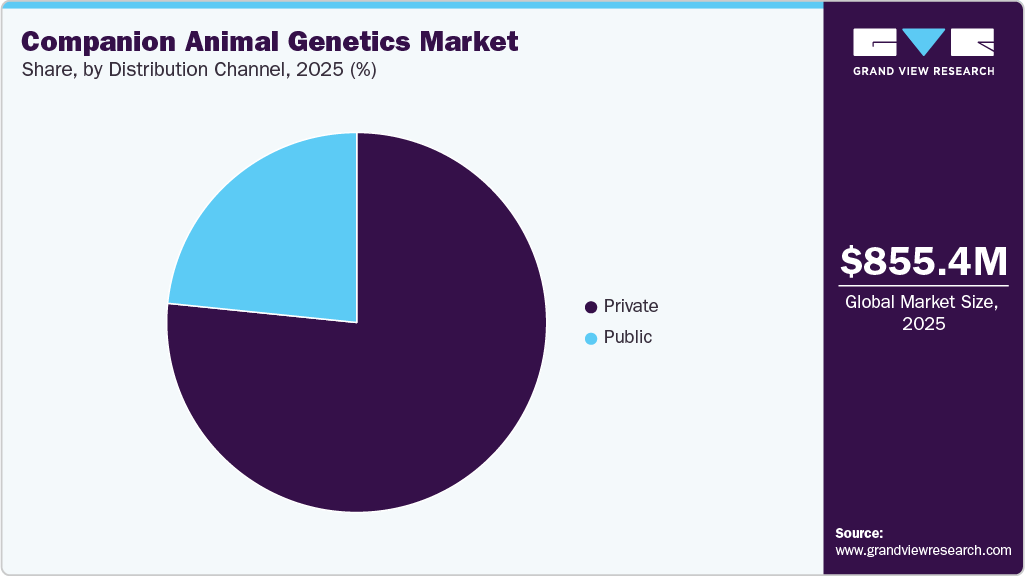
The public segment is anticipated to grow at a significant CAGR during the forecast period, supported by academic institutions, government research bodies, and public veterinary networks. These entities focus on large-scale genomic studies, disease surveillance, and breed conservation programs. Funding from public agencies and collaborations with private players are expanding research capabilities. The segment maintains steady growth due to its role in advancing scientific knowledge and supporting evidence-based veterinary practices.
Regional Insights
North America companion animal genetics market dominated the global industry with the largest revenue share of 30.9% in 2025, driven by competitive factors, such as rising pet humanization, demand for preventive care, and advances in genomic technologies. Some of the players, such as Zoetis, Embark Veterinary, and Mars’ Antech Diagnostics, lead with broad portfolios and D2C offerings. Innovations in next-generation sequencing, breed-specific disease panels, and clinic-integrated testing strengthen market growth and accessibility.
U.S. Companion Animal Genetics Market Trends
The companion animal genetics market in the U.S. accounted for the largest market revenue share in North America in 2025, driven by high pet ownership and a strong focus on precision veterinary care. Continuous research initiatives, large-scale genomic projects, and collaborations between industry and academia are expanding genetic databases and improving understanding of disease. Strategic developments, such as Zoetis' acquisition of genomics assets and Mars Petcare's advancement of biobank programs, are strengthening innovation and market competitiveness.
Europe Companion Animal Genetics Market Trends
The companion animal genetics market in Europe is expanding, fueled by rising pet healthcare awareness, preventive diagnostics, and demand for breed-specific testing. Leading players such as Neogen, Zoetis, and Basepaws are advancing innovative genomic screening technologies. In February 2025, Ceva Animal Health launched Biogenovac, a genomics research laboratory in France, strengthening its One Health strategy. The facility focuses on developing advanced vaccine solutions to address emerging animal diseases and adapt to evolving viral threats.
The UK companion animal genetics market is expanding, supported by rising focus on preventive care, breed-specific health management, and scientific research. Academic institutions such as the Royal Veterinary College are advancing research on canine health, genetics, and welfare, improving understanding of disease. Industry and research collaborations are strengthening diagnostic capabilities, while growing awareness among pet owners and veterinarians is increasing adoption of genetic testing for early detection and informed care decisions.
The companion animal genetics market in France is expanding, supported by growing scientific research that deepens understanding of pet animal genetics and microbiomes, such as new metagenomic insights into the canine gut microbiome. Collaborative initiatives like the ELIXIR Domestic Animals Genome and Phenome Community also strengthen genome and phenome research for domestic animals across Europe, boosting data resources and innovation that underpin broader market growth.
Asia Pacific Companion Animal Genetics Market Trends
The companion animal genetics market in the Asia Pacific is expected to grow at the fastest CAGR during the forecast period, driven by rising pet ownership, increased focus on preventive healthcare, and expanding veterinary infrastructure across countries like China, India, and Japan. Awareness of breed-specific health risks and genetic disorders is encouraging owners to adopt DNA-based testing. Key players, including Zoetis, Neogen, and Embark, are strengthening local partnerships, offering advanced genetic screening, and delivering personalized pet healthcare solutions, which accelerate the uptake of breed identification, disease risk assessment, and wellness programs.
The China companion animal genetics market is expanding alongside a booming pet economy, with rising pet ownership and higher spending on advanced veterinary services driving demand for genetic testing and precision diagnostics. Urban owners increasingly explore high‑end solutions, including pet cloning, a service growing in popularity despite controversy over ethics and cost, as biotechnology firms scale up offerings and the industry attracts more investment and public interest.
The companion animal genetics market in India is emerging, driven by growing pet ownership and increasing awareness of hereditary conditions. Companies like GeneTech are offering DNA-based services, including breed identification, parentage verification, and health risk screening. These solutions enable early detection of genetic disorders, support informed breeding, and promote preventive veterinary care. Expanding urban veterinary infrastructure and rising demand for personalized pet healthcare are further accelerating the adoption of advanced genetic testing across the country.
Latin America Companion Animal Genetics Market Trends
The companion animal genetics market in Latin America is expanding, driven by rising pet ownership, increased interest in mixed-breed dogs, and awareness of hereditary conditions. Growing initiatives in genetic testing and breed identification are improving early detection of health risks and supporting preventive veterinary care. Public interest in gene-edited and hybrid animals is also encouraging research and adoption of advanced genetic tools across the region.
The Brazil companion animal genetics market is witnessing growth due to increasing pet ownership and attention to mixed-breed dogs, which dominate urban populations. Rising public awareness of genetic traits and preventive care drives interest in DNA testing and screening. High-profile cloning cases and cultural adoption of genetic preservation techniques are stimulating the market, while media campaigns highlighting mixed-breed welfare enhance engagement with genetic health initiatives across the country.
Middle East & Africa Companion Animal Genetics Market Trends
The companion animal genetics market in the Middle East and Africa is expanding with rising pet ownership and growing awareness of hereditary diseases. Recent studies highlight the region as a key center of dog and cat domestication, with Middle Eastern wolves contributing to small-dog lineages and cats tracing back to the Fertile Crescent. Advances in DNA testing and genomic research are enabling breed-specific insights, early disease detection, and improved preventive veterinary care.
The South Africa companion animal genetics market is gradually advancing, driven by rising urban pet ownership and increased awareness of hereditary disorders. Innovative DNA tests, such as CirclePaw, provide detailed insights into breed, health risks, and traits, enabling early disease detection and personalized pet care. Research on African wildcats and wild dogs also informs understanding of genetic diversity and conservation, supporting both preventive veterinary care and broader adoption of genomic tools.
The companion animal genetics market in Saudi Arabia is emerging, supported by rising pet ownership and growing focus on preventive care. Genetic studies on sand cats and domestic pets highlight the region’s significance in feline and canine evolution. High-quality genomic research enables breed-specific testing and disease risk detection, strengthening veterinary care. Investments in genetic research and advanced diagnostics are accelerating the adoption of DNA-based solutions for proactive pet health management.
Key Companion Animals Genetics Company Insights
The companion animal genetics industry is dominated by key players such as Mars Petcare, Neogen Corporation, Embark Veterinary, and Ancestry. These companies hold significant market share through advanced genetic testing solutions, collaborations, and expanding product portfolios, driving innovation, accessibility, and growth across global pet health and diagnostics.
Key Companion Animal Genetics Companies:
The following key companies have been profiled for this study on the companion animal genetics market.
- Neogen Corporation
- Antech Diagnostics, Inc.
- Embark Veterinary, Inc.
- Basepaws
- UC Davis Veterinary Genetics Laboratory (VGL)
- ZOOGEN
- Orivet Genetic Pet Care
- Animal Genetics Inc.
- Generatio GmbH
- Zoetis Services LLC
Recent Developments
-
In March 2026, Vaxcellbio signed a Master Partnership Agreement with Taiwan’s Reber Genetics to collaborate on companion animal healthcare. The deal aims to strengthen genetic research and diagnostic capabilities for pets through joint development and expanded access to innovative genetic testing solutions.
-
In December 2025, Darwin’s Cats launched a novel fur‑based DNA sequencing method, enabling large-scale genetic analysis of cats. This breakthrough allows scientists to pair genetic data with owner insights, supporting population-level research and new discoveries in feline health and behavior.
-
In October 2025, Mars Inc. celebrated 3 years of The MARS PETCARE BIOBANK, a large‑scale, long‑term research initiative tracking up to 20,000 healthy cats and dogs over more than 10 years to collect biological samples, health, lifestyle and genomic data. Scientists will use this resource to uncover how diseases develop, identify early markers of illness, and improve individualized preventive care and diagnostics. The full genome data will be made openly available to fuel global pet health research.
-
In August 2025, POP launched a 90-day canine health study with Innovative Pet Lab and Embark Veterinary, offering nutrition, biomarker, and DNA insights. Participants get $600 in tools and personalized reports to advance preventative pet wellness.
Companion Animal Genetics Market Report Scope
Report Attribute
Details
Market size value in 2025
USD 917.5 million
Revenue forecast in 2033
USD 1,650.5 million
Growth rate
CAGR of 8.7% from 2026 to 2033
Base year for estimation
2025
Historical data
2021 - 2024
Forecast period
2026 - 2033
Quantitative units
Revenue in USD million/billion, and CAGR from 2026 to 2033
Report coverage
Revenue forecast, company ranking, competitive landscape, growth factors, and trends
Segments covered
Animal, type, distribution channel, region
Regional scope
North America; Europe; Asia Pacific; Latin America; MEA
Country scope
U.S.; Canada; Mexico; UK; Germany; France; Italy; Spain; Denmark; Sweden; Norway; Japan; China; India; Australia; South Korea; Thailand; Brazil; Argentina; South Africa; Saudi Arabia; UAE; Kuwait; Qatar; Oman
Key companies profiled
Neogen Corporation; Antech Diagnostics, Inc.; Generatio GmbH; Zoetis Services LLC; Embark Veterinary, Inc.; Basepaws; UC Davis Veterinary Genetics Laboratory (VGL); Animal Genetics, Inc.;ZOOGEN; Orivet Genetic Pet Care; Animal Genetics Inc.
Customization scope
Free report customization (equivalent up to 8 analysts working days) with purchase. Addition or alteration to country, regional & segment scope.
Pricing and purchase options
Avail customized purchase options to meet your exact research needs. Explore purchase options
Global Companion Animals Genetics Market Report Segmentation
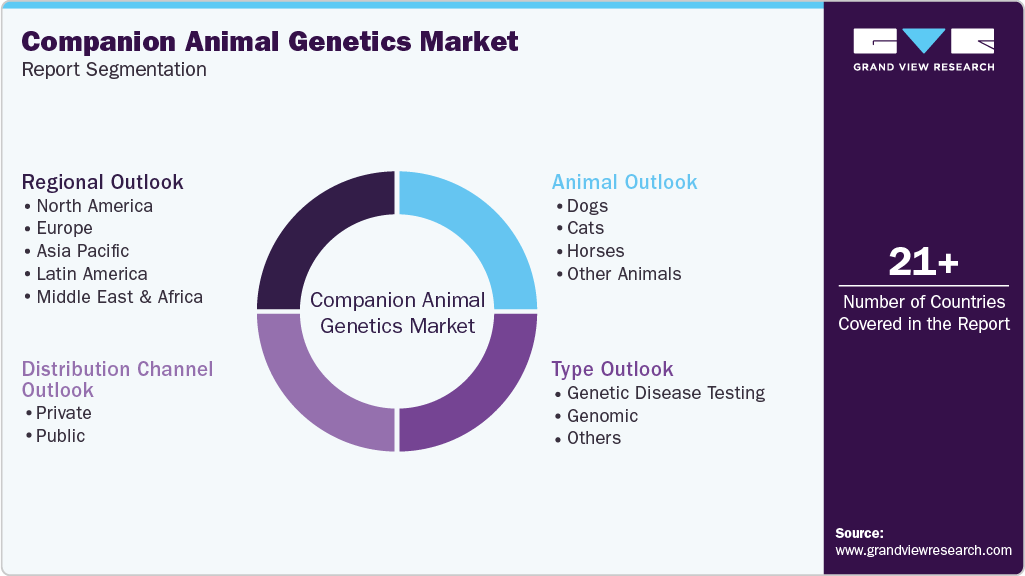
This report forecasts revenue growth at global, regional, and country levels and provides an analysis of the latest industry trends in each of the sub-segments from 2021 to 2033. For this study, Grand View Research has segmented the global companion animal genetics market report based on animal, type, distribution channel, and region.
-
Animal Outlook (Revenue, USD Million, 2021 - 2033)
-
Dogs
-
Cats
-
Horses
-
Other Animals
-
-
Type Outlook (Revenue, USD Million, 2021 - 2033)
-
Genetic Disease Testing
-
Genomic
-
Others
-
-
Distribution Channel Outlook (Revenue, USD Million, 2021 - 2033)
-
Private
-
Public
-
-
Regional Outlook (Revenue, USD Million, 2021 - 2033)
-
North America
-
U.S.
-
Canada
-
Mexico
-
-
Europe
-
UK
-
Germany
-
France
-
Italy
-
Spain
-
Denmark
-
Sweden
-
Norway
-
-
Asia Pacific
-
Japan
-
India
-
China
-
South Korea
-
Australia
-
Thailand
-
-
Latin America
-
Brazil
-
Argentina
-
-
Middle East and Africa (MEA)
-
South Africa
-
Saudi Arabia
-
UAE
-
Kuwait
-
Qatar
-
Oman
-
-
Frequently Asked Questions About This Report
b. Some key players operating in the companion animal genetics market include Neogen Corporation, Antech Diagnostics, Inc., Generatio GmbH, Zoetis Services LLC, Embark Veterinary, Inc., Basepaws, UC Davis Veterinary Genetics Laboratory (VGL), Animal Genetics, Inc., ZOOGEN, Orivet Genetic Pet Care, Animal Genetics Inc.
b. Key factors that are driving the market growth include rising pet humanization and preventive care trends, expansion of direct-to-consumer (DTC) models and rising incidence of hereditary and breed-specific disorders. The growing prevalence of hereditary and breed-specific conditions in dogs and cats is a major driver for companion animal genetics.
b. The global companion animal genetics market size was estimated at USD 855.4 million in 2025 and is expected to reach USD 917.5 million in 2026.
b. The global companion animal genetics market is expected to grow at a compound annual growth rate of 8.6% from 2026 to 2033 to reach USD 1,650.5 million by 2033.
b. Dogs represent the largest segment in the companion animal genetics market with a share of 49.3% in 2025, owing to high adoption rates and rising demand for advanced genetic testing.


Share this report with your colleague or friend.
Need a Tailored Report?
Customize this report to your needs — add regions, segments, or data points, with 20% free customization.


ISO 9001:2015 & 27001:2022 Certified
We are GDPR and CCPA compliant! Your transaction & personal information is safe and secure. For more details, please read our privacy policy.
Trusted market insights - try a free sample
See how our reports are structured and why industry leaders rely on Grand View Research. Get a free sample or ask us to tailor this report to your needs.