
- Home
- »
- Electronic & Electrical
- »
-
Commercial Vacuum Cleaner Market, Industry Report, 2033GVR Report cover
![Commercial Vacuum Cleaner Market Size, Share & Trends Report]()
Commercial Vacuum Cleaner Market (2026 - 2033) Size, Share & Trends Analysis Report By Power Source (Corded, Cordless), By Product (Upright, Canister, Robotic, Wet & Dry, Drum, Central, Backpack), By End-user, By Distribution Channel, By Region, Segment Forecasts
- Report ID: GVR-4-68040-577-4
- Number of Report Pages: 378
- Format: PDF
- Historical Range: 2021 - 2025
- Forecast Period: 2026 - 2033
- Industry: Consumer Goods
- Report Summary
- Table of Contents
- Interactive Charts
- Methodology
- Download FREE Sample
-
 Download Sample Report
Commercial Vacuum Cleaner Market Summary
The global commercial vacuum cleaner market size was estimated at USD 1.35 billion in 2025 and is expected to reach USD 1.85 billion by 2033, growing at a CAGR of 4.0% from 2026 to 2033. As businesses increasingly focus on maintaining clean, hygienic environments, the need for advanced, high-performance vacuum cleaners continues to grow.
Key Market Trends & Insights
- North America dominated the commercial vacuum cleaner market with the largest revenue share of 37.3% in 2025.
- The commercial vacuum cleaner market in the U.S. accounted for the largest market revenue share of 89.8% in North America in 2025.
- By power source, the corded vacuum cleaners segment led the commercial vacuum cleaner market and accounted for a share of 74.4% in 2025.
- By product, the upright vacuum cleaners segment led the market and accounted for a share of 26.6% in 2025.
- By end user, the cleaning service providers led the market and accounted for a share of 33.5% in 2025.
Market Size & Forecast
- 2025 Market Size: USD 1.35 Billion
- 2033 Projected Market Size: USD 1.85 Billion
- CAGR (2026-2033): 4.0%
- North America: Largest market in 2025
- Asia Pacific: Fastest growing market
The market expansion, rapid infrastructure development in emerging economies, and growing adoption of e-commerce for B2B procurement also significantly contribute to market growth. The market is being propelled by the expansion of sectors such as hospitality, healthcare, retail, and transportation, where maintaining cleanliness and hygiene standards is critical. Increasing regulations and compliance requirements related to sanitation in commercial spaces have further intensified demand. Moreover, the rise of outsourcing cleaning services and the need for specialized solutions for large-scale or high-traffic areas have created opportunities for innovation and product diversification in the commercial cleaning market.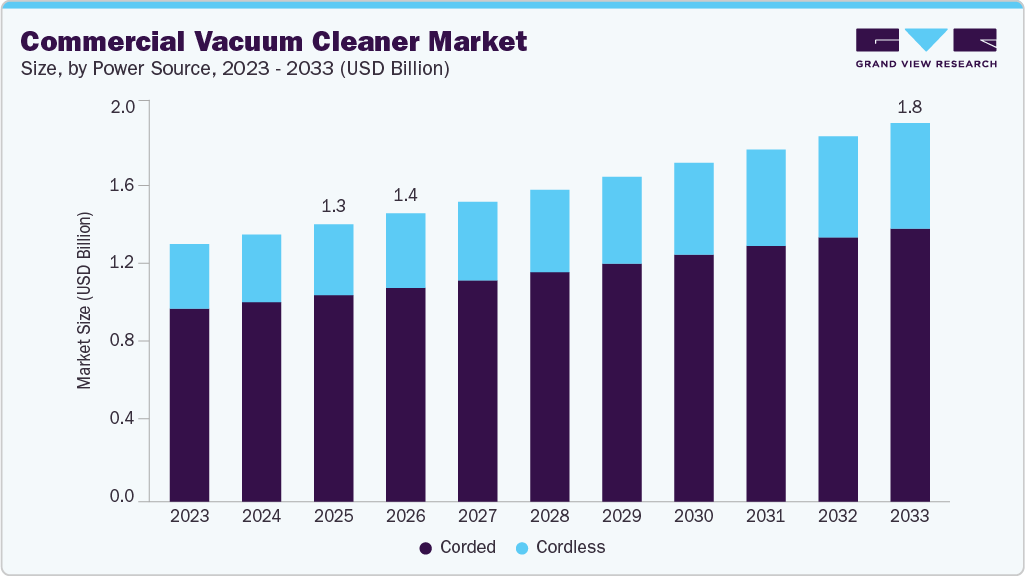
Brand Share Insights
In the market, brand share is typically concentrated among a small set of global incumbents, because large B2B buyers (facility management firms, hospitality chains, airports, retail chains, and healthcare facilities) prioritize proven uptime, nationwide service coverage, spare-parts availability, and standardized fleets over small price differences. As a result, Kärcher, Nilfisk, and Tennant tend to hold strong positions in institutional and facility-managed accounts, while Taski (Diversey) is often preferred in janitorial contracts that bundle chemicals + cleaning equipment. Numatic and SEBO commonly perform well in parts of Europe due to durability and strong distributor networks, and IPC, Comac, and other regional players gain share through local tenders and competitive total cost of ownership (TCO) packages.
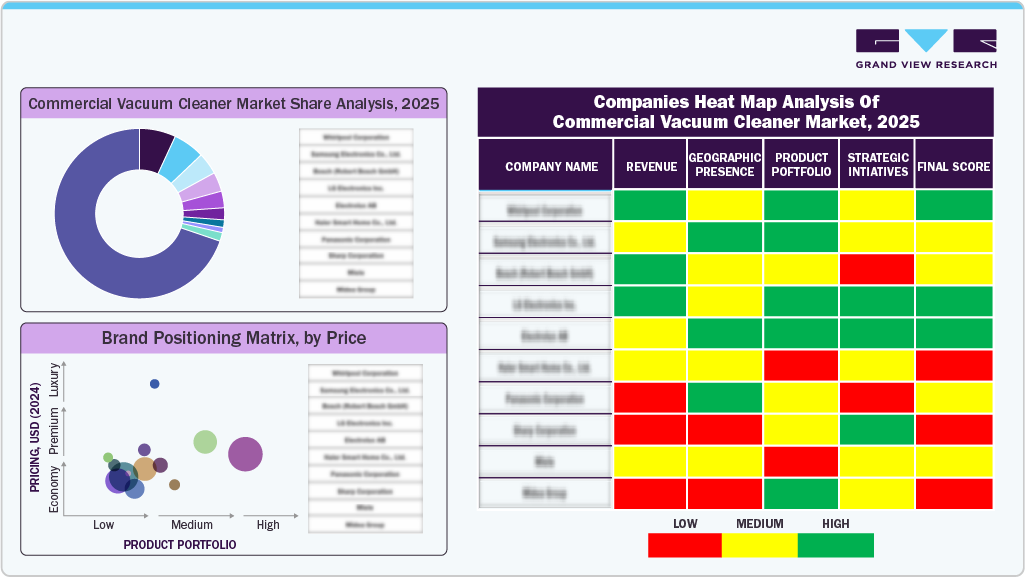
In North America, brands like Hoover Commercial, ProTeam, Sanitaire, and Bissell Commercial often capture meaningful share in specific categories (uprights, backpack vacuums, light-to-mid duty) driven by distributor presence and replacement-cycle demand. Overall, share shifts are usually driven less by product novelty and more by channel strength (dealers/Jan-San distribution), contract wins, after-sales SLAs, battery platform standardization (cordless), and compliance needs (e.g., HEPA/filtration expectations in healthcare and clean-sensitive environments).
According to the data published in January 2025, entertainment & leisure facilities prefer using backpack dry & wet vacuum cleaners as they offer versatility, portability, and convenience to clean each row of the cinema hall, ensuring mobility to the staff while cleaning the space. In these sectors, backpack vacuums, canister vacuums, and upright models with HEPA filters and multi-surface compatibility are typically the most effective solutions.
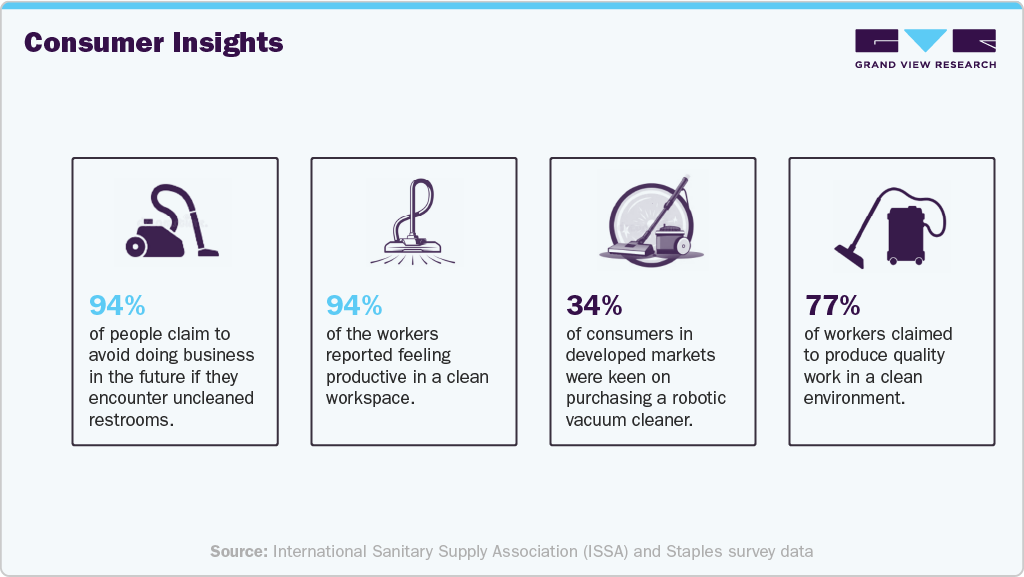
Commercial space cleaning has a direct impact on employees, boosting their productivity. Regular maintenance and cleanliness improve the office environment, assure zero allergens, boost employee morale, enhance work satisfaction, and reduce stress. According to a University of Arizona study, observed cleanliness in workspaces increased productivity by 15% by curtailing absenteeism. Companies such as Alfred Kärcher SE & Co. KG offer powerful vacuum cleaners such as Industrial vacuum IVR 40/30 Sc, and IVR 40/30 Sc M ACD, suitable for fine and combustible dusts in non-explosive production areas.
Pricing Analysis
Central vacuum cleaners hold the largest market value, reflecting their widespread use in large commercial and industrial facilities due to their powerful suction and convenience. Robotic vacuum cleaners are also projected to see significant growth, driven by increasing adoption of automation and smart technologies that reduce labor costs and improve cleaning efficiency.
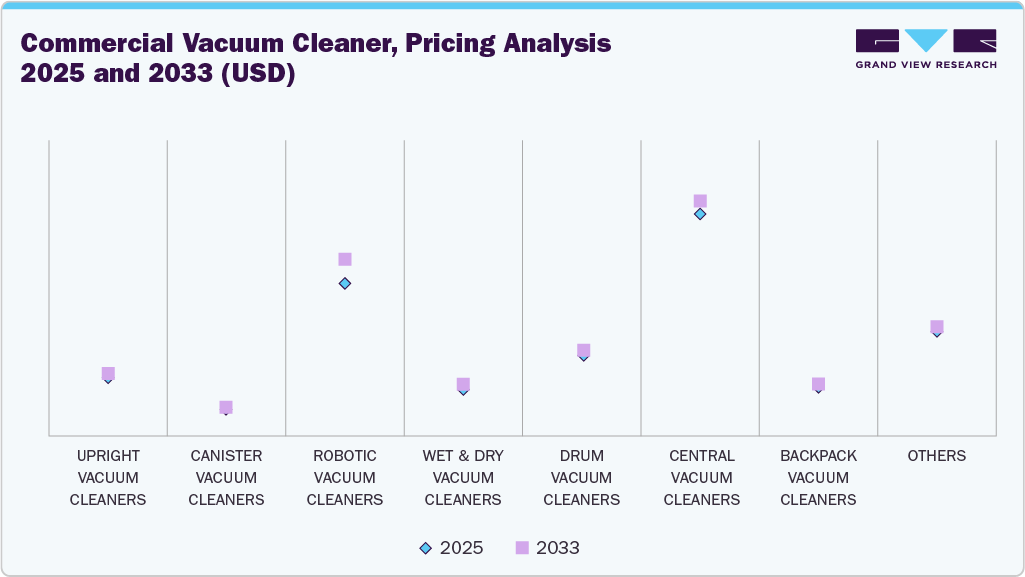
Other segments, such as upright, drum, wet & dry, backpack, and canister vacuum cleaners, are expected to grow moderately, supported by demand for versatile and specialized cleaning solutions in various commercial environments. The “others” category, which includes handheld and stick vacuums, maintains a substantial market presence due to their portability and ease of use for spot cleaning. Overall, technological advancements, rising hygiene standards, and expanding global commercial infrastructure are key factors driving a gradual increase in market value across all product types.
Power Source Insights
The corded commercial vacuum cleaners held the largest revenue share of 74.4% of the commercial vacuum cleaner industry in 2025. The market for corded (AC power) commercial vacuum cleaners is growing steadily, largely due to their reliability and suitability for large-scale cleaning tasks. One of the primary drivers of this demand is the uninterrupted power supply offered by corded models, which makes them ideal for extended use in environments such as hotels, hospitals, schools, and airports. Unlike battery-powered alternatives, corded vacuum cleaners do not require recharging, allowing for continuous operation and eliminating downtime, a crucial advantage for cleaning crews working within tight schedules.
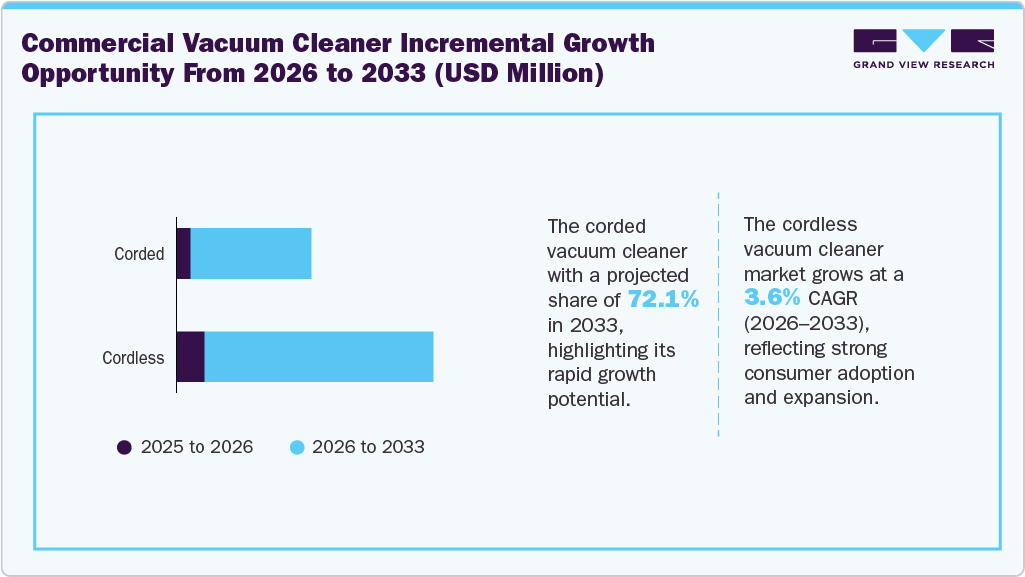
The cordless commercial vacuum cleaner is estimated to witness a CAGR of 3.6% from 2026 to 2033. A major driver behind their adoption is the increased focus on safety and reduced workplace hazards. Cordless vacuums eliminate the risk of people tripping over cords, which is especially important in public or high-traffic venues such as healthcare facilities, schools, and shopping centers. This has made them a go-to choice for businesses prioritizing both operational effectiveness and employee/public safety. Technological advancements in lithium-ion batteries have also made a significant impact. Modern cordless commercial vacuums now offer improved battery life, stronger suction power, and faster charging. As a result, the performance gap between cordless and corded models has narrowed considerably, making cordless vacuums a practical solution for deep and daily cleaning needs.
Product Insights
The upright vacuum cleaners held the largest revenue share of 26.6% of the commercial vacuum cleaner industry in 2025. The increasing demand for efficient and versatile cleaning solutions in commercial spaces such as offices, hotels, retail outlets, and healthcare facilities is leading to the demand for commercial upright vacuum cleaners. Upright vacuum cleaners are valued for their strong suction power, ease of use, and ability to handle large carpeted areas, making them a preferred choice for maintaining cleanliness in high-traffic environments. In addition, advancements in vacuum cleaner technology, such as lightweight designs, enhanced maneuverability, and energy efficiency, are making upright models more appealing. Features like HEPA filtration systems, which address concerns about air quality and allergens, are also influencing purchasing decisions, especially in sectors like healthcare and hospitality.
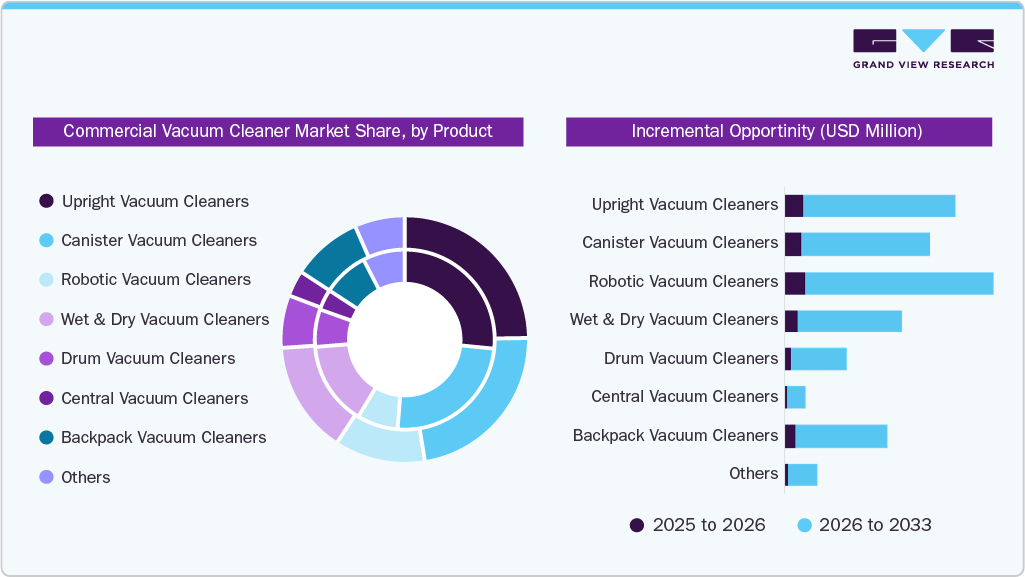
The robotic vacuum cleaners market is estimated to witness a CAGR of 10.2% from 2026 to 2033, due to advancements in technology, increasing operational efficiency needs, and the rising demand for automation in commercial spaces. Businesses, particularly in sectors such as hospitality, retail, healthcare, and office spaces, are adopting robotic vacuum cleaners to streamline cleaning processes and reduce manual labor costs. These devices feature AI-driven navigation, multi-surface cleaning, and remote operation, making them highly efficient and attractive for commercial use. The integration of smart technologies such as IoT, AI, and machine learning into robotic vacuum cleaners is also fueling their adoption. These technologies enable features like real-time mapping, adaptive learning, and scheduled cleaning, which are particularly beneficial for large commercial spaces.
End-user Insights
The commercial vacuum cleaners in cleaning service providers held the largest revenue share of 33.5%. of the commercial vacuum cleaner industry in 2025. Commercial vacuum cleaners are available in various types (e.g., upright, canister, backpack, robotic), each suited for different cleaning environments. This versatility allows cleaning service providers to select the right type of vacuum cleaner based on the specific needs of the space they are cleaning.
The commercial vacuum cleaners in offices and commercial buildings is estimated to witness a CAGR of 5.2% from 2026 to 2033. Vacuum cleaners are indispensable in office and commercial building environments due to their ability to provide fast, efficient, and thorough cleaning. In high-traffic office spaces, vacuum cleaners are ideal for maintaining cleanliness across large areas, including hallways, meeting rooms, and workstations. Their ability to quickly remove dirt, dust, and debris ensures that the workspace remains neat without significant disruptions. With advanced models, cleaning staff can cover more ground in less time, allowing employees to focus on their tasks while the space stays clean.
Distribution Channel Insights
The sale of commercial vacuum cleaner through offline channels held the largest revenue share of 85.7% of commercial vacuum cleaner industry in 2025, due to the hands-on experience, personalized service, and trust that brick-and-mortar outlets, distributors, and specialist suppliers provide. Many commercial buyers, especially in sectors like hospitality, healthcare, and facilities management, prefer purchasing high-investment equipment offline, where they can physically inspect the machines, test functionality, and evaluate build quality before making a decision. In addition, strong after-sales support and servicing options available through offline retailers and distributors are a major draw. These channels often provide product training, on-site demonstrations, installation assistance, and long-term service contracts, which are highly attractive to businesses seeking reliability and minimal downtime.
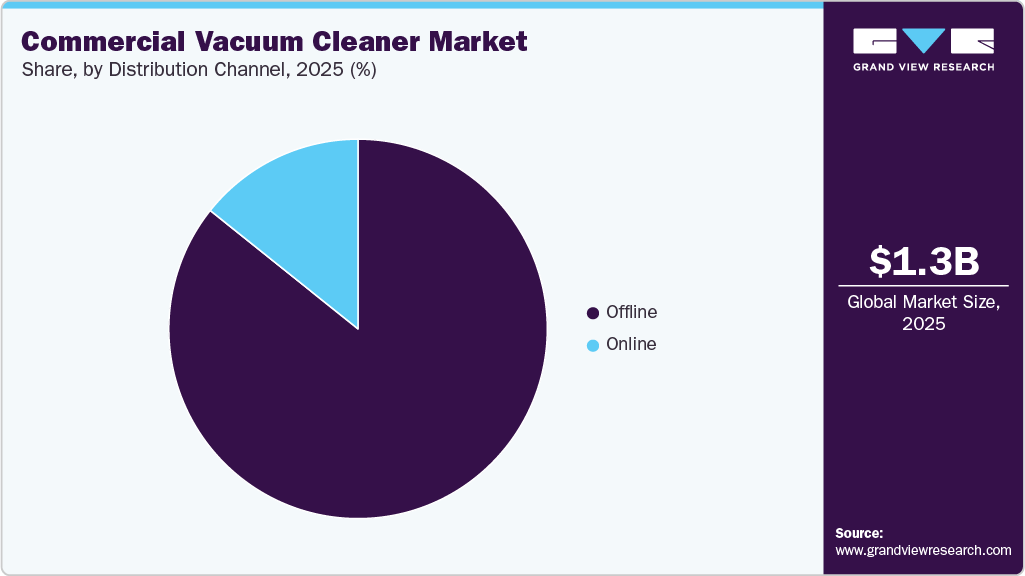
The sale of commercial vacuum cleaners through online channels is estimated to witness a CAGR of 6.4% from 2026 to 2033, driven by evolving buyer behavior, convenience, and broader access to product options and information. One of the primary reasons for this growth is the shift toward digital procurement in commercial and institutional sectors. Facilities managers, cleaning service providers, and business owners increasingly prefer to shop online to compare brands, features, and prices quickly, saving time and reducing the need for in-person visits to suppliers or showrooms.
Regional Insights
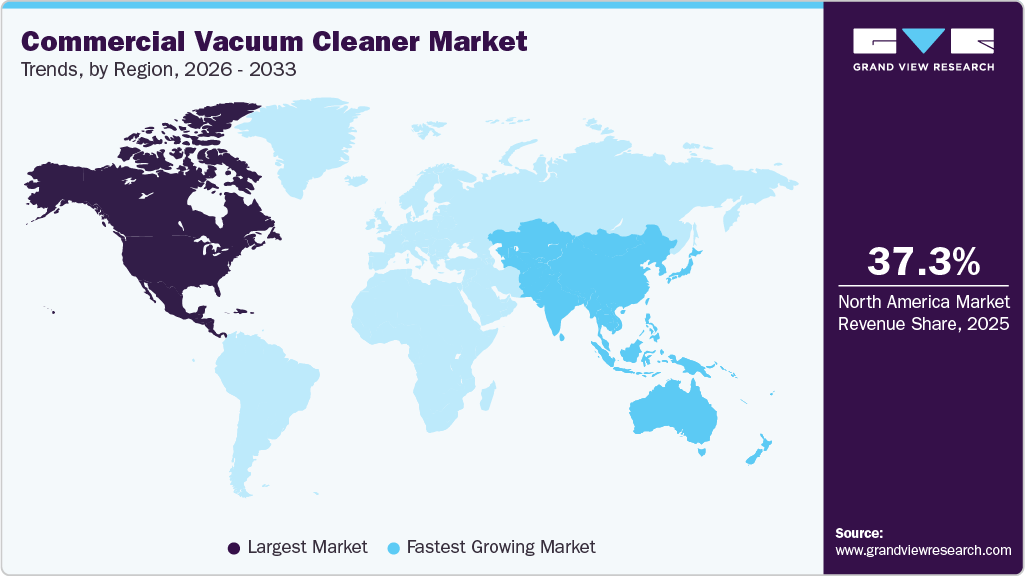
The commercial vacuum cleaner market in North America held the largest revenue share of 37.3% in 2025. In North America, the market is driven by stringent hygiene regulations, advanced facility management practices, and widespread adoption of commercial cleaning services. High demand exists across a variety of segments, particularly for upright vacuum cleaners in large office buildings, retail chains, and hospitality venues where carpeted flooring is common. Canister vacuum cleaners remain a staple in healthcare, education, and smaller commercial facilities due to their flexibility and ease of maneuverability. Robotic vacuum cleaners are increasingly popular, especially among small businesses and facilities managers seeking labor-efficient solutions. Wet & dry and drum vacuum cleaners are preferred in industrial, warehouse, and automotive settings that require robust equipment for heavier messes.
U.S. Commercial Vacuum Cleaner Market Trends
The commercial vacuum cleaner market in the U.S. accounted for a share of 89.8% of the North America revenue in 2025, primarily due to strong demand from diverse industries like hospitality, healthcare, manufacturing, and retail that require specialized, high-performance cleaning solutions to maintain hygiene and safety standards. Commercial settings prioritize efficient, durable vacuum cleaners such as versatile backpack models and wet/dry units that can handle large areas, wet and dry debris, and tight spaces, improving productivity and compliance with sanitation regulations. The U.S. market’s size is also driven by strict regulatory frameworks (e.g., OSHA) and growing awareness of indoor air quality, which push businesses to invest in advanced cleaning equipment.
Canada commercial vacuum cleaner marketis estimated to witness a CAGR of 5.0% from 2026 to 2033, due to increasing demand for advanced cleaning solutions driven by rising hygiene awareness in commercial spaces such as hospitals, malls, and offices. This growth is supported by expanding outsourcing of cleaning services, where businesses prefer professional providers using efficient vacuum cleaners to maintain high sanitation standards and reduce operational burdens. For instance, hospitals rely on powerful vacuum cleaners with HEPA filtration to ensure sterile environments for patients and staff. In addition, technological innovations like cordless, lightweight, and eco-friendly vacuum models are gaining popularity, aligning with Canada’s sustainability goals.
Europe Commercial Vacuum Cleaner Market Trends
The commercial vacuum cleaner market in Europe is estimated to witness a CAGR of 3.9% from 2026 to 2033, due to increasing industrial automation, stricter workplace hygiene regulations, and a strong focus on sustainability. Industries such as manufacturing, pharmaceuticals, and food processing are adopting advanced vacuum cleaners with smart features and energy-efficient designs to meet stringent environmental and safety standards. In addition, the rise of automated and robotic cleaning technologies helps reduce labor costs and improve cleaning efficiency in large commercial spaces like airports and shopping centers. Europe’s commitment to reducing carbon footprints and adopting eco-friendly cleaning solutions further drives demand for energy-saving vacuum cleaners.
The UK commercial vacuum cleaner marketis estimated to witness a CAGR of 4.3% from 2026 to 2033, due to increasing demand for efficient cleaning solutions across sectors like healthcare, retail, and manufacturing, driven by heightened hygiene standards and regulatory requirements. The rise in commercial construction and refurbishment projects also fuels demand for advanced vacuum cleaners, including canister and drum types, which offer powerful suction and versatility for large spaces. These factors, combined with innovations from key players like Dyson and Nilfisk, contribute to steady growth in the UK market.
The commercial vacuum cleaner market in Germanyis estimated to witness a CAGR of 3.7% from 2026 to 2033 due to increasing demand for energy-efficient, high-quality cleaning equipment driven by strict environmental regulations like the EU Ecodesign Directive and rising awareness of indoor air quality. German businesses across the healthcare, manufacturing, and hospitality sectors prioritize durable vacuum cleaners with advanced features, such as HEPA filtration, to meet stringent hygiene standards. Hospitals extensively use canister vacuum cleaners that provide powerful suction while minimizing noise, ensuring patient comfort and infection control. In addition, the growing adoption of cordless and robotic vacuum cleaners enhances cleaning efficiency and convenience in commercial spaces. Urbanization and expansion of commercial infrastructure in cities such as Berlin and Munich also boost demand for compact, versatile models suited for diverse environments.
Asia Pacific Commercial Vacuum Cleaner Market Trends
The commercial vacuum cleaner market in the Asia Pacific is estimated to witness a CAGR of 5.0% from 2026 to 2033, due to rapid urbanization, rising disposable incomes, and increasing awareness about hygiene in commercial spaces such as hospitals, malls, and offices. Countries like China, India, and Japan lead the market with growing demand for advanced, energy-efficient vacuum cleaners equipped with features like HEPA filtration to maintain clean and healthy environments. For instance, hospitals in India increasingly use high-suction vacuum cleaners to ensure sterile conditions for patients and staff. In addition, the expanding industrial sector in the region, including manufacturing and pharmaceuticals, drives demand for durable vacuum cleaners that improve workplace safety by controlling dust and contaminants.
China commercial vacuum cleaner marketaccounted for a share of 29.8% of the regional revenue in 2025 due to rapid urbanization, rising disposable incomes, and growing consumer awareness about hygiene and cleanliness in both residential and commercial spaces. In addition, the rise of e-commerce platforms in China facilitates easy access to a wide range of vacuum cleaner models, boosting sales. Strong competition between international brands such as Dyson and local players such as Haier and Midea encourages continuous innovation tailored to Chinese consumers’ preferences.
The commercial vacuum cleaner market in Indiais estimated to witness a CAGR of 6.4% from 2026 to 2033, due to rapid urbanization, rising disposable incomes, and increasing awareness about hygiene and cleanliness in commercial and industrial spaces. Growing sectors such as healthcare, hospitality, and manufacturing are driving demand for advanced vacuum cleaners with features to maintain sanitation and comply with safety standards. In addition, the expansion of organized retail and commercial infrastructure fuels the need for efficient cleaning solutions. The rising middle-class population and evolving lifestyles also encourage the adoption of premium and technologically advanced products. Furthermore, government initiatives promoting cleanliness and workplace safety enhance market growth. These factors, combined with the entry of international and domestic brands offering innovative, affordable products, make India one of the fastest-growing markets globally.
Central & South America Commercial Vacuum Cleaner Market Trends
The commercial vacuum cleaner market in Central & South America is estimated to grow at a CAGR of 3.2% from 2026 to 2033, driven by rising urbanization, expanding commercial infrastructure, and increasing workplace hygiene and cleanliness awareness in offices, hospitals, and retail spaces. Brazil, as the largest market in the region, drives growth, with a growing middle class demanding advanced cleaning technologies such as canister and robotic vacuum cleaners that offer efficiency and improved indoor air quality. Brazil increasingly uses HEPA-filtered vacuum cleaners to control dust and allergens, ensuring safer environments for patients. In addition, the rise of e-commerce platforms like MercadoLibre makes it easier to access a variety of vacuum cleaner models, boosting adoption even in smaller cities. Government initiatives promoting energy-efficient appliances and environmental sustainability also encourage the use of modern, eco-friendly vacuum cleaners. Despite challenges such as high costs and infrastructure gaps in some areas, these factors collectively support steady market expansion across Central and South America.
Middle East & Africa Commercial Vacuum Cleaner Market Trends
The commercial vacuum cleaner market in the Middle East & Africa is estimated to witness a CAGR of 2.6% from 2026 to 2033, due to increasing urbanization, rising hygiene awareness, and expanding commercial infrastructure across key countries like Saudi Arabia, the UAE, and South Africa. Although the residential sector dominates the overall vacuum cleaner market, the commercial segment is growing steadily as offices, hospitals, and educational institutions invest in advanced cleaning equipment to meet stricter health and safety standards. The growing trend of automation and smart cleaning technologies also enhances operational efficiency in large facilities.
Key Commercial Vacuum Cleaner Company Insights
Key companies in the commercial vacuum cleaner industry adopt strategies focused on innovation and sustainability to maintain competitiveness. They develop advanced products featuring smart technologies, energy efficiency, and enhanced filtration systems to meet increasing hygiene and environmental standards across commercial sectors. Emphasis on ergonomic designs and cordless or robotic models improves user convenience and cleaning efficiency. Companies also invest in expanding distribution through online and offline channels to reach diverse markets.
Key Commercial Vacuum Cleaner Companies:
The following key companies have been profiled for this study on the commercial vacuum cleaner market.
- Nilfisk Group
- Alfred Kärcher SE & Co. KG
- Makita Corporation
- Tennant Company
- Dyson Limited
- Hako Group
- Techtronic Industries Co. Ltd.
- Numatic International Ltd.
- Tacony Corporation
- Solenis LLC
- BISSEL Group
- ProTeam, Inc.
- SEBO America, LLC
- Pacvac Pty. Ltd.
- SPRiNTUS GmbH
Recent Developments
-
In February 2026, Makita expanded its XGT cordless platform with the launch of the 40VMax XGT VC013G vacuum and dust extractor, designed for professional jobsite cleaning and dust control. The portable L-Class extractor delivers strong suction power and airflow while maintaining compact size and low noise levels, making it suitable for construction and workshop environments.
-
In February 2026, Xerowaste Solutions introduced a new range of industrial battery-powered vacuum cleaners featuring lithium-iron phosphate batteries that provide longer runtime, enhanced safety, and reduced maintenance. The cordless Comzu model delivers strong suction comparable to traditional wired machines while supporting wet and dry industrial cleaning with optional HEPA filtration. The launch highlights the growing demand for energy-efficient, cordless, and sustainable cleaning equipment that improves operational efficiency and workplace safety.
-
In November 2025, Nilfisk expanded its robotics portfolio with the launch of the VP25, an industrial-grade robotic vacuum designed for large, high-traffic environments such as hotels, offices, and retail spaces. The autonomous vacuum uses advanced LiDAR sensors and smart navigation technology to map surroundings, avoid obstacles, and deliver consistent cleaning performance on both hard and soft floors.
Commercial Vacuum Cleaner Market Report Scope
Report Attribute
Details
Market size value in 2026
USD 1.40 billion
Revenue forecast in 2033
USD 1.85 billion
Growth rate
CAGR of 4.0% from 2026 to 2033
Actual data
2021 - 2025
Forecast period
2026 - 2033
Quantitative units
Volume in thousand units, revenue in USD million/billion, and CAGR from 2026 to 2033
Report coverage
Volume & revenue forecast, company ranking, competitive landscape, growth factors, and trends
Segments covered
Power source, product, end-user, distribution channel, region
Regional scope
North America; Europe; Asia Pacific; CSA; MEA
Country scope
U.S.; Canada; Mexico; Germany; UK; France; Italy; Spain; Netherland; Russia; Poland China; Japan; India; South Korea, Vietnam, Indonesia; Philippines; Australia & New Zealand; Brazil; Argentina; South Africa; Saudi Arabia; Turkey; UAE
Key companies profiled
Nilfisk Group; Alfred Kärcher SE & Co. KG; Makita Corporation; Tennant Company; Dyson Limited; Hako Group; Techtronic Industries Co. Ltd.; Numatic International Ltd.; Tacony Corporation; Solenis LLC; BISSEL Group; ProTeam, Inc.; SEBO America, LLC; Pacvac Pty. Ltd.; SPRiNTUS GmbH
Customization scope
Free report customization (equivalent up to 8 analysts’ working days) with purchase. Addition or alteration to country, regional & segment scope.
Pricing and purchase options
Avail customized purchase options to meet your exact research needs. Explore purchase options
Global Commercial Vacuum Cleaner Market Report Segmentation
This report forecasts revenue growth at global, regional & country levels and provides an analysis of the latest trends and opportunities in each of the sub-segments from 2021 to 2033. For this study, Grand View Research has segmented the global commercial vacuum cleaner market report based on power source, product, end-user, distribution channel, and region:
-
Power Source Outlook (Volume, Thousand Units; Revenue, USD Million, 2021 - 2033)
-
Corded
-
Cordless
-
-
Product Outlook (Volume, Thousand Units; Revenue, USD Million, 2021 - 2033)
-
Upright Vacuum Cleaners
-
Canister Vacuum Cleaners
-
Robotic Vacuum Cleaners
-
Wet & Dry Vacuum Cleaners
-
Drum Vacuum Cleaners
-
Central Vacuum Cleaners
-
Backpack Vacuum Cleaners
-
Others
-
-
End-user Outlook (Volume, Thousand Units; Revenue, USD Million, 2021 - 2033)
-
Healthcare Facilities
-
Hospitality and Lodging
-
Retail Stores
-
Shopping Malls
-
Educational Institutions
-
Offices and Commercial Buildings
-
Cleaning Service Providers
-
Car Detailing Services
-
Entertainment and Leisure Facilities
-
Others
-
-
Distribution Channel Outlook (Volume, Thousand Units; Revenue, USD Million, 2021 - 2033)
-
Online
-
Offline
-
-
Regional Outlook (Volume, Thousand Units; Revenue, USD Million, 2021 - 2033)
-
North America
-
U.S.
-
Canada
-
Mexico
-
-
Europe
-
Germany
-
UK
-
France
-
Italy
-
Spain
-
Netherland
-
Russia
-
Poland
-
-
Asia Pacific
-
China
-
Japan
-
India
-
Australia & New Zealand
-
South Korea
-
Vietnam
-
Indonesia
-
Philippines
-
-
Central & South America
-
Brazil
-
Argentina
-
-
Middle East & Africa
-
South Africa
-
Saudi Arabia
-
Turkey
-
UAE
-
-
Frequently Asked Questions About This Report
b. The global commercial vacuum cleaner market size was estimated at USD 1.30 billion in 2024 and is expected to reach USD 1.35 billion in 2025.
b. The global commercial vacuum cleaner market is expected to grow at a compounded growth rate of 4.1% from 2025 to 2030 to reach USD 1.65 billion by 2030.
b. The corded commercial vacuum cleaners market accounted for a share of 74.7% of the global revenue in 2024. The market for corded (AC power) commercial vacuum cleaners is growing steadily, largely due to their reliability and suitability for large-scale cleaning tasks.
b. Some key players operating in the commercial vacuum cleaner market include Nilfisk Group; Alfred Kärcher SE & Co. KG; Makita Corporation; Tennant Company; Dyson Limited; Hako Group; Techtronic Industries Co. Ltd.; Numatic International Ltd.; Tacony Corporation; Solenis LLC and others
b. Key factors that are driving the market growth include the expansion of the contract cleaning industry, rapid infrastructure development in emerging economies, and growing e-commerce adoption for B2B procurement


Share this report with your colleague or friend.
Need a Tailored Report?
Customize this report to your needs — add regions, segments, or data points, with 20% free customization.


ISO 9001:2015 & 27001:2022 Certified
We are GDPR and CCPA compliant! Your transaction & personal information is safe and secure. For more details, please read our privacy policy.
Trusted market insights - try a free sample
See how our reports are structured and why industry leaders rely on Grand View Research. Get a free sample or ask us to tailor this report to your needs.