- Home
- »
- Biotechnology
- »
-
Cell Culture Media & Cell Lines Market, Industry Report 2033GVR Report cover
![Cell Culture Media & Cell Lines Market Size, Share & Trends Report]()
Cell Culture Media & Cell Lines Market (2026 - 2033) Size, Share & Trends Analysis Report By Product (Traditional Cell Lines, Classical Media), By Application (Biopharmaceutical Production, Diagnostics, Research And Academic Institutes), By End-use, By Region, And Segment Forecasts
- Report ID: GVR-4-68040-682-0
- Number of Report Pages: 150
- Format: PDF
- Historical Range: 2021 - 2024
- Forecast Period: 2026 - 2033
- Industry: Healthcare
- Report Summary
- Table of Contents
- Segmentation
- Methodology
- Download FREE Sample
-
 Download Sample Report
Cell Culture Media & Cell Lines Market Summary
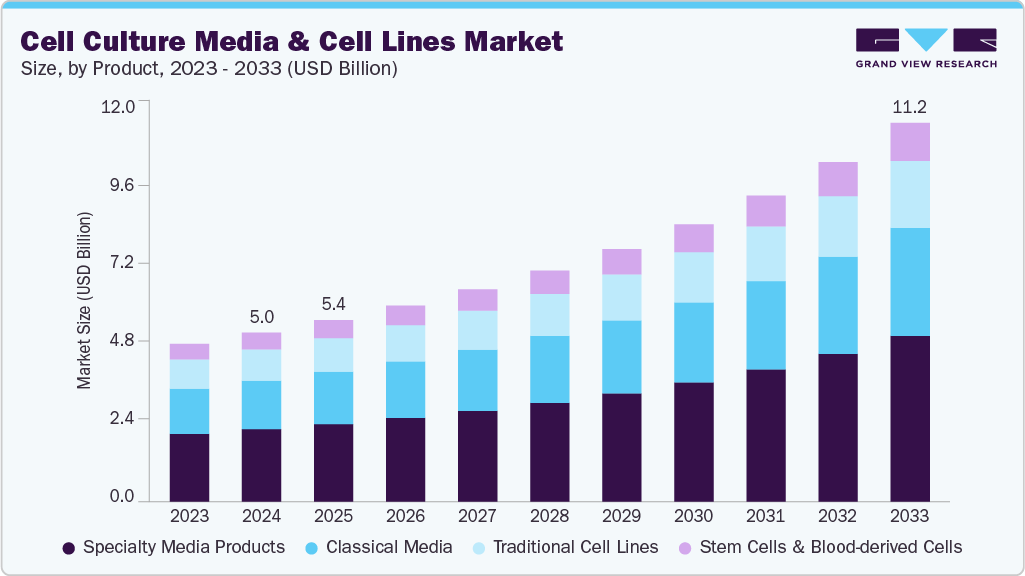
The global cell culture media & cell lines market size wasestimated at USD 5.39 billion in 2025 and is projected to reach USD 11.25 billion by 2033, growing at a CAGR of 9.87% from 2026 to 2033. This growth is driven by the rising demand for biopharmaceuticals, increasing investments in regenerative medicine and cancer research, and advancements in cell-based technologies.
Key Market Trends & Insights
- The North America cell culture media & cell lines market held the largest share of 43.15% of the global market in 2025.
- The cell culture media & cell lines market in the U.S. dominates the regional market.
- By product, the specialty media products cells segment held the highest market share of 42.78% in 2025.
- By application, the biopharmaceutical production segment held the highest market share of 45.75% in 2025.
- By end-use, the large biopharmaceutical companies segment dominated the market in 2025 with a share of 30.18%.
Market Size & Forecast
- 2025 Market Size: USD 5.39 Billion
- 2033 Projected Market Size: USD 11.25 Billion
- CAGR (2026-2033): 9.87%
- North America: Largest market in 2025
- Asia Pacific: Fastest growing market
Moreover, the expanding applications of cell culture in drug discovery, vaccine production, and personalized medicine are expected to boost market growth.Rising Vaccine Demand and Scaling of Production Capacities
The increasing global demand for vaccines, especially highlighted by the COVID-19 pandemic, has become a key market driver. Vaccines require efficient and scalable production platforms, where cell culture plays a vital role in propagating viruses and producing vaccine antigens. High-quality cell culture media and stable, well-characterized cell lines ensure consistent, safe, and effective vaccine manufacturing. As the world continues to focus on controlling infectious diseases such as influenza, RSV, and emerging viral threats, the demand for robust cell culture systems is expected to grow significantly.
In response to this growing vaccine demand, pharmaceutical companies and governments worldwide invest heavily in expanding vaccine production capacities and infrastructure. This expansion necessitates advanced cell culture media formulations and optimized cell lines to deliver higher yields, reduce production times, and meet stringent regulatory standards. The push toward serum-free and chemically defined media also supports safer and more reproducible vaccine manufacturing processes. These factors collectively drive the surge in demand for cell culture media and cell lines, positioning the market for strong growth over the forecast period.
Growing R&D Investments
Increasing investments from government bodies, private organizations, and academic and research institutions in life sciences research are a significant driver, fueling the demand for cell culture media and cell lines. For instance, in June 2025, researchers at James Cook University (JCU) Singapore and the Singapore Institute of Technology (SIT) initiated the SeaToMeat project in Singapore. This collaboration aims to develop sustainable, seaweed-based cell culture media alternatives by enzymatically hydrolyzing seaweed proteins into high-value hydrolysates.
The project, supported by the Good Food Institute and industry partner Umami Bioworks, seeks to replace traditional fetal bovine serum with cost-effective, scalable, and ethical media components. Moreover, the private sector, including pharmaceutical companies, biotech startups, and contract research organizations, heavily invests in R&D to accelerate drug discovery, improve manufacturing efficiencies, and develop personalized medicine approaches.
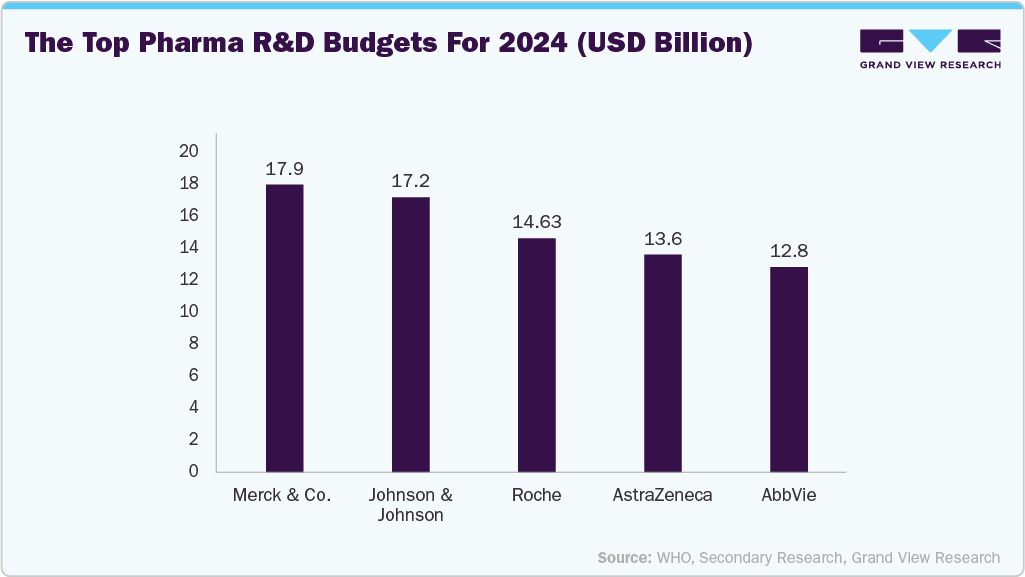
This surge in research activity fuels the demand for high-quality cell culture media tailored to various cell types and applications, along with robust, well-characterized cell lines that provide reliable and reproducible results. The rise of innovative technologies such as 3D cell culture, organoids, and high-throughput screening further intensifies the need for advanced culture media and cellular models. Growing R&D investments are expanding the market by driving technological advancements and broadening the scope of cell culture applications across biomedical research and biomanufacturing.
Market Concentration & Characteristics
The cell culture media & cell lines industry is significantly driven by a high degree of innovation, continuously enhancing product quality and process efficiency. Innovations in cell line engineering, including genetically modified and immortalized cell lines, have boosted productivity and stability, enabling more efficient biologics and vaccine production. For instance, in February 2025, Discovery Life Sciences announced the U.S. launch of its OncoPro-derived Tumoroid Cell Lines at Precision Med Tri-Con, advancing oncology research with predictive 3D cancer models. Moreover, the adoption of automation, artificial intelligence, and advanced screening is streamlining workflows and reducing costs. This ongoing technological progress meets the growing and evolving demands of the pharmaceutical and biotech industries and further fuels the market expansion.
The rising level of mergers and acquisitions (M&A) is a significant driver for the cell culture media and cell lines industry. Strategic moves allow companies to integrate innovative cell culture platforms, proprietary media formulations, and high-performance cell lines into their operations, accelerating product development and commercialization timelines. For instance, in April 2023, AnaBios Corporation acquired Cell Systems, a human primary cell and cell culture media company located in Kirkland, Washington. This acquisition enhances AnaBios' portfolio of human tissue and cells, providing researchers with a broader array of biologically relevant tools to expedite drug discovery and deepen understanding of cell biology. Moreover, M&A activity fosters industry consolidation, enhances supply chain capabilities, and promotes investment in R&D, ultimately driving innovation and boosting demand for high-quality cell culture solutions across a broader range of applications.
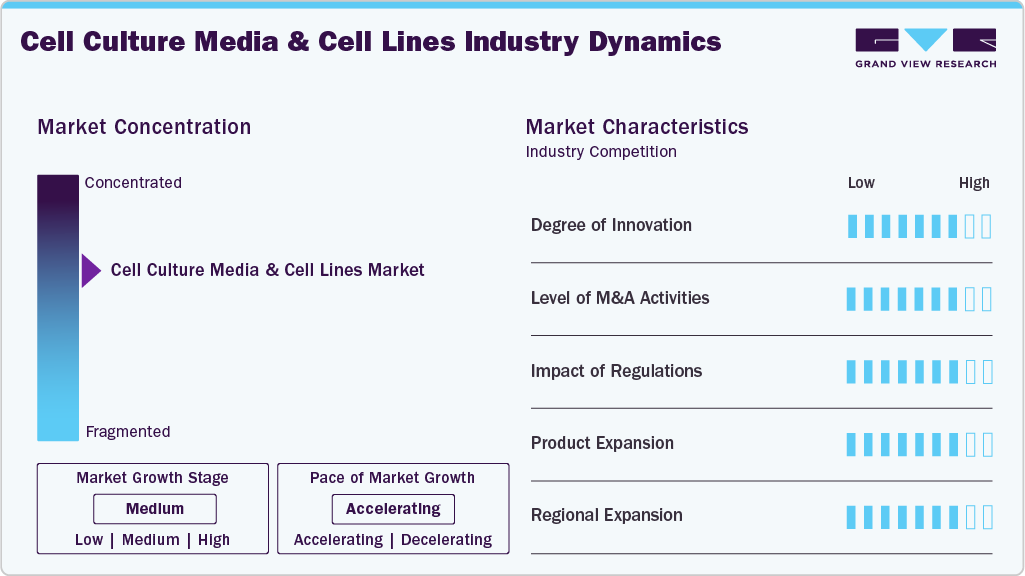
Regulatory frameworks play a critical role in shaping the cell culture media and cell lines industry by enforcing stringent quality, safety, and compliance standards, particularly for products used in biopharmaceutical manufacturing, vaccine production, and clinical research. Agencies such as the FDA, EMA, and other global regulatory bodies require rigorous testing and validation of cell lines and media components to ensure consistency, traceability, and the elimination of contaminants like animal-derived pathogens. This regulatory pressure drives the adoption of chemically defined serum-free, GMP-compliant media and thoroughly characterized and traceable cell lines. While compliance increases operational complexity and costs, it also encourages innovation and differentiation among manufacturers. As companies strive to meet evolving regulatory demands, the need for advanced, regulatory-compliant cell culture solutions continues to rise, fueling market growth.
Product expansion is a key driver propelling growth in the cell culture media & cell lines industry, as companies increasingly diversify and enhance their offerings to meet the complex and evolving needs of the life sciences industry. For instance, in October 2024, WuXi Biologics launched WuXia RidGS, a high-yield CHO cell line platform utilizing zinc finger nucleases for non-antibiotic cell line development. This platform achieved average clonal expression levels exceeding 6 g/L for monoclonal antibodies and maintained stable productivity and uniform product quality without needing antibiotics. WuXia RidGS was developed to meet the evolving needs of global clients, accelerating the speed of the market for life-saving therapies and advancing the accessibility of high-quality biologics for patients worldwide. This broadening of product portfolios helps companies address a wider range of research and bioproduction challenges and supports greater customization and scalability. As demand rises across pharmaceutical, academic, and clinical sectors, continuous product expansion ensures broader market reach and strengthens competitive positioning, driving sustained market growth.
Regional expansion is a significant growth driver in the cell culture media and cell lines industry. Key industry players increasingly target emerging markets in Asia-Pacific, Latin America, and the Middle East. These regions are witnessing rapid growth in biopharmaceutical manufacturing, academic research, and government-backed healthcare infrastructure, creating strong demand for advanced cell culture technologies. For instance, in November 2024, Thermo Fisher Scientific signed a Memorandum of Understanding with the Government of Telangana to establish a 10,000 sq. ft. Bioprocess Design Centre (BDC) in Genome Valley, Hyderabad. The facility, expected to commence operations in early 2025, will provide advanced capabilities in upstream and downstream research, cell culture media development, single-use scale-up manufacturing, and product validation. By developing regionally, companies can access new customer bases, reduce supply chain risks, and respond more effectively to local market needs, ultimately accelerating global market penetration and revenue growth.
Product Insights
The specialty media products segment dominated the market with a revenue share of 42.78% in 2025. This segment’s strong performance is attributed to the increasing demand for customized and application-specific media formulations designed to support the growth and function of specialized cell types, such as stem cells, primary cells, and genetically modified cell lines. Specialty media are widely used in advanced research areas, including regenerative medicine, cancer biology, vaccine production, and biopharmaceutical development, where precise control over cell behavior is critical. Their ability to enhance cell performance, improve reproducibility, and meet stringent regulatory standards makes them essential in academic and industrial settings. As research becomes more targeted and the need for high-efficiency culture systems grows, the demand for specialty media will continue rising, reinforcing this segment’s leadership in the global market.
The stem cells & blood-derived cells segment is expected to grow at the fastest growth rate over the forecast period, driven by the increasing adoption of stem cells in regenerative medicine, tissue engineering, and cellular therapies, as well as the rising use of blood-derived cells in immunotherapy and vaccine development. The growing number of clinical trials focused on stem cell-based treatments, combined with significant R&D investments in cell-based regenerative approaches, is fueling demand for highly specialized media and cell lines tailored to support the delicate growth conditions of these cells.
Application Insights
Biopharmaceutical production held the dominant market share of 45.75% in 2025, primarily due to the rapidly increasing demand for biologics such as monoclonal antibodies, recombinant proteins, and vaccines. The biopharmaceutical industry heavily relies on cell culture technologies for the large-scale production of these complex therapeutics, requiring high-performance media and robust, high-yield cell lines to ensure product consistency, safety, and scalability. The shift toward personalized medicine and targeted therapies has also increased the need for advanced biomanufacturing platforms.
Tissue engineering and regenerative medicine are projected to grow at the highest CAGR during the forecast period. This rapid growth is driven by increasing advancements in stem cell research, 3D bioprinting, and scaffold-based tissue engineering to repair or replace damaged tissues and organs. For instance, in June 2025, STEMCELL Technologies launched the STEMprep Tissue Dissociator System. This automated benchtop instrument standardizes tissue dissociation, producing high-yield, high-viability single-cell suspensions. It features built-in temperature control (4-37°C) and modular scalability, supporting 4 to 12 samples, with expansion options. STEMprep integrates seamlessly with STEMCELL’s EasySep and ImmunoCult workflows for oncology, immunology, and regenerative medicine applications, enhancing research efficiency and reproducibility. Cell culture media and cell lines are critical to the success of regenerative therapies, providing the essential nutrients and controlled environments needed to maintain cell viability, promote differentiation, and support tissue formation, further driving the segment demand in the cell culture media & cell lines industry.
End-use Insights
The large biopharmaceutical companies segment dominated the market in 2025 with a share of 30.18%, owing to their substantial investments in biopharmaceutical research and development, advanced manufacturing capabilities, and established global supply chains. These companies have extensive biologics pipelines, including monoclonal antibodies, vaccines, and cell-based therapies. These require large-scale, high-quality cell culture media and well-characterized cell lines for efficient production. Their ability to fund innovation and adopt cutting-edge technologies, such as serum-free media and genetically engineered cell lines, gives them a competitive edge in optimizing yields and reducing production costs. These factors collectively contribute to their dominant market position in the cell culture media and cell lines industry.
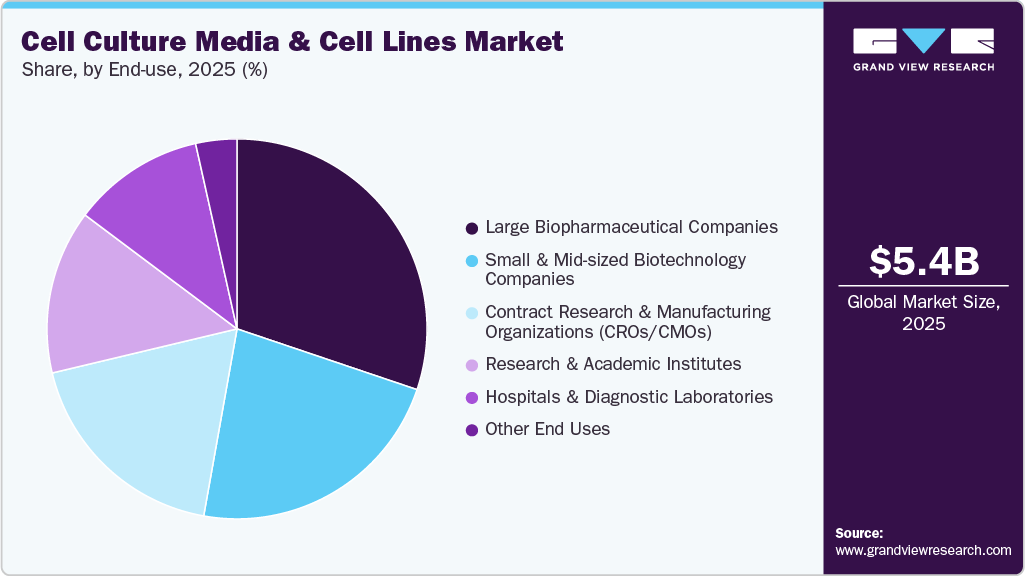
The contract research and manufacturing organizations (CROs/CMOs) segment is expected to emerge as the fastest-growing segment during the forecast period, driven by biopharmaceutical companies' increasing outsourcing of research, development, and manufacturing activities. As drug development processes become more complex and costly, many pharma and biotech firms partner with CROs and CMOs to leverage their specialized expertise, advanced facilities, and scalable manufacturing capabilities. For instance, in September 2024, NovAliX partnered with Bruker, which took a minority stake, to advance drug discovery through combined expertise and the Biophysics Institute for Biomedical Research. This trend is particularly prominent in cell culture-based biologics and cell therapy production. CROs/CMOs provide tailored cell lines and customized media solutions to meet specific project needs, boosting the overall market for cell culture media and cell lines.
Regional Insights
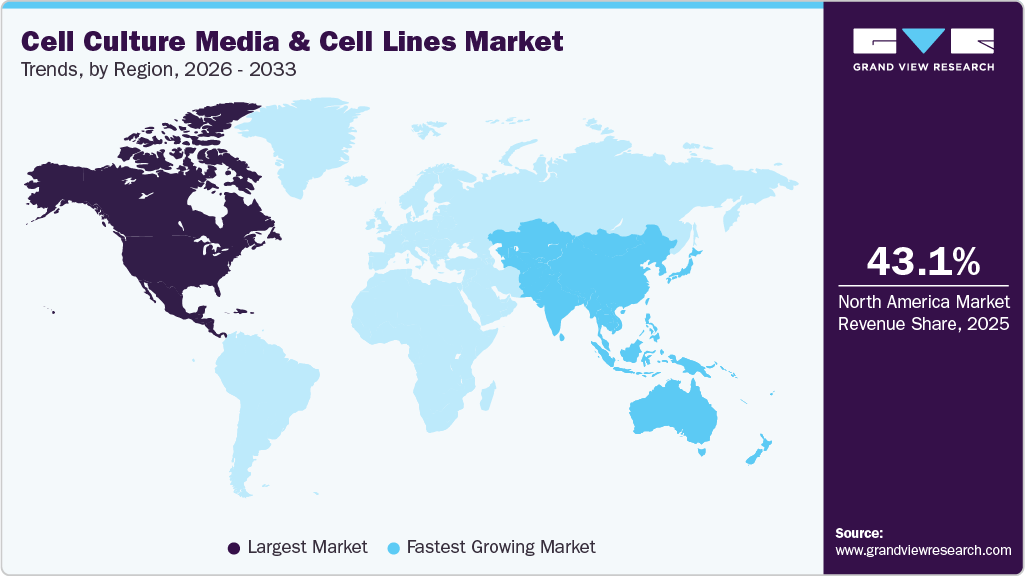
The cell culture media & cell lines market in North America registered the largest market share of 43.15% in 2025, owing to the well-established pharmaceutical and biotechnology industries, high R&D investments, and the presence of major market players. The region benefits from advanced healthcare infrastructure, supportive government initiatives, and increasing adoption of innovative biopharmaceuticals and cell therapies.
U.S Cell Culture Media & Cell Lines Market Trends
The cell culture media & cell lines market in the U.S. dominates the regional market with its cutting-edge biotech sector, significant R&D funding, and regulatory frameworks that facilitate innovation in cell culture technologies. The presence of numerous biotech startups, large pharmaceutical companies, and contract manufacturing organizations fuels the demand for advanced cell culture media and cell lines. The country's leadership in stem cell research and personalized medicine further strengthens market growth. For instance, in March 2021, Thermo Fisher Scientific launched Gibco Human Plasma Like Medium (HPLM) in the USA, offering a cGMP, physiologically relevant culture medium containing over 60 plasma-level metabolites and salts.
Europe Cell Culture Media & Cell Lines Market Trends
The cell culture media & cell lines market in Europe is a major market, fueled by strong biopharmaceutical manufacturing capabilities, high healthcare expenditure, and extensive research activities. Countries like Germany and the UK have led the adoption of advanced cell culture technologies, supported by strategic collaborations between academic institutions and industry. For instance, in March 2025, Molecular Devices deployed its CellXpress.ai Automated Cell Culture System across Europe and North America, leveraging AI-driven automation to enhance reproducibility, efficiency, and decision-making in complex cell culture workflows. Europe’s focus on regenerative medicine and personalized therapies further accelerates demand.
The UK cell culture media & cell lines market is expected to experience rapid growth, driven by a strong focus on regenerative therapies and biologics development. Increasing investments in cell therapy research, along with government incentives to support biotech innovation, propel demand for specialized media and cell lines. The country’s growing number of clinical trials and biomanufacturing facilities contributes to market expansion.
The cell culture media & cell lines market in Germany is a leading market in Europe, driven by its strong pharmaceutical manufacturing industry and robust research environment. The country emphasizes innovation in bioprocessing and regenerative medicine, supported by government funding and collaborations between industry and academia. Germany’s stringent regulatory standards also promote the adoptionof high-quality cell culture products, enhancing market demand.
Asia Pacific Cell Culture Media & Cell Lines Market Trends
The cell culture media & cell lines market in the Asia Pacific is expected to grow with the fastest CAGR of 10.26% throughout the forecast period, due to rapidly expanding biopharmaceutical industries, rising healthcare investments, and increasing government support for biotechnology research. Countries like China and Japan are at the forefront, driven by large patient populations, growing clinical trials, and expanding contract manufacturing services. For instance, in March 2025, Sartorius initiated construction of a Songdo, South Korea, cell‑culture media and sterile‑consumables facility, aimed at serving Asia‑Pacific demand, supporting regional biopharma growth, and establishing a technology and application centre, which further drives the regional demand.
China cell culture media & cell lines market is projected to grow steadily over the forecast period, due to its expanding biotechnology sector, large patient population, and increasing government initiatives to promote biopharmaceutical manufacturing and infrastructure development. The country’s investments in contract manufacturing, clinical research, and infrastructure development attract global players. For instance, in September 2023, Eminence Biotechnology launched a GMP-compliant cell culture media manufacturing facility in Suzhou, China. The 7,000 m² site features advanced pin-milling technology and annually delivers up to 20 million liters of dry powder and 300,000 liters of liquid media.
The cell culture media & cell lines market in Japan is a key player in Asia, with significant advancements in stem cell research, regenerative medicine, and biologics production. For instance, in December 2024, PHC Corporation's Biomedical Division received The Analytical Scientist's 2024 Innovation Award for its LiCellMo Live Cell Metabolic Analyzer launched in Japan to continuously monitor glucose and lactate levels in cell cultures. This advancement enables researchers to observe previously unmeasurable metabolic changes without interrupting experiments for sampling, thereby enhancing the reproducibility and quality of cell cultures in cell and gene therapy research and manufacturing.
MEA Cell Culture Media & Cell Lines Market Trends
The cell culture media & cell lines market in the Middle East & Africa region is emerging as a promising market, supported by increasing healthcare infrastructure development and growing investments in biotechnology. Countries like Kuwait focus on enhancing their biopharmaceutical capabilities, investing in research centers, and fostering public-private partnerships. Although the market size is smaller compared to other regions, the pace of growth is expected to accelerate due to rising awareness and government initiatives.
Kuwait cell culture media & cell lines market is anticipated to grow over the forecast period. Government initiatives to foster innovation and public-private partnerships boost investments in cell therapy research and biomanufacturing. While still developing compared to other regions, Kuwait's strategic efforts to build a biopharma ecosystem are expected to drive future demand for cell culture media and cell lines.
Key Cell Culture Media & Cell Lines Company Insights
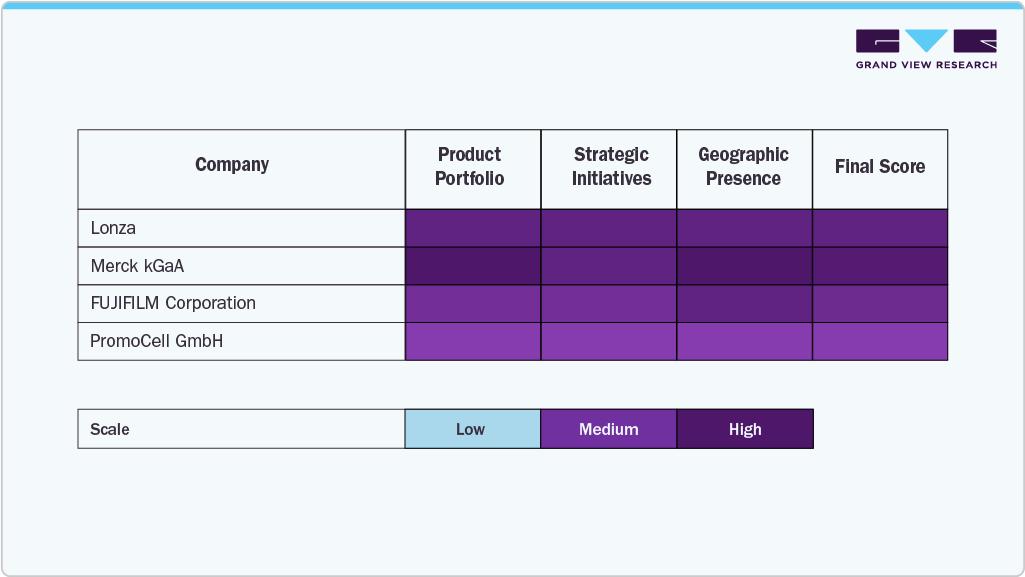
The market is characterized by a combination of globally established leaders and innovative emerging players, all driving growth through advanced product portfolios, strategic partnerships, and continuous investment in R&D. Key industry leaders such as Sartorius AG, Danaher, Merck KGaA, Thermo Fisher Scientific, Inc., FUJIFILM Corporation, Lonza, STEMCELL Technologies, PromoCell GmbH, ATCC, and AllCells have secured significant market share through their deep scientific expertise, high-performance product lines, and robust manufacturing and distribution capabilities. These companies are recognized for delivering specialized media and cell lines that meet the growing demand for scalable, reliable, and regulatory-compliant solutions across biopharmaceutical production, vaccine development, cell and gene therapy, and academic research.
Top-tier players like Thermo Fisher Scientific, Merck KGaA, and Lonza continue to dominate through their strong focus on innovation, sustainability, and global reach. Their offerings include a wide range of chemically defined, serum-free, and application-specific media and genetically optimized cell lines tailored for high-yield bioproduction. Companies such as STEMCELL Technologies and PromoCell GmbH are recognized for their commitment to serving research institutions with cutting-edge stem cell biology, immunology, and regenerative medicine tools. Meanwhile, ATCC and AllCells offer critical biological resources and primary cell products foundational to discovery and translational science. These firms leverage global research collaborations, strategic acquisitions, and advancements in AI-driven bioprocessing to stay ahead in a competitive, innovation-centric market.
The industry is witnessing a dynamic interplay of scientific breakthroughs and evolving industry needs. As demand for high-throughput research, biologics, and cell-based therapies continues to grow, the market will be increasingly shaped by cost-efficiency, regulatory adaptability, and the global expansion of biomanufacturing capabilities, ensuring sustained momentum and innovation across the cell culture value chain.
Key Cell Culture Media & Cell Lines Companies:
The following key companies have been profiled for this study on the cell culture media & cell lines market.
- Sartorius AG
- Danaher
- Merck KGaA
- Thermo Fisher Scientific, Inc.
- FUJIFILM Corporation
- Lonza
- STEMCELL Technologies
- PromoCell GmbH
- ATCC
- AllCells.
Recent Developments
-
In April 2025, Thermo Fisher Scientific introduced an enhanced platform technology and a new CHO K-1 cell line, reducing IND filing timelines from 13 to 9 months. This initiative aimed to streamline pre-clinical biologic drug development for biotech and pharmaceutical companies in the United States. The CHO K-1 cell line, capable of delivering up to 8g/L, provided higher protein expression levels and increased stability, facilitating greater productivity from pre-clinical phases through commercial development. Thermo Fisher's integrated solutions offered a comprehensive approach, supporting customers at every stage of the clinical development journey and simplifying their procurement strategy.
-
In January 2025, Danaher announced a $1.5 billion investment plan to expand Cytiva and Pall Corporation's manufacturing capacity. The initiative aimed to meet increasing global demand for biotechnology solutions, including cell culture media, chromatography resins, and single-use technologies. The expansion encompassed new facilities and enhancements at existing sites across the U.S., UK, Austria, and China. In addition, over 2,000 full-time positions were expected to be created over two years.
-
In September 2024, Merck KGaA, Darmstadt, Germany, achieved industry-first EXCiPACT cGMP certification for Pharmaceutical Auxiliary Materials (PAMs) at its global Cell Culture Media (CCM) production sites in Germany, the UK, China, and the USA. This certification underscores Merck's commitment to ensuring the safety, quality, and efficacy of cell culture media manufacturing life-saving therapies. The EXCiPACT standard is a widely recognized guideline for manufacturing non-sterile excipients. Merck is the first company to receive this certification, highlighting its leadership in the field.
Cell Culture Media & Cell Lines Market Report Scope
Attribute
Details
Market size value in 2026
USD 5.82 billion
Revenue forecast in 2033
USD 11.25 billion
Growth rate
CAGR of 9.87% from 2026 to 2033
Base year for estimation
2025
Historical data
2021 - 2024
Forecast period
2026 - 2033
Quantitative units
Revenue in USD million/billion and CAGR from 2026 to 2033
Report coverage
Revenue forecast, company ranking, competitive landscape, growth factors, and trends
Segments covered
Product, application, end-use, region
Regional scope
North America; Europe; Asia Pacific; Latin America; MEA
Country scope
U.S.; Canada; Mexico; UK; Germany; France; Italy; Spain; Denmark; Sweden; Norway,; India; China; Japan; Australia; South Korea; Thailand; Brazil; Argentina; Saudi Arabia; UAE; South Africa; Kuwait
Key companies profiled
Sartorius AG; Danaher; Merck KGaA; Thermo Fisher Scientific, Inc.; FUJIFILM Corporation; Lonza; STEMCELL Technologies; PromoCell GmbH; ATCC; AllCells
Customization scope
Free report customization (equivalent up to 8 analyst’s working days) with purchase. Addition or alteration to country, regional & segment scope.
Global Cell Culture Media & Cell Lines Market Report Segmentation
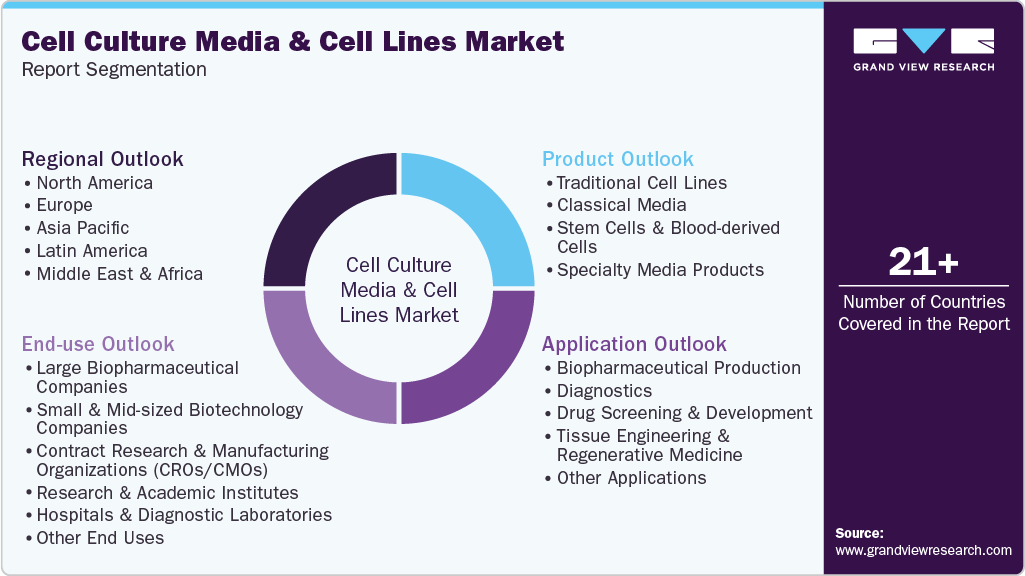
This report forecasts revenue growth and provides an analysis of the latest trends in each of the sub-segments from 2021 to 2033. For this report, Grand View Research has segmented the global cell culture media & cell lines market based on product, application, end-use, and region:
-
Product Outlook (Revenue, USD Million, 2021 - 2033)
-
Traditional Cell Lines
-
Classical Media
-
Stem Cells & Blood-derived Cells
-
Specialty Media Products
-
-
Application Outlook (Revenue, USD Million, 2021 - 2033)
-
Biopharmaceutical Production
-
Diagnostics
-
Drug Screening and Development
-
Tissue Engineering and Regenerative Medicine
-
Other Applications
-
-
End-use Outlook (Revenue, USD Million, 2021 - 2033)
-
Large Biopharmaceutical Companies
-
Small and Mid-sized Biotechnology Companies
-
Contract Research and Manufacturing Organizations (CROs/CMOs)
-
Research and Academic Institutes
-
Hospitals and Diagnostic Laboratories
-
Other End Uses
-
-
Regional Outlook (Revenue, USD Million, 2021 - 2033)
-
North America
-
U.S.
-
Canada
-
Mexico
-
-
Europe
-
UK
-
Germany
-
France
-
Italy
-
Spain
-
Denmark
-
Sweden
-
Norway
-
-
Asia Pacific
-
Japan
-
China
-
India
-
Australia
-
South Korea
-
Thailand
-
-
Latin America
-
Brazil
-
Argentina
-
-
Middle East and Africa (MEA)
-
South Africa
-
Saudi Arabia
-
UAE
-
Kuwait
-
-
Frequently Asked Questions About This Report
b. Some key players operating in the cell culture media & cell lines market include Sartorius AG; Danaher; Merck KGaA; Thermo Fisher Scientific, Inc.; FUJIFILM Corporation; Lonza; STEMCELL Technologies; PromoCell GmbH; ATCC; AllCells.
b. Key factors that are driving the market growth include rising demand for biopharmaceuticals, increasing investments in cell-based research, and advancements in cell culture technologies. Additionally, the growing focus on regenerative medicine and personalized therapies is further fueling market expansion.
b. The global cell culture media & cell lines market size was estimated at USD 5.39 billion in 2025 and is expected to reach USD 5.82 billion in 2026.
b. The global cell culture media & cell lines market is expected to grow at a compound annual growth rate of 9.87% from 2026 to 2033 to reach USD 11.25 billion by 2033.
b. North America dominated the market and accounted for 43.15% revenue share in 2025 owing to the strong presence of key biopharmaceutical companies and advanced healthcare infrastructure. Increased R&D investments in regenerative medicine and biologics, along with favorable government funding and a growing focus on personalized medicine, further supported the region’s market growth.


Share this report with your colleague or friend.
Need a Tailored Report?
Customize this report to your needs — add regions, segments, or data points, with 20% free customization.


ISO 9001:2015 & 27001:2022 Certified
We are GDPR and CCPA compliant! Your transaction & personal information is safe and secure. For more details, please read our privacy policy.
Trusted market insights - try a free sample
See how our reports are structured and why industry leaders rely on Grand View Research. Get a free sample or ask us to tailor this report to your needs.