- Home
- »
- Clothing, Footwear & Accessories
- »
-
Cashmere Clothing Market Size, Share, Industry Report 2033GVR Report cover
![Cashmere Clothing Market Size, Share & Trends Report]()
Cashmere Clothing Market (2026 - 2033) Size, Share & Trends Analysis Report By Product (Sweaters & Coats, Pants & Trousers, Tees & Polo), By End-use (Men, Women), By Distribution Channel (Offline, Online), By Region (North America, Europe, APAC, CSA), And Segment Forecasts
- Report ID: GVR-3-68038-806-0
- Number of Report Pages: 100
- Format: PDF
- Historical Range: 2021 - 2025
- Forecast Period: 2026 - 2033
- Industry: Consumer Goods
- Report Summary
- Table of Contents
- Segmentation
- Methodology
- Download FREE Sample
-
 Download Sample Report
Cashmere Clothing Market Summary
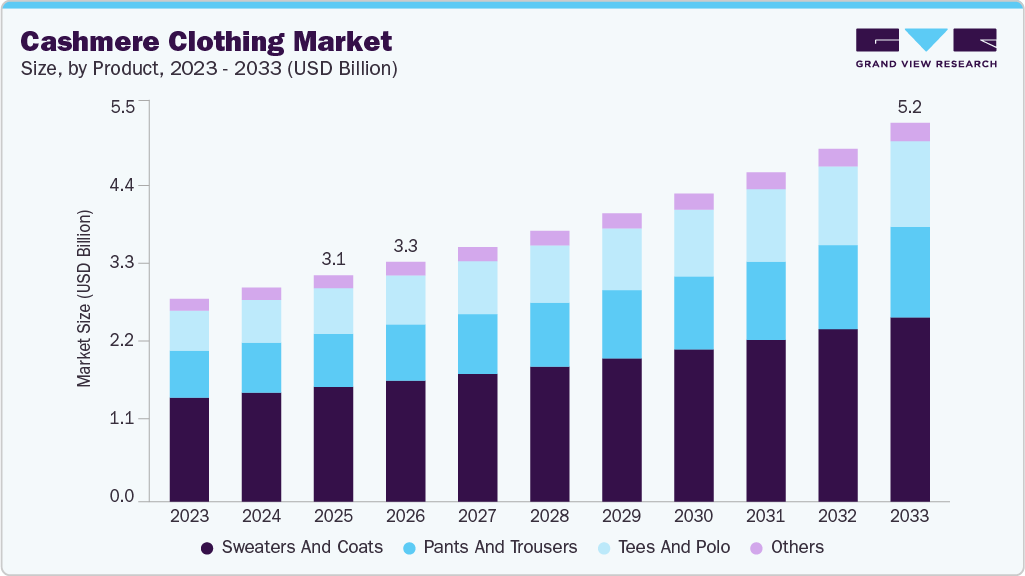
The global cashmere clothing market size was estimated at USD 3.12 billion in 2025 and is projected to reach USD 5.22 billion by 2033, growing at a CAGR of 6.8% from 2026 to 2033. The market is driven by rising demand for premium, sustainable fabrics like cashmere, along with expanding e-commerce and affordable luxury brands making these products more accessible to a wider consumer base.
Key Market Trends & Insights
- Europe cashmere clothing market accounted for the largest revenue share of 36.2% in 2025.
- The cashmere clothing industry in Germany held a notable revenue share of 21.90% in 2025.
- By product, sweaters and coats accounted for a revenue share of 50.7% in 2025.
- By end-use, women led the market with the largest revenue share of 58.3% in 2025.
- By distribution channel, the offline segment led the market with the largest revenue share of 59.8% in 2025.
Market Size & Forecast
- 2025 Market Size: USD 3.12 Billion
- 2033 Projected Market Size: USD 5.22 Billion
- CAGR (2026-2033): 6.8%
- Europe: Largest market in 2025
- Central & South America: Fastest growing market
A key trend is traceability-led premiumization, where brands are vertically integrating sourcing and using certified supply chains to ensure authentic, high-grade cashmere amid rising concerns over quality and sustainability.Derived from the soft fibers of cashmere goats, this exquisite material is known for its exceptional warmth and unparalleled softness. Cashmere clothing has witnessed a steady rise in demand, driven by consumers' increasing preference for high quality, natural fibers.
In addition, the influence of fashion trends and celebrity endorsements play a role in driving product demand. Celebrities often showcase and promote cashmere clothing, including pants and trousers, increasing consumer interest. The aspirational value associated with these garments further propels the product demand, as consumers seek to emulate the style and sophistication of their favorite influencers. For example, Taylor Swift, Kate Middleton, Emily Ratajkowski, Selena Gomez, and Carrie Underwood are known to own and promote cashmere clothing, contributing to its popularity. In September 2022, Gigi Hadid launched her own direct-to-consumer cashmere line called Guest In Residence, and in January 2023, Brad Pitt co-founded the luxury label God’s True Cashmere. These celebrity endorsements have drawn attention to cashmere clothing and influenced consumer interest in the fabric.
The surging demand for cashmere clothing can be attributed to a confluence of factors that resonate with modern consumers. Renowned for its unparalleled softness and luxurious texture, cashmere offers a sensory indulgence that aligns with the contemporary emphasis on comfort and quality. Its natural insulation, providing warmth without bulk, caters to diverse weather conditions, enhancing its appeal as a versatile wardrobe staple.
The durable nature of cashmere, when responsibly sourced, aligns with the growing trend of ethical and sustainable fashion. Fashion influencers and designers alike have embraced cashmere, integrating it into diverse styles, and contributing to its prominence in high-end collections and on social media platforms. The increasing accessibility of cashmere, coupled with rising disposable income, has facilitated its adoption by a wider demographic globally. As consumers prioritize longevity and value in their purchases, the enduring allure of cashmere continues to make it a coveted choice in the evolving landscape of fashion preferences.
Brand Share Analysis
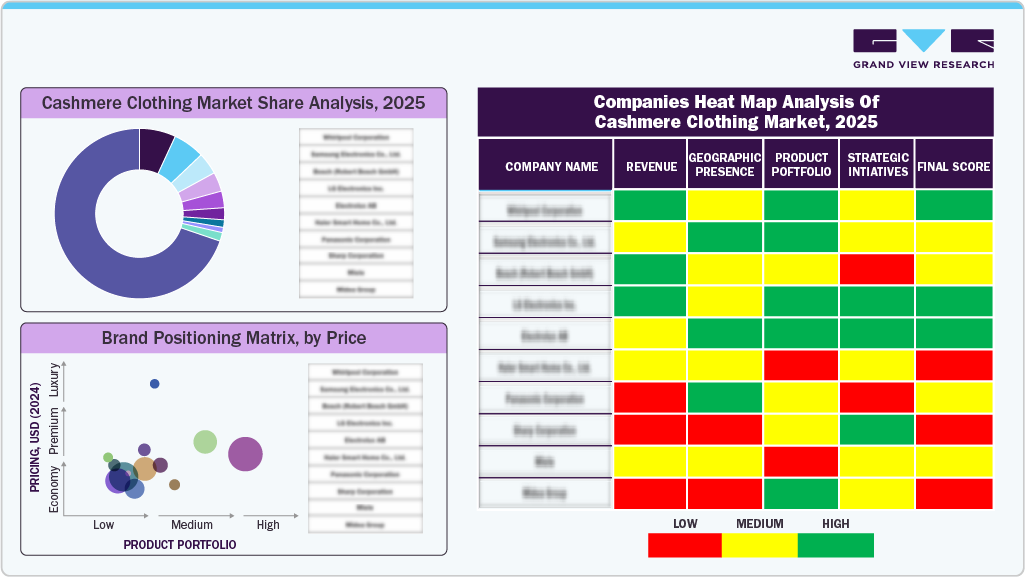
A mix of ultra-luxury heritage houses, premium contemporary labels, accessible luxury brands, and vertically integrated Mongolian players shapes the global cashmere clothing industry, each competing on fiber quality, artisanship, and price positioning:
-
Ultra-Luxury & Heritage Leaders: Loro Piana, Brunello Cucinelli, Pringle of Scotland - these brands dominate the top tier through control over raw cashmere sourcing, ultra-fine fiber selection (low micron), and Made-in-Italy/UK craftsmanship, targeting high-net-worth consumers with strong pricing power and brand legacy.
-
Premium Contemporary Designers: TSE Cashmere, Kinross Cashmere, Repeat Cashmere, Lisa Todd - positioned below ultra-luxury, these brands focus on design innovation, seasonal collections, and high-quality blends, appealing to affluent but more fashion-driven consumers.
-
Accessible Luxury & D2C Players: Autumn Cashmere, 360CASHMERE, White + Warren - leverage mid-premium pricing, wider product accessibility, and strong online distribution, expanding cashmere adoption among upper-middle-income consumers.
-
Vertically Integrated & Source-Origin Players (Asia): Gobi Cashmere and other Mongolian/Chinese manufacturers - compete through backward integration (herder-to-retail model), cost advantages, and growing global branding, increasingly disrupting traditional European dominance.
Consumer Insights
The global cashmere clothing industry shows a clear female-skewed consumption pattern, with women accounting for the majority share due to higher engagement with premium apparel, seasonal fashion cycles, and gifting behavior. However, the male segment is steadily expanding, particularly in categories such as sweaters, scarves, and business-casual knitwear, driven by growing acceptance of luxury basics and understated premium dressing.
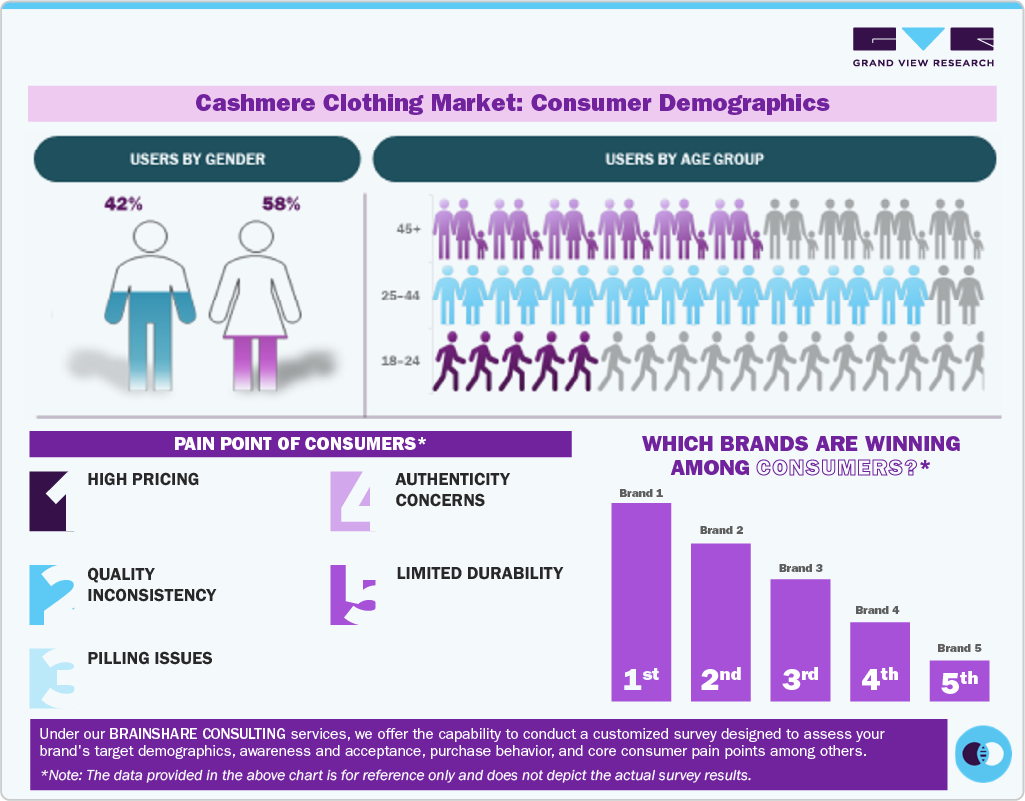
From an age perspective, the 25-44 segment dominates, as this group combines strong purchasing power with a preference for quality, comfort, and brand-driven fashion. The 45+ segment follows closely, supported by established income levels and a long-standing inclination toward durable, high-quality natural fibers. In contrast, the 18-24 segment remains relatively small, constrained by price sensitivity, though it is gradually expanding through exposure to affordable luxury and digital-first brands.
Despite strong demand, consumers face several persistent pain points. High pricing remains the most significant barrier, limiting frequent purchases, while quality inconsistency and authenticity concerns create hesitation, especially with rising instances of blended or mislabeled products. In addition, pilling issues and limited durability perceptions affect repeat purchases, pushing brands to focus more on transparency, fiber quality assurance, and product longevity to sustain consumer trust.
Product Insights
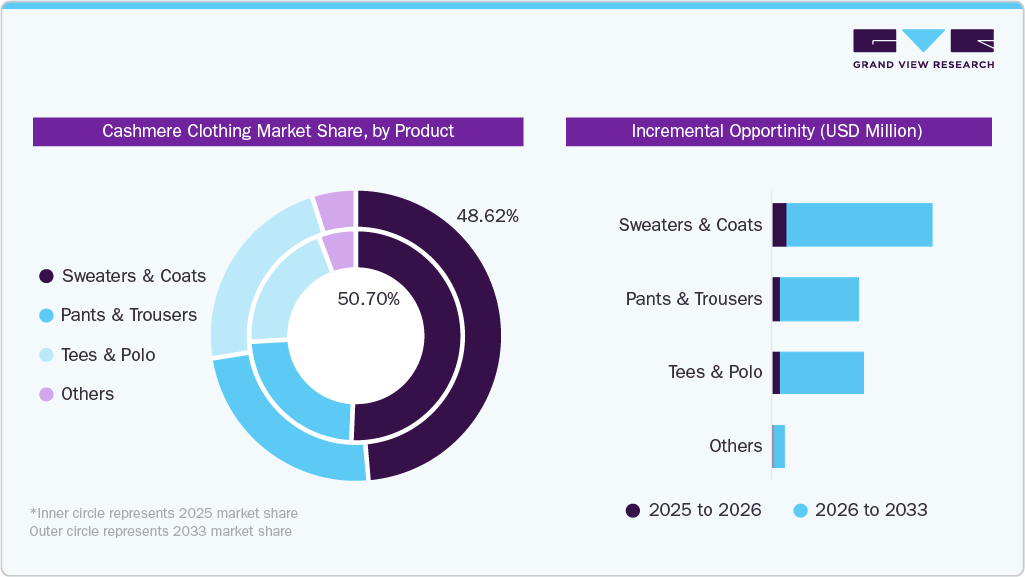
The cashmere sweaters and coats segment accounted for the largest revenue share of 50.7% in 2025, driven by their core functional relevance, as cashmere is primarily valued for warmth, softness, and insulation, making these categories the most practical and frequently purchased. In addition, these products offer higher visibility and versatility in styling, leading to stronger repeat purchases and broader adoption across both luxury and mid-premium segments.
In November 2025, Naadam launched a limited-edition collaboration with the film Wicked, introducing themed cashmere sweaters that blend pop culture with premium knitwear, showcasing how brands are using pop culture collaborations to attract younger consumers and modernize cashmere appeal.
Cashmere Tees & polo market are estimated to witness a CAGR of 8.2% from 2026 to 2033, driven by rising demand for casual and comfortable apparel, increasing adoption of athleisure fashion, and growing preference for versatile clothing suitable for both everyday wear and semi-formal occasions.
End-use Insights
The women cashmere clothing segment led the market, with the largest revenue share of 58.3% in 2025, driven by higher engagement in premium fashion, broader product variety across categories, and stronger demand for versatile, seasonally relevant luxury apparel.
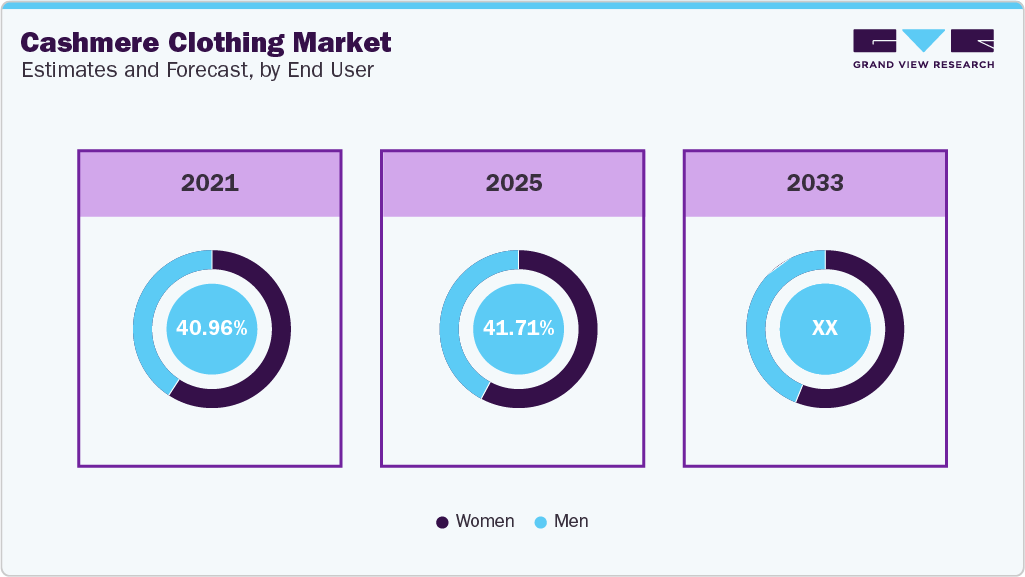
The men’s cashmere clothing industry is anticipated to witness the fastest growth in CAGR of 7.2% from 2026 to 2033, driven by rising adoption of premium basics, increasing interest in understated luxury, and expanding availability of versatile cashmere styles in menswear.
For instance, in October 2025, Uniqlo expanded its HEATTECH Cashmere Blend into a dedicated men’s line, offering crewneck and turtleneck innerwear that combines a small share of cashmere with functional fibers to deliver enhanced warmth (~1.5× vs regular HEATTECH) and softness, reflecting the growing demand for performance-driven, everyday cashmere in menswear.
Distribution Channel Insights
The sale of cashmere clothing through offline channel held a market share of 59.8% in 2025, driven by consumers’ preference for touch-and-feel evaluation of fabric quality, fit assurance, and the premium in-store experience offered by luxury boutiques and department stores.
For instance, in November 2025, Extreme Cashmere opened its first North American flagship store in New York’s SoHo district, designed as a home-like, immersive retail space that emphasizes slow, tactile shopping and personal interaction over traditional product displays, reflecting the shift toward experience-led offline luxury retail.
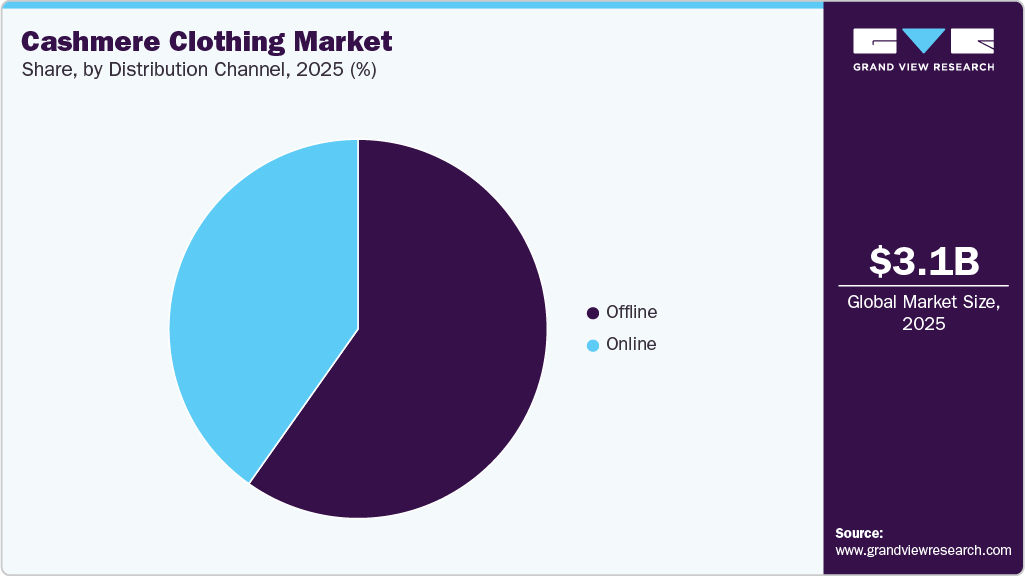
The sale of cashmere clothing through online channel is expected to grow at a CAGR of 7.7% from 2026 to 2033, driven by expanding D2C strategies, wider accessibility, and rising consumer confidence in buying premium apparel online. For instance, NakedCashmere leveraged Shopify’s Managed Markets to enable localized pricing and seamless cross-border shopping, resulting in a 149% increase in global sales and 7% growth in conversion globally in 4.5 months post-launch, highlighting the role of optimized e-commerce in driving growth.
Regional Insights
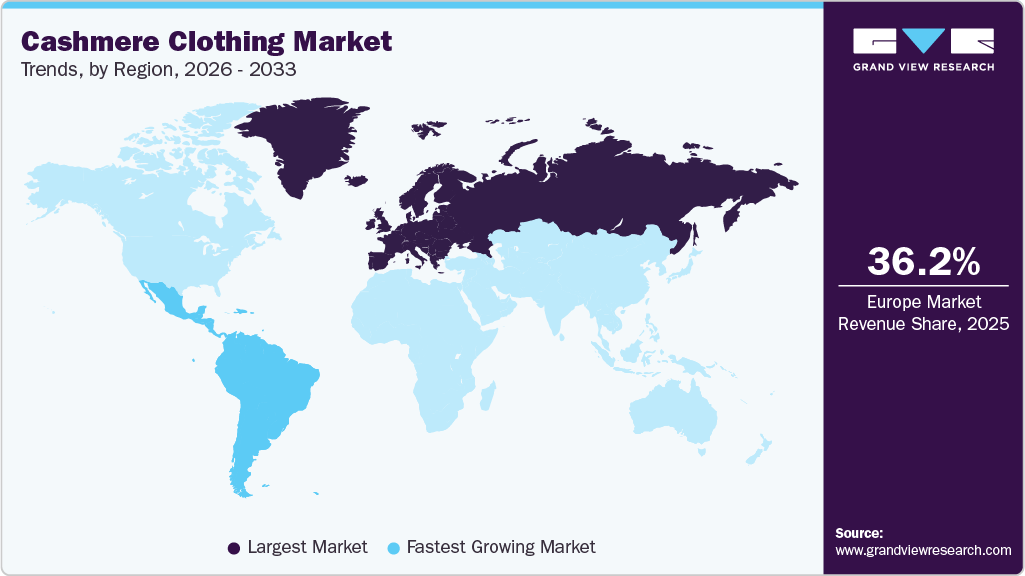
Europe cashmere clothing market accounted for the largest revenue share of 36.2% in 2025. Europe cashmere clothing industry driven by strong intra-regional demand and a well-established ecosystem of luxury consumption and manufacturing. The region benefits from a dense concentration of premium fashion clusters, particularly in Italy and France, where design, production, and distribution are closely integrated, enabling consistent product innovation and high-quality output. This localized value chain supports faster product cycles and reinforces Europe’s position as both a major consumption and export hub for cashmere apparel.
Demand across Europe is further supported by high consumer awareness of fabric quality, origin, and craftsmanship, leading to a preference for certified, traceable, and ethically sourced cashmere. In addition, cross-border tourism and luxury shopping play a significant role, with international consumers contributing to sales through flagship stores and shopping destinations in key cities. Strong penetration of private labels and premium department store brands also enhances accessibility across different price points, ensuring broader market reach while maintaining the region’s premium positioning
Germany Cashmere Clothing Market Trends
The cashmere clothing market in Germany held a notable revenue share of 21.90% in 2025, due to rising preference for durable, long-lasting clothing, with consumers favoring functional premium wear over fast fashion, supporting steady cashmere demand.
UK cashmere clothing market is anticipated to grow at a CAGR of 4.4% from 2026 to 2033. The moderate growth reflects high market saturation, with demand concentrated in seasonal collections and private labels from retailers like Marks & Spencer.
The cashmere clothing market in France is anticipated to witness a CAGR 4.8% from 2026 to 2033. The demand for luxury fashion houses influence cashmere between the French and designer brands that continue to incorporate cashmere into high-margin collections rather than mass adoption.
North America Cashmere Clothing Market Trends
The North America cashmere clothing market held a notable revenue share of 27.8% in 2025, driven by strong winter apparel consumption in colder U.S. states and Canada, along with high penetration of premium brands through department stores like Macy’s and Nordstrom, where cashmere is a staple seasonal category.
The cashmere clothing market in the U.S. accounted for a market share of 74.4% of the North American region in 2025. The dominance stems from structured retail and private-label penetration, with retailers like Macy’s and Bloomingdale’s pushing in-house cashmere lines at multiple price points, making it more accessible to buyers beyond the luxury market.
Canada cashmere clothing market in is expected to grow at a CAGR of 9.6% from 2026 to 2033, Growth is tied to longer winter seasons and rising online purchases from U.S. brands, as domestic availability is limited and cross-border e-commerce fills the gap.
Asia Pacific Cashmere Clothing Market Trends
The Asia Pacific cashmere clothing market is anticipated to witness a CAGR of 8.1% from 2026 to 2033. Rising middle-class spending and increasing acceptance of premium fabrics, especially in urban centers where western-style winter wear is becoming more common, drive the growth.
The cashmere clothing market in China held a notable revenue share of 58.5% in 2025. China leads due to domestic production hubs in Inner Mongolia, giving local brands a cost advantage and strong supply chain control, while also driving large-scale domestic consumption.
India cashmere clothing market is anticipated to witness a CAGR of 8.6% from 2026 to 2033. The growth of cashmere is concentrated in North India, where winters are relevant, and driven by gifting demand and increasing exposure to premium fabrics through online platforms like Myntra and Ajio.
The cashmere clothing market in Japan is anticipated to witness a CAGR of 5.4% from 2026 to 2033. The demand is supported by preference for lightweight layering and high-quality materials, with consumers willing to pay for fine cashmere blends suited to milder winters.
Central & South America Cashmere Clothing Market Trends
The cashmere clothing market in Central & South America is anticipated to witness a CAGR of 9.9% from 2026 to 2033. The growth is driven by niche urban consumers in countries like Brazil and Chile, where imported premium apparel is gaining traction through online and specialty retail.
Middle East & Africa Cashmere Clothing Market Trends
Middle East & Africa cashmere clothing market is expected to grow with a CAGR of 8.9% from 2026 to 2033. The demand is driven by luxury consumption in GCC countries, where cashmere is used more as a status and travel apparel rather than climate necessity.
Key Cashmere Clothing Companies:
The following key companies have been profiled for this study on the cashmere clothing market.
- Loro Piana S.P.A.
- Brunello Cucinelli SpA
- Pringle of Scotland Ltd
- Autumn Cashmere
- 360CASHMERE
- KINROSS CASHMERE
- REPEAT cashmere
- TSE Cashmere
- WHITE + WARREN
- Gobi Cashmere
- LISA TODD
Recent Developments
-
In January 2026, White + Warren launched its Clubhouse Collection, introducing sporty cashmere styles such as hoodies, cardigans, and shorts, reflecting the shift toward casual, athleisure-inspired cashmere designed for everyday wear beyond traditional luxury knitwear.
-
In November 2025, Sainsbury’s Tu Clothing launched a 100% cashmere collection featuring jumpers and cardigans at accessible price points, marking a strategic move to democratize premium fabrics and expand cashmere adoption among mass-market consumers.
-
In October 2025, New Zealand-based cashmere brand Elle & Riley expanded into the U.S. with its first store in Beverly Hills, reflecting the growing trend of emerging premium brands entering key luxury markets to build global presence and direct consumer engagement.
-
In August 2025, French cashmere brand Kujten announced the opening of its first U.S. flagship on Madison Avenue, marking a strategic expansion into the American luxury market with a focus on enhancing brand visibility and offering a full range of cashmere collections in a premium retail setting.
Cashmere Clothing Market Report Scope
Report Attribute
Details
Market size value in 2026
USD 3.31 billion
Revenue forecast in 2033
USD 5.22 billion
Growth rate (Revenue)
CAGR of 6.8% from 2026 to 2033
Actuals
2021 - 2025
Forecast period
2026 - 2033
Quantitative units
Revenue in USD million/billion and CAGR from 2026 to 2033
Report coverage
Revenue forecast, company ranking, competitive landscape, growth factors, and trends
Segments covered
Product, end-use, distribution channel, region
Regional scope
North America; Europe; Asia Pacific; Central & South America; Middle East & Africa
Country scope
U.S.; Canada; Mexico; UK; Germany; France; Italy; India; Spain; China; Japan; Australia & New Zealand; Brazil; South Africa
Key companies profiled
Loro Piana S.P.A.; Brunello Cucinelli SpA; Pringle of Scotland Ltd; Autumn Cashmere; 360CASHMERE; KINROSS CASHMERE; REPEAT cashmere; TSE Cashmere; WHITE + WARREN; Gobi Cashmere; LISA TODD
Customization scope
Free report customization (equivalent up to 8 analysts working days) with purchase. Addition or alteration to country, regional & segment scope.
Pricing and purchase options
Avail customized purchase options to meet your exact research needs. Explore purchase options
Global Cashmere Clothing Market Report Segmentation
This report forecasts revenue growth at the global, regional, and country levels and provides an analysis of the latest industry trends and opportunities in each of the sub-segments from 2021 to 2033. For this study, Grand View Research has segmented the global cashmere clothing market report based on product, end-use, distribution channel and region:
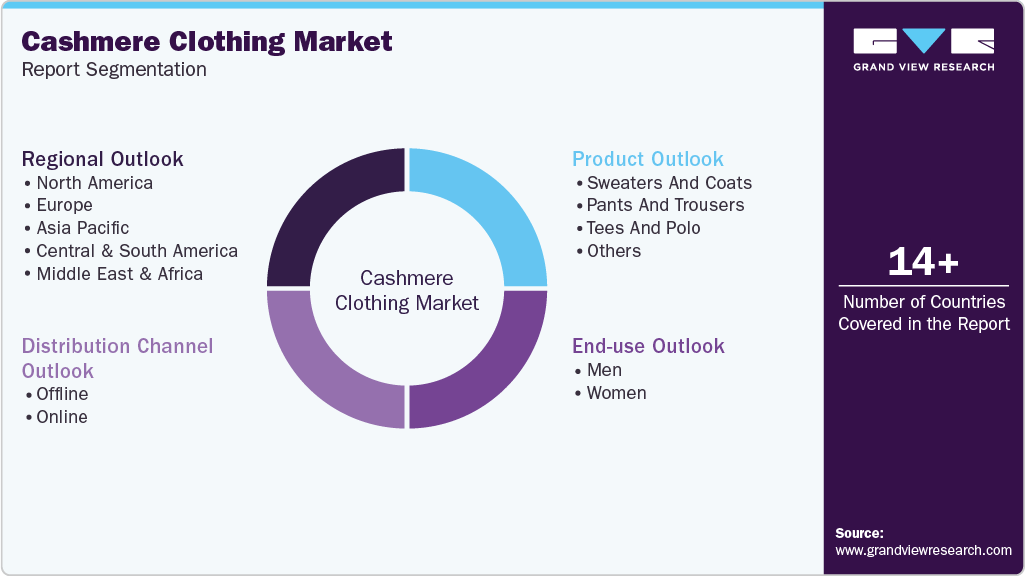
-
Product Outlook ( Revenue, USD Million, 2021 - 2033)
-
Sweaters and Coats
-
Pants and Trousers
-
Tees and Polo
-
Others
-
-
End-use Outlook ( Revenue, USD Million, 2021 - 2033)
-
Men
-
Women
-
-
Distribution Channel Outlook (Revenue, USD Million, 2021 - 2033)
-
Offline
-
Online
-
-
Regional Outlook (Revenue, USD Million, 2021 - 2033)
-
North America
-
U.S.
-
Canada
-
Mexico
-
-
Europe
-
UK
-
Germany
-
France
-
Italy
-
Spain
-
-
Asia Pacific
-
China
-
Japan
-
India
-
Australia
-
-
Central & South America
-
Brazil
-
-
Middle East & Africa
-
South Africa
-
-
Frequently Asked Questions About This Report
b. The global cashmere clothing market size was estimated at USD 3.12 billion in 2025 and is expected to reach USD 3.31 billion in 2026.
b. The global cashmere clothing market is expected to grow at a compounded growth rate of 6.8% from 2026 to 2033 to reach USD 5.22 billion by 2033.
b. The sweaters and coats segment dominated the global cashmere clothing market with a share of 50.8% in 2025. This is attributed to the rising demand for different types of premium sweaters and coats, such as casual, and formal wear.
b. Some key players operating in the cashmere clothing market include Loro Piana S.p.A, Ermenegildo Zegna Holditalia S.p.A., Brunello Cucinelli S.p.A., SofiaCashmere, Autumn Cashmere, Alyki - Felice De Palma & Co., and Pringle of Scotland Ltd.
b. Key factors that are driving the market growth include the rising popularity of fine woolen clothing and the growing demand for premium quality clothing across the globe.


Share this report with your colleague or friend.
Need a Tailored Report?
Customize this report to your needs — add regions, segments, or data points, with 20% free customization.


ISO 9001:2015 & 27001:2022 Certified
We are GDPR and CCPA compliant! Your transaction & personal information is safe and secure. For more details, please read our privacy policy.
Trusted market insights - try a free sample
See how our reports are structured and why industry leaders rely on Grand View Research. Get a free sample or ask us to tailor this report to your needs.