- Home
- »
- Homecare & Decor
- »
-
Business Travel Market Size & Share, Industry Report, 2033GVR Report cover
![Business Travel Market Size, Share & Trends Report]()
Business Travel Market (2026 - 2033) Size, Share & Trends Analysis Report By Traveler (Solo, Group), By Purpose (Marketing, Meetings, Trade Shows/Exhibitions, Product Launch), By Industry (Corporate, Government), By Region, And Segment Forecasts
- Report ID: GVR-4-68040-258-6
- Number of Report Pages: 110
- Format: PDF
- Historical Range: 2021 - 2025
- Forecast Period: 2026 - 2033
- Industry: Consumer Goods
- Report Summary
- Table of Contents
- Interactive Charts
- Methodology
- Download FREE Sample
-
 Download Sample Report
Business Travel Market Summary
The global business travel market size was estimated at USD 1,851.61 billion in 2025 and is expected to reach USD 3,255.11 billion by 2033, growing at a CAGR of 6.7% from 2026 to 2033. The global business travel market continues to play a vital role in enabling international trade and corporate expansion, as companies rely on travel to build partnerships, manage operations, and explore new market opportunities.
Key Market Trends & Insights
- North American business travel market accounted for the largest share of 27.40% in 2025.
- By traveler, solo travelers accounted for a market share of 51.15% in 2025.
- By purpose, business travel for marketing accounted for a market share of 36.86% in 2025.
- By industry, corporate business travel accounted for a market share of 64.93% in 2025.
Market Size & Forecast
- 2025 Market Size: USD 1,851.61 Billion
- 2033 Projected Market Size: USD 3,255.11 Billion
- CAGR (2026-2033): 6.7%
- North America: Largest market in 2025
Business travel allows organizations to maintain relationships with suppliers and clients, participate in global conferences, and oversee cross-border operations. As globalization continues to expand commercial networks across industries such as technology, finance, consulting, and manufacturing, companies increasingly view business travel as a strategic tool for strengthening partnerships and driving revenue growth. Face-to-face interactions remain particularly important for negotiations, contract discussions, and strategic planning activities that benefit from in-person engagement.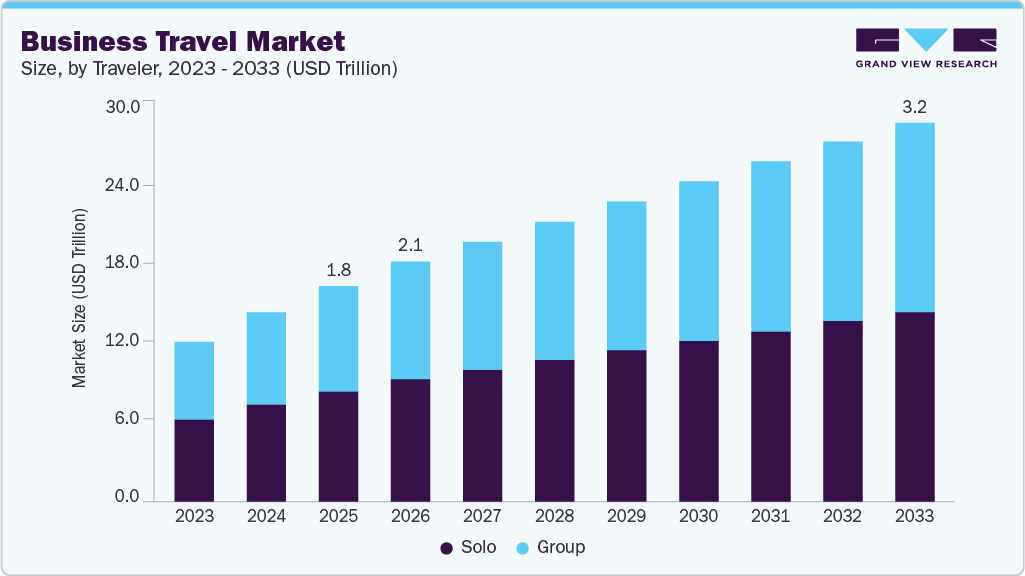
Corporate travel patterns are also evolving as organizations adopt hybrid and flexible work models. With many teams working remotely or across multiple locations, companies are increasingly organizing travel for collaboration-focused meetings, leadership summits, and customer engagement activities. In-person interaction has become especially important for building trust, strengthening professional relationships, and facilitating complex decision-making processes. As a result, business travel is increasingly used to support team collaboration, client relationship management, and global business development initiatives.
The strategic importance of corporate travel is reinforced by business traveller sentiment. According to the American Express Global Business Travel Trendex survey, 85% of business travellers believe travel helps them build stronger relationships with clients and colleagues, while 88% state that business travel supports career growth and professional development. In addition, 84% of respondents believe that business travel plays an important role in driving company growth, demonstrating how in-person engagement contributes to partnership building, knowledge sharing, and new business opportunities across industries.
The rise of digital travel platforms and online booking solutions is also transforming the way companies manage corporate travel. Businesses increasingly rely on integrated booking systems, travel management platforms, and mobile applications that allow employees to book flights, hotels, and transportation services quickly and efficiently. Travel companies are responding by offering digital services such as automated itinerary management, expense tracking tools, real-time travel updates, and AI-driven booking recommendations. These platforms enable organizations to streamline travel planning while maintaining policy compliance and cost control. The expansion of online booking channels, combined with new digital services offered by travel management companies, is improving convenience for corporate travellers and contributing to the continued growth of the global business travel market.
Brand Market Share Insights
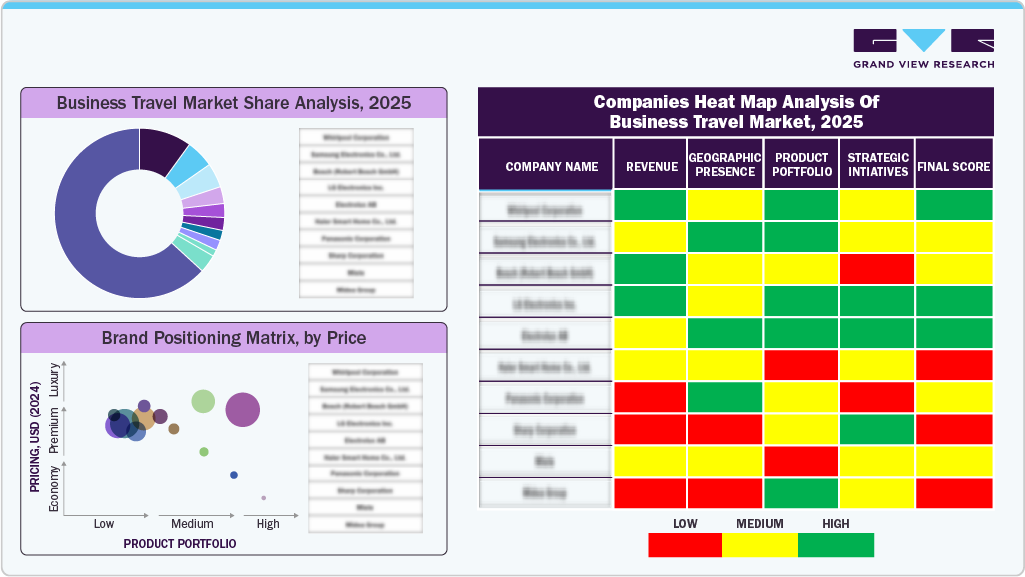
The global business travel market is characterized by a highly competitive landscape supported by the presence of multinational travel management companies, corporate travel service providers, and specialized business travel agencies. Leading companies leverage extensive corporate client networks, global booking platforms, and integrated travel management solutions to maintain their market positions while adapting to evolving corporate travel requirements. Major players such as American Express Global Business Travel, BCD Travel, CWT (Carlson Wagonlit Travel), Expedia Group, and Booking Holdings offer a wide range of services including corporate travel booking, expense management tools, travel policy compliance solutions, and customized travel programs for businesses. These companies continuously introduce advanced digital platforms, mobile booking tools, and data-driven travel management services to improve efficiency and traveler experience. Ongoing investments in travel technology, partnerships with airlines and hotel chains, and the expansion of global service networks enable leading providers to strengthen their presence while meeting the evolving needs of corporate travelers worldwide.
Consumer Survey & Insights
The growing importance of professional mobility in modern corporate environments strongly influences consumer behavior in the global business travel market. Business travel has become an essential component of corporate operations, enabling professionals to attend meetings, negotiate partnerships, manage international projects, and participate in industry events. Many organizations continue to prioritize in-person engagement for strategic discussions and relationship building, particularly in sectors such as consulting, finance, technology, and manufacturing. Corporate travelers frequently undertake multiple work-related trips each year, reinforcing consistent demand for airline travel, premium accommodation, conference venues, and corporate travel management services.
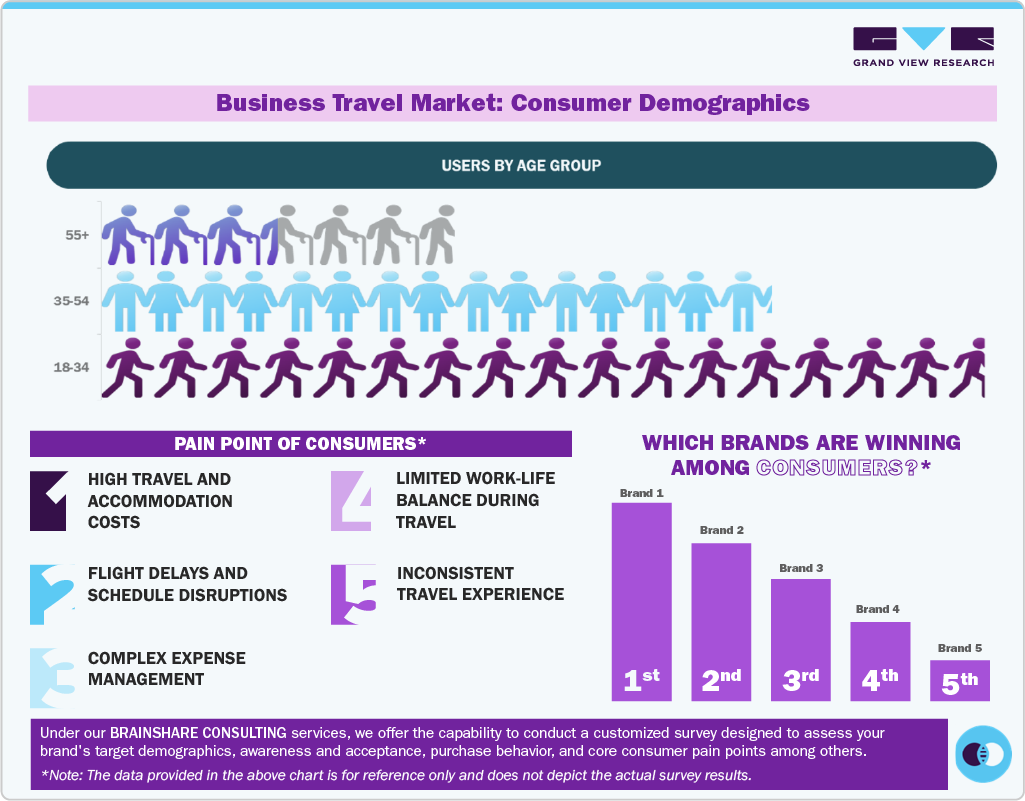
Spending behavior among business travelers is also shaped by the need for efficiency, flexibility, and convenience during trips. Corporate travelers typically prefer travel arrangements that minimize disruption to their work schedules, including direct flights, centrally located hotels, and reliable ground transportation services. Many companies allocate dedicated travel budgets for employee trips, covering expenses such as flights, accommodation, meals, and local transportation, which helps sustain steady demand across the travel and hospitality ecosystem. Premium travel services, including business-class flights, executive airport lounges, and high-quality accommodation, are often preferred by corporate travelers seeking comfort and productivity during business trips.
Digital booking platforms and corporate travel management tools are also influencing consumer behavior within the business travel market. Many professionals now rely on integrated travel platforms and mobile applications to book flights, hotels, and transportation services quickly while managing itineraries and expense reporting. These platforms provide real-time updates, flexible booking options, and streamlined reimbursement processes, making travel planning more efficient for both employees and corporate travel managers. As a result, travel providers are increasingly developing digital solutions and personalized travel services to meet the evolving expectations of modern business travelers who value convenience, speed, and reliability throughout their travel experience.
Traveler Insights
Solo travelers accounted for a revenue share of over 51.15% in 2025, supported by the nature of corporate travel where employees frequently travel individually for meetings, project assignments, and professional events. Many companies send executives, sales representatives, consultants, and managers on individual trips to attend client meetings, industry exhibitions, and training programs. Solo business travel allows professionals to manage flexible schedules, attend multiple meetings across locations, and maintain direct engagement with clients or partners. In addition, the growing number of international conferences, corporate workshops, and networking events has increased the frequency of individual work-related travel, further strengthening the share of solo travelers within the global business travel market.
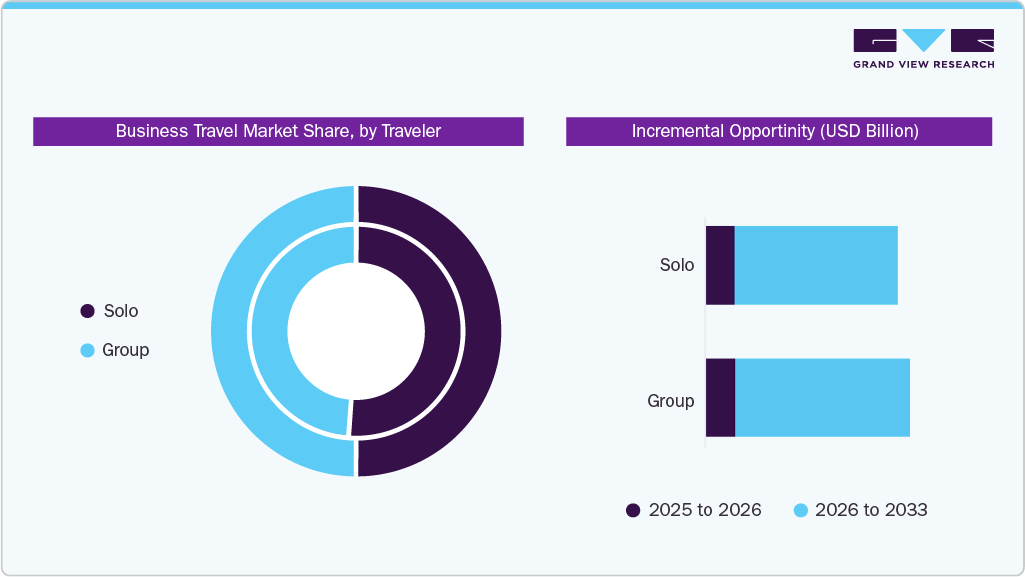
Group business travel is projected to grow at a CAGR of 7.0% over the forecast period of 2026-2033, supported by the increasing participation of companies in international trade exhibitions, industry conventions, and large-scale corporate conferences that require teams of employees to travel together. Organizations often send multiple representatives from departments such as sales, marketing, and product development to showcase offerings, meet clients, and gather market insights at these events. The segment is also driven by corporate training programs and leadership development workshops that bring employees from different regional offices to a single location. In addition, multinational companies frequently organize regional strategy meetings and cross-border collaboration sessions that involve group travel, further supporting the growth of group business travel globally.
Purpose Insights
The business travel for marketing accounted for a revenue share of around 36.86% in the year 2025. Marketing teams frequently travel to meet distributors, retail partners, and regional sales teams to coordinate product positioning and promotional strategies. The segment is also driven by companies organizing roadshows, brand activation events, and client engagement programs in key markets to strengthen customer relationships and expand market presence. In addition, businesses often send marketing executives to new geographic markets to study consumer preferences, evaluate competition, and support local campaign planning, which continues to sustain demand for marketing-related business travel globally.
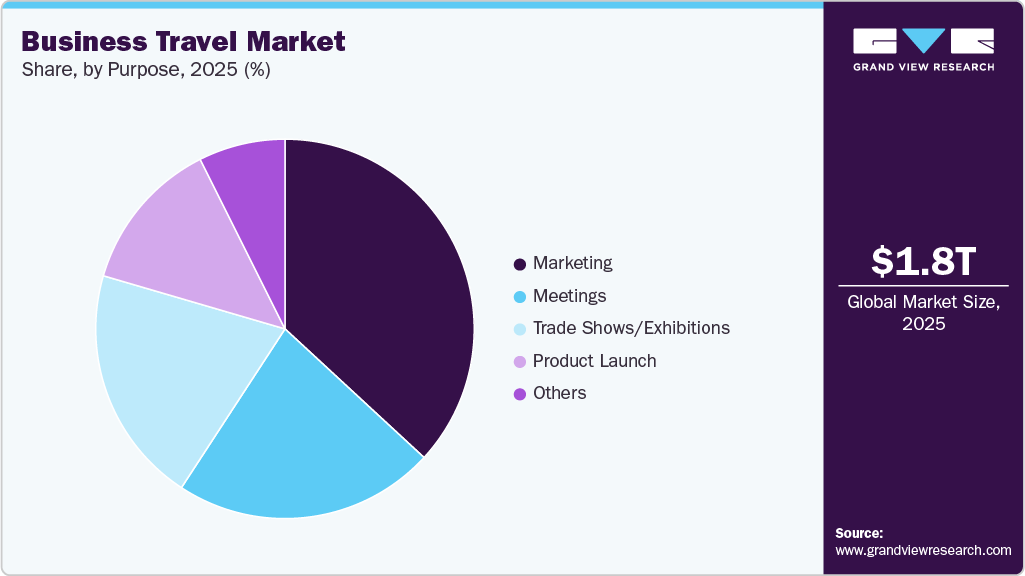
The business travel for product launch is projected to grow at a CAGR of 8.0% over the forecast period of 2026-2033, driven by companies organizing dedicated launch events and promotional tours to introduce new products across multiple regional markets. Businesses frequently send product managers, marketing executives, and technical specialists to different locations to demonstrate product features, conduct presentations, and engage directly with distributors and potential clients. These events help companies generate early market awareness and build relationships with key stakeholders involved in product distribution and adoption. In addition, many organizations arrange launch-related training sessions and briefing meetings for regional sales teams and partners, ensuring that product knowledge is communicated effectively before commercial rollout, which further supports the demand for business travel associated with product launches.
Industry Insights
Business travel by corporate industry accounted for a revenue share of around 64.93% in the year 2025, driven by the expansion of multinational operations that require employees to travel between regional offices to coordinate global projects and operational activities. Many companies regularly send executives and department heads to oversee branch performance, conduct strategic planning sessions, and align business objectives across international markets. The segment is also supported by increasing cross-border partnerships, mergers, and supplier relationships that require in-person negotiations and collaboration. In addition, corporations frequently organize internal leadership summits and regional management meetings where senior professionals from different locations gather to review company performance and plan future business strategies.
The business travel by government industry is projected to grow at a CAGR of 8.3% over the forecast period of 2026-2033. Government representatives frequently travel to attend multilateral summits, economic cooperation meetings, and intergovernmental conferences where key policy decisions and strategic partnerships are discussed. The segment is also supported by official delegations traveling to evaluate infrastructure projects, trade initiatives, and development programs in collaboration with international organizations. In addition, governments often send officials and technical experts abroad for specialized training programs, knowledge exchange initiatives, and capacity-building workshops, which continues to strengthen demand for government-related business travel.
Regional Insights
North America Business Travel Market Trends
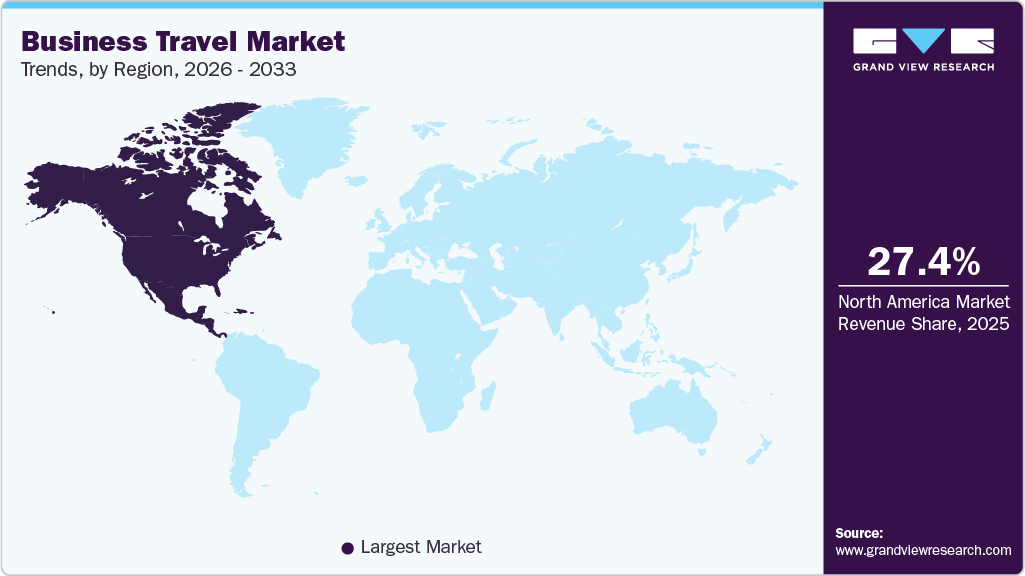
The North American business travel market accounted for the largest share of 27.40% of the global market in 2025. The North American business travel market is driven by the region’s strong concentration of multinational corporations and major financial institutions across the U.S. and Canada. Companies frequently organize travel for executives, consultants, and sales teams to attend corporate meetings, client presentations, and partnership negotiations. The market is also supported by the large number of global industry conventions, technology expos, and corporate events hosted in major cities across the region.
U.S. Business Travel Market Trends
The business travel industry in the U.S. accounted for a revenue share of around 72.6% on the North America market in 2025. The U.S. business travel market is driven by the country’s large corporate ecosystem and the presence of numerous multinational companies that require frequent travel for client meetings, project management, and strategic partnerships. Professionals regularly travel between major commercial hubs such as New York, Chicago, and San Francisco to coordinate business operations and attend corporate events. The market is also supported by the high number of industry conferences, technology summits, and trade exhibitions hosted across the country each year. In addition, the expansion of sectors such as technology, finance, healthcare, and consulting continues to generate consistent demand for corporate travel within the U.S.
Canada business travel industry is expected to grow at a CAGR of 7.2% from 2026 to 2033. The Canada business travel market is driven by the country’s strong natural resource and energy sectors, particularly oil, mining, and forestry, which require frequent travel by engineers, project managers, and corporate executives to oversee operations in different regions. Professionals regularly travel between major cities and resource development sites to manage exploration projects, infrastructure development, and supplier coordination. The market is also supported by the growing number of government-industry collaboration programs and international investment initiatives that require meetings between corporate leaders and policymakers.
Europe Business Travel Market Trends
Europe business travel market accounted for the revenue share of 18.67% of the global market in 2025. The Europe business travel market is driven by the strong presence of multinational corporations and regional headquarters across countries such as Germany, France, Italy, Spain, and the UK Many companies operate multiple offices across European cities, which requires frequent travel by executives and managers for coordination meetings, strategy planning sessions, and operational reviews. The market is also supported by the region’s strong consulting, financial services, and technology sectors, where professionals regularly travel to serve clients and manage cross-border projects. In addition, Europe’s role as a major destination for international policy forums, business summits, and economic cooperation meetings continues to generate significant demand for corporate travel across the region.
The business travel industry in the UK accounted for a revenue share of around 24.5% on the Europe market in 2025. The UK business travel market is driven by the country’s strong financial and professional services sector, particularly concentrated in major commercial centers such as London. Companies operating in banking, consulting, legal services, and technology frequently send employees to attend client meetings, corporate negotiations, and investment discussions across domestic and international markets. The market is also supported by the large number of international conferences, corporate forums, and industry events hosted across the country, which attract professionals from multiple sectors.
Germany business travel industry is expected to grow at a CAGR of 6.8% from 2026 to 2033. The Germany business travel market is driven by the country’s position as a key hub for international trade exhibitions and industry conventions across Europe. Major global events related to sectors such as automotive technology, industrial equipment, electronics, and pharmaceuticals attract thousands of corporate participants each year, generating significant demand for business travel. The market is also supported by the presence of numerous multinational headquarters and regional corporate offices that require regular travel by executives and managers for strategy meetings and operational coordination. In addition, Germany’s strong network of conference centers, business hotels, and event venues enables companies to host large corporate gatherings and professional seminars, further supporting the growth of business travel in the country.
Asia Pacific Business Travel Market Trends
The Asia Pacific business travel market accounted for the revenue share of 31.29% in 2025. The Asia Pacific business travel market is driven by the region’s strong manufacturing and export-oriented industries, which require frequent travel by executives, engineers, and procurement teams to manage supplier relationships and production networks across multiple countries. Many companies organize regular travel for factory audits, supply chain coordination, and contract negotiations with international partners. The market is also supported by the rapid growth of technology startups and regional corporate headquarters in major commercial centers such as Singapore, Hong Kong, and Seoul, which frequently host investor meetings, partnership discussions, and business development activities.
The business travel industry in the China accounted for a revenue share of around 28.7% on the Asia Pacific market in 2025. The China business travel market is driven by the country’s large manufacturing and export-oriented economy, which requires frequent travel by executives, engineers, and procurement teams to coordinate production, supply chain operations, and international trade activities. Businesses regularly organize trips for factory inspections, supplier negotiations, and partnership development with overseas clients. The market is also supported by the growing number of trade exhibitions, technology conferences, and industrial expos held across major cities such as Shanghai, Beijing, and Shenzhen. In addition, China’s expanding network of high-speed rail, international airports, and business hotels continues to facilitate corporate travel, strengthening the country’s position in the Asia Pacific business travel market.
India business travel industry is expected to grow at a CAGR of 8.6% from 2026 to 2033. The India business travel market is driven by the rapid expansion of the country’s corporate sector, particularly in industries such as information technology, consulting, finance, and manufacturing. Companies frequently send employees to different cities for client meetings, project coordination, and operational management activities. The market is also supported by the increasing number of domestic and international trade exhibitions, corporate events, and industry conferences hosted in major business hubs such as Mumbai, Bengaluru, and Delhi. In addition, the growth of multinational corporations and startup ecosystems in India is encouraging frequent travel by executives, sales teams, and consultants to explore new partnerships and business opportunities across the country and abroad.
Central & South America Business Travel Market Trends
The Central & South America business travel industry is expected to grow at a CAGR of 6.2% from 2026 to 2033. The Central & South America business travel market is driven by expanding regional trade activities and growing economic cooperation among countries such as Brazil and Argentina. Businesses frequently send executives and sales teams across neighboring markets to manage supplier relationships, negotiate contracts, and explore new investment opportunities. The market is also supported by the increasing number of international trade exhibitions and industry conferences hosted across major cities in the region.
Middle East & Africa Business Travel Market Trends
The Middle East & Africa business travel industry is expected to grow at a CAGR of 6.8% from 2026 to 2033. The Middle East & Africa business travel market is driven by the region’s growing role as a global hub for trade, finance, and international business activities across countries such as UAE and Saudi Arabia. Major cities in the region frequently host international exhibitions, trade fairs, and corporate conferences that attract business travelers from across the world. The market is also supported by ongoing investments in large-scale infrastructure projects, energy developments, and tourism initiatives that require frequent travel by corporate executives, consultants, and project managers. In addition, the expansion of international airlines, modern airports, and business-focused hospitality facilities across the region continues to facilitate corporate travel and support the growth of the business travel market in the Middle East and Africa.
Key Business Travel Companies:
The following key companies have been profiled for this study on the business travel market
- American Express Company
- BCD Group
- Booking Holdings
- Expedia, Inc.
- Corporate Travel Management
- Hogg Robinson Ltd
- CWT Solutions
- Wexas Travel
- Frosch International Travel
- Travel Leaders Group
Recent Developments
-
In February 2026, BCD Travel refreshed its brand identity to reflect its focus on innovation and technology in the corporate travel sector. The update highlights the company’s investment in digital tools and flexible technology platforms designed to help businesses manage complex travel programs more efficiently. The new branding also emphasizes BCD’s commitment to open and adaptable solutions that support evolving business travel needs.
-
In July 2025, American Express Global Business Travel (Amex GBT) introduced a new Guest Travel & Expense platform to simplify travel management for non-employees such as contractors, recruits, and partners. The platform enables organizations to manage bookings, budgets, and expense tracking in one system while allowing guest travelers to create profiles and arrange trips more easily. The solution is designed to streamline coordination and improve visibility into spending related to non-employee travel.
Business Travel Market Report Scope
Report Attribute
Details
Market size value in 2026
USD 2,061.22 billion
Revenue forecast in 2033
USD 3,255.11 billion
Growth rate
CAGR of 6.7% from 2026 to 2033
Actuals
2021 - 2025
Forecast period
2026 - 2033
Quantitative units
Revenue in USD million/billion and CAGR from 2026 to 2033
Report coverage
Revenue forecast, company ranking, competitive landscape, growth factors, and trends
Segments covered
Traveler, purpose, industry, and region
Regional scope
North America; Europe; Asia Pacific; Central & South America; Middle East & Africa
Country scope
U.S.; Canada; Mexico; UK; Germany; France; Italy; Spain; China; India; Japan; Australia & New Zealand; South Korea; Brazil; South Africa
Key companies profiled
American Express Company; BCD Group; Booking Holdings; Expedia, Inc.; Corporate Travel Management; Hogg Robinson Ltd ; CWT Solutions; Wexas Travel; Frosch International Travel; Travel Leaders Group
Customization scope
Free report customization (equivalent up to 8 analysts working days) with purchase. Addition or alteration to country, regional & segment scope.
Pricing and purchase options
Avail customized purchase options to meet your exact research needs. Explore purchase options
Global Business Travel Market Report Segmentation
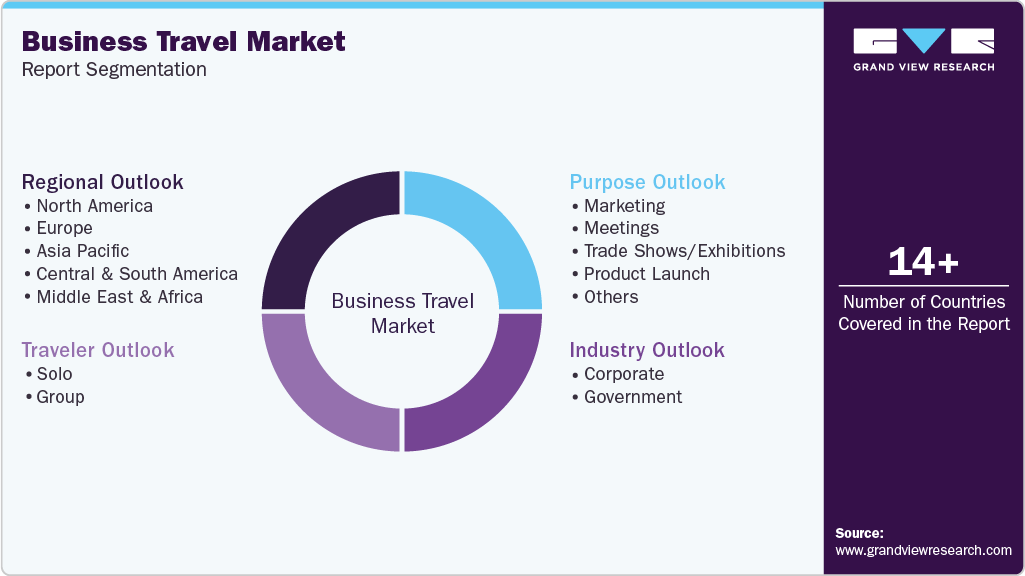
This report forecasts revenue growth at global, regional & country levels and provides an analysis on the latest trends and opportunities in each of the sub-segments from 2021 to 2033. For this study, Grand View Research has segmented the business travel market on the basis of traveler, purpose, industry, and region.
-
Traveler Outlook (Revenue, USD Billion, 2021 - 2033)
-
Solo
-
Group
-
-
Purpose Outlook (Revenue, USD Billion, 2021 - 2033)
-
Marketing
-
Meetings
-
Trade Shows/Exhibitions
-
Product Launch
-
Others
-
-
Industry Outlook (Revenue, USD Billion, 2021 - 2033)
-
Corporate
-
Government
-
-
Regional Outlook (Revenue, USD Billion, 2021 - 2033)
-
North America
-
U.S.
-
Canada
-
Mexico
-
-
Europe
-
UK
-
Germany
-
France
-
Italy
-
Spain
-
-
Asia Pacific
-
China
-
India
-
Japan
-
Australia & New Zealand
-
South Korea
-
-
Central & South America
-
Brazil
-
-
Middle East & Africa (MEA)
-
South Africa
-
-
Frequently Asked Questions About This Report
b. The global business travel market was estimated at USD 1,851.61 billion in 2025 and is expected to reach USD 2,061.22 billion in 2026.
b. The global business travel market is expected to grow at a compound annual growth rate of 6.7% from 2026 to 2033 to reach USD 3,255.11 billion by 2033.
b. Some of the key players operating in the business travel market include American Express Company; BCD Group; Booking Holdings; Expedia, Inc.; Corporate Travel Management; Hogg Robinson Ltd; CWT Solutions; Wexas Travel; Frosch International Travel; Travel Leaders Group
b. Key factors that are driving the business travel market growth include the expanding globalization of commerce, the rise in travel and tourism, and the growing presence of younger professionals combining business trips with leisure activities
b. Asia Pacific dominated the business travel market with a share of around 31.2% in 2025. The market in the region is witnessing rapid economic growth, increasing trade partnerships, and the proliferation of multinational corporations establishing regional headquarters.


Share this report with your colleague or friend.
Need a Tailored Report?
Customize this report to your needs — add regions, segments, or data points, with 20% free customization.


ISO 9001:2015 & 27001:2022 Certified
We are GDPR and CCPA compliant! Your transaction & personal information is safe and secure. For more details, please read our privacy policy.
Trusted market insights - try a free sample
See how our reports are structured and why industry leaders rely on Grand View Research. Get a free sample or ask us to tailor this report to your needs.