- Home
- »
- Clinical Diagnostics
- »
-
Blood Collection Market Size & Share, Industry Report, 2033GVR Report cover
![Blood Collection Market Size, Share & Trends Report]()
Blood Collection Market (2026 - 2033) Size, Share & Trends Analysis Report By Collection Site (Venous, Capillary), By Application (Diagnostics, Treatment), By Method (Manual, Automated), By End-use (Hospitals, Blood Banks), By Region, And Segment Forecasts
- Report ID: GVR-1-68038-382-9
- Number of Report Pages: 150
- Format: PDF
- Historical Range: 2021 - 2025
- Forecast Period: 2026 - 2033
- Industry: Healthcare
- Report Summary
- Table of Contents
- Segmentation
- Methodology
- Download FREE Sample
-
 Download Sample Report
Blood Collection Market Summary
The global blood collection market size was estimated at USD 5.02 billion in 2025 and is projected to reach USD 8.18 billion by 2033, growing at a CAGR of 6.33% from 2026 to 2033. The market growth is attributed to an increase in the number of diagnostic procedures involving blood samples.
Key Market Trends & Insights
- North America dominated the blood collection market, accounting for the largest revenue share of 39.08% in 2025.
- The U.S. blood collection industry is expected to grow over the forecast period.
- Based on collection site, the venous segment held the largest market share in 2025.
- Based on application, the diagnostics segment held the largest market share in 2025.
- Based on method, the manual blood collection segment held the largest market share in 2025.
Market Size & Forecast
- 2025 Market Size: USD 5.02 Billion
- 2033 Projected Market Size: USD 8.18 Billion
- CAGR (2026-2033): 6.33%
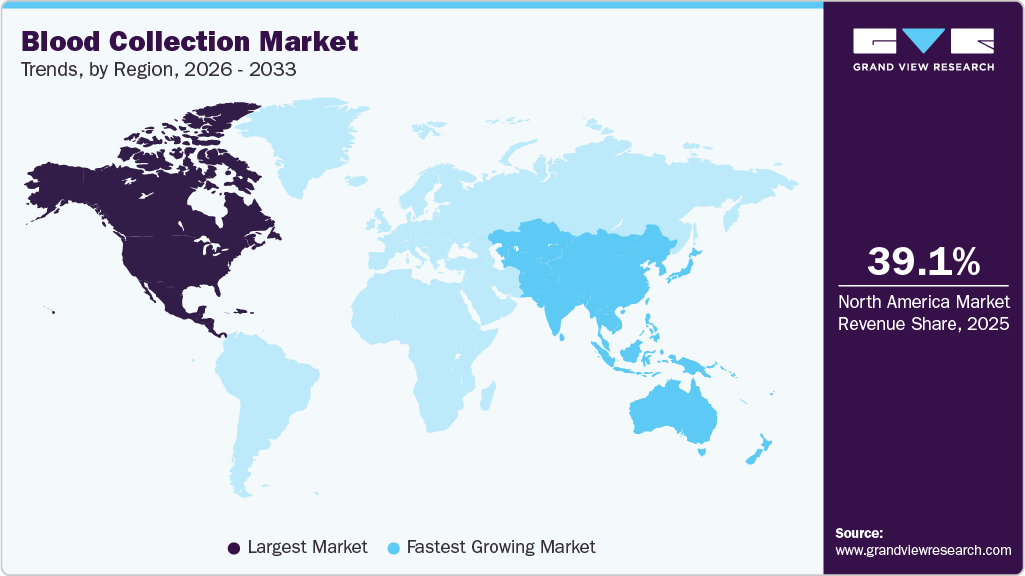
- North America: Largest market in 2025
- Asia Pacific: Fastest growing market
Key procedures include disease screening and medication monitoring. In addition, regular blood tests are necessary for treatment evaluation & monitoring of chronic illnesses, such as diabetes, cardiovascular disease, and cancer. High efficiency and ease in ensuring precise sample collection & preservation make these tests popular among medical experts. The growing prevalence of chronic diseases can further increase the need for diagnostic testing, boosting the demand for blood collection equipment.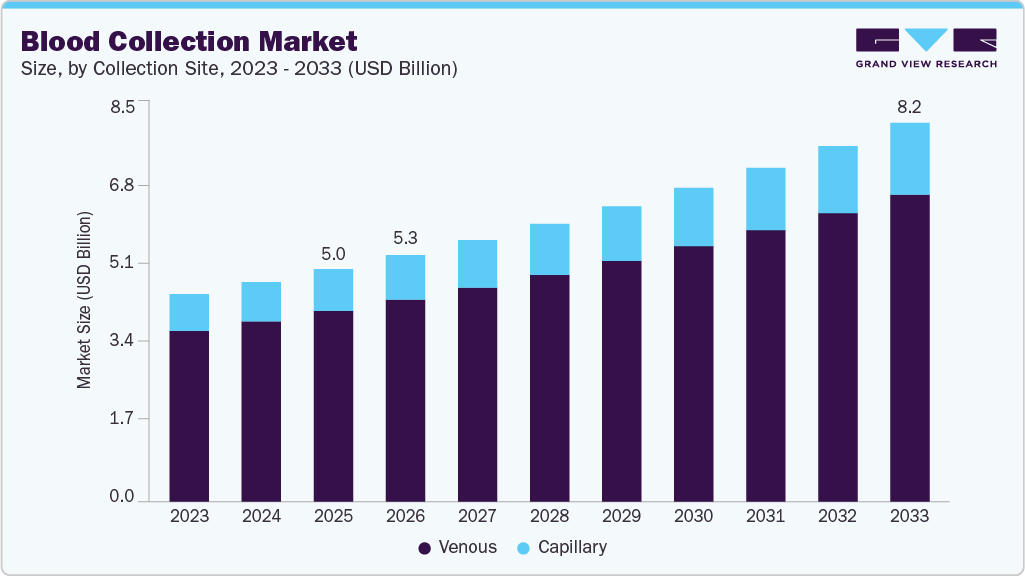
Blood samples often require specific temperature conditions (e.g., refrigeration or freezing) to maintain stability and integrity. Ensuring consistent temperature control throughout the storage and transportation is crucial to prevent sample degradation. In addition, coordinating the timely & efficient transportation of samples from collection sites to testing laboratories or facilities is a major challenge in blood collection. For instance, improper transportation of a sample intended for coagulation testing may result in the degradation of clotting factors due to incorrect temperature control. This could potentially lead to inaccurate test results indicating a clotting disorder, resulting in unnecessary anticoagulant therapy for the patient and heightened risks of bleeding complications.
The increasing prevalence of chronic & infectious diseases is a major factor driving the use of blood collection devices. With the U.S. becoming more globalized, health risks transcend borders. Economic integration, industrialization, urbanization, and mass migration contribute to a range of public health challenges. The emergence of infectious diseases, such as COVID-19, has caused significant morbidity & mortality, highlighting the urgent need for effective disease management strategies. Blood collection devices are crucial in diagnosing and monitoring chronic & infectious diseases. They provide a safe, hygienic, and efficient method for collecting samples, ensuring accurate test results & reducing the risk of contamination. In the context of the COVID-19 pandemic, these devices have been essential for collecting samples for diagnostic testing, tracking disease spread, and monitoring patient health.
The rising number of blood transfusions is one of the key factors expected to drive the blood collection market. According to the WHO 2023 estimate, around 118.5 million donations were collected worldwide. Among these, around 40% were collected from high-income countries, which together account for 16% of the global population. In addition, around 13,300 blood centers across 169 countries collectively gather around 106 million donations annually across the globe. The volume of donations per center varies significantly across countries, depending on the income levels.
Furthermore, climate change poses additional risks to public health, emphasizing the need for effective disease management tools. As the world continues to witness demographic & epidemiological transition, blood collection devices are expected to remain a critical component of healthcare systems, helping address the growing burden of chronic & infectious diseases and contributing to improved health outcomes for U.S. populations.
Blood transfusions are a common medical procedure conducted only after thorough compatibility testing. While generally safe, complications can sometimes arise weeks or even months after the transfusion. Complications include immune-related & nonimmune reactions, such as fever, acute immune hemolytic reactions, lung injury, bloodborne infections, delayed hemolytic reactions, iron overload, and graft-versus-host disease. These issues typically occur due to mismatches between the donor and the recipient, despite rigorous precautions taken by clinicians. If not promptly addressed, these risks can be fatal, posing a significant challenge to market growth. For instance, in September 2023, the U.S. FDA recently released a report detailing fatalities potentially associated with blood collection and transfusion in the U.S. for the fiscal year 2021. This report covers incidents reported between October 1, 2020 & September 30, 2021, and provides valuable insights by comparing these findings to data from the previous 5 fiscal years.
Market Concentration & Characteristics
The degree of innovation is high in the blood collection market, particularly with the new technologies enhancing convenience, accuracy, and patient experience. For example, Tasso, Inc. developed the Tasso OnDemand, a nearly painless device that allows patients to self-collect blood samples at home, which they can then mail directly to labs. This approach meets growing demand for at-home healthcare and supports decentralized clinical trials. Similarly, wearable continuous glucose monitors (CGMs), like the Freestyle Libre by Abbott, offer non-invasive, continuous monitoring, reducing the frequency of traditional draws for diabetic patients.
The merger and acquisition activities are moderate in the blood collection industry, as companies seek to expand capabilities, increase market share, and integrate complementary services. For instance, Quest Diagnostics acquired ExamOne, a mobile phlebotomy service provider, to bolster its reach in at-home lab services and enhance its consumer-facing offerings. Similarly, Laboratory Corporation of America (LabCorp) has expanded its diagnostic services portfolio through acquisitions, including its purchase of Covance, which extended LabCorp's capabilities into clinical trial and testing services.
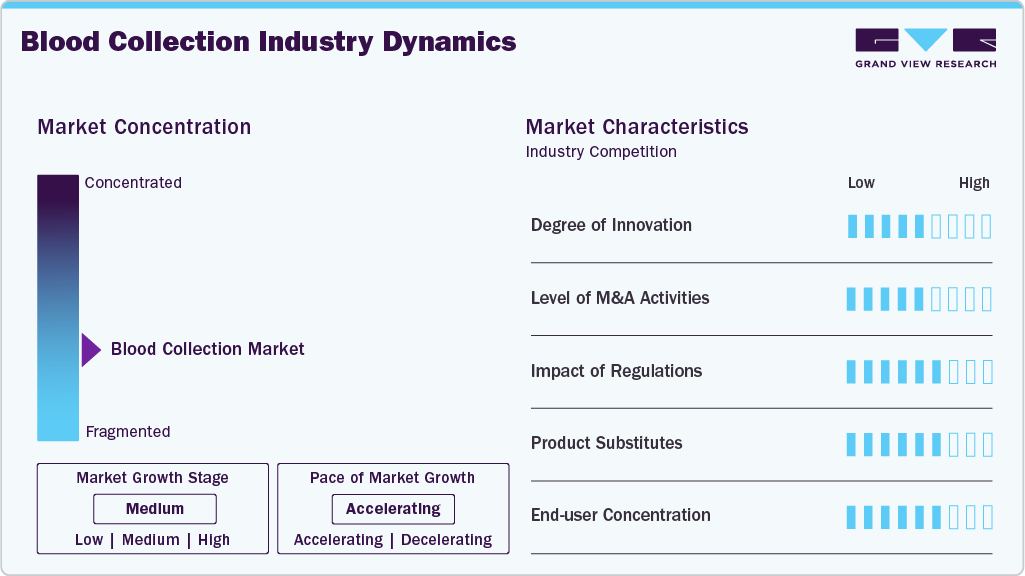
Regulation has a significant impact on the blood collection market, with stringent guidelines aimed at ensuring patient safety, data privacy, and testing accuracy. Regulatory bodies, such as the U.S. Food and Drug Administration (FDA) and European Medicines Agency (EMA), mandate high standards for collection devices, sample handling, and mobile phlebotomy services.
The blood collection market faces moderate substitution pressure from alternative diagnostic and monitoring technologies that reduce the need for traditional blood draws. Wearable devices, such as Abbott's Freestyle Libre and Dexcom’s G6, provide continuous glucose monitoring (CGM) without requiring frequent finger pricks or blood draws, offering diabetic patients a less invasive option for blood glucose tracking. Similarly, advancements in saliva- and urine-based tests, like those offered by Everlywell, are emerging as non-invasive diagnostic options that can measure biomarkers traditionally assessed via blood samples, such as cortisol and hormone levels. While these substitutes are limited to specific tests and are not yet comprehensive enough to replace traditional blood collection in all cases, they provide growing alternatives for patients seeking less invasive or at-home options.
The blood collection market shows a high level of end-user concentration, with primary demand coming from healthcare providers, diagnostics labs, and clinical trial organizations, as well as a growing segment of at-home healthcare users. Hospitals and diagnostic laboratories, such as Quest Diagnostics and LabCorp, account for the largest share of the market, as they require consistent blood testing for patient care, chronic disease management, and routine health screenings.
Collection Site Insights
The venous segment dominated the blood collection industry in 2025, accounting for the largest revenue share of 81.66%. The demand for venous blood collection is increasing due to the growing need for comprehensive diagnostic testing across various healthcare settings. As chronic diseases like diabetes, cardiovascular conditions, and cancer become more prevalent, there is a greater demand for routine blood tests and advanced diagnostics, many of which require venous samples for accurate analysis. Venous collection allows larger sample volumes, enabling multiple tests from a single draw, which is essential for patients with complex health needs. Additionally, the rise in decentralized clinical trials and home-based health services has further driven demand for venous collection, as it supports the extensive, reliable testing required for remote monitoring of patient outcomes.
The capillary segment is anticipated to witness the fastest growth rate during the forecast period, driven by its convenience, minimally invasive nature, and adaptability for at-home and point-of-care testing. Capillary sampling, often performed through a simple finger prick, requires less specialized equipment and is ideal for situations where smaller sample volumes are sufficient, such as glucose monitoring, cholesterol testing, and rapid diagnostic tests. With the expansion of telehealth and the demand for remote healthcare options, capillary collection enables patients to self-administer tests at home, reducing the need for in-person visits and making regular monitoring more accessible.
Application Insights
The diagnostics segment dominated the blood collection market with a share of 83.36% in 2025 and is anticipated to grow at the fastest CAGR over the forecast period, driven by the increasing need for precise, rapid, and minimally invasive testing across healthcare. Blood collection for diagnostic purposes is critical for identifying a range of medical conditions, from common infections to chronic diseases. A key example of this dominance is the widespread use of blood tests in managing diabetes, where frequent blood draws help monitor blood glucose levels and guide treatment. During the COVID-19 pandemic, diagnostics via blood collection surged, with antibody and serology tests enabling widespread testing and tracking of immunity levels. Companies like Becton, Dickinson and Company (BD) and Thermo Fisher Scientific expanded their diagnostic blood collection technologies to meet demand.
The treatment segment is expected to grow lucratively over the forecast period, primarily due to its essential role in therapeutic procedures such as sampling, transfusion, and cellular therapies. Blood collection for treatment is critical for managing various health conditions, including anemia, leukemia, and other hematological disorders, for which regular blood transfusions or stem cell treatments are required. For example, patients undergoing chemotherapy often need blood collections to monitor blood cell counts and receive transfusions to manage treatment-related side effects. With rising cases of chronic diseases and a growing elderly population worldwide, the treatment segment’s stronghold in the market is likely to continue, supported by innovations in collection technologies that aim to improve patient outcomes.
Method Insights
The manual blood collection segment dominated the blood collection market with a share of 81.73% in 2025, largely due to its widespread use in various healthcare settings, from primary care to specialized clinics, where reliable and cost-effective blood collection methods are essential. Unlike automated methods, manual collection, typically using syringes or vacuum-based tubes, allows healthcare providers greater control and flexibility, which is critical when handling patients with difficult vein access, such as children, elderly individuals, or those with certain medical conditions. This approach remains prevalent, especially in regions with limited access to advanced automated systems.
The automated blood collection segment is expected to register the fastest CAGR during the forecast period, driven by technological advancements that enhance precision, safety, and efficiency in the collection process. Automated systems that use sophisticated devices to draw blood with minimal human intervention are especially beneficial in high-throughput settings such as hospitals, diagnostic labs, and donation centers, where large volumes of samples are processed daily. These systems reduce the likelihood of human error, minimize patient discomfort, and streamline operations, making them an attractive choice for healthcare facilities aiming to optimize workflow and maintain high standards of care. Additionally, automated systems are increasingly favored in developed regions where healthcare infrastructure supports the integration of high-cost, technology-driven solutions.
End Use Insights
The hospitals segment dominated the blood collection industry, accounting for 39.12% in 2025. Primary healthcare facilities, hospitals, and clinics handle a large daily influx of patients, including those requiring routine blood tests, emergency care, and surgical procedures. The high number of blood tests performed in these settings creates a consistent demand for vacuum blood collection tubes. Furthermore, increasing healthcare spending to enhance the healthcare infrastructure in developing countries is leading to the construction of new hospitals and the modernization of existing ones. For example, in March 2022, the Delhi government announced plans to upgrade 15 hospitals and build four new healthcare facilities in the city, increasing the number of hospital-based diagnostic centers. Such developments are likely to drive market growth. In addition, many hospitals & clinics provide integrated services, including in-house laboratories and diagnostic centers. This integration further increases the demand for vacuum collection tubes, as it enables a streamlined workflow for blood collection and analysis within the same facility.
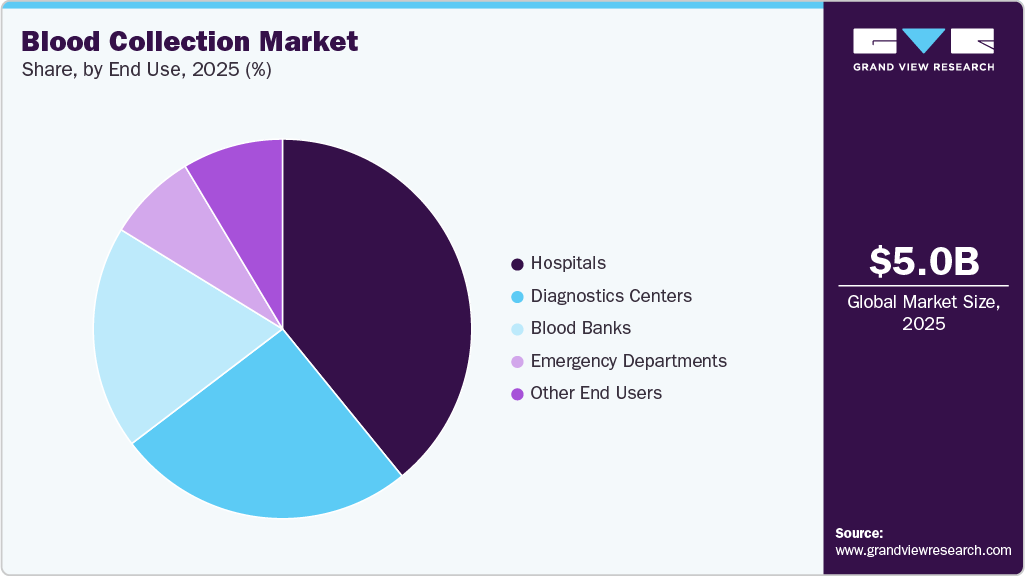
The diagnostics centers segment is expected to register the fastest CAGR during the forecast period. Technological advancements have transformed diagnostic capabilities, enabling more accurate and rapid testing for a range of medical conditions. Furthermore, the trend toward personalized medicine and genomic testing has broadened the scope of diagnostic services, catering to individual patient needs and improving treatment outcomes. In addition, the increasing prevalence of chronic diseases, such as diabetes and cardiovascular conditions, necessitates frequent monitoring and early detection through diagnostic testing, driving market demand. The increasing number of individuals with heart and circulatory diseases is driving a growing demand for diagnostic and monitoring tests, many of which require sample collection.
Regional Insights
North America dominated the blood collection market, accounting for the largest revenue share of 39.08% in 2025. Several factors, including the increasing incidence of accidents, rising prevalence of chronic & lifestyle diseases, and the growing geriatric population, drive the growth. The sedentary lifestyle of many individuals has contributed to the rise in Noncommunicable Diseases (NCDs), which are the leading cause of death in the U.S., affecting 200 million people and causing an estimated 3.9 million deaths annually. Innovations in collection technologies, such as home sampling kits and advanced diagnostic devices, align with the need for ongoing disease management & preventive care, thus expanding market opportunities and driving growth. Moreover, major players in North America include BD, Thermo Fisher Scientific, Greiner Bio-One, Haemonetics, Roche Diagnostics, Bio-Rad Laboratories, Medline Industries, Capillary Biomedical, Luminex, and Sanguine Biosciences. They offer a range of products, including collection tubes and devices, diagnostic solutions, and research kits.
U.S. Blood Collection Market Trends
The U.S. blood collection industry is expected to grow over the forecast period, driven by the increasing prevalence of chronic & infectious diseases, rapid advancements in blood collection technologies, and increasing demand for routine & specialized testing. Key factors include rising incidence of HIV, syphilis, & preterm births, growing awareness, and increasing government initiatives, such as the CDC’s HIV eradication plan.
Europe Blood Collection Market Trends
Europe accounted for a significant share of the blood collection industry in 2025. The rise in the prevalence of chronic and infectious diseases, such as diabetes, CVD, cancer, & asthma, drives the demand for advanced & reliable collection methods. Increased investments in healthcare infrastructure & research, increasing initiatives by market players, and the adoption of new diagnostic technologies further support this growth.
The UK blood collection market is growing primarily due to the increasing demand for advanced diagnostic and monitoring tools. Key market players include major healthcare companies specializing in blood collection technologies. The market shows a significant growth trend in the diagnostics segment due to the rising prevalence of chronic diseases.
The blood collection market in France is expected to grow over the forecast period due to the strong presence of strong healthcare systems, well-established insurance policies, government support, and the rising prevalence of infectious diseases. Respiratory viruses, including influenza, cause significant mortality, with annual seasonal outbreaks affecting 2 to 6 million people and resulting in 10,000 to 15,000 deaths, especially among vulnerable individuals.
The Germany blood collection market is expected to exhibit significant growth over the forecast period, due to several factors. Germany’s robust healthcare system, which covers 90% of the population under mandatory health insurance, supports widespread access to advanced treatments and infrastructure, fostering market expansion.
Asia Pacific Blood Collection Market Trends
The Asia Pacific blood collection industry is expected to witness the fastest CAGR over the projected period. The rising demand for healthcare, rapid technological advancements, and an aging population drive this growth. In countries such as India and Japan, the increasing incidence of chronic diseases, such as cardiovascular conditions and cancer, is propelling the need for advanced collection technologies and diagnostic tests. Japan’s rapidly aging population and rising cancer rates further boost market demand. At the same time, initiatives such as whole-blood product innovations and DBS card adoption highlight the region’s focus on improving healthcare infrastructure. Rapid technological advancements, such as new collection devices and automated systems, are enhancing efficiency & patient comfort.
The blood collection market in China is expected to grow over the forecast period, supported by the country’s large patient population, expanding healthcare infrastructure, and increasing demand for diagnostic testing. As healthcare providers strengthen disease management programs and preventive screening initiatives, the volume of blood testing procedures continues to increase. In addition, China’s efforts to expand point-of-care testing infrastructure and community healthcare services are improving access to diagnostic testing, particularly in urban and semi-urban healthcare facilities.
The Japan blood collection market is expected to grow over the forecast period. The high government spending drives the market growth to reduce the disease burden. In Japan, around 36.4 million, i.e., 29.1% of the population, are aged 65 & above, and the figure is expected to rise to 35.3% by 2040.
Latin America Blood Collection Market Trends
The Latin America blood collection industry was identified as a lucrative region in this industry due to improvements in healthcare infrastructure, increasing diagnostic awareness, and the rising prevalence of chronic diseases such as diabetes & cancer.
The blood collection market in Brazil is expected to grow over the forecast period. The market growth is driven by the high prevalence of chronic diseases that require regular monitoring and blood testing. With a population exceeding 200 million, Brazil represents a significant opportunity for healthcare services, especially diagnostic tests using collection devices.
Middle East & Africa Blood Collection Market Trends
The Middle East & Africa was identified as a lucrative region in the blood collection industry. The regional market is expected to witness significant growth opportunities, as the majority of the market remains untapped due to the absence of structured screening programs in underdeveloped African economies, which have impeded early detection efforts.
The blood collection market in Saudi Arabia is witnessing steady growth, supported by the rising burden of chronic diseases, particularly diabetes, and the country’s continued investments in healthcare infrastructure and diagnostic capabilities. The rising demand for diagnostic testing is being further supported by the government’s efforts to strengthen healthcare delivery and improve access to medical services. National healthcare transformation initiatives aim to expand preventive care programs and promote early disease detection.
Key Companies & Market Share Insights
Prominent companies lead the blood collection market with a strong global presence and advanced product offerings. Becton, Dickinson and Company (BD) is a dominant player known for its high-quality blood collection tubes and needles, widely used across healthcare facilities. Thermo Fisher Scientific provides an extensive range of blood collection equipment and consumables that support both diagnostic and therapeutic needs. Similarly, Fresenius Kabi and Terumo Corporation have carved out significant positions by offering specialized devices for blood donation and collection, particularly in areas that require high-precision technology. These companies continue to lead the market due to their innovative product portfolios, established distribution channels, and commitment to meeting evolving healthcare standards.
In recent years, several emerging players have entered the blood collection industry, introducing novel approaches and targeting underserved segments. For instance, companies like Tasso Inc. have developed blood collection devices that enable remote sampling, catering to the growing demand for at-home diagnostic solutions. Seventh Sense Biosystems has also made strides with its push-button blood-collection device, which simplifies the collection process for patients and healthcare providers. Emerging players like these are focused on enhancing convenience, reducing patient discomfort, and providing cost-effective alternatives, which is particularly appealing for telehealth and decentralized healthcare models. These innovations from new entrants are helping to expand the market by making blood collection more accessible and patient-friendly.
Key blood collection Companies:
The following key companies have been profiled for this study on the blood collection market.
- Abbott
- NIPRO Medical Corporation
- BD
- Terumo Corporation
- Medtronic
- QIAGEN
- FL Medical s.r.l.
- Greiner AG
- Haemonetics Corporation
- F. Hoffmann-La Roche Ltd.
- Sarstedt AG & Co. KG
- Centogene N.V.
- SEKISUI CHEMICAL CO., LTD.
Recent Developments
-
In January 2026, Terumo launched the Venosafe II Replot vacuum blood collection tube in Japan, designed to accelerate clot formation and reduce laboratory turnaround time. The product enhances the efficiency of serum preparation while maintaining specimen integrity for diagnostic testing.
-
In October 2025, Fresenius Kabi announced 13 New Inductees into the National Blood Donation Hall of Fame, highlighting leadership in blood collection bags and devices used by blood banks and healthcare facilities.
-
In February 2024, Tasso, Inc. announced the launch of Tasso Care for Prescreening, an advanced, end-to-end service solution crafted to elevate the effectiveness of prescreening programs. Building on Tasso's established Tasso Care services platform, this new offering leverages the company’s deep expertise in remote blood collection and analysis to streamline and enhance clinical trial recruitment efforts.
-
In December 2023, BD (Becton, Dickinson and Company) announced it had received 510(k) clearance from the U.S. Food and Drug Administration (FDA) for an innovative blood collection device designed to obtain samples via a fingerstick. This device delivers lab-quality results for a range of commonly ordered blood tests, representing a significant advancement in convenient, high-accuracy blood sampling technology.
-
In October 2023, YourBio Health announced it had obtained additional regulatory approval for its TAP Micro Select blood collection device, securing CE Mark certification. This certification enables the device to be marketed and used across the European Economic Area (EEA), signifying compliance with stringent EU health, safety, and environmental requirements. The TAP Micro Select device enables convenient, virtually painless collection from a fingertip, supporting high-quality sampling for diagnostic and monitoring purposes, thereby broadening its accessibility and use in various healthcare and at-home settings across Europe.
Blood Collection Market Report Scope
Report Attribute
Details
Market size value in 2026
USD 5.32 billion
Revenue forecast in 2033
USD 8.18 billion
Growth Rate
CAGR of 6.33% from 2026 to 2033
Actual Data
2021 - 2025
Forecast period
2026 - 2033
Quantitative units
Revenue in USD billion and CAGR from 2026 to 2033
Report coverage
Revenue forecast, company ranking, competitive landscape, growth factors, and trends
Segments covered
Collection site, application, method, end use, and region
Regional scope
North America; Europe; Asia Pacific; Latin America; MEA
Country scope
U.S.; Canada; Mexico; Germany; UK; France; Italy; Spain; Sweden; Denmark; Norway; China; Japan; India; South Korea; Australia; Thailand; Brazil; Argentina; Saudi Arabia; UAE; South Africa; Kuwait
Key companies profiled
Abbott; NIPRO Medical Corporation; BD; Terumo Corporation; Medtronic; QIAGEN; FL Medical s.r.l.; Greiner AG; Haemonetics Corporation; F. Hoffmann-La Roche Ltd.; Sarstedt AG & Co. KG; Centogene N.V.; SEKISUI CHEMICAL CO., LTD.
Customization scope
Free report customization (equivalent up to 8 analysts working days) with purchase. Addition or alteration to country, regional & segment scope.
Pricing and purchase options
Avail customized purchase options to meet your exact research needs. Explore purchase options
Global Blood Collection Market Report Segmentation
This report forecasts revenue growth at the global, regional, and country levels and provides an analysis of the latest industry trends in each of the sub-segments from 2021 to 2033. For this study, Grand View Research has segmented the global blood collection market report based on collection site, application, method, end use, and region:
-
Collection Site Outlook (Revenue, USD Million, 2021 - 2033)
-
Venous
-
Needles and Syringes
-
Double-Ended Needles
-
Winged Blood Collection Sets
-
Standard Hypodermic Needles
-
Other Blood Collection Needles
-
-
Blood Collection Tubes
-
Serum-separating
-
EDTA
-
Heparin
-
Plasma-separating
-
-
Blood Bags
-
Others
-
-
Capillary
-
Lancets
-
Micro-Container Tubes
-
Micro-Hematocrit Tubes
-
Warming Devices
-
Others
-
-
-
Application Outlook (Revenue, USD Million, 2021 - 2033)
-
Diagnostics
-
Treatment
-
-
Method Outlook (Revenue, USD Million, 2021 - 2033)
-
Manual Blood Collection
-
Automated Blood Collection
-
-
End Use Outlook (Revenue, USD Million, 2021 - 2033)
-
Hospitals
-
Diagnostics Centers
-
Blood Banks
-
Emergency Departments
-
Others
-
-
Regional Outlook (Revenue, USD Million, 2021 - 2033)
-
North America
-
U.S.
-
Canada
-
Mexico
-
-
Europe
-
UK
-
Germany
-
France
-
Italy
-
Spain
-
Sweden
-
Norway
-
Denmark
-
-
Asia Pacific
-
Japan
-
China
-
India
-
Australia
-
Thailand
-
South Korea
-
-
Latin America
-
Brazil
-
Argentina
-
-
MEA
-
South Africa
-
Saudi Arabia
-
UAE
-
Kuwait
-
-
Frequently Asked Questions About This Report
b. Some of the major players operating in the blood collection market include Abbott, NIPRO Medical Corporation, BD, Terumo Corporation, Medtronic, QIAGEN, FL Medical s.r.l., Greiner AG, Haemonetics Corporation, F. Hoffmann-La Roche Ltd., Sarstedt AG & Co. KG, Centogene N.V., SEKISUI CHEMICAL CO., LTD.
b. The increasing prevalence of infectious diseases, the mounting number of accident & trauma cases, and non-communicable diseases are the key factors contributing towards market growth.
b. The diagnostics segment held the largest blood collection market share with a market share of 83.86% in 2025, owing to the rising prevalence of chronic diseases such as cancer, diabetes, and cardiovascular diseases, coupled with growing awareness about regular health checkups.
b. The global blood collection market size was estimated at USD 5.02 billion in 2025 and is expected to reach USD 5.32 billion in 2026.
b. The global blood collection market is expected to grow at a compound annual growth rate of 6.33% from 2026 to 2033 to reach USD 8.18 billion by 2033.


Share this report with your colleague or friend.
Need a Tailored Report?
Customize this report to your needs — add regions, segments, or data points, with 20% free customization.


ISO 9001:2015 & 27001:2022 Certified
We are GDPR and CCPA compliant! Your transaction & personal information is safe and secure. For more details, please read our privacy policy.
Trusted market insights - try a free sample
See how our reports are structured and why industry leaders rely on Grand View Research. Get a free sample or ask us to tailor this report to your needs.