- Home
- »
- Homecare & Decor
- »
-
Baby Wipes Market Size And Share, Industry Report, 2033GVR Report cover
![Baby Wipes Market Size, Share & Trends Report]()
Baby Wipes Market (2026 - 2033) Size, Share & Trends Analysis Report By Product (Dry Wipes, Wet Wipes), By Distribution Channel (Hypermarket/Supermarket, Pharmacy And Drug stores, E-commerce), By Region, And Segment Forecasts
- Report ID: GVR-4-68038-838-1
- Number of Report Pages: 100
- Format: PDF
- Historical Range: 2021 - 2025
- Forecast Period: 2026 - 2033
- Industry: Consumer Goods
- Report Summary
- Table of Contents
- Interactive Charts
- Methodology
- Download FREE Sample
-
 Download Sample Report
Baby Wipes Market Summary
The global baby wipes market size was estimated at USD 6.20 billion in 2025 and is expected to reach USD 9.41 billion by 2033, growing at a CAGR of 5.4% from 2026 to 2033. Rising birth rates in emerging economies and increasing awareness of infant hygiene are key drivers of the baby wipes industry.
Key Market Trends & Insights
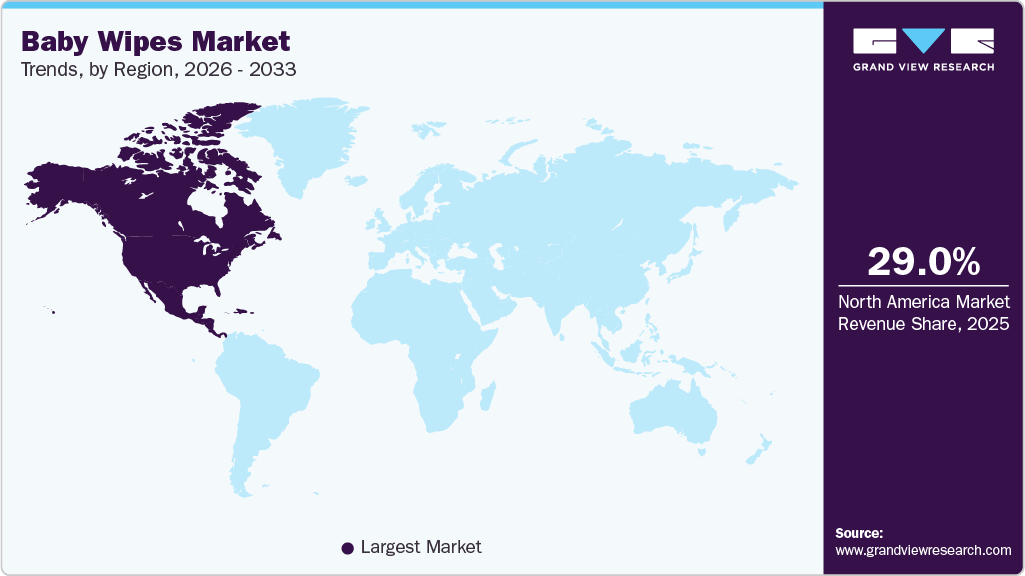
- The North America baby wipes market held the largest market share of 29.0% in 2025.
- The baby wipes market in the U.S. is estimated to grow at a CAGR of 5.2% from 2026 to 2033
- By product, dry wipes led the baby wipes market and accounted for a share of 58.7% in 2025.
- By distribution channel, the sales through hypermarket/supermarket led the baby wipes market and accounted for a share of 43.4% in 2025.
Market Size & Forecast
- 2025 Market Size: USD 6.20 billion
- 2033 Projected Market Size: USD 9.41 billion
- CAGR (2026-2033): 5.4%
- North America : Largest market
Parents are becoming more conscious of maintaining cleanliness during diaper changes and daily baby care routines to prevent skin irritation, infections, and rashes. As a result, baby wipes are widely preferred as a convenient and hygienic cleaning solution compared to traditional cloth or water-based methods, contributing to their growing adoption among modern parents.The rising participation of women in the workforce is playing a key role in the growth of the baby wipes market. The labor force participation rate among prime-age married mothers with children under five has increased from 63% in 2000 to around 69% in 2025, reflecting a growing number of working mothers managing both careers and childcare. As a result, demand for convenient, time-saving baby care products has surged in the baby wet tissues wipes market. These wipes offer a quick, portable, and hygienic solution for diaper changes and on-the-go use, making them an essential part of everyday infant care routines.
Rising consumer environmental awareness is driving the adoption of eco-friendly, biodegradable baby wipes. Traditional wipes often contain synthetic fibers and plastics that contribute to environmental waste, prompting parents to seek sustainable alternatives. In response, manufacturers are developing wipes made from plant-based fibers, biodegradable materials, and plastic-free formulations, along with recyclable or minimal packaging. This shift toward environmentally responsible products is increasingly influencing purchasing decisions and shaping innovation in the biodegradable baby wipes market.
In November 2025, Popees Baby Care expanded its baby care portfolio by launching premium organic bamboo baby wipes, designed to offer a gentle, eco-friendly cleaning solution for infants. The wipes are made from 100% organic bamboo fabric and formulated with ingredients such as aloe vera, avocado oil, and vitamin E, which help soothe and protect babies’ sensitive skin. The product is alcohol-free, fragrance-free, and dermatologically tested, emphasizing safety and skin compatibility.
Consumer Insights
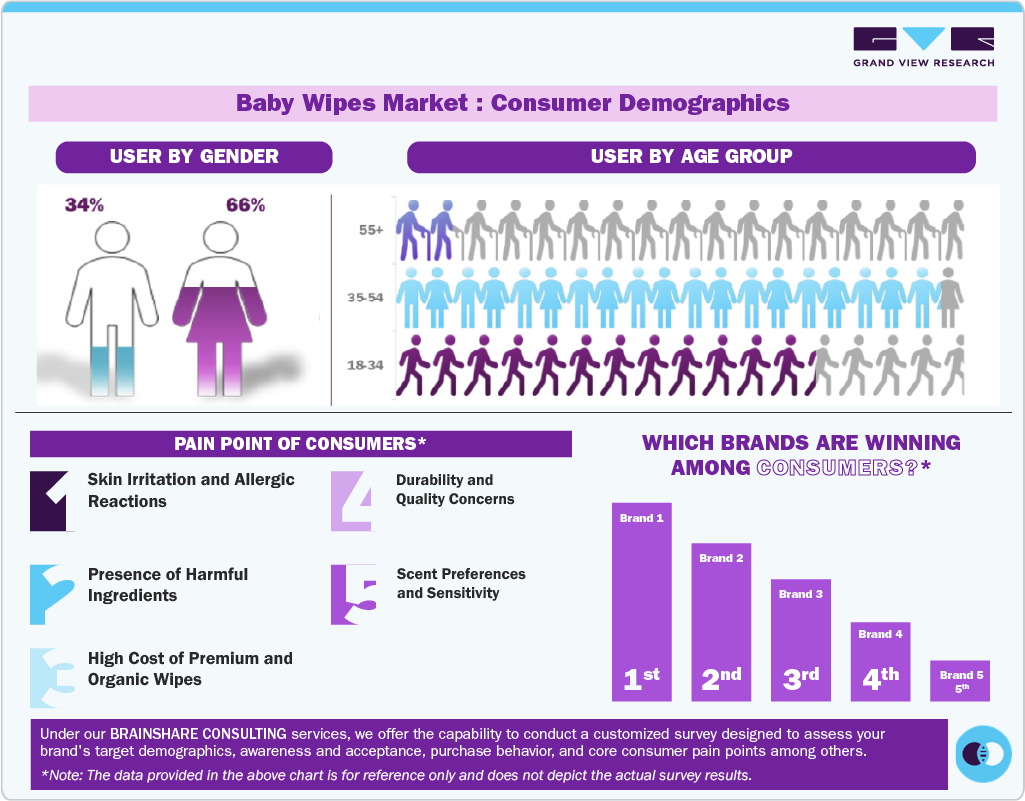
Parents increasingly prefer baby wipes made with natural, plant-based, and chemical-free ingredients to protect infants’ sensitive skin. Products containing ingredients such as aloe vera, chamomile, or purified water are popular because they are perceived as gentle and safe. Many consumers also look for wipes that are alcohol-free, fragrance-free, and dermatologically tested to reduce the risk of skin irritation.
Environmental awareness has significantly influenced purchasing decisions. Many parents now prefer biodegradable wipes made from materials like bamboo fiber, organic cotton, or plant-based cellulose, as these options reduce plastic waste and environmental impact. Eco-friendly packaging and plastic-free wipes are also gaining attention among environmentally conscious consumers. Consumers prioritize softness, hypoallergenic properties, and skin compatibility when choosing baby wipes. Products designed for sensitive skin and dermatologist-tested are highly preferred, as babies’ skin is delicate and prone to irritation. This has increased demand for wipes formulated with mild and soothing ingredients.
In January 2026, Harper Hygienics introduced Kindii Water Care, a new line of baby wipes specifically designed for ultra-sensitive skin and newborns from the first day of life. The wipes feature a minimalist formulation made with 99.9% water and only three ingredients, including grapefruit extract, a natural preservative. They are fragrance-free, dermatologically tested, and produced from 100% natural viscose fibers derived from plant-based cellulose, ensuring gentle cleansing without irritation.
Product Insights
The dry wipes market accounted for 58.7% of the baby wipes industry's revenue in 2025. Dry wipes are versatile and can be used for cleaning, wiping, and general hygiene, making them a preferred choice for many parents. Additionally, dry wipes are often perceived as more economical and have a longer shelf life than wet wipes, appealing to cost-conscious consumers. The growing awareness of the benefits of using gentle, chemical-free products for infants' sensitive skin has also boosted demand for dry wipes.
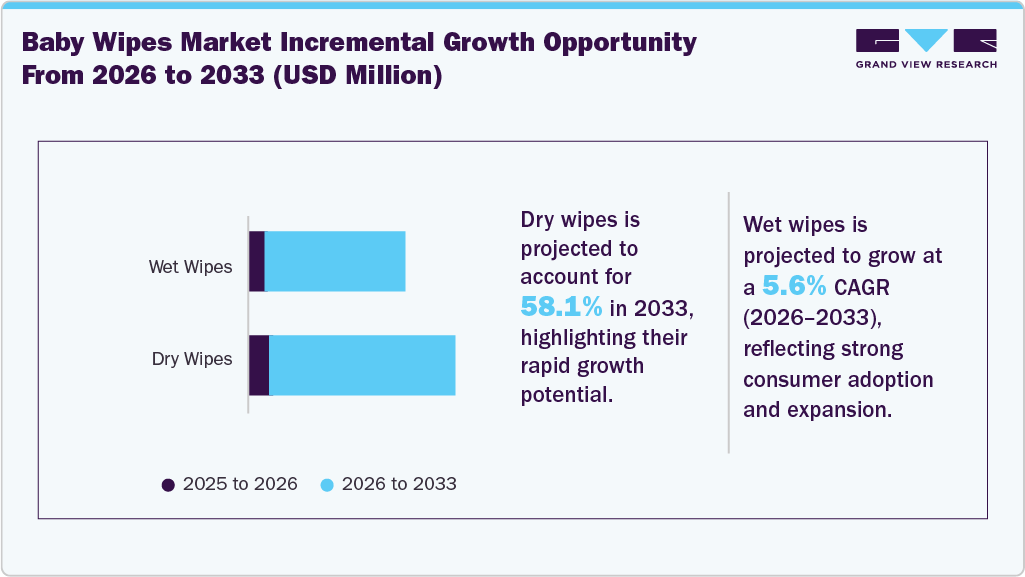
The demand for wet wipes is estimated to witness a CAGR of 5.6% from 2026 to 2033. Rising awareness of infant hygiene, particularly during the early developmental years, has significantly increased demand for baby wet wipes. These wipes are often formulated with gentle, moisturizing ingredients, making them suitable for infants’ sensitive skin and appealing to health-conscious parents. Furthermore, the growing availability of eco-friendly and biodegradable options has attracted environmentally conscious consumers, further driving growth in the baby wet wipes market.
Distribution Channel Insights
The sale of baby wipes through hypermarket/ supermarket held the revenue share of 43.4% of the baby wipes industry in 2025. These retail channels offer a wide range of baby care products under one roof, making it convenient for parents to purchase all their baby essentials in a single trip. The extensive availability and accessibility of baby wipes in hypermarkets and supermarkets, and frequent promotions and discounts, make these retail outlets an attractive shopping destination. Additionally, the ability for consumers to physically examine and compare products in-store enhances their shopping experience and builds trust in the quality of the products.
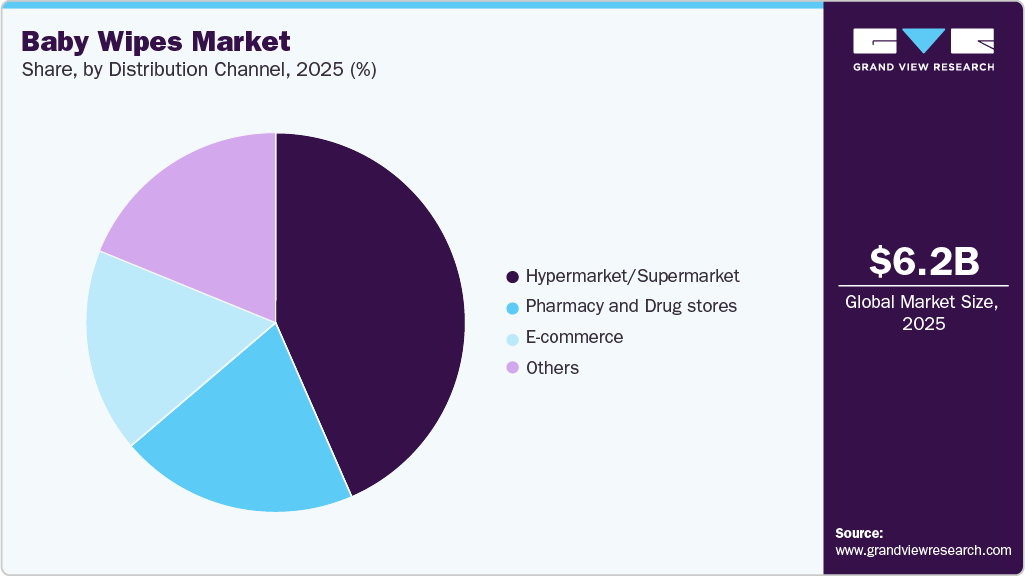
The sale of baby wipes through E-commerce is estimated to witness a CAGR of 6.9% from 2026 to 2033. The convenience and ease of online shopping have become increasingly appealing to parents, allowing them to purchase baby wipes and other essentials from the comfort of their homes. E-commerce platforms offer a wide range of products, enabling parents to compare brands, read reviews, and make informed decisions. Additionally, subscription services and bulk purchase options available through e-commerce platforms provide added convenience and cost savings for consumers.
Regional Insights
The baby wipes market in North America held a revenue share of 29.0% of the baby wipes industry in 2025. The region boasts high parental awareness of infant hygiene and health, which drives demand for convenient, effective baby wipes. The increasing number of dual-income households and the growing disposable incomes in the region have further contributed to the market expansion, as parents are more willing to invest in premium baby care products. The presence of well-established brands and a wide range of product offerings, including natural and organic options, cater to the diverse preferences of North American consumers. Additionally, the robust retail infrastructure, encompassing supermarkets, hypermarkets, and a rapidly growing e-commerce sector, ensures wide accessibility and availability of baby wipes.
U.S. Baby Wipes Market Trends
The baby wipes market in the U.S. is estimated to grow at a CAGR of 5.2% from 2026 to 2033, driven by increasing awareness of hygiene and health among parents, rising disposable incomes, and growing preference for convenient and effective baby care products. The trend towards natural and organic products, along with innovations in product formulations, has also contributed to the U.S. baby wipes market expansion.
The baby wipes market in Canada is estimated to witness a CAGR of 6.2% from 2026 to 2033. Growing awareness about infant hygiene and the need for convenient childcare solutions are major drivers of the baby wipes market in Canada. Busy lifestyles and the increasing participation of parents in the workforce are encouraging the use of disposable baby care products that simplify daily childcare routines.
Asia Pacific Baby Wipes Market Trends
The baby wipes market in the Asia Pacific held the revenue share of 24.9% of the baby wipes industry in 2025. Growing awareness of infant hygiene and health among parents in countries such as China, India, and Japan has significantly driven expansion in the disposable baby wipes market. The region’s diverse consumer base, spanning highly urbanized areas to rural communities, offers extensive opportunities for market penetration. Additionally, the influence of social media and digital marketing has increased the visibility and appeal of baby wipes products, particularly among younger parents who value convenience and quality.
The baby wipes market in China is estimated to witness a CAGR of 5.0% from 2026 to 2033. Manufacturers are introducing new product features such as extra-soft nonwoven fabrics, antibacterial formulations, and dermatologically tested wipes. Companies are also improving packaging formats, including refill packs and travel packs, to enhance convenience for parents and encourage repeat purchases.
The baby wipes market in India is estimated to witness a CAGR of 5.8% from 2026 to 2033. Online retail channels have become an important sales platform for baby wipes in India. A large share of urban households now prefer buying baby care products online for convenience, variety, and competitive pricing.
Europe Baby Wipes Market Trends
The baby wipes market in the Europe is estimated to witness a CAGR of 4.5% from 2026 to 2033. Strict regulatory standards on chemical use in baby care products across the region have driven innovation in the disposable baby wipes market, prompting manufacturers to develop more natural and organic formulations that appeal to health-conscious parents. Additionally, strong environmental awareness among European consumers is driving increased demand for biodegradable, eco-friendly baby wipes. The impact of educational campaigns and initiatives emphasizing the importance of infant hygiene has further supported market growth.
The baby wipes market in the UK is estimated to witness a CAGR of 4.9% from 2026 to 2033. Government regulations are significantly influencing product innovation. The UK plans to ban plastic-containing wet wipes by 2027, encouraging manufacturers to reformulate products with biodegradable fibers and environmentally friendly materials. This policy aims to reduce sewer blockages and marine pollution caused by wipes that contain plastic microfibers.
The baby wipes market in France is estimated to witness a CAGR of 4.3% from 2026 to 2033. Consumers in France increasingly prefer premium baby wipes with dermatological testing, moisturizing ingredients, and thicker textures that provide enhanced skin protection. These wipes often include added skincare benefits, such as aloe vera or moisturizing formulations, to help prevent diaper rash and maintain infant skin health.
Central And South America Baby Wipes Market Trends
The baby wipes market in Central and South America is estimated to witness a CAGR of 6.5% from 2026 to 2033. Due to economic fluctuations in several countries in the region, consumers often prioritize cost-effective and value-for-money baby wipes. This has increased the presence of private-label and locally manufactured wipes that offer competitive pricing while maintaining acceptable quality standards.
Middle East And Asia Baby Wipes Market Trends
The baby wipes market in the Middle East and Asia is estimated to witness a CAGR of 6.1% from 2026 to 2033. Consumers are increasingly shifting toward premium, eco-friendly, and skin-friendly biodegradable baby wipes. Demand is rising for high-quality wipes made with gentle ingredients and sustainable materials, as parents prioritize infant product safety and comfort. This has influenced the biodegradable baby wipes market.
Key Baby Wipes Company Insights
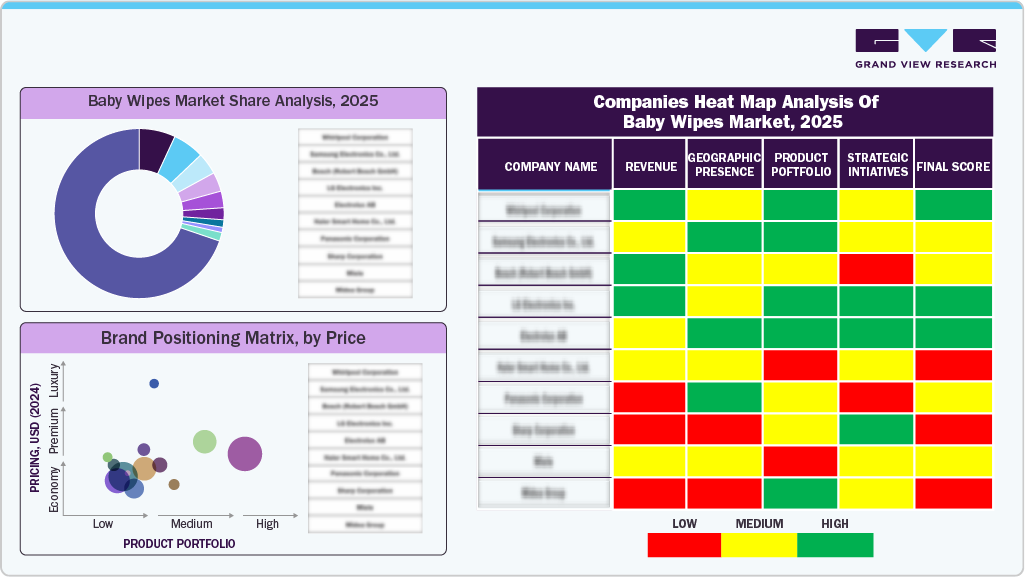
The baby wipes market is highly competitive and moderately fragmented, with the presence of several multinational consumer goods companies, regional manufacturers, and emerging niche brands. Key participants include well-established global players in the baby care and personal hygiene industry, as well as smaller companies focusing on organic and specialized baby care products. Companies compete through product innovation, formulation improvements, pricing strategies, and strong brand positioning while addressing consumer priorities such as skin safety, softness, convenience, and sustainability.
Key Baby Wipes Companies:
The following key companies have been profiled for this study on the baby wipes market.
- Johnson & Johnson Services, Inc.
- KCWW
- Procter & Gamble
- Unicharm Corporation
- BABISIL
- Cotton Babies, Inc.
- Farlin-Global
- Hengan International Group Company Ltd.
- Himalaya Wellness Company
- Pigeon Corporation
Recent Developments
-
In February 2026, Piramal Consumer Healthcare, a division of Piramal Pharma Limited, launched Little’s AquaSense Baby Wipes, formulated with 99.9% RO-purified water, providing a gentle, safe cleansing solution for newborns and infants. The wipes are pH-balanced, dermatologically tested, and free from alcohol and parabens, making them suitable for babies with sensitive skin. In addition, the product is biodegradable, reflecting the company’s focus on safety and environmentally responsible baby care solutions.
-
In January 2026, Harper Hygienics introduced Kindii Water Care, a new range of baby wipes designed specifically for newborns and infants with ultra-sensitive skin. The wipes feature a minimalist formulation containing 99.9% water and only three ingredients, including grapefruit extract, a natural preservative. They are fragrance-free, dermatologically tested, and suitable for use from the first day of life, ensuring gentle cleansing without irritation.
Baby Wipes Market Report Scope
Report Attribute
Details
Market size value in 2026
USD 6.51 billion
Revenue forecast in 2033
USD 9.41 billion
Growth rate
CAGR of 5.4% from 2026 to 2033
Actual data
2021 - 2025
Forecast period
2026 - 2033
Quantitative units
Revenue in USD Billion and CAGR from 2026 to 2033
Report coverage
Revenue forecast, company ranking, competitive landscape, growth factors, and trends
Segments covered
Product, distribution channel, region
Regional scope
North America; Europe; Asia Pacific; Central & South America; Middle East & Africa
Country scope
U.S.; Canada; Mexico; UK; Germany; France; Italy; Spain; China; India; Japan; Australia & New Zealand; South Korea; Brazil; South Africa
Key companies profiled
Johnson & Johnson Services, Inc.; KCWW; Procter & Gamble; Unicharm Corporation; BABISIL; Cotton Babies, Inc.; Farlin-Global; Hengan International Group Company Ltd.; Himalaya Wellness Company; Pigeon Corporation
Customization scope
Free report customization (equivalent up to 8 analysts working days) with purchase. Addition or alteration to country, regional & segment scope.
Pricing and purchase options
Avail customized purchase options to meet your exact research needs. Explore purchase options
Global Baby Wipes Market Report Segmentation
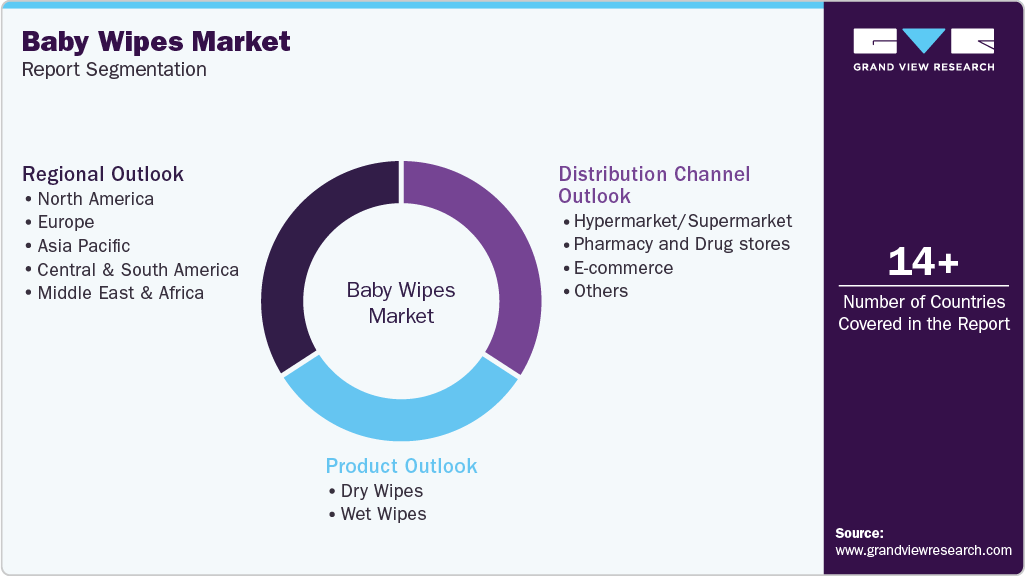
This report forecasts revenue growth at global, regional & country levels and provides an analysis of the latest trends and opportunities in each of the sub-segments from 2021 to 2033. For the purpose of this study, Grand View Research has segmented the baby wipes market on the basis of product, distribution channel and region.
-
Product Outlook (Revenue, USD Billion, 2021 - 2033)
-
Dry Wipes
-
Wet Wipes
-
-
Distribution Channel Outlook (Revenue, USD Billion, 2021 - 2033)
-
Hypermarket/Supermarket
-
Pharmacy and Drug stores
-
E-commerce
-
Others
-
-
Regional Outlook (Revenue, USD Billion, 2021 - 2033)
-
North America
-
U.S.
-
Canada
-
Mexico
-
-
Europe
-
UK
-
Germany
-
France
-
Italy
-
Spain
-
-
Asia Pacific
-
China
-
India
-
Japan
-
Australia & New Zealand
-
South Korea
-
-
Central & South America
-
Brazil
-
-
Middle East & Africa (MEA)
-
South Africa
-
-
Frequently Asked Questions About This Report
b. The global baby wipes market size was estimated at USD 6.20 billion in 2025 and is expected to reach USD 6.51 billion in 2026.
b. The global baby wipes market is expected to grow at a compound annual growth rate of 5.4% from 2026 to 2033 to reach USD 9.41 billion by 2033.
b. Some key players operating in the baby wipes market include Johnson & Johnson, The Himalaya Drug Company, Babisil Products Ltd., Cotton Babies, Inc., Farlin Corporation, Hengan International Group Company Ltd., Kimberly-Clark Corporation, Pigeon Corporation, Procter & Gamble Co., Unicharm Corporation.
b. Key factors that are driving the market growth include increasing awareness regarding baby hygiene among parents, an increasing number of working women population, and the prevalence of e-commerce retailers across the world.
b. The dry wipes market held the revenue share of 58.7% of the baby wipes industry in 2025. Dry wipes are versatile and can be used for cleaning, wiping, and general hygiene, making them a preferred choice for many parents


Share this report with your colleague or friend.
Need a Tailored Report?
Customize this report to your needs — add regions, segments, or data points, with 20% free customization.


ISO 9001:2015 & 27001:2022 Certified
We are GDPR and CCPA compliant! Your transaction & personal information is safe and secure. For more details, please read our privacy policy.
Trusted market insights - try a free sample
See how our reports are structured and why industry leaders rely on Grand View Research. Get a free sample or ask us to tailor this report to your needs.