- Home
- »
- Beauty & Personal Care
- »
-
Baby Diapers Market Size & Share, Industry Report, 2033GVR Report cover
![Baby Diapers Market Size, Share & Trends Report]()
Baby Diapers Market (2026 - 2033) Size, Share & Trends Analysis Report By Product (Non-Disposable Diapers, Disposable Diapers), By Type (Open Diapers, Closed Diapers), By Size (New Born, Small, Medium, Large, Extra Large), By Distribution Channel (Pharmacies & Drug Stores, Online), By Region, And Segment Forecasts
- Report ID: 978-1-68038-664-6
- Number of Report Pages: 110
- Format: PDF
- Historical Range: 2021 - 2025
- Forecast Period: 2026 - 2033
- Industry: Consumer Goods
- Report Summary
- Table of Contents
- Interactive Charts
- Methodology
- Download FREE Sample
-
 Download Sample Report
Baby Diapers Market Summary
The global baby diapers market size was estimated at USD 83.31 billion in 2025 and is projected to reach USD 141.80 billion by 2033, growing at a CAGR of 7.0% from 2026 to 2033. A rise in the global birth rate, especially in emerging economies, significantly drives the baby diapers market by increasing the number of infants requiring diaper products.
Key Market Trends & Insights
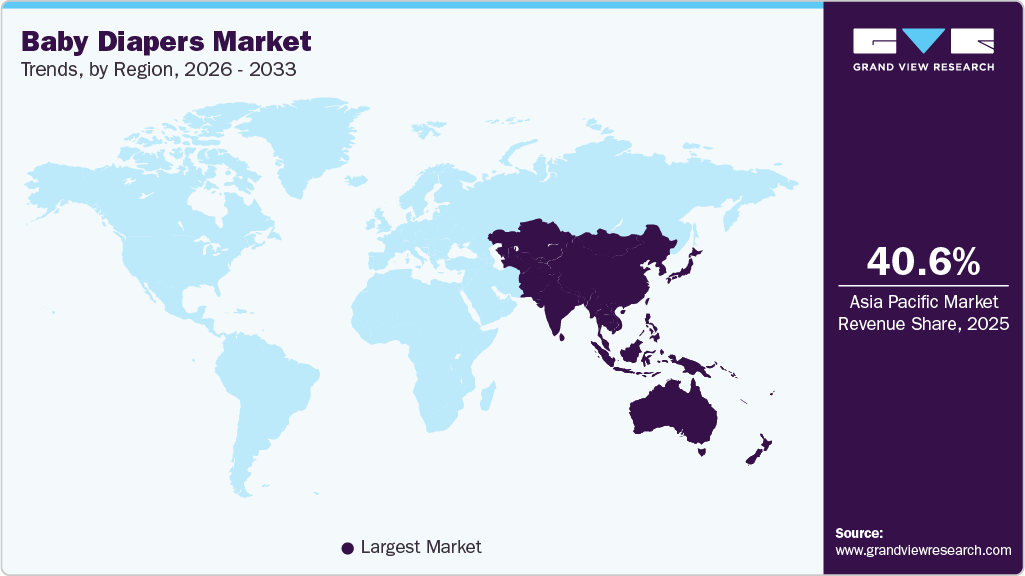
- By region, Asia Pacific led the baby diapers market and accounted for a share of 40.55% in 2025.
- By product, disposable diapers segment led the baby diapers market and accounted for a share of 78.39% in 2025.
- By type, closed diapers (pull-up or pants) segment led the baby diapers market and accounted for a share of 47.22% in 2025.
- By size, large diapers segment led the baby diapers market and accounted for a share of 40.65% in 2025.
Market Size & Forecast
- 2025 Market Size: USD 83.31 Billion
- 2033 Projected Market Size: USD 141.80 Billion
- CAGR (2026 - 2033): 7.0%
- Asia-Pacific: Largest Market in 2025
As birth rates grow, particularly in regions such as Asia-Pacific, Africa, and Latin America, the demand for essential baby care products like diapers rises accordingly. In these regions, where disposable income is also gradually increasing, parents are opting for convenient, hygienic, and high-quality diaper options, thus expanding the market. The growing population of infants directly correlates with higher diaper consumption, driving both production and sales across various diaper brands and categories. As more families migrate to urban areas and an increasing number of mothers join the workforce, disposable diapers have become an essential solution for busy parents seeking convenience and hygiene. Urban living often involves fast-paced, time-constrained lifestyles, making disposable diapers a practical choice for working parents who may not have the time or resources to wash cloth diapers regularly. These diapers offer ease of use, with no need for frequent laundering or additional time-consuming care, providing a cleaner, more hygienic option for babies. The convenience of easily accessible, ready-to-use diapers also aligns well with the growing trend of dual-income households, further driving the demand in urban markets.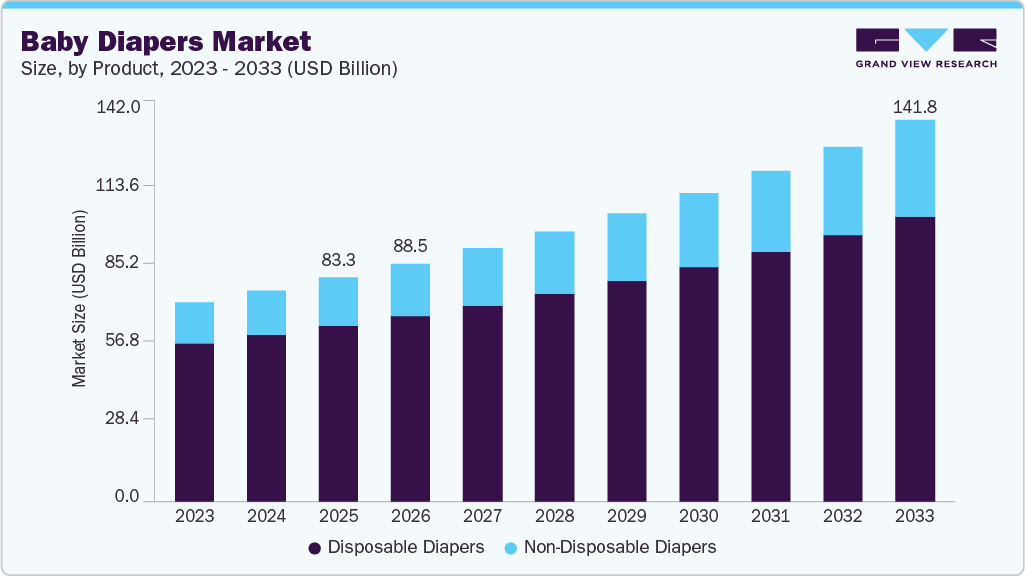
Continuous advancements in diaper technology, including the development of more absorbent materials, eco-friendly options, and innovative features like wetness indicators, have significantly driven demand for new and improved diaper products. These innovations offer enhanced comfort, better performance, and environmental sustainability, appealing to modern parents who seek both convenience and responsibility, thus fueling the growth of the market.
In November 2025, Pampers introduced the world’s smallest diaper: Swaddlers Preemie Extra Extra Small (Pxxs), designed specifically for extremely premature babies, marking a significant innovation in neonatal care. Launched on World Prematurity Day, the diaper was developed in collaboration with medical authorities and NICU professionals to meet the needs of micro-preemies born as early as 21-22 weeks and weighing under 500 grams, a segment previously underserved by existing diaper sizes. The product focuses on ultra-soft materials and a precise fit to protect fragile skin and reduce irritation.
The growth of e-commerce and improvements in distribution channels have significantly contributed to the expansion of the diaper market. The rise of online shopping platforms has made it increasingly convenient for parents to purchase diapers, often in bulk, at competitive prices, offering greater affordability and ease of access. Online retailers, alongside supermarkets and pharmacies, have expanded their presence, ensuring that diapers are readily available across multiple channels. This increased accessibility has allowed consumers to find their preferred products with minimal effort, further driving market growth.
Consumer Insights
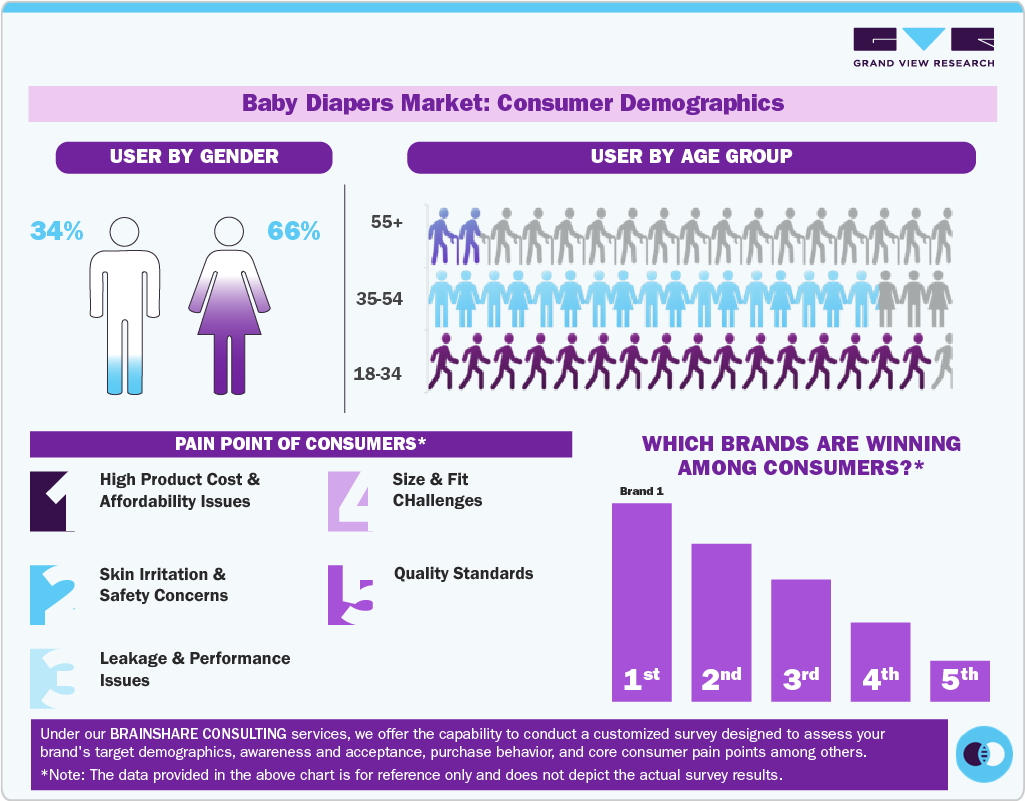
Parents strongly prioritize superior absorbency and leak protection when choosing baby diapers, as keeping babies dry directly impacts comfort, sleep quality, and overall hygiene. Diapers with advanced moisture-locking technology, overnight security, and leak-guard barriers are highly preferred because they reduce the need for frequent diaper changes and minimize nighttime disruptions for both babies and parents.
Another key preference is skin-friendly and safe materials, as parents are increasingly concerned about diaper rash, allergies, and exposure to harsh chemicals. Demand is rising for hypoallergenic, fragrance-free, and dermatologically tested diapers made from soft, breathable materials that protect sensitive baby skin while ensuring long-lasting comfort and safety.
Product Insights
Disposable diapers held the largest revenue share in the baby diapers industry in 2025, accounting for 78.39%. Disposable diapers offer advantages over cloth alternatives, including ease of use, superior absorbency, and the ability to be discarded after use, reducing the time and effort required for cleaning and maintenance. Their widespread adoption is also fueled by advancements in diaper technology, which has led to thinner, more absorbent designs that keep babies dry and comfortable for longer periods. Additionally, disposable diapers are preferred by parents for their effectiveness in preventing leaks, especially during nighttime, and the increasing availability of eco-friendly disposable options has helped address environmental concerns.
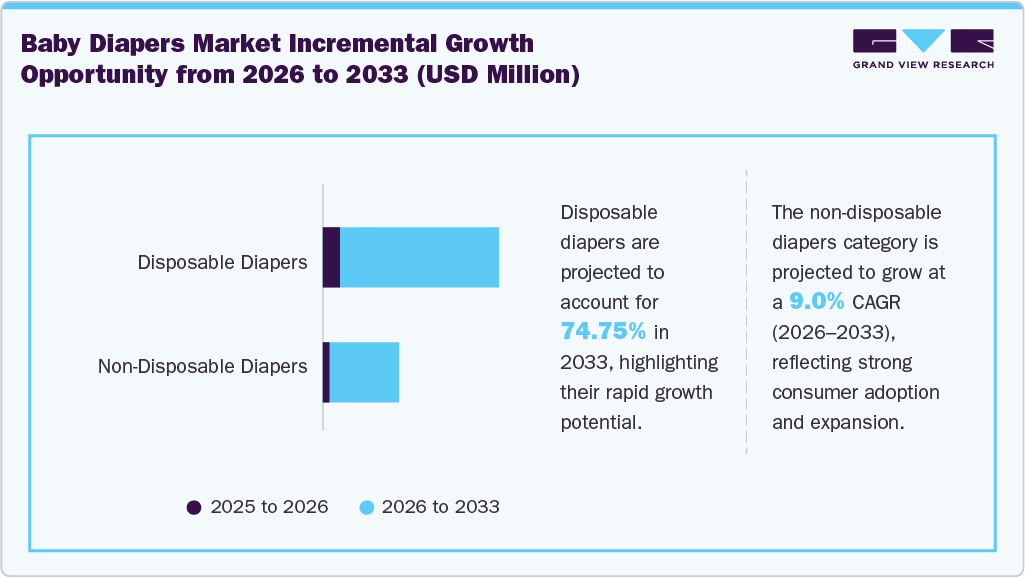
The demand for non-disposable diapers is anticipated to witness a CAGR of 9.0% from 2026 to 2033. Non-disposable diapers, such as cloth diapers, are seen as an eco-friendly alternative to disposable ones, as they can be reused multiple times, reducing waste and environmental impact. Parents are also attracted to the long-term cost savings, as cloth diapers, although a higher initial investment, do not require frequent repurchasing like disposables. Furthermore, advancements in cloth diaper technology, such as improved absorbent materials and easier washing methods, have made them more appealing. One company offering non-disposable baby diapers is BumGenius, known for its high-quality, reusable cloth diapers that provide comfort, performance, and sustainability for both parents and babies.
Type Insights
Open baby diapers held the largest revenue share of the baby diapers industry in 2025, accounting for a share of 52.7%. The consumers are driven by their ease of use, affordability, secure fit, and adaptability for babies of various shapes and sizes. Taped diapers feature adjustable side tabs that allow parents to customize the fit, ensuring a snug, comfortable fit for infants, especially during the early stages when babies are more active and prone to movement. This design provides a more flexible, secure fastening than pull-up diapers, making it easier to change babies, particularly younger infants who are unable to stand or walk. The availability of advanced features, such as improved absorbency, leak protection, and skin-friendly materials, in taped diapers further contributes to their popularity, making them a preferred choice for many parents seeking reliability and comfort.
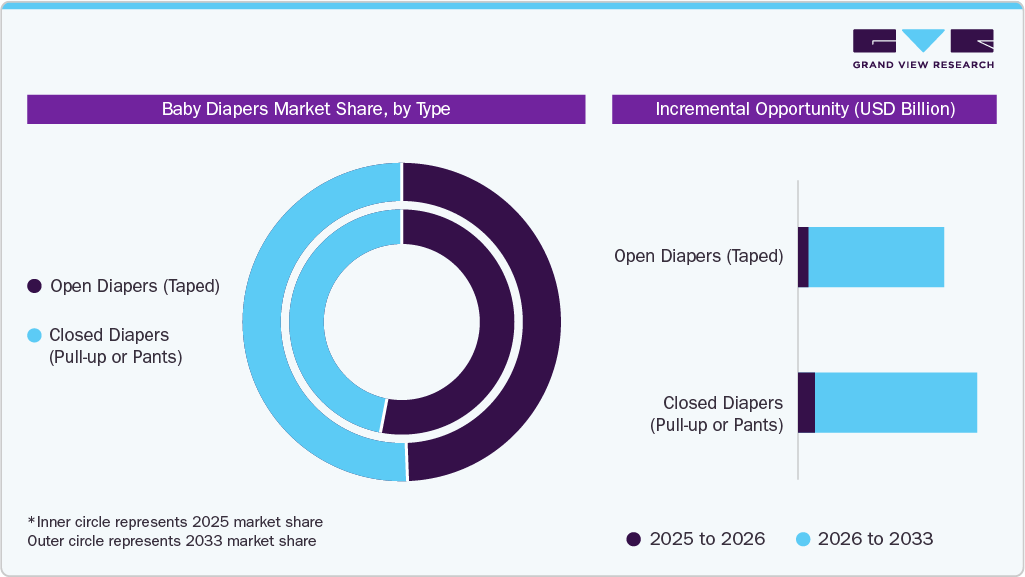
The demand for closed baby diapers is anticipated to witness a CAGR of 7.9% from 2026 to 2033. The increasing growth of closed baby diapers, such as pull-up or pants diapers, among consumers is driven by their convenience and enhanced mobility for babies and toddlers. These diapers are designed to be pulled up and down like regular underwear, making them ideal for active infants and toddlers who are beginning to walk and explore. They offer greater comfort and independence because they can be easily changed without removing the child’s clothes. This shift is also influenced by the growing preference for diapers that support potty training, as pull-ups help toddlers become more familiar with the toilet.
Size Insights
Large-sized baby diapers held the largest revenue share in the baby diapers industry in 2025, accounting for 40.6%. Larger sizes, typically designed for older infants and toddlers, offer a better value per unit, making them an attractive option for parents looking to reduce frequent purchases. Additionally, as babies grow, the frequency of diaper changes decreases, and parents prefer larger sizes that provide longer wear time, reducing the need for constant replacements. The shift towards bulk purchasing for better value is also influenced by busy parents seeking practical solutions for their children’s needs. Moreover, advancements in diaper technology, such as improved absorbency and greater comfort in larger sizes, further support parents' preference for these products.
Medium-sized baby diapers are expected to grow at a CAGR of 9.7% from 2026 to 2033. The growth of medium-sized baby diapers among consumers is driven by the transition from the newborn to toddler stage, when babies experience fluctuating growth patterns. Medium-sized diapers are often preferred for infants who are growing rapidly, but not yet large enough for larger sizes, offering a more comfortable and secure fit than smaller diapers. This size also caters to parents who want a balance between cost-efficiency and performance, as medium-size diapers tend to be more affordable than larger ones while still providing longer wear than newborn sizes.
Distribution Channel Insights
Sales through supermarkets & hypermarkets accounted for the largest revenue share in the baby diapers industry in 2025, at 35.9%. The sale of baby diapers through supermarkets and hypermarkets is driven by the convenience and accessibility these retail formats offer. Parents prefer buying baby diapers in bulk from these stores for their competitive pricing, regular promotions, and the ability to compare different brands and product types in one location. Supermarkets and hypermarkets also benefit from high foot traffic, particularly in urban areas, making them a key point of sale for baby care products. Major supermarkets and hypermarkets that sell baby diapers include Walmart, Costco, Target, Carrefour, and Tesco, which offer a wide range of diaper options to cater to diverse consumer preferences.
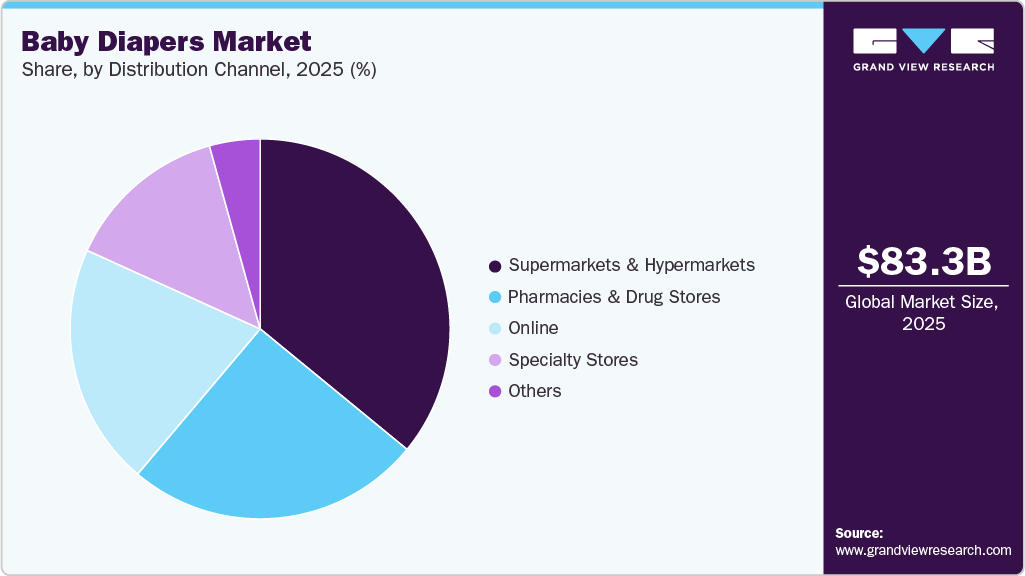
Baby diapers online sales are anticipated to witness a CAGR of 8.7% from 2026 to 2033. The growth of the baby diaper market through online channels has been significant, driven by convenience, a wide selection, and competitive pricing. As more parents prefer shopping online for baby products, e-commerce platforms offer easy access to a range of diaper brands, including premium and eco-friendly options. The rise of online shopping has also led to the growth of subscription services that deliver diapers regularly, saving parents time and effort. The ongoing digital transformation and the growth of mobile shopping apps have further boosted sales, enabling consumers to compare products, read reviews, and make informed purchasing decisions.
Regional Insights
The baby diapers market in North America held the revenue share of the global baby diapers industry in 2025, accounting for a share of 25.7%. Consumers are increasingly demanding diapers that offer superior absorbency, comfort, and skin protection, prompting manufacturers to innovate with advanced materials and eco-friendly options. Additionally, the rise of e-commerce and online retail channels has improved the accessibility of various diaper brands, further fueling market expansion. As more parents opt for natural and organic diaper alternatives, the market is also shifting toward sustainable solutions.
U.S. Baby Diapers Market Trends
The baby diapers market in the U.S. is anticipated to witness a CAGR of 7.8% from 2026 to 2033. The presence of a large number of companies in the U.S. significantly drives the baby diaper market by fostering intense competition, innovation, and product variety. Leading players such as Procter & Gamble (Pampers), Kimberly-Clark (Huggies), and Unicharm are continuously innovating to meet diverse consumer demands for high-quality, comfortable, and skin-friendly diapers. Alongside these giants, numerous regional and private-label brands contribute to the market, offering cost-effective alternatives and promoting accessibility across various income groups. The robust presence of both multinational and smaller companies ensures that consumers benefit from a wide range of choices in terms of price, features, and availability, further boosting the market's growth.
The baby diaper market in Canada is anticipated to witness a CAGR of 9.1% from 2026 to 2033. The rising demand for eco-friendly and sustainable diapers is a key trend shaping the Canadian baby diapers market, driven by growing environmental awareness among parents and increasing concerns about landfill waste generated by traditional disposable diapers. Consumers are increasingly choosing biodegradable, plant-based, chlorine-free, and reusable diaper options that reduce plastic usage and carbon footprint while remaining gentle on babies’ skin. In response, manufacturers are investing in sustainable materials, recyclable packaging, and low-impact production processes, positioning eco-conscious diaper solutions as a significant growth driver within Canada’s evolving infant care industry.
Europe Baby Diapers Market Trends
The baby diaper market in Europe held the revenue share of the baby diapers industry in 2025, accounting for a share of 20.28%. Parents in the region are increasingly prioritizing diapers that offer superior comfort, enhanced absorption, and sustainability, fueling innovation among manufacturers. The adoption of biodegradable, reusable diapers is gaining traction, driven by stringent environmental regulations and heightened consumer awareness of sustainability. Additionally, advanced distribution channels, including e-commerce platforms, are playing a pivotal role in market expansion.
The baby diaper market in the UK is anticipated to witness a CAGR of 4.0% from 2026 to 2033. Sustainability is a primary driver in the UK, with parents increasingly choosing biodegradable, reusable, and low-plastic nappies to reduce environmental impact. Government sustainability initiatives and rising awareness of diaper waste are accelerating the shift toward eco-conscious baby care products.
The baby diaper market in France is anticipated to witness a CAGR of 8.2% from 2026 to 2033. The growth of reusable and non-disposable diapers is driven by increasing environmental consciousness, rising waste-reduction initiatives, and cost awareness among parents. French consumers are increasingly adopting cloth and washable diaper solutions as sustainable alternatives to traditional disposables, supported by government awareness campaigns and eco-parenting movements promoting circular consumption. While disposable diapers still dominate overall sales due to convenience, reusable options are gaining momentum as families seek long-term savings, reduced environmental impact, and safer, chemical-free baby care products.
Asia Pacific Baby Diapers Market Trends
The baby diapers market in the Asia Pacific is anticipated to witness a CAGR of 7.5% from 2026 to 2033. The market is experiencing significant growth, driven by rising birth rates, increased urbanization, and growing awareness of infant hygiene across emerging economies. The market benefits from innovations in diaper materials, improved absorption technologies, and eco-friendly options catering to environmentally conscious consumers. Countries such as China, India, and Indonesia are key drivers of market expansion due to their large populations and rising disposable incomes. Major companies operating in this market include Procter & Gamble, Kimberly-Clark Corporation, Unicharm Corporation, Kao Corporation, and Hengan International Group.
The baby diapers market in China is anticipated to witness a CAGR of 6.0% from 2026 to 2033. Urban parents increasingly prioritize product safety, comfort, and performance over price. Rising disposable incomes and heightened awareness of infant skin health have driven demand for ultra-thin, highly absorbent, dermatologically tested, and imported-quality diapers. Parents are willing to pay more for advanced features such as breathable materials, wetness indicators, and hypoallergenic designs, prompting both domestic and international brands to expand their premium product portfolios and compete through innovation, branding, and superior quality positioning.
The baby diapers market in India is anticipated to witness a CAGR of 9.6% from 2026 to 2033. The expansion beyond metro cities is a significant growth driver in the Indian baby diaper market, as adoption is rapidly increasing across Tier-2 and Tier-3 towns and semi-urban regions. Improved retail distribution, rising household incomes, greater awareness of infant hygiene, and the growing reach of e-commerce platforms are making diapers more accessible and affordable outside major urban centers. Companies are introducing smaller pack sizes, value-oriented pricing, and localized marketing strategies to target first-time users, unlocking untapped demand and accelerating overall market penetration in emerging regions of India.
Central & South America Baby Diapers Market Trends
The baby diapers market in Central and South America is anticipated to witness a CAGR of 6.4% from 2026 to 2033. Rapid urbanization and increasing female workforce participation are encouraging higher adoption of disposable diapers due to convenience and time-saving benefits. Rising disposable incomes across countries such as Brazil, Mexico, Colombia, and Chile are improving affordability and expanding penetration beyond major urban centers.
Middle East and Africa Baby Diapers Market Trends
The baby diapers market in Central and South America is anticipated to witness a CAGR of 5.1% from 2026 to 2033. Demand is shifting toward premium diapers that offer enhanced comfort, an elastic fit, wetness indicators, and dermatologically safe materials. International brands and regional manufacturers are expanding their product portfolios to cater to middle-income consumers seeking higher-quality baby care products.
Key Baby Diapers Company Insights
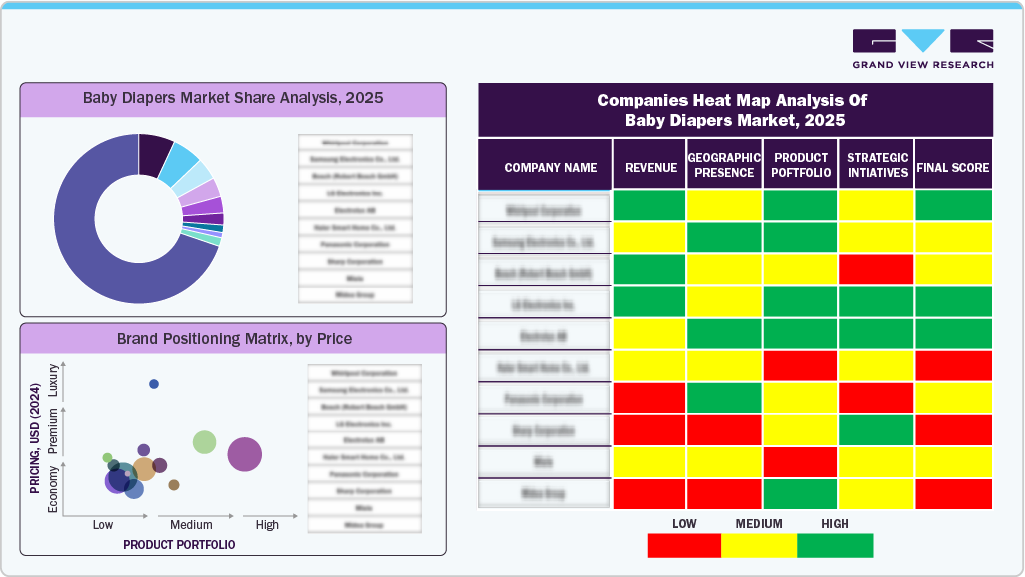
The baby diapers market is highly competitive, characterized by the presence of global giants like Procter & Gamble (Pampers), Kimberly-Clark (Huggies), and Unicharm (MamyPoko), which dominate with strong brand recognition and extensive distribution networks. Regional players such as Nobel Hygiene and Ontex cater to cost-sensitive markets with affordable alternatives. The competition is intensifying as consumer demand for eco-friendly, biodegradable diapers drives innovation. Private label brands, particularly in North America and Europe, are also gaining traction due to their cost-effectiveness. Companies focus on product differentiation through features such as improved absorbency, comfort, and skin-friendly materials, along with aggressive marketing and e-commerce expansion strategies.
Key Baby Diapers Companies:
The following key companies have been profiled for this study on the baby diapers market.
- The Procter & Gamble Company (P&G)
- Kimberly-Clark Corporation
- Hengan International
- Unicharm Corporation
- Johnson & Johnson
- First Quality Enterprises
- Ontex Group
- The Hain Celestial Group, Inc.
- The Honest Company, Inc.
- Essity AB
Recent Developments
-
In November 2025, Pampers introduced the world’s smallest diaper: Swaddlers Preemie Extra Extra Small (Pxxs), designed specifically for extremely premature babies, marking a significant innovation in neonatal care. Launched on World Prematurity Day, the diaper was developed in collaboration with medical authorities and NICU professionals to meet the needs of micro-preemies born as early as 21-22 weeks and weighing under 500 grams, a segment previously underserved by existing diaper sizes. The product focuses on ultra-soft materials and a precise fit to protect fragile skin and reduce irritation.
-
In August 2025, Nature’s One introduced a new range of plant-based diapers and baby wipes, reinforcing the growing industry shift toward natural, sustainable infant care products. The products are developed with gentle, responsibly sourced materials and formulated without harsh synthetic chemicals, prioritizing skin safety while addressing growing parental concerns about ingredient transparency and environmental impact.
-
In May 2025, Cottonsie launched the world’s first disposable cotton diaper, offering a sustainable alternative that combines the natural benefits of cloth diapers with the convenience of disposables. The innovation replaces plastic with 100% breathable cotton across key diaper layers, helping create a drier and healthier microclimate for babies while reducing the risk of skin irritation. Designed using patent-pending technology, the diaper is primarily plant-based and can biodegrade by up to 82% within 18 months, addressing growing environmental concerns around plastic waste from conventional diapers.
Baby Diapers Market Report Scope
Report Attribute
Details
Market size value in 2025
USD 88.50 billion
Revenue forecast in 2033
USD 141.80 billion
Growth rate
CAGR of 7.0% from 2026 to 2033
Actual data
2021 - 2025
Forecast period
2026 - 2033
Quantitative units
Revenue in USD million/billion, and CAGR from 2026 to 2033
Report coverage
Revenue forecast, company ranking, competitive landscape, growth factors, and trends
Segments covered
Product, type, size, distribution channel, region
Regional scope
North America; Europe; Asia Pacific; Central & South America; Middle East & Africa
Country scope
U.S.; Canada; Mexico; UK; Germany; France; Italy; Spain; Japan; China; India; Australia; South Korea; Brazil; South Africa
Key companies profiled
The Procter & Gamble Company (P&G); Kimberly-Clark Corporation; Hengan International; Unicharm Corporation; Johnson & Johnson; First Quality Enterprises; Ontex Group; The Hain Celestial Group, Inc.; The Honest Company, Inc.; and Essity AB
Customization
Free report customization (equivalent up to 8 analysts working days) with purchase. Addition or alteration to country, regional & segment scope.
Pricing and purchase options
Avail customized purchase options to meet your exact research needs. Explore purchase options
Global Baby Diapers Market Report Segmentation
This report forecasts revenue growth at the regional and country levels and provides an analysis of the latest industry trends and opportunities in each of the sub-segments from 2021 to 2033. For the purpose of this study, Grand View Research has segmented the global baby diapers market report on the basis of product, type, size, distribution channel, and region.
-
Product Outlook (Revenue, USD Billion, 2021 - 2033)
-
Non-Disposable Diapers
-
Disposable Diapers
-
-
Type Outlook (Revenue, USD Billion, 2021 - 2033)
-
Open Diapers (Taped)
-
Closed Diapers (Pull-up or Pants)
-
-
Size Outlook (Revenue, USD Billion, 2021 - 2033)
-
New Born
-
Small
-
Medium
-
Large
-
Extra Large
-
-
Distribution Channel Outlook (Revenue, USD Billion, 2021 - 2033)
-
Supermarkets & Hypermarkets
-
Pharmacies & Drug Stores
-
Specialty Stores
-
Online
-
Others
-
-
Regional Outlook (Revenue, USD Billion, 2021 - 2033)
-
North America
-
U.S.
-
Canada
-
Mexico
-
-
Europe
-
UK
-
Germany
-
France
-
Italy
-
Spain
-
-
Asia Pacific
-
China
-
Japan
-
India
-
Australia
-
South Korea
-
-
Central & South America
-
Brazil
-
-
Middle East & Africa
-
South Africa
-
-
Frequently Asked Questions About This Report
b. Some key players operating in the baby diapers market include Procter & Gamble (P&G), Kimberly-Clark Corporation, Hengan International , Unicharm Corporation, Johnson & Johnson, The Hain Celestial Group, Inc., and The Honest Company, Inc.
b. The shifting inclination for high-quality and eco-friendly baby products is the major factor boosting the demand for biodegradable diapers across the globe. . In addition, manufacturers are focusing on developing bio-ingredients-based baby diapers, which is also anticipated to propel the market growth over the coming years.
b. The global baby diapers market size was estimated at USD 83.31 billion in 2025 and is expected to reach USD 88.50 billion in 2026.
b. The global baby diapers market is expected to grow at a compound annual growth rate of 7.0% from 2026 to 2033 to reach USD 141.80 billion by 2033.
b. Asia Pacific led the baby diapers market with a share of 40.6% in 2025. The high affordability and purchasing power of consumers in the region has enabled them to buy highly effective baby products, irrespective of their prices. The demand for natural and organic products has been rising in China, Australia and India due to which companies have been focusing on natural ingredients, performance enhancement, and aesthetic improvement to appeal to modern parents.


Share this report with your colleague or friend.
Need a Tailored Report?
Customize this report to your needs — add regions, segments, or data points, with 20% free customization.


ISO 9001:2015 & 27001:2022 Certified
We are GDPR and CCPA compliant! Your transaction & personal information is safe and secure. For more details, please read our privacy policy.
Trusted market insights - try a free sample
See how our reports are structured and why industry leaders rely on Grand View Research. Get a free sample or ask us to tailor this report to your needs.