- Home
- »
- Pharmaceuticals
- »
-
Australia Legal Cannabis Market Size, Industry Report, 2033GVR Report cover
![Australia Legal Cannabis Market Size, Share & Trends Report]()
Australia Legal Cannabis Market (2026 - 2033) Size, Share & Trends Analysis Report By Source (Marijuana, Hemp), By Derivative (CBD, THC, Others), By End-use (Medical Use, Recreational Use, Industrial Use), And Segment Forecasts
- Report ID: GVR-4-68038-472-7
- Number of Report Pages: 100
- Format: PDF
- Historical Range: 2021 - 2025
- Forecast Period: 2026 - 2033
- Industry: Healthcare
- Report Summary
- Table of Contents
- Segmentation
- Methodology
- Download FREE Sample
-
 Download Sample Report
Australia Legal Cannabis Market Summary
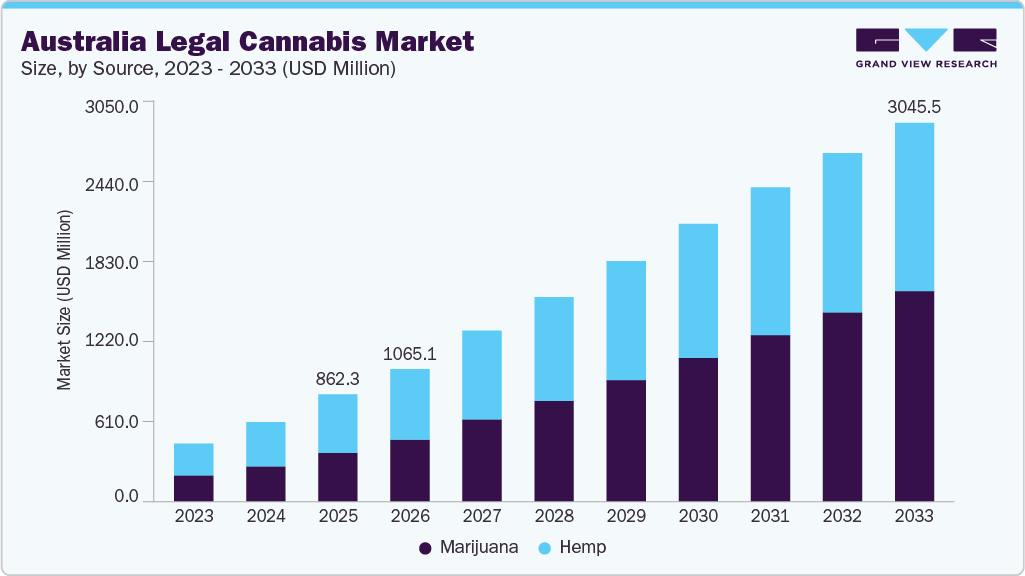
The Australia legal cannabis market size was estimated at USD 862.31 million in 2025 and is anticipated to reach USD 3.05 billion by 2033, growing at a CAGR of 16.19% from 2026 to 2033. The industry is driven by growing awareness of the health benefits of cannabis and the growing legalization of marijuana, mostly for medical purposes.
Key Market Trends & Insights
- The Australia legal cannabis industry is expected to grow significantly over the forecast period.
- By source type, the hemp segment held the highest revenue share of 54.49% in 2025.
- Based on derivatives, the CBD segment held the highest market share in 2025.
- Based on end use, the medical segment held the highest market share in 2025.
Market Size & Forecast
- 2025 Market Size: USD 862.31 Million
- 2033 Projected Market Size: USD 3.05 Billion
- CAGR (2026-2033): 16.19%
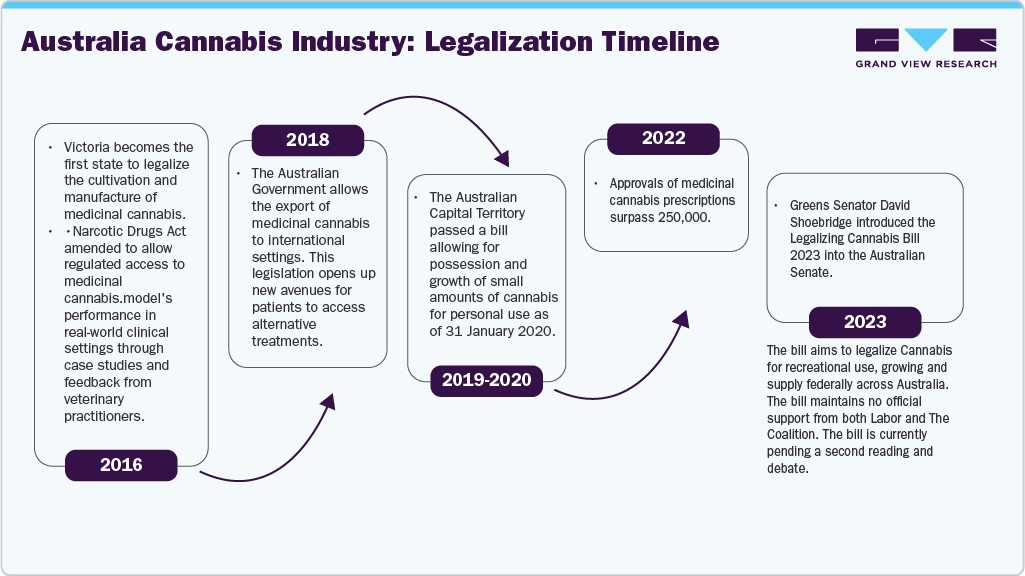
Furthermore, the increase in medical marijuana output as a result of increasing demand in the pharmaceutical sector is boosting overall growth. For instance, in 2016, the Australian Government legalized cannabis for medicinal purposes in all six states and two territories. The Therapeutic Goods Administration (TGA) regulates the supply of these medicinal products in Australia.
In Australia, the legal framework regulating medicinal cannabis is constantly evolving and remains closely monitored. New legislation was enacted by the Australian government, allowing the Australian Capital Territory (ACT) to acquire and cultivate four plants per household for personal use. In October 2023, the Australian Capital Territory (ACT) introduced certain regulations on the use of products such as marijuana and hemp. It stated that individuals over 18 years old can own cannabis (fresh up to 150 grams or dried up to 50 grams). This factor is expected to contribute to their usage in Australia.
Moreover, as per the March 2025 updates, the tax benefit of recreational products in Australia is expected to reach USD 700 million annually, which is aimed to have significant implications for the industry. This figure, highlighted by the Australian Greens as they renew their pledge to advocate for legalizing recreational cannabis, underscores both the economic potential and the shifting political landscape surrounding cannabis legislation in Australia. The estimated USD 700 million revenue can be allocated to various public services, including healthcare, education, and infrastructure. By legalization, governments can create a new stream of income that can help alleviate budgetary pressures.
The rising use of marijuana, mostly for medical purposes, and the availability of several medicinal products are boosting market growth as customers adopt cannabis-based treatment. For instance, as per the Commonwealth of Australia report published in November 2024, there are two approved medicinal products registered on the Australian Register of Therapeutic Goods (ARTG): Epidyolex (cannabidiol) and Sativex Oromucosal Spray (nabiximols). Many other medicinal products are available but are unregistered or unapproved. In addition, more than 450 medicinal products are available in Australia. There are five different categories of cannabis products available, such as,
-
Category 1: CBD Medicinal Product (CBD >98%)
-
Category 2: CBD Dominant Medicinal Product (CBD >60% and <98%)
-
Category 3: Balanced Medicinal Product (CBD <60% and >40%)
-
Category 4: THC Dominant Medicinal Product (THC 60-98%)
-
Category 5: THC Medicinal Product (THC >98%).
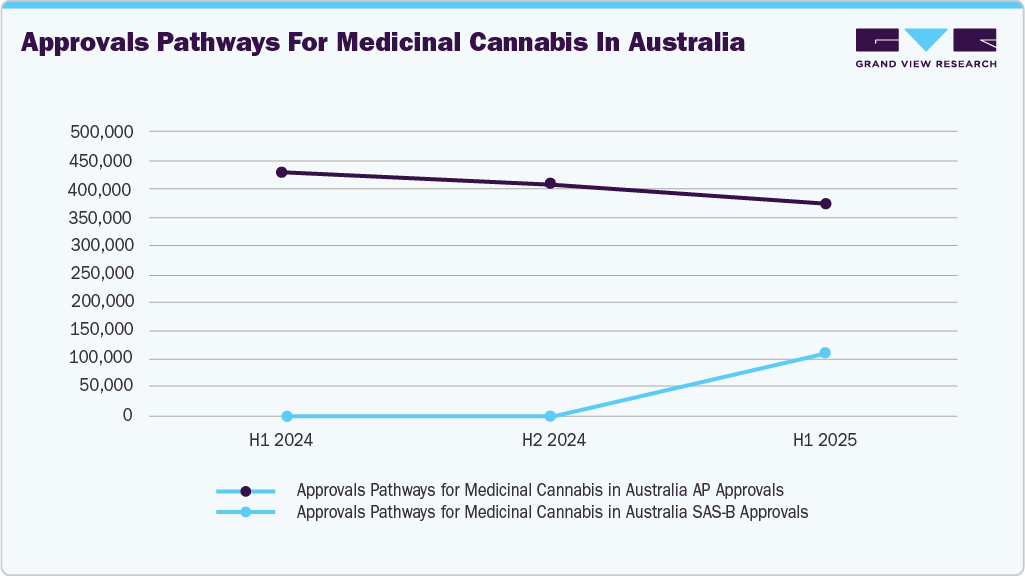
the growing number of approvals of different forms & formulations of cannabis for medicinal usage is another factor expected to propel market growth. According to TGA data estimates between 2018 and 2023, dried herb and oral liquid were the two most commonly manufactured formulations of cannabis and approved by the SAS-B patient pathway.
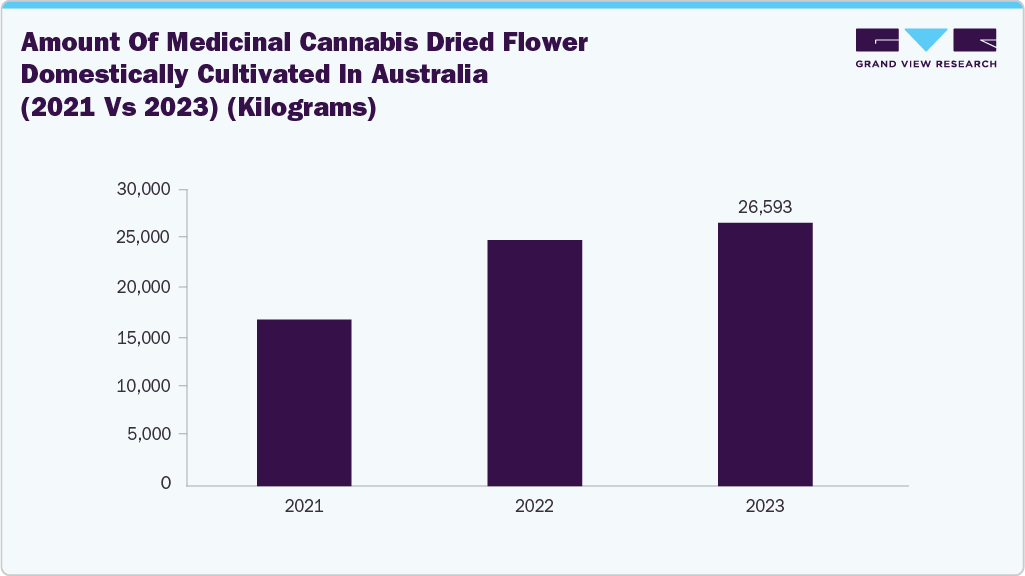
As Australia continues to expand its medicinal cannabis industry, the cultivation of domestically grown cannabis has become a key focus. The infographic below illustrates the significant increase in the amount of medicinal cannabis dried flower produced locally, comparing data from 2021 to 2023. This growth underscores the rising demand for medicinal cannabis and highlights Australia's efforts to strengthen its domestic supply chain, ensuring both the availability and quality of products for medical use.
Moreover, Australia is increasingly adopting advanced cannabis cultivation technologies to improve production efficiency and product quality. The integration of high-tech solutions, such as automated growing systems, climate control technologies, and hydroponics, has become essential to meet the growing demand for medicinal products. For instance, companies such as Cann Group Ltd use modular glasshouse systems that enable precise environmental control, optimizing conditions for plant growth while minimizing resource use. In February 2023, Aurora Inc. partnered with MedReleaf Australia to launch a new medical brand named CraftPlant. This initiative aims to enhance the availability of premium products for patients in Australia, reflecting Aurora's commitment to expanding its international presence in the market.
Value Chain Analysis
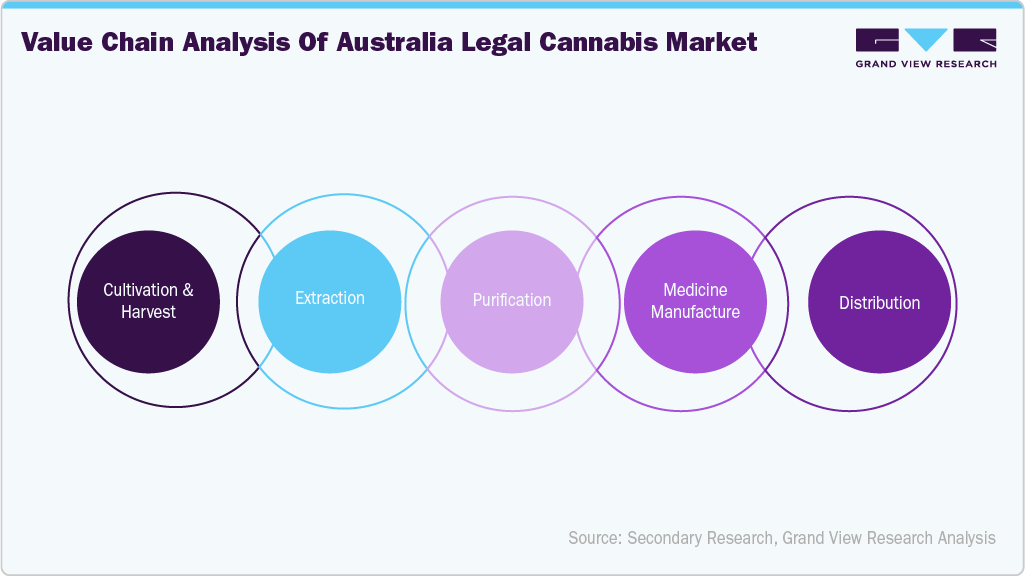
The value chain of the legal cannabis market comprises raw material suppliers, manufacturers, suppliers/distribution channels, and end users/applications. Cannabis is a major raw material used for producing cannabis-based products. Farmers/growers usually have contracts with commercial multipurpose cannabis-processing facilities, including hemp facilities, where raw hemp is processed to produce hemp seed, flower, and fiber products. Growers in the market secure contracts by teaming up with buyer companies that often offer value-added extras, such as access to company agronomists. This helps growers understand the technical requirements of buyers.
Market Trends in the Country
Australia’s legal cannabis sector is witnessing significant changes, driven by regulatory reforms, changes in clinical practice, shifting public attitudes, and increasing global participation. Beyond traditional medicinal prescribing, there’s growing movement toward product innovation and diversification, deeper integration of medicinal cannabis into healthcare, critical debate around safety and ethical prescribing, shifting consumer and societal acceptance, and increased international investment and partnerships. These changes highlight a complex yet steadily maturing landscape, where patient needs, regulatory frameworks, and global industry forces are modeling how cannabis is cultivated, prescribed, and understood across Australia.
Furthermore, the cannabis e-commerce market in Australia is growing rapidly due to the legalization of medical cannabis and potential future recreational use. The Therapeutic Goods Administration (TGA) regulates medicinal products, resulting in over 450 available products, including oils, tinctures, and edibles. E-commerce platforms have made accessing these products more convenient, significantly boosting the industry in the country. For instance, Xfive collaborated with Cannatrek, to develop a comprehensive digital platform aimed at streamlining the medical cannabis prescription process. The platform serves multiple stakeholders, including doctors, pharmacists, and patients, facilitating the application and management of medical treatments. The team collaborated closely with Cannatrek to transform their vision into a functional and secure platform, addressing the unique challenges of the industry.
Investments and Funding Trends
Company
Month
Year
Details
Zelira Therapeutics
January
2026
Zelira Therapeutics raised USD 32.98 million through its HOPE 1 SPV, with ThirdGate Capital acquiring a 50% interest and Zelira retaining 39.7%. The capital provides funding to complete the FDA regulatory pathway for HOPE 1, a therapeutic program targeting Phelan-McDermid Syndrome and autism spectrum disorder.
Australian Natural Therapeutics Group
December
2025
Australian Natural Therapeutics Group in Armidale received USD 0.93 million from the NSW Government, creating 20 new jobs and funding infrastructure upgrades across cultivation, manufacturing, and logistics. The investment supports expansion of Australia’s largest medicinal cannabis exporter and strengthens the region’s local industry.
Market Concentration & Characteristics
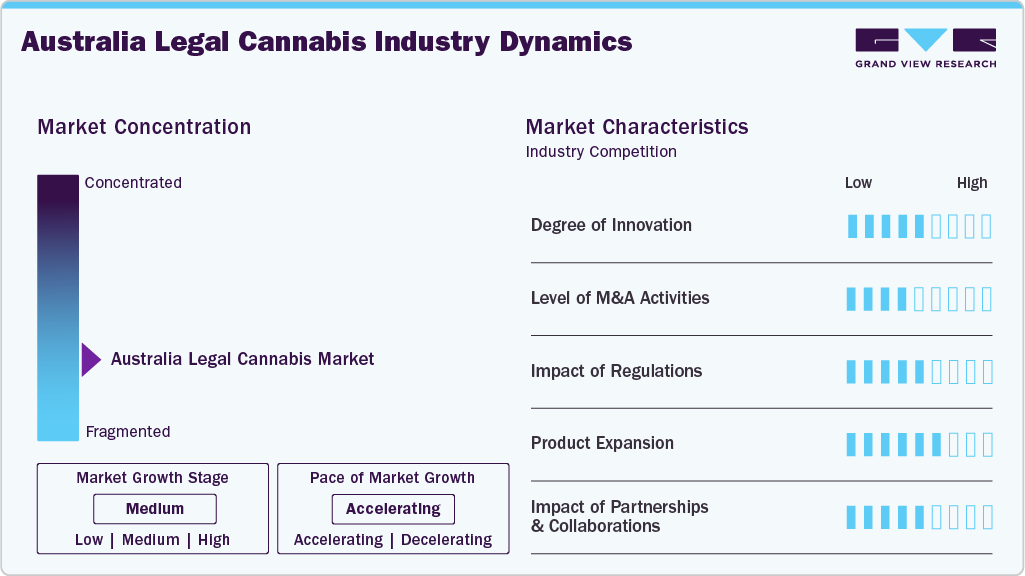
The chart below illustrates the relationship between market concentration, market characteristics, and market participants. The x-axis represents the level of market concentration, ranging from low to high. The y-axis represents various market characteristics, including degree of innovation, industry competition, service substitutes, and impact of regulations, level of mergers & acquisition activities, and market expansion. For instance, the Australia legal cannabis market is moderately consolidated, with few large players existing in the market and launching new products and innovative cultivation techniques. The degree of innovation is medium, the level of mergers & acquisition activities is medium, the impact of regulations on the market is high, and the market expansion is medium.
The degree of innovation in the industry is moderate. The innovation is attributed to products being used in cases where patients suffer from severe, persistent symptoms that do not respond adequately to conventional therapies recommended for their condition. In April 2025, Tilray Medical announced the launch of its first medical cannabis edibles in Australia under the brand name Good Supply Pastilles. This initiative aims to meet the increasing demand for alternative treatment options among patients who may prefer non-inhalation methods due to health concerns or personal preferences.
Market players implement diverse business strategies to increase their revenue growth, fostering growth in the market. For instance, in January 2026, Little Green Pharma announced a merger with Cannatrek, creating a combined medicinal cannabis group with USD 75.4 million in pro forma revenue and GMP-certified manufacturing in Australia and Denmark, aiming to scale operations and strengthen European market presence.
Regulation for legal cannabis in Australia involves a comprehensive framework that governs the cultivation, manufacturing, distribution, sale, and use of cannabis for medical. In Queensland, the Drugs Misuse Act 1986 (Part 5B) and the Drugs Misuse Regulation 1987 (Part 4) supervise industrial cannabis production. Moreover, in Australia, cannabis cultivation for medicinal use is exclusively authorized by the Commonwealth Narcotic Drugs Act 1967. In October 2023, the Australian Capital Territory (ACT) introduced certain regulations on the use of cannabis. It stated that individuals over 18 years old can own fresh cannabis up to 150 grams or dried cannabis up to 50 grams. This factor is expected to contribute to the cannabis usage in Australia.
Key industry participants are directing their efforts toward geographical expansion to seize opportunities within previously unexplored markets. This expansion typically involves the establishment of manufacturing facilities and research and development centers in new regions or through mergers and acquisitions with companies in different locations. In January 2025, Biortica Agrimed expanded its Green Farmers cultivation facilities in Victoria and New South Wales by 12,000 sqm to ensure year-round medicinal cannabis supply. The expansion improves local patient access, reduces import reliance, stabilizes costs, and creates over 150 jobs in Australia’s legal medicinal cannabis market.
Partnerships and collaborations influence Australia’s medical cannabis market by supporting product development, expanding distribution networks, and improving regulatory compliance. Alliances between cultivators, manufacturers, research institutions, and healthcare providers enable clinical validation, product differentiation, and supply chain stability. In December 2023, BOD Science signed a medicinal cannabis supply agreement with Green Farmers Pty Ltd, giving BOD exclusive access to four cannabis strains for at least three months, with automatic rolling renewal.
Source Insights
Based on the source type, the hemp segment dominated the market for legal cannabis in Australia and accounted for the highest revenue share of 54.49% in 2025. The growth is attributed to increasing rates of ailments such as epilepsy and other sleep disorders, and increased usage of hemp-based goods, such as hemp CBD and supplements, for their many health advantages. In April 2025, an article published in Epilepsia reported that Australia is projected to record 82,723 new adult epilepsy cases and 15,227 deaths over the next decade, along with losses of 992,812 quality-adjusted life years.
The marijuana segment is expected to grow at the fastest CAGR during the forecast period. The growth is attributed to the therapeutic benefits of marijuana to ease the suffering from illnesses such as cancer, AIDS, multiple sclerosis, glaucoma, seizure disorders, spinal cord injuries, chronic pain, and other disorders. For instance, in April 2024, Aurora Cannabis, Inc. entered into a partnership with MedReleaf Australia to launch a series of high-quality dried cannabis flower products. These products will be available for doctors to prescribe to their patients across Australia. Produced at Aurora's facility, which is certified to both EU-GMP and TGA-GMP, this new line features unique strains grown exclusively by Aurora, including Black Jelly, Chemango Kush, and Moon Berry.
Derivatives Insights
Based on the derivatives, the CBD segment had the largest market share of 53.40% in 2025. The growth is attributed to the legalization of low-dose CBD products by the Therapeutic Goods Administration (TGA); even though these products have been legalized, they have yet to be approved by the Australian Register of Therapeutic Goods (ARTG). CBD medical products can be imported into Australia through the Authorised Prescriber and Special Access schemes. CBD has been approved for various conditions such as treating epileptic seizures, and nausea caused due to chemotherapy and arthritic pain. For instance, in March 2024, Pat Cash, a former Wimbledon champion, ventured into the CBD business, launching a range of CBD products. This move aligns with a growing trend where athletes, including tennis professionals, are turning to CBD products for potential benefits, especially in managing chronic pain and enhancing recovery.
The THC segment is expected to grow at a lucrative CAGR during the forecast period. This growth is driven by increasing medical applications, evolving consumer preferences, and legislative changes. The therapeutic benefits of THC (tetrahydrocannabinol), particularly for conditions such as chronic pain, cancer-related symptoms, and neurological disorders, have led to a growing acceptance and demand for THC-based products. In August 2025, Aurora Cannabis Inc. launched its Whistler Cannabis Co. brand in Australia’s medical cannabis market, introducing Ginger Breath (32% THC) and Critical Diesel (28% THC) cultivars. The move strengthens Aurora’s presence in Australia, its second-largest market, following prior partnerships and strategic supply agreements with MedReleaf Australia.
End-use Insights
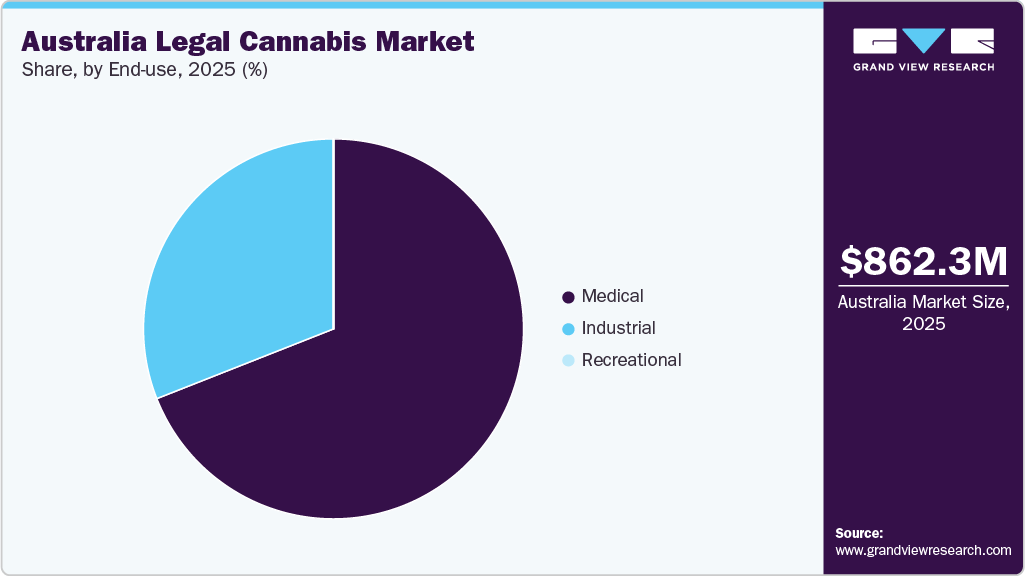
The medical application segment dominated the Australia legal cannabis market and accounted for the largest revenue share of 69.02% in 2025, driven by increasing clinical adoption, evolving prescriber participation, improved access pathways, and rising patient use for a range of health conditions. This trend is expected to continue as regulatory support strengthens and more healthcare providers integrate medical cannabis into treatment plans. In March 2025, the TGA reported a notable rise in SAS approvals, with more than 33,520 approvals in two months, representing a 47 % increase compared with the previous year’s period, evidence of expanding clinical utilization and prescriber engagement. In terms of indications, medical cannabis in Australia is most frequently prescribed for chronic non cancer pain, anxiety, sleep disorders, cancer-related symptoms (such as pain and nausea), and spasticity associated with multiple sclerosis, demonstrating its broad therapeutic application under clinical supervision.
The recreational segment is expected to grow at the fastest CAGR during the forecast period. The growth is driven by changing public perceptions, legislative developments, and increasing consumer demand. Ongoing initiatives for legal reform at both state and national levels drive the growth of the market. For instance, in July 2025, a NSW parliamentary inquiry recommended a staged pathway to reform, starting with removing custodial penalties for minor quantity possession and moving toward a regulated legal cannabis market, including personal cultivation and possession limits, as part of broader harm reduction and justice system equity measures. This reflects a significant shift in political and legal discourse around adult cannabis use in Australia.
Key Australia Legal Cannabis Company Insights
Key players are adopting new product development, partnership, and merger & acquisition strategies to increase their market share. In October 2024, New Zealand-based Helius Therapeutics entered the Australian medicinal cannabis market under the HTL brand, supported by Novachem as the local sponsor and distributors including Cannabis Warehouse, The Entourage Effect, and Leafio. Market players such as Zelira AusCann Group Holdings Ltd.; and others dominated the market. These key players have been supplying cannabis for medical purpose. Furthermore, emerging players, including ECOFIBRE and Bod Australia are undertaking several partnerships and research studies promote cannabis-based medicines.
Key Australia Legal Cannabis Companies:
- Cann Group
- Zelira Therapeutics
- AusCann Group Holdings Ltd
- Bod Science
- Althea Group
- Ecofibre
- Botanix SB Inc.
- EPSILON
- Little Green Pharma
- Incannex Healthcare
- Vitura Health Limited
- Bioxyne
- Green Farmers
- ECS Botanics
- Tasmanian Botanics
- Cannatrek
- Hale farms
- Australian Natural Therapeutics Group
- MedTEC Pharma
- Aruma Labs
- Montu Group
Recent Developments
-
In January 2026, Zelira Therapeutics raised USD 32.98 million through its HOPE 1 SPV, with ThirdGate Capital acquiring a 50% interest and Zelira retaining 39.7%. The capital provides funding to complete the FDA regulatory pathway for HOPE 1, a therapeutic program targeting Phelan-McDermid Syndrome and autism spectrum disorder.
-
In December 2025, ECS Botanics announced the 2026 launch of AVANI AVA women’s-health cannabis range in Australia, targeting conditions reported by female patients under the SAS-B pathway. The range includes pessaries, flower, topical cream, and capsules, aiming to boost engagement with prescribers and pharmacists and support domestic and export growth.
-
In November 2025, Bioxyne, via its subsidiary Breathe Life Sciences, secured an exclusive agreement with Curaleaf International to import, manufacture, and distribute the Que Medical Inhalation Device in Australia.
-
In April 2025, Software Effective Solutions Corp., operating under the name Medcana, announced a significant strategic expansion into the Australian market through the acquisition of licenses for the import and distribution of pharmaceutical cannabis. This move is part of Medcana's broader global growth strategy aimed at enhancing its international presence in the medical cannabis sector.
-
In February 2024, Peak Processing Solutions, an Althea Group Holdings subsidiary, signed an agreement with Collective Project to produce 6 cannabis-based beverage products based on contract manufacturing.
-
In January 2024, Althea Group Holdings Limited, a manufacturer and distributor of cannabis-based products, launched two new products, Althea THC10 and Althea CBD3:THC2, and expanded its softgel capsule product range.
Australia Legal Cannabis Market Report Scope
Report Attribute
Details
Revenue forecast in 2033
USD 3.05 billion
Growth rate
CAGR of 16.19% from 2026 to 2033
Actual data
2021 - 2025
Forecast period
2026 - 2033
Quantitative units
Revenue in USD million/billion, and CAGR from 2026 to 2033
Report coverage
Revenue forecast, company ranking, competitive landscape, growth factors, and trends
Segments covered
Sources, derivatives, end-use
Country scope
Australia
Key companies profiled
Cann Group; Zelira Therapeutics; AusCann Group Holdings Ltd; Bod Science; Althea Group; Ecofibre; Botanix SB Inc.; EPSILON; Little Green Pharma; Incannex Healthcare; Vitura Health Limited; Bioxyne; Green Farmers; ECS Botanics; Tasmanian Botanics; Cannatrek; Hale farms; Australian Natural Therapeutics Group; MedTEC Pharma; Aruma Labs; Montu Group
Customization scope
Free report customization (equivalent up to 8 analyst’s working days) with purchase. Addition or alteration to country, regional & segment scope.
Pricing and purchase options
Avail customized purchase options to meet your exact research needs. Explore purchase options
Australia Legal Cannabis Market Report Segmentation
This report forecasts revenue growth and provides at country level an analysis of the latest trends in each of the sub-segments from 2021 to 2033. For this report, Grand View Research has segmented the Australia legal cannabis market report based on sources, derivatives, and end-use:
-
Sources Outlook (Revenue, USD Million, 2021 - 2033)
-
Marijuana
-
Flower
-
Oil and Tinctures
-
-
Hemp
-
Hemp CBD
-
Supplements
-
Industrial Hemp
-
-
-
Derivatives Outlook (Revenue, USD Million, 2021 - 2033)
-
CBD
-
THC
-
Others
-
-
End-use Outlook (Revenue, USD Million, 2021 - 2033)
-
Medical
-
Cancer
-
Chronic Pain
-
Depression and Anxiety
-
Arthritis
-
Diabetes
-
Glaucoma
-
Migraines
-
Epilepsy
-
Multiple Sclerosis
-
AIDS
-
Amyotrophic Lateral Sclerosis
-
Alzheimer
-
Post-Traumatic Stress Disorder (PTSD)
-
Parkinson's Disease
-
Tourette
-
Others
-
-
Recreational
-
Industrial
-
Frequently Asked Questions About This Report
b. Some key players operating in the Australia legal cannabis market include AusCann Group Holdings Pty Ltd; Cann Group Ltd; Bod Australia; Zelira Therapeutics; Althea Group Holdings Limited; THC Global Group Limited; MGC Pharmaceuticals Ltd; and Ecofibre Limited.
b. Key factors that are driving the Australia legal cannabis market growth include the increasing legalization of marijuana for adult and medical use and the high consumption rate in the country.
b. The Australia legal cannabis market size was estimated at USD 862.31 million in 2025 and is expected to reach USD 1,065.1 million in 2026.
b. The Australia legal cannabis market is expected to grow at a compound annual growth rate of 16.2% from 2026 to 2033 to reach USD 3.05 billion by 2033.
b. Hemp dominated the Australia legal cannabis market with a share of 67.11% in 2025. This is attributable to the increased number of patients consuming hemp-based products such as hemp CBD and supplements for various health benefits.


Share this report with your colleague or friend.
Need a Tailored Report?
Customize this report to your needs — add regions, segments, or data points, with 20% free customization.


ISO 9001:2015 & 27001:2022 Certified
We are GDPR and CCPA compliant! Your transaction & personal information is safe and secure. For more details, please read our privacy policy.
Trusted market insights - try a free sample
See how our reports are structured and why industry leaders rely on Grand View Research. Get a free sample or ask us to tailor this report to your needs.