- Home
- »
- Clothing, Footwear & Accessories
- »
-
Athleisure Market Size And Share, Industry Report, 2033GVR Report cover
![Athleisure Market Size, Share & Trends Report]()
Athleisure Market (2026 - 2033) Size, Share & Trends Analysis Report By Product (Yoga Apparel, Leggings, Shorts), By Category (Mass Athleisure, Premium Athleisure), By End-use (Men, Women), By Distribution Channel (Offline, Online/E-commerce), By Region, And Segment Forecasts
- Report ID: GVR-3-68038-350-8
- Number of Report Pages: 107
- Format: PDF
- Historical Range: 2021 - 2025
- Forecast Period: 2026 - 2033
- Industry: Consumer Goods
- Report Summary
- Table of Contents
- Segmentation
- Methodology
- Download FREE Sample
-
 Download Sample Report
Athleisure Market Summary
The global athleisure market size was estimated at USD 422.04 billion in 2025 and is projected to reach USD 892.48 billion by 2033, growing at a CAGR of 9.9% from 2026 to 2033. The growing enthusiasm for sports and outdoor recreational activities among the young population is expected to drive up the demand for athleisure.
Key Market Trends & Insights
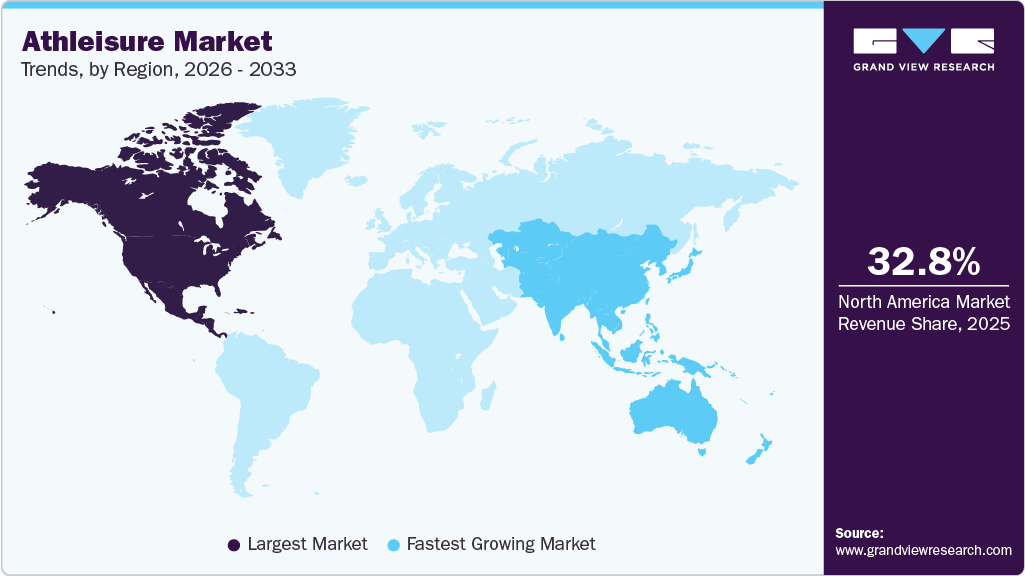
- The North America athleisure market accounted for a revenue share of 32.8% in 2025.
- The athleisure market in the U.S. is expected to grow at a CAGR of 9.1% from 2026 to 2033.
- By category, the mass athleisure accounted for a revenue share of 63.46% in 2025.
- By product, the shirts & t-shirts accounted for a revenue share of 30.5% in 2025.
- By end-use, the women accounted for a revenue share of 40.5% in 2025.
Market Size & Forecast
- 2025 Market Size: USD 422.04 Billion
- 2033 Projected Market Size: USD 892.48 Billion
- CAGR (2026-2033): 9.9%
- North America: Largest market in 2025
- Asia Pacific: Fastest growing market
A key factor contributing to this trend is the increasing awareness of fitness and health, which is boosting the need for comfortable and stylish clothing. A global shift towards more casual, adaptable attire has propelled athleisure to the forefront of fashion. This trend mirrors the increasing prioritization of comfort and versatility in everyday wear, allowing individuals to seamlessly transition between gym sessions and daily activities without compromising style. Moreover, the pervasive emphasis on health and wellness has fueled the adoption of active lifestyles, with athleisure serving as both a practical and fashionable solution.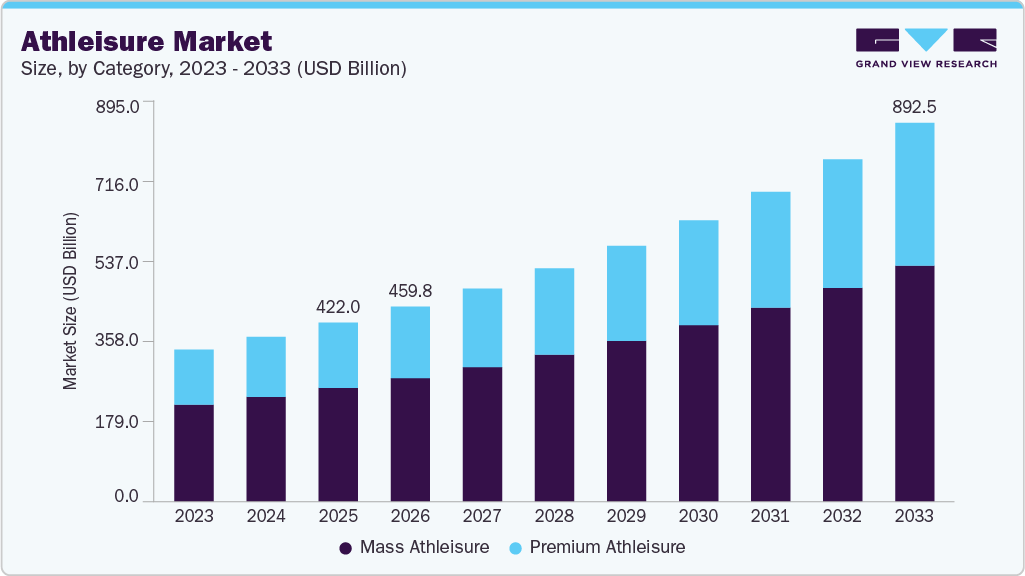
The availability of sports apparel with advanced features such as moisture management, temperature control, and other performance-enhancing characteristics that prevent discomfort and potential injury has piqued consumer interest across the athleisure industry. Many are willing to pay a premium for these added benefits. For example, Nike Inc. claims that its Dri-FIT fabric, used in its sports apparel, supports the body's natural cooling system by wicking away sweat and dispersing it across the fabric's surface for faster evaporation. Consequently, these enhanced features in athleisure products have influenced consumer habits, favoring athletic apparel across various activities, broadening the athleisure target market beyond traditional sports users.
The rising trend of athleisure among all age groups is significantly boosting the demand for these products for everyday wear. The desire to be fit and healthy has led consumers to prioritize garments that seamlessly transition between daily activities, reinforcing long-term demand in the athleisure industry. The increasing number of individuals participating in outdoor activities, such as hiking, marathons, and camping, is one of the major factors boosting the demand for athleisure, particularly among lifestyle-driven segments of the athleisure target market.
Athleisure leads the way in terms of design innovation. The growing prominence of technological advancements in sportswear and activewear is driving their adoption in customers' daily routines. Companies are infusing fabrics with the latest technologies to produce the most comfortable and convenient products. For instance, in November 2025, Northern Cote launched a sustainable activewear collection that blends high performance with environmental responsibility. The new lineup features leggings, tops, bras, and shorts made from recycled fibers engineered to enhance breathability, moisture management, and flexibility during workouts. Each piece is designed for durability and comfort while supporting eco-friendly production practices through responsibly sourced materials and energy-efficient manufacturing. By merging technical innovation with sustainability, Northern Cote aims to provide fitness enthusiasts with apparel that performs at a professional level while reducing its ecological footprint, aligning closely with evolving expectations across the athleisure target market.
Brand Market Share Insights
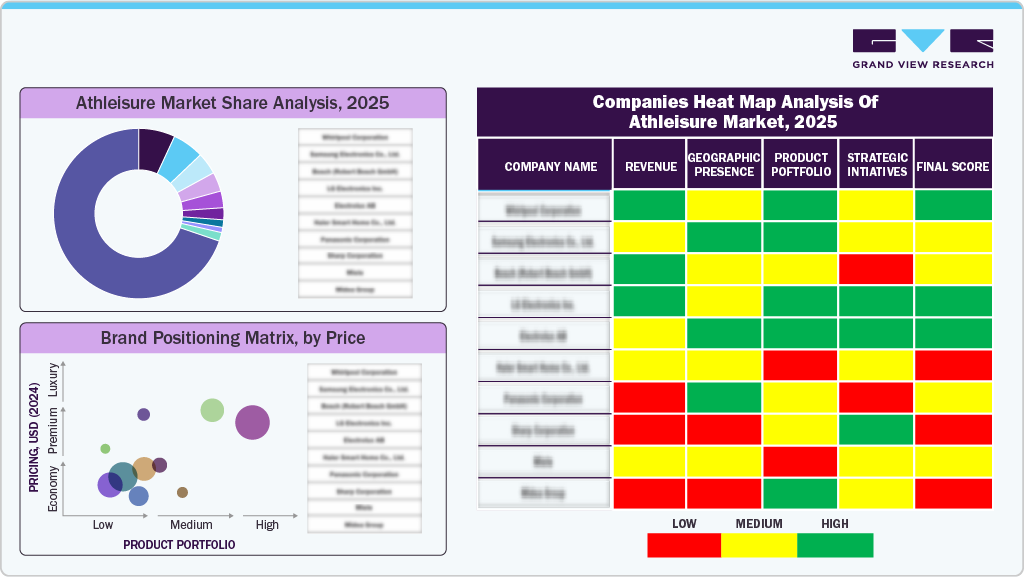
The global athleisure market is characterized by the presence of established sportswear companies alongside emerging lifestyle-focused brands, all competing to meet evolving consumer expectations around comfort, versatility, and style. Manufacturers are increasingly developing athleisure apparel that integrates performance-inspired features, such as moisture-wicking, breathability, stretch, and temperature regulation, into garments designed for everyday wear, enabling seamless transition from fitness activities to casual and social settings.
Leading brands, including Nike and Adidas, have extended their proprietary fabric technologies, traditionally used in sportswear, into athleisure collections such as joggers, leggings, hoodies, and coordinated sets. At the same time, sustainability has emerged as a key strategic focus, with brands adopting recycled polyester, organic cotton, and low-impact manufacturing processes to meet rising demand for eco-conscious apparel. This emphasis on sustainable materials supports the broader shift toward circular fashion, where athleisure products are designed for durability, repeat use, and recyclability, reinforcing the category’s positioning as a long-term lifestyle segment rather than a transient fashion trend.
Consumer Insights
Shifts in wellness awareness, flexible work routines, and relaxed dress norms are redefining how consumers engage with athleisure globally. Shoppers now look for clothing that moves comfortably between light exercise, long hours of wear, and everyday social settings without appearing overly technical or purely casual. Younger consumers, particularly those aged 18-35, favour multifunctional pieces that combine subtle performance features with clean, wearable design. Their purchase decisions are strongly influenced by digital content, including short videos, real-life fit trials, and influencer styling that demonstrate how garments perform in terms of stretch, shape retention, opacity, and day-long comfort, making visual storytelling a core driver of online sales.
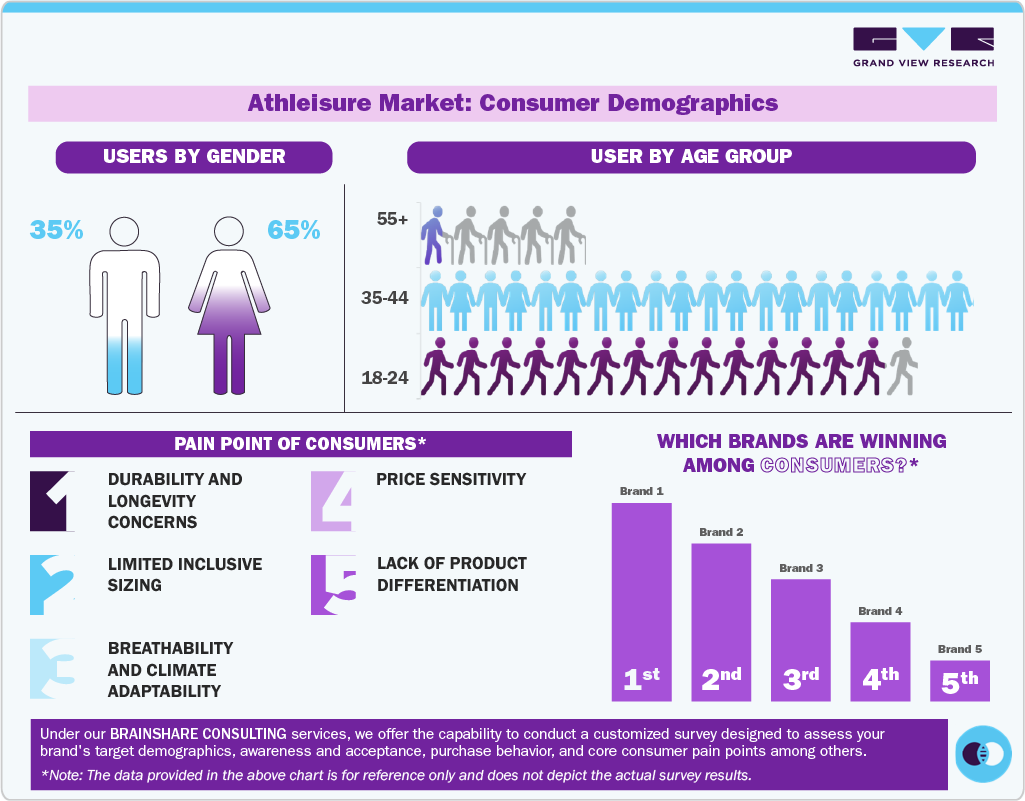
Fabric quality and construction play a decisive role in repeat buying across the athleisure segment. Brands are increasingly embedding moisture control, four-way stretch, light compression, and thermal regulation into leggings, joggers, sports bras, and matching sets to meet consumer expectations for both comfort and durability. Features such as flexible waistbands, inclusive sizing, and adaptive fits have become baseline requirements rather than premium add-ons. Products that effectively reduce issues like overheating, pilling, or loss of elasticity consistently outperform basic alternatives. Established players, including Nike, Adidas, and Lululemon, strengthen brand credibility through proprietary materials, visible testing credentials, and performance-led communication, while newer labels often rely on trend responsiveness and competitive pricing to gain traction.
Spending behavior within the athleisure market varies widely by income and lifestyle, influencing how brands structure their assortments. Students and first-time buyers tend to respond to discounts, entry-priced ranges, and fast-changing collections, whereas higher-income urban consumers are more inclined to pay a premium for pieces that offer durability, long-term comfort, and sustainable sourcing. The growing use of recycled synthetics, plant-based fibers, and environmentally responsible dyeing processes increasingly factors into purchasing decisions. Value-added incentives such as bundle pricing, free delivery thresholds, simple returns, and loyalty benefits help lift conversion rates, while predictable demand spikes around New Year fitness routines, summer activity, and travel periods continue to position athleisure as an essential, year-round wardrobe category rather than a short-lived fashion cycle.
Category Insights
The mass athleisure industry led the market with the largest revenue share of 63.46% in 2025. Positioned at accessible price points, mass athleisure brands cater strongly to value-conscious shoppers who seek comfort and style without premium pricing. This segment benefits from high-volume production, simplified designs, and cost-efficient materials, enabling brands to offer leggings, joggers, T-shirts, and coordinated sets suitable for daily use, casual outings, and light workouts. The broad availability of mass athleisure across supermarkets, fast-fashion retailers, and online marketplaces further strengthens its reach, allowing consumers to make repeat purchases.
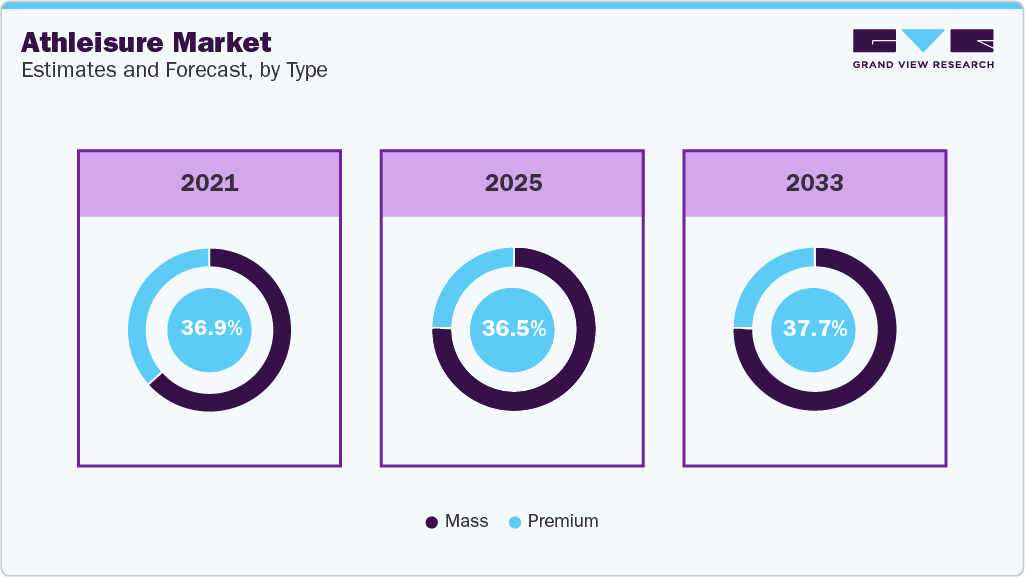
The premium athleisure market is anticipated to grow at the fastest CAGR of 10.4% from 2026 to 2033. Premium athleisure brands differentiate themselves through sustained investment in research and development, enabling the integration of advanced fabric technologies such as enhanced moisture management, targeted compression, temperature regulation, and body-mapped construction. These innovations improve comfort, support, and movement efficiency, making premium offerings attractive to consumers who engage in regular fitness activities while also seeking refined aesthetics for everyday wear. Brands such as Lululemon, Alo Yoga, and Nike reinforce their positioning through proprietary materials, extensive wear-testing, and performance-backed product claims.
Product Insights
The shirts & t-shirts segment led the market with the largest revenue share of 30.5% in 2025. Athleisure brands offer shirts and t-shirts with performance-enhancing features such as moisture-wicking fabrics, stretchability, and breathability, making them suitable for both athletic pursuits and casual wear. This versatility appeals to consumers seeking comfortable yet stylish clothing options for everyday activities.
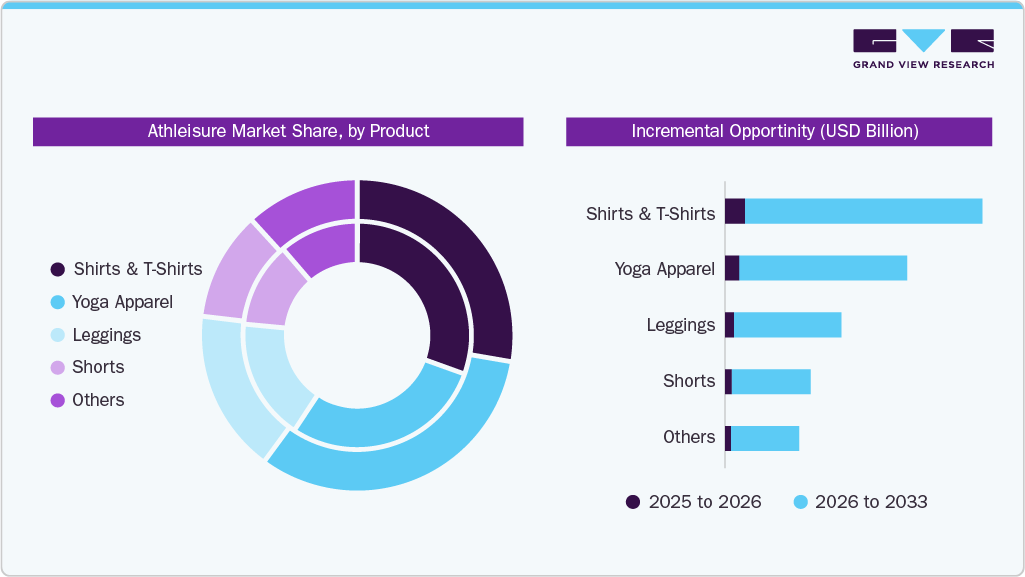
The yoga apparel market is projected to grow at the fastest CAGR of 11.6% from 2026 to 2033. Consumers favor garments made with moisture-wicking, four-way stretch, and lightweight materials that allow unrestricted motion while maintaining breathability during extended sessions. Seamless construction, soft-touch finishes, and high waist support are particularly valued for minimizing friction and enhancing comfort. Brands such as Lululemon and other premium athleisure players have strengthened demand by offering yoga-focused collections that combine functional performance with clean silhouettes suitable for everyday wear.
End-use Insights
Based on end-use, the women segment led the market with the largest revenue share of 40.5% in 2025. Athleisure brands increasingly design collections that align with women’s fashion sensibilities, offering leggings, bras, tops, and coordinated sets that combine performance features with contemporary silhouettes, colorways, and detailing. From patterned and sculpting leggings to versatile tops that transition easily from workouts to casual or social settings, product variety plays a central role in sustaining demand. Women are particularly drawn to athleisure for its ability to deliver comfort, flexibility, and ease of movement while maintaining a polished, fashion-forward appearance.
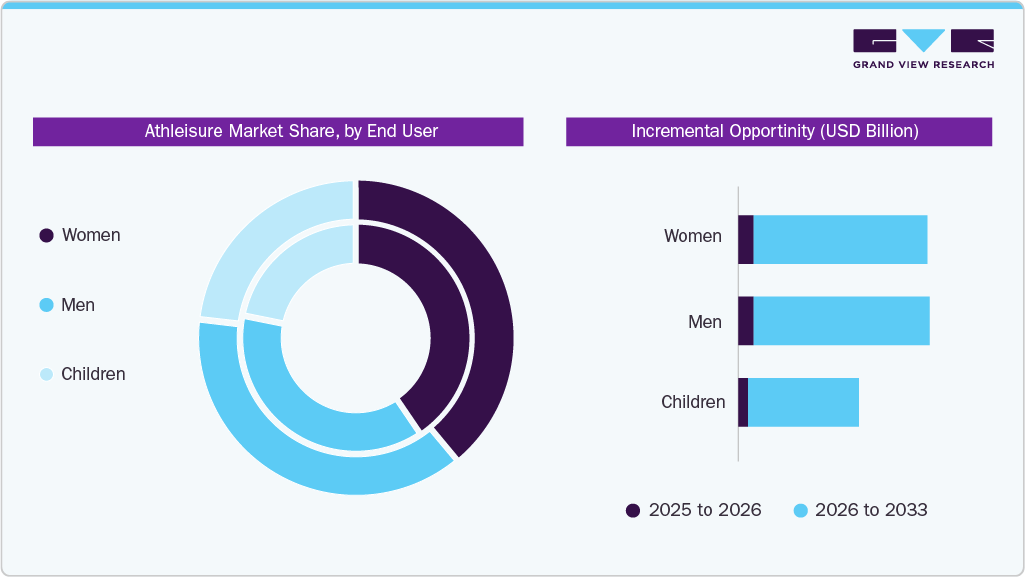
The children segment is projected to grow at the substantial CAGR of 10.7% from 2026 to 2033. Participation in organized sports, school physical education programs, and recreational activities is rising, prompting consistent demand for athleisure that supports movement and comfort throughout the day. Parents are placing greater emphasis on apparel that encourages regular physical activity while offering practical benefits such as stretch, breathability, and resilience against wear and tear. Easy-to-wear designs, lightweight fabrics, and all-day comfort are key purchase drivers, particularly for garments that can transition from school to play.
Distribution Channel Insights
The offline sales of athleisure led the market with the largest revenue share of 65.69% in 2025. Sporting goods retailers, brand-owned stores, and multi-brand outlets play a critical role by offering curated assortments of athleisure tailored to fitness, training, and everyday wear. These stores offer a wide range of products, including performance apparel, footwear, and accessories, enabling shoppers to compare styles, sizing, and functionality in person. In-store expertise, product trials, and personalized assistance further strengthen buyer confidence, particularly for first-time purchasers and higher-value items.
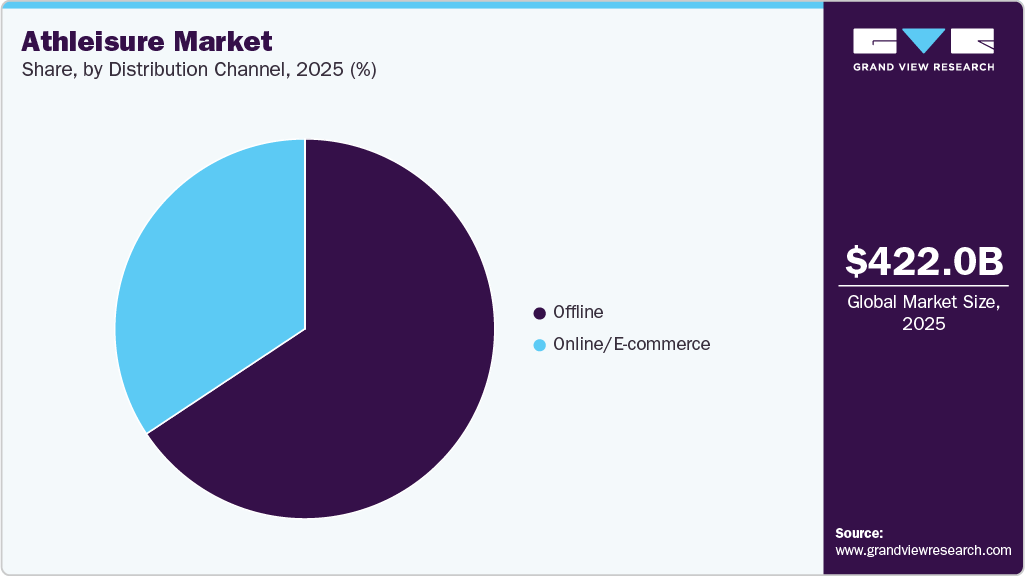
The online/e-commerce sales of athleisure are projected to grow at the substantial CAGR of 10.5% from 2026 to 2033. Consumers are increasingly comfortable purchasing athleisure online due to detailed size guides, fabric descriptions, customer reviews, and video-led product demonstrations that help assess fit, stretch, and comfort remotely. Easy access to a wide assortment of styles, colors, and coordinated sets, combined with frequent promotions and exclusive online launches, further supports channel growth. Features such as hassle-free returns, flexible payment options, and fast delivery enhance buyer confidence, particularly among younger, digitally native shoppers.
Regional Insights
The North America athleisure industry accounted for a revenue share of 32.83% in 2025. High participation in fitness activities, outdoor recreation, and wellness programs continues to support steady demand across both performance and lifestyle athleisure categories. Consumers in the region place strong emphasis on product quality, brand credibility, and functional benefits such as stretch, breathability, and durability, encouraging repeat purchases. The market also benefits from high disposable incomes, rapid adoption of premium and mid-priced athleisure, and a mature retail ecosystem that blends brand-owned stores with advanced e-commerce platforms. Leading companies, including Nike, Adidas, and Under Armour, continue to shape category growth through frequent product innovation, strong marketing visibility, and broad product portfolios spanning apparel and footwear.
U.S. Athleisure Market Trends
The athleisure industry in the U.S. is expected to grow at a CAGR of 9.1% from 2026 to 2033. Brands are increasingly adopting specialized technical fabrics, advanced dyeing processes, and simplified garment construction to enhance wearability while improving sustainability outcomes. Leading companies are also rethinking product design to reduce material waste and support recyclability. For instance, in March 2025, Hanes launched Hanes Moves, its first athleisure collection designed for active and everyday wear. The range includes items such as sports bras, leggings, T-shirts, and shorts made from breathable and stretchable fabrics for comfort and mobility. With this launch, the brand is expanding beyond traditional basics to tap into the growing demand for versatile activewear.
Athleisure is gaining wider acceptance in the U.S. as everyday and workplace-appropriate apparel, particularly in environments with relaxed dress codes. Comfort, ease of movement, and polished styling are key drivers behind this shift, encouraging consumers to integrate athleisure into daily routines beyond fitness. Participation in outdoor and recreational activities further supports demand, reinforcing the need for versatile apparel that performs across active and casual settings.
Europe Athleisure Market Trends
The athleisure industry in Europe accounted for a revenue share of 23.66% in 2025. The industry is influenced by Europe’s culture of active commuting, walking, cycling, and outdoor recreation, which drives preference for versatile apparel suited to daily movement rather than purely gym-based use. Consumers across key European markets favor understated, minimalist designs with strong functional performance, aligning athleisure with everyday urban wear. In addition, heightened awareness of sustainability and ethical sourcing plays a critical role in purchase decisions, with growing demand for recycled fabrics, low-impact production, and transparent supply chains.
The UK athleisure industry accounted for a revenue share of 23.65% of the Europe revenue in 2025. The market is driven by widespread adoption of flexible work arrangements and relaxed dress codes, which have increased acceptance of athleisure across work, travel, and leisure settings. UK consumers favor versatile, comfort-led designs that balance functionality with modern styling, supporting consistent replacement demand. In addition, growing awareness of sustainability and ethical production is influencing purchasing decisions, with increasing preference for responsibly sourced materials and transparent supply chains, reinforcing steady growth of the UK market.
The athleisure industry in Germany is expected to grow at a CAGR of 9.9% from 2026 to 2033. Athleisure is increasingly positioned as everyday wear (in Germany) that aligns with active commuting and casual urban lifestyles, rather than being limited to fitness environments. Consumers show a clear preference for clean, minimalist designs paired with technical fabrics that offer comfort across varying weather conditions. The market is further supported by high consumer confidence in established sportswear brands, consistent spending on quality apparel, and a well-developed retail and specialty sports store network that encourages regular category engagement.
Asia Pacific Athleisure Market Trends
The athleisure industry in the Asia Pacific is expected to grow at a CAGR of 11.6% from 2026 to 2033. Consumers in the region are actively seeking apparel that supports active routines while remaining suitable for everyday and social wear, driving demand for athleisure categories such as leggings, yoga pants, sweatshirts, and relaxed-fit tops. Growing middle-class incomes, greater exposure to global fashion trends, and the influence of social media are further accelerating adoption, particularly among younger consumers.
The China athleisure industry accounted for a revenue share of 25.16% of the Asia Pacific revenue in 2025. The market is driven by a young, trend-aware consumer base that increasingly wears athleisure across social, casual, and travel settings, rather than limiting its use to workouts. The rapid adoption of fitness apps, home workouts, and recreational sports is reinforcing the regular demand for comfortable, stylish activewear. In addition, China’s highly developed digital retail ecosystem, including social commerce and livestream-led shopping, accelerates trend adoption and shortens replacement cycles, while rising disposable incomes and preference for branded products continue to sustain growth in the domestic market.
The athleisure industry in India is expected to grow at a CAGR of 12.7% from 2026 to 2033. Athleisure in India is driven by the increasing convergence of sportswear and casual fashion, where athleisure is preferred for its ease of movement, low maintenance, and adaptability to everyday routines. Demand is particularly strong among urban youth and working professionals who prioritize comfort-led clothing that aligns with informal workplace norms and lifestyle flexibility. In addition, rising exposure to global fitness and wellness trends, increasing participation in yoga and wellness-led activities, and strong traction of influencer-led marketing are reinforcing sustained demand across the India market.
Central & South America Athleisure Market Trends
The athleisure industry in Central & South America is expected to grow at a CAGR of 10.1% from 2026 to 2033. Athleisure adoption is closely linked to rising engagement in recreational sports, community fitness activities, and active social lifestyles, rather than formal gym culture alone. Consumers in the region also show strong price sensitivity, encouraging demand for value-driven athleisure that balances functionality with fashion appeal. Additionally, the expansion of local apparel brands, increased penetration of fast-fashion retailers, and wider reach of digital commerce platforms are improving accessibility and supporting the sustained growth of the market across Central & South America.
Middle East & Africa Athleisure Market Trends
The athleisure industry in the Middle East & Africa is expected to grow at a CAGR of 7.9% from 2026 to 2033. The regional market is supported by rising participation in outdoor activities, walking, and informal fitness routines, particularly in urban areas where hot climates favor lightweight and breathable clothing. Athleisure is increasingly worn for everyday use, social outings, and travel, rather than being limited to workout settings. In addition, a growing young population, expanding presence of international and regional apparel brands, and increasing penetration of online fashion retail are improving product availability and affordability.
Key Athleisure Company Insights
Major companies operating in the global athleisure market primarily focus on product innovation, brand collaborations, and expansion of sustainable product lines to strengthen their market presence. Leading brands such as Nike, Adidas, Lululemon Athletica, Puma, and Under Armour continuously introduce new collections that combine performance functionality with everyday fashion appeal, incorporating features such as moisture-wicking fabrics, stretchable materials, and lightweight designs. Companies are also increasingly collaborating with celebrities, designers, and athletes to launch limited-edition collections and enhance brand visibility.
Key Athleisure Companies:
The following key companies have been profiled for this study on the athleisure market.
- Lululemon Athletica Inc.
- Adidas AG
- Under Armour, Inc.
- Hanesbrands Inc.
- Nike Inc.
- EILEEN FISHER
- Vuori
- Outerknown.
- PANGAIA
- Wear Pact, LLC
Recent Developments
-
In February 2025, Nike and SKIMS officially launched NikeSKIMS, a new brand created to redefine women’s activewear by combining Nike’s performance innovation and sport science with SKIMS’ focus on flattering fit and inclusivity. The venture aims to shake up the global fitness and athleisure market with a comprehensive line of training apparel, footwear, and accessories designed to sculpt, perform, and empower women of all body types. Built on a shared commitment to innovation and breaking norms, NikeSKIMS seeks to offer distinctive products that perform in the gym, studio, and everyday life.
-
In October 2024, PUMA collaborated with fitness influencer Pamela Reif to introduce a new athleisure collection driven by the energy and resilience of volcanic landscapes. This range blends performance and style with figure-flattering pieces such as leggings, shorts, skorts, sports bras, and tees that are engineered with PUMA’s Cloudspun and Shapeluxe materials for comfort, flexibility, and support.
Athleisure Market Report Scope
Report Attribute
Details
Market size value in 2026
USD 459.77 billion
Revenue forecast in 2033
USD 892.48 billion
Growth rate (Revenue)
CAGR of 9.9% from 2026 to 2033
Actual data
2021 - 2025
Forecast period
2026 - 2033
Quantitative units
Revenue in USD million/billion and CAGR from 2026 to 2033
Report coverage
Revenue forecast, company ranking, competitive landscape, growth factors, and trends
Segments covered
Category, product, end-use, distribution channel, region
Regional scope
North America; Europe; Asia Pacific; Central & South America; Middle East & Africa
Country scope
U.S.; Canada; Mexico; Germany; UK; France; Italy; Spain; China; Japan; India; Australia & New Zealand; South Korea; Brazil; Argentina; South Africa
Key companies profiled
Lululemon Athletica Inc.; Adidas AG; Under Armour, Inc.; Nike Inc.; Hanesbrands Inc.; EILEEN FISHER; Vuori; Outerknown.; PANGAIA; Wear Pact, LLC
Customization scope
Free report customization (equivalent up to 8 analysts working days) with purchase. Addition or alteration to country, regional & segment scope.
Pricing and purchase options
Avail customized purchase options to meet your exact research needs. Explore purchase options Global Athleisure Market Report Segmentation
This report forecasts revenue growth at the global, regional, and country levels and provides an analysis of the latest industry trends and opportunities in each of the sub-segments from 2021 to 2033. For this study, Grand View Research has segmented the global athleisure market report on the basis of category, product, end-use, distribution channel, and region:
-
Category Outlook (Revenue, USD Million, 2021 - 2033)
-
Mass Athleisure
-
Premium Athleisure
-
-
Product Outlook (Revenue, USD Million, 2021 - 2033)
-
Yoga Apparel
-
Tops
-
Pants
-
Shorts
-
Unitards
-
Capris
-
Others
-
-
Shirts & T-Shirts
-
Leggings
-
Shorts
-
Others
-
-
End-use Outlook (Revenue, USD Million, 2021 - 2033)
-
Men
-
Women
-
Children
-
-
Distribution Channel Outlook (Revenue, USD Million, 2021 - 2033)
-
Offline
-
Online/E-commerce
-
-
Regional Outlook (Revenue, USD Million, 2021 - 2033)
-
North America
-
U.S.
-
Canada
-
Mexico
-
-
Europe
-
Germany
-
UK
-
France
-
Italy
-
Spain
-
-
Asia Pacific
-
China
-
Japan
-
India
-
Australia & New Zealand
-
South Korea
-
-
Central & South America
-
Brazil
-
Argentina
-
-
Middle East & Africa
-
South Africa
-
-
Frequently Asked Questions About This Report
b. The global athleisure market size was estimated at USD 422.04 billion in 2025 and is expected to reach USD 459.77 billion in 2026.
b. The global athleisure market is expected to grow at a compounded growth rate of 9.9% from 2026 to 2033 to reach USD 892.48 billion by 2033.
b. North America dominated the athleisure market with a share of 32.83% in 2025. This is attributable to the growing apparel & textile sector and the rising frequency of fashion events, most notably in the U.S. and Canada.
b. Some key players operating in the athleisure market include Lululemon Athletica, Inc.; Adidas AG; TPUMA SE; Nike, Inc.; HUMAN PERFORMANCE ENGINEERING; and Under Armour, Inc.
b. Key factors that are driving the athleisure market growth include increased passion for sports and outdoor recreational activities among the country's young population.


Share this report with your colleague or friend.
Need a Tailored Report?
Customize this report to your needs — add regions, segments, or data points, with 20% free customization.


ISO 9001:2015 & 27001:2022 Certified
We are GDPR and CCPA compliant! Your transaction & personal information is safe and secure. For more details, please read our privacy policy.
Trusted market insights - try a free sample
See how our reports are structured and why industry leaders rely on Grand View Research. Get a free sample or ask us to tailor this report to your needs.