- Home
- »
- Pharmaceuticals
- »
-
Amitriptyline Hydrochloride Market, Industry Report, 2033GVR Report cover
![Amitriptyline Hydrochloride Market Size, Share & Trends Report]()
Amitriptyline Hydrochloride Market (2026 - 2033) Size, Share & Trends Analysis Report By Dosage Form, (Oral Solid Dosage Forms, Oral Liquid Formulations), By Indication, By Distribution Channel, By Region, And Segment Forecasts
- Report ID: GVR-4-68040-866-3
- Number of Report Pages: 150
- Format: PDF
- Historical Range: 2021 - 2024
- Forecast Period: 2026 - 2033
- Industry: Healthcare
- Report Summary
- Table of Contents
- Segmentation
- Methodology
- Download FREE Sample
-
 Download Sample Report
Amitriptyline Hydrochloride Market Summary
The global amitriptyline hydrochloride market size was estimated at USD 381.17 million in 2025 and is projected to reach USD 510.20 million by 2033, growing at a CAGR of 3.78% from 2026 to 2033. The global amitriptyline hydrochloride industry is expanding due to the rising prevalence of depression, anxiety disorders, and chronic pain conditions across diverse age groups worldwide.
Key Market Trends & Insights
- North America dominated the global amitriptyline hydrochloride market with the largest revenue share of 37.20% in 2025.
- The amitriptyline hydrochloride industry in the U.S. accounted for the largest market revenue share in North America in 2025.
- By dosage form, the oral solid dosage forms segment led the market with the largest revenue share of 97.81% in 2025.
- By indication, the major depressive disorder segment accounted for the largest market revenue share of 43.37% in 2025.
- By distribution channel, the retail pharmacies segment accounted for the largest market revenue share of 57.42% in 2025.
Market Size & Forecast
- 2025 Market Size: USD 381.17 Million
- 2033 Projected Market Size: USD 510.20 Million
- CAGR (2026-2033): 3.78%
- North America: Largest market share in 2025
- Middle East & Africa: Fastest growing market
Growing awareness surrounding mental health has improved diagnosis rates and increased treatment adoption across clinical settings. Amitriptyline continues to be prescribed for neuropathic pain, migraine prevention, and certain sleep disorders, which strengthens its therapeutic relevance. Its long-established clinical history and physician familiarity support consistent prescribing behavior across primary and specialty care. Increasing patient visits to outpatient clinics and mental health facilities helps sustain demand. For instance, in August 2025, the World Health Organization reported that approximately 332 million people worldwide were living with depression, representing about 4% of the global population, highlighting the large patient pool requiring antidepressant treatment. Urbanization, lifestyle stress, and the rising chronic disease burden further influence prescription volumes, supporting long-term global market expansion.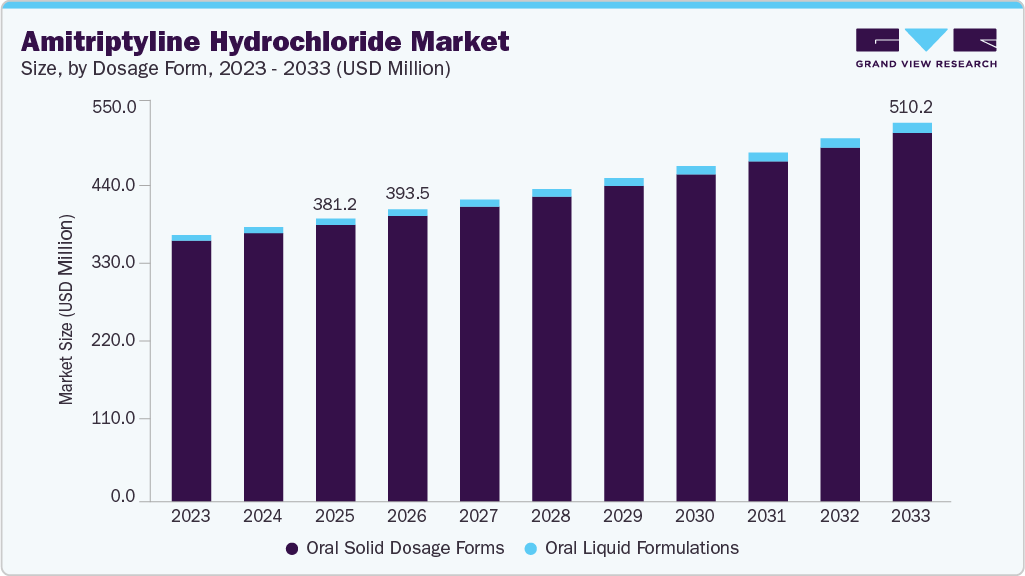
The strong availability of generic formulations represents a key factor supporting market growth across multiple regions. Cost-efficient manufacturing enables pharmaceutical companies to supply large volumes at competitive prices, thereby improving patient access. Generic competition has encouraged pricing stability while maintaining consistent demand among healthcare providers. Pharmaceutical manufacturers continue to optimize production efficiency, quality standards, and distribution networks to strengthen market presence. The expansion of retail pharmacy chains and e-commerce pharmaceutical platforms improves access to medicine across urban and semi-urban populations. Hospitals maintain steady procurement levels due to ongoing treatment needs for chronic neurological and psychiatric conditions.
For instance, in 2025 updated statistics, the National Alliance on Mental Illness reported that about 61.5 million U.S. adults experienced mental illness in 2024, representing 23.4% of the adult population, while 52.1% of adults with mental illness received treatment, indicating growing treatment adoption across healthcare systems. Reliable supply chains and established supplier relationships contribute to predictable purchasing behavior, supporting sustained revenue generation for market participants.
The growing global aging population contributes significantly to demand for amitriptyline hydrochloride, as older individuals experience higher rates of neuropathic pain and depressive symptoms. Increasing clinical use in off-label indications, including fibromyalgia and chronic headache disorders, expands therapeutic utilization. Improvements in pharmaceutical manufacturing technologies enhance product consistency, scalability, and regulatory compliance across production facilities. Expanding healthcare infrastructure in developing economies improves diagnosis rates and access to treatment for chronic conditions.
For instance , in 2025, the World Health Organization reported that mental health conditions remained among the top 10 leading causes of health loss worldwide, with depression and anxiety identified as the most common disorders across age groups, reinforcing the demand for therapeutic interventions. Rising physician preference for established medications with known efficacy profiles supports continued prescription levels. Longer life expectancy and increased chronic disease prevalence create recurring treatment requirements, contributing to stable long-term growth prospects for the amitriptyline hydrochloride industry globally.
Market Concentration & Characteristics
The amitriptyline hydrochloride industry demonstrates a relatively low degree of innovation compared to newer pharmaceutical segments, as the drug is a well-established tricyclic antidepressant with a long clinical history. Research activities primarily focus on formulation improvements, enhanced drug-delivery systems, and combination therapies to improve patient compliance. Manufacturers prioritize process optimization, cost efficiency, and quality consistency rather than novel molecule development. Incremental advancements in manufacturing technologies improve scalability and regulatory compliance. Limited patent protection encourages competition among generic producers, reducing incentives for extensive innovation investment. However, ongoing clinical evaluation for expanded therapeutic applications continues to create moderate development opportunities within the market.
Barriers to entry in the amitriptyline hydrochloride industry are moderate, primarily influenced by regulatory compliance requirements and manufacturing expertise. Pharmaceutical companies must meet stringent quality standards, including Good Manufacturing Practices, to obtain approvals in regulated markets. Established players benefit from economies of scale, supplier networks, and long-standing relationships with distributors and healthcare providers. Price competition among generic manufacturers puts new entrants under margin pressure. Technical knowledge related to active pharmaceutical ingredient synthesis and formulation stability also contributes to entry challenges. Market penetration requires consistent product quality, regulatory documentation, and strong distribution capabilities, which can limit participation from smaller manufacturers.
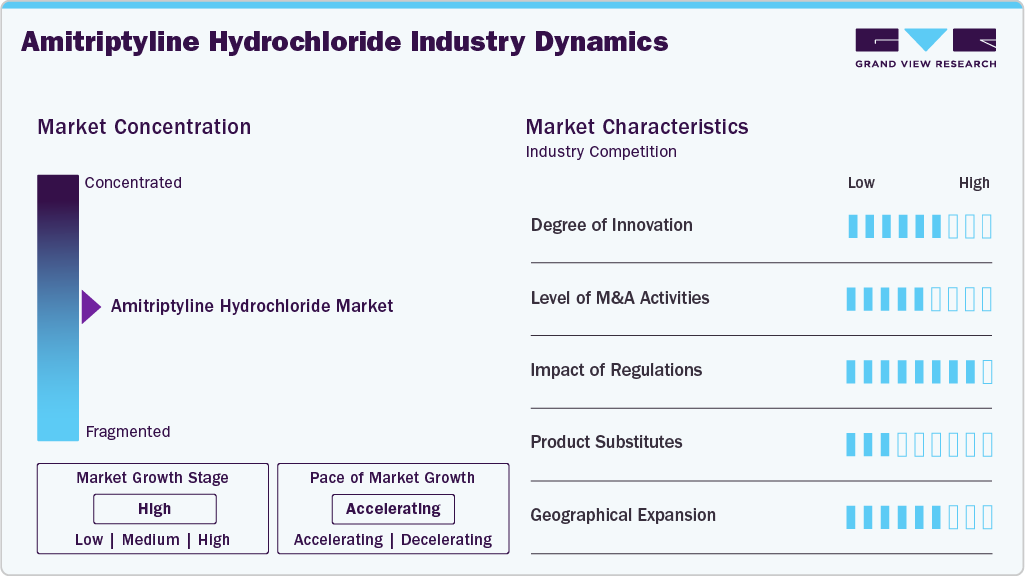
Regulatory frameworks significantly influence the amitriptyline hydrochloride industry through quality standards, approval pathways, and pharmacovigilance requirements. Compliance with international regulatory authorities ensures product safety, efficacy, and manufacturing reliability across global markets. Regulatory audits and certification requirements increase operational costs while maintaining industry credibility. Post-marketing surveillance and adverse event monitoring influence prescribing confidence and brand reputation. Labeling requirements and dosage regulations also shape product positioning and clinical adoption. Consistent regulatory oversight promotes standardized manufacturing practices, thereby contributing to market stability and consumer trust.
The presence of alternative antidepressants and pain management medications creates competitive pressure within the amitriptyline hydrochloride industry. Selective serotonin reuptake inhibitors, serotonin-norepinephrine reuptake inhibitors, and other newer drug classes are commonly prescribed for similar indications. Physicians often consider side effect profiles, patient tolerance, and treatment outcomes when selecting therapies. Despite competition, amitriptyline maintains relevance due to its cost-effectiveness and proven efficacy in certain neuropathic pain conditions. Generic availability further strengthens its competitive positioning in price-sensitive markets. Therapeutic substitution dynamics vary across regions depending on clinical guidelines, healthcare infrastructure, and prescribing practices.
Geographical expansion remains an important characteristic of the amitriptyline hydrochloride industry, driven by increasing healthcare access in emerging economies. Pharmaceutical manufacturers continue to expand distribution networks across Asia-Pacific, Latin America, and parts of Africa to capture untapped demand. Rising diagnosis rates and improving healthcare infrastructure support market penetration in developing regions. Export-oriented production hubs contribute significantly to global supply chains, enabling wider product availability. Strategic partnerships with regional distributors enhance market entry efficiency and brand presence. Growing urban populations and expanding pharmacy networks further support geographical diversification and long-term revenue opportunities.
Dosage Form Insights
The oral solid dosage forms segment led the market with the largest revenue share of 97.81% in 2025, supported by strong physician preference for tablets in long-term management of depression and chronic pain. Amitriptyline hydrochloride tablets provide precise dosing, convenient storage, and extended shelf stability, strengthening prescribing confidence across outpatient settings. High patient familiarity improves adherence among adult and elderly populations requiring sustained therapy. For instance, in July 2023, StatPearls Publishing reported tablet strengths of 10 mg, 25 mg, 50 mg, 75 mg, 100 mg, and 150 mg, oral bioavailability of 30 to 60 percent, and a half-life of 10 to 28 hours. Adults initiated at 25 mg daily were titrated by 25 mg every 3 to 7 days to 150 to 300 mg, with maintenance at 50 to 100 mg for 3 months or longer.
The oral liquid formulations segment is projected to grow at the fastest CAGR of 6.25% over the forecast period, driven by rising demand from pediatric and geriatric patients who have difficulty swallowing tablets. Liquid formulations enabled flexible dose titration, supporting individualized therapy in sensitive populations. Increasing awareness of personalized dosing in psychiatric and neuropathic care contributed to adoption, while clinicians favored liquids during treatment initiation to monitor tolerance and response. For instance, in August 2025, Rosemont Pharmaceuticals Ltd published details of Amitriptyline 25 mg/5 ml Oral Solution, supplied in a 150 ml brown glass bottle containing 25 mg per 5 ml, with 104.6 mg propylene glycol and 0.17 mg ethanol per 5 ml. Adults initiated at 25 mg twice daily may increase to 150 mg; elderly at 10 mg to 25 mg, up to 100 mg, with storage below 25 °C and a 6-month discard period after opening.
Indication Insights
The major depressive disorder segment led the market with the largest revenue share of 43.37% in 2025, due to the long-established clinical role of amitriptyline hydrochloride in managing moderate to severe depressive symptoms. Extensive clinical evidence supported its efficacy in mood stabilization and sleep improvement, sustaining physician confidence. High global prevalence of depression continued to drive prescription volumes across outpatient settings. For instance, in August 2025, the World Health Organization reported that major depressive disorder affected 5.7 percent of adults globally, including 4.6 percent of men and 6.9 percent of women, 5.9 percent of adults aged 70 years and older, and approximately 332 million people worldwide, with over 10 percent of pregnant and postpartum women affected. Depression was 1.5 times more common in women, contributed to 727,000 suicide deaths in 2021, and only one-third of patients in high-income countries received treatment. Cost-effectiveness and long-term regimens further supported sustained demand.
The neuropathic pain segment is projected to grow at the fastest CAGR of 4.64% over the forecast period, owing to increasing diagnosis rates of diabetic neuropathy, postherpetic neuralgia, and chronic pain syndromes. Amitriptyline hydrochloride demonstrates analgesic benefits through modulation of neurotransmitter pathways involved in pain perception, and clinicians increasingly prescribe low-dose regimens distinct from antidepressant use. For instance, in December 2025, StatPearls Publishing reported that neuropathic pain affected 4.1 percent to 12.4 percent of adults over a 12-month period in the United States, 7 percent to 8 percent of the population in Europe, with about 5 percent experiencing severe pain, and overall survey estimates ranging from 6 percent to 8 percent. Only 40 percent to 60 percent achieved partial relief with first-line antidepressants and anticonvulsants, while second-line therapies included lidocaine, capsaicin, and tramadol, and third-line options comprised strong opioids and botulinum toxin A, supporting demand for cost-effective tricyclic antidepressants.
Distribution Channel Insights
The retail pharmacies segment led the market with the largest revenue share of 57.42% in 2025, due to the high proportion of prescriptions filled in outpatient settings for chronic depression and pain management. Amitriptyline hydrochloride therapy often requires long-term refills, which aligns with retail pharmacy dispensing models. Strong geographic presence of chain and independent pharmacies improves medication accessibility across urban and rural areas. Generic availability through retail channels supports affordability and patient adherence. Pharmacist counseling services enhance treatment continuity and safety monitoring. Insurance coverage structures frequently direct patients toward retail pharmacy networks for maintenance medications. Established patient purchasing habits further reinforce segment dominance.
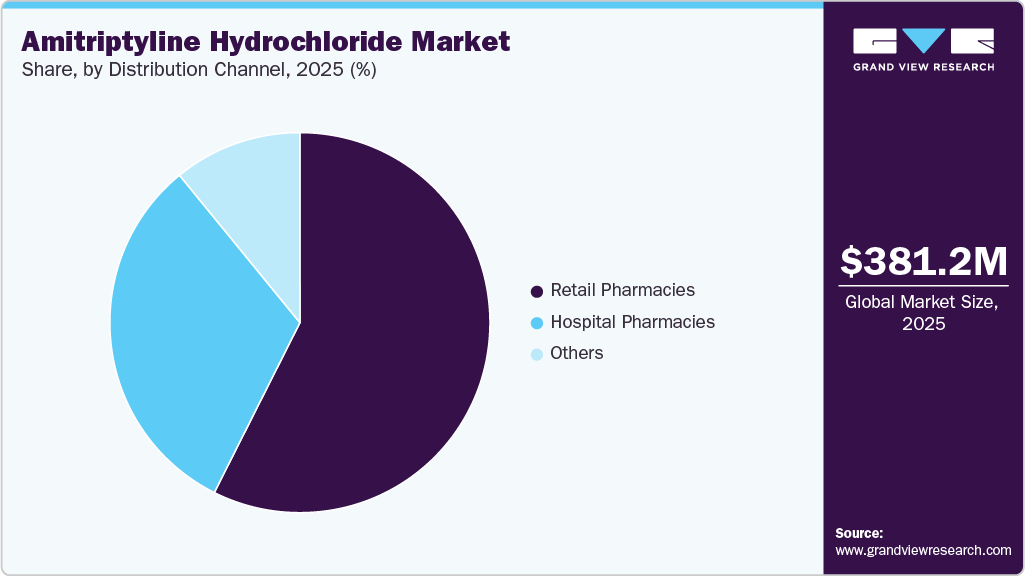
The hospital pharmacies segment is projected to grow at the fastest CAGR of 2.64% over the forecast period, due to increasing hospital-based management of complex psychiatric and neuropathic conditions. Inpatient initiation of therapy requires close monitoring of dosing adjustments and adverse effects. Rising hospitalization rates associated with severe depression and comorbid chronic illnesses contribute to demand. Integration of psychiatric care within hospital systems supports prescription volume through institutional channels. Hospital pharmacies play a key role in transitioning patients from inpatient to outpatient therapy plans. Growth in specialty care centers and pain management departments strengthens institutional procurement. Expanding clinical protocols for multidisciplinary treatment approaches encourages hospital-based dispensing.
Regional Insights
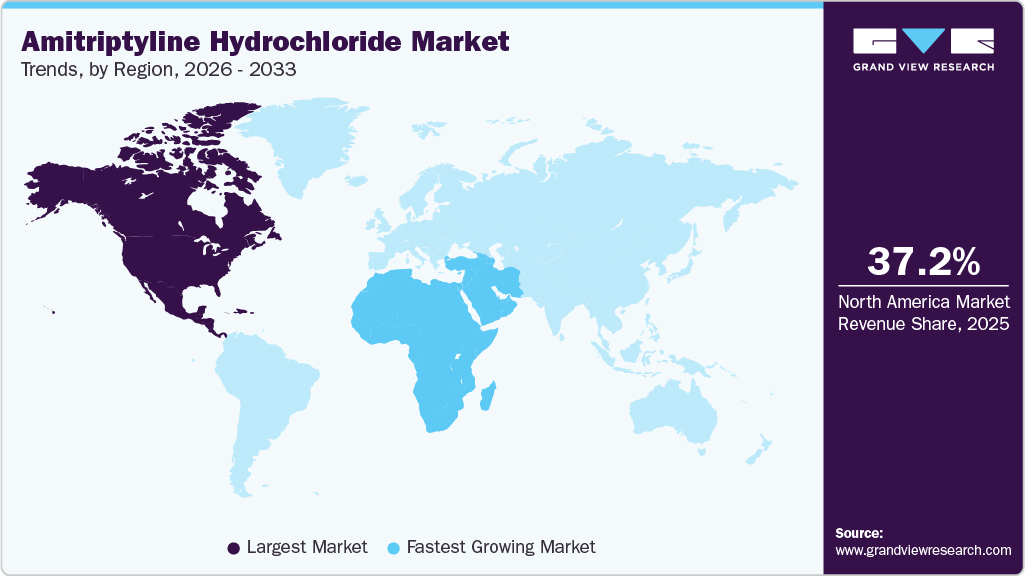
North America dominated the global amitriptyline hydrochloride market with the largest revenue share of 37.20% in 2025, due to high diagnosis rates of depression, anxiety disorders, and chronic pain conditions across the population. Advanced healthcare infrastructure supports widespread access to prescription medications and specialist care services. Strong physician familiarity with tricyclic antidepressants sustains prescribing levels across multiple therapeutic areas. The presence of major pharmaceutical companies and established distribution networks contributes to consistent product availability. Increasing demand for neuropathic pain management among aging individuals further supports market expansion. Insurance coverage for psychiatric and neurological treatments also strengthens medication utilization across clinical settings.
U.S. Amitriptyline Hydrochloride Market Trends
The amitriptyline hydrochloride market in the U.S. accounted for the largest market revenue share in North America in 2025, driven by the high prevalence of mental health conditions and chronic pain disorders. Extensive clinical adoption of established antidepressants supports continuous prescription demand. A large geriatric population with neuropathic complications contributes to recurring treatment requirements. Strong pharmaceutical manufacturing and distribution capabilities ensure a reliable supply of products across healthcare facilities. Growing awareness related to mental wellness encourages early diagnosis and treatment initiation. The expansion of retail pharmacy chains and online prescription services improves nationwide patient access to medications.
Europe Amitriptyline Hydrochloride Market Trends
The amitriptyline hydrochloride market in Europe holds a significant share in global market in 2025, due to increasing mental health awareness and established healthcare systems. High treatment adoption rates across Western European countries support consistent prescription volumes. The region shows strong clinical reliance on cost-effective generic medications for long-term therapy management. Aging demographics contribute to a higher prevalence of neuropathic pain and depressive disorders. Pharmaceutical manufacturers maintain a steady supply through regional production facilities and distribution partnerships. Increasing focus on chronic disease management further strengthens demand for established antidepressant therapies.
The UK amitriptyline hydrochloride market is expanding, driven by the increasing prevalence of depression, migraine disorders, and chronic pain conditions. Physicians frequently prescribe amitriptyline for neuropathic pain and sleep-related disorders in clinical practice. High patient engagement with primary care services supports early treatment initiation and follow-up management. The availability of generic medications contributes to sustained utilization across healthcare settings. Rising stress levels associated with urban lifestyles influence mental health treatment demand. Expansion of digital prescription services enhances patients' access to medication across regions.
The amitriptyline hydrochloride market in Germany represents a key share in European market in 2025, supported by strong pharmaceutical manufacturing capabilities and high healthcare expenditure. The increasing incidence of neurological disorders and chronic pain conditions contributes to consistent prescription volumes. Physicians maintain clinical confidence in established tricyclic antidepressants for specific therapeutic indications. Well-developed hospital and pharmacy networks ensure efficient nationwide medication distribution. The growing elderly population segments create recurring treatment needs for neuropathic conditions. Continuous medical research activity also supports awareness and therapeutic utilization within the country.
The France amitriptyline hydrochloride market shows stable growth in Europe in 2025, driven by increasing recognition of mental health disorders and chronic pain management needs. Physicians prescribe amitriptyline for multiple indications, including migraine prevention and neuropathic conditions. Expanding access to healthcare services supports patient diagnosis and treatment continuity. The presence of generic drug manufacturers contributes to competitive pricing and sustained market penetration. Aging populations require long-term management of neurological conditions, thereby increasing medication demand. Growing patient awareness regarding treatment options further supports prescription volumes across healthcare settings.
Asia-Pacific Amitriptyline Hydrochloride Market Trends
The amitriptyline hydrochloride market in the Asia Pacific is growing due to a large population size and rising mental health awareness. Increasing healthcare infrastructure development improves diagnosis rates and access to psychiatric treatments. Expanding pharmaceutical manufacturing capacity across the region strengthens supply availability and export potential. Growing middle-class populations contribute to higher healthcare spending and greater adoption of treatments. The rising prevalence of chronic diseases and neuropathic pain conditions supports long-term medication demand. Urbanization and lifestyle changes also influence mental health conditions, which drives prescription growth across emerging economies.
The Japan amitriptyline hydrochloride market demonstrates steady demand, driven by a rapidly aging population and the high prevalence of neurological conditions. Physicians prescribe the medication for neuropathic pain and depression management among elderly patients. Advanced healthcare systems ensure reliable access to pharmaceutical treatments across hospitals and clinics. Increasing awareness of mental health challenges contributes to early diagnosis and therapy adoption. Strong pharmaceutical quality standards support market stability and patient confidence. Rising chronic disease burden among older adults further contributes to recurring prescription demand within the country.
The amitriptyline hydrochloride market in China is a major growth market, supported by expanding healthcare infrastructure and rising mental health awareness among the population. Rising urbanization and work-related stress contribute to a higher incidence of depression and anxiety disorders. Domestic pharmaceutical manufacturing capabilities enable large-scale production and distribution across regions. Improving access to healthcare services supports diagnosis and treatment rates in both urban and semi-urban areas. The growing elderly population segments contribute to neuropathic pain treatment demand. Increasing healthcare expenditure among middle-income populations further strengthens market expansion opportunities.
Latin America Amitriptyline Hydrochloride Market Trends
The amitriptyline hydrochloride market in Latin America shows moderate growth in the global market, due to improving healthcare access and increasing awareness of psychiatric conditions. The rising prevalence of chronic pain disorders contributes to consistent medication utilization. Generic drug availability supports affordability across diverse income groups within the region. Expansion of pharmacy networks enhances distribution reach across urban and rural populations. Growing urbanization influences stress-related health conditions, which increases treatment demand. Healthcare providers continue to rely on established antidepressants for cost-effective long-term therapy management.
The Brazil amitriptyline hydrochloride market held a significant share in Latin America in 2025, driven by increasing diagnoses of depression and chronic neurological conditions. Expanding healthcare facilities improves patient access to prescription medications across metropolitan areas. Physicians commonly prescribe amitriptyline for neuropathic pain and migraine prevention. The presence of domestic pharmaceutical manufacturers supports consistent product availability. Rising mental health awareness is encouraging the adoption of treatment across various demographic groups. The increasing burden of chronic diseases contributes to recurring demand for long-term medication management across the country.
Middle East & Africa Amitriptyline Hydrochloride Market Trends
The amitriptyline hydrochloride market in the Middle East and Africa is expected to register at the fastest CAGR of 5.98% over the forecast period, supported by improving healthcare infrastructure and rising awareness of mental health conditions. The increasing prevalence of chronic diseases contributes to the demand for neuropathic pain management therapies. Expansion of pharmaceutical distribution networks enhances access to medication across urban centers. Healthcare providers rely on cost-effective generic medications for long-term treatment needs. A growing population size contributes to expanding patient pools requiring psychiatric care. Rising investment in healthcare facilities across key countries supports future market opportunities within the region.
The Saudi Arabia amitriptyline hydrochloride market is expected to demonstrate steady growth in the Middle East & Africa in 2025, driven by the increasing prevalence of lifestyle-related stress and chronic health conditions. Expanding healthcare facilities improves diagnosis and treatment access for mental health disorders. Physicians prescribe amitriptyline for neuropathic pain and migraine management across clinical settings. Growing awareness of psychiatric wellness encourages patients to seek treatment. Strong pharmaceutical distribution channels ensure the availability of medication across hospitals and retail pharmacies. Increasing elderly population segments contribute to sustained demand for chronic pain and depression management therapies.
Key Amitriptyline Hydrochloride Company Insights
Accord Healthcare Inc., Viatris Inc., and Sandoz Inc. maintain strong positions in the amitriptyline hydrochloride industry through broad generic portfolios and global distribution reach. Sun Pharmaceutical Industries Ltd., Torrent Pharmaceuticals Ltd., and Dr. Reddy's Laboratories focus on high-volume manufacturing and cost efficiency to remain competitive. Unichem Laboratories Ltd. and Zydus Pharmaceuticals (Zydus Lifesciences) emphasize regional expansion and strategic collaborations. Watson Laboratories Inc. (part of the Teva group) leverages established supply networks, while Vintage Pharmaceuticals Inc. supports niche production. Competition centers on pricing, quality standards, regulatory compliance, and reliable supply.
Key Amitriptyline Hydrochloride Companies:
The following key companies have been profiled for this study on the amitriptyline hydrochloride market.
- Accord Healthcare Inc.
- Viatris Inc.
- Sandoz Inc.
- Sun Pharmaceutical Industries Ltd.
- Torrent Pharmaceuticals Ltd.
- Dr. Reddy's Laboratories
- Unichem Laboratories Ltd.
- Zydus Pharmaceuticals (Zydus Lifesciences)
- Watson Laboratories Inc. (part of Teva group)
- Vintage Pharmaceuticals Inc.
Recent Developments
-
In June 2025, JB Chemicals & Pharmaceuticals received approval from the United States Food and Drug Administration for its Abbreviated New Drug Application for Amitriptyline Hydrochloride Tablets USP with approved dosages of 10 mg, 25 mg, 50 mg, 75 mg, 100 mg, and 150 mg, indicated for relief of symptoms of depression.
-
In April 2025, Accord Healthcare’s marketed Amitriptyline Tablets in the UK (10 mg, 25 mg, 50 mg) have updated product safety documentation aligning with regulatory recommendations for potential amitriptyline-related risks (Drug Reaction with Eosinophilia and Systemic Symptoms), reflecting compliance changes to product labeling and safety information.
-
In February 2025, The Pharmaletter reported that AlgoTherapeutix (AlgoTx) had announced the results of its Phase 2 “ACT” trial of its lead candidate ATX01, a proprietary topical formulation of amitriptyline hydrochloride for chemotherapy-induced peripheral neuropathy.
Amitriptyline Hydrochloride Market Report Scope
Report Attribute
Details
Market size value in 2026
USD 393.50 million
Revenue forecast in 2033
USD 510.20 million
Growth rate
CAGR of 3.78% from 2026 to 2033
Base year for estimation
2025
Historical data
2021 - 2024
Forecast period
2026 - 2033
Quantitative units
Revenue in USD million/billion, and CAGR from 2026 to 2033
Report coverage
Revenue forecast, company ranking, competitive landscape, growth factors, trends
Segments covered
Dosage form, indication, distribution channel, region
Regional scope
North America; Europe; Asia Pacific; Latin America; Middle East & Africa
Country scope
U.S.; Canada; Mexico; UK; Germany; France; Italy; Spain; Denmark; Sweden; Norway; China; Japan; India; Australia; South Korea; Thailand; Brazil; Argentina; South Africa; Saudi Arabia; UAE; Kuwait
Key company profiled
Accord Healthcare Inc.; Viatris Inc.; Sandoz Inc.; Sun Pharmaceutical Industries Ltd.; Torrent Pharmaceuticals Ltd.; Dr. Reddy's Laboratories; Unichem Laboratories Ltd.; Zydus Pharmaceuticals (Zydus Lifesciences); Watson Laboratories Inc. (part of Teva group); Vintage Pharmaceuticals Inc.
Customization scope
Free report customization (equivalent up to 8 analysts working days) with purchase. Addition or alteration to country, regional & segment scope.
Pricing and purchase options
Avail customized purchase options to meet your exact research needs. Explore purchase options
Global Amitriptyline Hydrochloride Market Report Segmentation
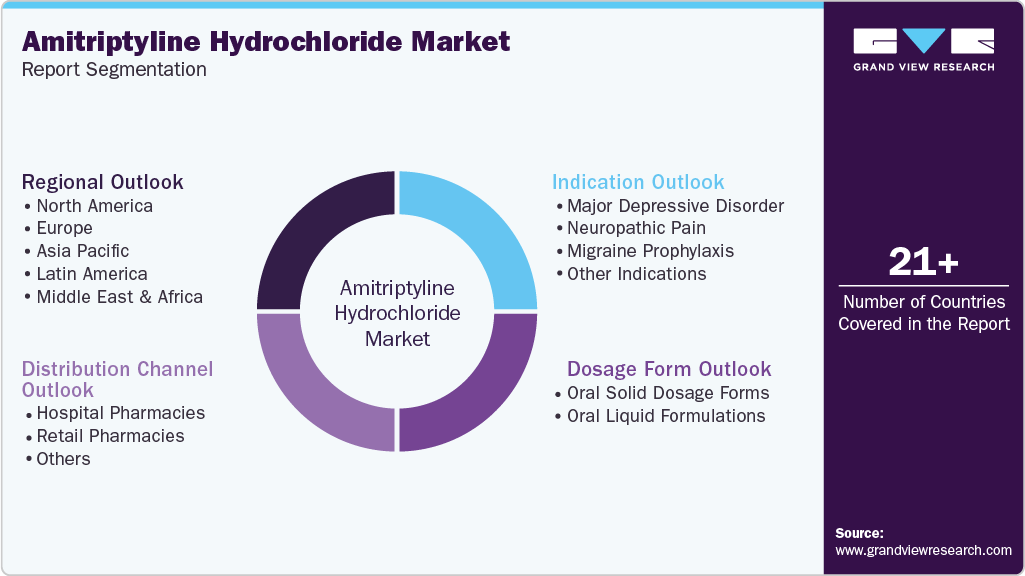
This report forecasts revenue growth at global, regional, and country levels and provides an analysis of the latest industry trends in each of the sub-segments from 2021 to 2033. For this study, Grand View Research has segmented the global amitriptyline hydrochloride market report based on dosage form, indication, distribution channel, and region:
-
Dosage Form Outlook (Revenue, USD Million, 2021 - 2033)
-
Oral Solid Dosage Forms
-
Oral Liquid Formulations
-
-
Indication Outlook (Revenue, USD Million, 2021 - 2033)
-
Major Depressive Disorder
-
Neuropathic Pain
-
Migraine Prophylaxis
-
Other Indications
-
-
Distribution Channel Outlook (Revenue, USD Million, 2021 - 2033)
-
Hospital Pharmacies
-
Retail Pharmacies
-
Others
-
-
Regional Outlook (Revenue, USD Million, 2021 - 2033)
-
North America
-
U.S.
-
Canada
-
Mexico
-
-
Europe
-
UK
-
Germany
-
France
-
Italy
-
Spain
-
Denmark
-
Sweden
-
Norway
-
-
Asia Pacific
-
Japan
-
China
-
India
-
Australia
-
South Korea
-
Thailand
-
-
Latin America
-
Brazil
-
Argentina
-
-
Middle East & Africa
-
South Africa
-
Saudi Arabia
-
UAE
-
Kuwait
-
-
Frequently Asked Questions About This Report
b. The global amitriptyline hydrochloride market size was estimated at USD 381.17 million in 2025 and is expected to reach USD 393.50 million in 2026.
b. The global amitriptyline hydrochloride market is expected to grow at a compound annual growth rate of 3.78% from 2026 to 2033 to reach USD 510.20 million by 2033.
b. Based on dosage form, the oral solid dosage forms segment dominated the market with the largest revenue share of 97.81% in 2025, driven by strong physician preference for tablets in long term management of depression and chronic pain, precise dosing convenience, extended shelf stability, and high patient familiarity across outpatient settings.
b. Key players operating in the market are Accord Healthcare Inc., Viatris Inc., Sandoz Inc., Sun Pharmaceutical Industries Ltd., Torrent Pharmaceuticals Ltd., Dr. Reddy's Laboratories, Unichem Laboratories Ltd., Zydus Pharmaceuticals (Zydus Lifesciences), Watson Laboratories Inc. (part of Teva group), and Vintage Pharmaceuticals Inc.
b. Key factors driving market growth include the rising prevalence of depression, anxiety disorders, and chronic pain conditions, growing awareness of mental health leading to improved diagnosis rates, and increasing use in neuropathic pain, migraine prevention, and sleep disorders. The availability of cost effective generic formulations, expanding healthcare infrastructure, and an aging population further support sustained demand globally.


Share this report with your colleague or friend.
Need a Tailored Report?
Customize this report to your needs — add regions, segments, or data points, with 20% free customization.


ISO 9001:2015 & 27001:2022 Certified
We are GDPR and CCPA compliant! Your transaction & personal information is safe and secure. For more details, please read our privacy policy.
Trusted market insights - try a free sample
See how our reports are structured and why industry leaders rely on Grand View Research. Get a free sample or ask us to tailor this report to your needs.