- Home
- »
- Food Additives & Nutricosmetics
- »
-
Amaranth Market Size And Share, Industry Report, 2033GVR Report cover
![Amaranth Market Size, Share & Trends Report]()
Amaranth Market (2026 - 2033) Size, Share & Trends Analysis Report By Product (Amaranth seeds, Amaranth oil, Amaranth leaves), By Application (Food & Beverages, Personal Care), By Region, And Segment Forecasts
- Report ID: GVR-3-68038-005-7
- Number of Report Pages: 80
- Format: PDF
- Historical Range: 2018 - 2024
- Forecast Period: 2026 - 2033
- Industry: Specialty & Chemicals
- Report Summary
- Table of Contents
- Segmentation
- Methodology
- Download FREE Sample
-
 Download Sample Report
Amaranth Market Summary
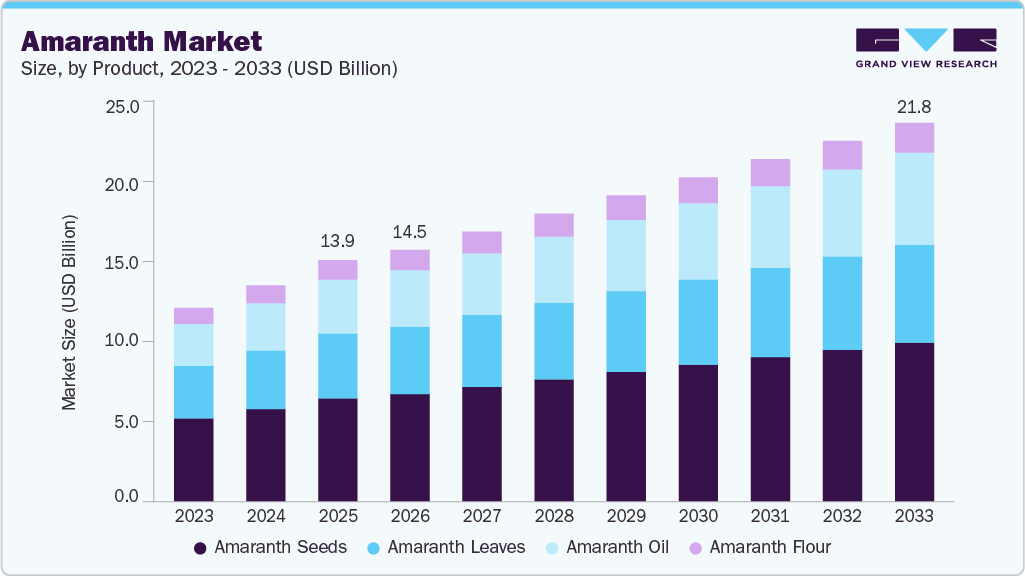
The global amaranth market size was estimated at USD 13,896.7 million in 2025 and is expected to reach USD 21,809.3 million by 2033, growing at a CAGR of 6.0% from 2026 to 2033. The increasing consumption of amaranth in health foods, gluten-free products, and functional nutrition applications is driving market growth.
Key Market Trends & Insights
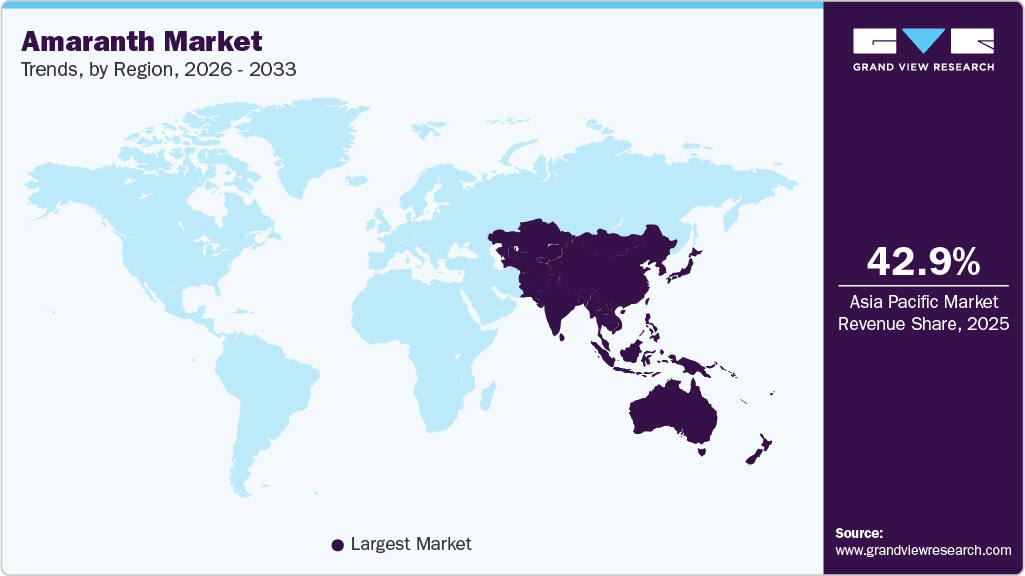
- Asia Pacific dominated the amaranth market with the largest revenue share of 42.9% in 2025.
- By product, the amaranth oil segment is expected to grow at the fastest CAGR of 7.3% from 2026 to 2033, in terms of revenue.
- By application, the pharmaceuticals segment is expected to grow at the fastest CAGR of 7.1% from 2026 to 2033, in terms of revenue
- By application, the food and beverages segment held the largest revenue share of 51.2% in 2025.
Market Size & Forecast
- 2025 Market Size: USD 13,896.7 Million
- 2033 Projected Market Size: USD 21,809.3 Million
- CAGR (2026-2033): 6.0%
- Asia Pacific: Largest market in 2025
Rising consumer awareness regarding plant-based proteins, expanding demand for ancient grains, growing usage in nutraceuticals and animal feed, and product innovation in value-added amaranth ingredients are contributing to the market’s steady expansion.Amaranth is an ancient grain and pseudo-cereal valued for its high nutritional content, including plant-based protein, dietary fiber, minerals, and bioactive compounds. Amaranth is cultivated primarily for its seeds and leaves and is increasingly recognized as a functional ingredient, with applications spanning food and beverages, gluten-free products, nutraceuticals, and animal feed. The rising demand for amaranth is largely driven by growing consumer focus on healthy eating, plant-based diets, and clean-label foods, along with advancements in processing techniques that improve product quality and shelf stability.
According to industry and nutrition-focused reports, increasing consumer awareness of whole grains and functional foods is supporting amaranth consumption. Rising prevalence of lifestyle-related health concerns, including obesity and cardiovascular conditions, continues to encourage the adoption of nutrient-dense ingredients, further strengthening demand for ancient grains such as amaranth across global markets.
Market Concentration & Characteristics
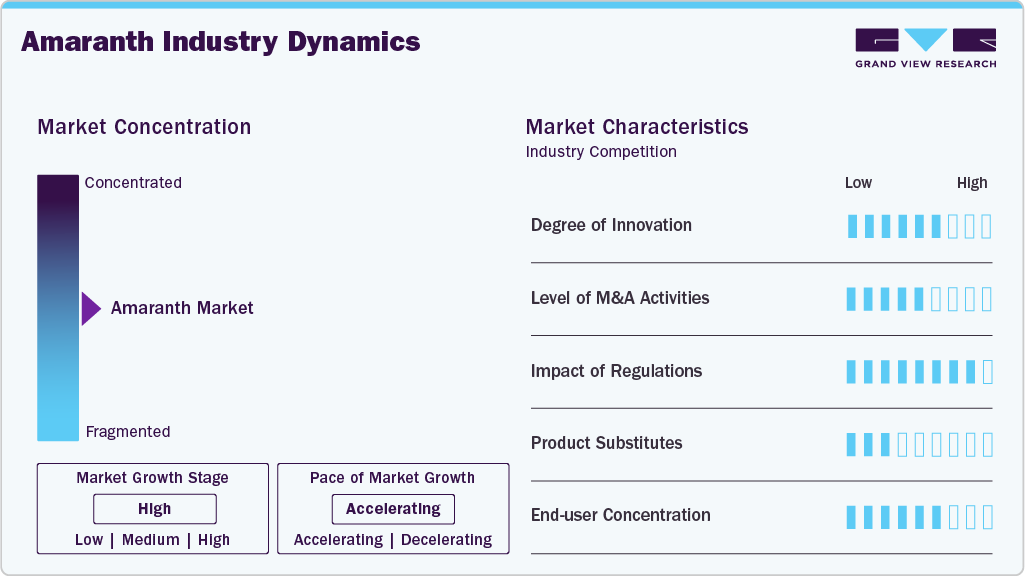
The amaranth market is moderately fragmented, with the presence of a mix of regional producers and a limited number of organized processors dominating the competitive landscape. These companies benefit from established sourcing networks, vertically integrated operations, and diversified product offerings. Key participants are increasingly focusing on expanding cultivation bases, investing in processing and product standardization, and adopting sustainable and organic farming practices to strengthen their competitive positioning in the global market.
Leading players in the global amaranth industry are adopting a mix of capacity expansion, product innovation, strategic collaborations, and sustainability-focused initiatives to enhance their market presence. Companies operating across cultivation, processing, and ingredient manufacturing are investing in improved seed varieties, post-harvest processing technologies, and value-added amaranth products to enhance quality and functional performance for food, nutraceutical, and cosmetic applications. To address rising demand across Asia Pacific and Latin America, several market participants are expanding their sourcing networks, strengthening regional distribution channels, and supporting contract farming initiatives.
Product Insights
The seeds segment led the amaranth market, accounting for a significant revenue share of 42.7% in 2025, and is expected to witness steady growth during the forecast period. Demand for whole amaranth seeds is driven by increasing consumer preference for minimally processed, nutrient-rich foods and ancient grains. Whole seeds are widely used in breakfast cereals, ready-to-cook meals, and traditional dishes, supporting their strong adoption across both retail and commercial segments. The rising awareness of plant-based nutrition, gluten-free diets, and functional foods is further boosting the global consumption of amaranth seeds. In contrast, other forms such as amaranth oil, leaves, and flour are also analyzed in the report.
Amaranth seeds are highly valued for their rich protein, dietary fiber, essential amino acids, and micronutrients, making them ideal for inclusion in health-focused diets and nutraceutical formulations. Expanding culinary experimentation, growing interest in clean-label and sustainable ingredients, and adoption in snacks and bakery products are expected to drive continued market growth over the forecast period.
Application Insights
The food and beverage segment dominated the amaranth industry, accounting for a revenue share of 51.2% in 2025. The segment is witnessing robust growth as amaranth finds wide-ranging applications across multiple sub-segments within the industry. Whole seeds, flakes, and flour are increasingly incorporated into breakfast cereals, bakery products, snacks, health bars, and beverages, catering to the rising demand for nutrient-dense, plant-based foods. Functional and gluten-free products have seen growing adoption as consumers continue to prioritize health, wellness, and clean-label ingredients. Other applications, such as personal care, pharmaceuticals, and additional amaranth-based uses, are also analyzed in the report.
Amaranth’s high protein, fiber, and micronutrient content make it ideal for fortifying foods and beverages, including ready-to-eat meals, dairy alternatives, and smoothies. The expanding interest in ancient grains, plant-based diets, and functional nutrition is driving consistent growth in the global food and beverage segment.
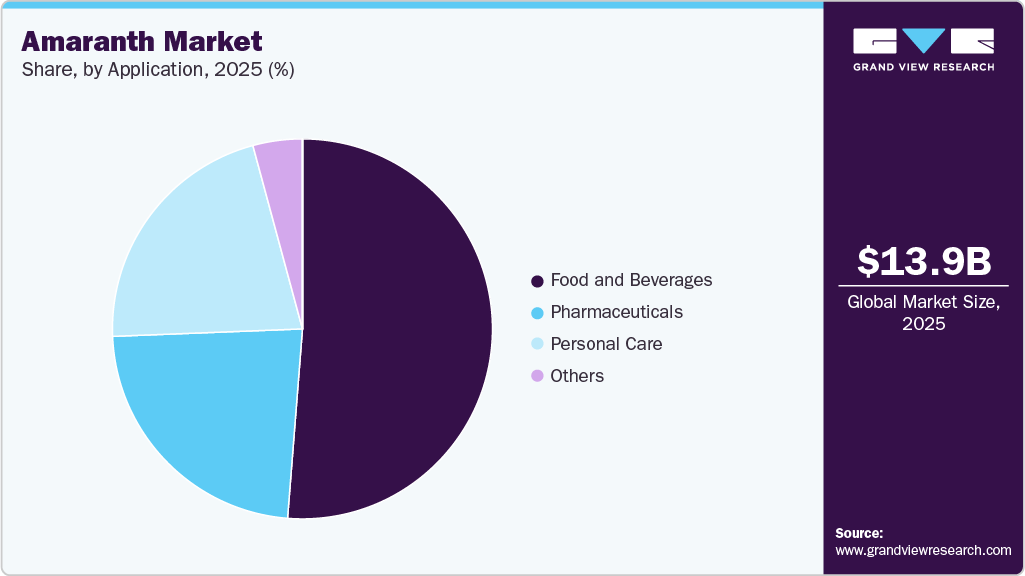
The pharmaceuticals segment is expected to emerge as one of the fastest-growing applications in the amaranth market, registering a CAGR of 7.1% during the forecast period. Growth is driven by the increasing use of amaranth-derived bioactive compounds, such as peptides, squalene, and antioxidants, in nutraceuticals and therapeutic formulations designed to support heart health, immune function, and overall wellness. Amaranth extracts and oils are increasingly incorporated into capsules, tablets, and functional supplements due to their anti-inflammatory and cholesterol-lowering properties.
Rising consumer preference for plant-based, scientifically validated, and natural health solutions is further accelerating adoption, particularly in preventive healthcare and specialty therapeutic segments. The expansion of research into bioactive-rich amaranth varieties and the development of standardized extracts are expected to drive the segment’s growth over the forecast period.
Regional Insights
The Asia Pacific amaranth market held the largest revenue share of 42.9% in 2025, driven by growing consumer awareness of the health benefits of ancient grains and plant-based proteins. The rising demand for gluten-free, nutrient-rich, and functional foods is driving the incorporation of amaranth seeds and flour into cereals, snacks, bakery items, and beverages. Expansion of cultivation, processing facilities, and product innovation across India, China, Japan, and Southeast Asia is expected to sustain regional growth.
The China amaranth market is witnessing strong growth, driven by rising consumer awareness of the nutritional benefits of ancient grains and plant-based proteins. As more individuals focus on healthy diets and functional foods, demand for amaranth seeds, flour, and products is increasing across breakfast cereals, snacks, bakery items, and beverages. Expansion of cultivation, processing facilities, and product innovation is further supporting market growth, positioning China as a key contributor to the Asia Pacific market.
Europe Amaranth Market Trends
The Europe amaranth industry is witnessing steady growth, driven by rising consumer demand for plant-based, gluten-free, and nutrient-dense foods. Health-conscious populations across Germany, France, the UK, and rest countries are increasingly incorporating amaranth seeds, flour, and products into bakery items, breakfast cereals, snacks, and functional beverages. The market is further supported by growing awareness of the protein and micronutrient content of ancient grains, as well as government initiatives promoting sustainable agriculture and healthier diets. Functional and clean-label product trends are encouraging manufacturers to innovate with value-added amaranth ingredients. Additionally, the expansion of organic cultivation and processing facilities, coupled with the rising adoption of amaranth in nutraceutical and dietary supplement applications, is strengthening Europe’s position as a key regional market, contributing significantly to overall global growth.
The German amaranth market is growing steadily, driven by increasing consumer interest in plant-based, gluten-free, and nutrient-rich foods. Amaranth seeds and flour are widely used in bakery products, breakfast cereals, snacks, and functional beverages. Rising awareness of the protein and micronutrient content of ancient grains, along with demand for clean-label and organic products, is encouraging manufacturers to innovate. Expansion of cultivation and processing capabilities is further supporting market growth.
North America Amaranth Market Trends
The North America amaranth industry is witnessing steady growth, fueled by rising consumer preference for plant-based, gluten-free, and nutrient-dense foods. Amaranth seeds, flour, and products are increasingly incorporated into bakery items, breakfast cereals, snacks, and health-focused beverages. Growing awareness of the protein, fiber, and micronutrient content of ancient grains, coupled with demand for clean-label and functional foods, is driving product innovation and supporting market expansion across the United States, Canada, and Mexico.
U.S. Amaranth Market Trends
The U.S. amaranth industry is experiencing steady growth, driven by increasing consumer awareness of plant-based, gluten-free, and nutrient-rich foods. Amaranth seeds, flour, and products are widely used in bakery items, breakfast cereals, snacks, and functional beverages. The rising demand for clean-label, organic, and ancient grain-based products is driving innovation. The expansion of processing facilities and increased product availability across retail and e-commerce channels is further supporting market growth.
Latin America Amaranth Market Trends
The Latin America amaranth industry is witnessing steady growth, driven by increasing consumer interest in nutritious, plant-based, and gluten-free foods. Amaranth seeds, flour, and products are gaining popularity in bakery items, breakfast cereals, snacks, and functional beverages. Rising awareness of the protein, fiber, and micronutrient content of ancient grains, along with the growing demand for clean-label and health-focused products, is encouraging manufacturers to innovate and expand their processing capabilities across Brazil and other key markets.
Middle East & Africa Amaranth Market Trends
The Middle East & Africa amaranth industry is growing steadily, supported by rising consumer awareness of nutrient-rich, plant-based, and gluten-free foods. Amaranth seeds and flour are increasingly used in bakery products, breakfast cereals, snacks, and functional beverages. Growing interest in healthy diets, ancient grains, and clean-label products is driving product innovation. Expansion of cultivation and processing facilities across key markets, including the UAE, Saudi Arabia, and South Africa, further supports growth.
Key Amaranth Company Insights
Key players, including Indian Oil Corporation Ltd., Castrol India Ltd., Bharat Petroleum Corp. Ltd., and Hindustan Petroleum Corp. Ltd., dominate the market.
-
Archer-Daniels-Midland Company (ADM) is emerging as a key player in the amaranth value chain, focusing on sourcing, processing, and supplying high-quality amaranth seeds and derivatives for food, nutraceutical, and functional ingredient applications. The company leverages its extensive infrastructure, technological expertise, and strong R&D capabilities to develop value-added amaranth-based products. ADM’s commitment to sustainable sourcing, quality assurance, and innovation supports its growing presence in domestic and international markets.
Key Amaranth Companies:
The following are the leading companies in the amaranth market. These companies collectively hold the largest market share and dictate industry trends.
- Archer-Daniels-Midland Company (ADM)
- Kilaru Naturals Private Limited
- Ingredion Incorporated
- Cargill, Incorporated
- Mary's Gone Crackers Inc.
- The Hain Celestial Group
- Ardent Mills
- Bob's Red Mill Natural Foods
- Organic Products India
- Arrowhead Mills
Key Industry Developments
- On November 6, 2023, Evonik launched PhytoSquene, a non-animal-derived squalene produced from amaranth oil under GMP standards. Introduced last year, PhytoSquene is the first GMP-certified amaranth oil-based squalene available for use as an adjuvant in parenteral dosage forms. By providing a plant-based alternative, Evonik addresses the growing demand for a sustainable and secure commercial supply of squalene for pharmaceutical applications, reducing reliance on shark liver oil and supporting clean, ethical sourcing trends.
Amaranth Market Report Scope
Report Attribute
Details
Market size value in 2026
USD 14,491.8 million
Revenue forecast in 2033
USD 21,809.3 million
Growth rate
CAGR of 6.0% from 2026 to 2033
Base year for estimation
2025
Historical data
2018 - 2024
Forecast period
2026 - 2033
Quantitative units
Revenue in USD million, volume in kilotons, and CAGR from 2026 to 2033
Report coverage
Revenue forecast, volume forecast, company ranking, competitive landscape, growth factors, and trends
Segments covered
Product, application, and region
Regional scope
North America; Europe; Asia Pacific; Middle East & Africa; Latin America
Country scope
U.S.; Canada; Mexico; Germany; UK; France; Italy; Spain; China; India; Japan; South Korea; Saudi Arabia; South Africa; Brazil; Argentina
Key companies profiled
Archer-Daniels-Midland Company (ADM); Kilaru Naturals Private Limited; Ingredion Incorporated; Cargill, Incorporated; Mary's Gone Crackers Inc.; The Hain Celestial Group; Ardent Mills; Bob's Red Mill Natural Foods; Organic Products India; Arrowhead Mills
Customization scope
Free report customization (equivalent up to 8 analysts’ working days) with purchase. Addition or alteration to country, regional & segment scope.
Pricing and purchase options
Avail customized purchase options to meet your exact research needs. Explore purchase options
Global Amaranth Market Report Segmentation
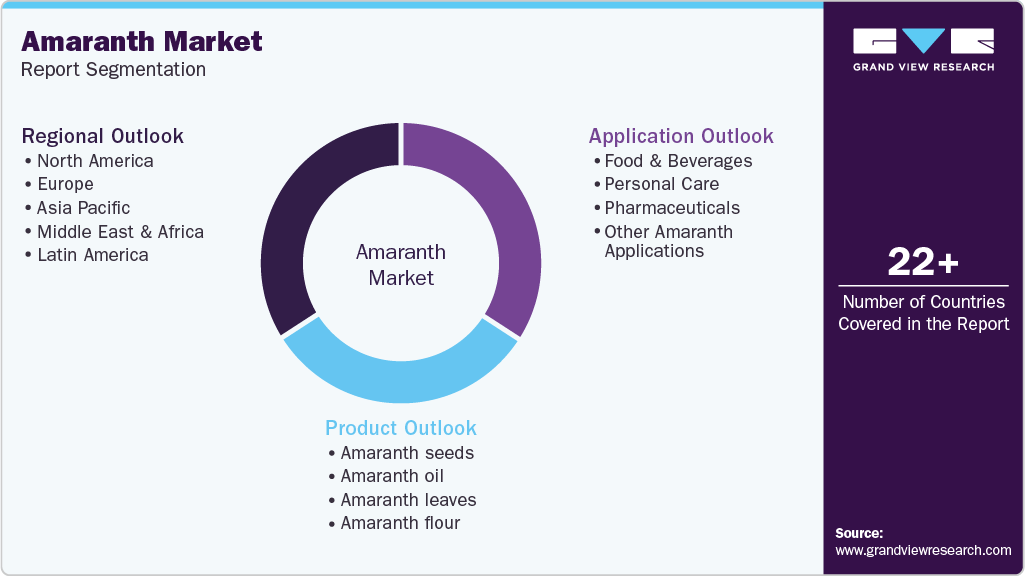
This report forecasts volume & revenue growth at the global, regional, and country levels and provides an analysis of the latest industry trends in each of the sub-segments from 2018 to 2033. For this study, Grand View Research has segmented the global amaranth market report based on product, application, and region:
-
Product Outlook (Volume, Kilotons; Revenue, USD Million, 2018 - 2033)
-
Amaranth seeds
-
Amaranth oil
-
Amaranth leaves
-
Amaranth flour
-
-
Application Outlook (Volume, Kilotons; Revenue, USD Million, 2018 - 2033)
-
Food & Beverages
-
Personal Care
-
Pharmaceuticals
-
Other Amaranth Applications
-
-
Regional Outlook (Volume, Kilotons; Revenue, USD Million, 2018 - 2033)
-
North America
-
U.S.
-
Canada
-
Mexico
-
-
Europe
-
Germany
-
UK
-
France
-
Italy
-
Spain
-
-
Asia Pacific
-
China
-
India
-
Japan
-
South Korea
-
-
Middle East & Africa
-
Saudi Arabia
-
South Africa
-
-
Latin America
-
Brazil
-
Argentina
-
-
Frequently Asked Questions About This Report
b. The Amaranth market size was estimated at USD 13,896.7 million in 2025 and is expected to reach USD 14,491.8 million in 2026
b. The Amaranth market is expected to grow at a compound annual growth rate of 6.0% from 2026 to 2033 to reach USD 21,809.3 million by 2033.
b. The amaranth seeds form dominated the global amaranth market by form in 2025, accounting for a significant share of 42.7% of overall consumption, driven by their minimal processing, nutritional integrity, and broad applicability across food systems. Whole amaranth seeds are widely used in traditional foods, breakfast cereals, ready-to-cook meals, and health-focused formulations due to their high protein content, dietary fiber, and micronutrient profile. Key advantages such as natural composition, versatility in culinary applications, and compatibility with clean-label and gluten-free trends continue to strengthen the market position of amaranth seeds globally.
b. Some of the key players operating in the market include Archer-Daniels-Midland Company (ADM), Kilaru Naturals Private Limited, Ingredion Incorporated, Cargill, Incorporated, Mary's Gone Crackers Inc., The Hain Celestial Group, Ardent Mills, Bob's Red Mill Natural Foods, Organic Products India, and Arrowhead Mills
b. The global amaranth market is primarily driven by rising demand from the food and beverages, infant nutrition, dietary supplements, and nutraceutical sectors, supported by increasing consumer awareness of healthy eating and plant-based nutrition. Growing adoption of ancient grains, continuous product innovation, and expanding use of amaranth in gluten-free, fortified, and functional food products are accelerating market growth. The incorporation of amaranth seeds and derivatives in bakery items, cereals, dairy alternatives, and health supplements, driven by demand for protein-rich, clean-label, and nutrient-dense ingredients, continues to support steady global market expansion


Share this report with your colleague or friend.
Need a Tailored Report?
Customize this report to your needs — add regions, segments, or data points, with 20% free customization.


ISO 9001:2015 & 27001:2022 Certified
We are GDPR and CCPA compliant! Your transaction & personal information is safe and secure. For more details, please read our privacy policy.
Trusted market insights - try a free sample
See how our reports are structured and why industry leaders rely on Grand View Research. Get a free sample or ask us to tailor this report to your needs.