- Home
- »
- Nanoparticles
- »
-
2D Materials Beyond Graphene Market Size Report, 2033GVR Report cover
![2D Materials Beyond Graphene Market Size, Share & Trends Report]()
2D Materials Beyond Graphene Market (2025 - 2033) Size, Share & Trends Analysis Report By End Use (Aerospace & Defense, Automotive), By Material (TMDs, h-BN, MXenes), By Region, And Segment Forecasts
- Report ID: GVR-4-68040-774-2
- Number of Report Pages: 101
- Format: PDF
- Historical Range: 2021 - 2023
- Forecast Period: 2025 - 2033
- Industry: Advanced Materials
- Report Summary
- Table of Contents
- Segmentation
- Methodology
- Download FREE Sample
-
 Download Sample Report
2D Materials Beyond Graphene Market Summary
The global 2D materials beyond graphene market size was estimated at USD 2.96 billion in 2024 and is projected to reach USD 3.93 billion by 2033, growing at a CAGR of 3.2% from 2025 to 2033, driven by increasing research and development activities aimed at discovering advanced materials with superior electrical, optical, and mechanical properties. Materials such as molybdenum disulfide (MoS₂), hexagonal boron nitride (h-BN), and transition metal dichalcogenides (TMDs) are being widely explored for their potential in next-generation electronics, flexible displays, and photonic devices.
Key Market Trends & Insights
- North America dominated the 2D materials beyond graphene market with the largest revenue share of 33.2% in 2024.
- By material, transition metal dichalcogenides (TMDs) segment is expected to grow at fastest CAGR of 3.6% from 2025 to 2033 in terms of revenue.
- By end use, energy & power segment is expected to grow at fastest CAGR of 3.7% from 2025 to 2033 in terms of revenue.
Market Size & Forecast
- 2024 Market Size: USD 2.96 Billion
- 2033 Projected Market Size: USD 3.93 Billion
- CAGR (2025-2033): 3.2%
- North America: Largest market in 2024
The growing demand for miniaturized and energy-efficient components in consumer electronics has further accelerated the exploration and adoption of these materials. Governments and private organizations increasingly fund nanotechnology research, contributing significantly to market expansion. The energy and storage sector represents another strong market growth avenue. These materials exhibit exceptional surface area, mechanical strength, and electrical conductivity, making them suitable for batteries, supercapacitors, and fuel cells. The rising focus on clean and renewable energy solutions has driven the adoption of advanced materials that enhance storage devices' energy density and charge-discharge efficiency. Moreover, the ability of these materials to act as efficient catalysts in hydrogen evolution reactions is boosting their demand in sustainable energy generation. Ongoing research into their electrochemical properties continues to expand potential end uses across the green energy ecosystem.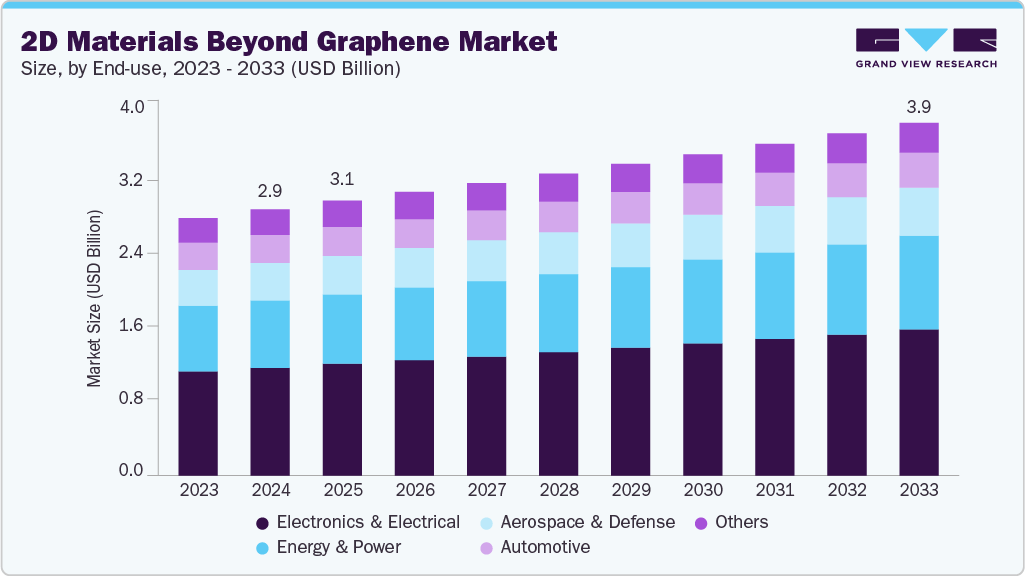
In addition, the market is benefiting from the expanding scope of end uses in the biomedical and sensing sectors. 2D materials beyond graphene possess excellent biocompatibility, high surface reactivity, and tunable optical properties, which make them promising candidates for biosensing, drug delivery, and imaging technologies. Their use in detecting highly sensitive environmental pollutants and biological molecules is gaining traction in healthcare and environmental monitoring. The convergence of nanotechnology, material science, and biotechnology creates new opportunities to commercialize these materials. As industrial players move from laboratory-scale experiments to scalable production, the market is poised for significant long-term growth.
Market Concentration & Characteristics
The global 2D materials beyond graphene industry is characterized by a high degree of innovation, driven by intensive research efforts and collaborations between academic institutions, startups, and established technology firms. The market remains nascent yet rapidly evolving, with continuous breakthroughs in synthesis methods, scalability, and material quality. Although commercialization is still limited, emerging patents and pilot-scale production reflect growing industrial interest. The sector has witnessed a moderate level of mergers and partnerships, primarily aimed at combining material expertise with end use development in semiconductors, energy storage, and flexible electronics. These strategic collaborations are crucial for bridging the gap between research and large-scale industrial deployment.
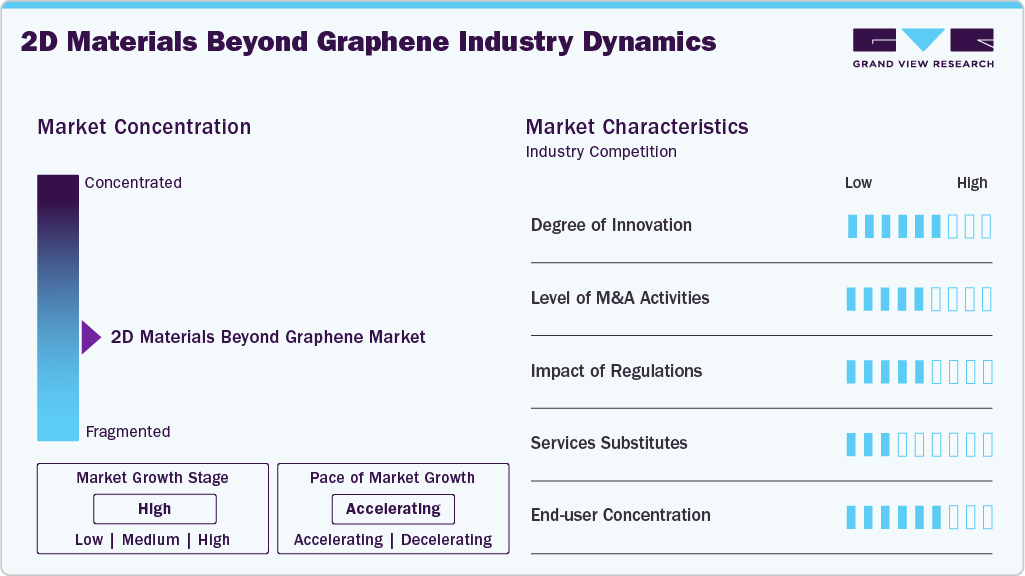
Regulatory frameworks also significantly shape the market dynamics, particularly concerning environmental safety, nanomaterial handling, and sustainable manufacturing practices. Compliance with international standards and nanomaterial safety regulations ensures responsible development and enhances market credibility. There are limited direct substitutes for 2D materials beyond graphene, given their unique physical and chemical properties. However, competition exists from advanced nanomaterials such as carbon nanotubes and perovskites in certain end uses. End-user concentration is relatively diversified, spanning electronics, energy, healthcare, and aerospace industries, though semiconductor and energy sectors currently account for the largest share. As standardization and production scalability improve, the market is expected to witness higher consolidation and broader adoption across industries.
End Use Insights
Based on end use, electronics & electrical dominated the global market, accounting for a revenue share of 40.6% in 2024, driven by increasing demand for miniaturized, high-performance electronic devices. Due to their excellent electrical conductivity and tunable band gaps, materials such as MoS₂ and h-BN are being explored for transistors, photodetectors, and flexible displays. Rapid growth in consumer electronics, wearable devices, and next-generation computing systems is boosting adoption. In addition, ongoing research in integrating 2D materials into semiconductors enhances device efficiency and performance. Industrial collaborations and pilot-scale production are further accelerating commercialization in this segment.
Energy & power is expected to grow at the fastest CAGR of 3.7% over the forecast period, driven by the rising need for advanced energy storage and conversion solutions. 2D materials beyond graphene are increasingly used in batteries, supercapacitors, and fuel cells because of their high surface area, conductivity, and chemical stability. The global push for renewable energy and efficient power management systems further fuels adoption. These materials also serve as catalysts for hydrogen evolution and other electrochemical reactions, supporting sustainable energy initiatives. Innovations in material synthesis and integration enable practical end uses in industrial and consumer energy technologies.
Material Insights
Transition metal dichalcogenides (TMDs) segment dominated the global market, accounting for a revenue share of 45.2% in 2024, driven by unique electrical, optical, and mechanical properties of materials such as MoS₂, WS₂, and WSe₂. These materials are widely applied in transistors, photodetectors, and flexible electronic devices for enhanced performance. The increasing adoption of TMDs in nanoelectronics and optoelectronics is driven by their tunable band gaps and high carrier mobility. Research advancements and improved scalable production methods are expanding industrial end uses. Collaboration between research institutions and manufacturers accelerates commercialization and reduces entry barriers in this segment.
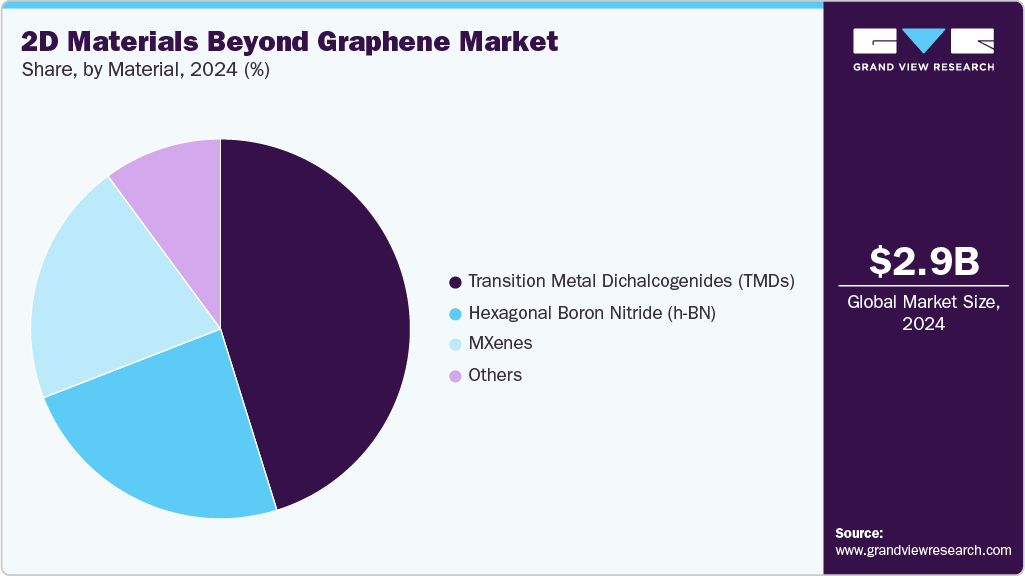
MXenes is anticipated to grow significantly at a CAGR of 3.3% during the forecast period, driven by their exceptional conductivity, mechanical strength, and surface chemistry, making them ideal for energy storage, sensors, and electromagnetic shielding end uses. Increasing demand for high-performance electrodes in batteries and supercapacitors is a key driver. MXenes’ tunable surface functional groups also enable end uses in water purification and catalysis. Continuous advancements in scalable synthesis and processing technologies are improving material accessibility. The segment benefits from growing interest in multifunctional materials that address energy and environmental challenges.
Regional Insights
North America held the largest revenue market share of 33.2% in 2024, driven by strong research infrastructure and extensive government funding for nanotechnology and advanced materials. Leading universities and research laboratories are actively developing novel 2D materials for electronics, photonics, and quantum computing end uses. The presence of major semiconductor manufacturers and collaborations between academia and industry are accelerating commercialization efforts. In addition, the region’s focus on developing flexible and wearable electronic devices is enhancing material demand. Supportive policies promoting clean energy and sustainable innovation further grow the market. Integrating 2D materials into energy storage and next-generation computing systems remains a key regional focus.
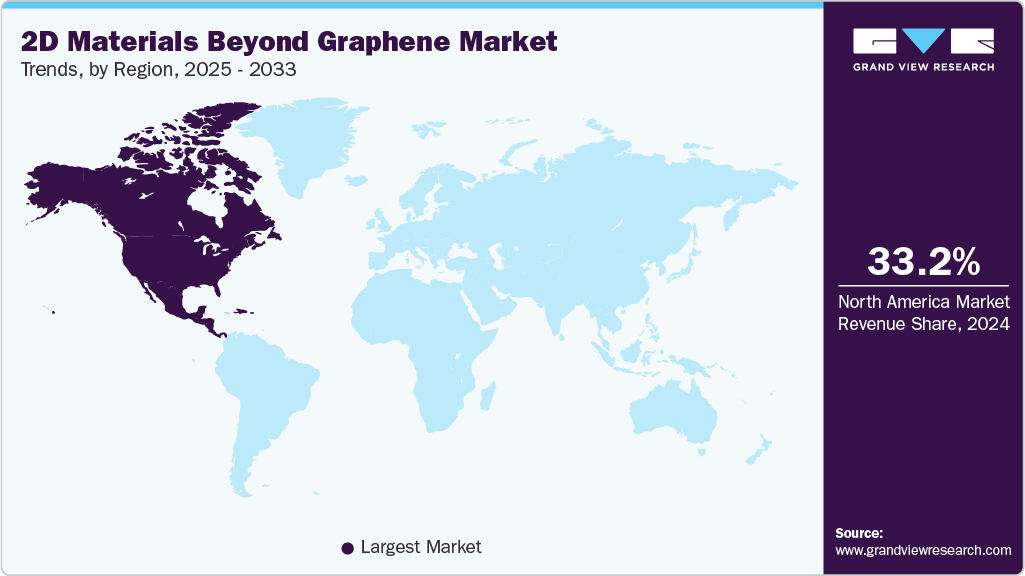
U.S. 2D Materials Beyond Graphene Market Trends
The 2D materials beyond graphene market in the U.S. is fueled by high R&D investments and strong participation from technology giants and startups in developing next-generation electronic and optoelectronic devices. Federal initiatives supporting nanomaterial development under programs such as the National Nanotechnology Initiative (NNI) are stimulating innovation. The growing end use of 2D materials in sensors, transistors, and energy systems is expanding market opportunities. Strategic collaborations between industry leaders and research institutions are leading to early-stage commercialization of 2D materials. The defense and aerospace sectors also adopt these materials for lightweight, high-strength end uses. Moreover, the rising interest in clean energy technologies, such as hydrogen production and supercapacitors, is propelling domestic demand.
Asia Pacific 2D Materials Beyond Graphene Market Trends
The 2D materials beyond graphene market in Asia is witnessing significant growth due to strong manufacturing capabilities and rising investments in the semiconductor and electronics industries. Countries such as China, Japan, and South Korea spearhead research in transition metal dichalcogenides and boron nitride for advanced transistor fabrication. The demand for flexible and miniaturized devices has spurred the adoption of consumer electronics and communication technologies. Government initiatives supporting nanotechnology and clean energy materials are accelerating regional innovation. The increasing establishment of pilot-scale production units enables the transition from research to commercialization. Rapid industrialization and expanding academic collaboration networks are further strengthening the market outlook.
China 2D materials beyond graphene market represents one of the most dynamic markets, driven by robust government support for nanotechnology and material science innovation. Substantial funding under national programs and inclusion in the “Made in China 2025” initiative have propelled local research and industrial capabilities. Chinese firms and universities are developing scalable synthesis processes for TMDs and other 2D compounds. The country’s dominance in semiconductor fabrication and consumer electronics manufacturing provides a strong foundation for material adoption. Furthermore, China’s focus on renewable energy, including advanced batteries and hydrogen energy systems, fosters material utilization. Continuous collaborations between domestic and international research entities strengthen China’s global position in this sector.
Europe 2D Materials Beyond Graphene Market Trends
The 2D materials beyond graphene market in Europe is driven by the region’s strong emphasis on sustainable and safe nanomaterial development. The European Commission’s funding programs, such as Horizon Europe, encourage collaborative research on novel 2D materials and their integration into energy-efficient and green technologies. The presence of specialized research institutes and advanced semiconductor infrastructure supports innovation. European industries are exploring using 2D materials in quantum computing, energy storage, and biosensing end uses. Strict environmental and safety regulations ensure the responsible production and deployment of nanomaterials. Increasing demand for eco-friendly and high-performance materials continues to shape the regional market trajectory.
Germany 2D materials beyond graphene market is primarily driven by advancements in nanotechnology, electronics, and automotive end uses. The country’s strong industrial base and emphasis on precision manufacturing enable rapid integration of novel materials into high-performance products. German research organizations and universities are conducting pioneering work on transition metal dichalcogenides and boron nitride-based materials. In addition, Germany’s focus on renewable energy technologies, including fuel cells and advanced batteries, is enhancing the use of 2D materials for energy efficiency. Collaborative research projects supported by public-private partnerships are accelerating technological progress. The nation’s commitment to innovation and sustainability ensures steady market expansion in the coming years.
Central & South America 2D Materials Beyond Graphene Market Trends
The 2D materials beyond graphene market in Central & South America is growing gradually, supported by increasing awareness of nanotechnology’s potential in industrial and academic sectors. Countries such as Brazil and Mexico are investing in research programs focused on material synthesis and characterization. The region’s expanding electronics manufacturing and renewable energy initiatives create opportunities for advanced materials adoption. Government efforts to modernize research infrastructure are contributing to technological development. While commercialization remains limited, partnerships with global research entities foster knowledge transfer and innovation. The rising demand for sustainable materials in energy and environmental end uses is expected to stimulate future market growth.
Middle East & Africa 2D Materials Beyond Graphene Market Trends
The 2D materials beyond graphene market in the MEA is driven by emerging interest in advanced materials for energy, defense, and industrial end uses. The growing focus on clean and sustainable technologies, especially in the Gulf nations, encourages research into 2D materials for energy storage and hydrogen production. Collaborative projects between universities and international research organizations are promoting regional expertise. Investment in nanotechnology centers and innovation hubs gradually expands the region’s scientific capabilities. In addition, the diversification of economies toward high-tech industries supports market development. As awareness of 2D materials’ potential end uses increases, the region is expected to become an emerging participant in the global value chain.
Key 2D Materials Beyond Graphene Company Insights
Some of the key players operating in the market include 2D Semiconductors Inc., Graphenea S.A.:
-
2D Semiconductors Inc. offers a wide range of monolayer and few-layer materials, including molybdenum disulfide (MoS₂), tungsten diselenide (WSe₂), and boron nitride. These materials are used in next-generation electronic, optoelectronic, and photonic devices. The company focuses on customized material growth and scalable production to support innovation in advanced semiconductor technologies.
-
Graphenea S.A. provides graphene oxide, CVD-grown graphene, and 2D material films tailored for research, energy storage, and sensor end uses. Graphenea’s extensive R&D programs support collaborations with universities and technology firms across Europe and North America.
NanoXplore Inc. and Sixth Element Materials Technology Co., Ltd. are some of the emerging market participants.
-
NanoXplore Inc. is a vertically integrated manufacturer of graphene and advanced materials designed to enhance the performance of polymers and composites. The company develops graphene-enhanced thermoplastics that improve strength, conductivity, and durability in automotive and industrial end uses.
-
Sixth Element Materials Technology Co., Ltd., supplies graphene powders, dispersions, and films for coatings, batteries, and conductive inks. Its advanced research programs focus on expanding into transition metal dichalcogenides and boron nitride-based products.
Key 2D Materials Beyond Graphene Companies:
The following are the leading companies in the 2D materials beyond graphene market. These companies collectively hold the largest market share and dictate industry trends.
- 2D Semiconductors Inc.
- Graphenea S.A.
- NanoXplore Inc.
- Sixth Element Materials Technology Co., Ltd.
- Versarien plc
- 2D Layer Materials Pte. Ltd.
- XG Sciences, Inc.
- ACS Material, LLC
- Thomas Swan & Co. Ltd.
2D Materials Beyond Graphene Market Report Scope
Report Attribute
Details
Market size value in 2025
USD 3.05 billion
Revenue forecast in 2033
USD 3.93 billion
Growth rate
CAGR of 3.2% from 2025 to 2033
Base year for estimation
2024
Historical data
2021 - 2023
Forecast period
2025 - 2033
Quantitative units
Revenue in USD million/billion, and CAGR from 2025 to 2033
Report coverage
Revenue forecast, company ranking, competitive landscape, growth factors, and trends
Segments covered
End Use, material, region
Regional scope
North America; Europe; Asia Pacific; Central & South America; Middle East & Africa
Country scope
U.S.; Canada; Mexico; Germany; UK; France; Italy; Spain; India; China; Japan
Key companies profiled
2D Semiconductors Inc.; Graphenea S.A.; NanoXplore Inc.; Sixth Element Materials Technology Co., Ltd.; Versarien plc; 2D Layer Materials Pte. Ltd.; XG Sciences, Inc.; ACS Material, LLC; Thomas Swan & Co. Ltd.
Customization scope
Free report customization (equivalent to 8 analysts’ working days) with purchase. Addition or alteration to country, regional & segment scope.
Pricing and purchase options
Avail customized purchase options to meet your exact research needs. Explore purchase options
Global 2D Materials Beyond Graphene Market Report Segmentation
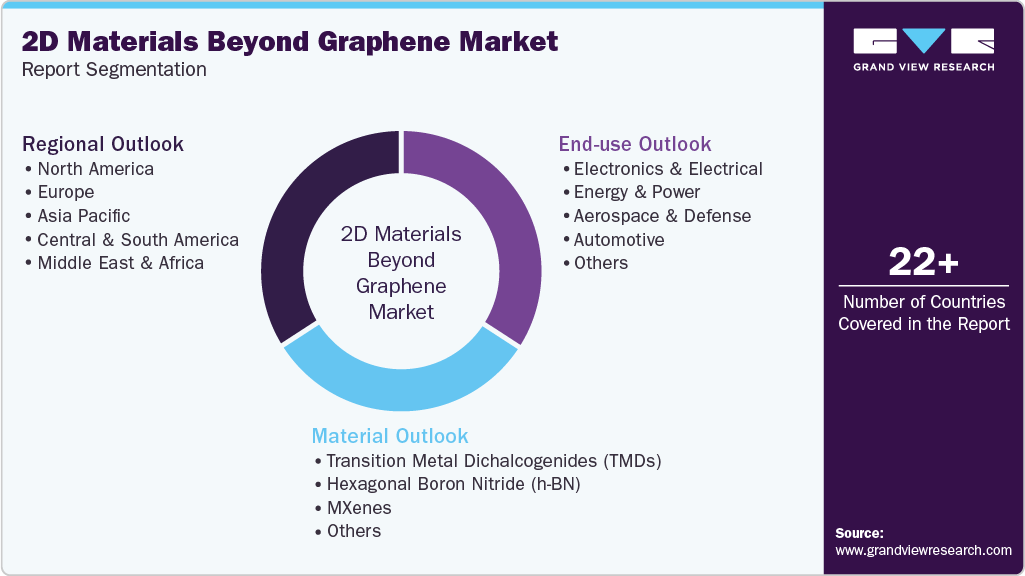
This report forecasts revenue growth at the global, regional, and country levels and provides an analysis of the latest industry trends in each of the sub-segments from 2021 to 2033. For this study, Grand View Research has segmented the global 2D materials beyond graphene market report based on end use, material, and region:
-
End Use Outlook (Revenue, USD Million, 2021 - 2033)
-
Electronics & Electrical
-
Energy & Power
-
Aerospace & Defense
-
Automotive
-
Others
-
-
Material Outlook (Revenue, USD Million, 2021 - 2033)
-
Transition Metal Dichalcogenides (TMDs)
-
Hexagonal Boron Nitride (h-BN)
-
MXenes
-
Others
-
-
Regional Outlook (Revenue, USD Million, 2021 - 2033)
-
North America
-
U.S.
-
Canada
-
Mexico
-
-
Europe
-
Germany
-
UK
-
France
-
Italy
-
Spain
-
-
Asia Pacific
-
China
-
India
-
Japan
-
-
Central & South America
-
Middle East & Africa
-
Frequently Asked Questions About This Report
b. The global 2D materials beyond graphene market size was estimated at USD 2.96 billion in 2024 and is expected to reach USD 3.05 billion in 2025.
b. The 2D materials beyond graphene market is expected to grow at a compound annual growth rate of 3.2% from 2025 to 2033 to reach USD 3.93 billion by 2033.
b. Transition metal dichalcogenides (TMDs) segment dominated the global 2D materials beyond graphene market, accounting for a revenue share of 45.2% in 2024, driven by unique electrical, optical, and mechanical properties of materials such as MoS₂, WS₂, and WSe₂.
b. Key players in the 2D materials beyond graphene market include 2D Semiconductors Inc., Graphenea S.A., NanoXplore Inc., Sixth Element Materials Technology Co., Ltd., Versarien plc, 2D Layer Materials Pte. Ltd., XG Sciences, Inc., ACS Material, LLC, and Thomas Swan & Co. Ltd.
b. Key factors driving the 2D materials beyond graphene market include rising road safety regulations, growing demand for high-visibility apparel, and expanding infrastructure development projects globally.


Share this report with your colleague or friend.
Need a Tailored Report?
Customize this report to your needs — add regions, segments, or data points, with 20% free customization.


ISO 9001:2015 & 27001:2022 Certified
We are GDPR and CCPA compliant! Your transaction & personal information is safe and secure. For more details, please read our privacy policy.
Trusted market insights - try a free sample
See how our reports are structured and why industry leaders rely on Grand View Research. Get a free sample or ask us to tailor this report to your needs.