
- Home
- »
- Clothing, Footwear & Accessories
- »
-
Winter Sporting Goods Market Size, Industry Report, 2033GVR Report cover
![Winter Sporting Goods Market Size, Share & Trends Report]()
Winter Sporting Goods Market (2026 - 2033) Size, Share & Trends Analysis Report By Product (Sleds, Tubes), By Distribution Channel (Offline, Online), By Region (North America, Europe, Asia Pacific, Central & South America, MEA), And Segment Forecasts
- Report ID: GVR-4-68038-392-8
- Number of Report Pages: 83
- Format: PDF
- Historical Range: 2021 - 2024
- Forecast Period: 2026 - 2033
- Industry: Consumer Goods
- Report Summary
- Table of Contents
- Segmentation
- Methodology
- Download FREE Sample
-
 Download Sample Report
Winter Sporting Goods Market Summary
The global winter sporting goods market size was estimated at USD 490.36 million in 2025 and is projected to reach USD 728.88 million by 2033, growing at a CAGR of 5.0% from 2026 to 2033. The growing consumer interest in nature-based sports that offer leisure, as well as competitiveness, has been promoting the demand for winter sports products, including sleds and tubes.
Key Market Trends & Insights
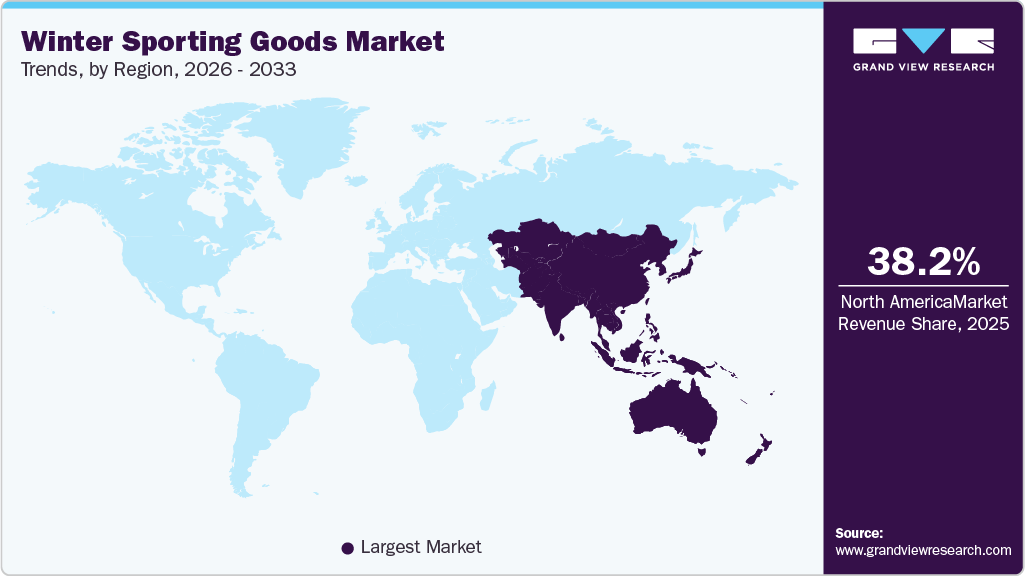
- By region, North America led the market with a share of 38.2% in 2025.
- By product, sleds led the market and accounted for a share of 54.1% in 2025.
- By distribution channel, the offline channel led the market and accounted for a share of 58.9% in 2025.
Market Size & Forecast
- 2025 Market Size: USD 490.36 Million
- 2033 Projected Market Size: USD 728.88 Million
- CAGR (2026-2033): 5.0%
- North America: Largest market in 2025
The increasing concern among consumers for a healthy lifestyle, coupled with the rising acceptance of various winter sports activities, such as skiing, snowboarding, cross-country skiing, sledding, and ice skating, especially in countries with cold weather, such as the U.S., Canada, Germany, Sweden, France, and Austria, has increased the popularity of winter sports. The growing popularity of several winter sports, including figure skating, bobsled, luge, and Alpine snowboarding in the Olympic Games, is also boosting the growth of the market for winter sporting goods.Consumers now expect higher-performance products, lighter materials, advanced insulation, ergonomic designs, and safety enhancements, which increase replacement cycles and expand spending per user. At the same time, social media and visual culture make stylish, high-quality winter wear more desirable, pushing both fashion-oriented and technical brands into the category. This crossover between performance gear and lifestyle apparel is widening the consumer base beyond traditional winter athletes to everyday consumers seeking versatile winter clothing.
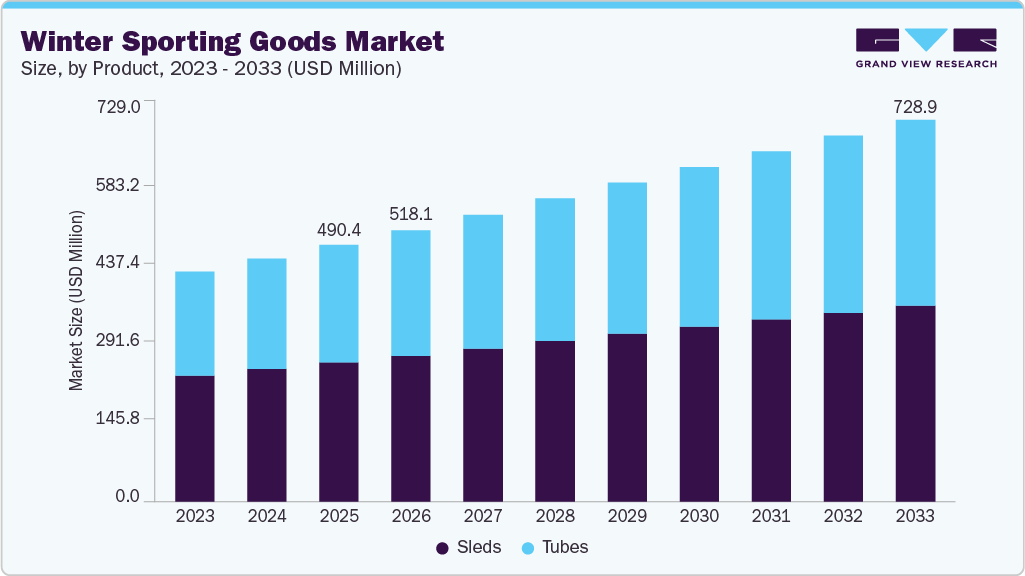
The market is also boosted by the rise of e-commerce and omnichannel retail, which makes winter gear more accessible. Consumers increasingly research, compare, and purchase equipment and apparel online, while rental platforms and subscription models encourage first-time users to try winter sports without full ownership costs. Improved logistics and digital fitting tools have reduced traditional barriers around sizing and equipment selection.
Advancements in packaging and sustainable fishing practices are vital to shaping the market landscape. Companies are adopting eco-friendly packaging solutions and responsible sourcing strategies to appeal to environmentally conscious consumers. As sustainability concerns grow, brands that emphasize ethical fishing practices and recyclable packaging are gaining a competitive edge. This trend is expected to drive market growth by attracting a wider consumer base.
In addition, increased interest in health, wellness, and outdoor recreation, especially post-pandemic, has positioned winter sports as a way to stay active and socially connected during colder months.
Consumer Insights
Consumer preferences in the winter sporting goods market are increasingly shaped by lifestyle, performance expectations, and evolving participation patterns. One of the biggest trends is the rise of experience-driven consumption. Consumers, especially younger demographics, are entering winter sports like skiing, snowboarding, and winter hiking not only for athletic reasons but also for leisure, social experiences, and travel. This shift drives demand for gear that looks good, performs well, and enhances the overall “experience” on- and off-slope. Stylish, visually appealing gear is becoming as important as technical performance, particularly because winter sports content is frequently shared on social media.
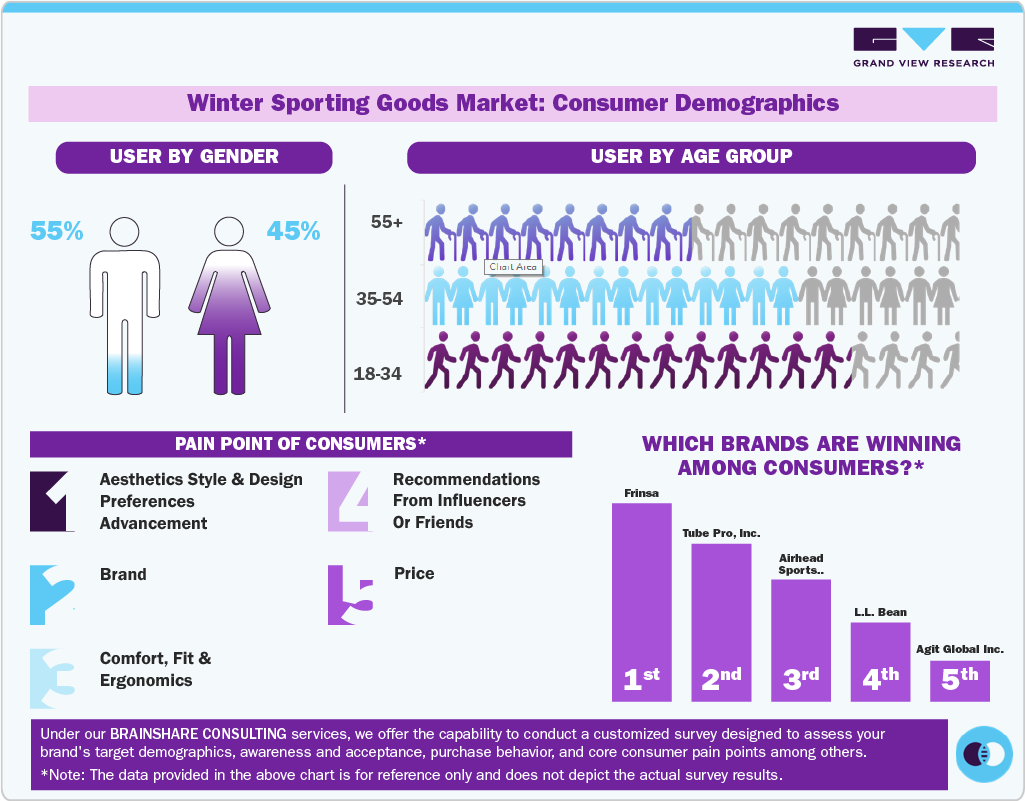
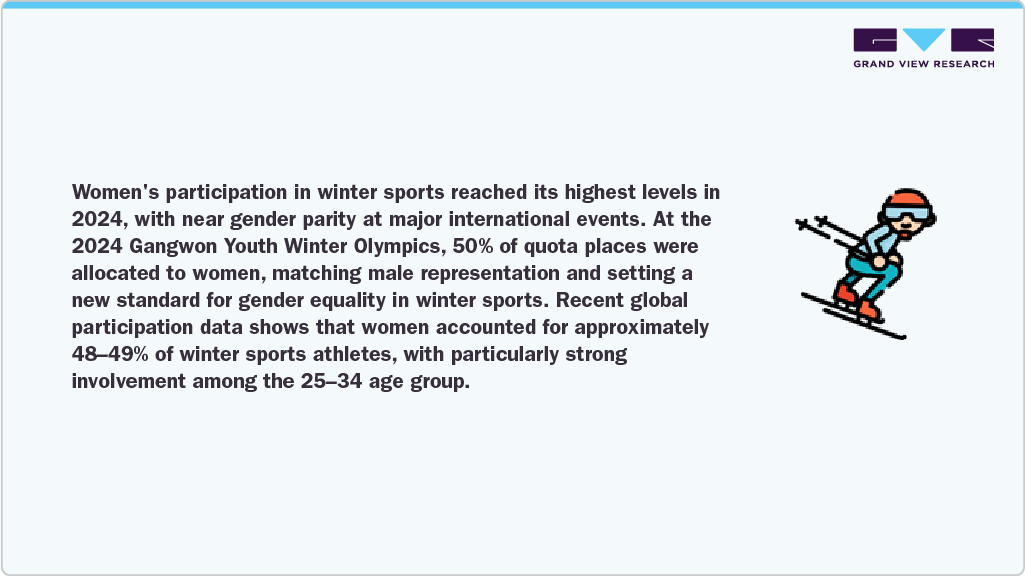
A major shift shaping winter sporting goods demand is the significant increase in women’s participation across skiing, snowboarding, winter trekking, and backcountry activities. Women are entering winter sports not only as beginners but also as advanced and competitive participants, which is expanding the addressable consumer base. This change has prompted a strong preference for women-specific gear-including improved boot fits, women-tailored ski shapes, ergonomic bindings, lighter, more mobile apparel, and designs that blend performance with aesthetics.
At the same time, buyers are showing a strong preference for high-performance, technologically advanced gear. They want products that are lighter, more durable, more comfortable, and designed with advanced materials such as thermal insulation, breathable waterproof membranes, and shock-absorbing composites. The push toward personalization is also evident, with consumers gravitating toward equipment and apparel that can adapt to variable conditions through modular layering systems or integrated smart features. Premiumisation is evident across the category, as more consumers are willing to pay extra for recognised performance benefits, especially in safety-critical items such as helmets, ski boots, and bindings.
The market is also seeing strong growth from women, youth, and beginner participants, driving demand for gear that is easier to use, better-fitting, and available in more design options. These segments care about comfort, price accessibility, and brand guidance-meaning that clear product positioning and beginner-friendly options matter. Meanwhile, rental models appeal to occasional users who want high-quality gear without committing to full ownership, especially as winter sports can be expensive and highly seasonal.
Product Insights
The sleds dominated the winter sporting goods market with a share of 54.1% in 2025. The demand for sleds in winter sporting goods is rising as consumers increasingly seek simple, family-friendly outdoor activities that require minimal skill and offer instant fun. Growing interest in seasonal recreation, especially among younger families, has boosted sales of lightweight, affordable sleds for use in parks, local hills, and backyard snow areas. Social media trends showcasing winter play, along with a renewed focus on outdoor wellness and active lifestyles, have further accelerated this demand, making sledding one of the most accessible and fast-growing winter pastimes.
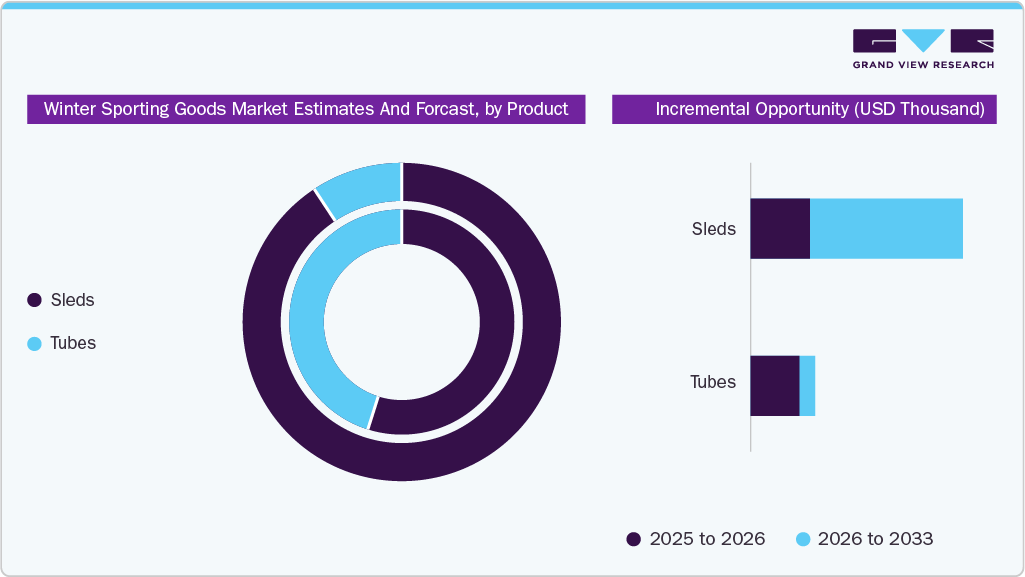
The tubes segment is expected to exhibit a CAGR of 5.8% from 2026 to 2033. Demand for tubes used in winter sports, such as snow tubes and inflatable sledding tubes, is rising as the popularity of low-skill, family-friendly winter recreation grows. As more consumers seek affordable and accessible outdoor activities during the winter holidays, tubes offer a fun, safe, and low-maintenance alternative to skis or snowboards. Their lightweight design, easy storage, and enhanced durability (with better PVC, rubber, and composite materials) have made them increasingly appealing. Additionally, social media-driven interest in winter adventure experiences and improved infrastructure at snow parks and resorts are further boosting adoption.
Distribution Channel Insights
Sales of winter sporting goods through the offline channels segment dominated the market, accounting for a share of 58.9% in 2025. Consumers prefer to physically evaluate high-performance gear such as jackets, boots, thermal layers, skis, and accessories before purchasing. These products require fit testing, material feel, insulation checks, and expert guidance, which offline stores provide through trained staff, curated product displays, and trial zones. In addition, the rise of winter tourism, skiing holidays, and colder seasonal conditions has driven more shoppers to seek reliable, premium-quality gear, and offline specialty stores offer greater trust, authenticity, and product assurance than online platforms.
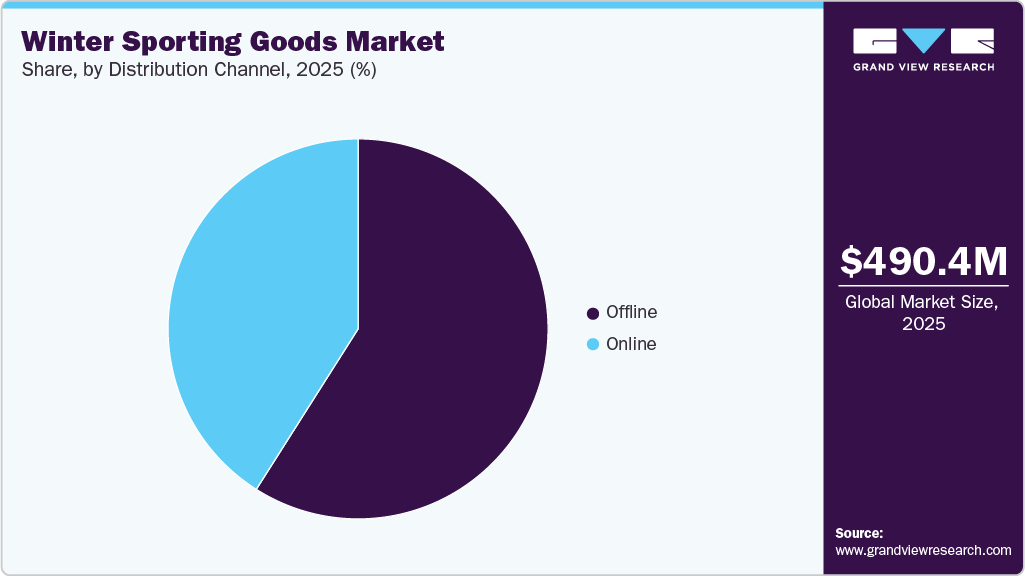
Sales of winter sporting goods through the online channel are expected to grow at a CAGR of 4.1% over the forecast period. Consumers now prefer the convenience of home delivery, wider product variety, and easy price comparisons for items like thermals, snow boots, skis, and winter fitness gear. E-commerce platforms also offer seasonal discounts, quick-commerce availability in cold regions, and access to international brands that are not easily available in offline stores. Additionally, growing interest in winter travel, skiing holidays, and cold-weather fitness has pushed shoppers to buy specialised winter gear online, where sizing guides, reviews, and return policies make the purchase safer and more informed.
Regional Insights
The North America winter sporting goods industry accounted for a share of 38.2% in 2025, driven by improved snow-making technologies at resorts and expanding access to outdoor recreation. Growing interest in health, fitness, and adventure lifestyles is pushing more consumers toward skiing, snowboarding, ice skating, and snowshoeing, while younger demographics are adopting winter sports through social media and influencer-led content. Besides, rising participation in family-oriented winter travel, investments in ski resort infrastructure, and the popularity of premium gear such as advanced skis, insulated apparel, and safety equipment are collectively boosting market growth.
U.S. Winter Sporting Goods Market Trends
The winter sporting goods industry in the U.S. is rising due to growing participation in outdoor recreation, driven by a post-pandemic focus on wellness, active lifestyles, and nature-based activities. Expanding access to winter sports through improved facilities, beginner-friendly programs, and wider availability of affordable gear has also attracted new participants. Moreover, social media and influencer culture have boosted interest in skiing, snowboarding, and snow trekking, while technological innovation in equipment lighter, safer, and performance-enhancing gear, continues to elevate consumer demand.
Europe Winter Sporting Goods Market Trends
The winter sporting goods industry in Europe is expected to grow at a CAGR of 4.8% from 2026 to 2033, owing to growing participation in seasonal outdoor activities, expanding tourism in Alpine regions, and increasing interest in fitness-oriented lifestyles. Warmer winters with shorter snowfall windows are prompting consumers to invest in specialized, higher-performance gear to maximize their time on the slopes. Additionally, post-pandemic lifestyle shifts have boosted interest in outdoor recreation and adventure travel, while social media and influencer culture continue to popularize skiing, snowboarding, and winter trekking among younger demographics. This combination of tourism growth, lifestyle shifts, and premiumization is driving sustained demand for winter sporting goods across Europe.
Asia Pacific Winter Sporting Goods Market Trends
The winter sporting goods industry in the Asia Pacific is expected to register the fastest CAGR of 5.8% from 2026 to 2033. Demand for winter sporting goods in the Asia Pacific is rising due to rapid growth in winter tourism, increased participation in ice and snow sports, and expanding access to winter-sport infrastructure across China, Japan, South Korea, and emerging markets. Rising disposable incomes, a growing middle class seeking experiential leisure activities, and the influence of social media and lifestyle trends are further driving the adoption of winter apparel, skiing equipment, snowboarding gear, and protective accessories across the region.
Key Winter Sporting Goods Share Insights
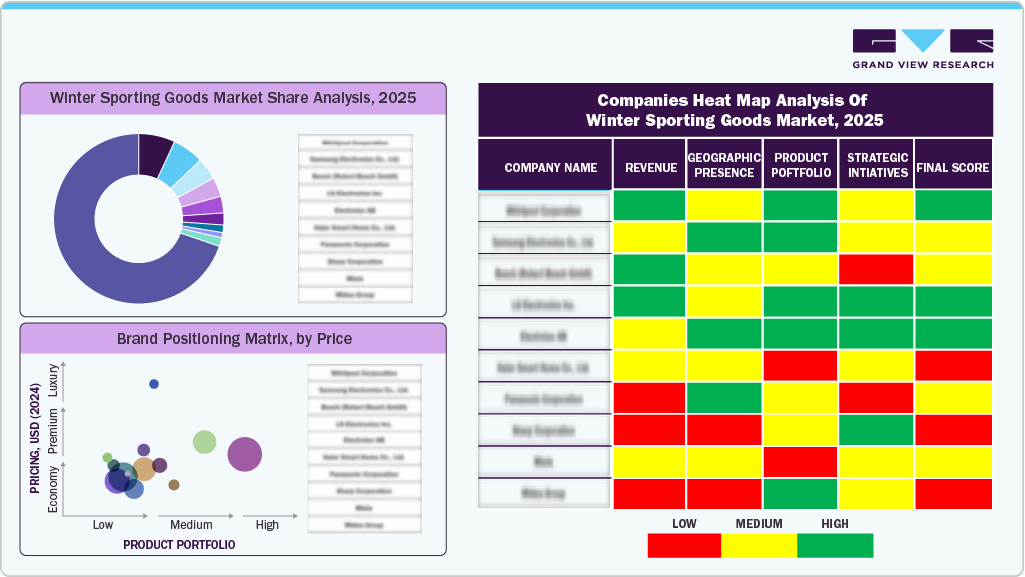
The presence of a few established players and new entrants characterizes the market. Many big players are increasing their focus on the growing trend of the winter sporting goods. Players are diversifying their service offerings in order to maintain market share.
Key Winter Sporting Goods Companies:
The following key companies have been profiled for this study on the winter sporting goods market
- Tube Pro, Inc.
- Airhead Sports Group
- L.L. Bean
- Agit Global, Inc.
- Paricon
- Bestway Inflatables & Material Corp.
- Emsco Group
- Slippery Racer
- Franklin Sports Inc.
- Gizmo Riders
Recent Developments
-
In November 2025, UNIQLO renewed its sponsorship agreements with the Swedish Ski and Curling Associations, continuing to provide advanced LifeWear apparel for athletes and expanding youth development initiatives in winter sports for 2026, including new activities at major ski and curling events in Japan. The partnership also includes hosting clinics and programs to introduce more children to winter sports, broadening opportunities for future athletes.
-
In November 2025, Gsou Snow launched its Autumn/Winter 2025-2026 collection, featuring new designs for ski and outdoor apparel targeting both youth and global customers. The collection focuses on innovative sports fashion, emphasizing vibrant styles and advanced functionality, signaling the brand’s ambitions for global expansion.
Winter Sporting Goods Market Report Scope
Report Attribute
Details
Market size value in 2026
USD 518.11 million
Revenue forecast in 2033
USD 728.88 million
Growth rate
CAGR of 5.0% from 2026 to 2033
Base year for estimation
2025
Historical data
2021 - 2024
Forecast period
2026 - 2033
Quantitative units
Revenue in USD Million and CAGR from 2026 to 2033
Report coverage
Revenue forecast, company ranking, competitive landscape, growth factors, and trends
Segments covered
Product, distribution channel, region
Regional scope
North America; Europe; Asia Pacific; Central & South America; Middle East & Africa
Country scope
U.S.; Canada; Mexico; UK; Germany; France; Italy; Spain; China; Japan; India; South Korea; Australia & New Zealand; Brazil; South Africa
Key companies profiled
Tube Pro, Inc.; Airhead Sports Group; L.L. Bean; Agit Global, Inc.; Paricon; Bestway Inflatables & Material Corp.; Emsco Group; Slippery Racer; Franklin Sports Inc.; Gizmo Riders
Customization scope
Free report customization (equivalent up to 8 analysts working days) with purchase. Addition or alteration to country, regional & segment scope.
Pricing and purchase options
Avail customized purchase options to meet your exact research needs. Explore purchase options
Global Winter Sporting Goods Market Report Segmentation
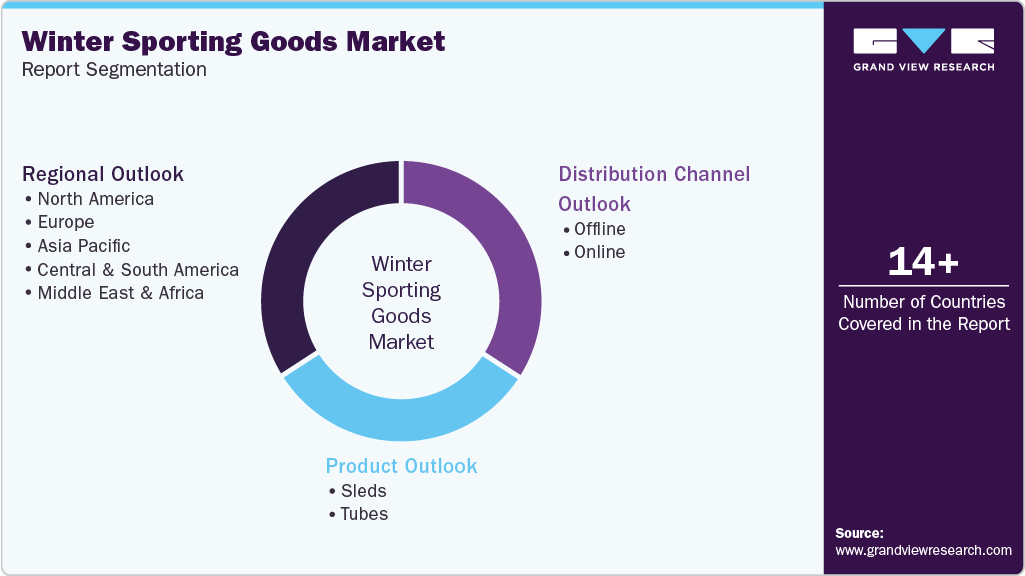
This report forecasts revenue growth at global, regional & country levels and provides an analysis on the latest trends and opportunities in each of the sub-segments from 2021 to 2033. For this study, Grand View Research has segmented the global winter sporting goods market report on the basis of product, distribution channel, and region.
-
Product Outlook (Revenue, USD Million, 2021 - 2033)
-
Sleds
-
Plastic
-
Foam
-
Others
-
-
Tubes
-
Plastic
-
Foam
-
Others
-
-
-
Distribution Channel Outlook (Revenue, USD Million, 2021 - 2033)
-
Offline
-
Online
-
-
Regional Outlook (Revenue, USD Million, 2021 - 2033)
-
North America
-
U.S.
-
Canada
-
Mexico
-
-
Europe
-
UK
-
Germany
-
France
-
Italy
-
Spain
-
-
Asia Pacific
-
China
-
India
-
Japan
-
Australia & New Zealand
-
South Korea
-
-
Central & South America
-
Brazil
-
-
Middle East & Africa (MEA)
-
South Africa
-
-
Frequently Asked Questions About This Report
b. Some key players operating in the winter sporting goods market include Tube Pro Inc.; Airhead Sports Group; L.L.Bean; Agit Global Inc.; Paricon; Bestway Inflatables & Material Corp.; Emsco Group; Slippery Racer; Franklin Sports Inc.; Gizmo Riders; Surf 9 LLC; Zipfy; and PoolCandy.
b. Key factors that are driving the winter sporting goods market growth include the rising popularity of outdoor activities including snow sports among consumers, because of the growing awareness regarding these sports’ mental and physical benefits.
b. The global winter sporting goods market size was estimated at USD 490.36 million in 2025 and is expected to reach USD 518.12 million in 2026.
b. The global winter sporting goods market is expected to grow at a compound annual growth rate of 5.0% from 2026 to 2033 to reach USD 728.88 million by 2033.
b. Sales of winter sporting goods through the offline channels segment dominated the market, accounting for a share of 58.9% in 2025. Consumers prefer to physically evaluate high-performance gear such as jackets, boots, thermal layers, skis, and accessories before purchasing. These products require fit testing, material feel, insulation checks, and expert guidance, which offline stores provide through trained staff, curated product displays, and trial zones.


Share this report with your colleague or friend.
Need a Tailored Report?
Customize this report to your needs — add regions, segments, or data points, with 20% free customization.


ISO 9001:2015 & 27001:2022 Certified
We are GDPR and CCPA compliant! Your transaction & personal information is safe and secure. For more details, please read our privacy policy.
Trusted market insights - try a free sample
See how our reports are structured and why industry leaders rely on Grand View Research. Get a free sample or ask us to tailor this report to your needs.












