U.S. Anti-aging Products Market Trends
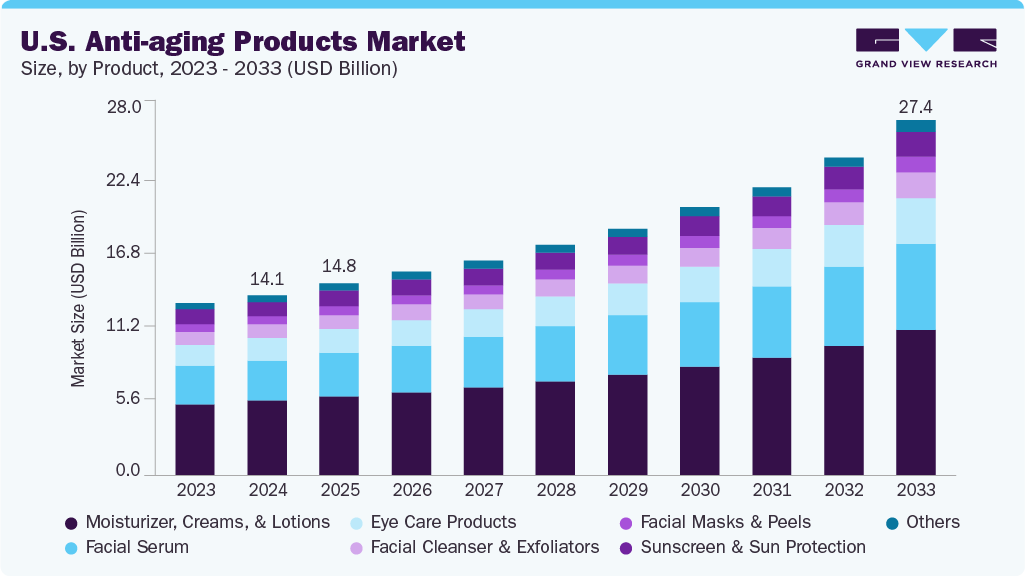
The U.S. anti-aging products market size was estimated at USD 14.05 billion in 2024 and is projected to reach USD 27.44 billion by 2033, growing at a CAGR of 8.0% from 2025 to 2033. The market is driven by an increasing demand for high-performance skincare solutions that offer visible, long-term results. Consumers are particularly focused on products that target fine lines, wrinkles, and skin elasticity, with a growing interest in advanced formulations that combine anti-aging benefits with overall skin health.
There's a strong preference for products that contain potent ingredients such as retinoids, peptides, hyaluronic acid, and antioxidants, which are believed to improve skin texture and promote collagen production. Clean beauty is also a major trend, with many consumers opting for anti-aging products that feature natural, organic, and non-toxic ingredients, as well as sustainable and eco-friendly packaging. According to a survey conducted across the U.S. in 2023, 63% of the respondents seek skin care products with natural ingredients that are good for their skin and the planet.
In addition, the market is also driven by the aging population, increased disposable income, and heightened awareness through social media and influencers. Technological advancements in skincare diagnostics and personalized regimens are also shaping consumer preferences. The rise of men’s grooming and wellness culture is expanding the market demographic. Moreover, easy accessibility through e-commerce platforms is accelerating product adoption nationwide.
Consumer Insights & Surveys
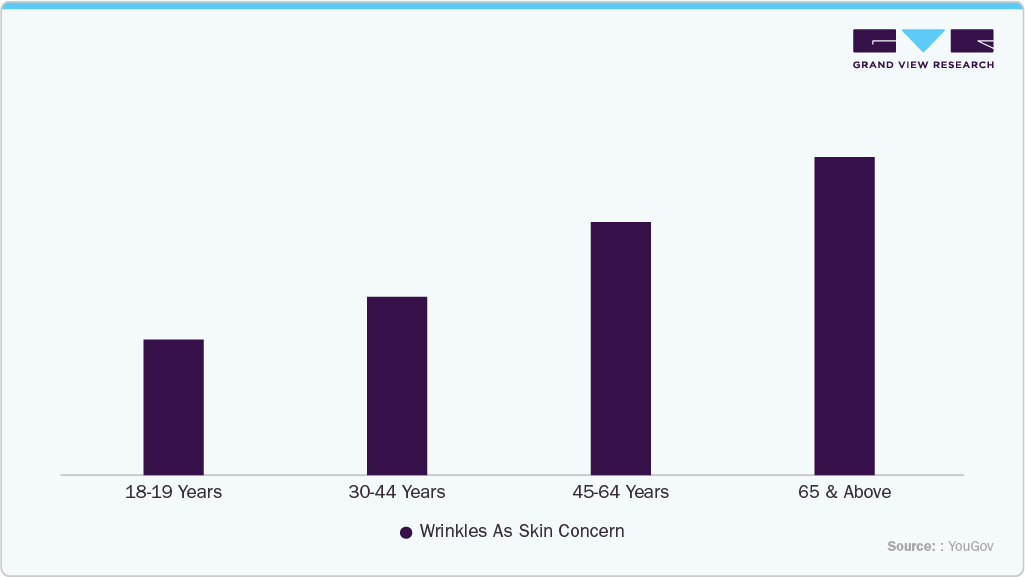
The above data indicates that concerns about wrinkles as a skin issue increase significantly with age. Only 20% of individuals aged 18-29 report wrinkles as a concern, while this rises to 26% in the 30-44 age group. The percentage jumps to 37% among those aged 45-64 and peaks at 47% in the 65 and above category. This trend highlights how aging directly correlates with heightened awareness and concern about visible signs of skin aging.
Product Insights
Moisturizer, creams, & lotions accounted for the largest revenue share of about 41.2% of the U.S. anti-aging products market in 2024. Moisturizers, creams, and lotions play a key role in driving the anti-aging market due to their ease of use and daily application in skincare routines. These products offer hydration, which is essential for maintaining skin suppleness and reducing the appearance of aging signs. According to the American Academy of Dermatology Association (AAD) data, dermatologists agree that moisturizers are an effective anti-aging solution that can noticeably improve skin appearance by diminishing the look of fine lines. An anti-aging moisturizer specifically helps smooth the skin and reduce the visibility of fine lines. Many formulations now include multi-functional benefits, such as SPF protection and skin-repairing ingredients. Their wide availability across price points also makes them accessible to a broad consumer base.
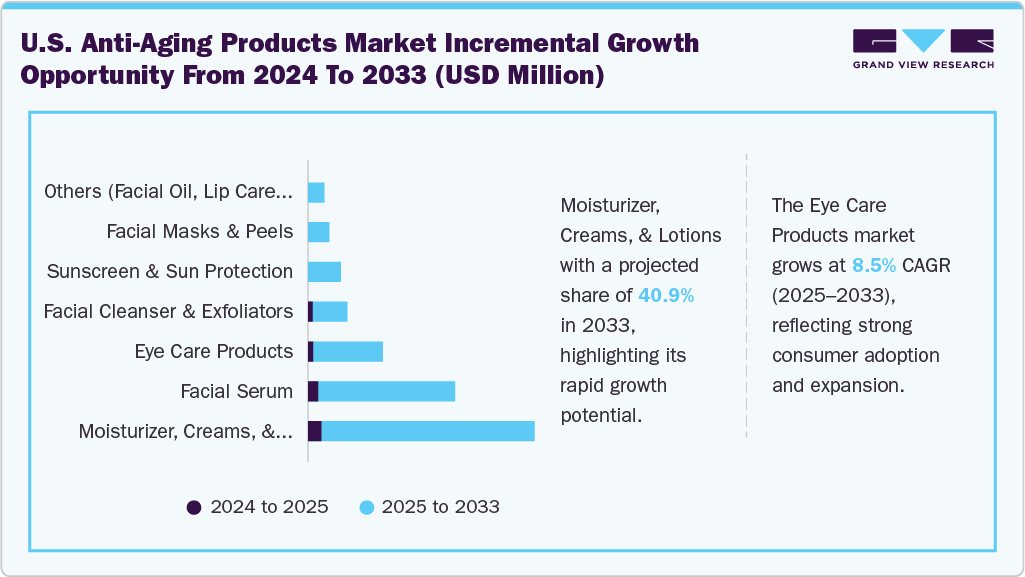
Demand for eye care products is projected to rise at a fastest-growing CAGR of 8.5% from 2025 to 2033. Eye care products are a significant driver in the anti-aging market as the delicate skin around the eyes is often one of the first areas to show signs of aging. These products target issues like puffiness, dark circles, crow’s feet, and sagging skin. Consumers seek specialized formulas that offer gentle yet effective treatment for this sensitive area. Innovations such as cooling applicators and ingredient-rich serums are further boosting their popularity. Companies such as ZO Skin Health, Inc. offer Growth Factor Eye Serum, formulated to improve the look of expression lines, creases, and hollowness. The serum provides a plumping effect and a refreshing sensation delivered by the cooling applicator.
Distribution Channel Insights
Supermarkets & Hypermarkets accounted for the largest revenue share of about 34.0% in 2024. Supermarkets and hypermarkets play a crucial role in driving the anti-aging product market by offering a wide variety of brands and product types under one roof. Their large-scale presence and strategic locations make these products easily accessible to a broad consumer base. According to the Hale Cosmeceuticals Inc. data published in March 2024, about 55% of Americans prefer buying skincare products from physical stores such as supermarkets and hypermarkets. In-store promotions, discounts, and product sampling further encourage impulse purchases. Additionally, the ability to physically evaluate products before buying builds consumer trust and confidence.
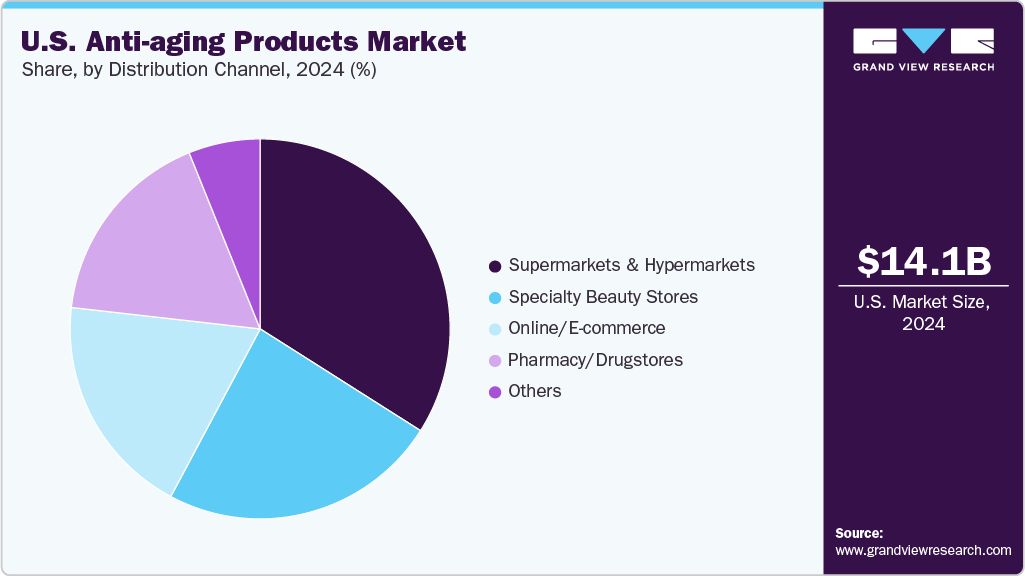
Online/E-commerce is expected to grow at the fastest CAGR of 9.7% from 2025 to 2033. Online and e-commerce platforms are key drivers in the anti-aging product market by providing consumers with convenient, 24/7 access to a vast selection of products. They enable easy comparison of ingredients, prices, and customer reviews, helping buyers make informed decisions. The rise of digital marketing and influencer endorsements also boosts product visibility and credibility. Moreover, personalized recommendations and subscription services enhance customer engagement and loyalty. For instance, according to the data published in February 2025, about 29% of U.S. consumers prefer to purchase personal care & beauty products through online channels. Additionally, the ability to deliver products directly to consumers' doorsteps ensures quick and hassle-free shopping experiences, further fueling market growth.
Key U.S. Anti-aging Products Company Insights
The U.S. anti-aging products industry consists of both established industry leaders and emerging brands. Key players are continuously adapting to changing consumer preferences and advancing skincare technologies to expand their product offerings and strengthen their market share. Innovation in ingredient formulations and personalized solutions remains central to maintaining competitive advantage. This dynamic environment drives ongoing growth and diversification within the market.
-
The Estée Lauder Companies is a prominent leader in the U.S. anti-aging products industry, headquartered in New York, with a comprehensive portfolio of renowned skincare and beauty brands. Operating through divisions such as Estée Lauder, Clinique, and La Mer, the company offers a broad spectrum of anti-aging solutions catering to various skin concerns and demographics. Its product range includes serums, creams, eye care treatments, and advanced formulations featuring cutting-edge ingredients. Estée Lauder’s commitment to innovation, scientific research, and clean beauty principles strengthens its position as a key player in the U.S. anti-aging skincare segment.
-
Johnson & Johnson is a major player in the U.S. anti-aging products industry, known for its extensive expertise in skincare and consumer health. Headquartered in New Brunswick, New Jersey, the company manages a diverse portfolio of trusted brands such as Neutrogena, RoC, and Aveeno, which address various anti-aging concerns, including wrinkles, fine lines, and skin elasticity. Within the anti-aging segment, Neutrogena stands out with its innovative formulations that combine effective ingredients and dermatologist-recommended solutions. Johnson & Johnson’s focus on research-driven products and commitment to skin health innovation reinforce its strong presence in the U.S. anti-aging skincare market.
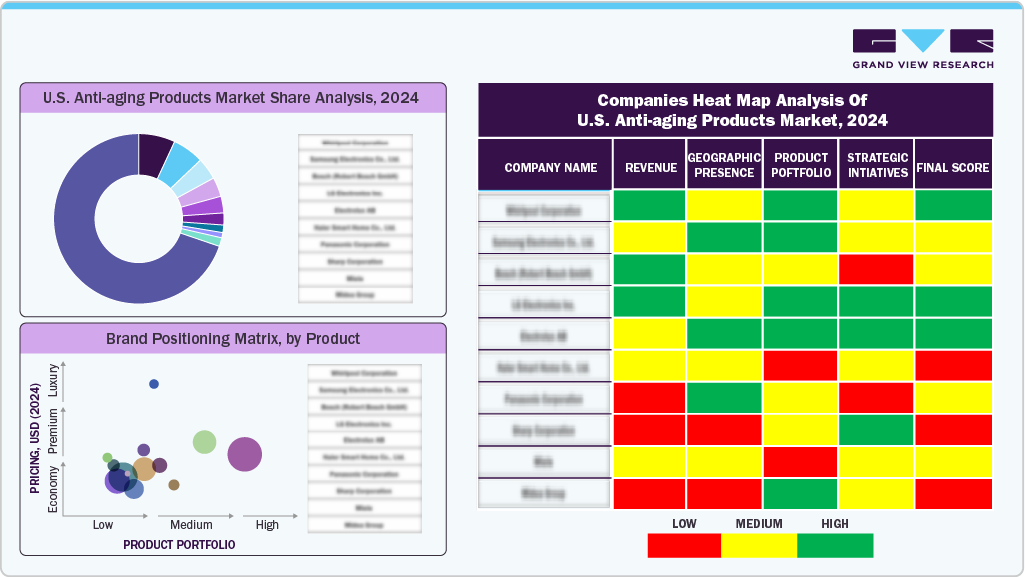
Key U.S. Anti-aging Products Companies:
- Procter & Gamble
- Johnson & Johnson
- Estée Lauder Inc.
- L’Oréal Group.
- Unilever
- Shiseido Company
- Beiersdorf AG.
- PMD Beauty (Age Sciences Inc.)
- ZO Skin Health, Inc.
- Avon Products, Inc.
Recent Developments
-
In February 2025, Eucerin introduced its new Advanced Hydration Face SPF 50, an ultra-lightweight fluid sunscreen that offers broad-spectrum UVA/UVB protection while delivering clinically proven, all-day hydration thanks to its multi-weight hyaluronic acid formula. This extra level of defense supports the prevention of long-term sun damage and helps reduce the appearance of early signs of skin aging.
-
In January 2024, Eucerin introduced the Immersive Hydration Collection, its first facial care range powered by multi-weight hyaluronic acid technology. The formula blends larger molecules for surface hydration with smaller ones that reach deeper layers to visibly reduce fine lines and wrinkles.
U.S. Anti-aging Products Market Report Scope
|
Report Attribute
|
Details
|
|
Market size value in 2025
|
USD 14.80 billion
|
|
Revenue forecast in 2033
|
USD 27.44 billion
|
|
Growth rate
|
CAGR of 8.0% from 2025 to 2033
|
|
Actual data
|
2021 - 2024
|
|
Forecast period
|
2025 - 2033
|
|
Quantitative units
|
Revenue in USD million/billion, and CAGR from 2025 to 2033
|
|
Report coverage
|
Revenue forecast, company ranking, competitive landscape, growth factors, and trends
|
|
Segments covered
|
Product, distribution channel
|
|
Country scope
|
U.S.
|
|
Key companies profiled
|
Procter & Gamble; Johnson & Johnson; Estée Lauder Inc.; L’Oréal Group.; Unilever, Shiseido Company; Beiersdorf AG.; PMD Beauty (Age Sciences Inc.); ZO Skin Health, Inc.; Avon Products, Inc.
|
|
Customization
|
Free report customization (equivalent up to 8 analysts working days) with purchase. Addition or alteration to country, regional & segment scope.
|
|
Pricing and purchase options
|
Avail customized purchase options to meet your exact research needs. Explore purchase options
|
U.S. Anti-aging Products Market Report Segmentation
This report forecasts revenue growth at the country level and provides an analysis of the latest industry trends and opportunities in each of the sub-segments from 2021 to 2033. For this study, Grand View Research has segmented the U.S. anti-aging products market report based on the product, and distribution channel:
-
Product Outlook (Revenue, USD Million, 2021 - 2033)
-
Facial Serum
-
Moisturizer, Creams, & Lotions
-
Eye Care Products
-
Facial Cleanser & Exfoliators
-
Facial Masks & Peels
-
Sunscreen & Sun Protection
-
Others (Facial Oil, Lip Care Products, etc.)
-
Distribution Channel Outlook (Revenue, USD Million, 2021 - 2033)
Frequently Asked Questions About This Report
b. The U.S. anti-aging products market was estimated to be valued at USD 14.05 billion in 2024 and is expected to expand at a CAGR of 8.0% from 2025 to 2033.
b. The U.S. anti-aging products market is expected to expand at a CAGR of 8.0% from 2025 to 2033.
b. Moisturizer, creams, & lotions accounted for the largest share of about 41.2% of the U.S. anti-aging products market in 2024. Moisturizers, creams, and lotions play a key role in driving the anti-aging market due to their ease of use and daily application in skincare routines.
b. Some of the key players operating in the U.S. anti-aging products market are Procter & Gamble, Johnson & Johnson, Estée Lauder Inc., L’Oréal Group., Unilever, Shiseido Company, Beiersdorf AG, PMD Beauty (Age Sciences Inc.), ZO Skin Health, Inc., and Avon Products, Inc.
b. The U.S. anti-aging products market is driven by an increasing demand for high-performance skincare solutions that offer visible, long-term results. Consumers are particularly focused on products that target fine lines, wrinkles, and skin elasticity, with a growing interest in advanced formulations that combine anti-aging benefits with overall skin health.

 Download Sample Report














