UK Anti-aging Products Market Summary
The UK anti-aging products market size was estimated at USD 3.57 billion in 2024 and is expected to reach USD 6.41 billion by 2033, growing at a CAGR of 7.1% from 2025 to 2033. The industry is propelled by rising consumer awareness of preventive skincare and a growing preference for science-backed, dermatologically tested solutions. Consumers are increasingly drawn to clean beauty products with natural ingredients, minimal additives, and sustainable credentials.
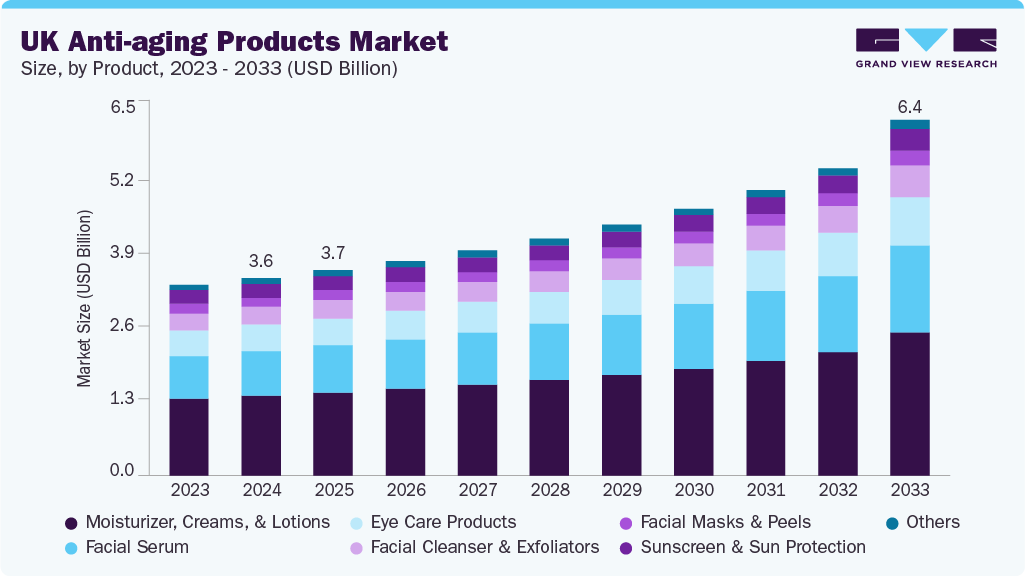
Additionally, the aging population and a strong culture of skincare maintenance are encouraging long-term product use, particularly among middle-aged and older demographics seeking gentle yet effective routines.
Digital influence is playing a crucial role in shaping consumer behavior in the market, with online reviews, influencer endorsements, and social media tutorials guiding purchase decisions. According to the data published in May 2025, about 42% of the consumers in the U.K. have made purchases based on creator recommendations.
In addition, the rise of e-commerce and subscription-based skincare services is making it easier for consumers to discover and consistently use anti-aging products. Men’s grooming and skincare are also contributing to market growth, as more men adopt age-specific products. For instance, according to the YouGov data published in February 2025, about 24% of men use skincare products to prevent their skin from aging. Furthermore, innovations in delivery systems such as serums, ampoules, and microneedling-compatible formulas are gaining popularity for their perceived effectiveness and ease of use.
Consumer Insights & Surveys
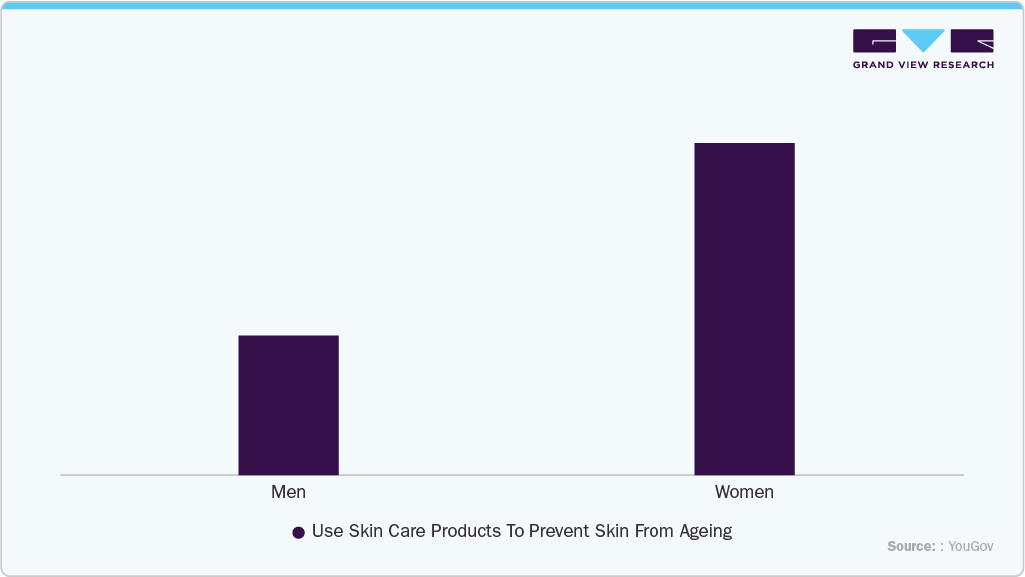
In the UK, 59% of women and 25% of men actively use skincare products to prevent signs of aging, reflecting a strong gender-based interest in maintaining youthful skin. This indicates a well-established routine among women and a growing acceptance among men of targeted skincare. The increasing use among male consumers highlights shifting grooming norms and expanding market potential. Brands are responding with gender-inclusive and male-specific formulations to cater to this evolving demand.
Product Insights
Moisturizer, creams, & lotions accounted for the largest share of about 40.5% of the market in 2024. Moisturizers, creams, and lotions are gaining traction due to their accessibility, ease of use, and ability to seamlessly integrate into daily skincare routines. Consumers are prioritizing products that deliver hydration while supporting skin barrier repair and collagen maintenance. The demand for multifunctional formulations, combining SPF, antioxidants, and anti-wrinkle properties, is also driving category growth. Additionally, the preference for gentle, fragrance-free options among sensitive-skin users is influencing product development and innovation. Companies such as Sebapharma (SebaMed) offer an anti-aging skin care product line including Wrinkle Filler, Lifting Eye Cream, Q10 Protection Cream, and Q10 Firming Body Lotion. The product range is formulated with Coenzyme Q10 and Hyaluronic Acid and is clinically proven to minimize the appearance of wrinkles and enhance skin smoothness.
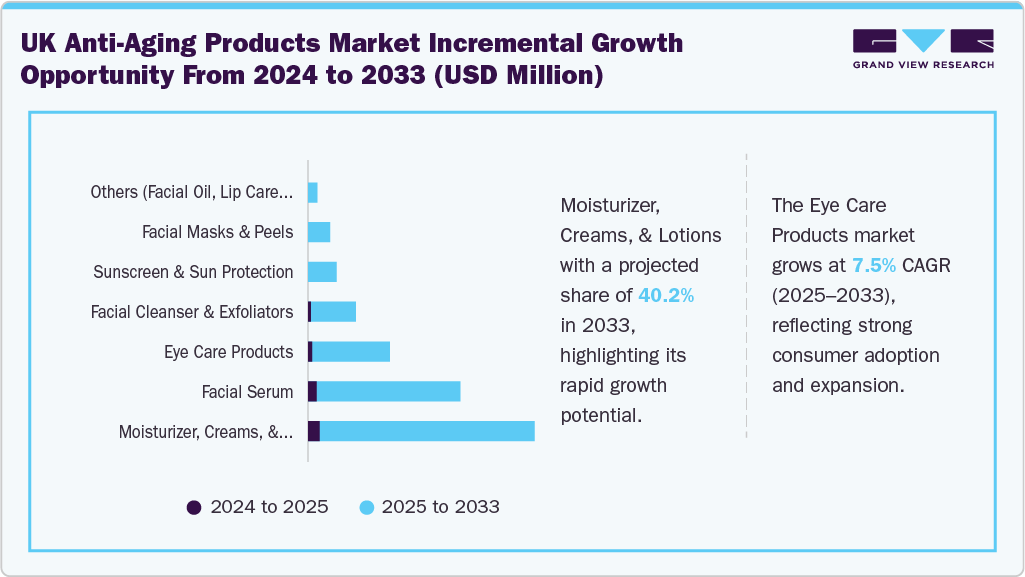
Demand for eye care products is projected to rise at a CAGR of 7.5% from 2025 to 2033. Eye care products are seeing increased demand in the U.K. anti-aging market as consumers seek targeted solutions for concerns such as dark circles, puffiness, and crow’s feet. The delicate nature of the under-eye area has led to growing interest in specialized, lightweight formulas designed for sensitive skin. Innovations such as peptide-infused gels, cooling applicators, and fast-absorbing serums are attracting attention for their visible results. Additionally, rising screen time and lifestyle-related fatigue have amplified the need for rejuvenating eye treatments. Companies such as Procter & Gamble offer eye care products through their brand Olay. The brand offers eye cream serum known for reducing the appearance of fine lines and wrinkles. It also delivers hydration to lift the eye contour, featuring a fragrance-free formula enriched with Amino-Peptide Complex. The Olay brand also offers night eye cream enriched with retinol for younger-looking skin.
Distribution Channel Insights
Supermarkets & hypermarkets accounted for the largest revenue share of about 34.0% in 2024. In the U.K. anti-aging industry, supermarkets and hypermarkets remain popular due to their wide product assortment and frequent promotional offers that attract value-conscious shoppers. Their convenient locations and extended hours make it easy for consumers to pick up skincare essentials during regular grocery trips. These retailers also cater to impulse purchases through strategic product placement and seasonal displays. According to the data published in May 2025, about 77% of U.K. consumers are turning to store brands as they offer discounts, resulting in lower prices. Supermarkets such as Tesco and Aldi offer products at an affordable price without compromising on quality. Additionally, the growing presence of private-label and well-known anti-aging brands on their shelves enhances accessibility and consumer trust.
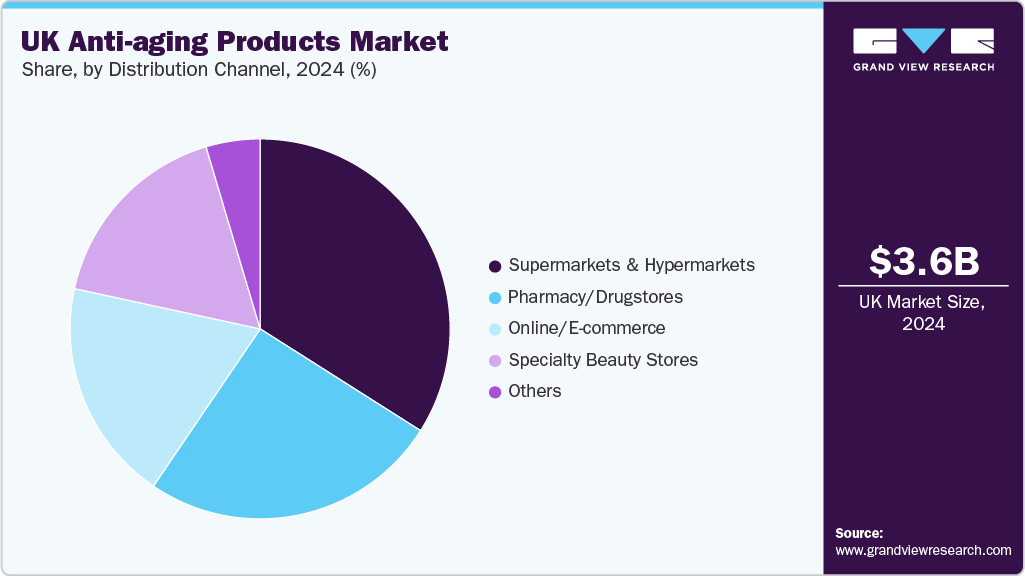
The online/e-commerce segment is expected to grow at the fastest CAGR of 8.7% from 2025 to 2033. The online and e-commerce channels are thriving due to the convenience of home delivery and access to a broader range of niche and premium brands. Consumers benefit from detailed product information, reviews, and virtual consultations, which aid in informed purchasing decisions. For instance, according to the data published in May 2025, about 41% of the consumers in the U.K. are influenced by reviews and ratings on trusted retail platforms. Flash sales, subscription models, and personalized skincare recommendations are further enhancing customer engagement. Additionally, the rise of mobile shopping apps and influencer-driven campaigns is fueling digital purchases in the anti-aging products industry.
Key UK Anti-aging Products Company Insights
Key players operating in the UK anti-aging products market are undertaking various initiatives to strengthen their presence and increase the reach of their products and services. Strategies such as expansion activities and partnerships are key in propelling the market growth.
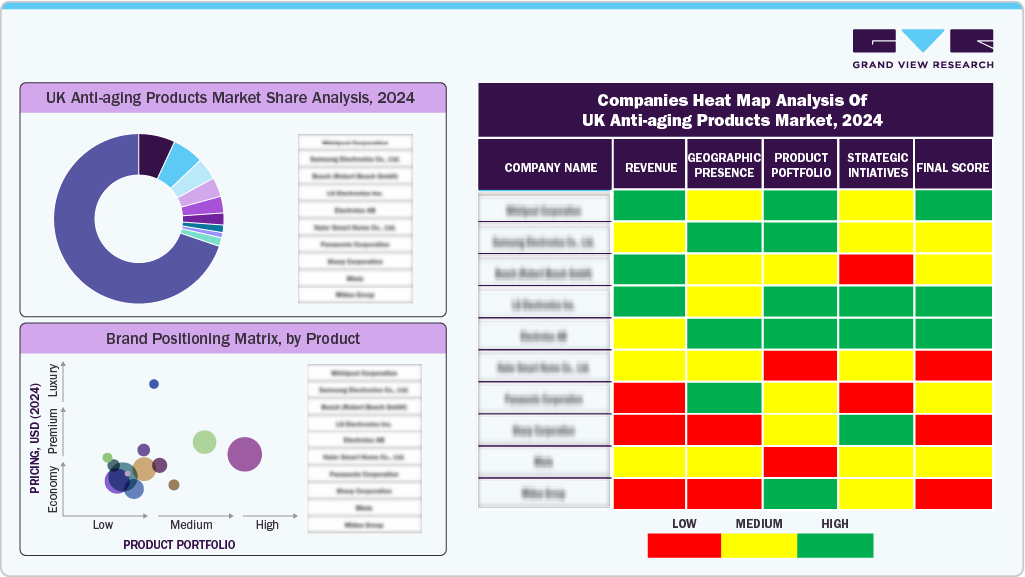
Key UK Anti-aging Products Companies:
- Estée Lauder Inc.
- L'Oréal Group
- Procter & Gamble
- Unilever
- Coty Inc.
- DECIEM Beauty Group Inc.
- Elemis
- ARK Skincare
- Tropic Skincare
- TEMPLESPA
Recent Developments
-
In July 2025, British beauty brand Trinny London introduced Take Back Time Elixir, a product created to rejuvenate tired skin by providing intense hydration, enhancing radiance, and boosting vitality. This new anti-aging formula deeply moisturizes, addresses vascular aging, and helps to strengthen the skin’s protective barrier.
-
In April 2025, The Boots Company PLC launched a new anti-aging night serum in the U.K. as part of its Future Renew line. Formulated with peptides and clinically proven to improve visible signs of skin damage, it promotes plumper, fresher, and smoother-looking skin.
-
In June 2023, Actress Scarlett Johansson launched her skincare brand, The Outset, in the UK through Cult Beauty, an online retailer specializing in cosmetics. The brand stands out in the anti-aging space for its use of the Hyaluroset complex, a plant-based alternative to hyaluronic acid.
UK Anti-Aging Products Market Report Scope
|
Report Attribute
|
Details
|
|
Market size value in 2025
|
USD 3.70 billion
|
|
Revenue forecast in 2033
|
USD 6.41 billion
|
|
Growth rate
|
CAGR of 7.1% from 2025 to 2033
|
|
Actuals
|
2021 - 2024
|
|
Forecast period
|
2025 - 2033
|
|
Quantitative units
|
Revenue in USD million/billion, and CAGR from 2025 to 2033
|
|
Report coverage
|
Revenue forecast, company ranking, competitive landscape, growth factors, and trends
|
|
Segments covered
|
Product, distribution channel
|
|
Country scope
|
UK
|
|
Key companies profiled
|
Estée Lauder Inc.; L'Oréal Group; Procter & Gamble; Unilever; Coty Inc.; DECIEM Beauty Group Inc.; Elemis; ARK Skincare; Tropic Skincare; TEMPLESPA
|
|
Customization
|
Free report customization (equivalent up to 8 analysts working days) with purchase. Addition or alteration to country, regional & segment scope.
|
|
Pricing and purchase options
|
Avail customized purchase options to meet your exact research needs. Explore purchase options
|
UK Anti-Aging Products Market Report Segmentation
This report forecasts revenue growth at the country level and provides an analysis of the latest industry trends and opportunities in each of the sub-segments from 2021 to 2033. For this study, Grand View Research has segmented the UK anti-aging products market report based on product and distribution channel.
-
Product Outlook (Revenue, USD Million, 2021 - 2033)
-
Facial Serum
-
Moisturizer, Creams, & Lotions
-
Eye Care Products
-
Facial Cleanser & Exfoliators
-
Facial Masks & Peels
-
Sunscreen & Sun Protection
-
Others (Facial Oil, Lip Care Products, etc.)
-
Distribution Channel Outlook (Revenue, USD Million, 2021 - 2033)
Frequently Asked Questions About This Report
b. The UK anti-aging products market size was estimated at USD 3.57 billion in 2024 and is expected to reach USD 3.70 billion in 2025.
b. The UK anti-aging products market is expected to grow at a compound annual growth rate (CAGR) of 7.1 % from 2025 to 2033 to reach USD 6.41 billion by 2033.
b. Moisturizer, creams, & lotions accounted for a revenue share of 40.5% in 2024, driven by a beauty-conscious aging demographic, premium product demand, and widespread access to dermatological innovations.
b. Some key players operating in the UK anti-aging products market include Estée Lauder Inc., L'Oréal Group, Procter & Gamble, Unilever, Coty Inc., DECIEM Beauty Group Inc., and Elemis
b. Key factors driving growth in the UK anti-aging products market include a mature and beauty-conscious population, strong presence of premium skincare brands, and increasing demand for personalized and clinically proven solutions. Technological advancements, influencer-driven marketing, and rising interest in sustainable and clean beauty products further boost the sector

 Download Sample Report














