- Home
- »
- Clothing, Footwear & Accessories
- »
-
Sports Equipment Market Size, Share, Industry Report, 2033GVR Report cover
![Sports Equipment Market Size, Share & Trends Report]()
Sports Equipment Market (2026 - 2033) Size, Share & Trends Analysis Report By Product (Ball Over Net Games, Ball Games, Fitness/strength Equipment), By Distribution Channel (Online Retail, Specialty & Sports Shops, Department & Discount Stores), By Region, And Segment Forecasts
- Report ID: GVR-2-68038-407-9
- Number of Report Pages: 85
- Format: PDF
- Historical Range: 2021 - 2025
- Forecast Period: 2026 - 2033
- Industry: Consumer Goods
- Report Summary
- Table of Contents
- Interactive Charts
- Methodology
- Download FREE Sample
-
 Download Sample Report
Sports Equipment Market Summary
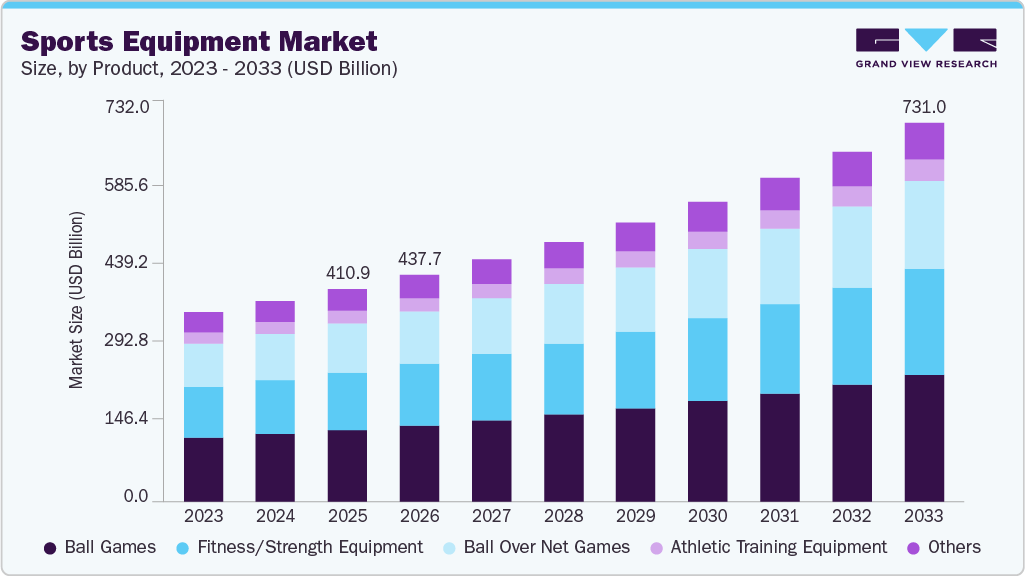
The global sports equipment market size was estimated at USD 410.95 billion in 2025 and is expected to reach USD 731.02 billion by 2033, growing at a CAGR of 7.6% from 2026 to 2033. Continuous innovations and rapid technological advancements to keep pace with dynamic consumer preferences are driving the growth of the market.
Key Market Trends & Insights
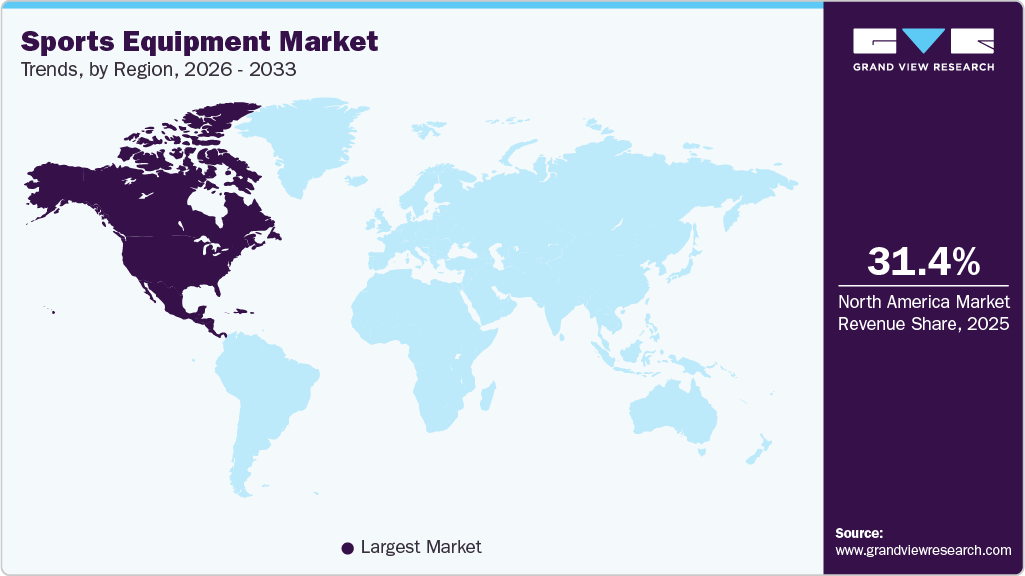
- By region, North America led the market with a share of 31.4% in 2025.
- By product, ball games led the market and accounted for a share of 33.8% in 2025.
- By distribution channel, specialty stores led the market and accounted for a share of 44.8% in 2025.
Market Size & Forecast
- 2025 Market Size: USD 410.95 Billion
- 2033 Projected Market Size: USD 731.02 Billion
- CAGR (2026-2033): 7.6%
- North America: Largest market in 2025
The increasing awareness about the benefits of a healthy lifestyle and the importance of sports and fitness activities is further stimulating the demand for such equipment.Individuals are placing greater emphasis on maintaining active routines that support physical health, mental well-being, and long-term lifestyle goals. As a result, demand has expanded across a broad spectrum of sports equipment, including fitness gear, training accessories, outdoor sports products, and performance footwear, reflecting a shift from event-driven purchases to regular, routine-based consumption.
A notable trend influencing the market is the continued rise of athleisure, which blends athletic functionality with everyday wearability. Consumers increasingly prefer sports apparel and footwear that can transition seamlessly from workout settings to casual and social environments. This shift is particularly evident among younger demographics and urban consumers, who view sportswear as an extension of personal style and wellness identity. The normalization of flexible work environments and active commuting has further reinforced the demand for versatile athletic apparel, footwear, and accessories that prioritize comfort, durability, and aesthetic appeal.
The demand for fitness equipment has strengthened as consumers adopt more consistent and personalized fitness routines. Home-based workouts, hybrid training models, and outdoor exercise activities have driven interest in equipment such as resistance bands, free weights, yoga and Pilates accessories, cardio equipment, and wearable-compatible training tools. Fitness equipment is increasingly viewed as a long-term investment in health rather than a discretionary purchase, particularly as consumers seek greater control over their exercise schedules and environments.
The UK Fitness Report indicates that approximately 48% of the adult population engages in regular exercise, reflecting a modest year-on-year increase and signaling a sustained rise in fitness participation. This suggests that nearly half of the population has integrated physical activity into their routine, pointing to broader health and lifestyle prioritization. Younger adults, particularly those aged 18 to 24, are most engaged in exercise, with 63% of this cohort reporting regular physical activity, the highest participation rate among age groups. This highlights a strong generational shift toward prioritising physical fitness as part of everyday life.
The expansion of sports tourism and activity-based travel has further amplified demand for sports and fitness equipment. Travelers are increasingly selecting destinations that enable participation in physical activities such as running events, cycling tours, golf, hiking, water sports, and adventure sports. This has led to higher equipment purchases both prior to travel and at destinations, as participants require sport-specific gear to engage safely and effectively. Sports tourism thus reinforces equipment demand not only among professional athletes but also among amateur participants and recreational enthusiasts. Participation in marathons, community leagues, recreational tournaments, and fitness challenges has encouraged consistent equipment replacement cycles, particularly for footwear, protective gear, and training accessories. The influence of athletes, trainers, and fitness communities amplified through digital platforms has further shaped consumer purchasing decisions, with greater attention to product performance, injury prevention, and durability.
Fitness retreats, training camps, endurance events, and adventure-focused travel packages increasingly incorporate structured physical activities into leisure travel. These formats appeal to consumers seeking holistic experiences that combine fitness, relaxation, and exploration. As a result, equipment aligned with endurance sports, functional training, and outdoor activities continues to gain traction.
Key Brand Market Share Insights
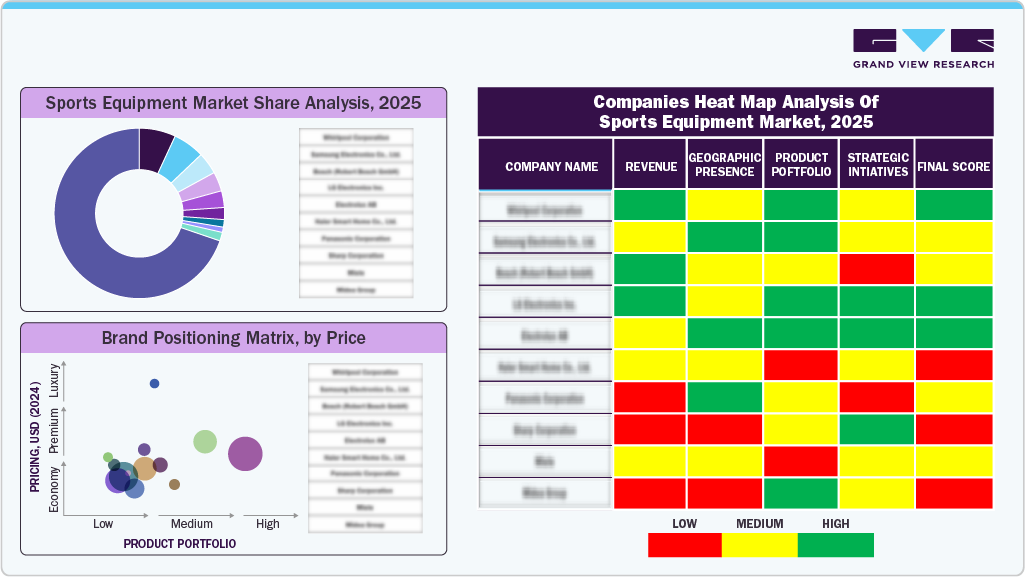
The presence of a few established players and new entrants characterizes the market. Many big players are increasing their focus on the growing trend of the sports equipment market. Players in the market are diversifying their service offerings in order to maintain market share.
Product Insights
Sports equipment for ball games dominated the sports equipment products market with a share of 33.8% in 2025. Growing awareness of physical fitness, rising interest in community and school-level sports programs, and the popularity of professional leagues are encouraging higher engagement in sports such as football, basketball, cricket, tennis, and volleyball. In parallel, consumers are showing a greater willingness to invest in higher-quality and performance-enhancing equipment, driven by improved product design, durability, and safety standards. The expansion of sports infrastructure, training academies, and amateur leagues is further supporting sustained growth in demand for ball-game sports equipment.
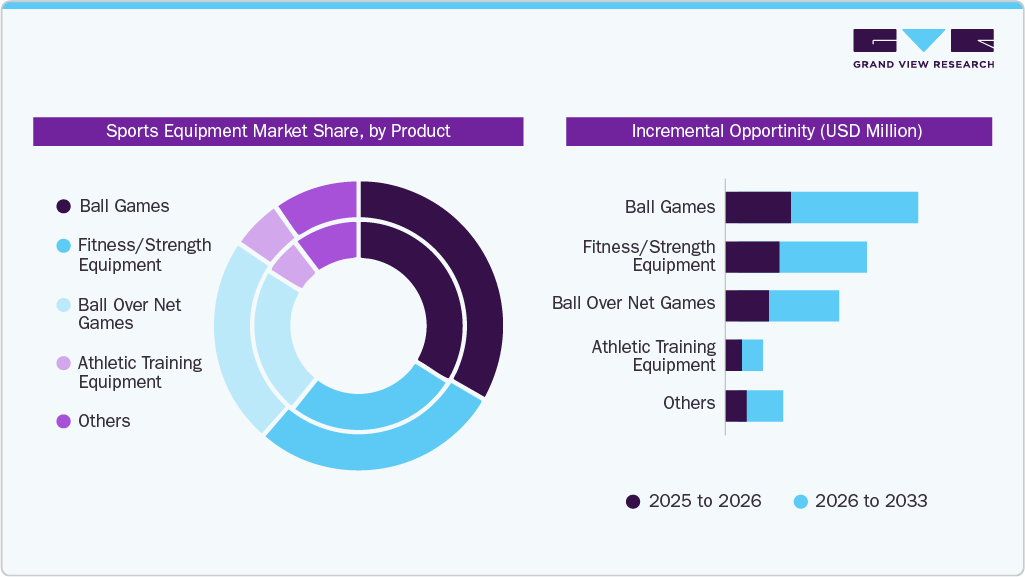
Sports equipment for fitness/strength equipment is predicted to have a CAGR of 8.1% from 2026 to 2033. Growing awareness of the long-term benefits of regular exercise, combined with busy lifestyles, is encouraging individuals to invest in home-based and flexible fitness solutions. Strength training, in particular, is gaining popularity across age groups due to its proven role in improving mobility, metabolism, and overall functional health. The availability of compact, user-friendly equipment and the influence of digital fitness content and training programs are further supporting adoption, driving sustained growth in the fitness and strength equipment segment.
Distribution Channel Insights
Sales of sports equipment through specialty & sports shops accounted for a share of 44.8% in 2025. Specialty retailers offer knowledgeable staff, sport-specific product assortments, and personalized fitting or customization services that are difficult to replicate through mass-market or online channels. As participation in fitness, recreational sports, and organized training rises, customers are seeking high-performance and technically advanced equipment, which is more effectively marketed and explained in specialist stores. In addition, these outlets often serve as community hubs for sports enthusiasts by hosting events, training sessions, and brand demonstrations, strengthening customer loyalty and driving repeat purchases.
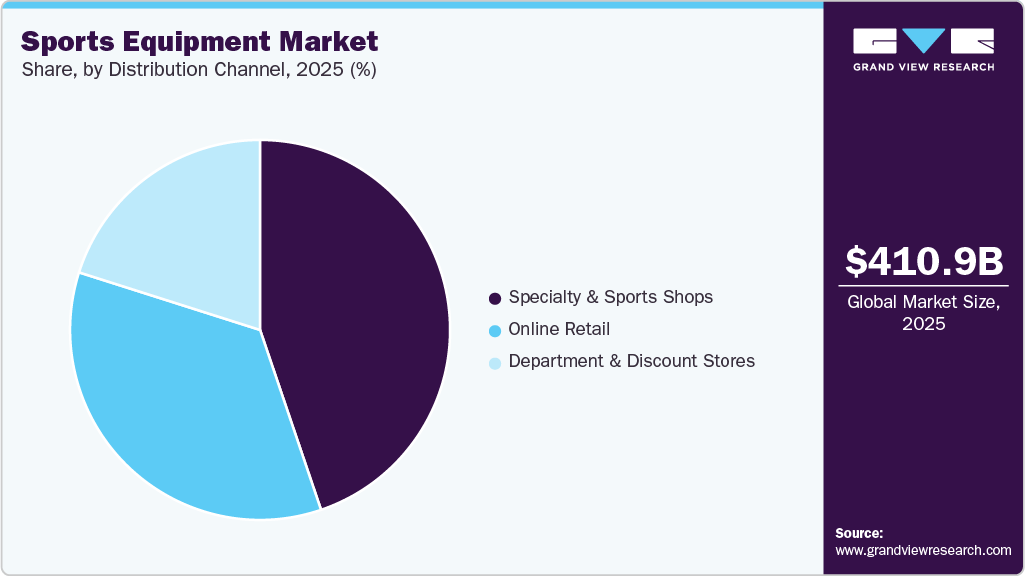
Sales of sports equipment through the online retail channel are expected to grow at a CAGR of 8.5% from 2026 to 2033. Online platforms allow buyers to compare brands, features, and prices easily, access detailed product information and reviews, and purchase specialized or niche equipment that may not be readily available in physical stores. The growth of home fitness, recreational sports, and personalized training routines has further supported online demand, as consumers seek direct-to-door delivery and flexible purchasing options. Moreover, improved logistics, faster delivery times, and attractive digital promotions have strengthened consumer confidence in buying sports equipment online, contributing to sustained growth in this channel.
Regional Insights
North America Sports Equipment Market Trends
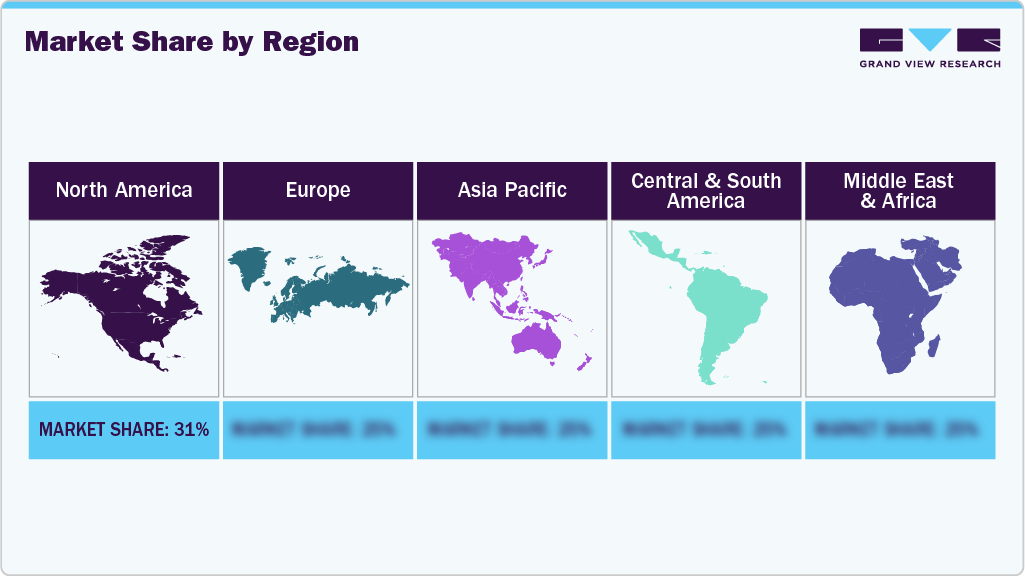
The North American sports equipment market accounted for a share of 31.4% in 2025. The sports equipment market in North America is increasing due to rising health awareness, growing participation in recreational and organized sports, and a strong cultural emphasis on active lifestyles. Consumers across age groups are increasingly investing in fitness and sports activities to support physical well-being, driven by concerns around obesity, chronic disease prevention, and mental health. This trend is further supported by the expansion of school, collegiate, and community sports programs, as well as increased interest in home fitness and outdoor activities.
U.S. Sports Equipment Market Trends
The sports equipment market in the U.S. is expanding as consumers place greater emphasis on health, fitness, and active lifestyles across all age groups. Rising awareness of physical and mental well-being, combined with higher participation in organized sports, recreational activities, and at-home fitness routines, is driving sustained demand for sports gear and accessories. Schools, community programs, and professional leagues continue to promote sports participation, while the popularity of outdoor and individual fitness activities has broadened the consumer base beyond traditional athletes.
Europe Sports Equipment Market Trends
The European sports equipment market is expected to grow at a CAGR of 7.6% from 2026 to 2033. Consumers across Europe are placing greater emphasis on physical well-being, preventive healthcare, and regular exercise, which is driving sustained demand for equipment used in sports, fitness training, and outdoor activities. Growth in organized and informal sports participation, alongside the popularity of home fitness and outdoor pursuits, has further strengthened equipment sales. In addition, innovation in product design, materials, and performance technology combined with expanding e-commerce access has improved product availability and affordability, supporting continued market growth across the region.
Asia Pacific Sports Equipment Market Trends
Asia Pacific sports equipment market is expected to grow at a CAGR of 8.4% from 2026 to 2033. The sports equipment market in the Asia Pacific region is increasing due to rising health awareness, expanding middle-class populations, and growing participation in both organized and recreational sports. Governments across the region are actively promoting physical fitness through school sports programs, public infrastructure development, and national wellness campaigns, which is encouraging broader sports adoption. At the same time, rapid urbanization and higher disposable incomes are enabling consumers to spend more on quality sports gear and fitness equipment. The growing influence of international sporting events, professional leagues, and digital fitness content is also shaping consumer interest in modern, performance-oriented sports equipment, supporting sustained market growth across the region.
Key Sport Equipment Companies:
The following key companies have been profiled for this study on the sport equipment market.
- Adidas AG
- Amer Sports
- Callaway Golf Co.
- Sumitomo Rubber Industries Limited
- Nike, Inc.
- Puma SE
- Mizuno Corporation
- Sports Direct International PLC
- Under Armour
- Yonex Co., Ltd
Recent Developments
-
In May 2025, DICK'S Sporting Goods acquired Foot Locker in a $2.4 billion deal to create a global leader in sports retail, combining over 3,200 DICK'S locations with Foot Locker’s roughly 2,400 stores across 20 countries and $8 billion in 2024 sales, while keeping Foot Locker as a standalone business unit and maintaining its portfolio of brands such as Foot Locker, Kids Foot Locker, Champs Sports, WSS, and atmos.
-
In April 2024, WHP Global signed a long-term license granting Agilitas Sports exclusive rights to design, manufacture, market, and distribute Italian sports brand Lotto in India, Australia, and later South Africa, starting with a multi-category launch by early 2025. Agilitas is expected to leverage its acquisition of leading Indian footwear manufacturer Mochiko, invest heavily in manufacturing, R&D, design, marketing, and distribution, and use channels such as D2C, brand stores, shop-in-shops, and marketplaces to rapidly scale Lotto while building strong consumer engagement, athlete partnerships, and grassroots programs.
Sports Equipment Market Report Scope
Report Attribute
Details
Market size value in 2026
USD 437.74 billion
Revenue forecast in 2033
USD 731.02 billion
Growth rate
CAGR of 7.6% from 2026 to 2033
Base year for estimation
2025
Historical data
2021 - 2025
Forecast period
2026 - 2033
Quantitative units
Revenue in USD Million/Billion, and CAGR from 2026 to 2033
Report coverage
Revenue forecast, company ranking, competitive landscape, growth factors, and trends
Segments covered
Product, distribution channel and region
Regional scope
North America; Europe; Asia Pacific; Central & South America; Middle East & Africa
Country scope
U.S.; Canada; Mexico; UK; Germany; France; Italy; Spain; China; India; Japan; South Korea; Australia & New Zealand; Brazil; South Africa
Key companies profiled
Adidas AG; Amer Sports; Callaway Golf Co.; Sumitomo Rubber Industries Limited; Nike, Inc.; Puma SE; Mizuno Corporation; Sports Direct International PLC; Under Armour; Yonex Co., Ltd.
Customization scope
Free report customization (equivalent up to 8 analysts working days) with purchase. Addition or alteration to country, regional & segment scope.
Pricing and purchase options
Avail customized purchase options to meet your exact research needs. Explore purchase options
Global Sports Equipment Market Report Segmentation
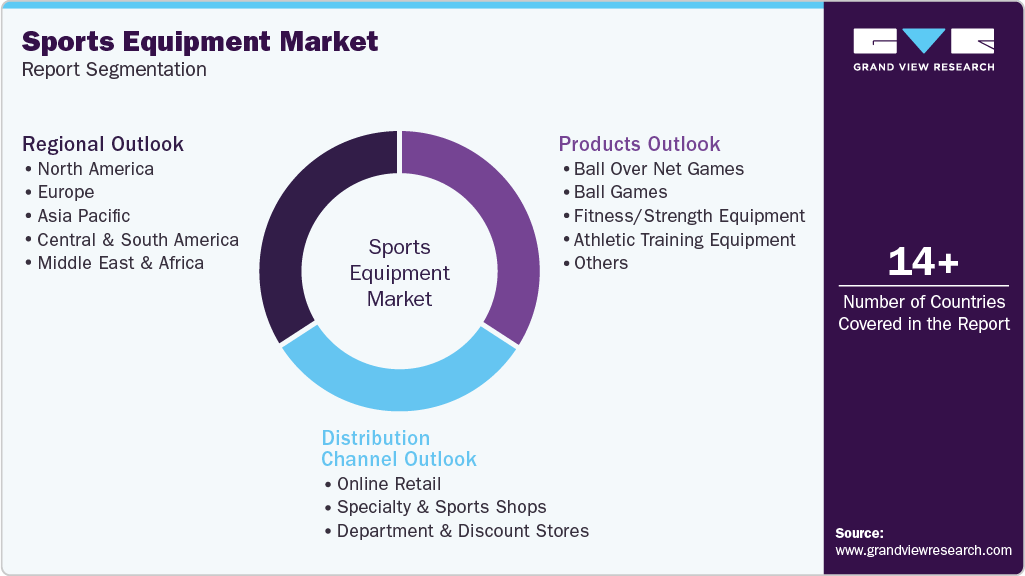
This report forecasts revenue growth at global, regional & country levels and provides an analysis on the latest trends and opportunities in each of the sub-segments from 2021 to 2033. For this study, Grand View Research has segmented the sports equipment market based on products, distribution channels, and region:
-
Products Outlook (Revenue, USD Billion, 2021 - 2033)
-
Ball over net games
-
Ball games
-
Fitness/Strength equipment
-
Athletic training equipment
-
Others
-
-
Distribution Channel Outlook (Revenue, USD Billion, 2021 - 2033)
-
Online retail
-
Specialty & sports shops
-
Department & discount stores
-
-
Regional Outlook (Revenue, USD Billion, 2021 - 2033)
-
North America
-
U.S.
-
Canada
-
Mexico
-
-
Europe
-
UK
-
Germany
-
France
-
Italy
-
Spain
-
-
Asia Pacific
-
China
-
India
-
Japan
-
Australia & New Zealand
-
South Korea
-
-
Central & South America
-
Brazil
-
-
Middle East & Africa (MEA)
-
South Africa
-
-
Frequently Asked Questions About This Report
b. Key factors that are driving the sports equipment market growth include the rising awareness regarding general health & fitness and the rising popularity of casual and athletic designs in sports equipment.
b. The global sports equipment market size was estimated at USD 410.95 billion in 2025 and is expected to reach USD 434.74 billion in 2026.
b. Sports equipment for ball games dominated the sports equipment products market with a share of 33.8% in 2025. Growing awareness of physical fitness, rising interest in community and school-level sports programs, and the popularity of professional leagues are encouraging higher engagement in sports such as football, basketball, cricket, tennis, and volleyball.
b. Some of the prominent companies operating in the sports equipment market are Adidas AG; Amer Sports; Callaway Golf Co.; Sumitomo Rubber Industries Limited; Nike, Inc.; Puma SE; Mizuno Corporation; Sports Direct International PLC; Under Armour; Yonex Co., Ltd.
b. The global sports equipment market is expected to grow at a compound annual growth rate of 7.6% from 2026 to 2033 to reach USD 731.02 billion by 2033.


Share this report with your colleague or friend.
Need a Tailored Report?
Customize this report to your needs — add regions, segments, or data points, with 20% free customization.


ISO 9001:2015 & 27001:2022 Certified
We are GDPR and CCPA compliant! Your transaction & personal information is safe and secure. For more details, please read our privacy policy.
Trusted market insights - try a free sample
See how our reports are structured and why industry leaders rely on Grand View Research. Get a free sample or ask us to tailor this report to your needs.