
- Home
- »
- Medical Devices
- »
-
Sequential Compression System Market Size Report, 2033GVR Report cover
![Sequential Compression System Market Size, Share & Trends Report]()
Sequential Compression System Market (2026 - 2033) Size, Share & Trends Analysis Report By Product (Compression Systems, Consumables & Accessories), By Technology (ASC, SSC), By Application, By End Use, By Region, And Segment Forecasts
- Report ID: GVR-4-68040-851-1
- Number of Report Pages: 120
- Format: PDF
- Historical Range: 2021 - 2024
- Forecast Period: 2026 - 2033
- Industry: Healthcare
- Report Summary
- Table of Contents
- Segmentation
- Methodology
- Download FREE Sample
-
 Download Sample Report
Sequential Compression System Market Summary
The global sequential compression system market size was valued at USD 1.27 billion in 2025 and is projected to reach USD 2.47 billion by 2033, growing at a CAGR of 8.34% from 2026 to 2033. The industry is primarily driven by the rising incidence of venous thromboembolism (VTE), deep vein thrombosis (DVT), and other circulatory disorders, particularly among aging, obese, and post-surgical patient populations.
Key Market Trends & Insights
- North America dominated the sequential compression system market with the largest revenue share of 38.0% in 2025.
- The sequential compression system market in the U.S. accounted for the largest market revenue share in North America in 2025.
- By product, the consumables & accessories segment led the market with the largest revenue share in 2025.
- By technology, the simultaneous sequential compression (SSC) segment led the market with the largest revenue share in 2025.
- By application, the deep vein thrombosis (DVT) prevention segment led the market with the largest revenue share in 2025.
Market Size & Forecast
- 2025 Market Size: USD 1.27 Billion
- 2033 Projected Market Size: USD 2.47 Billion
- CAGR (2026-2033): 8.34%
- North America: Largest market in 2025
Increasing awareness of the clinical benefits of non-invasive mechanical prophylaxis, along with strong recommendations for DVT prevention in perioperative and critical-care guidelines, is accelerating adoption. In addition, the growing shift toward outpatient procedures and home-based care is boosting demand for portable, user-friendly sequential compression devices. Continuous technological advancements, such as lightweight designs, automated pressure control, and wearable systems, are further improving patient compliance and clinical outcomes, thereby supporting sustained market growth.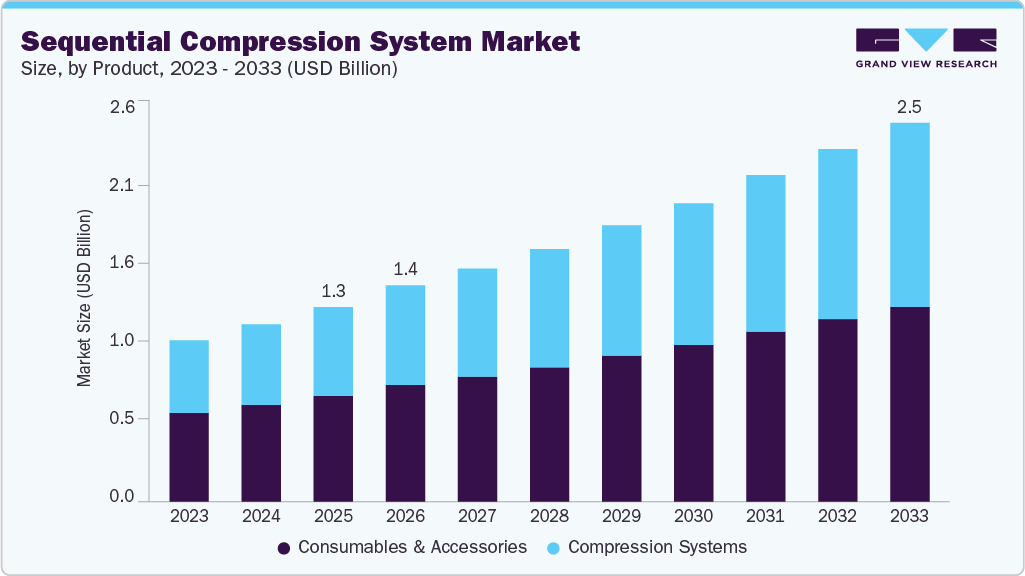
Growth in surgical procedures is a key driver of the industry, as higher surgical volumes directly increase the risk of postoperative venous thromboembolism (VTE) and the need for preventive interventions. Orthopedic surgeries, in particular, represent a major demand driver due to prolonged operative time and reduced mobility during recovery. According to the American College of Rheumatology in March 2025, approximately 790,000 total knee replacements and 544,000 total hip replacements are performed annually in the U.S., procedures for which sequential compression systems are widely recommended as standard mechanical prophylaxis to prevent deep vein thrombosis (DVT). This elevated risk is further highlighted by the U.S. Centers for Disease Control and Prevention (CDC), which estimates that up to 900,000 people in the U.S. are affected by VTE each year, with a significant proportion linked to hospitalization or surgery. As surgical volumes continue to rise, especially in high-risk orthopedic procedures, demand for sequential compression systems is expected to grow steadily, supporting sustained market expansion.
Clinical guidelines and prophylaxis recommendations play a significant role in driving the sequential compression system market by establishing evidence-based practices that encourage the use of mechanical methods, such as intermittent pneumatic compression (IPC) devices, to prevent venous thromboembolism (VTE) in high-risk patients. Leading guidelines from hematology and surgical societies recommend mechanical compression for patients who are at increased risk of VTE but have contraindications to pharmacological prophylaxis (such as high bleeding risk), and also support the use of IPC devices, often in combination with pharmacological agents, for surgical patients to reduce DVT incidence, particularly after major operations like orthopedic procedures. Mechanical prophylaxis is frequently preferred over no prophylaxis when anticoagulants are not suitable, and IPC devices are preferred over graduated compression stockings in many perioperative protocols, further strengthening clinicians' reliance on sequential compression systems in hospitals and acute care settings.
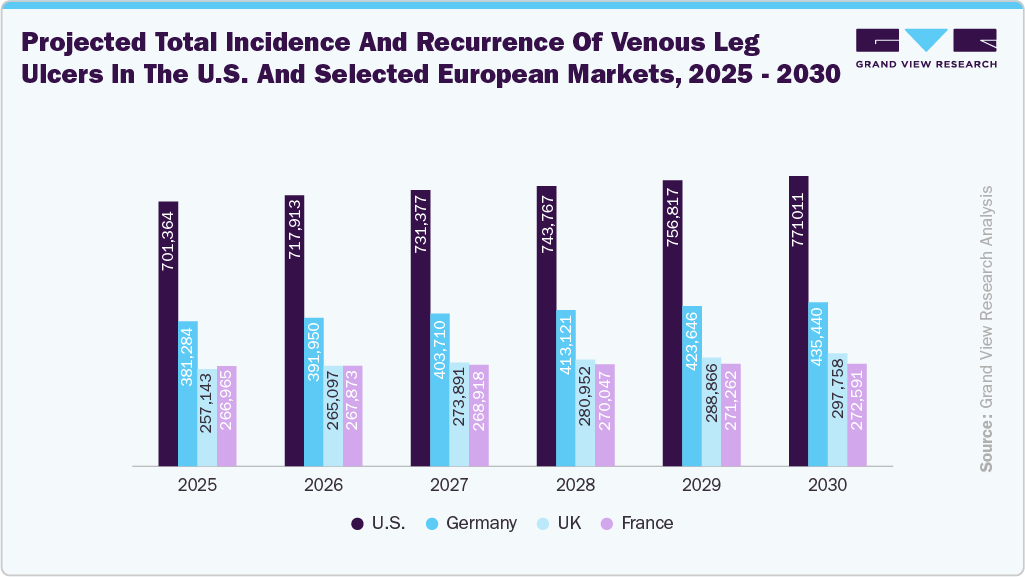
As the incidence of VLUs increases, particularly among the aging population, obese patients, and individuals with diabetes or limited mobility, demand for effective circulation-enhancing therapies is rising. Sequential compression systems play an important role in VLU management by improving venous blood flow, reducing edema, and supporting wound healing, especially when static compression alone is insufficient or patient adherence is low. The growing emphasis on long-term wound care, home-based treatment, and the prevention of ulcer recurrence is further expanding the use of advanced compression systems, thereby driving market growth.
Technological advancements are a key driver of the industry, as innovation continues to improve device effectiveness, portability, and patient compliance. Manufacturers are focusing on next-generation designs that integrate smart features, lightweight construction, and enhanced usability to expand adoption beyond traditional hospital settings. For instance, in October 2025, ManaMed received FDA 510(k) clearance for PlasmaFlow X, a tubeless Class II sequential compression system with a compact, portable design, advanced smart functionality, and extended battery life. Such innovations reduce setup complexity, improve patient comfort, and enable longer wear times, making compression therapy more suitable for outpatient, home care, and post-discharge recovery, thereby accelerating market growth.
"PlasmaFlow X is a generational leap for sequential compression," said Trevor Theriot, President + CEO of ManaMed. "In a category long defined by incremental updates, our team re-imagined everything-a more compact design, all-day battery, USB-C convenience, and a big beautiful, informative display-to deliver industry-leading therapy in a remarkably portable system. This is our most exciting product launch in ManaMed's 10-year history, and it underscores our commitment to innovation that serves patients, clinicians, and partners."
Market Concentration & Characteristics
The degree of innovation in the market is high, driven by continuous advancements focused on improving portability, patient comfort, and clinical effectiveness. Manufacturers are increasingly introducing tubeless, lightweight, and wearable systems integrated with smart sensors, automated pressure adjustment, and real-time compliance monitoring to enhance therapy outcomes and ease of use. Innovation is also evident in longer battery life, quieter operation, and ergonomic garment designs that support use in outpatient and home-care settings. While the core pneumatic compression mechanism remains well established, differentiation is largely achieved through digital connectivity, data analytics, and user-centric design enhancements rather than disruptive changes to the underlying technology.
The level of M&A activity in the industry is moderate, characterized by strategic acquisitions and partnerships aimed at expanding product portfolios, strengthening technological capabilities, and increasing geographic reach. Large medical device companies are acquiring or collaborating with smaller, innovation-driven firms to integrate advanced features such as wearable designs, smart compression algorithms, and digital health connectivity into their offerings.
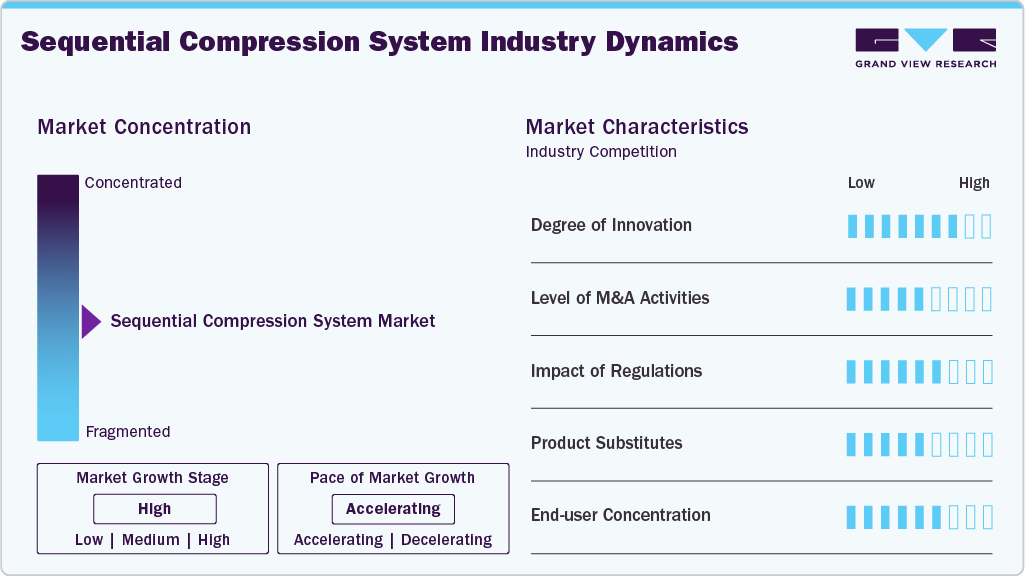
Regulations have a significant impact on the sequential compression system industry, as products must comply with stringent medical device standards related to safety, sterility, and biocompatibility. Regulatory approvals and quality requirements, such as FDA clearance and CE marking, increase development costs and timelines but also enhance product reliability and patient trust, supporting long-term market growth.
End-user concentration in the market is moderately high, with hospitals accounting for the largest share of demand due to the widespread use of these systems for perioperative and inpatient venous thromboembolism (VTE) prevention. Acute care hospitals, particularly large and multi-specialty facilities, dominate adoption owing to high surgical volumes and standardized DVT prophylaxis protocols.
Product Insights
The compression systems segment is expected to register the fastest growth due to its widespread clinical adoption for venous thromboembolism (VTE) prevention across hospitals, surgical centers, and post-acute care settings. These systems are favored over accessories and garments alone because they deliver controlled, intermittent pneumatic compression with consistent pressure accuracy, making them integral to standardized DVT prophylaxis protocols.
The segment is also supported by ongoing technological advancements, such as portable, tubeless, and smart compression devices, increasing use in home-based care, and rising surgical volumes globally, which continue to expand the installed base of compression systems.
Technology Insights
The simultaneous sequential compression (SSC) segment dominated the sequential compression system market in 2025, due to its proven clinical effectiveness in enhancing venous blood flow and reducing the risk of venous thromboembolism (VTE) in high-risk patients. SSC systems deliver coordinated, multi-chamber compression cycles that provide more uniform and efficient hemodynamic support compared to basic compression modalities, making them the preferred choice in hospitals and surgical settings.
The alternate sequential compression (ASC) segment is expected to be the fastest-growing in the sequential compression system market during the forecast period, driven by its ability to deliver targeted, limb-specific compression that improves patient comfort and flexibility across diverse care settings. ASC systems alternate compression cycles between limbs, reducing continuous pressure and enhancing tolerability, which supports longer wear times and better patient compliance, particularly in outpatient and home-care environments.
Application Insights
The deep vein thrombosis (DVT) prevention segment dominated the sequential compression system market in 2025, driven by the widespread use of these devices as standard of care for venous thromboembolism (VTE) prophylaxis in hospitalized and post-surgical patients. High surgical volumes, increasing rates of orthopedic, cardiovascular, and general surgeries, and a growing population of elderly and immobile patients significantly increased the demand for mechanical DVT prevention.
The sports recovery & performance segment is expected to be the fastest-growing in the sequential compression system market during the forecast period, driven by the increasing adoption of compression therapy by professional athletes, fitness enthusiasts, and sports rehabilitation centers to enhance muscle recovery and reduce fatigue. Growing awareness of the benefits of improved circulation, faster lactate clearance, and reduced post-exercise soreness is driving demand for portable and wearable compression systems designed for use outside clinical settings.
End Use Insights
The institutional settings segment dominated the market in 2025, due to the extensive use of these devices in hospitals, long-term care facilities, and rehabilitation centers for routine venous thromboembolism (VTE) prevention and circulation management. High inpatient volumes, especially among post-surgical, elderly, and immobile patients, supported sustained demand, while strict clinical protocols and regulatory guidelines reinforced the routine deployment of sequential compression systems in institutional care.
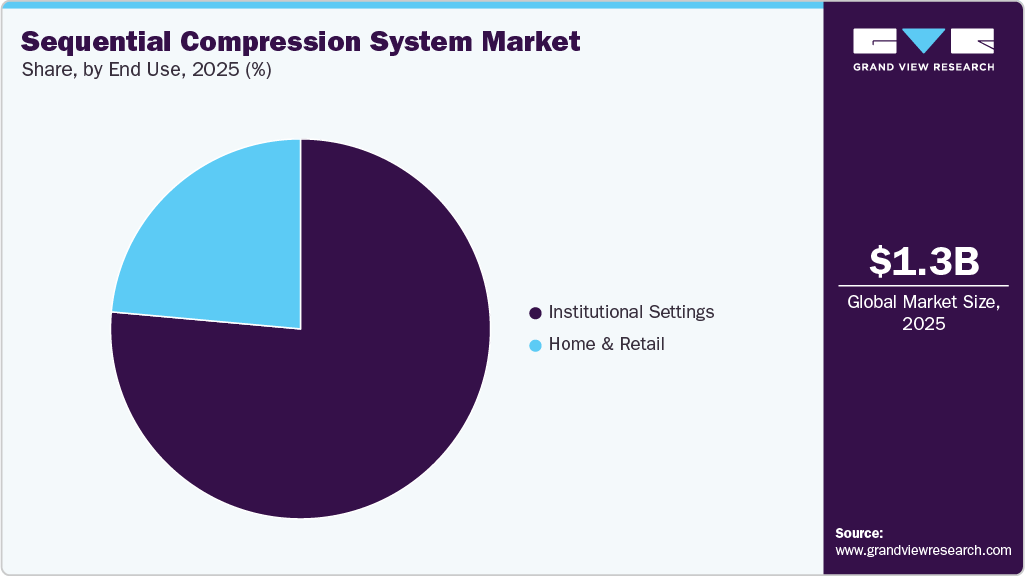
The home & retail segment is expected to be the fastest-growing in the sequential compression system market during the forecast period, driven by the increasing shift toward home-based care and self-managed recovery solutions. Rising patient preference for convenient, non-invasive therapies, along with shorter hospital stays and earlier discharge protocols, is accelerating demand for portable, easy-to-use compression systems.
Regional Insights
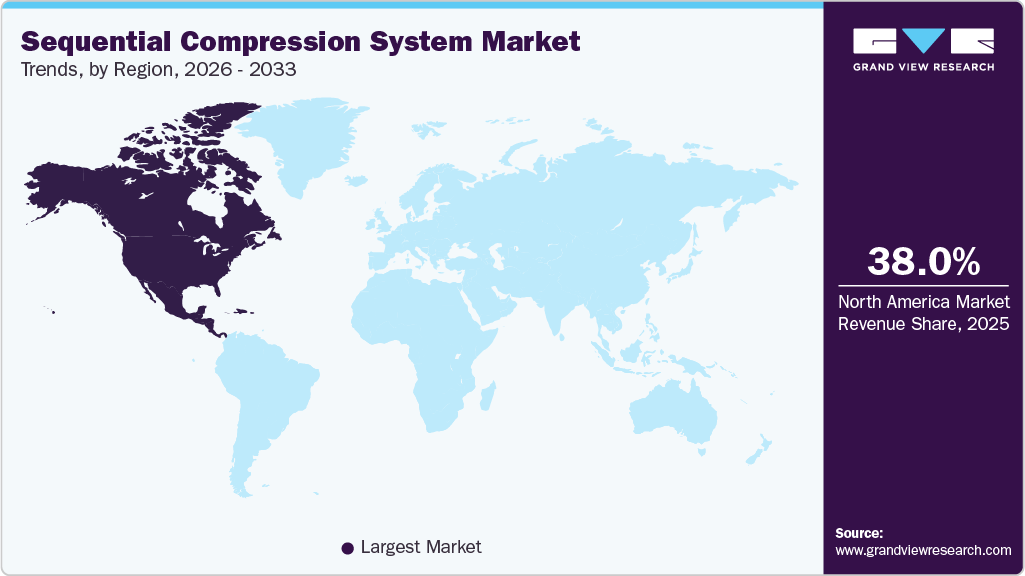
North America sequential compression system market held the largest share of 38.00% in 2025, driven by high surgical volumes, a growing aging population, and a strong focus on venous thromboembolism (VTE) prevention. Well-established clinical guidelines, favorable reimbursement frameworks, and widespread adoption of mechanical prophylaxis in hospitals have supported market dominance. In addition, continuous technological advancements, such as portable, wearable, and smart compression systems, are improving patient compliance and expanding use beyond acute care settings.
U.S. Sequential Compression System Market Trends
The sequential compression system market in the U.S. is experiencing steady growth due to increasing awareness of DVT prevention and strong integration of compression therapy into perioperative care protocols. High prevalence of orthopedic, cardiovascular, and general surgeries, along with an aging and obese population, continues to drive demand. Technological innovation focused on tubeless designs, remote monitoring, and improved patient comfort is further accelerating adoption across hospitals, ambulatory surgical centers, and home-care environments.
Europe Sequential Compression System Market Trends
The sequential compression system market in Europe is growing steadily, supported by rising emphasis on patient safety, postoperative care, and early mobility. Increasing surgical procedures and a growing elderly population at higher risk of venous disorders are key demand drivers. Adoption is also benefiting from improved device design, enhanced comfort, and compliance with stringent regulatory standards under the EU MDR, which has strengthened clinical confidence in advanced compression technologies.
The UK sequential compression system market is expanding as healthcare providers increasingly prioritize non-pharmacological DVT prevention strategies to reduce hospital-acquired complications. Strong National Health Service (NHS) protocols supporting mechanical compression therapy, combined with rising use in orthopedic and trauma care, are driving adoption. Additionally, the shift toward outpatient procedures and early discharge programs is increasing demand for portable and easy-to-use sequential compression systems.
The sequential compression system market in France is witnessing growth driven by a strong focus on preventive care and postoperative complication reduction. Hospitals and rehabilitation centers are increasingly adopting advanced compression systems to support circulation management and VTE prevention. Growing awareness of mechanical prophylaxis benefits and improvements in device ergonomics are encouraging broader adoption across both inpatient and post-acute care settings.
Asia Pacific Sequential Compression System Market Trends
The sequential compression system market in Asia Pacific is experiencing rapid growth due to expanding healthcare infrastructure, rising surgical volumes, and increasing awareness of venous disease prevention. Aging populations, growing prevalence of lifestyle-related conditions, and improved access to advanced medical devices are supporting market expansion. Countries in the region are also witnessing rising adoption of portable compression systems, particularly in outpatient and home-care settings.
The China sequential compression system market is witnessing gradual growth, driven by rising surgical procedures, an aging population, and greater awareness of DVT prevention. Expansion of hospital infrastructure and home healthcare services is supporting wider adoption of compression therapy. Domestic manufacturers are focusing on cost-effective and scalable solutions, enabling penetration beyond major urban hospitals into regional healthcare facilities.
Latin America Sequential Compression System Market Trends
The sequential compression system market in Latin America is gaining momentum as healthcare systems increasingly focus on reducing postoperative complications and improving patient outcomes. Rising prevalence of chronic diseases, increasing surgical interventions, and gradual improvements in healthcare access are driving demand. Cost sensitivity remains a key factor, prompting the adoption of affordable sequential compression systems suited for public hospitals and outpatient care.
Middle East & Africa Sequential Compression System Market Trends
The sequential compression system market in the Middle East & Africa is in an early growth stage, supported by expanding healthcare infrastructure and growing awareness of VTE prevention. Demand is stronger in urban and higher-income regions where hospital modernization and surgical volumes are increasing. While adoption remains uneven, gradual investment in acute and post-acute care facilities is expected to support long-term market growth across the region.
Key Sequential Compression System Companies Insights
The sequential compression system market is largely led by a few established global manufacturers that hold a sizable share due to strong brand presence, wide product portfolios, and direct-to-consumer channels.
Key Sequential Compression System Companies:
The following key companies have been profiled for this study on the sequential compression system market
- Cardinal Health
- Arjo
- Tactile Medical
- Bio Compression Systems
- Enovis
- Mego Afek
- Zimmer Biomet
- AIROS Medical
- Hyperice
- Therabody
- BREG, Inc.
Recent Developments
-
In October 2025, ManaMed announced that it had received FDA 510(k) clearance for PlasmaFlow X, its next-generation tubeless sequential compression system designed to enhance patient recovery. Classified as a Class II medical device, PlasmaFlow X features a more compact and portable design, advanced smart functionality, and extended battery life, delivering effective compression therapy in a streamlined, user-friendly form factor.
-
In November 2024, Cardinal Health announced the U.S. launch of its Kendall SCD SmartFlow Compression System, the next-generation addition to the Kendall Compression Series designed to improve both clinician workflow and patient comfort. The system incorporates clinically validated technology that delivers customized intermittent pneumatic compression (IPC) to enhance blood flow in at-risk patients, supporting the prevention of venous thromboembolism (VTE) while also improving circulation and reducing pain and swelling associated with venous stasis.
-
In April 2023, AIROS Medical, Inc., a medical technology company specializing in compression therapy solutions for lymphedema and venous disorders, announced that it had received U.S. Food and Drug Administration (FDA) 510(k) clearance for its AIROS 8P Sequential Compression Therapy device and garment system. The clearance also enables the company to market larger compression therapy garments, including lower truncal options, expanding treatment capabilities for patients with abdominal swelling.
Sequential Compression System Market Report Scope
Report Attribute
Details
Market size value in 2026
USD 1.41 billion
Revenue forecast in 2033
USD 2.47 billion
Growth rate
CAGR of 8.34% from 2026 to 2033
Base year for estimation
2025
Historical data
2021 - 2024
Forecast period
2026 - 2033
Quantitative units
Revenue in USD million/billion and CAGR from 2026 to 2033
Report coverage
Revenue forecast, company ranking, competitive landscape, growth factors, and trends
Segments covered
Product, application, technology, end use, region
Regional scope
North America; Europe; Asia Pacific; Latin America; MEA
Country scope
U.S.; Canada; Mexico; Germany; UK; France; Norway; Italy; Denmark; Sweden; Spain; China; Japan; India; South Korea; Australia; Brazil; KSA; UAE; South Africa
Key companies profiled
Cardinal Health; Arjo; Tactile Medical; Bio Compression Systems; Enovis; Mego Afek; Zimmer Biomet; AIROS Medical; Hyperice; Therabody; BREG, Inc.
Customization scope
Free report customization (equivalent up to 8 analysts working days) with purchase. Addition or alteration to country, regional & segment scope.
Pricing and purchase options
Avail customized purchase options to meet your exact research needs. Explore purchase options
Global Sequential Compression System Market Report Segmentation
This report forecasts revenue growth at global, regional, and country levels and provides an analysis of the latest industry trends in each of the sub-segments from 2021 to 2033. For this study, Grand View Research has segmented the global sequential compression system market report on the basis of product, application, technology, end use, and region:
-
Product Outlook (Revenue, USD Million, 2021 - 2033)
-
Compression Systems
-
Stationary/Tabletop Units
-
Portable & Wearable Units
-
-
Consumables & Accessories
-
Compression Sleeves
-
Garments
-
Replacement Tubing & Connectors
-
-
-
Technology Outlook (Revenue, USD Million, 2021 - 2033)
-
Alternate Sequential Compression (ASC)
-
Simultaneous Sequential Compression (SSC)
-
-
Application Outlook (Revenue, USD Million, 2021 - 2033)
-
Deep Vein Thrombosis (DVT) Prevention
-
Lymphedema Management
-
Chronic Venous Insufficiency (CVI) & Ulcer Management
-
Sports Recovery & Performance
-
Others
-
-
End Use Outlook (Revenue, USD Million; 2021 - 2033)
-
Institutional Settings
-
Hospitals
-
Specialty Clinics
-
Rehabilitation & Skilled Nursing Facilities
-
-
Home & Retail
-
Home Healthcare
-
Direct-to-Consumer (DTC) Sports/Fitness Centers
-
-
-
Regional Outlook (Revenue, USD Million, 2021 - 2033)
-
North America
-
U.S.
-
Canada
-
Mexico
-
-
Europe
-
Germany
-
UK
-
France
-
Italy
-
Spain
-
Sweden
-
Denmark
-
Norway
-
-
Asia Pacific
-
Japan
-
China
-
India
-
Australia
-
South Korea
-
Thailand
-
-
Latin America
-
Brazil
-
Argentina
-
-
Middle East & Africa
-
South Africa
-
Saudi Arabia
-
UAE
-
Kuwait
-
-
Frequently Asked Questions About This Report
b. The global sequential compression system market size was estimated at USD 1.27 billion in 2025 and is expected to reach USD 1.41 billion in 2026.
b. The global sequential compression system market is expected to grow at a compound annual growth rate of 8.34% from 2026 to 2033 to reach USD 2.47 billion by 2033.
b. North America dominated the sequential compression system market with a share of 38.0% in 2025. This is attributable to high surgical volumes, a growing aging population, and a strong focus on venous thromboembolism (VTE) prevention. Well-established clinical guidelines, favorable reimbursement frameworks, and widespread adoption of mechanical prophylaxis in hospitals have supported market dominance.
b. Some key players operating in the sequential compression system market include Cardinal Health; Arjo; Tactile Medical; Bio Compression Systems; Enovis; Mego Afek; Zimmer Biomet; AIROS Medical; Hyperice; Therabody; BREG, Inc.
b. Key factors that are driving the market growth include the rising incidence of venous thromboembolism (VTE), deep vein thrombosis (DVT), and other circulatory disorders, particularly among aging, obese, and post-surgical patient populations. Increasing awareness of the clinical benefits of non-invasive mechanical prophylaxis, along with strong recommendations for DVT prevention in perioperative and critical-care guidelines, is accelerating adoption.


Share this report with your colleague or friend.
Need a Tailored Report?
Customize this report to your needs — add regions, segments, or data points, with 20% free customization.


ISO 9001:2015 & 27001:2022 Certified
We are GDPR and CCPA compliant! Your transaction & personal information is safe and secure. For more details, please read our privacy policy.
Trusted market insights - try a free sample
See how our reports are structured and why industry leaders rely on Grand View Research. Get a free sample or ask us to tailor this report to your needs.












