
- Home
- »
- Clothing, Footwear & Accessories
- »
-
Seamless Apparel Market Size, Share, Industry Report, 2033GVR Report cover
![Seamless Apparel Market Size, Share & Trends Report]()
Seamless Apparel Market (2026 - 2033) Size, Share & Trends Analysis Report By Product Type (Sports Bra, Leggings, Tops, Underwear), By Material (Polymide, Polyester, Elastane, Blends), By End User (Lifestyle, Athletes, Shapewear Consumersr), By Region (North America, Europe, Asia Pacific), And Segment Forecasts
- Report ID: GVR-4-68040-837-4
- Number of Report Pages: 160
- Format: PDF
- Historical Range: 2021 - 2025
- Forecast Period: 2026 - 2033
- Industry: Consumer Goods
- Report Summary
- Table of Contents
- Segmentation
- Methodology
- Download FREE Sample
-
 Download Sample Report
Seamless Apparel Market Summary
The global seamless apparel market size was estimated at USD 69.65 billion in 2025 and is projected to reach USD 123.67 billion by 2033, growing at a CAGR of 7.4% from 2026 to 2033. The seamless apparel market is gaining traction as apparel producers and consumers alike gravitate toward garments that blend high functionality with minimal structure.
Key Market Trends & Insights
- North America seamless apparel market accounted for the revenue share of 29.97% in 2025.
- Asia Pacific held a market share of 38.24% in 2025.
- By product type, seamless leggings accounted for a revenue share of 23.59% in 2025.
- By material, polyamide seamless apparels accounted for a revenue share of 40.66% in the year 2025.
- By end user, lifestyle seamless apparel accounted for highest market share in the year 2025.
Market Size & Forecast
- 2025 Market Size: USD 69.65 Billion
- 2033 Projected Market Size: USD 123.67 Billion
- CAGR (2026-2033): 7.4%
- Asia Pacific: Largest market in 2025
For instance, in a September 2025 article, textile-industry coverage described how 3D knitting technology now allows manufacturers to reduce fabric waste by up to 90% because garments can be knitted directly in three dimensions, eliminating or drastically reducing cutting and sewing stages. Technological developments such as 3D knit-to-shape manufacturing and seamless construction are driving this shift. Design and consumer expectations have evolved, as noted in a recent article, seamless technology is becoming a standard in sportswear and activewear because it offers improved fit, comfort, and reduced seams while appealing to fashion-conscious consumers. This convergence of production innovation and shifting consumer behavior is expanding the addressable market worldwide, as brands reposition seamless garments from niche performance gear to everyday lifestyle wearConsumers today expect garments that adapt to hybrid lifestyles and multi-activity days, whether commuting, remote working, working out, or casual leisure. Seamless apparel meets this need, flat construction and integrated knitting permit garments that conform to body shapes, and reduce chafing. Moreover, sustainability is increasingly embedded in consumer decision-making.
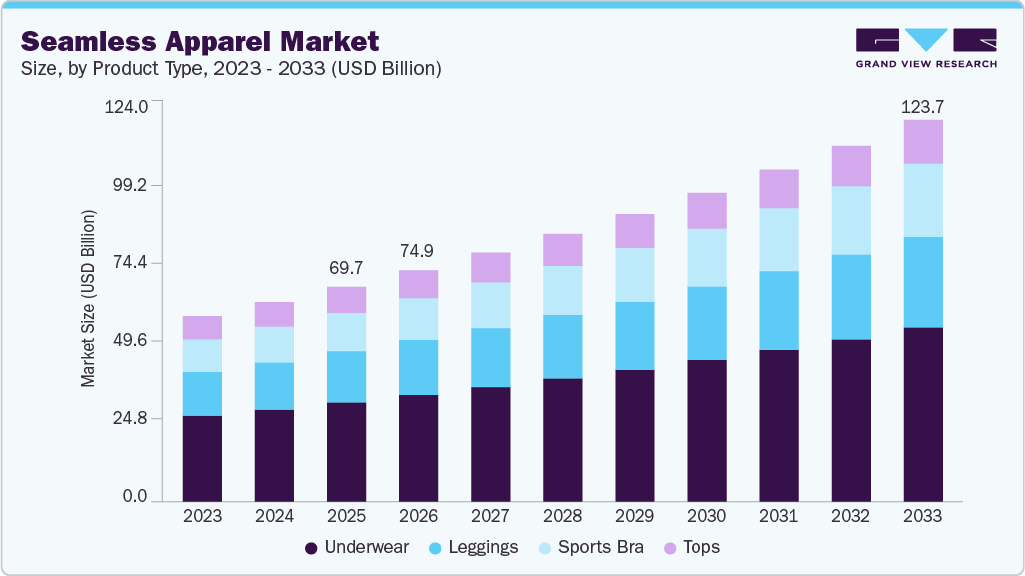
Manufacturers and brands are rapidly innovating around seamless disciplines. The article published by Venuez cites examples of seamless technology enabling custom texture placement, compression zones, and fewer seams, thereby enhancing both aesthetics and performance. Brand activations also reflect this evolution. For instance, in September 2025, Jockey expanded its women’s innerwear portfolio in India with a new collection introduced under the “Designed to Disappear” campaign. The range features bras, lounge styles, and shapewear made using bonded technology to offer a smooth, second-skin finish with no visible lines under clothing. Available in neutral tones, the collection aims to provide both comfort and an invisible look, reflecting the growing consumer demand for sleek, seamless essentials. To support the launch, Jockey has also introduced an in-store “Size Check” fitting service.
Furthermore, advancements such as automated 3D knit-to-shape systems and zero-waste knitting platforms are enabling premium brands to overcome the traditional cost barrier, reduce fabric wastage, and accelerate time-to-market. These capabilities are shifting seamless apparel from a niche, high-cost innovation to a scalable, eco-efficient model poised for broader global adoption.
For instance, Active Clothing Co. Ltd. recently entered into a strategic collaboration with China’s Ningbo Cixing Co. Ltd. to establish India’s first fully automated knit-to-shape factory. The smart facility integrates 3D seamless knitting machinery, AI-enabled automation, and a waste-free production workflow, eliminating the need for manual cutting or stitching. Designed as a next-generation manufacturing hub, it enables precise fit customization, faster output, and a significantly smaller environmental footprint, signaling a breakthrough that puts premium seamless apparel on track for widespread commercial viability.
Key Brand Share Insights
Many brands in the global seamless apparel market have identified untapped potential within specialized industry segments and are strategically innovating to capture these opportunities. This involves introducing advanced fabric technologies, expanding size and fit inclusivity, and offering customizable solutions tailored to specific job functions and environments. Companies are also refining their branding and distribution strategies to better align with regional regulations, workforce demographics, and shifting consumer expectations. By targeting emerging sectors and evolving workplace needs, these brands aim to enhance their market share and reinforce their global competitiveness.
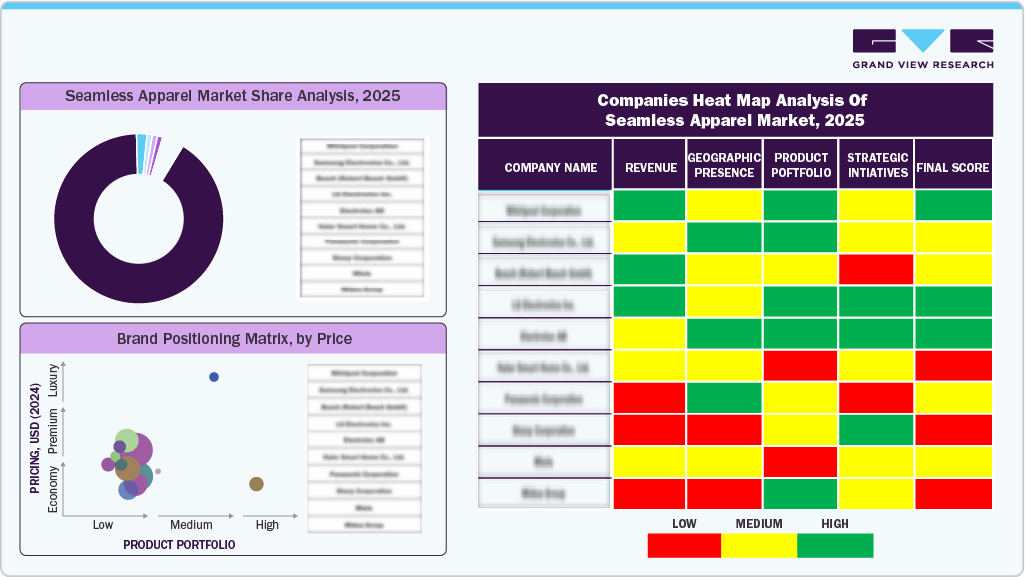
Some of the key players operating in the market include: -
- VF Corp
- Puma
- Skechers
- H&M (sport)
- Columbia Sportswear
- Li Ning
- Zalando
- New Balance
- JD Sports
- Lidl (sport)
- North Face
- Brooks
- Ice Breaker
- Foot Locker
- Inditex (sport)
- Superdry
- Patagonia
- Fila
- Dick's Sporting Goods
- Salomon
- Odlo
- Hoka
- On Running
- Deckers
- Intersport
- XBionic
- Asics
- Kari Traa
Consumer Insights
Consumers expect moisture-wicking fabrics that draw sweat away from the skin and allow it to evaporate quickly, thereby maintaining a cool and dry inner microclimate. This functional aspect is particularly vital in warmer or humid climates, where discomfort from excess moisture can deter longer wear. Fabric innovations such as LYCRA Soft Comfort have emerged to address this demand by combining gentle elasticity with breathability, ensuring stretch and recovery without the constriction or synthetic feel that often accompanies high-spandex content. Brands that build this kind of thermoregulation into their product architecture signal a deeper understanding of comfort as a physiological need, not just an aesthetic preference.
For instance, in November 2025, Northern Cote launched a sustainable activewear collection that blends high performance with environmental responsibility. The new lineup features leggings, tops, bras, and shorts made from recycled fibers engineered to enhance breathability, moisture management, and flexibility during workouts. Each piece is designed for durability and comfort while supporting eco-friendly production practices through responsibly sourced materials and energy-efficient manufacturing. By merging technical innovation with sustainability, Northern Cote aims to provide fitness enthusiasts with apparel that performs at a professional level while reducing its ecological footprint.
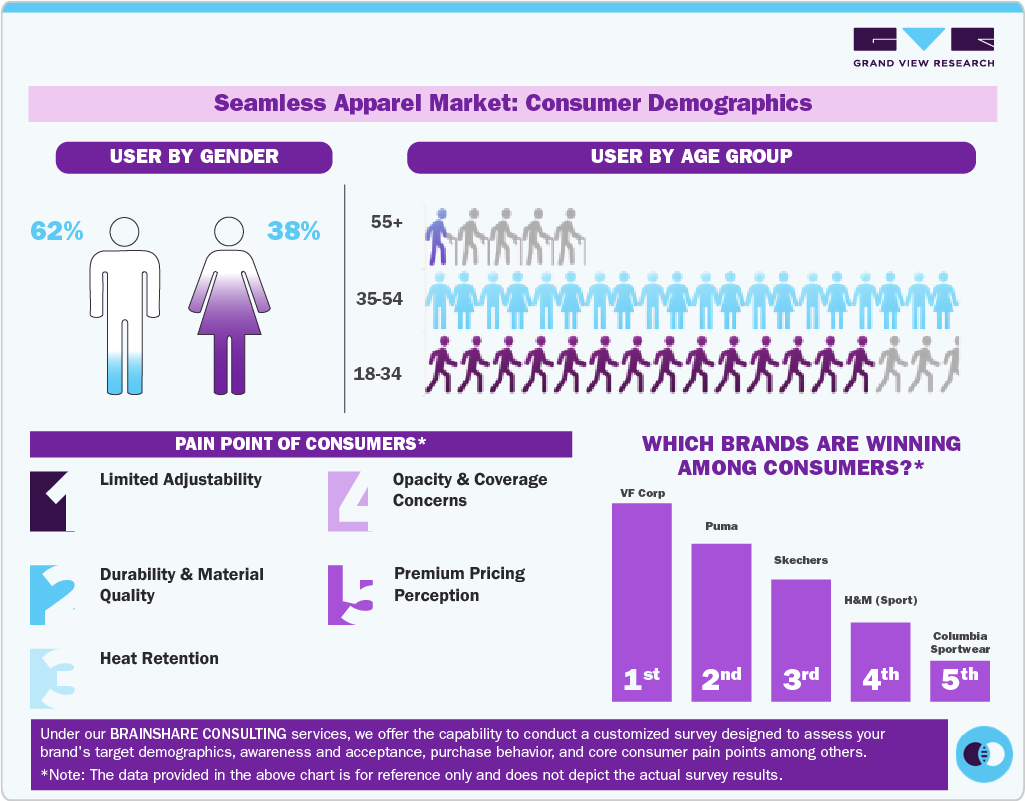
Furthermore, consumers' focus has shifted from basic comfort to performance-engineered precision that aligns with how the body moves, breathes, and recovers. As highlighted by Venuze in its feature on the challenges of designing fashionable sportswear that performs, the modern buyer is no longer satisfied with clothing that merely functions; they demand pieces that carry a refined aesthetic while withstanding the rigor of active use. This evolution reflects a behavioral change; consumers treat apparel as both a style statement and a piece of wearable technology. It allows garments to follow the body’s contours without friction, providing an unbroken surface that feels natural, smooth, and adaptive to every movement.
The rise of seamless innerwear has played a defining role in shaping these expectations. According to C9 Airwear, the growing popularity of seamless undergarments demonstrates how consumers now equate shaping with confidence and performance rather than appearance alone. The company notes that seamless garments have gained ground in fashion trends because they provide a second-skin feel, freedom of motion, and a clean, sculpted finish that complements outerwear. This behavioral pattern has spilled over into outer performance apparel, where shaping must remain subtle yet supportive. Buyers seek clothing that moves in harmony with the body, holds its form across repeated wear, and maintains elasticity without visible strain. In the consumer’s mind, a well-shaped seamless garment communicates technical mastery, proof that comfort and structure have been deliberately engineered to coexist.
Key Trends Insights
Key trends in the seamless apparel market are increasingly defined by data-led product engineering and fit precision. Body-mapping has shifted into a measurable workflow supported by 3D body scanning, virtual fitting, and size analytics that inform how garments are engineered at the stitch level. Platforms such as 3DLOOK enable brands to translate real consumer body data into zoned knit structures, placing ventilation, support, or compression exactly where it is needed within a seamless garment. This approach improves comfort during extended wear, supports performance use cases such as training and travel, and materially reduces return rates by tightening size accuracy. Retail adoption of virtual try-on and personalization tools further strengthens this loop, allowing body maps to guide both product development and on-demand production strategies, thereby lowering inventory exposure and improving sell-through efficiency.
In parallel, material innovation and circularity are reshaping seamless fabric choices. Recycled polyester remains the most used material for seamless base layers, bras, and leggings, but brands are increasingly adopting recycled elastomultiester fibers to achieve stretch and recovery without heavy reliance on virgin spandex. Solutions such as LYCRA T400 EcoMade from The LYCRA Company offer controlled elasticity, better dimensional stability, and dye uniformity, making them well-suited to seamless mono-knit constructions. A second material shift involves blending recycled synthetics with bio-based or cellulosic fibers to enhance breathability, softness, and moisture management without compromising performance. Furthermore, a shift toward mono-material seamless garments, particularly all-polyester systems with engineered stretch, reflects a growing focus on simplifying recycling at the end of life. By minimizing fiber complexity and eliminating trims and cut components, brands can improve material recovery while maintaining performance standards.
Product Insights
Seamless leggings accounted for a revenue share of 23.59% in 2025 in the overall seamless apparel industry. With more people adopting yoga, HIIT sessions, running, pilates, and athleisure dressing, the demand for leggings has surged. According to Squatwolf, seamless leggings are specifically engineered using circular knit technology, which eliminates bulky seams and creates a second-skin fit that adapts to movement without friction or restriction. As more consumers prioritize comfort and freedom while still expecting sculpting and support, seamless leggings are fast becoming a wardrobe staple for both active and casual wear.
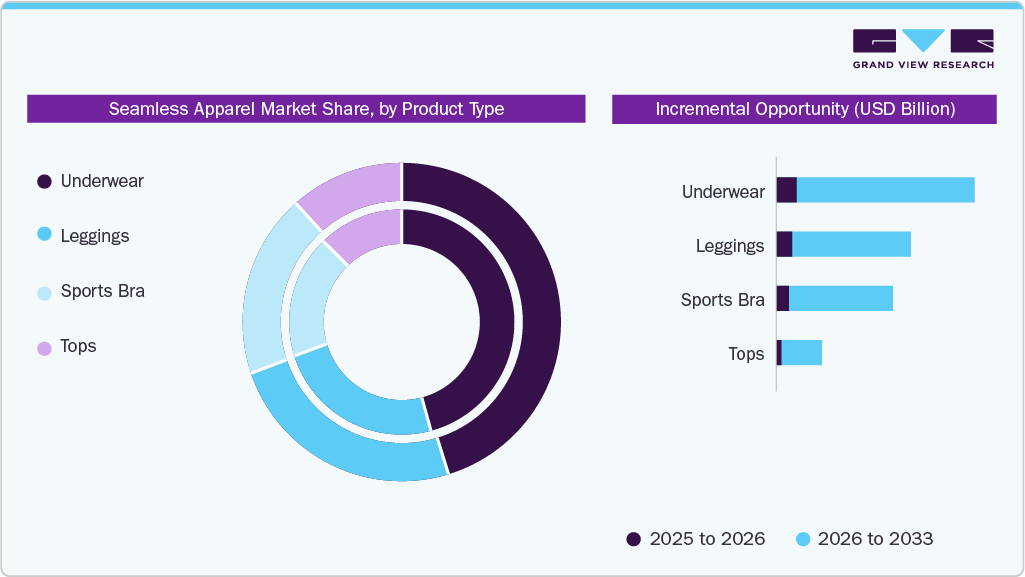
Seamless sports bras are projected to grow at a CAGR of 8.3% over the forecast period of 2026-2033, driven by rising female participation in fitness and sports, growing awareness of breast support and injury prevention, and the broader shift toward comfort-led athleisure. Consumers increasingly prefer seamless construction as it reduces chafing and pressure points while offering flexibility for both high-intensity workouts and all-day wear. At the same time, demand is rising for stylish, minimalist designs and inclusive sizing that allow seamless sports bras to transition easily between training and casual use..
Material Insights
Polyamide seamless apparels accounted for a revenue share of 40.66% in the year 2025 in the overall seamless apparel industry. Demand is being propelled by consumers’ growing preference for durable, lightweight, and high-performance garments that can withstand frequent wear while maintaining shape and comfort. Polyamide’s smooth texture and high stretch recovery make it particularly suitable for activewear, athleisure, innerwear, and performance base layers, where seamless construction enhances fit and reduces friction. Rising adoption is also supported by lifestyle shifts toward all-day wear apparel that transitions seamlessly between workouts, work-from-home routines, and casual use.
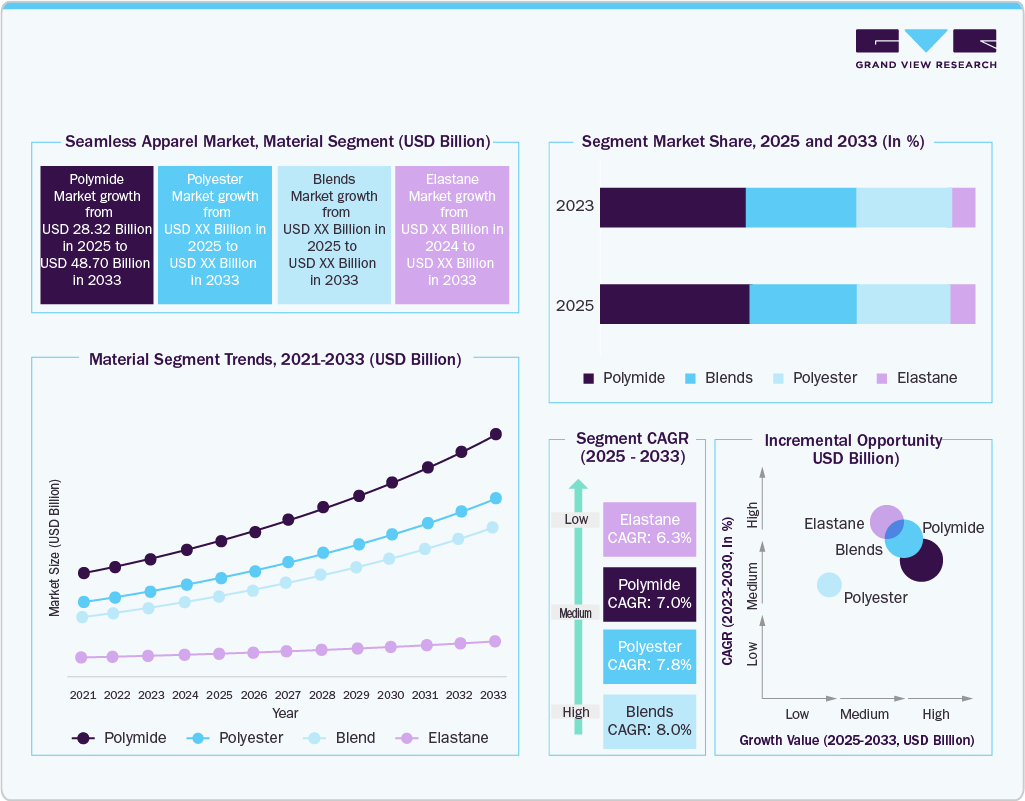
Blends seamless apparels are projected to grow at a CAGR of 8.0% over the forecast period of 2026-2033. Consumers increasingly prefer fabric blends such as polyamide-elastane or polyester-elastane, that combine stretch, durability, breathability, and softness, making them suitable for activewear, athleisure, innerwear, and everyday lifestyle use. The growing emphasis on body-adaptive fit and long-wear comfort is encouraging brands to use blended yarns that enhance elasticity while maintaining shape retention. In addition, blended seamless fabrics enable improved moisture management and thermal regulation, broadening their appeal across climate conditions and activity levels.
End User Insights
Lifestyle seamless apparel accounted for a revenue share of 48.59% in the year 2025 of the seamless apparel industry. Seamless apparel has become an essential choice for lifestyle users seeking comfort, versatility, and a smooth silhouette across daily activities. Its popularity is closely aligned with the rise of athleisure, a trend that now spans not just gym wear but work-from-home outfits, casual social settings, and even travel wardrobes. According to GWI’s athleisure insights, nearly 30% of global consumers now consider comfort-driven clothing suitable for both leisure and non-athletic settings. Seamless tops, leggings, and intimate wear offer a clean, minimalist look that appeals to users seeking all-day ease without the limitations of stitched seams.
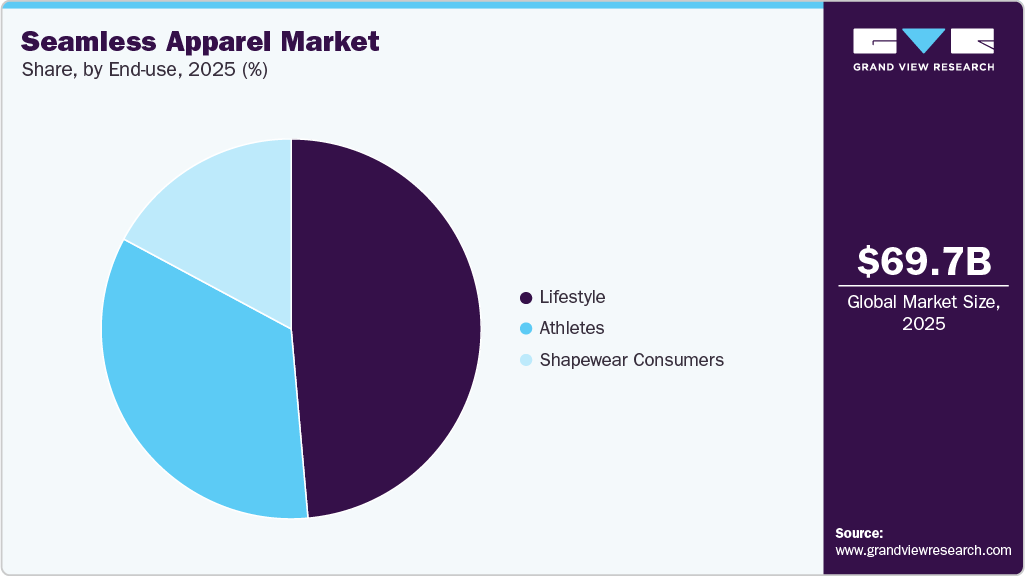
Seamless apparel for shapewear consumers is projected to grow at a CAGR of 7.9% over the forecast period of 2026-2033. Consumers increasingly prefer seamless shapewear as it delivers smooth silhouettes without visible lines, making it suitable for both everyday wear and occasion dressing. Growing awareness around posture support, core shaping, and confidence enhancement is expanding adoption beyond special-use occasions to regular wardrobe staples. In addition, innovations in seamless knitting enable targeted compression zones, breathable panels, and adaptive stretch, improving fit across diverse body types. The shift toward lightweight, breathable, and skin-friendly materials is also supporting longer wear durations.
Regional Insights
North America Seamless Apparel Market Trends
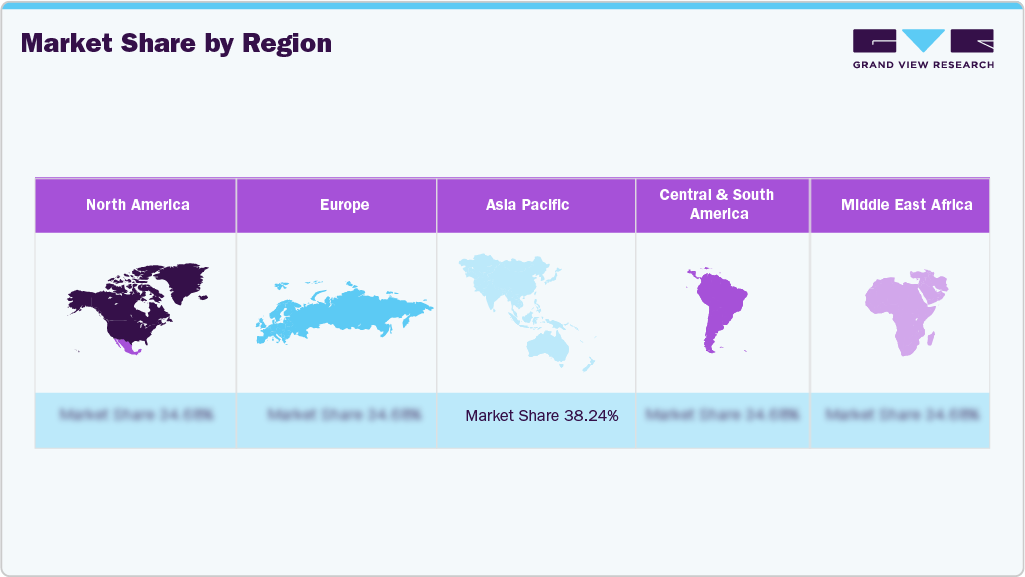
North America seamless apparel market accounted for the revenue share of 29.97% in 2025. High participation in fitness and wellness activities, coupled with lifestyle shifts toward all-day wearable clothing, continues to sustain demand for seamless garments that offer flexibility, breathability, and irritation-free wear. The region’s advanced retail ecosystem and strong presence of global apparel brands accelerate adoption of innovative seamless designs, while growing awareness of fabric performance such as moisture management, stretch recovery, and durability driving repeat purchases.
The U.S. seamless apparel market led the North American seamless apparel market in 2025, holding the largest market share with 83.50% of the region’s total revenue. U.S. consumers are actively shifting towards apparel that delivers both elevated comfort and technical benefits, which aligns strongly with seamless construction. Trends indicate a growing preference for garments that eliminate irritation and provide body-responsive stretch, particularly among individuals who engage in frequent physical activity or seek comfort during extended periods of working from home. Younger demographics, particularly Gen Z, are driving this shift with tech-savvy shopping behaviors and heightened expectations around value and fit.
According to Firework’s retail insights, Gen Z consumers in the U.S. are more likely to discover new apparel products through social and short-video content, a trend that’s motivating seamless apparel brands to embed storytelling and digital engagement into their strategies. Additionally, this cohort values functional innovation, seeking moisture-wicking, quick-dry, and antimicrobial properties, as well as sustainability, making seamless pieces made with recycled or eco-friendly fibers particularly appealing.
Europe Seamless Apparel Market Trends
The seamless apparel industry in Europe accounted for the revenue share of 26.97% in 2025, Supported by a mature fashion ecosystem, rising interest in technical textiles, and sustained demand for premium comfort-led clothing. Growth in gym memberships, outdoor recreation, and hybrid work lifestyles has reinforced the shift toward versatile apparel that performs well in both active and everyday settings. Europe’s established knitting clusters, especially in Italy and Portugal, continue to fuel high-quality, design-forward production, with advanced circular knitting and eco-efficient processes improving output and material performance.
Germany seamless apparel market led the Europe market in 2025, holding the largest market share with 19.45% of the region’s total revenue. The country’s active lifestyle and strong participation in sports underpin sustained demand for functional clothing. In 2024, more than seven million Germans were registered members of football clubs, followed by widespread participation in gymnastics, tennis, and cycling. This deeply rooted outdoor and athletic culture consistently demands seamless garments that deliver flexibility, breathability, and comfort across various activities, including hiking, trekking, and daily commuting. As consumers seek multipurpose performance wear, seamless construction offers practical advantages, lightweight layering, adaptive temperature regulation, and reduced friction, all attributes valued in Germany’s quality-conscious market.
Asia Pacific Seamless Apparel Market Trends
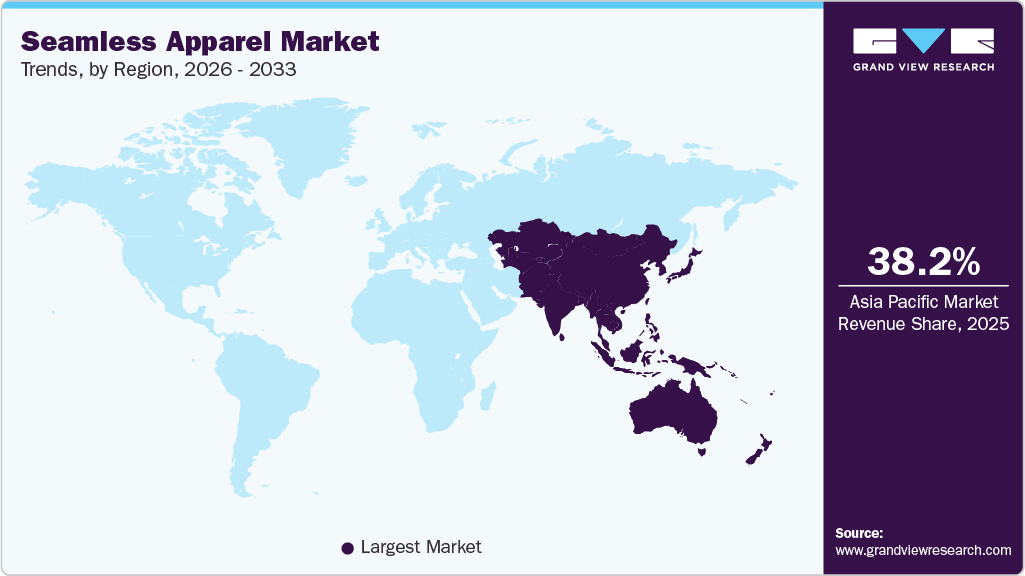
Asia Pacific held a market share of 38.24% in 2025. The Asia Pacific is projected to grow significantly at a CAGR of 8.0% from 2026 to 2033, driven by lifestyle shifts, rising disposable incomes, and strong regional textile capabilities. Consumers across markets such as China, Japan, India, and South Korea are increasingly embracing seamless garments for their comfort, adaptability, and sleek appearance. The region’s growing fitness culture and preference for versatile fashion have made seamless apparel a preferred choice for both active and casual wear.
Key Seamless Apparel Company Insights
The global seamless apparel market is highly competitive, supported by a mix of multinational brands and specialized regional players that compete through advanced knitting technologies, material innovation, and fit-driven product engineering. Leading companies place strong emphasis on research and development to enhance comfort, durability, and performance while minimizing waste through precision seamless construction. Increasing adoption of digital design tools, body-mapping data, and sustainable yarn systems, such as recycled and bio-based fibers, allows manufacturers to improve fit accuracy, reduce return rates, and support circular production goals.
Key Seamless Apparel Companies:
The following are the leading companies in the seamless apparel market. These companies collectively hold the largest market share and dictate industry trends.
- VF Corp
- Puma
- Skechers
- H&M (sport)
- Columbia Sportswear
- Li Ning
- Zalando
- New Balance
- JD Sports
- Lidl (sport)
Recent Developments
-
In November 2025, Northern Cote launched a sustainable activewear collection that blends high performance with environmental responsibility. The new lineup features leggings, tops, bras, and shorts made from recycled fibers engineered to enhance breathability, moisture management, and flexibility during workouts. Each piece is designed for durability and comfort while supporting eco-friendly production practices through responsibly sourced materials and energy-efficient manufacturing. By merging technical innovation with sustainability, Northern Cote aims to provide fitness enthusiasts with apparel that performs at a professional level while reducing its ecological footprint.
-
In September 2025, Jockey introduced a new Seamless Innerwear Collection for women, created to offer an invisible, second-skin feel beneath clothing. The range is crafted using advanced bonding techniques that eliminate traditional seams and stitches, ensuring a smooth, contouring fit that prevents visible lines. Designed with lightweight, stretchy fabric, the collection focuses on delivering all-day comfort, breathability, and a barely noticeable sensation. By combining innovative construction with refined aesthetics, Jockey aims to provide modern women with innerwear that complements both everyday wear and performance-driven lifestyles.
Seamless Apparel Market Report Scope
Report Attribute
Details
Market size value in 2026
USD 74.98 billion
Revenue forecast in 2033
USD 123.67 billion
Growth rate
CAGR of 7.4% from 2026 to 2033
Actual data
2021 - 2025
Forecast period
2026 - 2033
Quantitative units
Revenue in USD Billion, Volume Million Units,and CAGR from 2026 to 2033
Report coverage
Revenue forecast, company ranking, competitive landscape, growth factors, and trends
Segments covered
Product type, material, end user
Regional scope
North America, Europe, Asia Pacific, Central & South America, Middle East & Africa
Country scope
U.S.; Canada; UK; Germany; France; Italy; Spain; Poland; Czech Republic; Croatia; Hungary; China; India; Japan; Australia & New Zealand; South Korea; Indonesia; Thailand; Malaysia; Vietnam; Brazil; South America, Bahrain, Kuwait; Oman; Qatar; Saudi Arabia; UAE
Key companies profiled
VF Corp; Puma; Skechers; H&M (sport); Columbia Sportswear; Li Ning; Zalando; New Balance; JD SpIce Breaker; Foot Locker; Inditex (sport); Superdry; Patagonia; Fila; Dick's Sporting Goods; Salomon; Odlo; Hoka; On R-Deckers; Intersport; XBionic; Asics; Kari Traa
Customization scope
Free report customization (equivalent up to 8 analysts working days) with purchase. Addition or alteration to country, regional & segment scope.
Pricing and purchase options
Avail customized purchase options to meet your exact research needs. Explore purchase options
Global Seamless Apparel Market Report Segmentation
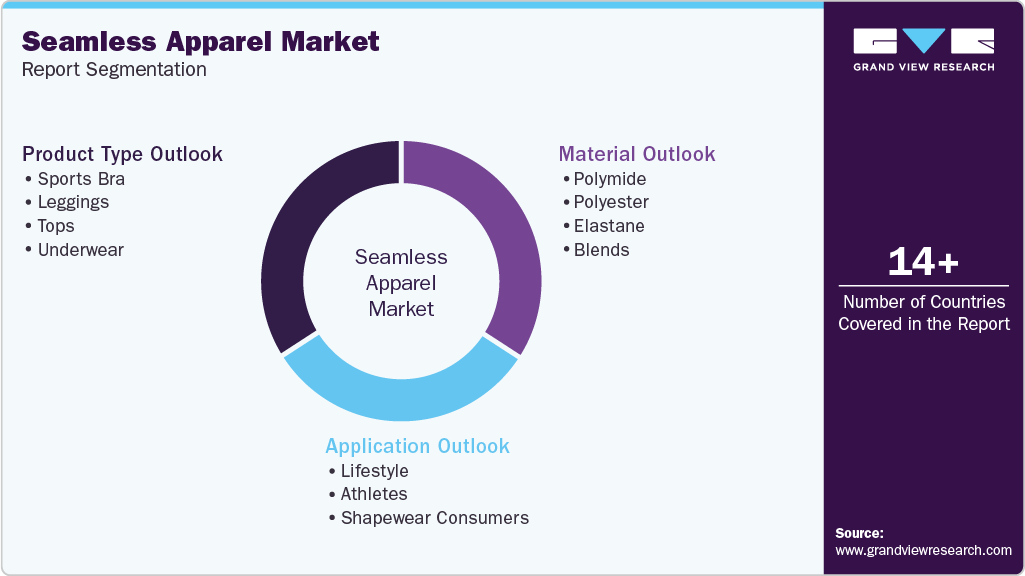
This report forecasts revenue growth at country levels and provides an analysis on the latest trends and opportunities in each of the sub-segments from 2021 to 2033. For the purpose of this study, Grand View Research has segmented the seamless apparel market on the basis of product type, material, and end user.
-
Product Type Outlook (Revenue, USD Billion; Volume Million Units, 2021 - 2033)
-
Sports Bra
-
Leggings
-
Tops
-
Underwear
-
-
Material Outlook (Revenue, USD Billion; Volume Million Units, 2021 - 2033)
-
Polymide
-
Polyester
-
Elastane
-
Blends
-
-
Application Outlook (Revenue, USD Billion; Volume Million Units, 2021 - 2033)
-
Lifestyle
-
Athletes
-
Shapewear Consumers
-
-
Regional Channel Outlook (Revenue, USD Billion, Volume Million Units, 2021 - 2033)
-
North America
-
U.S.
-
Canada
-
-
Europe
-
U.K.
-
Germany
-
France
-
Italy
-
Spain
-
Poland
-
Czech Republic
-
Croatia
-
Hungary
-
-
Asia Pacific
-
China
-
India
-
Japan
-
Australia & New Zealand
-
South Korea
-
Indonesia
-
Thailand
-
Malaysia
-
Vietnam
-
South/Latin America
-
Brazil
-
South America
-
-
Middle East & Africa
-
Middle East
-
Bahrain
-
Kuwait
-
Oman
-
Qatar
-
Saudi Arabia
-
UAE
-
-
Africa
-
South Africa
-
-
-
Frequently Asked Questions About This Report
b. The global seamless apparel market size was estimated at USD 69.65 billion in 2025 and is expected to reach USD 74.98 billion in 2026.
b. The global seamless apparel market is expected to grow at a compound annual growth rate of 7.4% from 2026 to 2033 to reach USD 123.67 billion by 2033.
b. Seamless leggings apparel accounted for a revenue share of 23.59% in the year 2025 in the overall seamless apparel industry. They combine all-day comfort, stretch-driven fit, and seam-free construction with strong shaping and durability, making them suitable for both performance use and everyday wear. Their widespread adoption across fitness, athleisure, travel, and casual lifestyles, supported by high usage frequency and repeat purchasing.
b. Some key players operating in the global seamless apparel market include VF Corp; Puma; Skechers; H&M (sport); Columbia Sportswear; Li Ning; Zalando; New Balance; JD SpIce Breaker; Foot Locker; Inditex (sport); Superdry; Patagonia; Fila; Dick's Sporting Goods; Salomon; Odlo; Hoka; On R-Deckers; Intersport; XBionic; Asics; Kari Traa
b. Key factors driving the global seamless apparel market include rising demand for all-day comfort and friction-free wear, growing adoption of athleisure and active lifestyles, advancements in circular knitting and performance fabrics, and increasing consumer preference for durable, body-contouring garments suitable for both active and everyday use.


Share this report with your colleague or friend.
Need a Tailored Report?
Customize this report to your needs — add regions, segments, or data points, with 20% free customization.


ISO 9001:2015 & 27001:2022 Certified
We are GDPR and CCPA compliant! Your transaction & personal information is safe and secure. For more details, please read our privacy policy.
Trusted market insights - try a free sample
See how our reports are structured and why industry leaders rely on Grand View Research. Get a free sample or ask us to tailor this report to your needs.












