
- Home
- »
- IT Services & Applications
- »
-
Real Estate Software Market Size, Industry Report, 2033GVR Report cover
![Real Estate Software Market Size, Share & Trends Report]()
Real Estate Software Market (2026 - 2033) Size, Share & Trends Analysis Report By Type (Customer Relationship Management Software, Enterprise Resource Planning Software, Property Management Software), By Deployment, By Application, By Region, And Segment Forecasts
- Report ID: GVR-4-68039-822-8
- Number of Report Pages: 120
- Format: PDF
- Historical Range: 2021 - 2025
- Forecast Period: 2026 - 2030
- Industry: Technology
- Report Summary
- Table of Contents
- Segmentation
- Methodology
- Download FREE Sample
-
 Download Sample Report
Real Estate Software Market Summary
The global real estate software market size was estimated at USD 12.79 billion in 2025 and is projected to reach USD 31.96 billion by 2033, growing at a CAGR of 12.2% from 2026 to 2033. The real estate software market is growing as businesses adopt digital solutions to streamline property management, sales, and client engagement.
Key Market Trends & Insights
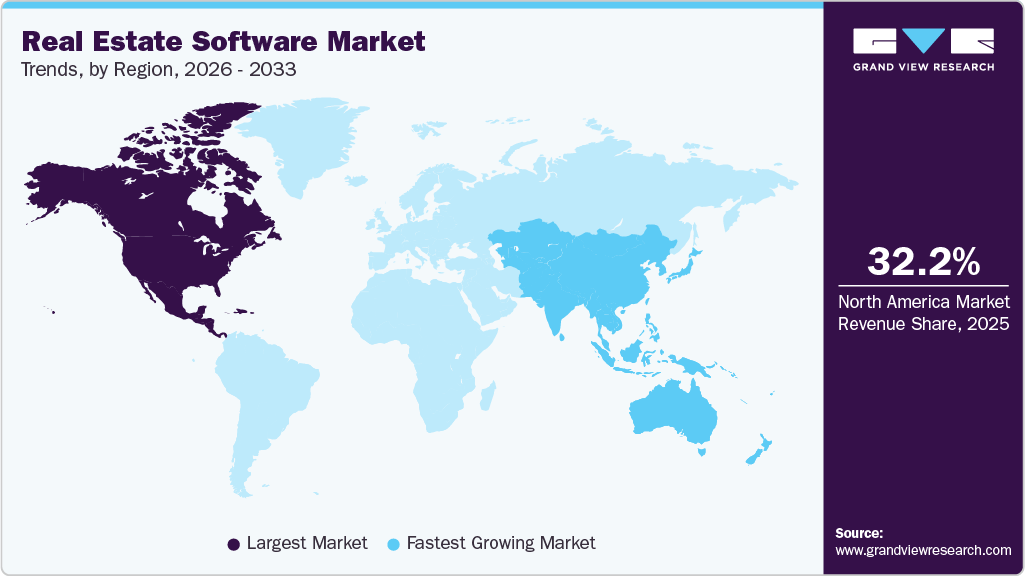
- North America held a 33.4% revenue share of the global real estate software market in 2025.
- In the U.S., the market is driven by the widespread adoption of cloud-based property management platforms, increasing demand for data-driven decision making, and the growing use of AI-enabled tools to automate leasing, maintenance, and customer relationship management processes.
- By type, the customer relationship management software segment held the largest revenue share of 27.4% in 2025.
- By deployment, the cloud segment held the largest revenue share in 2025.
Market Size & Forecast
- 2025 Market Size: USD 12.79 Billion
- 2033 Projected Market Size: USD 31.96 Billion
- CAGR (2026-2033): 12.2%
- North America: Largest market in 2025
- Asia Pacific: Fastest growing market
However, it is expected to recover from a post-pandemic due to the increased digitization of existing customer data and records, which helps clients predict purchasing behavior and customer trends. Population growth and rapid urbanization have led to a surge in major infrastructure projects that use smart solutions in recent years. Furthermore, the adoption of new software technologies, such as cloud and artificial intelligence, across multiple applications in the real estate market is also driving growth. Real estate software helps increase the productivity of businesses as they work in various areas such as social media, online advertising, and websites, leading to higher demand for efficient software tools. Moreover, factors such as the increased digitization of real estate businesses and improvements in automation technologies have positively impacted the market in recent years. Additionally, the demand for better data management strategies and more robust data protection is pushing firms to adopt a variety of software solutions and boost client retention.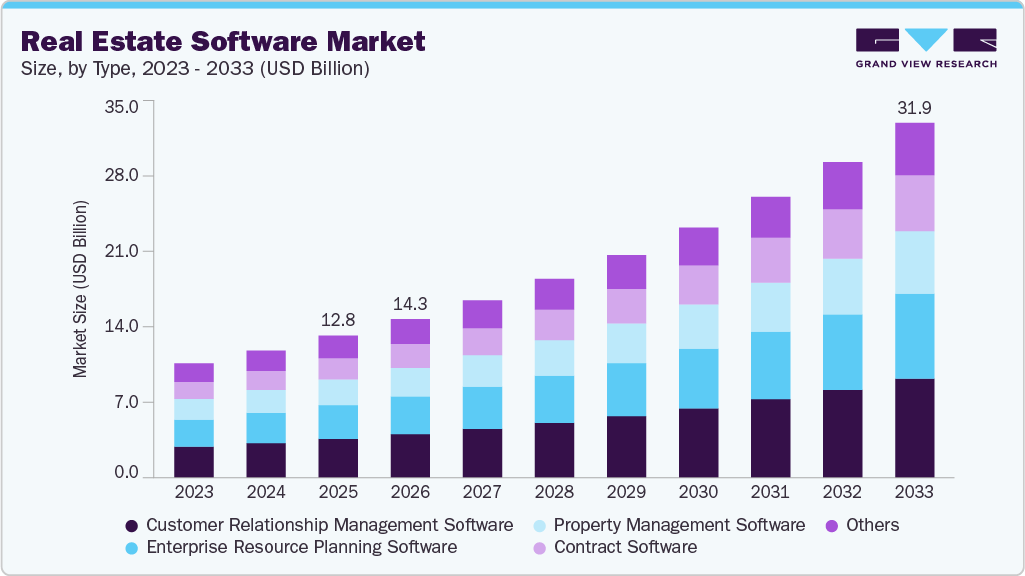
Key vendors in the real estate software market are adopting various technologies to offer products more relevant to the various needs of customers. Virtualization and adoption of Virtual Reality (VR) are expected to favor market growth as they help save time and resources, expand reach to include long-distance buyers, and increase user engagement. Many companies are also introducing integrated digital platforms to strengthen their online presence and improve customer interaction. For instance, in January 2026, RealEstate, a partner of the National Association of REALTORS, introduced a unified digital platform for real estate professionals. The platform offers website creation tools, AI-powered content and SEO features, integrated CRM, and mobile-optimized templates. It helps agents and brokerages manage branding, marketing, and client engagement through a single digital solution.
Furthermore, Artificial Intelligence (AI) and Machine Learning (ML) are allowing businesses to automate time-consuming tasks, resulting in a better ROI. Real estate software is employed to automate various processes or tasks and speed up the workflow. Internal teams such as sales and marketing, finance, and top management can better analyze the customer journey by monitoring the different segments of the real estate software, gathering information about leads, managing dashboards for employees, and tracking financial data for orders. These factors could facilitate the growth of the real estate software market soon. However, the high investments required, and the high training cost of the workforce could hamper the market growth to a certain extent. Property management businesses are transitioning to online platforms, which could further increase the cost of real estate software and hamper the growth of the market.
Type Insights
The customer relationship management software segment accounted for the largest market share of 27.4% in 2025. CRM software supports relations in staying organized, moving tenants, following up with potential buyers, and closing sales deals on properties. CRM software also helps improve productivity and efficiency by speeding up routine processes and keeping customers and clients up to date with recent updates. The adoption of smart technologies and enterprise applications for project management could further drive the segment’s growth. Additionally, the rising demand for CRM solutions for ensuring the security of sensitive information could have a positive impact on the CRM software segment.
The contract software segment is anticipated to grow at the fastest CAGR during the forecast period. Contract management software can assist in tightening inspection, compliance with regulatory requirements, reducing investor fears, and building customer trust. Data privacy regulation compliance facilitates protection from internal and external security threats, thus building trust among real estate customers. The adoption of digital technologies such as e-signatures and AI-assisted contract management are driving the growth of this segment. In addition, automated document tracking and centralized contract storage help organizations reduce paperwork and improve operational efficiency. These solutions also enable faster approvals and better collaboration between agents, legal teams, and clients.
Deployment Insights
The cloud segment accounted for a market share in 2025. Cloud-based software enables real estate companies to access data faster and more efficiently, thereby increasing workflow productivity. Moreover, efficient management of large volumes of data is possible through the cloud deployment model that has higher security standards. The significant growth in construction activities globally is expected to drive the adoption of cloud technologies to better manage businesses and improve efficiency and productivity by leveraging data to streamline processes.
The on-premise segment is anticipated to grow at the fastest CAGR during the forecast period. Compared to the on-premises deployment model, the cloud model does not require additional hardware, making it cost-efficient for small-scale businesses. Furthermore, the storage capacity of the cloud can be easily upgraded or downsized based on requirements, and the pay-as-you-go feature makes it more attractive. Moreover, cloud-based construction and project management solutions offer organizations functionalities such as project management, scheduling, and automating tasks into a single dashboard, which could deflate the demand for on-premise solutions.
Application Insights
The residential segment accounted for a market share in 2025. Demand for real estate software in the residential and commercial sectors has grown significantly in recent years. The rising preference for homeownership and the continually rising prices of residential property are also driving demand for real estate software. Buildings have seen an increase in modern infrastructure, and commercial spaces have grown significantly in previous years. In addition, property developers and agents are increasingly adopting digital platforms to manage listings, automate documentation, and improve communication with buyers. Real estate software also supports virtual property tours, online bookings, and digital payment systems, enhancing customer convenience. These capabilities are encouraging wider adoption of software solutions across residential real estate operations.
The commercial segment is expected to grow at the fastest CAGR during the forecast period. Real estate software helps residential and commercial property builders track associated activities, including transaction updates, property management, storage of legal documents, and easy handling of property accounts. Many countries have also seen an increase in the number of retail shops that require knowledge about property and building leases. Real estate software solutions can assist businesses and customers in acquiring relevant knowledge.
End Use Insights
The architects & engineers segment accounted for a market share in 2025. The segment is expected to continue to dominate the market during the forecast period as well. The rising demand for commercial and residential real estate is compelling architects and engineers to spend increasing time developing feasibility reports for new projects. Real estate software enables the quick, easy generation of these reports, allowing engineers and architects to focus on their core tasks. In addition, real estate software helps provide interactive, virtual property tours that architects can use to help customers better understand their designs.
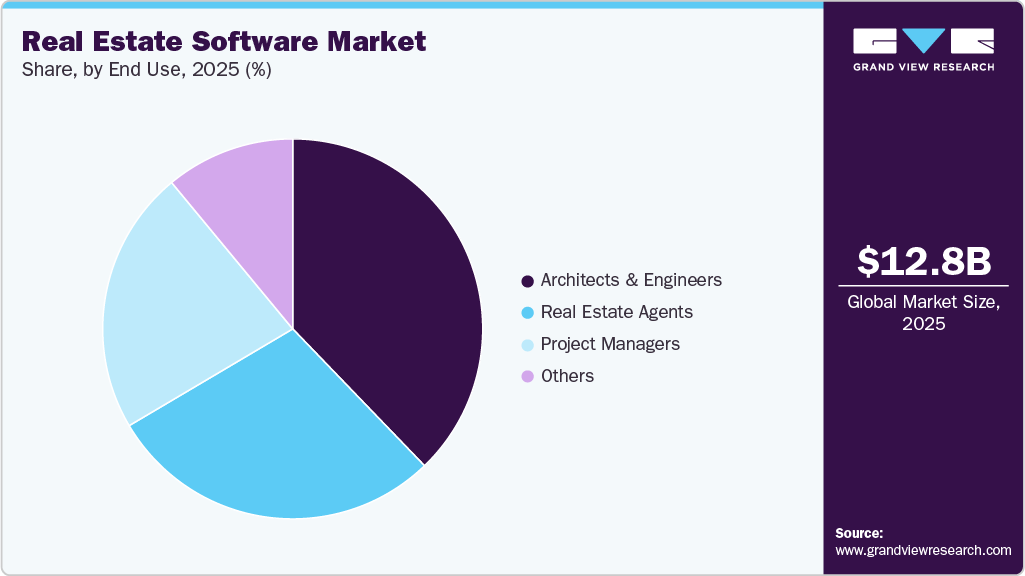
The real estate agents segment is expected to grow at the fastest CAGR during the forecast period. The real estate agents segment is expected to be the fastest-growing over the forecast period. This can be attributed to the increase in the adoption of digital technologies such as VR, AI, and blockchain in the real estate industry. Real estate agents have begun adopting digital technologies, such as remote property viewing, remote marketing and sales, and digital property management, to attract and retain customers. In addition, software platforms help agents manage property listings, track leads, and maintain client communication more efficiently. These tools also support data-driven decision-making, enabling agents to improve sales performance and customer engagement.
Regional Insights
North America real estate software is anticipated to register significant growth from 2026 to 2033, characterized by rapid adoption of digital tools that enhance property management, transaction efficiency, and data-driven decision-making amid rising urbanization and economic shifts. Market key drivers include the integration of artificial intelligence for predictive modeling and virtual reality for immersive property tours, which are transforming traditional practices into more agile, user-centric operations. Several industry participants are actively introducing advanced AI-driven platforms to strengthen their competitive positioning and accelerate digital transformation. For instance, in February 2026, CoStar Group launched a new AI-powered home search experience on Homes.com, using Microsoft technology. The platform enables conversational property searches, enhances consumer engagement, supports agents, and signals significant advancement in the competitive real estate software market.
U.S. Real Estate Software Market Trends
The U.S. real estate software market is expanding steadily as property management companies, brokers, and agents increasingly adopt digital tools to enhance efficiency. These solutions help automate tasks such as listings management, client communication, and transaction tracking. The demand is driven by the need for better data analytics, improved customer experience, and seamless workflow integration. Cloud-based platforms and mobile applications are gaining popularity for their flexibility and real-time accessibility. Overall, market growth reflects the industry's shift toward technology-driven operations and smarter decision-making.
Europe Real Estate Software Market Trends
The real estate software market in Europe is anticipated to register significant growth from 2026 to 2033. These platforms streamline tasks such as property listings, client management, and transaction processing, improving overall efficiency. Increasing demand for data-driven insights, enhanced customer experience, and regulatory compliance is driving market adoption. Cloud-based and mobile-enabled software solutions are becoming more popular due to their flexibility and accessibility. Overall, the market growth highlights the region’s shift toward technology-enabled real estate management and smarter business practices.
The UK real estate software market is driven by digital transformation across transactions, management, and analytics in both residential and commercial sectors. It generated significant revenue in 2023 and is forecast to expand at a robust compound annual growth rate through the latter part of this decade, reflecting strong demand for cloud‑based, AI‑enabled, and CRM solutions among agents, landlords, and investors. Adoption of PropTech and integrated digital platforms is reshaping traditional processes, although uptake varies across industry players as some remain cautious about perceived ROI. Key market contributors include online portals, property management systems, valuation and analytics tools, and platforms facilitating faster digital transactions.
The Germany real estate software market continues to hold a strong position within Europe. Companies are adopting software solutions for tasks such as property listing management, tenant communication, and financial reporting to enhance efficiency. Cloud-based platforms and AI-powered tools are gaining popularity for predictive analytics and automated workflows. Rising demand for smart building integration and data-driven decision-making is further supporting market expansion. Overall, the market reflects a shift toward technology-enabled solutions that streamline real estate processes and improve operational outcomes.
Asia Pacific Real Estate Software Market Trends
Asia Pacific accounted for the largest share in 2025 in global real estate software market, increasing adoption of cloud-based solutions and property management platforms is helping developers, brokers, and property managers streamline operations and improve efficiency. Rising urbanization and smart city initiatives are fueling demand for advanced real estate technologies. Integration of analytics, AI, and mobile applications is enhancing decision-making and customer engagement. Overall, the market is expected to expand steadily as technology adoption continues across residential, commercial, and industrial real estate segments.
The real estate software market in Japan is poised for robust growth from 2026 to 2033, driven by digital transformation and increased adoption of cloud‑based solutions across property management, brokerage, and transaction workflows. It is forecast to expand significantly over the next decade, with revenue projected to more than double by 2030, underpinned by strong demand for automation, AI‑enhanced analytics, and scalable platforms that improve operational efficiency. Market growth is supported by high internet and smartphone penetration, regulatory stability, and the increasing reliance on digital platforms for listings, contracts, and customer engagement. Key trends include the shift to cloud deployments, integration of machine learning and predictive tools, and the blending of traditional real estate services with advanced technology capabilities.
The real estate software market in China is projected to expand significantly from 2026 to 2033. Cloud‑based solutions are leading adoption, supported by trends toward automation, data analytics, and integrated property management platforms. Demand is driven by urbanization, industry digitization efforts, and the need for cost‑effective property operations. Overall, the market outlook remains positive with sustained growth prospects as digital transformation in China’s real estate sector continues.
The real estate software market in India is poised for rapid expansion from 2026 to 2033, driven by increasing digital adoption across property developers, brokers, and construction firms. Solutions such as property management, CRM, and virtual tour platforms are streamlining operations and improving customer engagement. The rising demand for automated workflows, data analytics, and cloud-based tools is enhancing decision-making and operational efficiency. Government initiatives promoting smart cities and transparent real estate transactions are further supporting market expansion. Overall, the market is evolving rapidly as stakeholders embrace technology to optimize processes and improve client experiences.
Key Real Estate Software Company Insights
Key players operating in the server industry are Accruent, Altus Group, Autodesk Inc., CoStar Realty Information Inc. and others. Companies are focusing on various strategic initiatives, including new product development, partnerships & collaborations, and agreements to gain a competitive advantage over their rivals. The following are some instances of such initiatives.
-
In July 2025, RealPage acquired Rexera to enhance its AI-enabled real estate software capabilities. Integrating agentic AI with HomeWiseDocs, the platform streamlines HOA document retrieval, lien searches, mortgage payoffs, and compliance workflows. This innovation improves efficiency, accuracy, and customer experience, enabling real estate professionals to manage operations on a scale more effectively.
-
In June 2025, AppFolio introduced Realm-X Performers, AI-powered tools designed to enhance real estate software performance. These agents automate leasing and maintenance workflows, manage inquiries, schedule showings, and prioritize requests. Integrated with Realm-X Flows, they streamline operations, improve efficiency, and help property managers maintain high occupancy and service quality.
-
In November 2024, JLL and Slate Asset Management launched JLL Asset Beacon, a SaaS platform for commercial real estate. It integrates financial, operational, and leasing data, offering real-time insights, AI-powered analytics, and customizable reporting. The platform helps asset managers optimize portfolios, mitigate risks, and make faster, data-driven investment decisions.
Key Real Estate Software Companies:
The following key companies have been profiled for this study on the real estate software market.
- Accruent
- Altus Group
- Autodesk Inc.
- CoStar Realty Information Inc.
- Microsoft Corporation
- MRI Software LLC
- Oracle Corporation
- RealPage Inc.
- SAP SE
- SMR Group
- Trimble Inc.
- Yardi Systems Inc.
Real Estate Software Market Report Scope
Report Attribute
Details
Market size in 2026
USD 14.29 billion
Revenue forecast in 2033
USD 31.96 billion
Growth rate
CAGR of 12.2% from 2026 to 2033
Actual data
2021 - 2025
Forecast period
2026 - 2033
Quantitative units
Revenue in USD Billion and CAGR from 2026 to 2033
Report Coverage
Revenue forecast, company share, competitive landscape, growth factors, and trends
Segments covered
Type, deployment, application, end use, region
Regional scope
North America; Europe; Asia Pacific; Latin America; MEA
Country scope
U.S.; Canada; Mexico; UK; Germany; France; China; India; Japan; Australia; South Korea; Brazil; UAE; Kingdom of Saudi Arabia; South Africa
Key companies profiled
Accruent; Altus Group; Autodesk Inc.; CoStar Realty Information Inc.; Microsoft Corporation; MRI Software LLC; Oracle Corporation; RealPage Inc.; SAP SE; SMR Group; Trimble Inc.; Yardi Systems Inc.
Customization scope
Free report customization (equivalent to 8 analysts working days) with purchase. Addition or alteration to country, regional & segment scope.
Pricing and purchase options
Avail customized purchase options to meet your exact research needs. Explore purchase options
Global Real Estate Software Market Report Segmentation
This report forecasts revenue growth at global, regional, and country levels and provides an analysis of the latest industry trends in each of the sub-segments from 2021 to 2033. For this study, Grand View Research has segmented the real estate software market report based on type, deployment, application, end use, and region:
-
Type Outlook (Revenue, USD Billion, 2021 - 2033)
-
Customer Relationship Management Software
-
Enterprise Resource Planning Software
-
Property Management Software
-
Contract Software
-
Others
-
-
Deployment Outlook (Revenue, USD Billion, 2021 - 2033)
-
Cloud
-
On-premise
-
-
Application Outlook (Revenue, USD Billion, 2021 - 2033)
-
Commercial
-
Residential
-
-
End Use Outlook (Revenue, USD Billion, 2021 - 2033)
-
Architects & Engineers
-
Project Managers
-
Real Estate Agents
-
Others
-
-
Regional Outlook (Revenue, USD Billion, 2021 - 2033)
-
North America
-
U.S.
-
Canada
-
Mexico
-
-
Europe
-
UK
-
Germany
-
France
-
-
Asia Pacific
-
China
-
India
-
Japan
-
South Korea
-
Australia
-
-
Latin America
-
Brazil
-
-
Middle East & Africa
-
UAE
-
Saudi Arabia
-
South Africa
-
-
Frequently Asked Questions About This Report
b. Key factors that are driving the real estate software market growth include the growing population and rapid urbanization has led to a rise in major infrastructure development projects using smart solutions in recent years. Furthermore, the adoption of new software technologies such as cloud and artificial intelligence across several applications in the real estate market is also driving the market.
b. The customer relationship management software segment dominated the real estate software market in 2025 due to its ability to streamline lead management, enhance client interactions, and support efficient sales and marketing processes.
b. Some key players operating in the market include Accruent, Altus Group, Autodesk Inc., CoStar Realty Information Inc., Microsoft Corporation, MRI Software LLC, Oracle Corporation, RealPage Inc., SAP SE, SMR Group, Trimble Inc., Yardi Systems Inc. and others.
b. The global real estate software market size was estimated at USD 12.79 billion in 2025 and is expected to reach USD 14.29 billion in 2026.
b. The global real estate software market is expected to grow at a compound annual growth rate of 12.2% from 2026 to 2033 to reach USD 31.96 billion by 2033.

Share this report with your colleague or friend.
Need a Tailored Report?
Customize this report to your needs — add regions, segments, or data points, with 20% free customization.


ISO 9001:2015 & 27001:2022 Certified
We are GDPR and CCPA compliant! Your transaction & personal information is safe and secure. For more details, please read our privacy policy.
Trusted market insights - try a free sample
See how our reports are structured and why industry leaders rely on Grand View Research. Get a free sample or ask us to tailor this report to your needs.












