
- Home
- »
- Alcohol & Tobacco
- »
-
Ready-to-Drink Cocktails Market Size, Industry Report, 2033GVR Report cover
![Ready-to-Drink Cocktails Market Size, Share & Trends Report]()
Ready-to-Drink Cocktails Market (2026 - 2033) Size, Share & Trends Analysis Report By Type (Malt-based, Spirit-based, Wine-based), By Packaging (Bottles, Cans), By Distribution Channel (Hypermarkets/Supermarkets, Online, Liquor Stores), By Region, And Segment Forecasts
- Report ID: GVR-4-68039-253-5
- Number of Report Pages: 165
- Format: PDF
- Historical Range: 2021 - 2025
- Forecast Period: 2026 - 2033
- Industry: Consumer Goods
- Report Summary
- Table of Contents
- Interactive Charts
- Methodology
- Download FREE Sample
-
 Download Sample Report
Ready-to-Drink Cocktails Market Summary
The global ready-to-drink cocktails market size was estimated at USD 3,693.1 million in 2025 and is projected to reach USD 10,721.0 million by 2033, growing at a CAGR of 14.1% from 2026 to 2033. One prominent trend is the convenience factor and evolving consumer lifestyles. Modern consumers, particularly millennials and Gen Z, prioritize convenience and are constantly seeking on-the-go beverage options that fit their busy schedules.
Key Market Trends & Insights
- North America led the ready-to-drink cocktails market with a share of over 32.5% in 2025.
- The ready-to-drink cocktails market in the U.S. is expected to grow at a CAGR of 14.0% from 2026 to 2033.
- By type, the malt-based led the market and accounted for a share of 81.3% in 2025.
- By packaging, the cans led the market and accounted for a share of 78.2% in 2025.
- By distribution channel, the hypermarkets/supermarkets led the market and accounted for a share of 44.2% in 2025.
Market Size & Forecast
- 2025 Market Size: USD 3,693.1 Million
- 2033 Projected Market Size: USD 10,721.0 Million
- CAGR (2026-2033): 14.1%
- North America: Largest market in 2025
- Asia Pacific: Fastest growing market
RTD cocktails offer a hassle-free alternative to traditional cocktail preparation, eliminating the need for multiple ingredients and mixing equipment. This convenience is particularly appealing for outdoor activities, social gatherings, and at-home consumption, contributing significantly to market growth. Furthermore, increasing urbanization and a shift towards smaller households are also driving demand for convenient, single-serve beverage options like RTD cocktails. In April 2025, Tilray Brands launched a new line of ready-to-drink cocktails called Cruisies, featuring flavors such as Blood Orange Vodka Soda, Golf Tea, and Cuba Libre, with 6% ABV and distribution initially focused on Long Island, New York, followed by broader U.S. expansion plans.Consumers are no longer satisfied with basic, mass-produced alcoholic beverages. They are increasingly willing to pay a premium for high-quality ingredients, unique flavor combinations, and innovative packaging. This has led to the emergence of craft RTD cocktails featuring natural ingredients, artisanal spirits, and globally-inspired flavors. Manufacturers are responding by experimenting with exotic fruits, botanical infusions, and innovative production techniques to create differentiated products that cater to evolving taste preferences. The desire for healthier options is also driving the development of low-sugar, low-calorie, and organic RTD cocktail variants. In September 2025, Sazerac Company expanded its RTD cocktail portfolio by launching three new brands in Texas, including Nuestro (margarita-style cocktails), Vamos (wine-based party punch RTDs), and Brightway (low-calorie vodka RTD cocktails), targeting younger consumers and convenience retail channels.
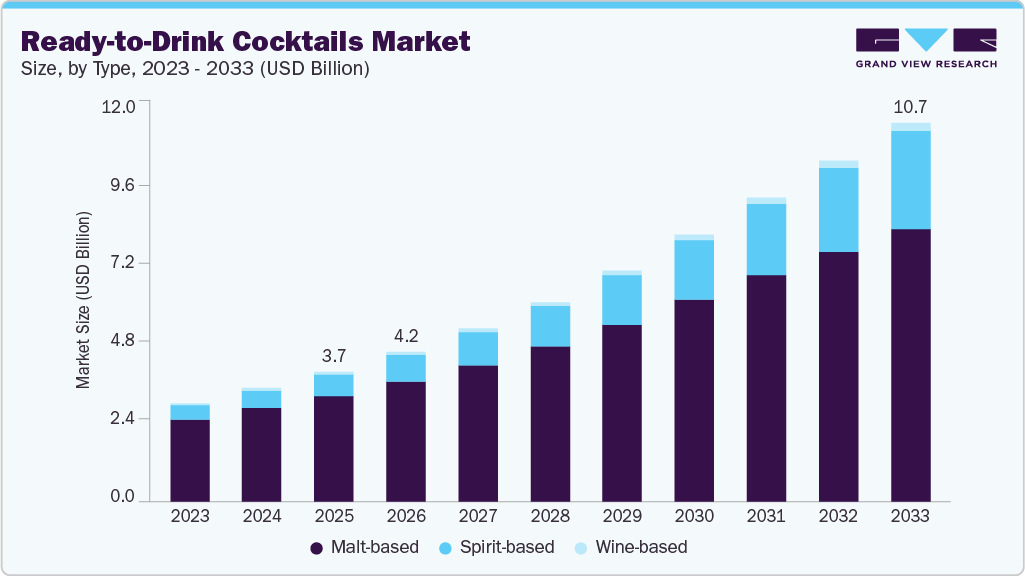
The expansion of distribution channels and the increasing availability of RTD cocktails are also crucial demand drivers. Once primarily confined to liquor stores, RTD cocktails are now increasingly available in supermarkets, convenience stores, online retailers, and even on-premise establishments like bars and restaurants. This wider accessibility has significantly increased consumer awareness and purchase opportunities. The growth of e-commerce platforms has further facilitated the distribution of RTD cocktails, reaching a wider audience and enabling manufacturers to introduce new products and target specific consumer segments more effectively. Furthermore, strategic partnerships with grocery chains and restaurant groups are expanding the reach and accessibility of RTD cocktails, driving RTD alcohol market growth.
RTD cocktail manufacturers are increasingly leveraging social media platforms, influencer marketing, and targeted advertising campaigns to connect with their target audience and build brand awareness. These campaigns often emphasize the convenience, taste, quality, and unique attributes of their products. Visual appeal is also crucial, with manufacturers investing in attractive packaging designs that stand out on shelves and appeal to younger consumers. By effectively communicating the value proposition of RTD cocktails and creating a positive brand image, manufacturers are successfully driving consumer adoption and expanding the RTD alcohol market footprint. In May 2025, Suntory Holdings, through its On The Rocks Cocktails brand, introduced the Yuzu Matcha Martini and Japanese Boulevardier RTD cocktails as part of the Harmony Collection, combining traditional Japanese ingredients like matcha and yuzu with premium spirits for at-home consumption.
Innovations in packaging and preservation technologies are also playing a crucial role in the growth of the RTD alcohol market. Advancements in canning and bottling techniques have improved the shelf life and portability of these beverages, allowing manufacturers to reach a wider distribution network. Furthermore, the use of nitrogen infusion and other preservation methods has enhanced the texture and flavor of RTD cocktails, making them more appealing to consumers. Sustainable packaging options, such as recyclable cans and eco-friendly labels, are also gaining traction as consumers become more environmentally conscious. In June 2025, Blake Lively expanded her RTD beverage brand Betty Booze by launching two new vodka iced tea ready-to-drink cocktails, Meyer Lemonade and Passion Fruit, targeted at social and casual consumption occasions.
Consumer Surveys & Insights
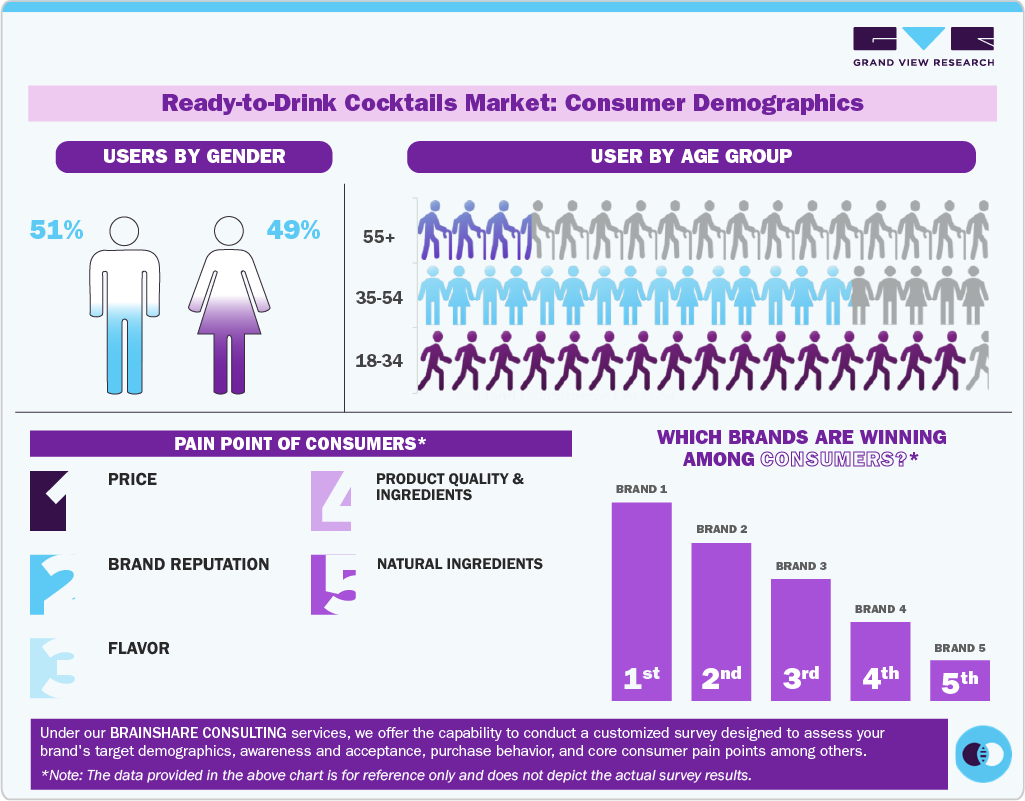
According to the 2025 RTD Strategic Study, in 2025, approximately 55 % of U.S. RTD consumers reported drinking RTDs at least once per week, up significantly from 44 % in 2023, and 57 % of RTD consumers were either Millennials or Gen Z, underscoring the strong appeal among younger adult drinkers. The RTD category continues to enjoy broad gender appeal, with both men and women participating in similar proportions in the U.S., reinforcing that RTDs are not heavily skewed toward one gender.
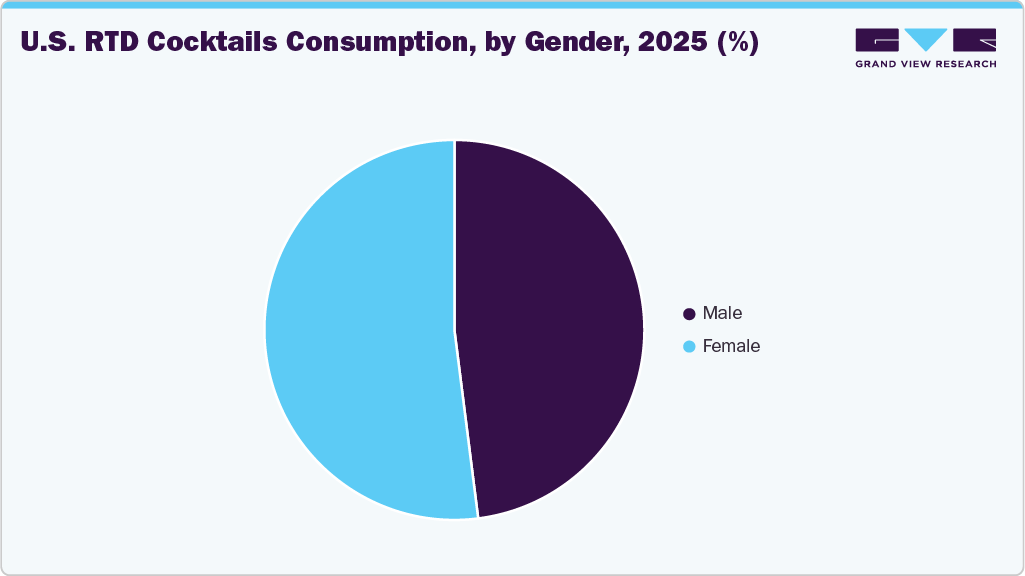
According to earnings commentary from Diageo (FY2025 results), RTD portfolio growth in North America has been disproportionately driven by legal-age consumers under 35, particularly in tequila- and vodka-based canned cocktails, reflecting sustained category relevance among Millennials and Gen Z. Constellation Brands reported in its FY2025 earnings call that its ready-to-drink (RTD) and flavored alcoholic beverage portfolio demonstrates balanced gender purchasing trends, with incremental growth observed among female legal-age consumers in convenience and grocery channels.
Type Insights
The malt-based RTD cocktails market accounted for a revenue share of 81.3% in 2025. Malt-based RTD cocktails, often positioned as convenient alternatives to traditional beer, are experiencing a surge in popularity driven by a desire for bolder flavors and a perception of being slightly lighter and more refreshing than some spirit-based counterparts. A key trend is innovation in flavor profiles, moving beyond standard citrus and fruit combinations to encompass more complex and adventurous blends featuring botanicals, spices, and even savory notes. This caters to consumers seeking unique and sophisticated drinking experiences without the fuss of mixing their cocktails. Furthermore, the lower alcohol content compared to some spirit-based options appeals to health-conscious consumers and those seeking sessionable, enjoyable beverages for social occasions.
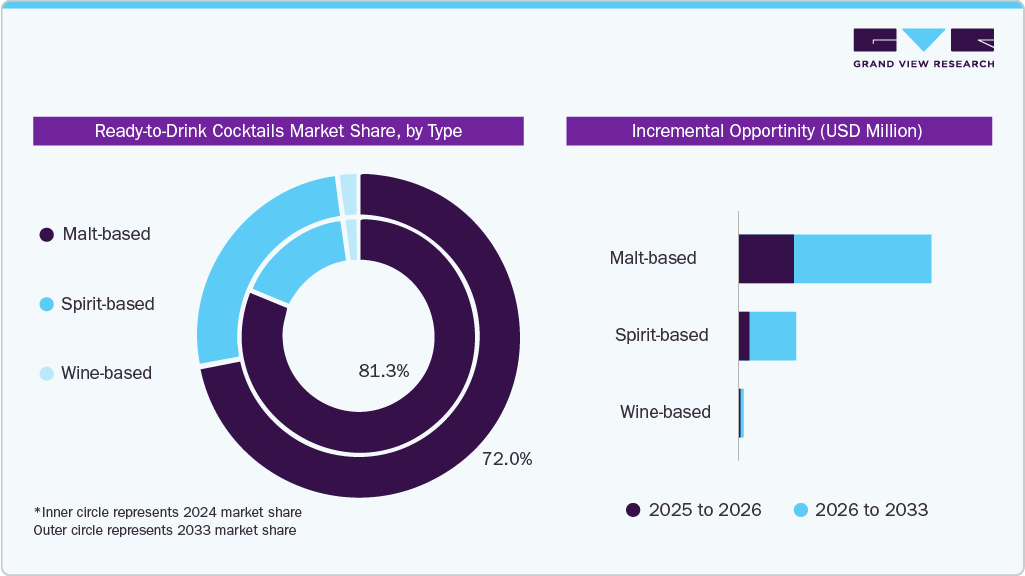
The spirit-based RTD cocktails market is anticipated to witness a growth rate of 20.5% from 2026 to 2033, fueled by a desire for premium, bar-quality experiences in a convenient format. The key trend here is the use of premium spirits and authentic cocktail recipes, offering consumers a taste of their favorite cocktails without the effort of preparation or the need to visit a bar. This segment also benefits from the perception of higher quality and sophistication, appealing to consumers willing to pay a premium for a more elevated drinking experience. Brands are increasingly focusing on using high-quality ingredients, including natural flavors and real fruit juices, to further differentiate themselves and appeal to discerning palates. Moreover, the increasing popularity of e-commerce and online delivery services has further boosted their accessibility, allowing consumers to easily purchase their favorite spirit-based RTD cocktails from the comfort of their homes.
Packaging Insights
The cans accounted for a revenue share of 78.2% in 2025. Cans are lightweight, durable, unbreakable, and readily chilled, making them ideal for outdoor activities, social gatherings, and on-the-go consumption. This convenience factor aligns perfectly with the busy lifestyles of modern consumers, who increasingly seek ready-to-enjoy solutions without compromising on quality or taste. Furthermore, the can format has become associated with accessibility and affordability, which has helped to democratize the RTD cocktail market, making it available to a broader audience. The development of innovative can designs, coupled with colorful and attractive graphics, has further driven their appeal, particularly among younger demographics.
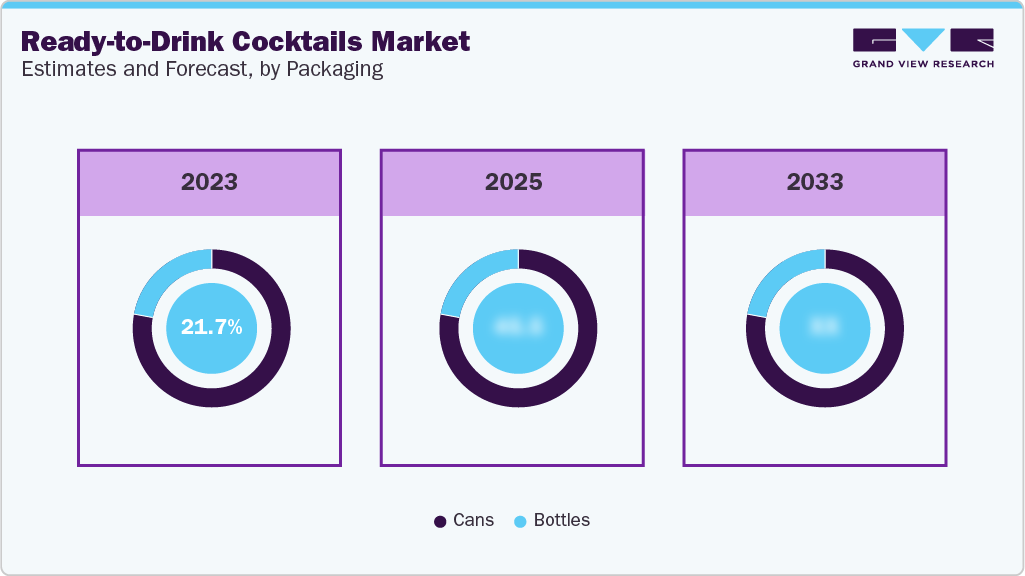
The bottled RTD cocktails market is anticipated to witness a growth rate of 14.5% from 2026 to 2033, driven by a desire for premiumization and the visual appeal that glass packaging offers. Consumers associate glass bottles with higher quality, craftsmanship, and a more sophisticated drinking experience, often drawing parallels to traditional cocktails served in bars. This perception is fueling demand for bottled RTDs that utilize high-end spirits, natural ingredients, and unique flavor profiles. Furthermore, the tactile sensation of a glass bottle, along with its re-sealability in many cases, contributes to a more elevated and leisurely consumption experience. Additionally, glass requires more energy to produce and recycle compared to other alternatives, which adds to its environmental footprint and may not appeal to environmentally conscious consumers.
Distribution Channel Insights
The sales of ready-to-drink cocktails through hypermarkets/supermarket channels accounted for a revenue share of 44.2% in 2025. driven by consumer preference for convenience and accessibility. These large-format stores provide a one-stop shop experience, allowing consumers to easily browse and purchase RTD cocktails alongside their regular groceries. This encourages impulse buys and broadens the reach of these beverages to a wider audience, including those who might not typically visit liquor stores. Moreover, the trend towards premiumization is evident in this channel, with consumers increasingly seeking out higher-quality RTD cocktails featuring natural ingredients, craft spirits, and innovative flavor profiles. Furthermore, the demand within hypermarkets and supermarkets is also fueled by the increasing popularity of at-home consumption and casual gatherings.
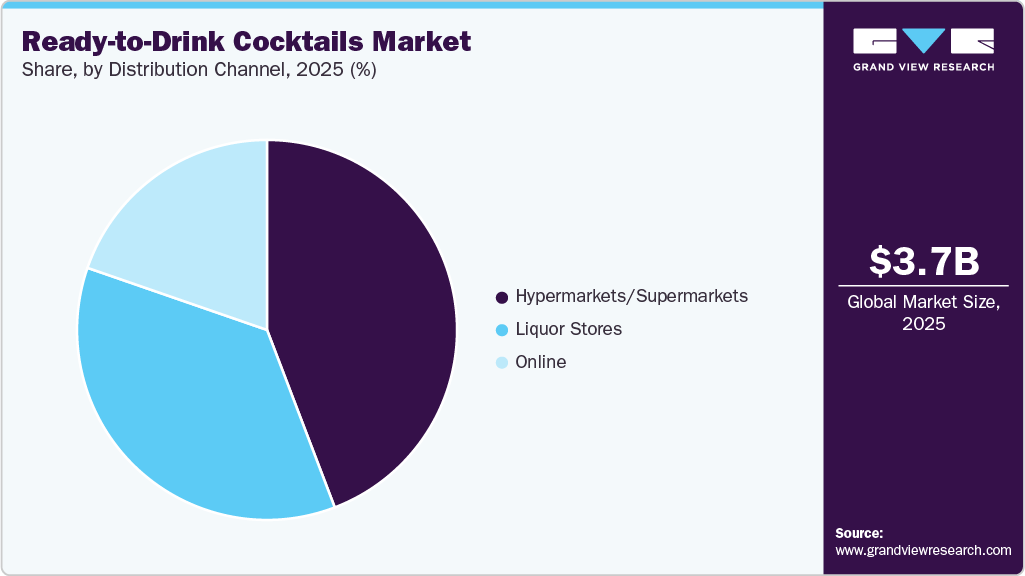
The online segment is estimated to grow at a CAGR of 16.7% from 2026 to 2033. Consumers appreciate the ability to browse a diverse range of products from the comfort of their homes, compare prices, and access reviews before making a purchase. This convenience is particularly appealing to younger demographics who are comfortable with online shopping and are also significant consumers of RTD cocktails. Moreover, online platforms offer a wider variety of options than traditional brick-and-mortar stores, including limited-edition releases, craft brands, and international products that may not be available locally. This vast selection caters to a diverse range of tastes and preferences, attracting both adventurous and niche consumers to the online channel. Besides, online platforms also offer features like subscription services and direct-to-consumer delivery, which enhance convenience and build customer loyalty.
Regional Insights
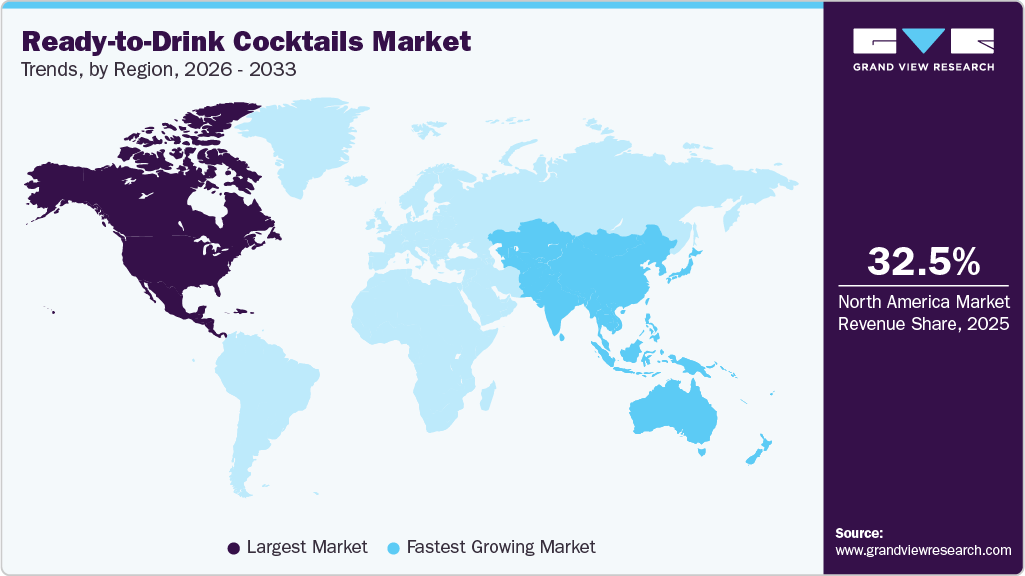
The ready-to-drink cocktails in North America held over 32.5% of the global revenue in 2025, fueled by a combination of convenience and a desire for premium, diverse options. Consumers are increasingly seeking alternatives to traditional beer and wine, and RTDs offer a flavorful and portable solution for social gatherings, outdoor activities, and at-home consumption. The rise of health-conscious consumers is also shaping the RTD alcohol market, leading to demand for lower-sugar, lower-calorie, and "better-for-you" options, often incorporated with natural ingredients and clean labels. Innovation in unique flavor profiles, including those inspired by craft cocktails, is a major trend, as is the use of high-quality spirits and premium packaging reflecting a more sophisticated experience.
U.S. Ready-to-Drink Cocktails Market Trends
The ready-to-drink cocktails market in the U.S. is expected to grow at a CAGR of 14.0% from 2026 to 2033, fueled by a desire for convenience and the increasing popularity of premium, flavorful alcoholic beverages. Consumers, particularly millennials and Gen Z, are drawn to the portability and ease of RTDs, fitting their on-the-go lifestyles. Beyond convenience, a growing interest in lower-calorie and low-sugar options is driving innovation within the category, with brands increasingly using natural ingredients and focusing on the health-conscious consumer. The rise of e-commerce and robust distribution networks has also expanded the reach of RTD cocktails, making them readily accessible in a variety of retail outlets, further boosting demand.
Europe Ready-to-Drink Cocktails Market Trends
The ready-to-drink cocktails market in Europe is expected to grow at a CAGR of 14.2% from 2026 to 2033. Convenience remains a key motivator, but there's also a growing appreciation for authentic flavors and heritage. Consumers are drawn to RTDs that feature recognizable and classic cocktail recipes, often with a modern twist, and this aligns with a general preference for familiar tastes, which is then amplified throughout the European RTD alcohol market. There is also a preference for premium quality and a desire to recreate the bar experience at home, leading to a demand for drinks made with high-quality spirits and natural ingredients. The appeal for lower-alcohol options is also evident, with many consumers seeking lighter, non-alcoholic RTD beverages across the countries in the region. Southern European countries often lean towards fruit-forward and refreshing options, while Northern European consumers may be drawn to more spirit-forward profiles.
Germany ready-to-drink cocktails market is expected to grow at a CAGR of 14.4% from 2026 to 2033, characterized by a preference for classic and familiar cocktail flavors. While the convenience factor plays a role, German consumers are also increasingly seeking higher-quality products with natural ingredients and a focus on authenticity. There is a notable trend towards premiumization within the RTD sector, with brands using premium spirits and artisanal techniques gaining traction amongst discerning consumers. This reflects a broader consumer interest in craft beverages rather than mass-produced options. In Germany, established drinking habits and cultural norms surrounding traditional beers and wines mean the RTD category faces some headwinds, especially compared to the U.S. However, the appeal of convenience and an evolving younger generation that is less traditionally inclined are driving increased adoption.
The ready-to-drink cocktails in the UK held over 23.1% of the European revenue in 2025, driven by a strong desire for convenience and a vibrant social drinking culture. Consumers in the UK are highly receptive to new and innovative trends and are becoming increasingly interested in flavorful, quality-focused offerings. The proliferation of bars and pubs with dedicated cocktail menus has fueled this consumer interest in cocktails, which is now extending to the RTD sector. This is particularly apparent amongst a younger generation looking for novel drinking experiences and alternatives to beer and wine. The growing trend of socializing at home and outdoor events has further boosted the demand for RTD cocktails in the UK. The ease of bringing and serving pre-made cocktails is proving incredibly popular. Furthermore, brands are actively catering to the health-conscious consumer with a focus on low-sugar and lower-calorie offerings.
Asia Pacific Ready-to-Drink Cocktails Market Trends
The ready-to-drink cocktails market in the Asia Pacific is set to grow at a CAGR of about 14.9% from 2026 to 2033, characterized by rapid expansion and significant diversity, with varying trends driven by unique cultural preferences and economic factors across the region. In many countries, RTDs present a convenient and accessible entry point to alcoholic beverages from a category traditionally dominated by other drink options. The appeal of trendy flavors, eye-catching packaging, and brands endorsed by popular culture icons strongly resonates with younger generations. The rise of e-commerce and online retail is proving to be a critical growth driver, making RTDs more accessible to a broad customer base, particularly amongst those who prefer to purchase items via their mobile devices. Furthermore, specific regional preferences influence demand. In markets like Japan and South Korea, consumers are drawn to lighter, more refreshing flavors and lower alcohol content, whereas markets like Australia see more demand for spirit-based RTD cocktail options.
China ready-to-drink cocktails market is experiencing rapid growth, fueled by a young, urban demographic eager to experiment with new and convenient drinking options. A key trend is the increasing demand for premium and craft-inspired RTDs, moving beyond basic flavors to more complex and sophisticated profiles mimicking popular bar cocktails. Consumers are drawn to the ready-to-drink format for its portability and accessibility, especially in social settings and at-home consumption. Furthermore, e-commerce platforms like Tmall and JD.com are playing a crucial role in driving sales and expanding the reach of RTD brands to consumers in both major cities and smaller, emerging markets. Local brands are gaining traction as well, innovating with flavors that appeal to the Chinese palate, such as incorporating traditional teas and fruits.
The ready-to-drink cocktails market in Japan, known as "canned cocktails" or "chūhai," is a mature and highly competitive RTD alcohol market with a long history. A dominant trend is the continuing innovation in flavor profiles, with a constant stream of new and seasonal releases targeting discerning consumers. Fruit flavors, particularly citrus, remain popular, but there is also a growing interest in more complex and savory flavors, as well as collaborations with popular snack brands. Health-conscious options, such as low-sugar, zero-sugar, and fruit-infused sparkling water variations, are also gaining significant traction, reflecting a broader focus on wellness among consumers.
Australia & New Zealand ready-to-drink cocktails market is set to grow at a significant CAGR from 2026 to 2033, driven by a laid-back outdoor lifestyle and a strong preference for convenient alcoholic beverages. There is a high degree of acceptance for new and innovative products, and consumers are generally adventurous when it comes to flavors. The RTD alcohol market is particularly popular at social gatherings and outdoor events, and this aligns with the local culture. Consumers in Australia and New Zealand are increasingly seeking out beverages made with natural ingredients that are low in sugar and calories. This has led to the rise in hard seltzers as well as other light spirits-based RTDs.
Key Ready-to-Drink Cocktails Company Insights
Key companies, including Ranch Rider Spirits Co., House of Delola, LLC, Diageo plc, Brown-Forman, Bacardi Limited, Asahi Group Holdings, Ltd., Pernod Ricard, Halewood Wines & Spirits, Shanghai Bacchus Liquor Co., Ltd., Suntory Holdings Limited, Manchester Drinks Company Ltd., and Anheuser-Busch InBev, hold significant positions in the RTD cocktails market. These key companies possess significant brand recognition and established distribution networks, allowing them to leverage their existing portfolios and introduce RTD cocktail variations catered to specific consumer preferences.
These companies often prioritize acquisitions and strategic partnerships to expand their product offerings and geographical reach. New product launches, particularly those incorporating trending flavors and health-conscious attributes (e.g., low-sugar or organic options), are a primary driver of market share gains. For example, a major player might launch a line of tequila-based RTD cocktails targeting the growing popularity of tequila-based drinks.
Mergers and acquisitions are strategically employed to consolidate market positions and gain access to new markets or technologies. Expansion into new geographical regions is another common tactic, with major brands investing in distribution networks in emerging markets with growing disposable incomes. Partnerships with influential bars and restaurants or collaborations with celebrities are also frequently employed to enhance brand visibility and appeal to specific target audiences, further impacting RTD alcohol market share dynamics.
Key Ready-to-Drink Cocktails Companies:
The following key companies have been profiled for this study on the ready-to-drink cocktails market.
- Ranch Rider Spirits Co.
- House of Delola, LLC
- Diageo plc
- Brown-Forman
- Bacardi Limited
- Asahi Group Holdings, Ltd.
- Pernod Ricard
- Halewood Wines & Spirits
- Shanghai Bacchus Liquor Co., Ltd.
- Suntory Holdings Limited
- Manchester Drinks Company Ltd.
- Anheuser-Busch InBev
Recent Developments
-
In April 2025, Bacardi introduced BACARDÍ Real Rum Cocktails, a ready-to-serve canned cocktail range featuring flavors such as Mojito, Limon & Lemonade, and Bahama Mama. The range uses Bacardi Superior rum and natural fruit flavors, targeting outdoor, festival, and convenience consumption occasions.
-
In March 2025, Diageo expanded its Ketel One Botanical Vodka Spritz RTD portfolio by introducing new flavors, including Grapefruit & Rose and Peach & Orange Blossom, in slim cans. These ready-to-drink spritz cocktails were launched to address rising demand for low-ABV premium vodka-based canned cocktails among health-conscious consumers.
-
In February 2025, Brown-Forman expanded its successful Jack Daniel’s & Coca-Cola RTD lineup with a new Cherry variant, building on the global success of the original collaboration. The product combines Jack Daniel’s Tennessee Whiskey with Coca-Cola Cherry flavor in a pre-mixed canned format.
-
In January 2025, Pernod Ricard expanded its partnership with Ocean Spray by introducing new Absolut Ocean Spray Vodka Cranberry canned cocktails, including Cran-Mango and Cran-Pineapple variants. These RTDs were developed using Absolut Vodka and real fruit juice, targeting younger legal-drinking-age consumers seeking recognizable cocktail flavors in convenient formats.
Ready-to-Drink Cocktails Market Report Scope
Report Attribute
Details
Market size value in 2026
USD 4,252.4 million
Revenue forecast in 2033
USD 10,721.0 million
Growth rate
CAGR of 14.1% from 2026 to 2033
Actuals
2021- 2025
Forecast period
2026 - 2033
Quantitative units
Volume in thousand 9-Liter cases, revenue in USD million/billion and CAGR from 2026 to 2033
Report coverage
Revenue forecast, company ranking, competitive landscape, growth factors, and trends
Segments covered
Type, packaging, distribution channel, region
Regional scope
North America; Europe; Asia Pacific; Central & South America; MEA
Country scope
U.S.; Canada; Mexico; UK; Germany; France; Italy; Spain; China; Japan; India; South Korea; Australia & New Zealand; Brazil; South Africa
Key companies profiled
Ranch Rider Spirits Co.; House of Delola, LLC; Diageo plc; Brown-Forman; Bacardi Limited; Asahi Group Holdings, Ltd.; Pernod Ricard; Halewood Wines & Spirits; Shanghai Bacchus Liquor Co., Ltd.; Suntory Holdings Limited; Manchester Drinks Company Ltd.; Anheuser-Busch InBev
Customization scope
Free report customization (equivalent up to 8 analysts working days) with purchase. Addition or alteration to country, regional & segment scope.
Pricing and purchase options
Avail customized purchase options to meet your exact research needs. Explore purchase options
Global Ready-to-Drink Cocktails Market Report Segmentation
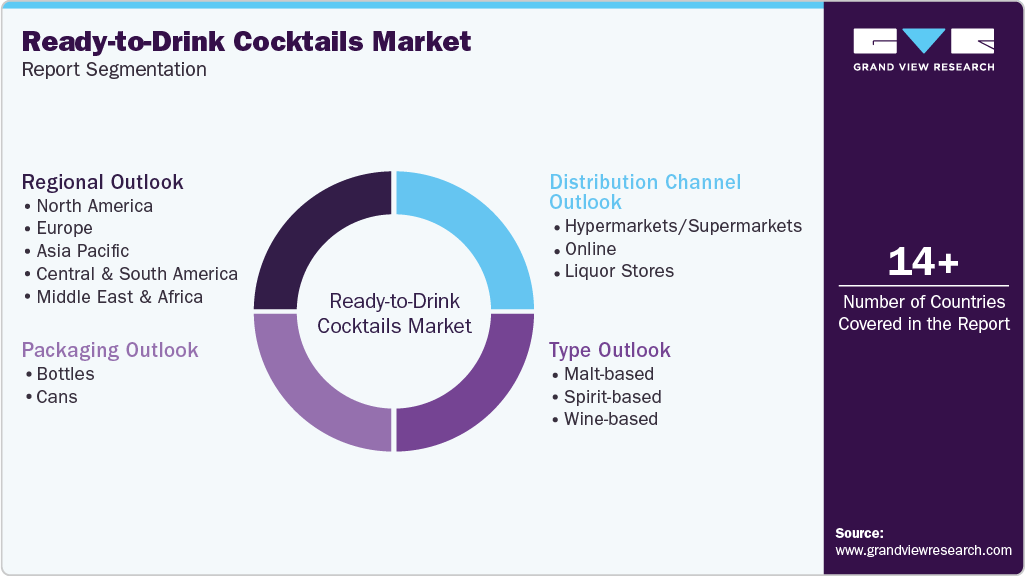
This report forecasts revenue growth at global, regional & country levels and provides an analysis of the industry trends in each of the sub-segments from 2021 to 2033. For this study, Grand View Research has segmented the global ready-to-drink cocktails market report based on type, packaging, distribution channel, and region:
-
Type Outlook (Volume, Thousand 9-Liter Cases; Revenue, USD Million, 2021 - 2033)
-
Malt-based
-
Spirit-based
-
Wine-based
-
-
Packaging Outlook (Volume, Thousand 9-Liter Cases; Revenue, USD Million, 2021 - 2033)
-
Bottles
-
Cans
-
-
Distribution Channel Outlook (Volume, Thousand 9-Liter Cases; Revenue, USD Million, 2021 - 2033)
-
Hypermarkets/Supermarkets
-
Online
-
Liquor Stores
-
-
Regional Outlook (Volume, Thousand 9-Liter Cases; Revenue, USD Million, 2021 - 2033)
-
North America
-
U.S.
-
Canada
-
Mexico
-
-
Europe
-
UK
-
Germany
-
France
-
Italy
-
Spain
-
-
Asia Pacific
-
China
-
Japan
-
India
-
South Korea
-
Australia & New Zealand
-
-
Central & South America
-
Brazil
-
-
Middle East & Africa
-
South Africa
-
-
Frequently Asked Questions About This Report
b. Some key players operating in the ready to drink cocktails market include The Absolut Company; House of Delola, LLC; Diageo plc; Brown-Forman; Bacardi Limited; and Asahi Group Holdings, Ltd.
b. Key factors that are driving the market growth include health-conscious consumers in developed countries are increasingly opting for low-alcohol flavored beverages.
b. The ready-to-drink cocktails in North America held over 32.5% of the global revenue in 2025, fueled by a combination of convenience and a desire for premium, diverse options.
b. The global ready-to-drink cocktails market size was valued at USD 3,693.1 million in 2025 and is anticipated to reach USD 4,252.4 million by 2026.
b. The global ready-to-drink cocktails market size is expected to reach USD 10,721.0 million by 2033 and is anticipated to grow at a CAGR of 14.1% over the forecast period of 2026 to 2033.


Share this report with your colleague or friend.
Need a Tailored Report?
Customize this report to your needs — add regions, segments, or data points, with 20% free customization.


ISO 9001:2015 & 27001:2022 Certified
We are GDPR and CCPA compliant! Your transaction & personal information is safe and secure. For more details, please read our privacy policy.
Trusted market insights - try a free sample
See how our reports are structured and why industry leaders rely on Grand View Research. Get a free sample or ask us to tailor this report to your needs.












