
- Home
- »
- Clothing, Footwear & Accessories
- »
-
Middle East Seamless Apparel Market, Industry Report, 2033GVR Report cover
![Middle East Seamless Apparel Market Size, Share & Trends Report]()
Middle East Seamless Apparel Market (2026 - 2033) Size, Share & Trends Analysis Report By Product Type (Sports Bra, Leggings, Tops, Underwear), By Material (Polymide, Polyester, Elastane, Blends), By End-user, And Segment Forecasts
- Report ID: GVR-4-68040-834-4
- Number of Report Pages: 110
- Format: PDF
- Historical Range: 2021 - 2025
- Forecast Period: 2026 - 2033
- Industry: Consumer Goods
- Report Summary
- Table of Contents
- Segmentation
- Methodology
- Download FREE Sample
-
 Download Sample Report
Middle East Seamless Apparel Market Summary
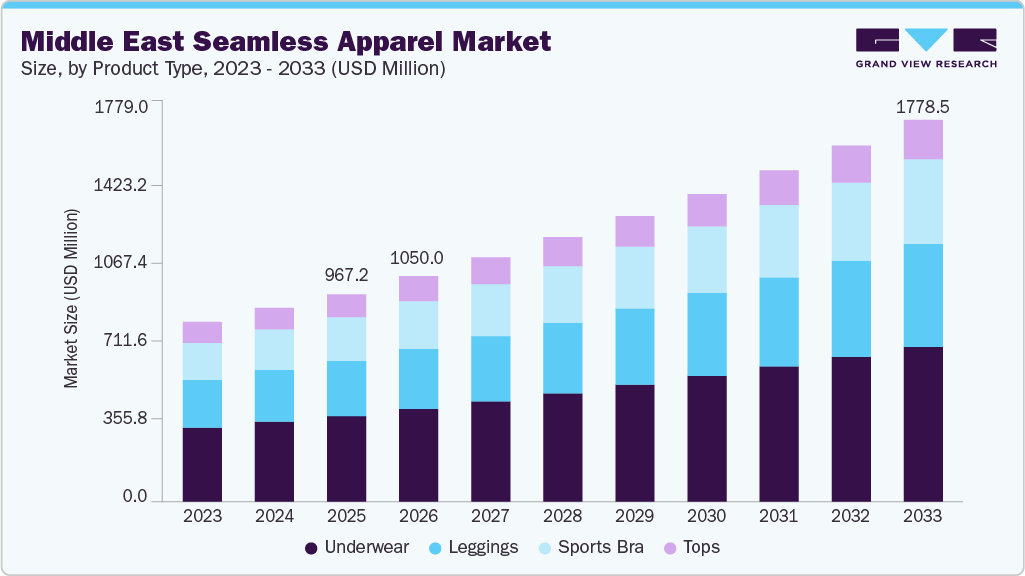
The Middle East seamless apparel market size was estimated at USD 967.2 million in 2025 and is projected to reach USD 1,778.5 million by 2033, growing at a CAGR of 7.8% from 2026 to 2033. In hot and arid environments, consumers place strong emphasis on lightweight, breathable garments that can be worn for extended hours without heat retention or skin irritation.
Key Market Trends & Insights
- By product type, seamless leggings apparel accounted for a revenue share of 26.65% in 2025.
- By material, polyester seamless apparels accounted for a largest revenue share in 2025.
- By end user, seamless apparel for shapewear consumers is projected to grow at a CAGR of 8.5% over the forecast period of 2026-2033.
Market Size & Forecast
- 2025 Market Size: USD 967.2 Million
- 2033 Projected Market Size: USD 1,778.5 Million
- CAGR (2026-2033): 7.8%
Seamless apparel aligns well with this requirement, as knit-to-shape construction minimizes layered fabric buildup and stitching density, helping garments remain lighter and cooler. This functional advantage has increased the relevance of seamless designs across innerwear, activewear, and base-layer categories rather than positioning them purely as performance sports products.Unlike Western markets, where seamless adoption has been driven primarily by fitness culture, demand in the Middle East is closely tied to layering needs under modest or structured outerwear. Seamless bras, camisoles, leggings, and lightweight tops are increasingly used as invisible foundation layers that sit smoothly beneath abayas, thobes, dresses, and tailored garments. Flat-knit construction and bonded finishes reduce friction and visible lines, addressing both comfort and appearance requirements for consumers who spend long days moving between indoor, air-conditioned environments and outdoor heat.
The region’s mall-led retail ecosystem, combined with a strong preference for premium international brands, encourages consumers to prioritize quality, longevity, and fit consistency over frequent replacement. Shoppers are more inclined to invest in garments that maintain shape, elasticity, and comfort over repeated wear, especially given extended daily usage and seasonal rotation rather than fast-fashion cycles. Seamless apparel aligns well with this purchasing behavior, as its construction supports durability and stretch recovery while delivering a refined finish.
Furthermore, demand patterns are shaped by travel influxes, Ramadan, Eid, and major promotional periods, requiring brands to manage assortments with precision and speed. Advanced seamless manufacturing allows suppliers to respond to these cycles by offering consistent sizing, cleaner finishes, and faster replenishment without the inventory risks associated with complex cut-and-sew production. This operational flexibility has supported the steady expansion of seamless apparel across innerwear, lounge, and lightweight active categories. Importantly, the category’s growth in the region is anchored less in overt performance positioning and more in climate suitability, discreet layering, and all-day wear comfort, reinforcing seamless apparel’s role as a practical, lifestyle-driven solution tailored to Middle Eastern consumer needs.
Consumer Insights
Consumers prioritise moisture-management systems that actively pull sweat away from the skin and allow rapid evaporation, preserving a cool and stable inner microclimate even in extreme heat. Fabrics that balance breathability with controlled stretch are particularly valued, as excessive compression or heavy synthetics can amplify discomfort. As a result, seamless constructions that integrate thermoregulation into the fabric structure are increasingly seen as essential rather than premium, signalling that brands understand comfort as a physiological requirement tied directly to climate, not simply a lifestyle choice.
Material innovation plays a central role in meeting these demands. Fiber platforms such as LYCRA Soft Comfort have gained traction among regional manufacturers and global brands operating in the Middle East, as they deliver elasticity, airflow, and shape retention without the stiff or plastic-like handfeel associated with high-spandex blends. Seamless garments built on these technologies allow for fluid movement while maintaining a refined surface, aligning with regional preferences for polished, understated aesthetics. Brands that engineer stretch, recovery, and breathability directly into the garment architecture are perceived as offering smarter, climate-aware design rather than generic activewear adapted for heat.
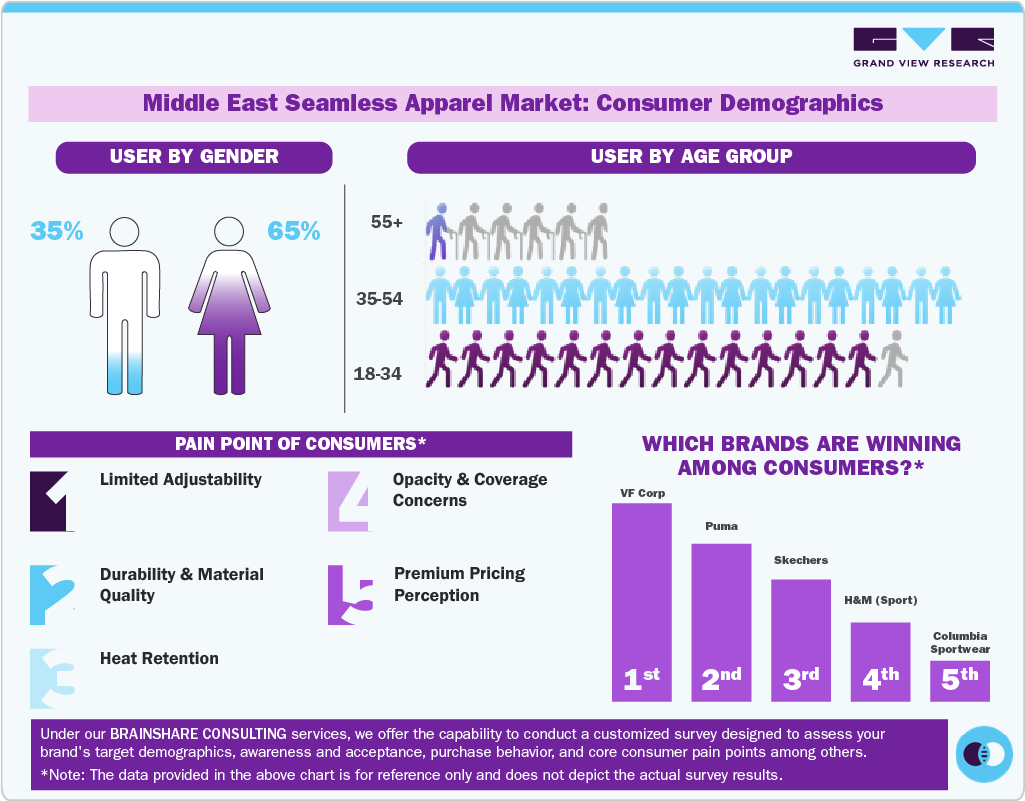
Consumer expectations have also evolved beyond basic comfort toward performance-engineered precision that respects how the body moves and regulates heat throughout the day. In the Middle East, this is especially relevant as seamless apparel is worn not only for workouts but also for commuting, indoor-outdoor transitions, and long social or professional engagements. Leading international brands such as Nike and Adidas have expanded seamless ranges in the region that combine anatomical mapping, ventilation zones, and smooth finishes, enabling garments to contour naturally without friction or pressure points.
Furthermore, seamless innerwear has been particularly influential in shaping these broader expectations across the Middle East apparel landscape. Brands such as Skims and Lululemon have demonstrated how seamless shaping can deliver discreet support, confidence, and freedom of movement without overt compression or visual emphasis. This mindset has extended into outer seamless apparel, where shaping is expected to be subtle yet technically precise.
Product Insights
Seamless leggings apparel accounted for a revenue share of 26.65% in the year 2025 in the Middle East seamless apparel industry. Increased engagement in yoga, HIIT, running, pilates, and athleisure-focused lifestyles has accelerated demand for leggings that support frequent movement while remaining comfortable in everyday settings. Furthermore, the demand is fueld by growing preferences for garments that maintain fit stability, provide consistent support, and perform reliably during extended wear, particularly in high-temperature environments.
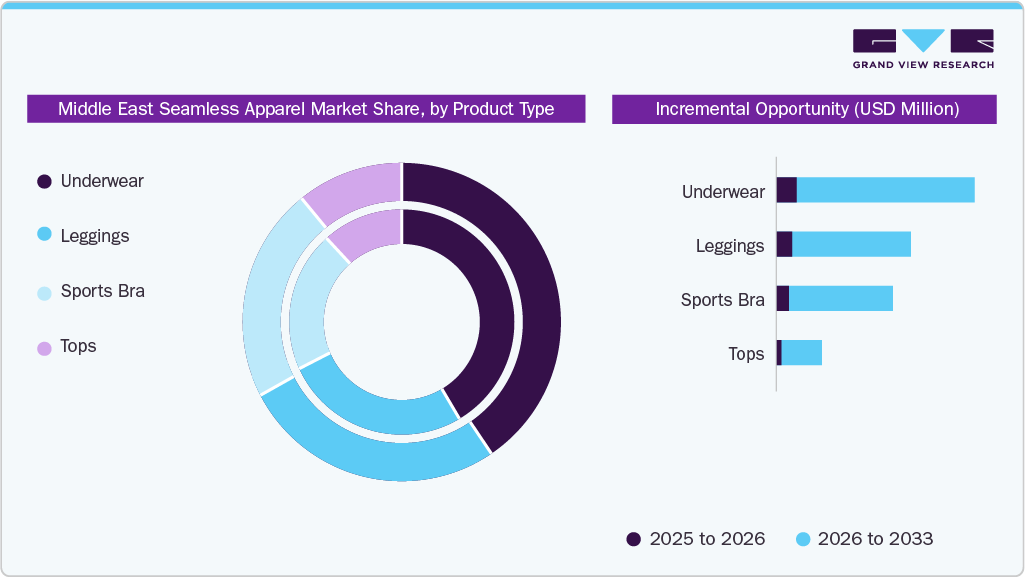
Seamless sports bras are projected to grow at a CAGR of 8.6% over the forecast period of 2026-2033. Seamless sports bras are gaining traction as they address fit consistency and wearability during extended use, making them suitable for both structured training sessions and daily wear. In parallel, demand is strengthening for streamlined aesthetics, neutral color palettes, and broader size inclusivity, enabling seamless sports bras to function as versatile apparel pieces that move fluidly between active and casual wear.
Material Insights
Polyester seamless apparels accounted for a revenue share of 37.99% in the year 2025 in the Middle East seamless apparel industry. Demand is being driven by the material’s suitability for frequent use, wash durability, and shape retention, which align well with regional preferences for practical, long-lasting garments. Polyester-based seamless products are widely adopted in leggings, sports bras, tops, and base layers where consistent fit and structural stability are essential. Growth is further reinforced by lifestyle shifts toward versatile apparel designed for extended daily wear, supporting use across fitness activities, home-based routines, and casual settings without compromising performance expectations.
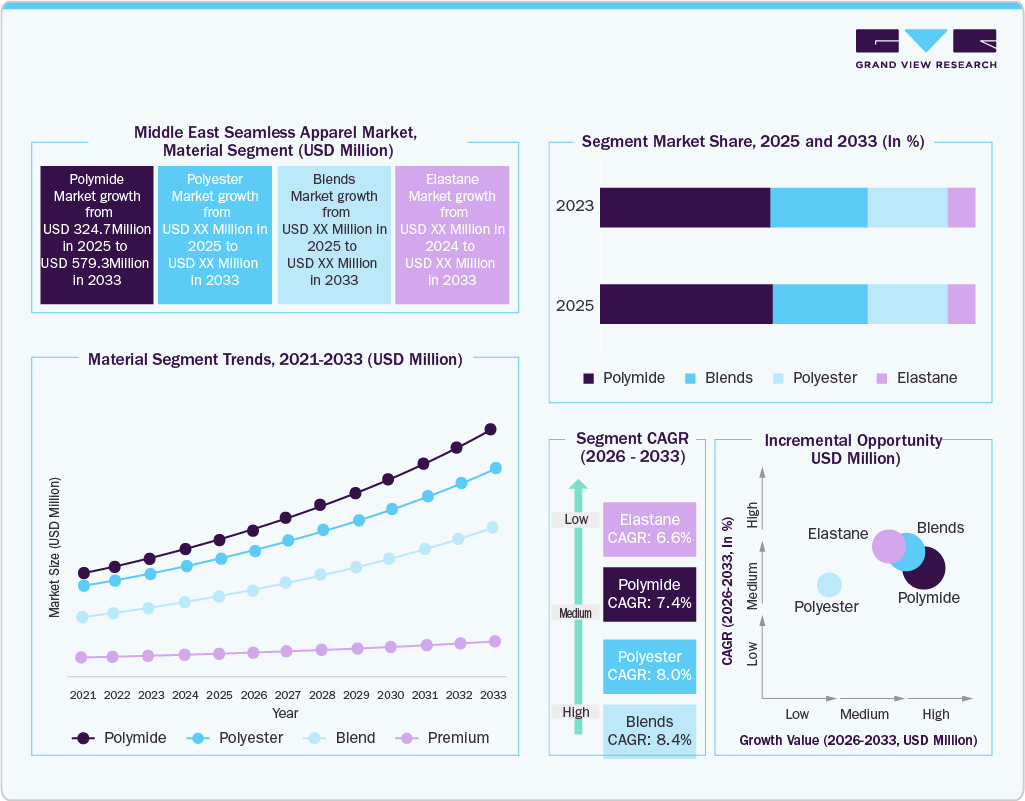
Blends seamless apparels are projected to grow at a CAGR of 8.4% over the forecast period of 2026-2033, supported by increasing adoption of fabric combinations such as polyester-elastane and polyamide-elastane across core apparel categories. These blends are gaining preference as they balance stretch, durability, and surface smoothness, making them suitable for activewear, athleisure, innerwear, and everyday lifestyle applications. Brand focus on fit consistency and wear stability is accelerating the use of blended yarns that provide elasticity without compromising shape retention over repeated use. In addition, blended seamless fabrics support effective moisture handling and thermal balance, strengthening their relevance across varied activity intensities and the Middle East’s diverse climatic conditions.
End User Insights
Lifestyle seamless apparel accounted for a revenue share of 52.52% in the year 2025 of the Middle East seamless apparel industry. The widespread adoption of athleisure has reinforced demand for seamless tops, leggings, and intimate wear that offer visual simplicity, ease of layering, and consistent comfort throughout the day. As comfort-led dressing becomes normalized beyond athletic contexts, lifestyle seamless apparel continues to gain traction for its ability to deliver versatility and a refined, low-profile aesthetic without compromising everyday wearability.
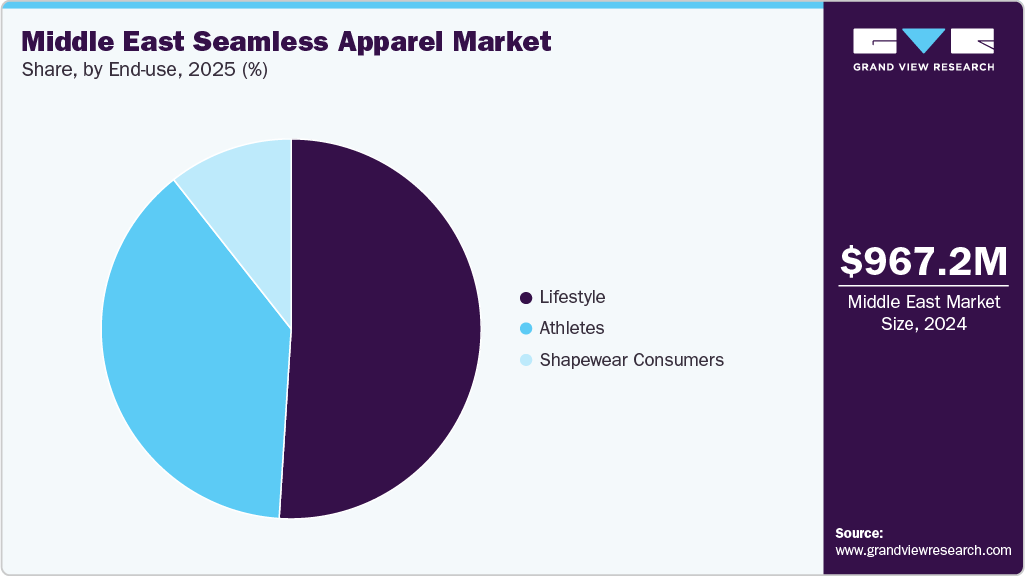
Seamless apparel for shapewear consumers is projected to grow at a CAGR of 8.5% over the forecast period of 2026-2033. Consumers are adopting seamless shapewear for its ability to deliver a smooth, unobtrusive fit under both casual and formal clothing, supporting wider use across daily wear wardrobes. Rising awareness around posture alignment, core support, and body contouring is expanding the category beyond traditional sculpting needs into confidence-led essentials. At the same time, product advancements focused on zonal support, fit adaptability, and improved airflow are enhancing comfort and wear consistency across different body profiles, reinforcing sustained category growth in the region.
Country Insights
UAE Seamless Apparel Market Trends
UAE seamless apparel market accounted for the revenue share of 28.50% in 2025. Demand is reinforced by a shift toward apparel that can be worn comfortably across extended daily routines, spanning workouts, work-from-home schedules, social outings, and travel. The country’s mature retail infrastructure, high penetration of international apparel brands, and rapid adoption of new product formats continue to accelerate uptake of seamless categories. In parallel, heightened consumer awareness around performance attributes such as fit durability, stretch recovery, and moisture control is encouraging repeat purchases, positioning the UAE as a key demand center for seamless apparel in the region.
Saudi Arabia Seamless Apparel Market Trends
Saudi Arabia seamless apparel market is projected to grow significantly at a CAGR of 8.1% from 2026 to 2033, driven by evolving lifestyle patterns, rising disposable incomes, and increasing participation in fitness, wellness, and recreational activities across urban populations. As consumers place greater emphasis on comfort-led, versatile clothing, seamless apparel is gaining traction for its suitability across active routines, casual daily wear, and extended at-home use. In parallel, expanding retail access, growing brand presence, and heightened awareness of fit consistency and wear durability are reinforcing adoption, positioning Saudi Arabia as a key growth engine for seamless apparel in the region.
Key Middle East Seamless Apparel Company Insights
The Middle East seamless apparel market is becoming increasingly dynamic, driven by both international sportswear brands and emerging regional manufacturers that leverage advanced knitting technologies, localized design insights, and performance-oriented engineering to meet evolving consumer preferences. Market players in the region are prioritizing research and development to enhance garment comfort, breathability, and durability, while also adopting precision seamless construction to reduce material waste. Growing use of digital design platforms, body-mapping analytics, and sustainable yarn solutions, including recycled and bio-based fibers, is helping brands improve fit accuracy, decrease return rates, and align with developing circular economy initiatives.
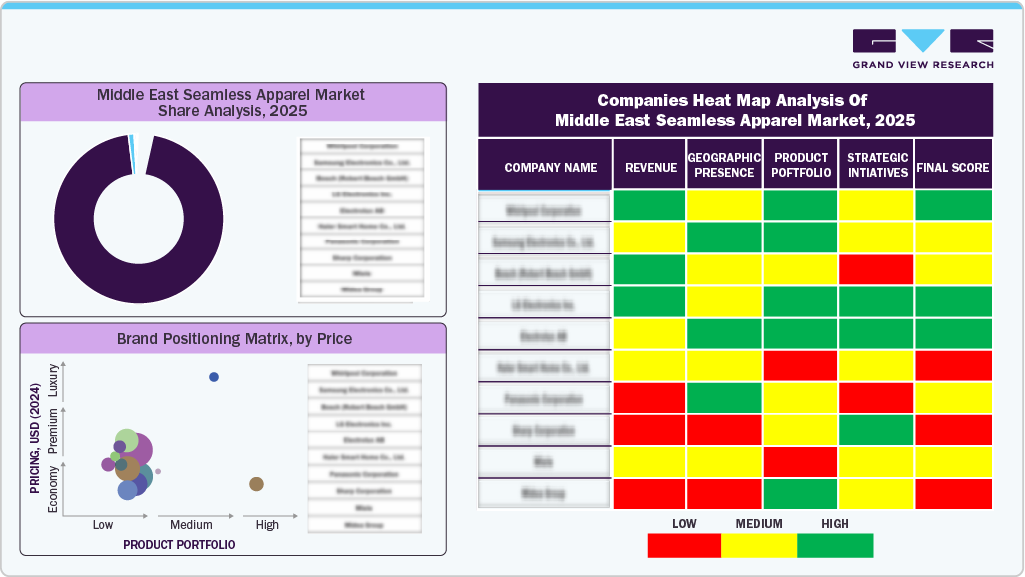
Key Middle East Seamless Apparel Companies:
- Classic Fashion
- Delta Galil Industries
- Cottonil
- Private Label Clothing Manufacturers
- Caprisious
- LC
- Generation Strong
- Trendy Garments Factory
- Times Clothing
- Emirates Apparel
- Si Fashion
- AMCO Apparel
- Stitchphile
- Atlas Tex. & Garment Factory Ltd.
- Marhaba Textile Co.
- Ivory Garments Factory LLC
- Alkhwaja Apparel & Garments
- Jobedu
Recent Developments
-
In May 2025, SOIE launched its SMOOV and Spacer Cup Bra collections, marking a shift toward invisible, comfort-driven lingerie. The SMOOV line features advanced bonding technology that eliminates seams and stitches, allowing the bras to sit smoothly under clothing for a refined, no-show finish. The Spacer Cup range, on the other hand, offers ultra-light construction with breathable fabric and soft padding that provides gentle lift and full coverage. Available in both wired and non-wired variants, these collections combine aesthetic minimalism with functionality, reflecting SOIE’s focus on effortless style and everyday ease for modern women.
-
In October 2024, Carbios, in collaboration with global brands including On, Patagonia, PUMA, PVH Corp., and Salomon, introduced the world’s first clothing item produced entirely from biorecycled textile waste. Using Carbios’ proprietary enzymatic recycling process, the consortium transformed discarded polyester-based fabrics into new, high-quality fibres suitable for manufacturing fresh garments. The initiative led to the creation of a simple white T-shirt, showcasing the potential of true circularity in the textile industry. This milestone showcases how biotechnology can reduce dependency on virgin materials and represents a significant step toward sustainable, closed-loop fashion production on an industrial scale. Such advances reinforce domestic confidence in eco-engineered apparel and establish a clear framework for future seamless manufacturing within the circular-fashion model.
Middle East Seamless Apparel MarketReport Scope
Report Attribute
Details
Market size value in 2026
USD 1,050.0 million
Revenue forecast in 2033
USD 1,778.5 million
Growth rate
CAGR of 7.8% from 2026 to 2033
Actuals
2021 - 2025
Forecast period
2026 - 2033
Quantitative units
Revenue in USD million/billion, volume million units,and CAGR from 2026 to 2033
Report coverage
Revenue forecast, company ranking, competitive landscape, growth factors, and trends
Segments covered
Product type, material, end user, country
Regional scope
Middle East
Country scope
Bahrain; Kuwait; Oman; Qatar; Saudi Arabia; UAE
Key companies profiled
Classic Fashion; Delta Galil Industries; Cottonil; Private Label Clothing Manufacturers; Caprisious, LC; Generation Strong; Trendy Garments Factory; Times Clothing; Emirates Apparel; Si Fashion; AMCO Apparel; Stitchphile; Atlas Tex. & Garment Factory Ltd.; Gem Readymade Garment Factory LLC; Marhaba Textile Co.; Ivory Garments Factory LLC; Embee Readymade Garments Industry Ltd.; Alkhwaja Apparel & Garments; Jobedu
Customization scope
Free report customization (equivalent up to 8 analysts working days) with purchase. Addition or alteration to country, regional & segment scope.
Pricing and purchase options
Avail customized purchase options to meet your exact research needs. Explore purchase options
Middle East Seamless Apparel Market Report Segmentation
This report forecasts revenue growth at country levels and provides an analysis on the latest trends and opportunities in each of the sub-segments from 2021 to 2033. For this study, Grand View Research has segmented the Middle East seamless apparel market report on the basis of product type, material, end user, and country:
-
Product Type Outlook (Volume Million Units; Revenue, USD Million, 2021 - 2033)
-
Sports Bra
-
Leggings
-
Tops
-
Underwear
-
-
Material Outlook (Volume Million Units; Revenue, USD Million, 2021 - 2033)
-
Polymide
-
Polyester
-
Elastane
-
Blends
-
-
End user Outlook (Volume Million Units; Revenue, USD Million, 2021 - 2033)
-
Lifestyle
-
Athletes
-
Shapewear Consumers
-
-
Country Outlook (Volume Million Units; Revenue, USD Million, 2021 - 2033)
-
Bahrain
-
Kuwait
-
Oman
-
Qatar
-
Saudi Arabia
-
UAE
-
Frequently Asked Questions About This Report
b. The Middle East seamless apparel market size was estimated at USD 967.2 million in 2025 and is expected to reach USD 1,050.0 million in 2026.
b. The Middle East seamless apparel market is expected to grow at a compound annual growth rate of 7.8% from 2026 to 2033 to reach USD 1,778.5 million by 2033.
b. Seamless leggings apparel accounted for a revenue share of 26.65% in the year 2025 in the Middle East seamless apparel industry, due to rising participation in fitness, yoga, and athleisure lifestyles, alongside strong demand for garments that remain comfortable in hot climates. The seamless structure improves airflow, flexibility, and fit consistency during extended wear, making leggings a preferred everyday and activewear.
b. Some key players operating in the Middle East seamless apparel market include Classic Fashion, Delta Galil Industries, Cottonil, Private Label Clothing Manufacturers, Caprisious, LC, Generation Strong, Trendy Garments Factory, Times Clothing, Emirates Apparel, Si Fashion, AMCO Apparel, Stitchphile, Atlas Tex. & Garment Factory Ltd., Gem Readymade Garment Factory LLC, Marhaba Textile Co., Ivory Garments Factory LLC, Embee Readymade Garments Industry Ltd., Alkhwaja Apparel & Garments, and Jobedu
b. Key factors that are driving the Middle East seamless apparel market growth include increasing fitness and athleisure adoption, hot-climate comfort requirements, and consumer preference for lightweight, flexible garments that support all-day wear.


Share this report with your colleague or friend.
Need a Tailored Report?
Customize this report to your needs — add regions, segments, or data points, with 20% free customization.


ISO 9001:2015 & 27001:2022 Certified
We are GDPR and CCPA compliant! Your transaction & personal information is safe and secure. For more details, please read our privacy policy.
Trusted market insights - try a free sample
See how our reports are structured and why industry leaders rely on Grand View Research. Get a free sample or ask us to tailor this report to your needs.












