India Anti-aging Products Market Trends
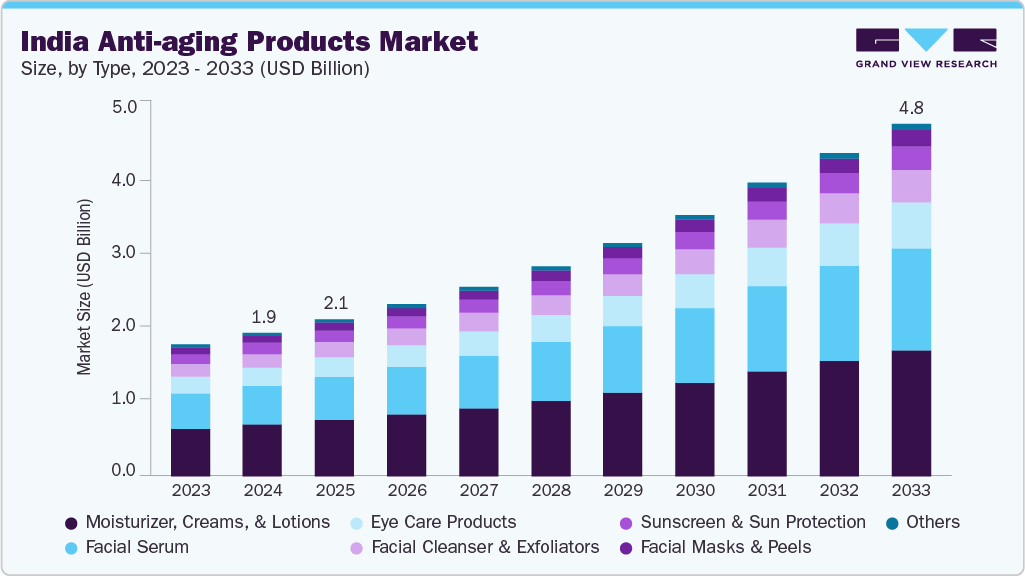
The India anti-aging products market size was estimated at USD 1.97 billion in 2024 and is expected to reach USD 4.84 billion by 2033, growing at a CAGR of 10.7% in from 2025 to 2033. The market is expanding rapidly, fueled by a growing aging population and increased awareness around skin health. With rising life expectancy and greater exposure to global beauty trends, Indian consumers are actively seeking solutions to address concerns such as fine lines, pigmentation, and skin firmness.
The cultural shift toward prioritizing appearance in both professional and personal settings has significantly shaped consumer behavior. This heightened interest in maintaining youthful skin is further supported by increased access to premium products and dermatologist-recommended regimens across urban and semi-urban areas.
The emerging landscape of India’s anti-aging skincare market reveals a distinct shift toward clean, science-backed formulations coupled with ingredient transparency. Gen Z and digitally native consumers voluntarily scrutinize labels for clinically proven actives such as niacinamide, retinol, peptides, vitamin C, and hyaluronic acid. Brands like O3+ emphasize dermatologist-tested performance, while Re’equil’s retinol line incorporates time‑controlled delivery systems to minimize irritation, reflecting deep consumer demand for efficacy and safety. This development signals a transition from legacy wellness imagery to a more rational, evidence-based positioning.
Furthermore, consumer values increasingly align with sustainability and ethical practices. Clean‑label positioning, no parabens, silicones, dyes, and cruelty‑free claims have emerged as a differentiator among millennials and Gen Z. Brands with eco‑friendly packaging, transparent sourcing, and formulations devoid of harsh chemicals have captured attention, reflecting a deeper concern for both health and the environment.
Homegrown clean-beauty and DTC brands are increasingly challenging established players through consumer engagement and digital storytelling. Platforms such as Tatha Skincare leverage clean‑tech approaches using plant stem-cell science for barrier repair, while apps like Kult curate highly personalized skincare selections using AI, enabling access to 700+ premium global and local brands formatted to individual skin profiles.
Brands such as Mamaearth, Minimalist, Pilgrim, and Foxtale have gained traction by positioning themselves around toxin-free, active‑rich formulations and building strong online communities, reshaping consumer expectations.
Consumer Insights & Surveys
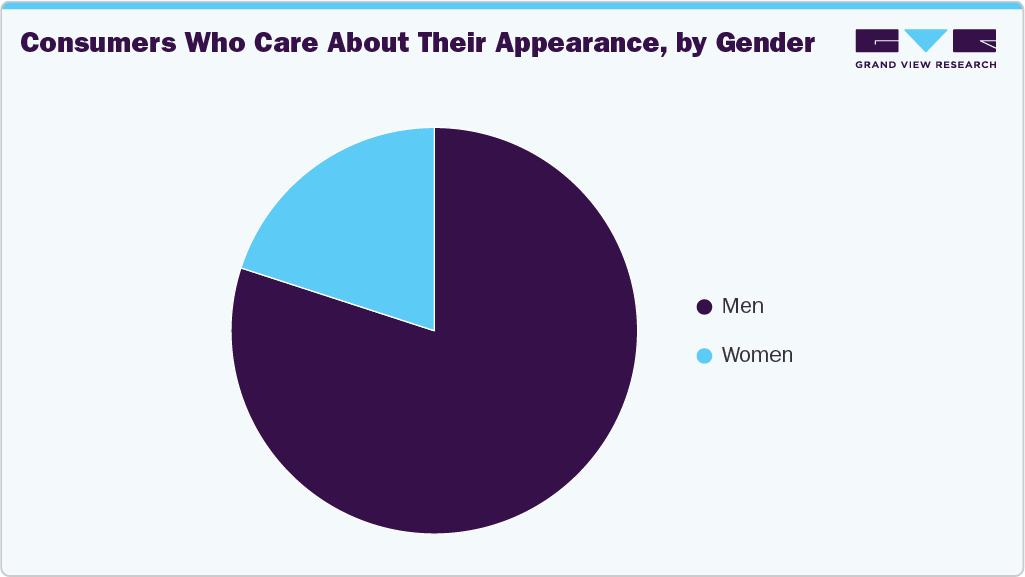
India's anti-aging skincare landscape is undergoing a notable transformation, driven by evolving attitudes among male and female consumers. Historically, skincare was deemed a predominantly feminine domain, but recent insights reveal a striking shift: over 80% of Indian men say they care about their appearance just as much as women, and about 30% of them are actively expanding their facial skincare routines, compared to 26% of women, with the interest particularly pronounced among men aged 25-34. This signals growing parity in skincare engagement across genders, with both conscious of prevention, hydration, and barrier support.
Data shows that in the five years through mid-2022, one in five beauty launches in India targeted men, the highest share across APAC, surpassing China and Japan. These launches span moisturisers, serums, fairness products, beard softeners, and home spa kits, underscoring men's hunger for both foundational and luxury skincare. The Indian male grooming sector is rapidly evolving from basic cleansers to a diverse, multi-step regimen that embraces anti-aging.
Brands have responded with targeted men’s anti-aging introductions. Inde Wild, for example, has expanded its ayurvedic skincare line with men-centric serums and moisturisers that combine botanical actives with hydration-first formulations. The Business of Fashion notes a “new era of men’s skincare” characterized by science-backed actives and inclusive marketing, influenced by international trends like K‑Beauty and bolstered by urban and tier‑II/III consumer interest. Male consumers are now open to serums, exfoliants, and sunscreens tailored to their skin needs, beyond rudimentary grooming.
While some formulations remain functionally identical across genders, marketing presentations are being deliberately gendered. Products for men often feature simplified packaging, neutral scents, and direct messaging, whereas women's lines may emphasize floral notes and ingredient richness. However, experts observe that these distinctions are primarily marketing-driven, as underlying ingredients are virtually the same. Consumers increasingly recognize that anti-aging efficacy relies on active ingredients, such as vitamin C, retinol, peptides, antioxidants, and SPF, which apply universally, regardless of gender.
Product Insights
Moisturizer, creams, & lotions accounted for the revenue share of about 36.08% of India anti-aging products industry in 2024. These formats are widely preferred by consumers across age groups as daily essentials that hydrate the skin, improve elasticity, and visibly reduce signs of aging such as fine lines and dryness. Their affordability and availability in both mass and premium segments make them accessible to a wide demographic. In addition, brands have increasingly infused these products with active ingredients like hyaluronic acid, peptides, and retinol, blurring the line between basic skincare and targeted anti-aging treatment, thereby boosting their relevance in everyday routines and solidifying their position as category leaders.
The demand for facial serum is projected to rise at a CAGR of 11.4% from 2025 to 2033, driven by increasing consumer preference for concentrated, high-performance skincare solutions. Serums are formulated with potent active ingredients, such as vitamin C, retinol, peptides, and niacinamide that deliver targeted results, making them ideal for addressing fine lines, uneven skin tone, and loss of firmness. Additionally, the rise of minimal yet effective skincare regimens has positioned serums as a key step between cleansing and moisturizing, contributing to their growing popularity and long-term market potential.
Distribution Channel Insights
The sale of anti-aging products through supermarkets and hypermarkets accounted for a revenue share of about 29.10% in 2024. These retail formats allow consumers to evaluate products physically, compare brands side by side, and benefit from promotional discounts or bundled offers, which are especially influential in skincare purchasing decisions. The growing footprint of organized retail chains in urban and tier-II cities has further improved accessibility to both mass-market and premium anti-aging products. Furthermore, the presence of dedicated beauty sections, trained sales staff, and real-time product sampling opportunities enhances consumer confidence, making these outlets a preferred choice for skincare purchases.
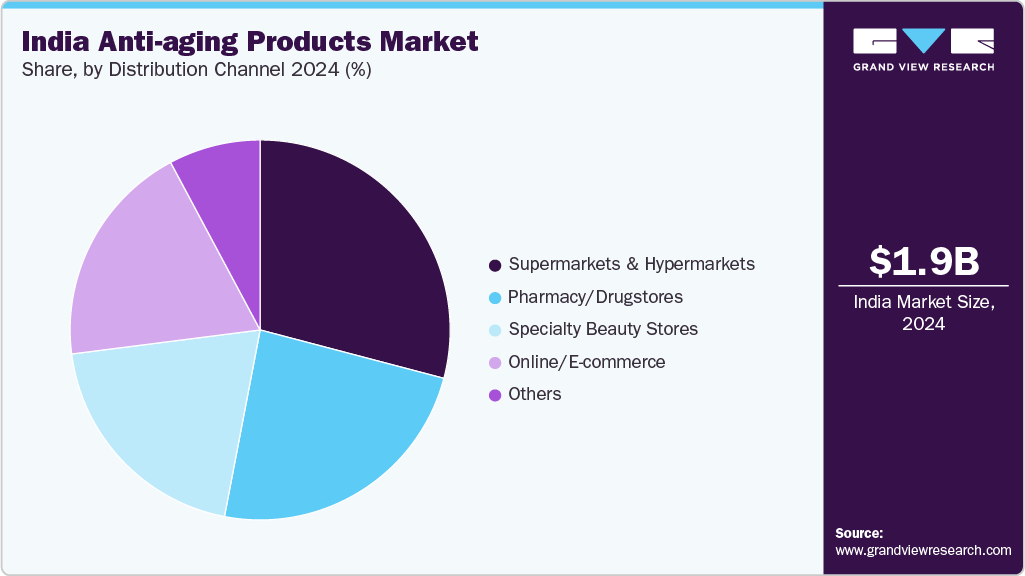
The sale of anti-aging products through online retail channels is expected to grow at a CAGR of 12.3% from 2025 to 2033. Consumers prefer the ease of browsing detailed ingredient lists, watching expert-led tutorials, and comparing product reviews before purchasing, experiences that online platforms like Nykaa, Amazon, and Tira have effectively optimized. For instance, Nykaa’s recent launch of an AI-powered skin analyzer tool helps users receive personalized anti-aging product recommendations based on their skin type and concerns, enhancing both trust and conversion rates. Such tech-enabled convenience, combined with frequent discounts and subscription models, continues to attract a wider demographic, including first-time users from smaller towns.
Key India Anti-aging Products Company Insights
The India anti-aging products industry features a dynamic mix of established global brands and fast-growing domestic players, all adapting to shifting consumer preferences and skincare priorities. To remain competitive, companies are focusing on continuous innovation by introducing formulations enriched with clinically backed active ingredients and multifunctional benefits. There is also a strategic emphasis on expanding product ranges to address a broad spectrum of skin types, climatic conditions, and age-specific concerns. Additionally, brands are increasingly aligning their offerings with consumer demand for ingredient transparency, clean-label formulations, and targeted solutions, reinforcing their relevance in a rapidly evolving skincare landscape.
-
Re’equil India Pvt. Ltd. is an Indian skincare company known for its dermatologically tested products that address specific skin concerns such as acne, pigmentation, aging, and dryness. Headquartered in Chandigarh, the brand emphasizes formulation transparency and active ingredient efficacy. Re’equil offers anti-aging solutions like the Bakuchiol Smoothing Serum, which targets fine lines and promotes skin firmness, and the Skin Radiance Cream, designed to improve tone and texture while supporting hydration.
-
Kenvue Brands LLC is a U.S.-based consumer health company spun off from Johnson & Johnson, focusing on personal care, skin health, and over-the-counter wellness products. The company owns well-known brands such as Neutrogena, Aveeno, and RoC, offering targeted anti-aging treatments. Notable products include Neutrogena Rapid Wrinkle Repair, formulated with retinol and hyaluronic acid for visible wrinkle reduction, and RoC Retinol Correxion Line Smoothing Night Serum, designed to improve skin texture and elasticity.
Key India Anti-aging Products Companies:
- The Estée Lauder Companies Inc.
- Beiersdorf AG
- L'Oréal S.A.
- Caudalie
- Avène Thermal Water
- Nuxe
- NAOS Group (Bioderma)
- Sisley Cosmetics USA Inc.
- Re’equil India Pvt. Ltd.
- Kenvue Brands LLC
Recent Developments
-
In July 2025, Spanish skincare brand Casmara introduced its advanced anti-aging innovations to the Indian market, aiming to strengthen its global presence. With over 50 years of expertise in dermocosmetics, the company is recognized for its high-performance treatments, including single-dose formulations and signature algae peel-off masks. Casmara’s offerings are rooted in biotechnology and include solutions that support skin regeneration, balance the microbiome, and slow visible signs of aging. The brand’s expansion strategy reflects its commitment to combining scientific research with premium skincare, positioning itself as a key player in the professional beauty and wellness segment across international markets.
-
In May 2024, Estée Lauder unveiled its luxury “Re‑Nutriv Ultimate Diamond Collection” in India during a high-profile debut event held at Suryagarh, Jaisalmer, Rajasthan. The launch reinforces the brand’s strategic focus on the Indian market and its positioning at the intersection of beauty and wellness. Featuring patent-pending Sirtivity‑Lp technology alongside Black Diamond Truffle Extract, the range includes deeply nourishing, fast-absorbing hero products like the Ultimate Lift Regenerating Youth Crème Rich and the Transformative Brilliance Serum.
India Anti-aging Products Market Report Scope
|
Report Attribute
|
Details
|
|
Market size value in 2025
|
USD 2.15 billion
|
|
Revenue forecast in 2033
|
USD 4.84 billion
|
|
Growth rate
|
CAGR of 10.7% from 2025 to 2033
|
|
Actual data
|
2021 - 2024
|
|
Forecast period
|
2025 - 2033
|
|
Quantitative units
|
Revenue in USD million/billion, and CAGR from 2025 to 2033
|
|
Report coverage
|
Revenue forecast, company ranking, competitive landscape, growth factors, and trends
|
|
Segments covered
|
Product, distribution channel
|
|
Country scope
|
India
|
|
Key companies profiled
|
The Estée Lauder Companies Inc.; Beiersdorf AG; L'Oréal S.A.; Caudalie; Avène Thermal Water; Nuxe; NAOS Group (Bioderma); Sisley Cosmetics USA Inc.; Re’equil India Pvt. Ltd.; Kenvue Brands LLC
|
|
Customization
|
Free report customization (equivalent up to 8 analysts working days) with purchase. Addition or alteration to country, regional & segment scope.
|
|
Pricing and purchase options
|
Avail customized purchase options to meet your exact research needs. Explore purchase options
|
India Anti-aging Products Market Report Segmentation
This report forecasts revenue growth at the country level and provides an analysis of the latest industry trends and opportunities in each of the sub-segments from 2021 to 2033. For this study, Grand View Research has segmented the India anti-aging products market report based on product, and distribution channel:
-
Product Outlook (Revenue, USD Billion, 2021 - 2033)
-
Facial Serum
-
Moisturizer, Creams, & Lotions
-
Eye Care Products
-
Facial Cleanser & Exfoliators
-
Facial Masks & Peels
-
Sunscreen & Sun Protection
-
Others
-
Distribution Channel Outlook (Revenue, USD Billion, 2021 - 2033)
Frequently Asked Questions About This Report
b. The India anti-aging products market was estimated at USD 1.97 billion in 2024 and is expected to reach USD 2.15 billion in 2025.
b. The India anti-aging products market is expected to grow at a compound annual growth rate of 10.7% from 2025 to 2033 to reach USD 4.84 billion by 2033.
b. Moisturizer, Creams, & Lotions accounted for the revenue share of about 36.08% of India anti-aging products industry in 2024. In India, rising skin aging concerns among consumers aged 36–45, coupled with high UV exposure and urban pollution, are fueling demand.
b. Some of the key players in the India anti-aging products market The Estée Lauder Companies Inc.; Beiersdorf AG; L'Oréal S.A.; Caudalie; Avène Thermal Water; Nuxe; NAOS Group (Bioderma); Sisley Cosmetics USA Inc.; Re’equil India Pvt. Ltd.; Kenvue Brands LLC
b. In India, the demand for anti-aging products is rising due to increasing awareness of skin health and the impact of prolonged sun exposure. Consumers are seeking products that offer both anti-aging benefits and sun protection, suited to Indian skin tones and climatic conditions.

 Download Sample Report














