
- Home
- »
- Homecare & Decor
- »
-
Healthcare Real Estate Market Size, Industry Report, 2033GVR Report cover
![Healthcare Real Estate Market Size, Share & Trends Report]()
Healthcare Real Estate Market (2026 - 2033) Size, Share & Trends Analysis Report By Property (Hospitals, Medical Office Buildings (MOBs), Senior Living And Retirement Communities), By Model (Sales, Rental, Lease), By Region, And Segment Forecasts
- Report ID: GVR-4-68040-426-2
- Number of Report Pages: 100
- Format: PDF
- Historical Range: 2021 - 2025
- Forecast Period: 2026 - 2033
- Industry: Consumer Goods
- Report Summary
- Table of Contents
- Interactive Charts
- Methodology
- Download FREE Sample
-
 Download Sample Report
Healthcare Real Estate Market Summary
The global healthcare real estate market size was valued at USD 1,542.45 billion in 2025 and is projected to reach USD 2,923.93 billion by 2033, growing at a CAGR of 8.4% from 2026 to 2033. The industry is being reshaped by the steady expansion of private healthcare delivery models, which are increasingly complementing public systems across both developed and emerging economies.
Key Market Trends & Insights
- North America healthcare real estate accounted for a market share of 50.03% in 2025.
- By property, hospital real estateaccounted for a market share of 32.80% in 2025.
- By model, the lease modelaccounted for a market share of 64.65% in 2025.
Market Size & Forecast
- 2025 Market Size: USD 1,542.45 Billion
- 2033 Projected Market Size: USD 2,923.93 Billion
- CAGR (2026-2033): 8.4%
Rising patient volumes, capacity constraints within public healthcare systems, and growing expectations for service quality have pushed private providers to expand their physical footprint. This has translated into sustained demand for hospitals, specialty clinics, and ancillary healthcare facilities, particularly in urban and peri-urban locations. In the U.S. healthcare real estate market, private and not-for-profit health systems continue to consolidate services while simultaneously expanding off-campus facilities to improve patient access and operational efficiency. As healthcare delivery becomes more distributed, real estate demand is shifting away from large centralized hospital campuses toward a broader mix of facilities that support outpatient, diagnostic, and specialty care.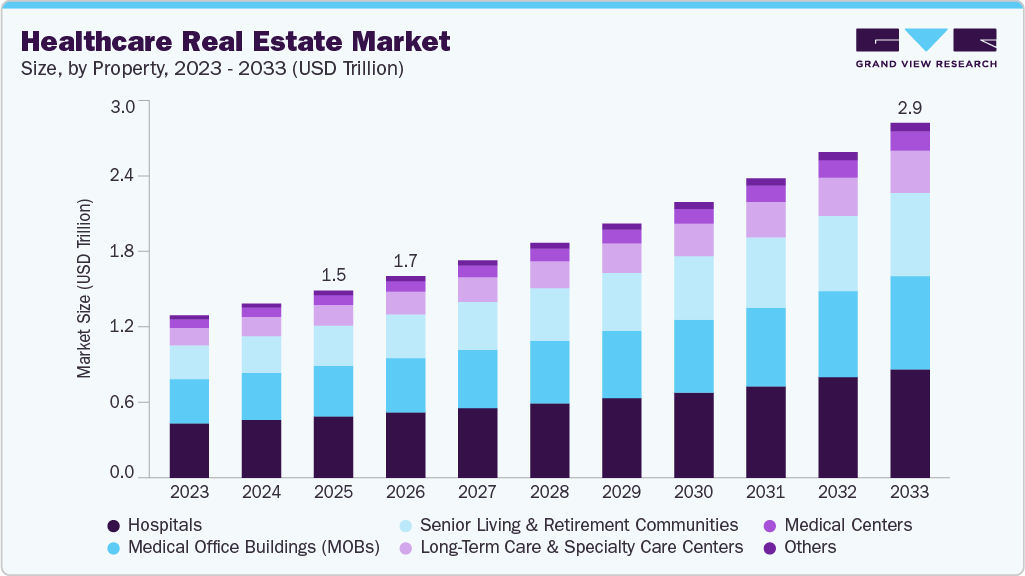
A defining structural change supporting this transition is the accelerating shift toward outpatient and day-care facilities, with direct implications for asset allocation in healthcare real estate portfolios. A JLL report in March 2025 highlights a major shift in the U.S. healthcare system toward outpatient care, driven by patient preference for lower-cost, more convenient services and an aging population. Outpatient volumes are forecast to expand by around 10.6 % over the next five years, markedly outpacing inpatient care growth and fueling strong demand for medical outpatient facilities. This surge has boosted occupancy in medical outpatient buildings to nearly 93%, with net absorption exceeding 19 million sq ft in top U.S. markets, and limited new construction is increasing pressure on available space. Providers are also exploring alternative office and retail sites to meet patient demand, while real estate investors are attracted by steady rent growth and long lease terms, underscoring the growing strategic importance of outpatient care infrastructure in the healthcare real estate industry.
Similar outpatient-led real estate dynamics are evident across Europe. In the UK market, rising demand for elective procedures and diagnostics has encouraged private operators to expand outpatient clinics and day-care surgical centers, particularly as the National Health Service faces capacity constraints. These facilities are increasingly delivered through long-lease arrangements that appeal to institutional investors seeking income stability. In the German healthcare real estate market, one of Europe’s largest private hospital ecosystems, healthcare delivery is already heavily diversified, with a strong emphasis on ambulatory treatment centers and specialist clinics. Germany’s regulatory environment supports outpatient expansion, reinforcing demand for modern healthcare properties that sit outside traditional hospital settings. Across both markets, outpatient growth has strengthened investor confidence in healthcare real estate as a resilient asset class, underpinned by demographic aging and sustained healthcare utilization.
Investment momentum in emerging markets further reinforces the global growth trajectory. Healthcare real estate in India is experiencing accelerated development as private providers expand capacity to address structural shortages in healthcare infrastructure. According to a news article, India’s healthcare sector recorded cumulative deal values exceeding USD .12 billion in Q2 FY26, reflecting strong investor appetite across hospitals, diagnostics, and specialty care platforms. This investment activity is driven by low bed density, estimated at approximately 1.3 beds per 1,000 people, rising insurance coverage, and rapid growth in private healthcare delivery. Real estate development is increasingly focused on multi-specialty hospitals, outpatient centers, and integrated medical hubs in tier-2 and tier-3 cities, where demand growth is outpacing supply. These investments highlight how real estate expansion is closely tied to broader healthcare system modernization and private sector participation.
Rising healthcare investment and institutional capital inflow continue to underpin the attractiveness of healthcare real estate globally. Pension funds, insurance companies, and sovereign investors are allocating larger shares of capital to healthcare assets due to their defensive characteristics, predictable occupancy, and long-term lease structures. In the United States and Europe, healthcare real estate is increasingly viewed as a recession-resistant segment within commercial property portfolios, supported by non-cyclical demand for medical services. The growing dominance of outpatient care further enhances this appeal, as medical office buildings and ambulatory centers typically demonstrate lower operating volatility than acute care hospitals. Institutional capital is therefore not only expanding the scale of healthcare real estate investment but also shaping asset preferences toward flexible, outpatient-oriented formats.
Brand Market Share Insights
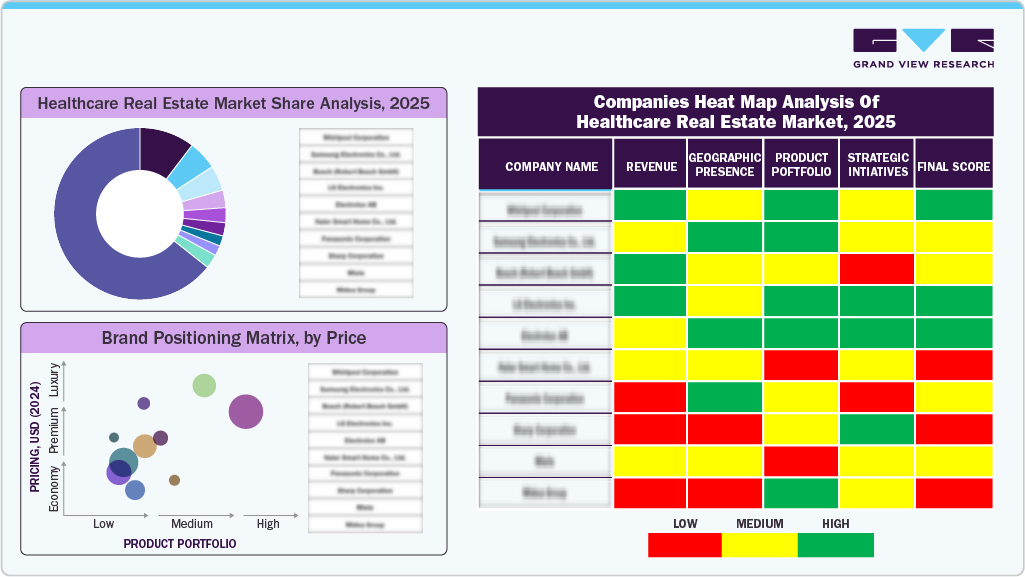
The competitive landscape of the healthcare real estate sector is characterized by a dynamic interplay of key players, emerging trends, and strategic positioning. Major institutional investors, including Real Estate Investment Trusts (REITs) and private equity firms, dominate the market, leveraging their substantial capital reserves to acquire and develop high-value healthcare properties. These investors are increasingly focusing on acquiring medical office buildings (MOBs), senior living facilities, and specialized care centers, driven by the sector's stability and long-term growth prospects.
In addition, healthcare providers and developers are intensifying their efforts to differentiate themselves through the development of cutting-edge, patient-centric facilities. This includes integrating advanced medical technologies, creating adaptable spaces for evolving healthcare delivery models, and incorporating sustainable design principles to attract tenants and enhance operational efficiencies.
Property Insights
The hospital real estate held a market share of 32.80% in 2025. The increasing demand for healthcare services, driven by an aging population and the rising prevalence of chronic diseases, necessitates the expansion of hospital infrastructure to accommodate the growing patient base. In addition, advancements in medical technology and the need for specialized care facilities are prompting the development of new, state-of-the-art hospitals designed to meet these modern healthcare requirements. Moreover, government initiatives and policies aimed at improving healthcare access, particularly in underserved regions, are fueling investment in hospital construction. This growth is further supported by the attractiveness of hospitals as stable, long-term investments for real estate developers and institutional investors, who see the healthcare sector as a resilient and essential asset class with promising returns.
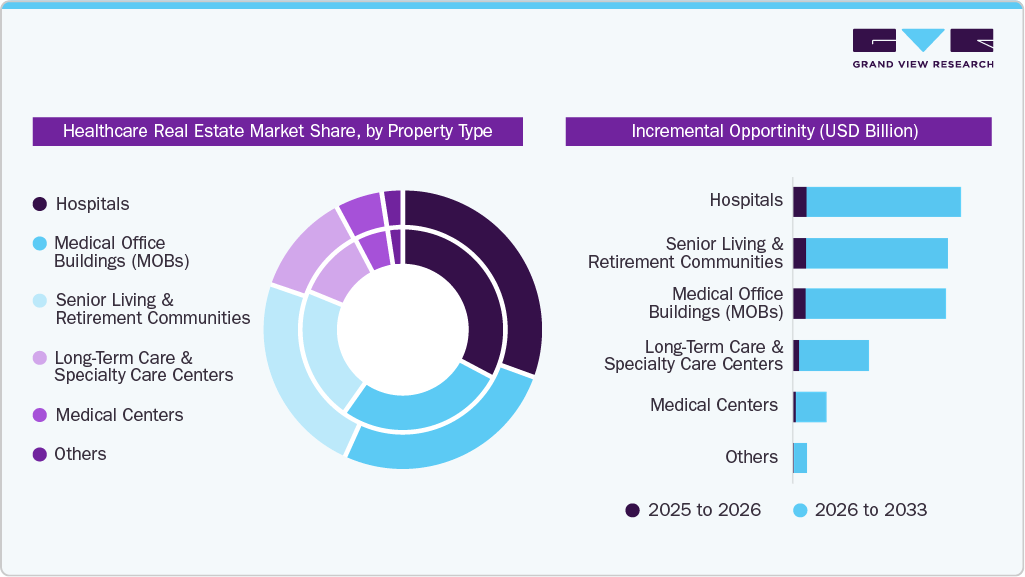
The construction of senior living and retirement communities in the healthcare real estate sector is projected to expand at a robust CAGR of 9.6% from 2026 to 2033. The aging global population is the primary catalyst, as more individuals reach retirement age and seek specialized living arrangements that offer enhanced care and lifestyle amenities. Additionally, evolving preferences for aging in place and the rising demand for high-quality, service-oriented senior living options are prompting significant investments in this sector. The sector's growth is further supported by favorable government policies and incentives to improve senior care infrastructure, along with increased recognition of the need for integrated, supportive environments for elderly residents. These dynamics collectively underscore the growing attractiveness and necessity of expanding senior living and retirement community facilities.
Model Insights
The lease model held a market share of 64.65% in 2025. The leasing model in healthcare real estate is experiencing significant growth due to several compelling factors. Leasing provides healthcare providers with the flexibility to adapt to evolving operational needs without the substantial capital expenditure associated with property acquisition. This model allows organizations to allocate financial resources more efficiently, focusing on core healthcare services rather than property ownership. Besides, leasing offers scalability, enabling providers to expand or contract their space in response to fluctuating patient volumes and changing healthcare delivery trends. The long-term stability of leasing agreements also appeals to investors, particularly real estate investment trusts (REITs), who seek steady income streams and lower risk profiles.
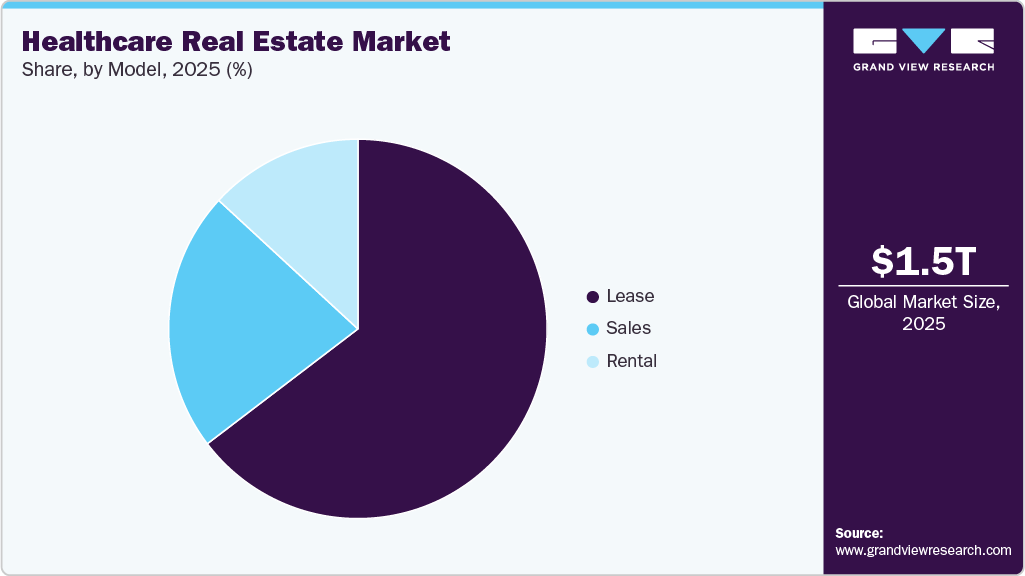
Rental arrangements offer healthcare providers a cost-effective, flexible solution for securing space without the long-term financial commitment of ownership or leasing. This flexibility is particularly advantageous for temporary or specialized healthcare services, such as pop-up clinics or seasonal health initiatives, which require short-term space solutions. Furthermore, the rental model enables healthcare providers to quickly adapt to changing demands and operational needs without the burden of long-term property management or significant capital outlay. As the healthcare industry continues to innovate and expand, the ability to secure rental spaces for emerging services or temporary needs is becoming increasingly valuable.
Regional Insights
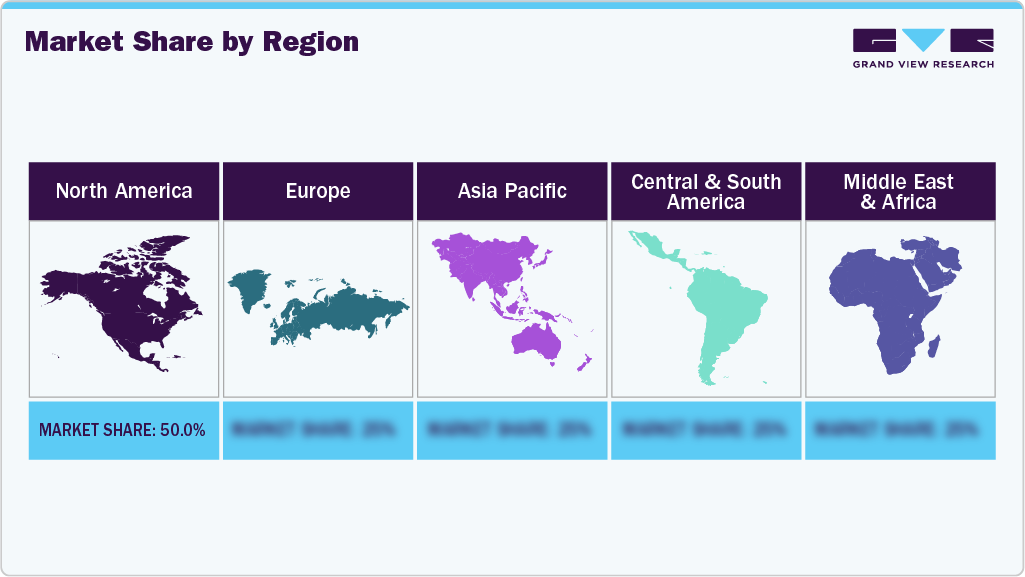
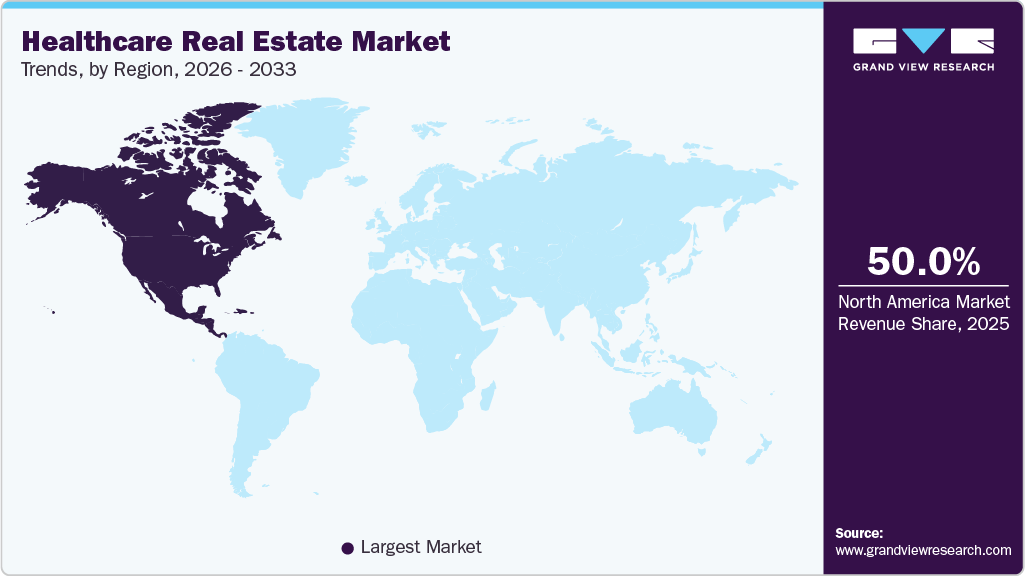
The healthcare real estate industry in North America held a share of 50.03% of the global revenue in 2025. The regional market is undergoing substantial growth driven by robust investments in cutting-edge medical facilities and a significant increase in healthcare service demand. The U.S., in particular, is seeing an expansion of medical office buildings (MOBs), integrated health campuses, and specialty care centers to accommodate an aging population and the rising prevalence of chronic conditions. The market is also benefiting from heightened investment from real estate investment trusts (REITs) and private equity firms, aimed at modernizing healthcare infrastructure and improving patient care delivery across various regions.
U.S. Healthcare Real Estate Market Trends
The U.S. healthcare real estate industry is expected to grow at a CAGR of 8.3% from 2026 to 2033. The healthcare real estate sector is rapidly evolving in the U.S., characterized by a surge in demand for diversified healthcare facilities such as outpatient centers, specialty hospitals, and senior living communities. This growth is fueled by an increasing focus on value-based care, technological advancements in medical treatments, and a demographic shift towards an older population. The expansion of integrated health systems and the rise of telehealth services are further driving the need for sophisticated, accessible healthcare properties, positioning the U.S. as a leading market for healthcare real estate development.
Europe Healthcare Real Estate Market Trends
The healthcare real estate industry in Europe accounted for a revenue share of around 27.26% in 2025. The regional market is experiencing growth driven by increasing healthcare expenditures, an aging population, and strategic government initiatives to improve medical infrastructure. Investment is focused on upgrading existing facilities and developing new medical centers, senior living communities, and specialty care centers to address the diverse healthcare needs across the continent. The expansion is particularly pronounced in tier-2 and tier-3 cities, where there is a concerted effort to enhance regional healthcare access and support the evolving needs of an aging population.
Asia Pacific Healthcare Real Estate Market Trends
The healthcare real estate industry in the Asia Pacific is projected to grow at a CAGR of 9.4% from 2026 to 2033. The market is expanding significantly due to rapid urbanization, a growing middle class, and improving healthcare infrastructure. Countries such as China and India are investing heavily in new hospitals, medical research facilities, and senior living communities to meet the increasing healthcare needs of their large populations. The region is also witnessing a rise in demand for advanced life sciences and biotech facilities, driven by burgeoning research and development activities and a focus on enhancing healthcare accessibility and quality. The Indian government is actively fostering the development of healthcare real estate through targeted initiatives. The Pradhan Mantri Jan Arogya Yojana (PMJAY) enhances healthcare affordability, driving demand for medical services in these regions. Additionally, the expansion of All India Institutes of Medical Sciences (AIIMS) into tier-2 cities significantly bolsters medical infrastructure. Furthermore, the "Heal in India" initiative is poised to boost medical tourism, creating additional opportunities for infrastructure growth and advancing the healthcare sector.
Central & South America Healthcare Real Estate Market Trends
The healthcare real estate industry in Central & South America is projected to grow at a CAGR of 7.5% from 2026 to 2033. Countries such as Brazil, Colombia, and Chile are witnessing steady growth in hospital networks, diagnostic centers, and outpatient facilities as governments work to reduce healthcare access gaps while private operators expand capacity in urban and semi-urban areas. Increasing health insurance penetration, growing middle-income populations, and a rising burden of chronic diseases are strengthening demand for modern healthcare facilities, particularly multi-specialty hospitals and ambulatory care centers.
Middle East & Africa Healthcare Real Estate Market Trends
The healthcare real estate industry in the Middle East & Africa is projected to grow at a CAGR of 5.9% from 2026 to 2033. Rapid population growth, rising urbanization, and increasing life expectancy are placing sustained pressure on existing healthcare systems, driving demand for new hospitals, diagnostic centers, and outpatient facilities. Governments across the region are increasing healthcare spending to improve access and capacity, while private healthcare providers are expanding their physical networks to address gaps in service availability. Growing health insurance penetration and a rising middle-income population are further supporting demand for modern, multi-specialty healthcare facilities.
Key Healthcare Real Estate Companies:
The following key companies have been profiled for this study on the healthcare real estate market
- Healthpeak Properties, Inc.
- Ventas, Inc.
- Welltower Inc.
- Brookdale Senior Living Inc.
- Medical Properties Trust, Inc.
- CBRE Group, Inc.
- Carter Validus Mission Critical REIT
- JLL (Jones Lang LaSalle)
- Mediclinic Group
- Hammerson plc
Recent Developments
-
In January 2026, IRA Capital launched a new healthcare real estate platform in the U.S., anchored by the acquisition of a large portfolio of medical properties across multiple states. The initiative focused on hospital-adjacent and mission-critical healthcare assets and was backed by institutional capital, reflecting growing investor confidence in medical and outpatient real estate as demand for healthcare services continues to expand.
-
In December 2025, Lincoln Property Company and PGIM formed a strategic partnership to expand investments in outpatient medical real estate across the U.S., combining PGIM’s capital strength with Lincoln’s development and operating expertise. The collaboration aims to build a diversified portfolio of outpatient medical facilities aligned with growing healthcare demand, and has already completed initial acquisitions covering approximately 193,000 square feet, with plans to pursue further opportunities in key U.S. markets.
-
In November 2025, TwentyTwo Real Estate launched a dedicated senior residence investment platform in France, marked by its first acquisition of emeis’ senior residences business. The portfolio comprises 16 properties with around 1,900 units, including both operational and recently completed residences, and will be managed under a long-term agreement with Les Jardins d’Arcadie, a leading senior housing operator. This initiative extends TwentyTwo’s existing residential footprint of about 17,000 units and reflects its strategy of investing in operationally intensive living assets, while addressing demographic trends and expanding its presence in the healthcare and senior housing sectors in Europe.
Healthcare Real Estate Market Report Scope
Report Attribute
Details
Market size value in 2026
USD 1,660.79 billion
Revenue forecast in 2033
USD 2,923.93 billion
Growth rate
CAGR of 8.4% from 2026 to 2033
Actuals
2021 - 2025
Forecast period
2026 - 2033
Quantitative units
Revenue in USD million/billion and CAGR from 2026 to 2033
Report coverage
Revenue forecast, company ranking, competitive landscape, growth factors, and trends
Segments covered
Property, model, region
Regional scope
North America; Europe; Asia Pacific; Central & South America; Middle East & Africa
Country scope
U.S.; Canada; Mexico; UK; Germany; France; Italy; Spain; China; India; Japan; Australia & New Zealand; South Korea; Brazil; South Africa
Key companies profiled
Healthpeak Properties, Inc.; Ventas, Inc.; Welltower Inc.; Brookdale Senior Living Inc.; Medical Properties Trust, Inc.; CBRE Group, Inc.; Carter Validus Mission Critical REIT; JLL (Jones Lang LaSalle); Mediclinic Group; Hammerson plc
Customization scope
Free report customization (equivalent up to 8 analysts working days) with purchase. Addition or alteration to country, regional & segment scope.
Pricing and purchase options
Avail customized purchase options to meet your exact research needs. Explore purchase options
Global Healthcare Real Estate Market Report Segmentation
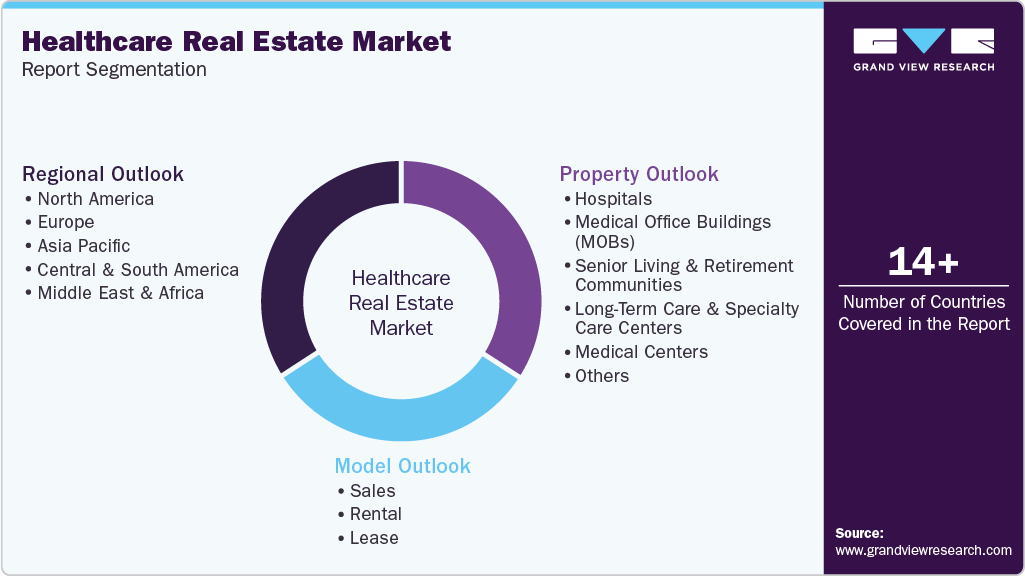
This report forecasts revenue growth at global, regional & country levels and provides an analysis of the latest trends and opportunities in each of the sub-segments from 2021 to 2033. For this study, Grand View Research has segmented the global healthcare real estate market report on the basis of property, model, and region.
-
Property Outlook (Revenue, USD Billion, 2021 - 2033)
-
Hospitals
-
Medical Office Buildings (MOBs)
-
Senior Living and Retirement Communities
-
Long-Term Care and Specialty Care Centers
-
Medical Centers
-
Others
-
-
Model Outlook (Revenue, USD Billion, 2021 - 2033)
-
Sales
-
Rental
-
Lease
-
-
Regional Outlook (Revenue, USD Billion, 2021 - 2033)
-
North America
-
U.S.
-
Canada
-
Mexico
-
-
Europe
-
UK
-
Germany
-
France
-
Italy
-
Spain
-
-
Asia Pacific
-
China
-
India
-
Japan
-
Australia & New Zealand
-
South Korea
-
-
Central & South America
-
Brazil
-
-
Middle East & Africa (MEA)
-
South Africa
-
-
Frequently Asked Questions About This Report
b. Some of the key players operating in the healthcare real estate market include Healthpeak Properties, Inc., Ventas, Inc., Welltower Inc., Brookdale Senior Living Inc., Medical Properties Trust, Inc., CBRE Group, Inc., Carter Validus Mission Critical REIT, JLL (Jones Lang LaSalle), Mediclinic Group, and Hammerson plc.
b. Demographic shifts, technological advancements, and changing healthcare delivery models are key factors driving the healthcare real estate market growth. The aging population, particularly in developed regions such as North America and Europe has emerged as one of the primary market growth drivers.
b. The global healthcare real estate market was estimated at USD 1,542.45 billion in 2025 and is expected to reach USD 1,660.79 billion in 2026.
b. The global healthcare real estate market is expected to grow at a compound annual growth rate of 8.4% from 2026 to 2033 to reach USD 2,923.93 billion by 2033.
b. North America dominated the healthcare real estate market with a share of over 50.03% in 2025. The healthcare real estate market in North America is undergoing substantial growth driven by robust investments in cutting-edge medical facilities and a significant increase in healthcare service demand.


Share this report with your colleague or friend.
Need a Tailored Report?
Customize this report to your needs — add regions, segments, or data points, with 20% free customization.


ISO 9001:2015 & 27001:2022 Certified
We are GDPR and CCPA compliant! Your transaction & personal information is safe and secure. For more details, please read our privacy policy.
Trusted market insights - try a free sample
See how our reports are structured and why industry leaders rely on Grand View Research. Get a free sample or ask us to tailor this report to your needs.












