
- Home
- »
- Homecare & Decor
- »
-
Golf Equipment Market Size & Share, Industry Report, 2033GVR Report cover
![Golf Equipment Market Size, Share & Trends Report]()
Golf Equipment Market (2026 - 2033) Size, Share & Trends Analysis Report By Product (Golf Club, Golf Balls, Golf Gear), By Distribution Channel (Sporting Goods Retailer, On-Course Shop), By Region (NA, Europe, APAC, Central & South America, MEA), And Segment Forecasts
- Report ID: GVR-3-68038-334-8
- Number of Report Pages: 83
- Format: PDF
- Historical Range: 2021 - 2024
- Forecast Period: 2026 - 2033
- Industry: Consumer Goods
- Report Summary
- Table of Contents
- Segmentation
- Methodology
- Download FREE Sample
-
 Download Sample Report
Golf Equipment Market Summary
The global golf equipment market size was estimated at USD 8.55 billion in 2025 and is projected to reach USD 13.08 billion by 2033, growing at a CAGR of 5.6% from 2026 to 2033. The global golf equipment industry is witnessing renewed momentum driven by rising global participation in golf, particularly as the sport continues to evolve from a niche competitive activity into a mainstream leisure and lifestyle pursuit.
Key Market Trends & Insights
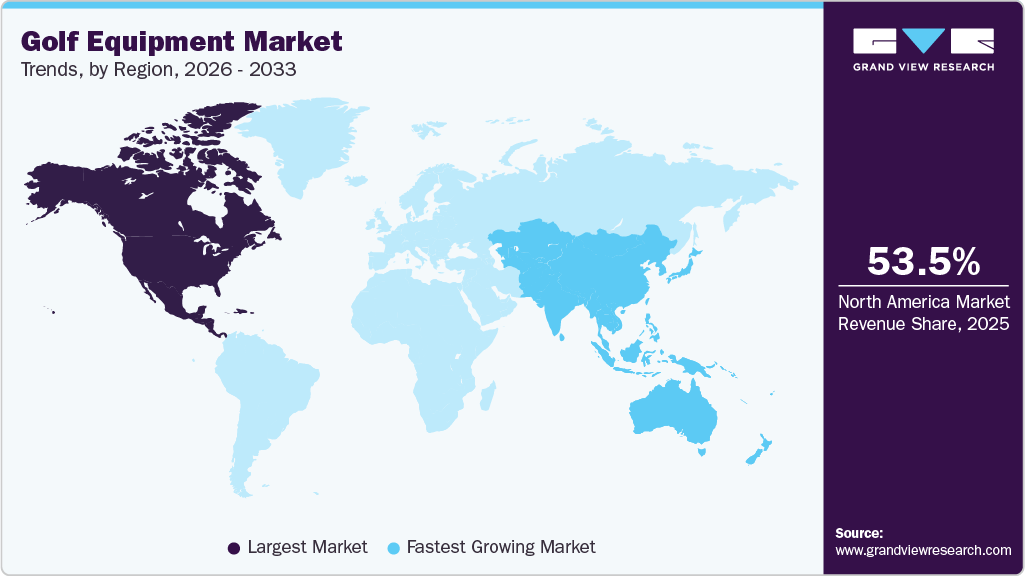
- North America dominated the global golf equipment market with the largest revenue share of 53.5% in 2025.
- The golf equipment market in the U.S. accounted for the largest market revenue share in North America in 2025.
- By product, the golf club segment led the market with the largest revenue share of 44.6% in 2025.
- By distribution channel, the sporting goods retailer segment led the market with the largest revenue share of 48.4% in 2025.
Market Size & Forecast
- 2025 Market Size: USD 8.55 Billion
- 2033 Projected Market Size: USD 13.08 Billion
- CAGR (2026-2033): 5.6%
- North America: Largest market share in 2025
- Asia Pacific: Fastest growing market
Growth is supported by rising disposable incomes, the expansion of golf courses in both mature and emerging markets, and increasing interest in golf tourism worldwide. Government-backed initiatives to promote sports tourism, coupled with the integration of golf into premium resorts, hotels, and recreational developments, are expanding the addressable consumer base. In parallel, greater female participation and growing engagement among younger players are reshaping demand patterns, creating long-term growth opportunities for equipment manufacturers.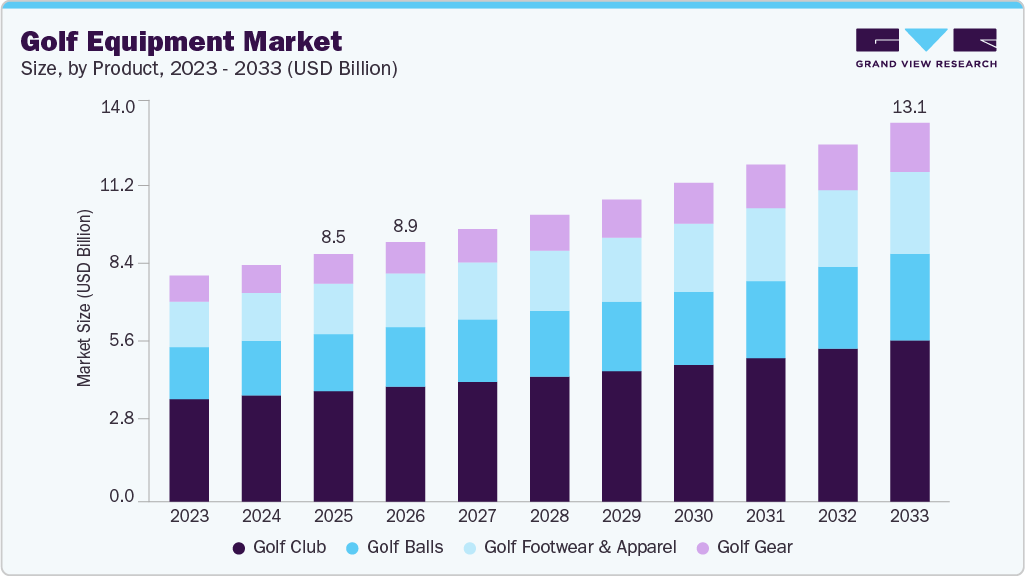
Technological innovation and performance enhancements remain central to market expansion, as leading players invest heavily in R&D to improve distance, accuracy, forgiveness, and consistency. Advances in materials science, aerodynamics, and club-face engineering have enabled manufacturers to deliver measurable performance gains, encouraging frequent equipment upgrades among both amateur and professional golfers. Brands such as TaylorMade, Callaway, Titleist, and Ping continue to introduce new product lines at premium price points, reinforcing value perception while pushing technological boundaries.
For instance, in January 2026, TaylorMade Golf introduced the Qi4D driver lineup, expanding its portfolio of performance-focused golf clubs. The new range was engineered to deliver higher ball speeds, improved forgiveness, and greater customization through advanced weighting and aerodynamic design. Aimed at accommodating different swing profiles, the launch reinforced TaylorMade’s emphasis on precision engineering and adjustable technology to help golfers optimize distance and consistency. This innovation-led pricing strategy has also created space for emerging and direct-to-consumer brands offering competitively priced alternatives.
Growing emphasis on customization and fit-focused demand is further reshaping the golf equipment industry. Golfers increasingly recognize the impact of properly fitted clubs on performance and injury prevention, driving demand for custom shafts, grips, loft configurations, and swing-matched equipment. Advanced fitting technologies, including launch monitors, swing analytics, and simulation software, are becoming standard offerings at golf retailers, academies, and clubhouses. This shift supports higher average selling prices and strengthens brand loyalty, as consumers invest in personalized equipment solutions rather than off-the-shelf products.
In addition, the rise in golf apparel is contributing meaningfully to overall market growth, reinforcing golf’s positioning as a lifestyle sport. Demand for performance-driven apparel that combines comfort, breathability, and style has increased, driven by casualization of dress codes on golf courses and broader athleisure trends. Apparel purchases are increasingly tied to brand identity and social visibility, encouraging cross-selling between equipment, footwear, and clothing. This convergence of sport and lifestyle is expanding total consumer spend per golfer beyond core equipment.
For instance, in January 2025, Authentic Brands Group partnered with Sports Casuals International to expand Reebok into the golf category. The collaboration focuses on developing and distributing Reebok-branded golf apparel, while complementing existing footwear efforts to create a complete golf offering. The move supports Reebok’s renewed push into performance-led sports segments and targets modern golfers through global retail and digital channels.
Furthermore, the growth of online retail and digital engagement is also transforming how golf equipment is marketed and sold. E-commerce platforms, brand-owned websites, and digital fitting tools have improved access to products and information, enabling consumers to research, compare, and purchase equipment remotely. Digital content, including virtual coaching, performance tracking apps, and influencer-led product reviews, has strengthened consumer engagement and shortened decision cycles.
While brick-and-mortar stores and pro shops remain critical for fittings and experiential purchases, online channels are increasingly important for repeat buys, accessories, and apparel. Collectively, these trends position the global golf equipment industry for sustained growth, driven by participation-led demand, innovation, personalization, and the expansion of digital commerce.
Brand Market Share Insights
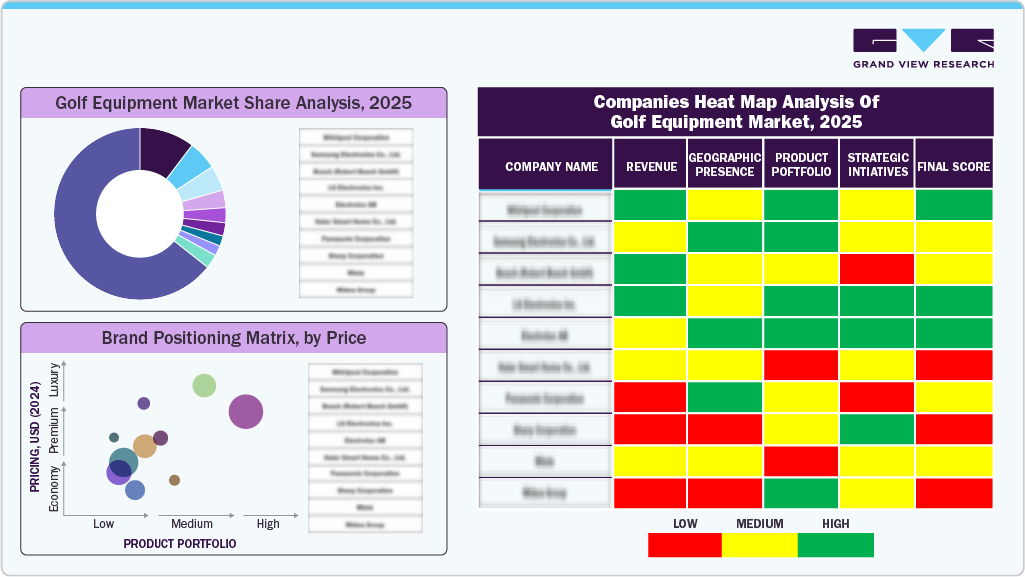
The golf equipment industry is undergoing a structural shift as manufacturers increasingly align product development with changing participation patterns and playing behaviors rather than focusing solely on elite performance. Demand is rising for equipment that supports consistency and ease of play, reflecting the growing base of recreational, lifestyle, and returning golfers. Brands are placing greater emphasis on game-improvement clubs, distance-enhancing golf balls, and lightweight carry equipment that reduce physical strain and improve playability across varied course conditions. This has expanded the appeal of golf equipment beyond traditional low-handicap players to casual golfers, seniors, women, and new entrants to the sport.
At the same time, innovation in the golf equipment industry is becoming more use-case driven and data-led. Manufacturers are integrating adjustable features, modular components, and fitting-centric designs that allow golfers to fine-tune equipment based on swing speed, launch angle, and playing style. Advances in materials engineering, such as carbon composites, high-strength alloys, and multi-layer ball construction, are being applied to enhance distance control, vibration dampening, and durability. These developments support higher replacement cycles and premium pricing, while also reinforcing the market’s shift toward personalized, performance-optimized equipment that caters to a broader and more diverse global golfer base.
Consumer Insights
Consumer insights in the golf equipment industry indicate a clear shift toward innovation-driven, experience-oriented purchasing behavior, as golfers increasingly expect equipment to reflect both performance needs and personal style. Players are no longer satisfied with standard, one-size-fits-all products; instead, they seek clubs, balls, and accessories that combine advanced engineering with improved feel, consistency, and visual appeal. Manufacturers are responding by introducing high-quality materials, adjustable features, and performance-enhancing designs that cater to a broad spectrum of golfers, from recreational players to low-handicap enthusiasts, while maintaining premium build quality and brand differentiation.
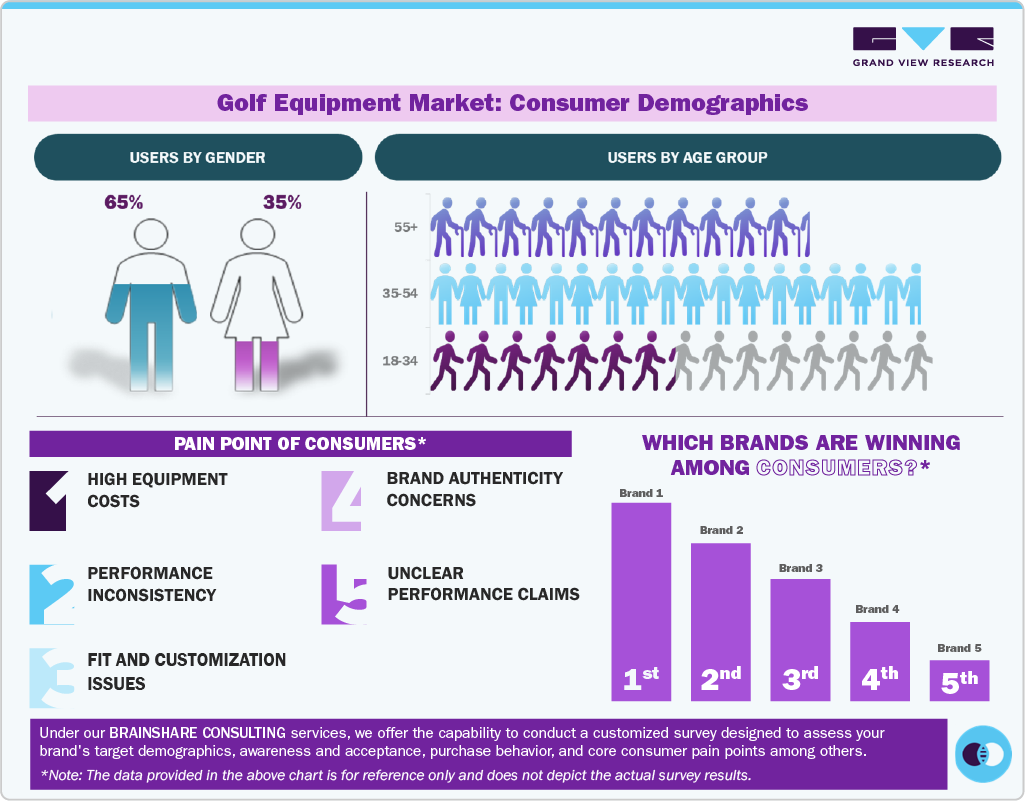
The perception of golf equipment has also evolved globally, driven by increased media exposure, professional endorsements, and the sport’s growing lifestyle appeal. High-profile tournaments, athlete sponsorships, and global golf events have amplified consumer awareness and aspirational demand for branded equipment. New product launches tied to professional tour usage or milestone sporting moments often stimulate replacement purchases, as golfers seek to align their gear with what they see at the professional level. This visibility, combined with expanding golf tourism and course development, continues to support steady demand across both mature and emerging markets.
Digital engagement is playing an increasingly important role in shaping golf equipment purchasing decisions. Consumers actively research products through brand websites, online reviews, virtual fittings, and performance analytics before making purchases. E-commerce platforms and direct-to-consumer channels provide golfers with access to a wide product range, customization tools, and convenient purchasing options, while still complementing physical retail for fittings and experiential buying. This omnichannel approach enhances accessibility and supports informed decision-making, particularly among younger and tech-savvy golfers. Demand for customization and personalization is another defining consumer trend within the golf equipment industry. Golfers increasingly value the ability to customize shaft type, grip size, loft, and lie angle to match their individual swing mechanics and playing preferences. Personalized equipment enhances performance confidence and fosters stronger brand loyalty, as consumers view custom-fit products as long-term investments rather than discretionary purchases.
Product Insights
The golf clubs segment led the market with the largest revenue share of 44.6% in 2025, driven by increasing consumer preference for customizable and mixed club sets, with golfers selecting adjustable shafts, loft angles, and grip options to align with individual swing mechanics and playing styles. Manufacturers continue to stimulate interest through innovation, particularly in hybrid clubs that combine the distance advantages of woods with the control and precision of irons, appealing strongly to recreational and mid-skill players. At the same time, advances in materials and construction have significantly improved the durability of iron clubs, extending replacement cycles and moderating volume growth within the segment despite sustained interest in premium and technologically advanced club offerings.
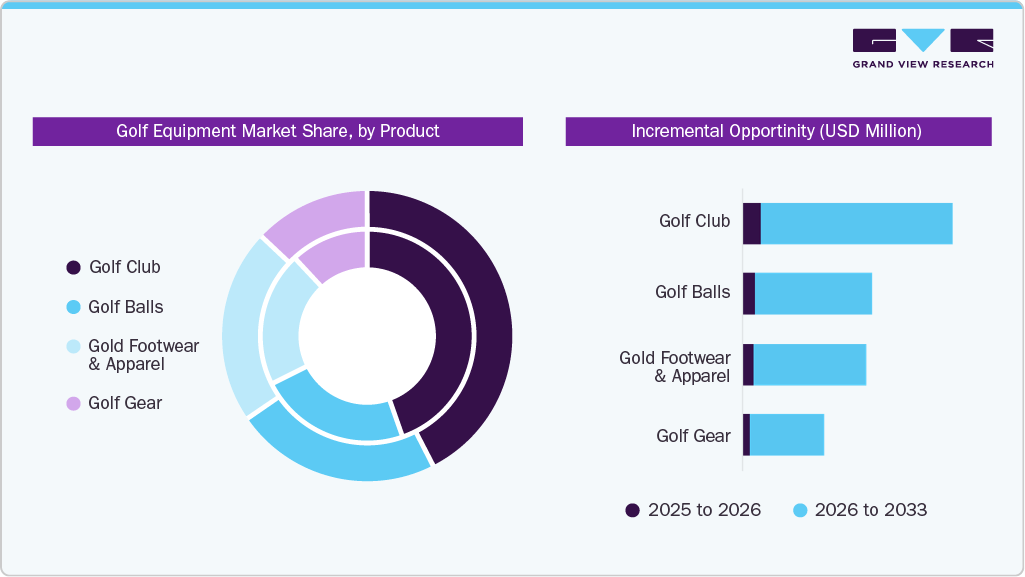
The golf gear segment is expected to grow at the fastest CAGR of 6.6% from 2026 to 2033. Golfers are spending more frequently on gloves, bags, training aids, rangefinders, and accessories as performance monitoring and course preparedness become integral to regular play. The expansion of e-commerce and brand-owned platforms has further accelerated purchases, with online promotions, seasonal discounts, and bundled offerings encouraging higher replacement and upgrade cycles. Growing interest in custom-fit and personalized golf gear, enabled by faster manufacturing processes and digital configuration tools, has reduced lead times and expanded product variety. Manufacturers continue to drive demand through innovation-led launches aimed at different skill levels; for example, TaylorMade has consistently introduced new performance-oriented gear and accessories alongside its club launches, reinforcing consumer engagement and supporting sustained growth of the golf gear segment over the forecast period.
Distribution Channel Insights
The sporting goods retailer segment led the market with the largest revenue share of 48.4% in 2025. These retailers benefit from offering multiple brands and product categories under one roof, enabling golfers to compare pricing, specifications, and product feel before purchase. Their close association with golf courses and driving ranges further strengthens sales, as purchase decisions are often made alongside play, practice, or coaching sessions. In addition, sporting goods retailers frequently bundle equipment purchases with club memberships, fitting services, or loyalty discounts, encouraging higher-value transactions and reinforcing their position as a primary sales channel for golf equipment.
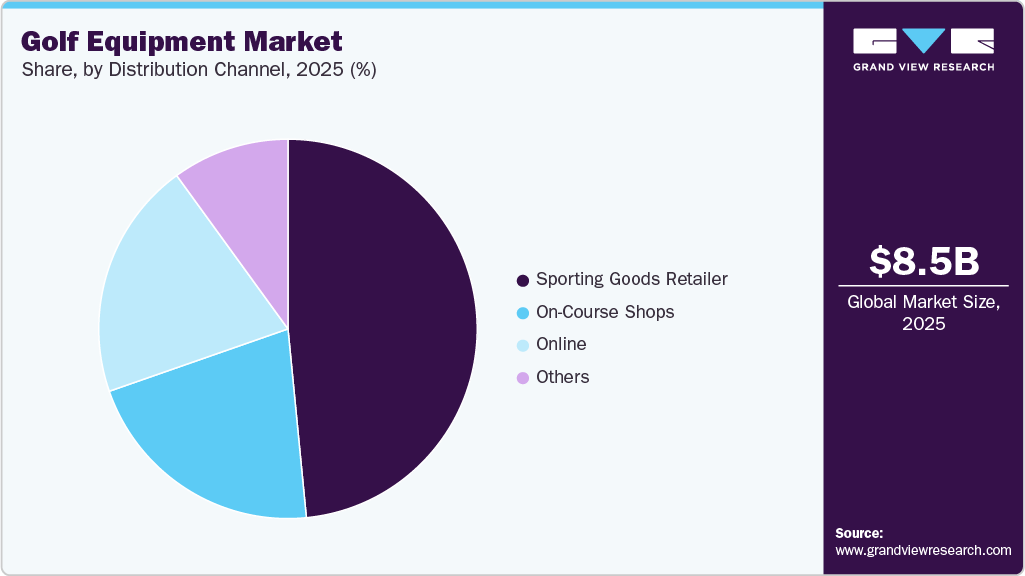
The online segment is expected to grow at the fastest CAGR of 6.8% from 2026 to 2033. Golf accessories such as balls, gloves, headgear, carts, and training aids are increasingly purchased online, as these products typically do not require in-person fitting or complex technical evaluation. Competitive pricing, frequent online promotions, and broad product availability have further strengthened digital channel adoption. In addition, easy ordering processes, fast delivery, and flexible return policies have reduced perceived purchase risk, encouraging golfers to shift accessory and repeat purchases toward e-commerce platforms, supporting the sustained growth of online sales within the golf equipment segment.
Regional Insights
North America dominated the global golf equipment market with the largest revenue share of 53.5% in 2025, driven by a high concentration of golf courses, training facilities, and country clubs, supporting consistent participation across professional, amateur, and recreational segments. Strong engagement with professional golf tournaments, tours, and player endorsements sustains demand for premium and technologically advanced equipment. In addition, high disposable incomes, widespread access to custom-fitting services, and a well-established retail and e-commerce ecosystem encourage frequent equipment upgrades. The presence of leading global manufacturers, early adoption of new technologies, and strong golf tourism activity continue to reinforce North America’s dominant position in the global market.
U.S. Golf Equipment Market Trends
The golf equipment market in the U.S. accounted for the largest market revenue share in North America in 2025, driven by consistent year-round participation across multiple climate zones, a large base of frequent golfers, and strong spending on performance-oriented equipment. U.S. consumers demonstrate a strong propensity to invest in premium clubs, balls, and gear, supported by widespread access to club-fitting services and practice facilities. In addition, the concentration of leading golf brands, strong domestic manufacturing and marketing presence, and a mature distribution network spanning pro shops, specialty retailers, and online channels continue to sustain the U.S. as the primary revenue engine of the North American golf equipment industry.
The Canada golf equipment market is expected to grow at a significant CAGR of 6.2% from 2026 to 2033, driven by rising domestic tourism and increased use of golf as a seasonal leisure activity integrated into vacation travel, resorts, and destination clubs. Expansion of public and semi-private courses, along with government and municipal investment in recreational infrastructure, is improving accessibility and supporting new player participation. In addition, Canada’s aging population is driving steady demand for equipment that prioritizes comfort, consistency, and ease of use, encouraging replacement purchases. The growing availability of indoor golf simulators and training centers is also extending participation beyond the outdoor season, supporting year-round equipment demand and reinforcing sustained growth of the Canadian market over the forecast period.
Europe Golf Equipment Market Trends
The golf equipment market in Europe is driven by a strong club-based golfing culture, widespread public course access, and high engagement in amateur and recreational play across countries such as the UK, Germany, France, Spain, and the Nordic markets. European golfers place emphasis on technique, course variety, and seasonal play, supporting consistent demand for clubs, balls, and practice equipment.
The Germany golf equipment market held a significant share in Europe in 2025. The golf equipment industry in Germany is driven by a well-established network of private and semi-private golf clubs, where structured memberships, regular tournaments, and training programs encourage consistent equipment replacement and upgrades. German golfers show a strong preference for quality, durability, and technical precision, driving demand for premium clubs, balls, and performance accessories. In addition, widespread availability of certified fitting centers, pro shops within golf clubs, and specialty golf retailers strengthens purchasing confidence. The growing adoption of indoor golf simulators, year-round practice facilities, and digital swing-analysis tools further supports equipment demand, reinforcing Germany’s position as a leading contributor to the European market.
The golf equipment market in the UK is expected to grow at a CAGR of 4.9% from 2026 to 2033. The UK golf equipment industry is supported by rising interest in golf as a wellness and outdoor lifestyle activity, particularly among urban professionals seeking low-impact sports. The expansion of pay-and-play courses and driving-range-led facilities has lowered entry barriers for new players, stimulating first-time equipment purchases. In addition, the growing adoption of indoor golf simulators and technology-enabled practice centers is extending playing and training activity beyond seasonal constraints. Increased exposure through televised international tournaments and digital golf content is also encouraging equipment upgrades, supporting steady growth in the UK golf equipment industry over the forecast period.
Asia Pacific Golf Equipment Market Trends
The golf equipment market in the Asia Pacific is expected to grow at the fastest CAGR of 6.2% from 2026 to 2033. The golf equipment industry in the Asia Pacific is driven by rising disposable incomes, rapid urbanization, and increasing exposure to global golf tournaments are encouraging the adoption of golf as a recreational and lifestyle sport in countries such as Japan, South Korea, China, Australia, and India. Governments and private developers are investing in new golf courses, driving ranges, and golf academies, improving accessibility and supporting first-time player entry. In addition, growing interest among younger consumers and corporate professionals, along with increased golf tourism in resort destinations across Southeast Asia, is supporting demand for clubs, balls, and accessories.
The China golf equipment market accounted for a revenue share of 37.4% of the Asia Pacific in 2025. China's market is driven by rising participation among affluent urban consumers, increased exposure to international golf tournaments, and expanding availability of golf facilities in major metropolitan and resort destinations. Golf in China is increasingly positioned as a premium leisure and business networking activity, driving demand for high-quality clubs, balls, and accessories. In addition, strong digital integration plays a critical role in purchasing behavior, with consumers relying on online platforms, social media content, and live-streamed product demonstrations to evaluate equipment.
The golf equipment market in the India is expected to grow at a significant CAGR of 7.6% from 2026 to 2033. India's golf equipment industry is driven by rising interest in golf among corporate professionals and high-net-worth individuals, who increasingly associate the sport with networking, leisure, and premium recreation rather than competitive play alone. Expansion of golf courses, academies, and driving ranges in metropolitan regions and tier-1 cities is improving accessibility and encouraging first-time equipment purchases. In addition, increased exposure to international golf tournaments through digital media, growing golf tourism, and the inclusion of golf facilities within luxury real estate developments and resorts are supporting sustained demand for clubs, balls, and accessories.
Central & South America Golf Equipment Market Trends
The golf equipment market in Central & South America is expected to grow at a CAGR of 3.9% from 2026 to 2033. The golf equipment industry in Central & South America is driven by rising interest in golf among middle- and upper-income consumers, particularly in countries with established tourism infrastructure and resort-based courses. International tournaments, regional championships, and the growing visibility of professional golfers are improving awareness and encouraging equipment adoption. In addition, golf’s association with hospitality, premium real estate developments, and recreational tourism is supporting steady demand for clubs, balls, and accessories. Improving availability through specialty sports retailers and pro shops and expanding e-commerce channels is further enhancing accessibility.
Middle East & Africa Golf Equipment Market Trends
The golf equipment market in the Middle East & Africa is expected to expand at a rapid pace, driven by large-scale tourism and real estate developments that integrate golf courses, academies, and driving ranges, particularly in the Middle East, positioning golf as part of a luxury lifestyle and as a destination offering. In parallel, expanding corporate participation, hospitality-led golf experiences, and international tournament hosting are raising awareness and encouraging equipment purchases. Across parts of Africa, the gradual expansion of golf clubs and training facilities, coupled with growing interest among urban consumers, is supporting steady demand. Improved access through pro shops, specialty sports retailers, and e-commerce platforms is further enhancing equipment availability, reinforcing sustained growth of the golf equipment industry across the Middle East & Africa region.
Key Golf Equipment Companies:
The following key companies have been profiled for this study on the golf equipment market
- Callaway
- SRI Sports Limited
- Acushnet Holding Corp.
- Taylormade
- Titleist
- Clevaland
- Mizuno
- Wilson
- Odyssey
- Ping
Recent Developments
-
In December 2025,XXIO introduced its XXIO 14 line of lightweight golf clubs featuring a new VR Titanium alloy in key components to boost performance. The updated design focuses on reducing overall club weight while enhancing launch conditions and forgiveness, helping golfers generate greater speed and distance with less effort. This launch underscores XXIO’s strategy of blending advanced materials with player-friendly technologies to appeal to golfers seeking easy-to-hit, high-performance equipment.
-
In January 2025,PCNA expanded into the golf segment by launching a broad collection of golf-related products, including Srixon golf balls and supporting accessories. The new assortment was designed to help distributors and retailers serve golf events and promotions with a wider range of performance and customizable items. The move reflects PCNA’s strategy to diversify its product portfolio and tap into growing demand for golf-focused merchandise.
Golf Equipment Market Report Scope
Report Attribute
Details
Market size value in 2026
USD 8.96 billion
Revenue forecast in 2033
USD 13.08 billion
Growth rate
CAGR of 5.6% from 2026 to 2033
Base year for estimation
2025
Historical data
2021 - 2024
Forecast period
2026 - 2033
Quantitative units
Revenue in USD million/billion, and CAGR from 2026 to 2033
Report coverage
Revenue forecast, company ranking, competitive landscape, growth factors, and trends
Segments covered
Product, distribution channel, region
Regional scope
North America; Europe; Asia Pacific; Central & South America; Middle East & Africa
Country scope
U.S.; Canada; Mexico; UK; Germany; France; Italy; Spain; China; Japan; India; Australia & New Zealand; South Korea; Brazil; South Africa
Key companies profiled
Callaway; SRI Sports Limited; Acushnet Holding Corp.; Taylormade; Titleist; Clevaland; Mizuno; Wilson; Odyssey; Ping
Customization scope
Free report customization (equivalent up to 8 analysts working days) with purchase. Addition or alteration to country, regional & segment scope.
Pricing and purchase options
Avail customized purchase options to meet your exact research needs. Explore purchase options
Global Golf Equipment Market Report Segmentation
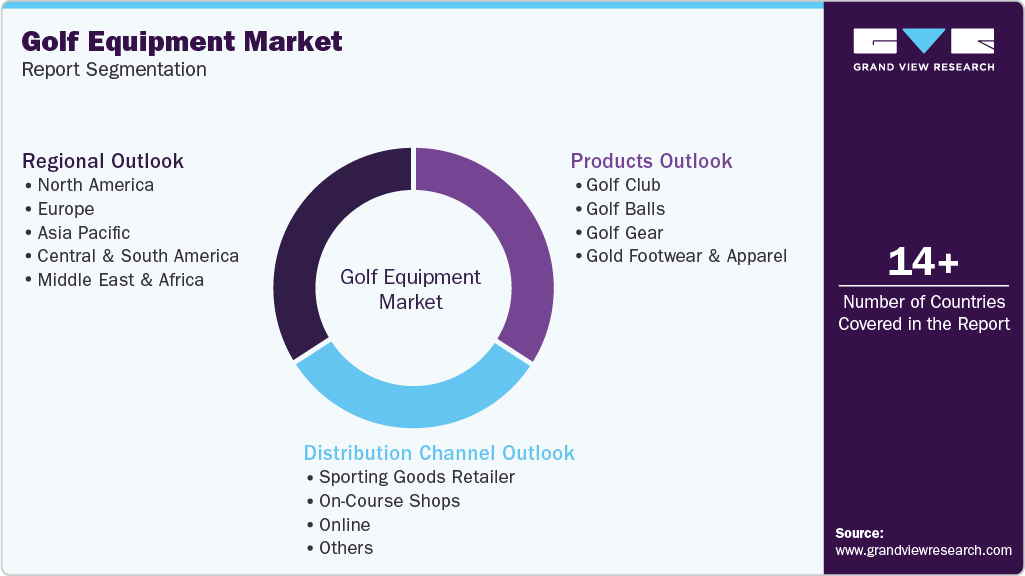
This report forecasts revenue growth at global, regional & country levels and provides an analysis on the latest trends and opportunities in each of the sub-segments from 2021 to 2033. For this study, Grand View Research has segmented the global golf equipment market report based on the products, distribution channel, and region.
-
Products Outlook (Revenue, USD Million, 2021 - 2033)
-
Golf Club
-
Golf Balls
-
Golf Gear
-
Gold Footwear & Apparel
-
-
Distribution Channel Outlook (Revenue, USD Million, 2021 - 2033)
-
Sporting Goods Retailer
-
On-Course Shops
-
Online
-
Others
-
-
Regional Outlook (Revenue, USD Million, 2021 -2030)
-
North America
-
U.S.
-
Canada
-
Mexico
-
-
Europe
-
UK
-
Germany
-
France
-
Italy
-
Spain
-
-
Asia Pacific
-
China
-
India
-
Japan
-
South Korea
-
Australia & New Zealand
-
-
Central & South America
-
Brazil
-
-
Middle East & Africa (MEA)
-
South Africa
-
-
Frequently Asked Questions About This Report
b. Some of the key players operating in the golf equipment market include Callaway, SRI Sports Limited, Acushnet Holding Corp., Taylormade, Titleist, Cleveland, Mizuno, Wilson, Odyssey, and Ping.
b. Key factors that are driving the golf equipment market growth include rising disposable income, an increase in the number of golf courses, especially in high-income countries, and golf tourism.
b. The global golf equipment market size was estimated at USD 8.55 billion in 2025 and is expected to reach USD 8.96 billion in 2026.
b. The global golf equipment market is expected to grow at a compounded growth rate of 5.6% from 2026 to 2033 to reach USD 13.08 billion by 2033.
b. The golf club segment dominated the global golf equipment market with a share of 44.6% in 2025. Customizable and assorted golf clubs are becoming popular among consumers, which is anticipated to boost the demand for golf clubs over the forecast period.


Share this report with your colleague or friend.
Need a Tailored Report?
Customize this report to your needs — add regions, segments, or data points, with 20% free customization.


ISO 9001:2015 & 27001:2022 Certified
We are GDPR and CCPA compliant! Your transaction & personal information is safe and secure. For more details, please read our privacy policy.
Trusted market insights - try a free sample
See how our reports are structured and why industry leaders rely on Grand View Research. Get a free sample or ask us to tailor this report to your needs.












