
- Home
- »
- Consumer F&B
- »
-
Fortified Dairy Products Market Size, Industry Report, 2033GVR Report cover
![Fortified Dairy Products Market Size, Share & Trends Report]()
Fortified Dairy Products Market (2025 - 2033) Size, Share & Trends Analysis Report By Product (Milk, Yogurt, Cheese), By Ingredient (Probiotic & Prebiotic, Protein, Vitamins & Minerals), By Distribution Channel (Hypermarket/Supermarket, Convenience Stores), By Region, And Segment Forecasts
- Report ID: GVR-4-68040-389-1
- Number of Report Pages: 110
- Format: PDF
- Historical Range: 2021 - 2024
- Forecast Period: 2025 - 2033
- Industry: Consumer Goods
- Report Summary
- Table of Contents
- Interactive Charts
- Methodology
- Download FREE Sample
-
 Download Sample Report
Fortified Dairy Products Market Summary
The global fortified dairy products market size was estimated at USD 91.23 billion in 2024 and is projected to reach USD 140.16 billion in 2033, growing at a CAGR of 4.9% from 2025 to 2033. The growth can be attributed to the increasing consumer awareness of the health benefits associated with fortified foods and beverages.
Key Market Trends & Insights
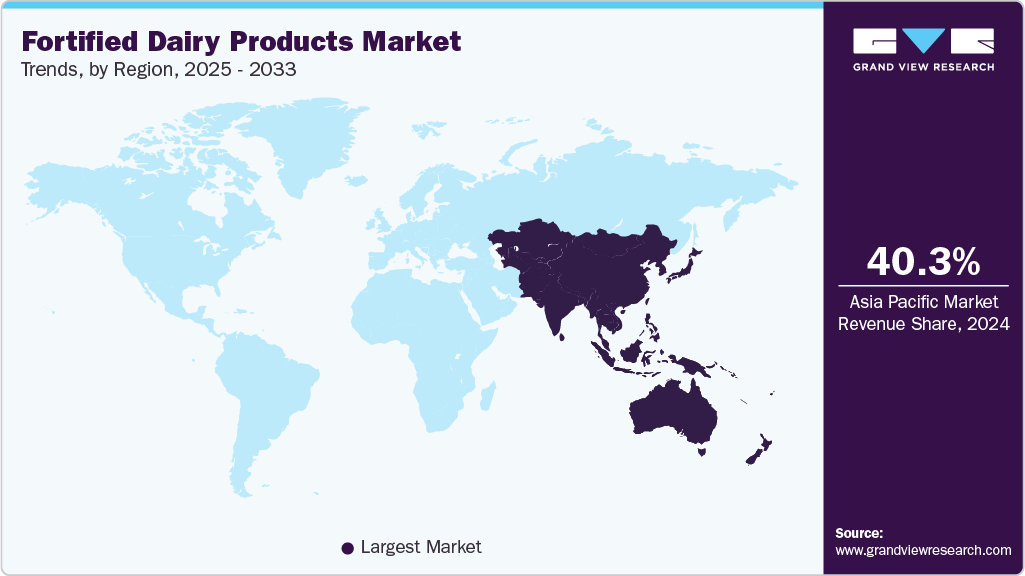
- Asia Pacific dominated the global fortified dairy products market in 2024 with a revenue share of 40.3% and it is also growing at the fastest CAGR of 5.9% in the forecast period.
- The fortified dairy products market in the U.S. held a revenue share of 77.8% of the North American region in 2024.
- Based on product, the yogurt segment in the global fortified dairy products market accounted for a share of 48.2% in 2024.
- Based on ingredient, the probiotic & prebiotic segment held a share of 49.6% in 2024.
- By distribution channel, the hypermarket/supermarkets segment dominated the market with a revenue share of 40.9% in 2024.
Market Size & Forecast
- 2024 Market Size: USD 91.23 Billion
- 2033 Projected Market Size: USD 140.16 Billion
- CAGR (2025-2033): 4.9%
- Asia Pacific: Largest market in 2024
A key trend is the rising demand for dairy products enriched with vitamins like D and A, minerals such as calcium and iron, and omega-3 fatty acids. This trend is fueled by a growing population with dietary deficiencies and a desire to proactively improve overall health and well-being. Furthermore, the aging population is a significant demand driver, as older adults seek fortified dairy products to maintain bone health and combat age-related nutritional deficiencies. The increasing adoption of innovative fortification technologies and the diversification of fortified dairy product offerings are driving the industry growth. Manufacturers are responding to the demand for healthier options by developing products with reduced sugar and fat content, while simultaneously enhancing them with essential nutrients. Moreover, plant-based fortified dairy alternatives are also gaining traction, catering to the growing vegan and lactose-intolerant populations.The rising prevalence of celiac disease has significantly influenced consumer preferences, particularly in the fortified dairy products market. Celiac disease, an autoimmune disorder triggered by gluten consumption, affects approximately 1-2% of the global population, with cases increasing worldwide. Since individuals with celiac disease often suffer from gut dysbiosis and digestive discomfort, there has been a heightened interest in products that promote gut health, leading to a surge in demand for fortified dairy products containing prebiotic and probiotic ingredients.
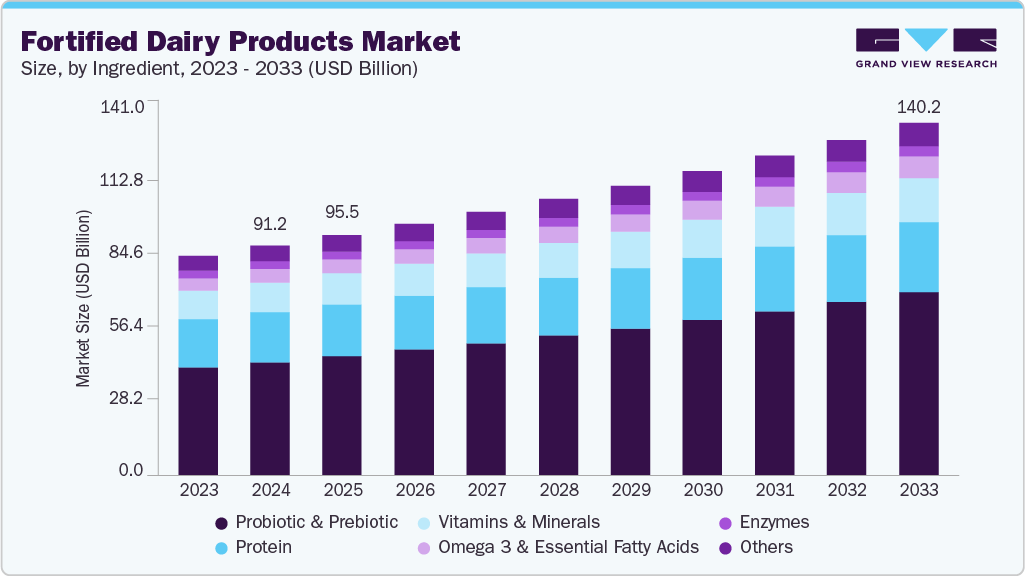
Fortified dairy products such as probiotic yogurts, kefir, and functional milk enriched with prebiotic fibers have gained traction among consumers seeking digestive health benefits. These products not only aid in digestion but also enhance nutrient absorption, which is particularly beneficial for individuals with celiac disease who often struggle with nutrient deficiencies.
Consumer Insights for the Fortified Dairy Products Market
Fortified dairy products are enhanced with additional nutrients such as vitamins (D, B12), minerals (calcium, iron), probiotics, or omega-3 fatty acids to address dietary gaps and enhance health benefits. These products cater to health-conscious consumers seeking functional foods that go beyond basic nutrition. Several key consumer trends, including an increased focus on health and wellness, dietary deficiencies, and the desire for functional benefits, drive the growing demand for fortified dairy products.
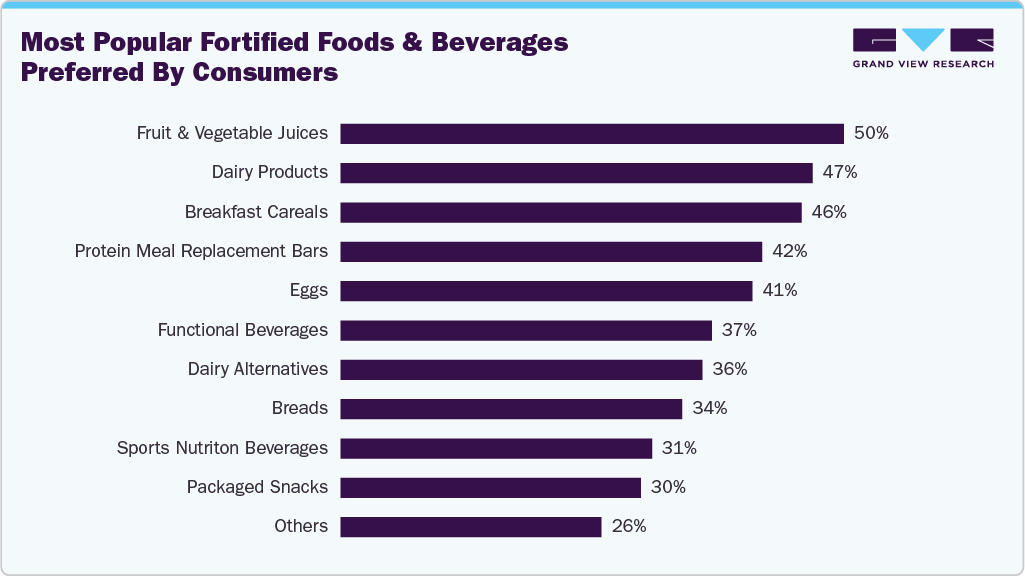
Post-pandemic, there has been a significant shift towards prioritizing immune health and overall wellness, leading to increased demand for nutrient-dense options. According to the International Food Information Council (IFIC), 85% of consumers are more concerned about the nutritional content of their food than they were five years ago. This shift towards health-conscious eating has significantly boosted the demand for fortified foods, particularly dairy products. Fortified dairy products are seen as an easy way to enhance daily nutrient intake without drastic changes in diet.
A 2023 study analyzed 233 plant-based milk alternatives (e.g., almond, oat, soy) and found that only 12% (28 products) matched cow’s milk’s nutrient profile for protein, calcium, and vitamin D. While 70% were fortified with calcium and 51% with vitamin D, most fell short in protein-only soy and pea milk approached cow’s milk’s 8g per 8 oz. serving. Notably, 76% of oats, 69% of soy, and 66% of almond milk contained calcium and vitamin D, but iodine and zinc were rarely added.
Consumers are increasingly willing to pay a premium for protein-fortified food and beverages, including fortified dairy products that provide enhanced nutritional benefits and support their health goals. Premiumization strategies in fortified dairy involve emphasizing high-quality protein sources, integrating functional ingredients such as probiotics for gut health, and ensuring transparency in labeling. Highlighting added nutrients like calcium, vitamin D, and omega-3s further enhances consumer trust and positions fortified dairy as a valuable addition to a balanced diet.
Product Insights
Based on product, yogurt held the largest share of 48.2% of the global revenue in 2024. Fortified yogurt, particularly that enriched with probiotics and prebiotics, supports digestive health by promoting a balanced gut microbiome. Additionally, vitamin D and calcium fortification cater to concerns about bone health and osteoporosis prevention, especially among aging populations. Moreover, consumers are moving toward personalized nutrition, choosing foods that cater to their specific dietary needs. Fortified yogurts tailored for gut health, heart health, brain function, and bone health are gaining popularity. To attract younger consumers and expand their appeal, brands are launching innovative flavors, functional ingredients, and exotic superfoods in fortified yogurts. The inclusion of turmeric (for anti-inflammatory benefits), matcha (rich in antioxidants), chia seeds (fiber and omega-3s), and adaptogens (stress-relieving properties) has created a new niche of superfood yogurts that appeal to health-conscious buyers.
Frozen desserts are anticipated to grow at a CAGR of 6.5% from 2025 to 2033. The availability of fortified desserts in supermarkets, health food stores, and online platforms has made these products more accessible to a wider consumer base. E-commerce and direct-to-consumer brands are playing a crucial role in introducing innovative and niche-fortified dessert options. In September 2024, Müller and Myprotein partnered to launch a new range of high-protein yogurts and desserts. This collaboration aims to meet the growing demand for protein-rich dairy products, targeting health-conscious consumers and fitness enthusiasts. The range will feature a variety of flavors and formats, emphasizing taste alongside nutritional benefits. The partnership combines Müller's expertise in dairy with Myprotein’s strong presence in the fitness nutrition sector. This launch aligns with the increasing trend of functional foods in the dairy market.
Ingredient Insights
Based on ingredients, probiotics and prebiotics held a 49.6% share in 2024. The inclusion of probiotics and prebiotics in fortified dairy products aligns with increasing consumer demand for gut health-focused nutrition. These ingredients enhance the effectiveness of fortification by improving the bioavailability of essential nutrients like calcium, vitamin D, and protein. Additionally, the growing interest in functional foods has driven dairy manufacturers to innovate with probiotic yogurts, prebiotic-infused milk, and other gut-friendly dairy options.
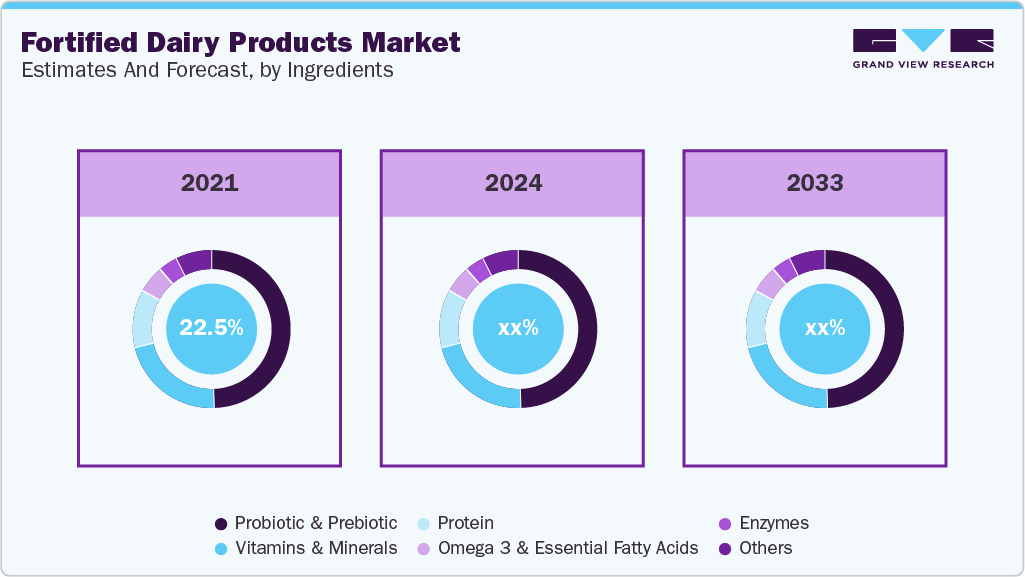
Omega-3 & essential fatty acids are anticipated to grow at a CAGR of 5.7% in the forecast period. Fortifying dairy products with omega-3 and essential fatty acids significantly enhances their nutritional value, offering consumers additional health benefits. These polyunsaturated fats are vital for maintaining optimal health, supporting heart function, brain development, and even skin health. However, the human body cannot synthesize them, necessitating their inclusion through diet. By enriching commonly consumed dairy items like milk, yogurt, and cheese with these essential nutrients, manufacturers provide an accessible means for individuals to meet their dietary requirements. Incorporating omega-3 and essential fatty acids into dairy products not only meets consumer demand for functional foods but also addresses dietary deficiencies prevalent in modern diets. This fortification approach offers a practical solution to enhance public health by providing essential nutrients through familiar and widely consumed food items.
Distribution Channel Insights
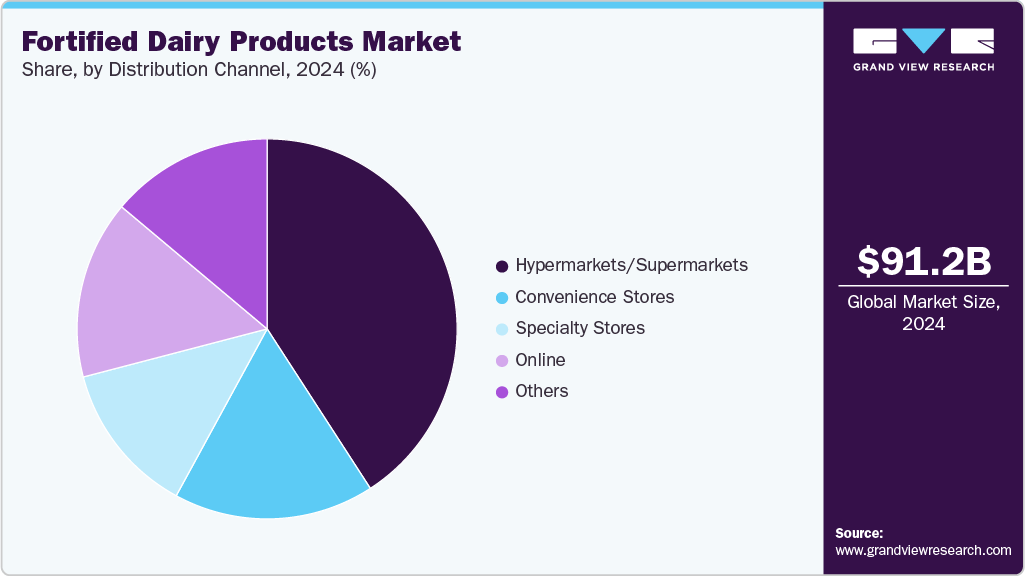
The sale of fortified dairy products through the hypermarkets/supermarkets accounted for a share of over 40.9% of the global revenues in 2024. Supermarkets and hypermarkets are gaining popularity due to their multiple options and the convenience of buying everything in a single place. The availability of various products also enables customers to choose from multiple options according to their preferences, dietary requirements, and budget. Moreover, consumers are likely to trust the quality of products available at well-established hypermarkets and supermarkets and, therefore, prefer to buy from there. This makes supermarkets a convenient and preferable distribution channel for fortified dairy products.
Sales of fortified dairy products through online channels are anticipated to grow at a CAGR of 6.2% from 2025 to 2033. The increasing digitization globally and rising e-commerce are further expected to add to the market growth. According to the Food and Agriculture Organization of the United Nations (FAO), the rising emphasis on healthy living, the increased expectation for personalization, and the rapid integration of technological innovations are driving the growth of the customized nutrition sector and affecting the consumption habits of the customers, which is expected to drive market growth.
Moreover, online channels offer advantages to both brands and customers, as they eliminate mediators and storage costs and add a personalized shopping experience. These also provide brands with insights into consumer preferences through the integration of big data analytics and help improve their product portfolios. Key players in the fortified dairy products market are shifting to online sales channels to expand their customer base and sales.
Regional Insights
The fortified dairy products market in Asia Pacific held a share of 40.3% of the global market in 2024 and it is also growing at the fastest CAGR of 5.9% in the forecast period. The Asia Pacific region is home to a large population with varying dietary habits, including high rates of lactose intolerance. According to the World Population Review data, lactose intolerance is common in the region, especially in East Asia, where at least 70% of people show signs of lactose intolerance. This has led to a surge in demand for plant-based fortified dairy alternatives, such as almond and soy milk, fortified with essential nutrients like calcium and vitamin D. Furthermore, as the region becomes more health-conscious, manufacturers are increasingly focusing on innovative fortified dairy products that cater to both local preferences and global health trends. Companies are investing in research and development to offer products that meet the needs of diverse consumer bases, leading to continuous product launches and the emergence of new fortified dairy options.
North America Fortified Dairy Products Market Trends
The North America fortified dairy products market is expected to grow at a CAGR of 4.3% from 2025 to 2033. With an increasing focus on health and wellness, consumers in this region are becoming more inclined toward dairy products that offer additional benefits such as improved digestion, immunity, and heart health. The demand for plant-based dairy alternatives, enriched with nutrients such as calcium, vitamins, and probiotics, has gained significant traction, supported by growing vegan and lactose-intolerant populations.
Additionally, an increase in lactose intolerance and the growing preference for dairy alternatives have created opportunities for plant-based fortified dairy options, such as almond and soy milk, further expanding the market. For instance, according to the National Institute of Diabetes and Digestive and Kidney Diseases (NIDDK) data, about 36% of Americans have lactose malabsorption.
U.S. Fortified Dairy Products Market Trends
The fortified dairy products market in the U.S. held a revenue share of 77.8% of the North American region in 2024. According to the data published by Boston Children's Hospital Services, about 30 to 50 million people in the U.S. are lactose intolerant. Moreover, fortified dairy products such as milk and yogurt enriched with calcium, protein, and probiotics are increasingly popular as Americans look for convenient dairy products to improve bone health, digestive health, and overall nutrition. This has urged key players to introduce new products to cater to the changing consumer preferences. For instance, in February 2023, Dairy Farmers of America, Inc., collaborated with Good Culture to produce a new probiotic milk free from lactose. The new product is available in two variants: whole milk and 2% reduced-fat options. It is formulated with 1 billion probiotic cultures per 12-oz serving to support digestive and immune health.
Europe Fortified Dairy Products Market Trends
The fortified dairy products market in Europe held a share of 23.31% of the global market in 2024. In Europe, the fortified dairy products market is primarily driven by increasing consumer interest in maintaining a healthy lifestyle. Europeans are increasingly turning to fortified dairy products as part of their daily nutrition, with a focus on digestive health, immunity, and mental well-being. Moreover, the rise of organic and natural products further supports the demand for fortified dairy, as consumers seek options with fewer additives and preservatives while still providing health benefits. Major dairy brands in Europe, including Danone, Arla, and Nestlé, continue to innovate with new fortified dairy products, particularly focusing on benefits such as enhanced immunity and digestive support.
Germanyfortified dairy products market held a share of 20.2% of the European market in 2024. Growing consumer interest in sustainable and ethical food production practices influences purchasing decisions in the fortified dairy products market. German consumers are particularly focused on products with natural ingredients and high nutritional value, which drives the demand for fortified dairy products such as milk, yogurt, and cheese enriched with vitamins, minerals, and protein. Additionally, Germany’s well-established dairy industry benefits from a high level of innovation in the dairy sector, with local producers introducing various fortified dairy variants to cater to health-conscious consumers.
Key Fortified Dairy Products Company Insights
Key players operating in the fortified dairy products market are undertaking various initiatives to strengthen their presence and increase the reach of their products and services. Strategies such as expansion activities and partnerships are key in propelling the market growth.
Key Fortified Dairy Products Companies:
The following are the leading companies in the dairy products market. These companies collectively hold the largest market share and dictate industry trends.
- Nestlé S. A
- Danone S.A
- FrieslandCampina
- LACTALIS
- The Kraft Heinz Company
- General Mills Inc.
- Dairy Farmers of America, Inc.
- Müller Group
- Yili Group
- AMUL (GCMMF)
Recent Developments
-
In January 2025, General Mills, Inc. completed the sale of its yogurt business in Canada to Sodiaal. This divesture includes the Canada-based operations of brands such as Yoplait and Liberté and a manufacturing facility located in Saint-Hyacinthe, Québec. The company also plans to sell its U.S. yogurt business to LACTALIS in the same year, subject to regulatory approvals.
-
In November 2024, LACTALIS announced an investment of USD 55 million in the Tulare facility in the U.S. to increase the volume of Président Feta Cheese manufactured in the nation
-
In September 2024, Müller Group announced a collaboration with MyProtein to introduce a new product range consisting of high-protein yogurts and desserts. The collaboration includes products: high-protein yogurts, low-fat puddings, and low-fat mousses, available in vanilla, chocolate, vanilla, and chocolate and salted caramel flavors, respectively.
-
In July 2024, Chinese dairy leader Yili Group collaborated with Xampla, a University of Cambridge spin-off, to introduce microencapsulation technology aimed at strengthening heat-treated dairy beverages and improving the nutritional profile of its products.
Fortified Dairy Products Market Report Scope
Report Attribute
Details
Market size value in 2025
USD 95.46 billion
Revenue Forecast in 2033
USD 140.16 billion
Growth rate
CAGR of 4.9% from 2025 to 2033
Actual data
2021 - 2024
Forecast period
2025 - 2033
Quantitative units
Revenue in USD million/billion and CAGR from 2025 to 2033
Report coverage
Revenue forecast, company ranking, competitive landscape, growth factors, and trends
Segments covered
Product, ingredient, distribution channel, region
Regional scope
North America; Europe; Asia Pacific; Central & South America; Middle East & Africa
Country scope
U.S.; Canada; Mexico; UK; Germany; France; Italy; Spain; China; India; Japan; Australia & New Zealand; Brazil; Argentina; South Africa; Saudi Arabia
Key companies profiled
Nestlé S. A; Danone S.A; FrieslandCampina; LACTALIS; The Kraft Heinz Company; General Mills Inc.; Dairy Farmers of America, Inc.; Müller Group; Yili Group; AMUL (GCMMF)
Customization scope
Free report customization (equivalent up to 8 analysts’ working days) with purchase. Addition or alteration to country, regional & segment scope. Pricing and purchase options
Avail customized purchase options to meet your exact research needs. Explore purchase options Global Fortified Dairy Products Market Report Segmentation
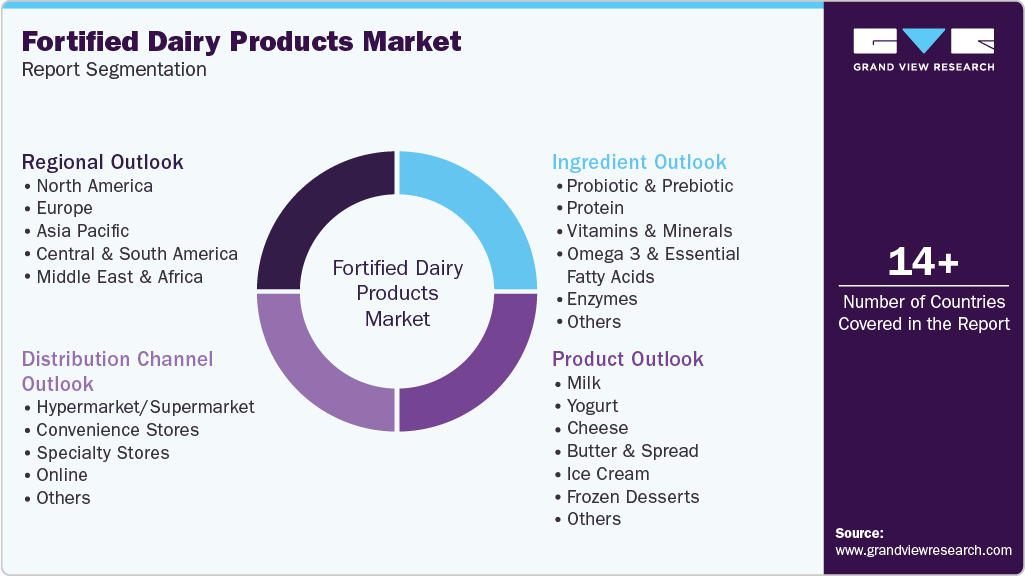
This report forecasts revenue growth at global, regional & country levels and provides an analysis of the latest trends and opportunities in each of the sub-segment from 2021 to 2033. For this study, Grand View Research has segmented the global fortified dairy products market report on the basis product, ingredient, distribution channel, and region.
-
Product Market Outlook (Revenue, USD Billion, 2021 - 2033)
-
Milk
-
Whole Milk
-
Flavored Milk
-
Others
-
-
Yogurt
-
Regular/Traditional
-
Greek
-
Drinkable
-
Plant-based
-
-
Cheese
-
Butter & Spread
-
Ice Cream
-
Frozen Desserts
-
Others
-
-
Ingredient Market Outlook (Revenue, USD Billion, 2021 - 2033)
-
Probiotic & Prebiotic
-
Protein
-
Vitamins & Minerals
-
Omega 3 & Essential Fatty Acids
-
Enzymes
-
Others
-
-
Distribution Channel Market Outlook (Revenue, USD Billion, 2021 - 2033)
-
Hypermarket/Supermarket
-
Convenience Stores
-
Specialty Stores
-
Online
-
Others
-
-
Regional Market Outlook (Revenue, USD Billion, 2021 - 2033)
-
North America
-
U.S.
-
Canada
-
Mexico
-
-
Europe
-
UK
-
Germany
-
Spain
-
France
-
Italy
-
-
Asia Pacific
-
China
-
Japan
-
India
-
Australia & New Zealand
-
-
Central & South America
-
Brazil
-
Argentina
-
-
Middle East & Africa
-
South Africa
-
Saudi Arabia
-
-
Frequently Asked Questions About This Report
b. The global fortified dairy products market was estimated at USD 91.23 billion in 2024 and is expected to reach USD 95.47 billion in 2024.
b. The global fortified dairy products market is expected to grow at a compound annual growth rate of 4.9% from 2025 to 2033 to reach USD 140.16 billion by 2033.
b. Asia Pacific dominated the fortified dairy products market with a share of over 40.25% in 2024. The growth of the regional market is mainly driven by a growing awareness of nutrient deficiencies and their impact on health, and innovations in food technology and product formulations have made fortified dairy products more appealing to diverse taste preferences in the region.
b. Some of the key players operating in the fortified dairy products market include Dean Foods Company, Nestle S.A, BASF SE., China Modern Dairy Holdings Ltd., General Mills Inc., Arla Foods UK Plc., Danone, CMMF Ltd., Fonterra Group Cooperative Ltd, and Bright Dairy & Foods Co.
b. Key factors that are driving the fortified dairy products market growth include the rising health consciousness, a growing elderly population concerned with bone health, dietary trends favoring fortified products, regulatory encouragement for nutrient enrichment, and consumer preference for functional dairy products.


Share this report with your colleague or friend.
Need a Tailored Report?
Customize this report to your needs — add regions, segments, or data points, with 20% free customization.


ISO 9001:2015 & 27001:2022 Certified
We are GDPR and CCPA compliant! Your transaction & personal information is safe and secure. For more details, please read our privacy policy.
Trusted market insights - try a free sample
See how our reports are structured and why industry leaders rely on Grand View Research. Get a free sample or ask us to tailor this report to your needs.












