
- Home
- »
- Homecare & Decor
- »
-
Cookware Market Size, Share, Trends, Industry Report, 2033GVR Report cover
![Cookware Market Size, Share & Trends Report]()
Cookware Market (2026 - 2033) Size, Share & Trends Analysis Report By Product (Pots, Pans, Woks, Pressure Cookers, Kitchen Tools and Accessories, Bakeware), By Coating Type (Non-Coated, Coated), By Material, By Distribution Channel, By Region, And Segment Forecasts
- Report ID: GVR-4-68039-420-4
- Number of Report Pages: 110
- Format: PDF
- Historical Range: 2021 - 2025
- Forecast Period: 2026 - 2033
- Industry: Consumer Goods
- Report Summary
- Table of Contents
- Segmentation
- Methodology
- Download FREE Sample
-
 Download Sample Report
Cookware Market Summary
The global cookware market size was estimated at USD 32.38 billion in 2025 and is expected to reach USD 43.44 billion by 2033, growing at a CAGR of 3.8% from 2026 to 2033. The growth is driven by accelerated replacement of legacy PTFE cookware, premiumization toward durable, health-focused materials, rising urban home-cooking frequency, and rapid e-commerce penetration, reshaping brand reach and product mix.
Key Market Trends & Insights
- By region, Asia Pacificled the cookware market and accounted for a share of 38.1% in 2025.
- The China cookware industry led Asia Pacific with the largest revenue share in 2025.
- By product, the panssegment held the largest market share of 27.0% in 2025.
- By coating type, the non-stick/coatedsegment held the largest market share of 54.0% in 2025.
- By material, the stainless steel segment held the largest market share of 33.9% in 2025.
- By distribution channel, the offline segment held the largest market share of 78.8% in 2025.
Market Size & Forecast
- 2025 Market Size: USD 32.38 Billion
- 2033 Projected Market Size: USD 43.44 Billion
- CAGR (2026-2033): 3.8%
- Asia Pacific: Largest market in 2025
Advancements in material science and coating technologies are increasingly defining cookware performance and consumer choice. Manufacturers are adopting fully PFAS/PFOA-free ceramic and hybrid coatings that use sol-gel and diamond-reinforced formulations to deliver superior scratch resistance, improved heat distribution, and easier cleaning compared with older non-stick surfaces, while also meeting eco-friendly and health-safe criteria.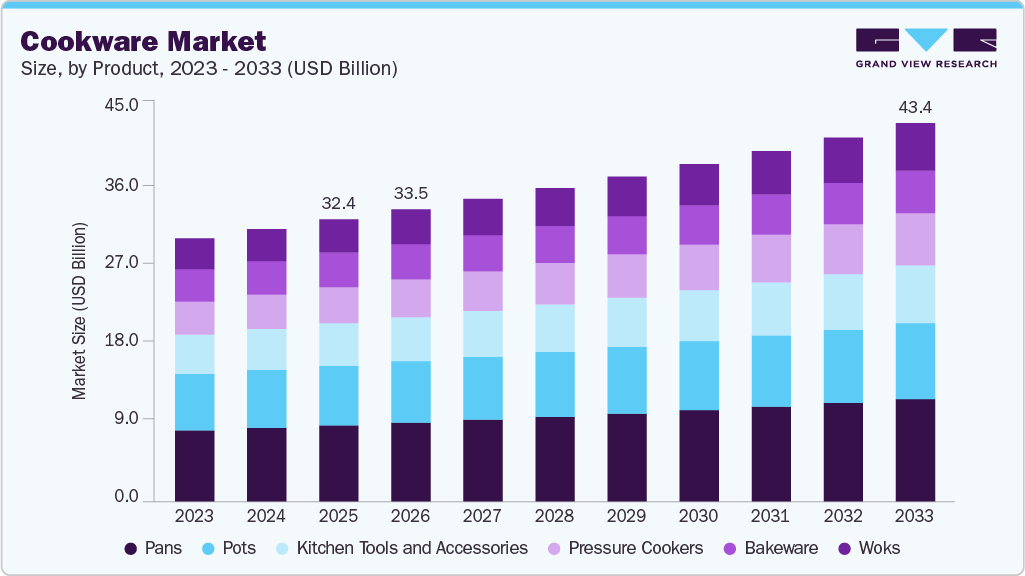
The proliferation of visual and interactive content on platforms such as Instagram, TikTok, and Pinterest has transformed cookware from a purely functional purchase into a lifestyle and aesthetic decision for many consumers. Social media doesn’t just showcase recipes; users often highlight the cookware itself in context, reinforcing aspirational cooking scenarios that significantly impact buying behaviour. The search interest for “pastel cookware sets” surged, driven primarily by platform‑centric trends that emphasize kitchen aesthetic as part of home decor and personal expression. As a result, cookware brands with visually appealing designs or Instagrammable colourways often experience spikes in engagement and sales following targeted content pushes.
This digital influence is compounded by broader consumer shopping behaviors, which show that social media is a growing touchpoint for product discovery and purchase inspiration across categories. According to YouGov’s 2024 consumer studies, around 27% of consumers use social media platforms for product research and to inspire purchases. This behavior is especially pronounced among younger demographics, who are also core drivers in premium cookware segments. This cohort often encounters cookware through cooking videos, influencer posts, and user‑generated content, raising awareness of brands and specific product features long before traditional retail interactions occur.
Consumer Insights
Age plays a critical role in shaping consumer behavior in the cookware and kitchen tools market. Younger consumers increasingly prioritize convenience, speed, and versatility in cooking, driven by urban lifestyles, dual-income households, and time constraints. At the same time, older consumers continue to allocate more time and resources to home cooking and meal preparation. This generational divide is directly reflected in cookware ownership patterns, frequency of use, and the types of tools consumers choose to invest in.
Younger consumers tend to spend less time cooking full meals but show a strong interest in global cuisines, social cooking, and visually engaging food preparation. This has increased demand for specialized, trend-driven tools such as chopsticks, ricers, mandolins, zesters, and whisks, which appear significantly more often in younger households than in older ones. These tools support experimentation, baking, international recipes, and food presentation, activities strongly influenced by social media platforms, cooking influencers, and digital recipe ecosystems. For this demographic, cookware is not only functional but also an extension of lifestyle and identity.
In contrast, consumers aged 45 years and above typically own a wider range of essential kitchen tools, reflecting long-term household formation, stable cooking routines, and accumulated purchasing power. Ownership is strongest for measuring cups, spatulas, measuring spoons, cutting boards, ladles, tongs, and graters, which are foundational tools for everyday cooking. This group places greater emphasis on reliability, ease of maintenance, and completeness of kitchen setups. Their cookware purchasing behavior is more conservative, often favoring familiar formats, proven brands, and products with long replacement cycles.
Product Insights
Pans dominated the cookware industry in 2025, accounting for a revenue share of 27.0%. The pans market growth is primarily driven by their high-heat, quick-cooking functionality. Pans are essential for frying, searing, sautéing, stir-frying, and browning, providing precise temperature control and enabling culinary techniques that achieve crisp textures and caramelization. This functionality aligns with rising consumer interest in protein-rich diets, home-based gourmet cooking, and international cuisines, making pans indispensable for both everyday meal preparation and specialty cooking. In September 2025, Lakeland introduced its 8-in-1 Only Pan, a multifunctional cookware pan engineered to perform eight distinct cooking methods, including steaming, simmering, pan-frying, boiling, sautéing, and stir-frying, in a single design, addressing demand for versatile kitchen tools.
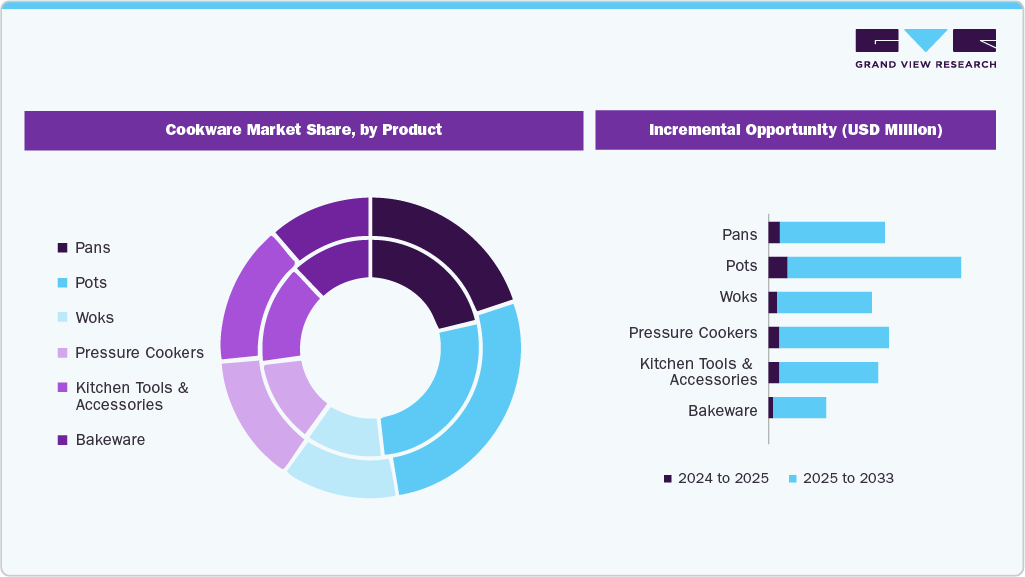
The pressure cookers category is anticipated to witness a CAGR of 4.9% from 2026 to 2033. The pressure cookers market is expanding due to a combination of functionality, time‑saving utility, and changing consumer lifestyles. Pressure cookers significantly reduce cooking time by using steam pressure to cook food faster than conventional methods, addressing the needs of modern households that prioritize convenience and efficiency. This time‑saving feature resonates strongly with dual‑income families, working professionals, and urban populations who seek to minimize kitchen time without compromising on nutrition or meal quality. Additionally, pressure cookers are highly versatile, capable of preparing a wide range of meals, such as rice, lentils, stews, meats, and even desserts, making them a core cookware product.
Coating Type Insights
Non-stick/coated cookware led the cookware industry in 2025, accounting for a revenue share of 54.0%. Non-stick cookware offers several compelling advantages, such as ease of maintenance, minimal need for cooking oil, and excellent food-release properties. It is particularly beneficial for professional cooks in commercial settings and is used to prepare bread or fried dishes, as it helps maintain food integrity. Cleaning non-stick cookware is easy, making it a convenient choice, especially when hosting guests or when time is limited.
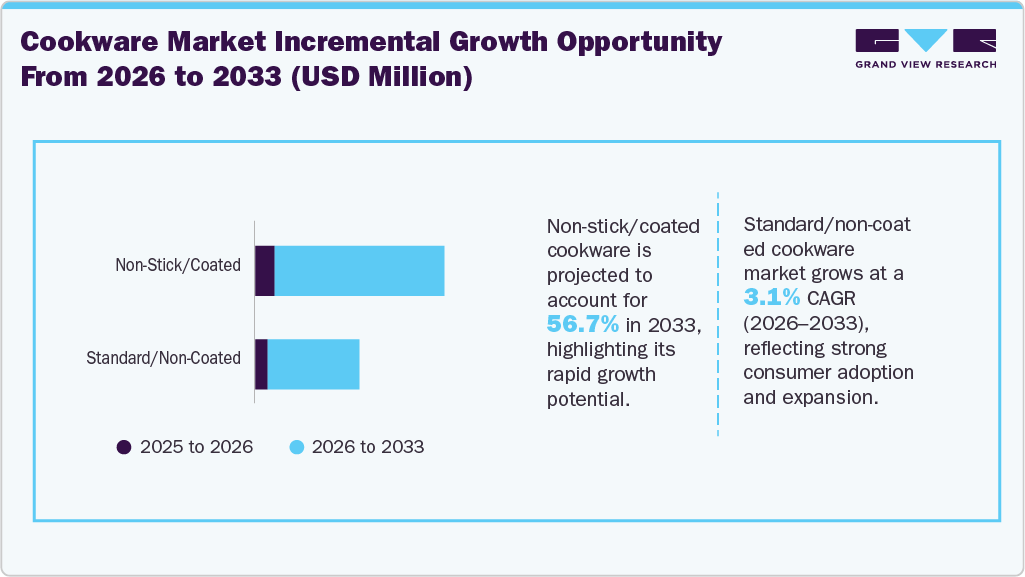
The standard/non-coated cookware market segment is anticipated to witness a CAGR of 3.1% from 2026 to 2033. Standard/non-coated cookware offers a distinct advantage in achieving attractive browning effects on food, such as the desirable crust on baked bread or appealing sear marks on meats. Its ability to withstand high heat without damaging the nonstick coating makes it a preferred choice among professional chefs, enabling efficient, rapid cooking and a delightful golden finish.
Material Insights
The stainless steel segment dominated the cookware industry in 2025, accounting for the largest revenue share of 33.9%. Health and safety considerations are another significant catalyst for market development. Growing consumer awareness of potential risks associated with chemical coatings in certain non-stick cookware has shifted purchasing behavior toward non-toxic, non-reactive cooking surfaces. Stainless steel does not leach harmful substances into food, maintaining food integrity and addressing concerns about chemical exposure during high-temperature cooking, a factor increasingly emphasized by health-conscious segments of the market. The material’s non-porous surface also facilitates effective cleaning and hygiene, which resonates strongly with households that prioritize food safety and with commercial foodservice operators who must meet rigorous sanitation standards. Manufacturers are responding with continuous innovation in cookware ranges. For instance, in March 2025, Anolon launched the EverLast Ceramic Nonstick in Clad Stainless Steel cookware collection, combining multi-ply stainless steel construction with a PFAS-free ceramic nonstick interior for professional-grade performance and healthier cooking.
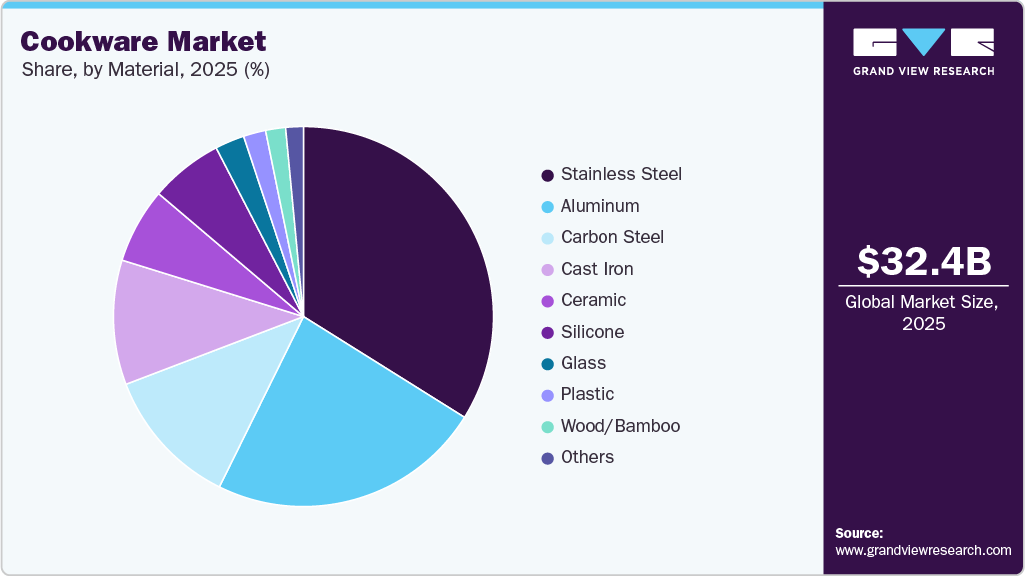
Wood/bamboo cookware is anticipated to grow at a CAGR of 4.9% from 2026 to 2033. The wood and bamboo kitchen cookware market is expanding since these materials offer surface-safe mechanical performance that cannot be replicated by metal, plastic, or silicone. As adoption of non-stick, ceramic, and enameled cookware rises, consumers increasingly require utensils that apply force without abrasion, allowing scraping, stirring, and flipping without damaging coated surfaces. Bamboo’s fibrous structure delivers high stiffness with low surface hardness, enabling it to move dense foods, such as rice, noodles, and stir-fries, without gouging pan interiors. This functional compatibility makes wood and bamboo utensils essential tools rather than optional accessories in modern kitchens.
Distribution Channel Insights
Offline demand held the largest share of the cookware market in 2025, accounting for a share of 78.8%. The cookware sales through offline channels continue to grow as consumers place high value on physical inspection, in-store guidance, and immediate access to products when purchasing durable kitchen goods. Cookware is a tactile, performance-driven category in which weight, balance, handle comfort, coating quality, and material thickness directly influence perceived value and long-term usability. Offline retail enables shoppers to touch, lift, compare, and receive demonstrations, reducing perceived risk for higher-ticket items such as stainless steel sets, non-stick pans, and pressure cookers.
Online demand for beverages is anticipated to grow at a CAGR of 5.6% from 2026 to 2033. The cookware sales through online channels are expanding rapidly as consumers increasingly prioritize convenience, price transparency, and information-rich purchasing environments when buying kitchenware. Online platforms allow shoppers to compare materials, coatings, capacities, prices, and brand reputations in real time, reducing search costs and enabling more confident purchase decisions, particularly for repeat purchases and product upgrades. High-resolution product images, video demonstrations, customer reviews, and Q&A sections replicate much of the in-store evaluation process while offering the advantage of a broader assortment and 24/7 accessibility, making online channels especially attractive to urban, digitally native, and value-conscious consumers.
Regional Insights
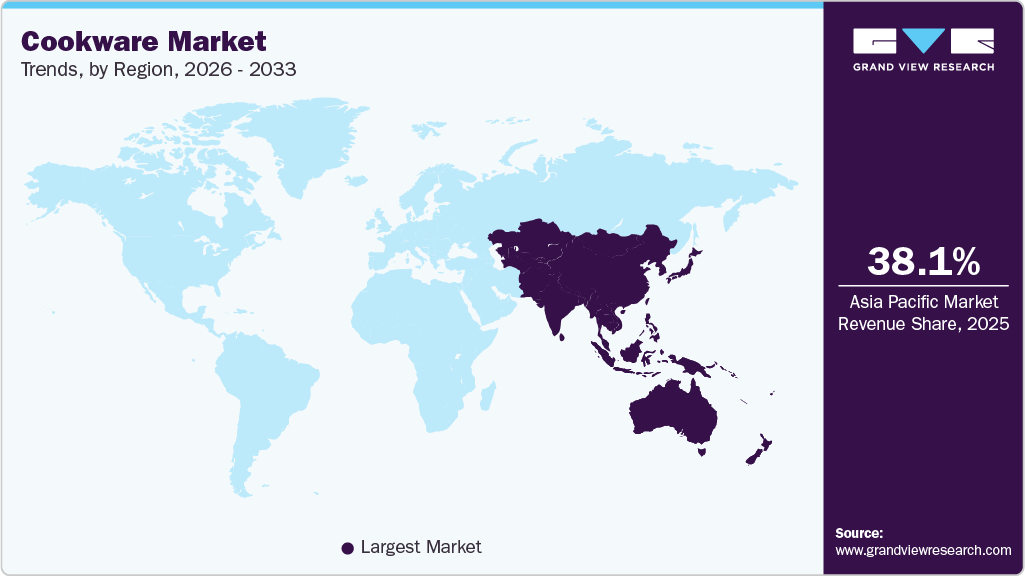
The Asia Pacific cookware industry accounted for the largest revenue share of 38.1% in 2025, driven by regional demographic, economic, and cultural dynamics. Rapid urbanization and the growth of nuclear households across China, India, Southeast Asia, and South Korea are driving demand for basic and replacement cookware as millions of consumers set up new homes each year. Rising middle-class incomes, particularly in India, Indonesia, Vietnam, and the Philippines, are enabling greater spending on branded and premium cookware. In addition, the strong presence of traditional cooking methods, such as stir-frying, steaming, and pressure cooking, has increased demand for specialized products, such as woks, rice cookers, kadais, steamers, and pressure cookers, tailored to local cuisines. Moreover, government-led clean cooking initiatives and the shift from solid fuels to gas and induction stoves are also accelerating cookware upgrades across urban and semi-urban markets.
At the same time, innovation in formulation technology accelerated as companies sought to maintain shelf life while reducing reliance on synthetic chemicals. Techniques such as encapsulation and microemulsions improved stability and controlled release of natural antimicrobials and antioxidants, enhancing their effectiveness without affecting taste or texture. Many processors also adopted “hurdle technology,” combining mild preservation methods such as high-pressure processing (HPP), modified atmosphere packaging (MAP), and lower preservative doses to achieve safety targets synergistically. This approach not only supported clean-label positioning but also enabled longer freshness, better sensory quality, and reduced overall chemical load, aligning with both regulatory expectations and evolving consumer preferences.
India Cookware Market Trends
The India cookware market is expected to grow rapidly over the forecast period. Consumers in India are purchasing cookware not only for household formation but also for health, convenience, and alignment with a modern lifestyle. Growing awareness of food safety and non-toxic materials is increasing demand for ceramic-coated, stainless steel, and PFAS-free cookware. The rapid rise of e-commerce platforms and influencer-driven cooking content has improved product accessibility and encouraged experimentation with new cooking styles at home.
In November 2025, TK Prestige launched its Tri-Ply Designer Cookware Series in India, featuring premium stainless-steel pieces, including a kadai and a fry pan with glass lids that combine elegant design with durable tri-ply construction for even heat distribution. The new range is built for modern kitchens, offering improved performance and aesthetics for everyday cooking.
North America Cookware Market Trends
Regional dynamics, including residential sector growth and evolving consumer preferences, drive the cookware industry’s growth in North America. Significant increases in new household formations and home renovation projects across the U.S. and Canada fuel demand for premium cookware that complements modern kitchen designs. Concurrently, post-pandemic behavioral shifts have solidified a surge in home cooking, amplified by health consciousness, social media-inspired culinary experimentation, and a pivot toward nutritious meals over restaurant dining.
E-commerce penetration accelerates market growth by providing convenient access to diverse, high-end, and sustainable cookware options through omnichannel strategies prevalent in the U.S. This digital shift aligns with broader retail trends, enabling consumers to explore specialized products tailored to regional tastes and lifestyles.
In September 2024, GreenPan expanded its TUCCI by GreenPan cookware collection, developed in collaboration with actor and author Stanley Tucci, with 34 new products available exclusively at Williams Sonoma stores and online. The new pieces include a 4.5-quart Stanley Pan in multiple colors, an eco-friendly lasagna pan, and additional stainless-steel cookware, all engineered in Italy with advanced design features and PFAS-free ceramic nonstick performance.
Europe Cookware Market Trends
European consumers are purchasing cookware not only for functionality but also for durability, aesthetics, and compliance with health standards. Premiumization is a key regional trend, as buyers in markets such as Germany, the Nordics, and the UK are willing to pay more for long-lasting, European-made products that meet certified safety standards and offer superior heat performance. The popularity of compact apartments and smaller kitchens has further increased demand for stackable, multifunctional, and space-saving cookware designs. At the same time, the influence of regional cuisine, cooking shows, and online recipe platforms has encouraged experimentation at home, reinforcing replacement demand and first-time purchases among younger households.
For instance, in January 2026, Lakeland launched its Tri-Tanium Elite pan range, featuring three titanium-plasma-coated frying pans, designed for durable non-stick performance at accessible prices. The new pans combine a stainless-steel interior with an aluminum core and are safe on all hobs and oven-ready up to 230°C, offering a trend-led cookware option for modern European kitchens.
The UK cookware market is expected to grow over the forecast period. The rising instance of people who enjoy cooking at home is driving the demand. Cooking shows on TV and the web, as well as regional and international food magazines, have also greatly contributed to the trend of cooking at home, and this has driven the sales of cookware in this region. Social media has played a significant role in driving a sudden surge in home cooking and in trying new and exciting recipes. Pictures and recipes of appetizers, desserts, entrees, cocktails, and various other items are easily available on social media platforms such as Instagram, Facebook, Pinterest, and YouTube.
The rising trend of food-away-from-home is also presenting lucrative growth opportunities for cookware manufacturers serving restaurants and eateries. The rising number of eateries is presenting the need for cookware in commercial kitchens for the speedy processing and service of food to customers. Customer desire for convenience, socialization, and high-quality food and service is mainly driving. The growth of the restaurant industry. This, in turn, is prompting restaurant owners to invest in high-quality, modern cookware.
Latin America Cookware Market Trends
Cultural and lifestyle factors specific to the region are further driving purchases. Latin America’s rich culinary traditions, ranging from Brazilian churrasco grills to Argentine parrillas and regional stews, continue to sustain demand for specialty cookware tailored to local cooking practices. At the same time, a growing focus on sustainability and health has increased interest in eco-friendly, PFAS-free materials and durable cookware that aligns with environmental values. The rise of food tourism, vibrant local dining cultures, and influential cooking shows and social media content have also encouraged home cooks to invest in quality cookware to replicate restaurant-style meals.
In July 2025, Cookut launched its multifunction pot “La Fabulosa” in Argentina, a versatile 8-in-1 cookware piece that replaces multiple traditional utensils, such as a sauté pan, wok, steamer, fryer, etc., with a single unit made from recycled aluminium and featuring a PFOA-free non-stick coating.
Middle East & Africa Cookware Market Trends
The Middle East & Africa cookware industry is expected to grow at a CAGR of 4.2% from 2026 to 2033. The region’s rich and diverse food heritage, ranging from tagines and slow-cooked stews to large family-style preparations in the Middle East, sustains demand for cookware that accommodates these methods, while innovative manufacturing enhancements, such as heat-resistant coatings and the fusion of traditional materials with modern convenience, are enabling consumers to retain cultural cooking experiences with improved usability.
In June 2025, Vinod Cookware launched its official retail rollout across key Middle Eastern markets, including the UAE, Saudi Arabia, and Bahrain, bringing its high-performance kitchenware range to GCC retail channels and e-commerce platforms. The expansion includes partnerships with regional distributors and listings on major platforms such as Amazon and Noon, marking a significant milestone in the brand’s international growth strategy.
Key Cookware Company Insights
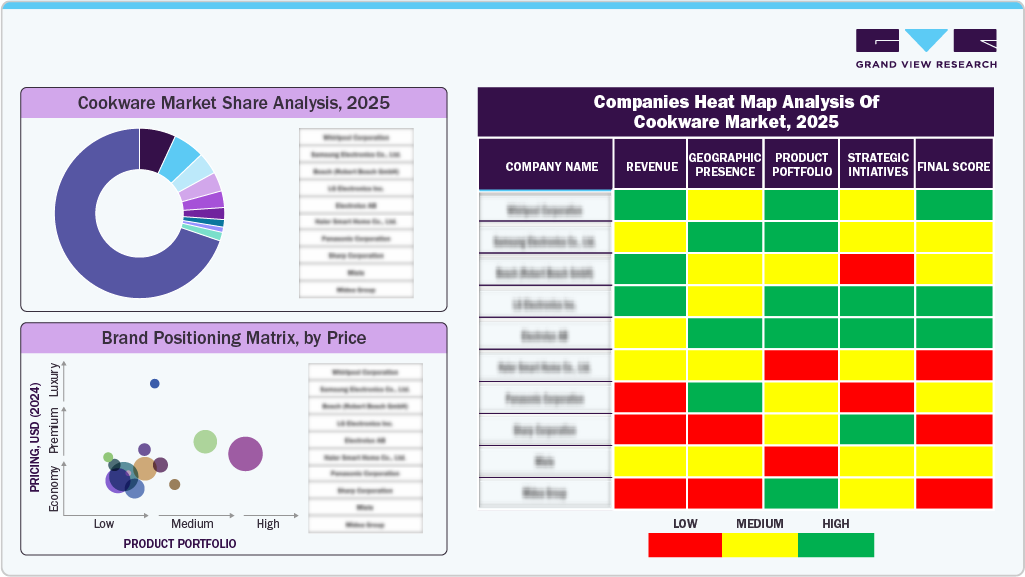
Leading players in the cookware market include Tramontina, WMF, Staub, and Supor. The companies are increasingly focusing on durable, safe, and health-oriented materials such as non-toxic coatings, PFOA-free non-stick surfaces, stainless steel, cast iron, and ceramic alternatives to address evolving consumer preferences and stricter safety regulations. Innovation is driven by multifunctional and ergonomic designs, improved heat-distribution technologies, induction-compatible bases, and smart features such as temperature indicators and stackable, space-saving formats. Sustainability is also shaping the industry, with brands adopting recyclable materials, eco-friendly production processes, and long-lasting products that reduce replacement frequency.
Key Cookware Companies:
The following key companies have been profiled for this study on the cookware market.
- Tramontina
- WMF
- Staub
- Anolon
- All-Clad
- Calphalon
- Circulon
- Supor
- Hawkins
- Zwilling J.A. Henckels
Recent Developments
-
In November 2025, All‑Clad company launched its limited‑edition 71‑piece Legacy Set, a premium cookware and kitchen gear collection celebrating the brand’s heritage with everything from cookware to a pizza oven. The set, valued at over USD 8,000, is offered at approximately USD 5,000 while quantities last.
-
In September 2025, Lagostina expanded its market presence with a strategic rebranding aimed at engaging a new generation of home cooks, updating its visual identity and brand positioning to broaden appeal beyond its century-old heritage. The refreshed direction supports wider product engagement and modern market growth for the Italian cookware brand.
Cookware Market Report Scope
Report Attribute
Details
Market size in 2026
USD 33.53 billion
Revenue forecast in 2033
USD 43.44 billion
Growth rate
CAGR of 3.8% from 2026 to 2033
Actuals
2021 - 2025
Forecast period
2026 - 2033
Quantitative units
Revenue in USD million and CAGR from 2026 to 2033
Report coverage
Revenue forecast, company ranking, competitive landscape, growth factors, and trends
Segments covered
Product, coating type, material, distribution channel, region
Region covered
North America; Europe; Asia Pacific; Central & South America; Middle East & Africa
Country covered
U.S.; Canada; Mexico; UK; Germany; France; Spain; Italy; China; Japan; India; South Korea; Australia & New Zealand; Brazil; South Africa
Key companies profiled
Tramontina; WMF; Staub; Anolon; All-Clad; Calphalon; Circulon; Supor; Hawkins; Zwilling J.A. Henckels
Customization scope
Free report customization (equivalent up to 8 analysts’ working days) with purchase. Addition or alteration to country, regional & segment scope.
Pricing and purchase options
Avail customized purchase options to meet your exact research needs. Explore purchase options
Global Cookware Market Report Segmentation
This report forecasts revenue growth at the global, regional & country levels and provides an analysis of the latest trends and opportunities in each of the sub-segments from 2021 to 2033. For this study, Grand View Research has segmented the cookware market report based on product, coating type, material, distribution channel, and region:
-
Product Outlook (Revenue, USD Million, 2021 - 2033)
-
Pots
-
Pans
-
Woks
-
Pressure Cookers
-
Kitchen Tools and Accessories
-
Cutting & Chopping Tools
-
Knives
-
Chef's Knife
-
Utility Knife
-
Paring Knife
-
Boning Knife
-
Bread Knife
-
Cleaver Knife
-
-
Peelers, Graters, and Slicers
-
Cutting Boards
-
-
Mixing & Handling Tools
-
Spatulas
-
Ladles
-
Whisks
-
Turner
-
Skimmer/Skimmer with Strainer
-
Sieves/Strainers
-
-
Spoons
-
-
Bakeware
-
Tins & Trays
-
Cups
-
Molds
-
Pans & Dishes
-
Others (Rolling Pin)
-
-
-
Coating Type Outlook (Revenue, USD Million, 2021 - 2033)
-
Standard/Non-Coated
-
Non-Stick/Coated
-
Teflon (PTFE) Coated
-
Ceramic Coated
-
Enamel Coated
-
Diamond-Reinforced
-
Titanium-Reinforced
-
Hard-Anodized
-
Plasma/Hybrid Coatings
-
-
-
Material Outlook (Revenue, USD Million, 2021 - 2033)
-
Stainless Steel
-
Silicone
-
Carbon Steel
-
Cast Iron
-
Aluminum
-
Ceramic
-
Wood/Bamboo
-
Plastic
-
Glass
-
Others (Copper, Multi-Material/Clad)
-
-
Distribution Channel Outlook (Revenue, USD Million, 2021 - 2033)
-
Offline
-
Brand-Exclusive Stores (Offline DTC)
-
Supermarkets and Hypermarkets
-
Specialty Kitchenware & Home Improvement Stores
-
Traditional/Independent Retail (Local Shops, Neighborhood Stores)
-
-
Online
-
Brand-Owned E-Commerce (Online DTC)
-
Online Marketplaces (Amazon, Walmart)
-
-
-
Regional Outlook (Revenue, USD Million, 2021 - 2033)
-
North America
-
U.S.
-
Canada
-
Mexico
-
-
Europe
-
UK
-
Germany
-
France
-
Spain
-
Italy
-
-
Asia Pacific
-
China
-
Japan
-
India
-
South Korea
-
Australia & New Zealand
-
-
Latin America
-
Brazila
-
Argentina
-
-
Middle East and Africa (MEA)
-
South Africa
-
-
Frequently Asked Questions About This Report
b. The global cookware market was estimated at USD 32.38 billion in 2025 and is expected to reach USD 33.53 billion in 2026.
b. The global cookware market is expected to grow at a compound annual growth rate of 3.8% from 2026 to 2033 to reach USD 43.44 billion by 2033.
b. Some of the key players operating in the cookware market include Groupe SEB; Werhahn Group; Target; Meyer Corporation; Fissler; Tramontina; Newell Brands Inc.; SCANPAN; TTK Prestige Ltd.; The Vollrath Co., L.L.C.; and Hawkins Cookers Limited.
b. Key factors that are driving the cookware market growth include the rising preference for modular kitchens coupled with improving living standards, growing trend of food-away-from-home, increased spending on home improvement projects or home remodeling, and rapid expansion in commercial constructions, particularly in developing economies such as India and China.
b. Asia Pacific dominated the cookware market with a share of 38.1% in 2025. The growth of the regional market is mainly driven by the presence of popular market players in the geography, combined with the continuous expansion of the residential sector, an increasing number of home remodeling and renovation projects, and rising disposable income.
b. The Europe cookware market size was estimated at USD 7.38 billion in 2025 and is expected to reach USD 7.54 billion in 2026.


Share this report with your colleague or friend.
Need a Tailored Report?
Customize this report to your needs — add regions, segments, or data points, with 20% free customization.


ISO 9001:2015 & 27001:2022 Certified
We are GDPR and CCPA compliant! Your transaction & personal information is safe and secure. For more details, please read our privacy policy.
Trusted market insights - try a free sample
See how our reports are structured and why industry leaders rely on Grand View Research. Get a free sample or ask us to tailor this report to your needs.












