
- Home
- »
- Consumer F&B
- »
-
Butter Market Size, Share And Growth, Industry Report 2033GVR Report cover
![Butter Market Size, Share & Trends Report]()
Butter Market (2026 - 2033) Size, Share & Trends Analysis Report By Product (Cultured Butter, Uncultured Butter), By Distribution Channel (Offline, Online), By Region (North America, Europe, Asia Pacific, Central & South America, Middle East & Africa (MEA)), And Segment Forecasts
- Report ID: GVR-4-68039-941-8
- Number of Report Pages: 83
- Format: PDF
- Historical Range: 2021 - 2024
- Forecast Period: 2026 - 2033
- Industry: Consumer Goods
- Report Summary
- Table of Contents
- Segmentation
- Methodology
- Download FREE Sample
-
 Download Sample Report
Butter Market Summary
The global butter market size was estimated at USD 56.45 billion in 2025 and is projected to reach USD 76.30 billion by 2033, growing at a CAGR of 4.0% from 2026 to 2033. The global market for butter, both cultured and uncultured, is experiencing steady growth as consumers increasingly return to natural, full-fat dairy products that offer superior taste, authenticity, and culinary versatility.
Key Market Trends & Insights
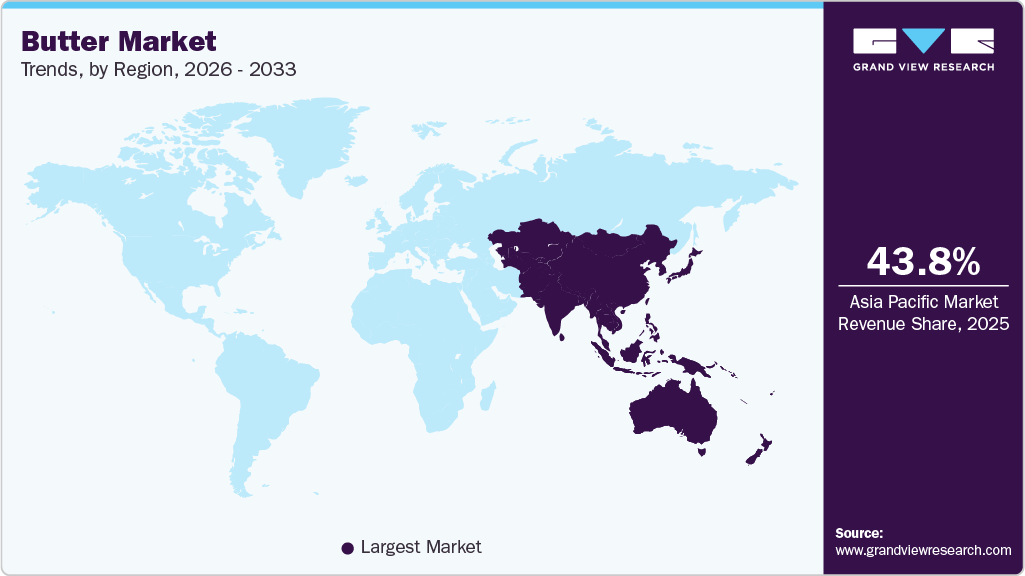
- By region, Asia Pacific led the market with a share of 43.8% in 2025.
- China butter market accounted for a significant share in 2025.
- By product, cultured butter led the market and accounted for a share of 59.6% in 2025.
- By distribution channel, offline led the market and accounted for a share of 80.3% in 2025.
Market Size & Forecast
- 2025 Market Size: USD 56.45 Billion
- 2033 Projected Market Size: USD 76.30 Billion
- CAGR (2026-2033): 4.0%
- Asia Pacific: Largest market in 2025
After years of low-fat dietary preferences, there is a renewed emphasis on whole, minimally processed foods, and butter has benefited significantly from this shift. Consumers across North America, Europe, Asia-Pacific, and Latin America now perceive butter as a more natural alternative to highly processed spreads and margarine, resulting in consistent demand growth across retail, bakery, and foodservice sectors. This is driving the growth of the bread and butter market across all regions.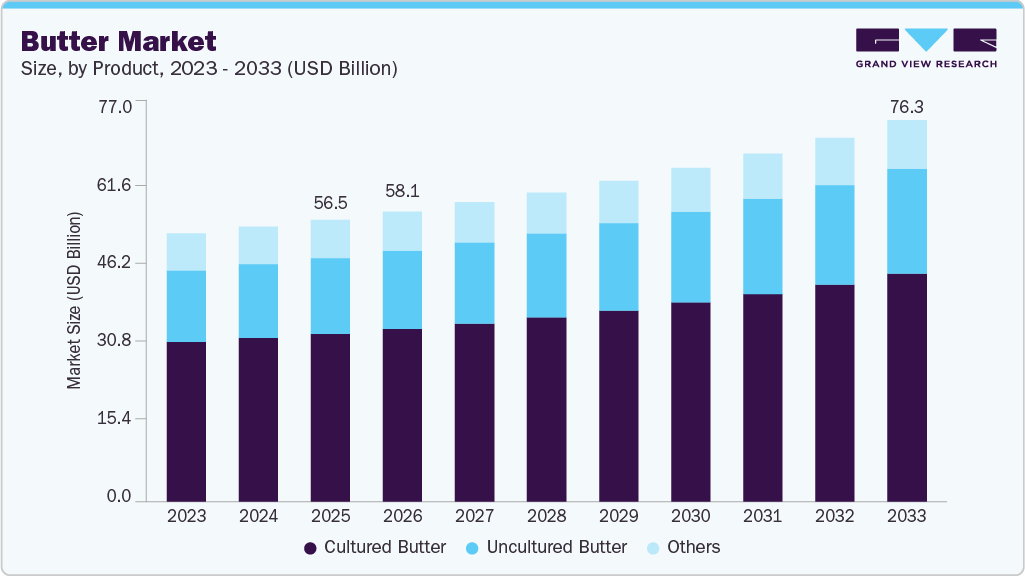
Rising urbanization and higher disposable incomes in developing regions have encouraged greater consumption of dairy fats as diets diversify beyond basic staples. Scientific and health discussions emphasizing the value of natural fats over artificial or hydrogenated alternatives have also helped improve butter’s image among health-conscious consumers. This is expected to drive the growth of the shea butter market during the forecast period. The broader clean-label movement places butter in a favorable position, as it is typically produced with as few as one or two ingredients, aligning well with consumer preferences for transparency and simplicity in food products.
FAO food balance sheet data show that butter consumption has remained stable or increased in many regions, supported by expanding dairy production and shifting dietary patterns. Denmark, France, and Bahrain continue to be the top countries consuming butter globally. In contrast, Asian and African markets traditionally showed lower consumption levels, yet growing middle-class populations and urban lifestyle changes have led to gradual increases in butter usage, particularly in packaged bakery, confectionery, and café-sector products. These patterns underscore that butter is transitioning from a regionally concentrated staple to a widely adopted ingredient across diverse cuisines. This is driving the growth of related markets like the peanut butter market, the coconut butter market, and the almond butter market.
The rising popularity of cultured butter represents an additional dynamic shaping the market. Cultured butter appeals to consumers seeking gourmet, artisanal, or specialty products with enhanced flavor complexity and traditional production methods. Demand is supported by premium baking trends, the rise of European-style patisseries in metropolitan areas worldwide, and a growing interest in fermented foods due to their perceived digestive benefits. While uncultured butter maintains the largest share of global consumption, cultured varieties are expanding more quickly because they cater to evolving taste preferences and premiumization trends in the dairy category.
Consumer Insights
Consumer preferences in the global butter industry are increasingly shaped by a combination of “back-to-natural” eating habits, premiumization, and indulgence-led consumption. Butter is widely perceived as a simple, minimally processed dairy fat with a clean ingredient list (essentially cream and salt), in contrast to some vegetable oil spreads and margarines that are viewed as more processed. Food science data reveal that butter’s distinctive flavor and “natural image” are key reasons why both consumers and the food industry continue to flavor it in many recipes and formulations.
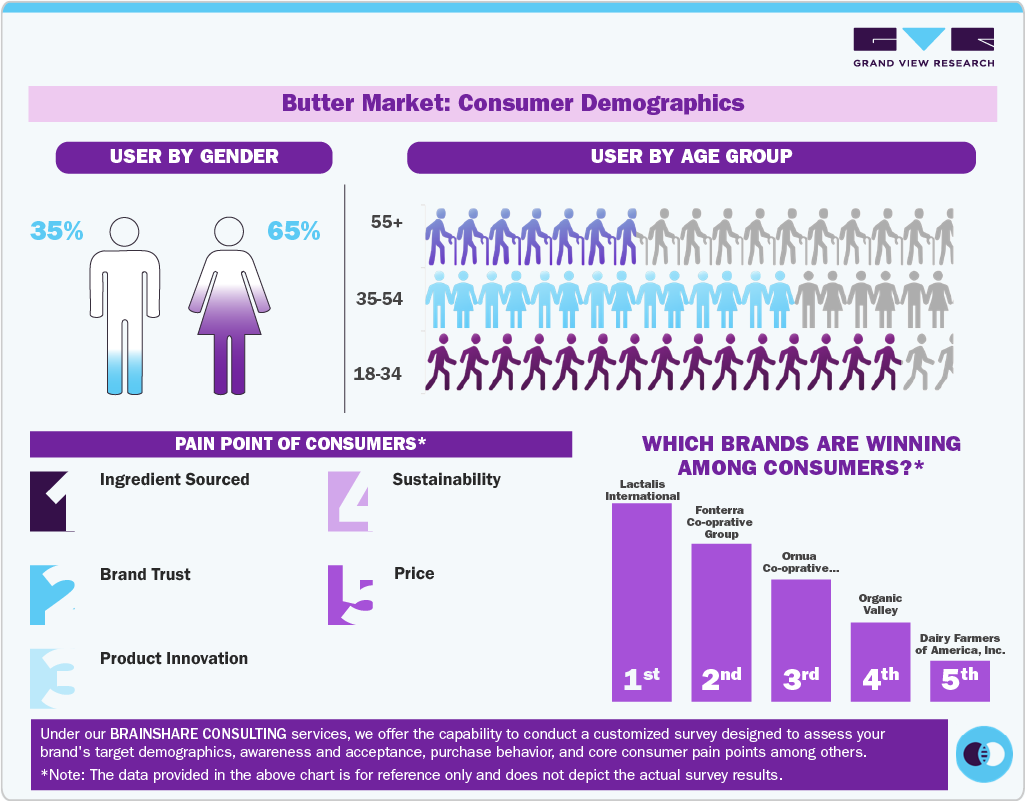
As trans fats from partially hydrogenated oils have been removed from many products, nutritional discussions and expert blogs increasingly emphasize moderation and overall dietary patterns, rather than demonizing butter alone. At the same time, dairy-focused industry analyses report that consumers in markets such as the U.S. are actively moving away from margarine toward butter, citing a preference for natural and minimally processed foods.
In the U.S., average per capita butter consumption reached around 6.5 pounds per person in 2023, the highest level in roughly 60 years, according to dairy industry coverage based on U.S. Department of Agriculture data.
A global perspective from the International Dairy Federation, drawing on the OECD-FAO Agricultural Outlook, indicates that world demand for butter is expected to grow by about 2.2% per year, driven by sustained interest in milk fat and richer dairy products.
In the European Union, butter consumption has remained robust, with per capita intake edging up from about 4.1 kg per person in 2011 to roughly 4.17 kg in 2023, signaling stable to slightly increasing demand in mature dairy markets.
Product innovation and flavor diversification have also become central to butter’s appeal. Specialist butter manufacturers now offer a wide range of flavored butters, for instance, roasted garlic parmesan, pesto, lemon herb, truffle, maple brown sugar, cinnamon honey, chile-lime, and herb-infused variants designed to elevate bread, steaks, vegetables, pasta, and seafood with minimal effort from the consumer. European and U.S. suppliers are developing IQF (individually quick frozen) flavored butter pellets and portions, which allow easy dosing in both foodservice and retail meal kits, marrying convenience with restaurant-style flavor.
Beyond the traditional block or tub, brands are increasingly adopting portion-controlled formats such as single-serve cups, medallions, sachets, and frozen pellets to meet the needs of hotels, airlines, QSR chains, and ready-meal producers, while also appealing to individual consumers who want convenience and portion control. There is also a gradual move towards more premium and sustainable packaging, including redesigned packs that emphasize origin and quality, and efforts to reduce plastic use or improve recyclability in line with broader ESG expectations.
Product Insights
The cultured butter dominated the market with a share of 59.6% in 2025. Cultured butter made by fermenting cream with live bacterial cultures delivers a richer, tangier flavor profile and a higher butterfat content, aligning with the growing preference for gourmet and chef-inspired ingredients in home cooking. Health-conscious consumers are also drawn to the natural fermentation process, which is perceived as cleaner, less processed, and more authentic compared to conventional butter. In addition, the broader shift toward European-style dairy traditions, alongside rising interest in home baking and specialty foods, has further elevated demand. As consumers continue to prioritize quality, provenance, and artisanal craftsmanship in food products, cultured butter is gaining prominence across retail and foodservice channels.
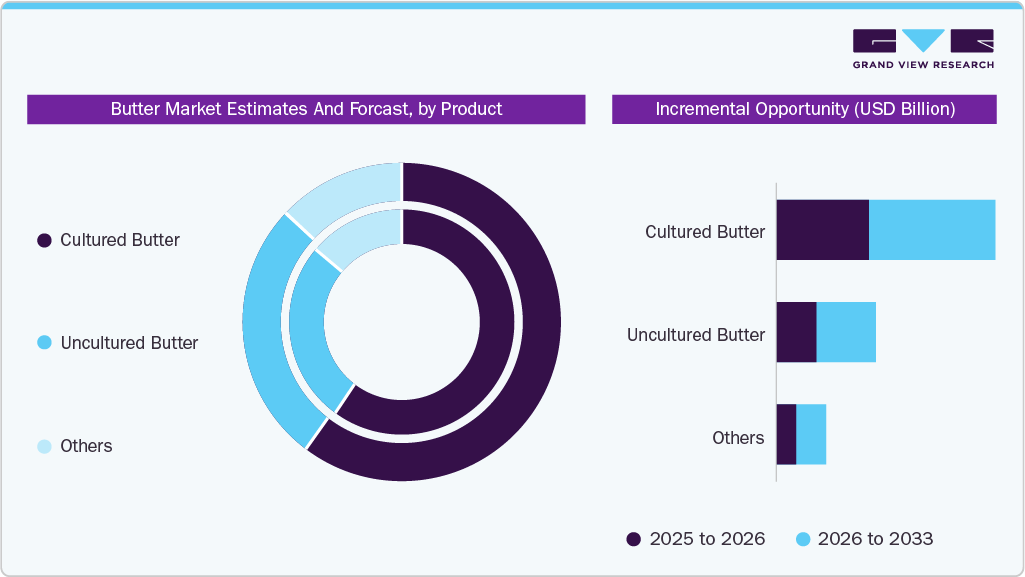
The uncultured butter is predicted to have a CAGR of 4.3% from 2026 to 2033. Uncultured butter, which contains no added bacterial cultures, appeals to households looking for a neutral flavor profile suitable for baking, sautéing, and everyday culinary use. The growing interest in home cooking and baking, especially post-pandemic, has further strengthened demand, as uncultured butter provides consistent performance and versatility across recipes. In addition, rising consumer awareness around ingredient transparency and the avoidance of additives or fermentation processes has positioned uncultured butter as a preferred choice among those seeking more natural, straightforward dairy options.
Distribution Channel Insights
Sales of butter through the offline channel accounted for a share of 80.3% in 2025. Many shoppers prefer to buy butter from supermarkets, specialty grocers, and local stores where they can visually assess product quality, check expiration dates, and select from branded and artisanal options that are often more prominently displayed offline. In addition, the resurgence of home cooking and baking has driven higher foot traffic to grocery stores, where butter remains a pantry essential. Offline outlets also frequently offer promotional pricing, variety packs, and chilled storage conditions that reinforce consumer confidence in product safety and authenticity, supporting steady growth in butter purchases through traditional retail formats.
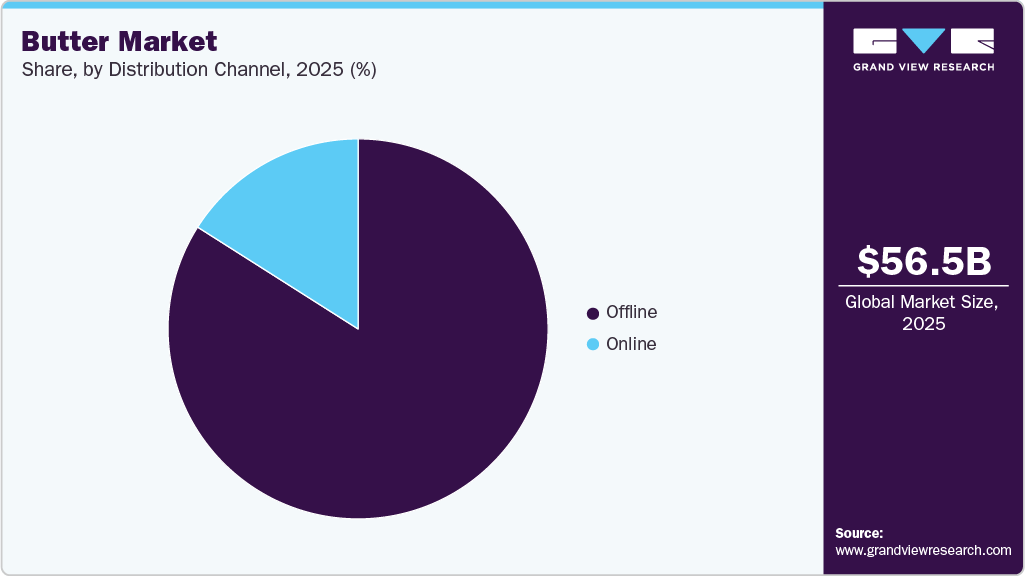
Sales of butters through the online distribution channel are expected to grow at a CAGR of 4.8% from 2026 to 2033. E-commerce platforms offer access to a wider assortment of premium, organic, cultured, and international butter varieties that are not always available in local stores. In addition, the growing popularity of home baking, specialty cooking, and high-fat diets such as keto has strengthened online demand for butter, as consumers prefer doorstep delivery of fresh, temperature-controlled dairy products. Improved cold-chain logistics, subscription models, and rapid-delivery services have further supported this growth, making online purchasing a preferred option for many households seeking quality and convenience.
Regional Insights
North America Butter Market Trends
The North American butter industry is expected to grow at a CAGR of 3.8% from 2026 to 2033. Consumers increasingly perceive butter as a clean-label, wholesome fat source, supported by evolving nutritional perspectives that favor healthy fats over highly processed alternatives. Growth in home cooking and baking strengthened during and after the pandemic has further elevated butter usage across households. In addition, demand for premium, grass-fed, organic, and flavored butter varieties continues to expand as consumers seek higher-quality and more indulgent dairy experiences. This combination of health-driven preferences, culinary trends, and product premiumization is fueling sustained growth in the North American butter industry.
U.S. Butter Market Trends
The U.S. butter industry is rising among consumers due to a renewed preference for natural, minimally processed foods and a shift away from artificial substitutes. Many households perceive real butter as a cleaner, more authentic ingredient compared to margarine, aligning with the broader “back to basics” cooking trend. Increased at-home cooking and baking particularly following the pandemic has further strengthened butter demand, as consumers prioritize quality flavor and texture in homemade meals.
Europe Butter Market Trends
Europe butter industry is expected to grow at a CAGR of 4.2% from 2026 to 2033. European shoppers are showing strong preference for products perceived as authentic and “clean label,” and butter aligns well with this shift due to its simple ingredient profile. In addition, the growth of home cooking and baking reinforced during and after the pandemic has significantly boosted household butter consumption across key markets such as France, Germany, and the UK. Premium and specialty butter varieties, including grass-fed, artisanal, and region-specific PDO/PGI butters, are also gaining traction as consumers become more willing to spend on high-quality dairy products. This combination of health perception, culinary interest, and premiumization continues to drive steady demand for butter in Europe.
Asia Pacific Butter Market Trends
Asia Pacific butter industry accounted for a share of 43.8% in 2025. The market for butter is rising steadily among Asia Pacific consumers due to shifting dietary preferences, increased Westernization of food habits, and a growing interest in home cooking and baking. Rising disposable incomes and expanding urban middle-class populations have encouraged consumers to incorporate more premium dairy products such as butter into both everyday meals and indulgent bakery items. In addition, the rapid growth of the café and bakery culture across countries such as China, India, South Korea, and Indonesia has significantly boosted butter consumption in the foodservice sector. Consumers are also gravitating toward products perceived as natural and minimally processed, leading butter to gain preference over margarine and synthetic spreads.
China Butter Market Trends
China butter market accounted for a significant share in 2025. Growth in the China butter market is being driven primarily by westernization of diets, rising bakery and foodservice demand, and premiumization in urban consumption, while several structural trends are simultaneously shaping market evolution. Butter consumption is being accelerated by the rapid expansion of bakery chains, café culture, and Western-style foodservice, where butter is increasingly used in pastries, laminated doughs, desserts, and premium cooking applications. Rising middle-class income levels and exposure to international cuisines are supporting demand for imported and premium butter products, particularly in Tier-1 and Tier-2 cities.
Key Butter Company Insights
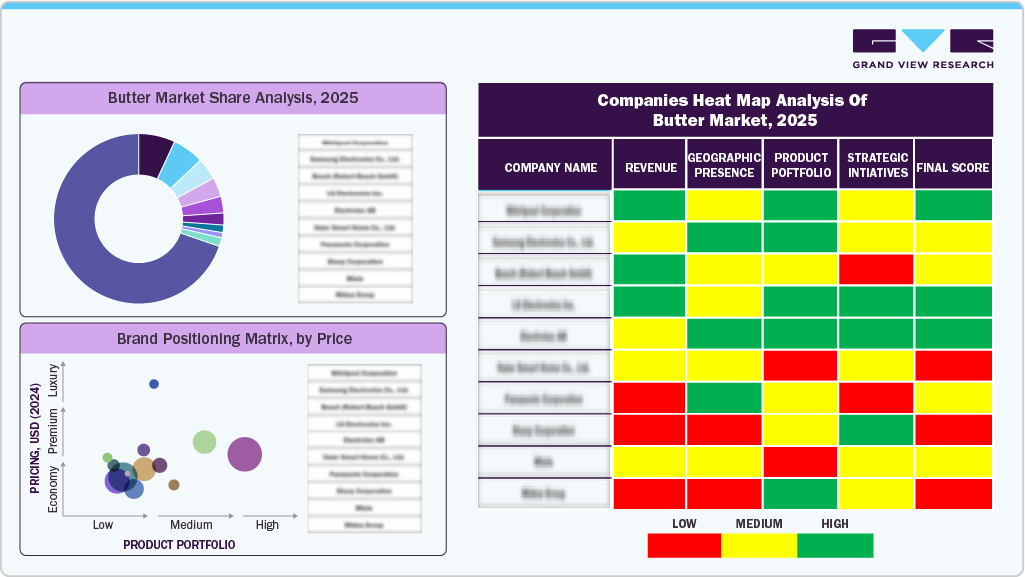
The presence of a few established players and new entrants characterizes the market. Many big players are increasing their focus on the growing trend of the butter industry. Players in the market are diversifying their service offerings to maintain market share.
Key Butter Companies:
The following key companies have been profiled for this study on the butter market.
- Lactalis International
- Fonterra Co-operative Group
- Ornua Co-operative Limited
- Organic Valley
- Dairy Farmers of America, Inc.
- Amul Dairy
- Meadow Foods Ltd.
- Arla Foods
- MS Iceland Dairies
- Müller
Recent Developments
-
In July 2025, Springfield Creamery, known for Nancy’s Probiotic Foods, launched Nancy’s organic European‑style cultured butter nationwide after an initial Oregon rollout in late 2024, using surplus cream generated by booming cottage cheese sales. The butter, now sold through Whole Foods and independent retailers, comes in sea‑salted and unsalted versions with 82-83% butterfat, giving a richer, creamier, deep‑yellow butter that bakers favor for its lower water content and better texture in baked goods.
-
In July 2024, A California startup called Savor, backed by Bill Gates, developed a lab-made “butter” created from captured carbon dioxide, hydrogen, and oxygen instead of milk or plants, aiming to replicate the taste and chemistry of real dairy butter while slashing emissions. The product’s projected carbon footprint is a tiny fraction of conventional butter’s, uses no farmland and far less water, and is still pre‑commercial as the company works through regulatory approval, with hopes to begin sales from 2025 onward as part of a broader push to replace high‑impact animal fats with climate‑friendly alternatives.
Butter Market Report Scope
Report Attribute
Details
Market size value in 2026
USD 58.08 billion
Revenue forecast in 2033
USD 76.30 billion
Growth rate
CAGR of 4.0% from 2026 to 2033
Base year for estimation
2025
Historical data
2021 - 2024
Forecast period
2026 - 2033
Quantitative units
Revenue in USD million/billion and CAGR from 2026 to 2033
Report coverage
Revenue forecast, company ranking, competitive landscape, growth factors, and trends
Segments covered
Product, distribution channel, region
Regional scope
North America; Europe; Asia Pacific; Central & South America; Middle East & Africa
Country scope
U.S.; Canada; Mexico; UK; Germany; France; Italy; Spain; China; India; Japan; South Korea; Australia & New Zealand; Brazil; South Africa
Key companies profiled
Lactalis International; Fonterra Co-operative Group; Ornua Co-operative Limited; Organic Valley; Dairy Farmers of America; Inc.; Amul Dairy; Meadow Foods Ltd.; Arla Foods amba; MS Iceland Dairies; and Müller
Customization scope
Free report customization (equivalent up to 8 analysts working days) with purchase. Addition or alteration to country, regional & segment scope.
Pricing and purchase options
Avail customized purchase options to meet your exact research needs. Explore purchase options
Global Butter Market Report Segmentation
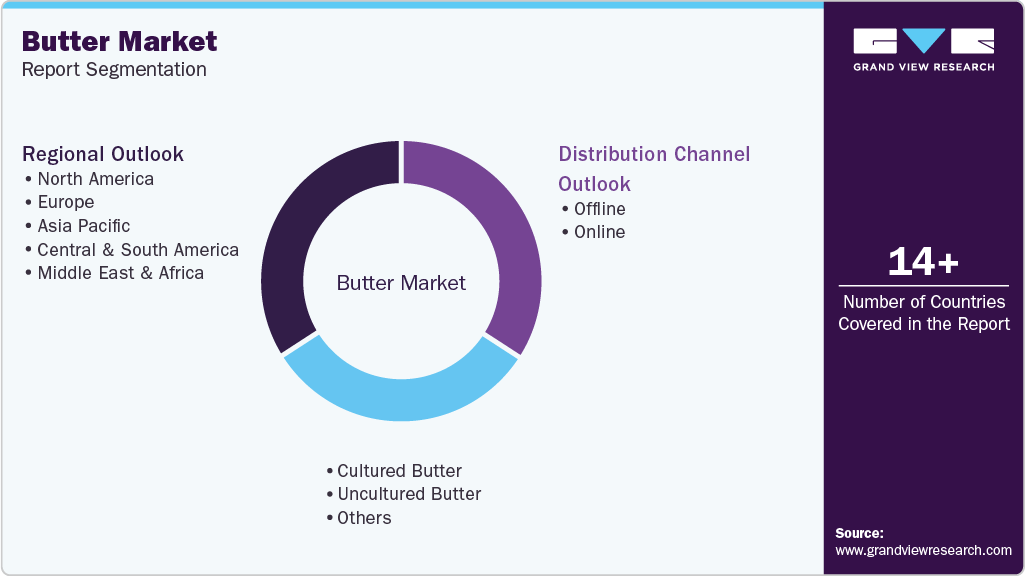
This report forecasts revenue growth at global, regional & country levels and provides an analysis on the latest trends and opportunities in each of the sub-segments from 2021 to 2033. For this study, Grand View Research has segmented the butter market based on product, distribution channel, and region:
-
Product Outlook (USD Million; 2021 - 2033)
-
Cultured Butter
-
Uncultured Butter
-
Others
-
-
Distribution Channel Outlook (USD Million; 2021 - 2033)
-
Offline
-
Online
-
-
Regional Outlook (Revenue, USD Million; 2021 - 2033)
-
North America
-
U.S.
-
Canada
-
Mexico
-
-
Europe
-
UK
-
Germany
-
France
-
Italy
-
Spain
-
-
Asia Pacific
-
China
-
India
-
Japan
-
Australia & New Zealand
-
South Korea
-
-
Central & South America
-
Brazil
-
-
Middle East & Africa (MEA)
-
South Africa
-
-
Frequently Asked Questions About This Report
b. The global butter market size was estimated at USD 56.45 billion in 2025 and is expected to reach USD 58.08 billion in 2026.
b. The global butter market is expected to grow at a compound annual growth rate of 4.0% from 2026 to 2033 to reach USD 76.30 billion by 2033.
b. The cultured butter dominated the butter products market with a share of 59.6% in 2025. Cultured butter made by fermenting cream with live bacterial cultures delivers a richer, tangier flavor profile and a higher butterfat content, aligning with the growing preference for gourmet and chef-inspired ingredients in home cooking.
b. Some key players operating in the butter market include Lactalis International, Fonterra Co-operative Group, Ornua Co-operative Limited, Organic Valley, Dairy Farmers of America, Inc., Amul Dairy, Meadow Foods Ltd., Arla Foods amba, MS Iceland Dairies, and Müller.
b. Key factors that are driving the butter market growth include growing demand for milk products and changing consumer's preferences from meat to milk products for protein enhancement.


Share this report with your colleague or friend.
Need a Tailored Report?
Customize this report to your needs — add regions, segments, or data points, with 20% free customization.


ISO 9001:2015 & 27001:2022 Certified
We are GDPR and CCPA compliant! Your transaction & personal information is safe and secure. For more details, please read our privacy policy.
Trusted market insights - try a free sample
See how our reports are structured and why industry leaders rely on Grand View Research. Get a free sample or ask us to tailor this report to your needs.












