Bubble Tea Market Summary
The global bubble tea market size was estimated at USD 3,326.7 million in 2025 and is projected to reach USD 8,322.1 million by 2033, growing at a CAGR of 12.7% from 2026 to 2033. Increasing intake of tea and coffee as nootropic drinks among the working-class and student population is a major factor for the market growth.
Key Market Trends & Insights
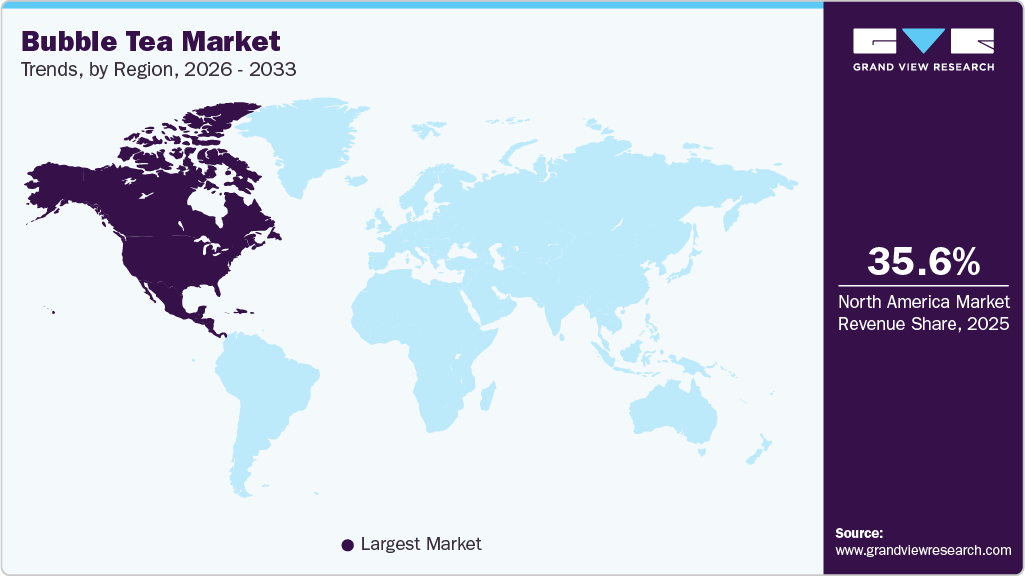
- North America dominated the global bubble tea market with the largest revenue share of 35.61% in 2025.
- The bubble tea industry in the Asia Pacific is expected to grow at the fastest CAGR of 13.7% during the forecast period.
- By type, the green bubble tea segment is anticipated to grow at the fastest CAGR of 13.6% during the forecast period.
- By flavor, the fruit-flavor segment led the market with the largest revenue share of 38.33% in 2025.
Market Size & Forecast
- 2025 Market Size: USD 3,326.7 Million
- 2033 Projected Market Size: USD 8,322.1 Million
- CAGR (2026-2033): 12.7%
- North America: Largest market share in 2025
Moreover, low-calorie content and zero fat of such beverages are propelling the demand further. The growing popularity of various hot beverages is further driving growth in the fruit-flavor market. In addition, health experts suggest that balanced consumption of such beverages improves concentration and brain function.
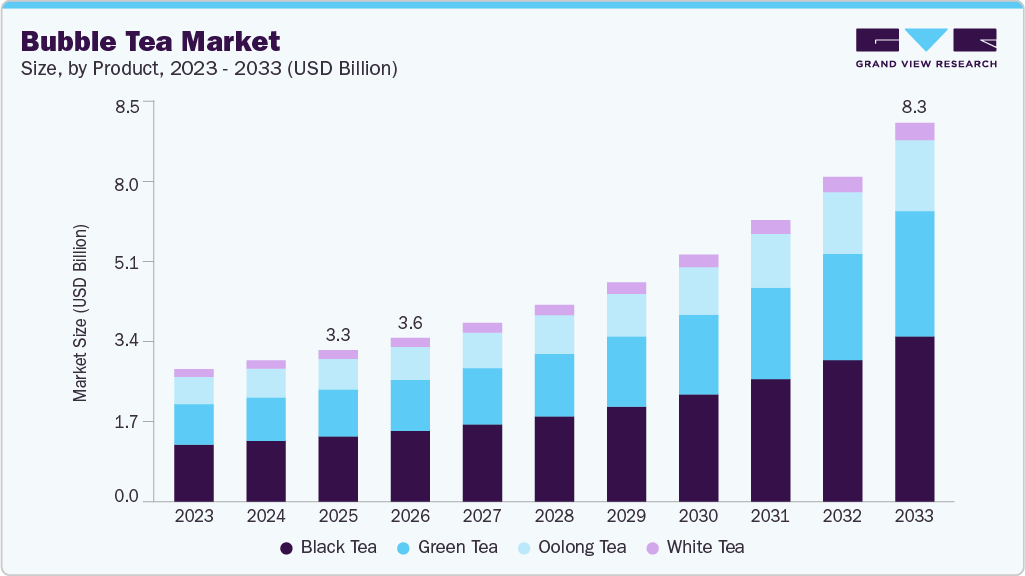
Bubble tea is gaining popularity owing to its different tastes and availability of various flavors, namely fruits, coffee, chocolate, and simple classic. The primary driver of the fruit-flavor bubble tea industry is the convergence of shifting consumer taste preferences toward refreshing, vibrant, and healthier beverage options. Growing preference for tea, coffee, and other flavored beverages more than carbonated drinks is expected to boost the demand for bubble tea during the forecast period.
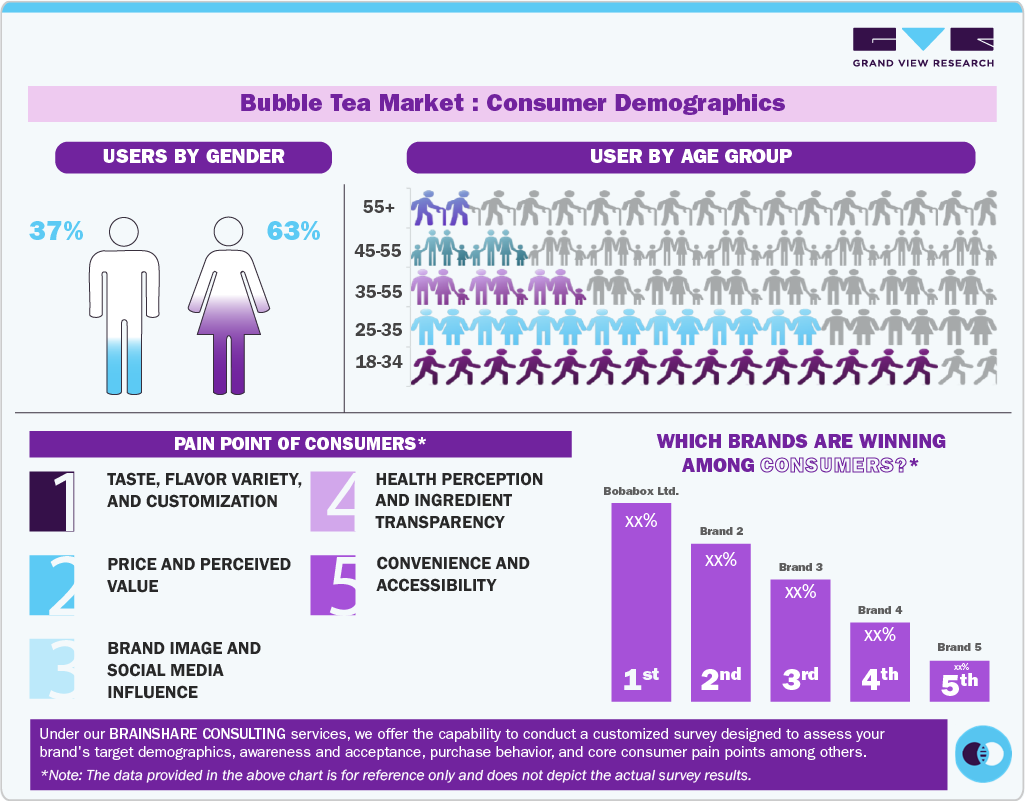
The growth of the bubble tea industry has been driven by evolving consumer preferences toward experiential and customizable beverages. Demand has been increasingly shaped by younger consumers, particularly Gen Z and millennials, for whom bubble tea has been positioned as a lifestyle product rather than a functional refreshment. The availability of extensive customization options, such as sweetness levels, tea bases, milk alternatives, and toppings, has enhanced perceived value and repeat consumption. This trend has been reinforced by social media visibility, where visually appealing beverages have been leveraged by brands to strengthen engagement and brand recall, thereby accelerating trial and adoption across urban markets.
However, the raw ingredients used to prepare bubble tea contain sugars, which can be dangerous if consumed in large amounts, and this is a major factor limiting its growth among consumers. In addition, the amount of sugar drunk along with bubble tea can pose possible risks. The consumption of high levels of sugar can lead to serious health complications like obesity, heart disease, cognitive decline, non-alcoholic fatty liver disease (NAFLD), and some forms of cancer. Hence, these factors are restraining the overall bubble tea industry during the forecast period.
Moreover, the expansion of bubble tea has been supported by product innovation and menu diversification. Traditional milk tea offerings have been complemented by fruit-based teas, cheese teas, low-sugar variants, and plant-based formulations, aligning with broader wellness and clean-label trends observed over the past few years. Lactose-free milk, oat milk, and reduced-calorie sweeteners have been increasingly incorporated to address health-conscious consumers without compromising taste. As a result, bubble tea has been positioned to compete not only with carbonated soft drinks but also with premium café beverages, supporting higher average selling prices and improved outlet-level profitability.
Type Insights
The black tea segment led the market with the largest revenue share of 43.10% in 2025. This growth is attributed to the authentic natural flavor of black tea. Moreover, the drink helps reduce the blood sugar level and bad cholesterol and improve gut health. It also acts as an excellent source of antioxidants. Black tea is very rich in antioxidants, which improve heart and gut health, lower cholesterol, blood sugar, and blood pressure levels, and are among the benefits that further contribute to the growth of the black tea segment in the bubble tea industry.
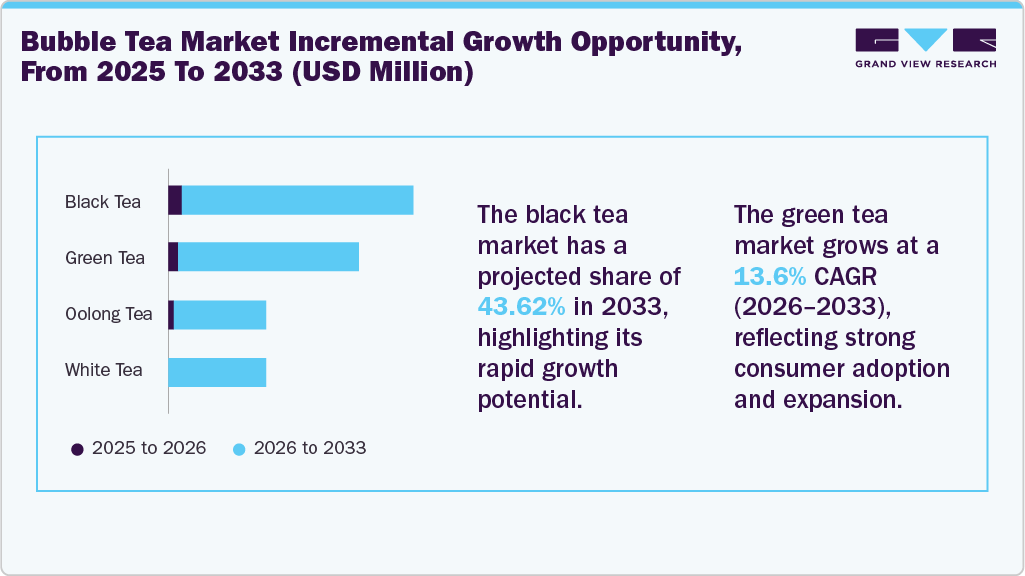
The green tea segment is expected to register at the fastest CAGR of 13.6% from 2026 to 2033. The segment is growing fastest due to the presence of a wealth of antioxidants, which are known for promoting good health. Moreover, green tea contains polyphenols, natural compounds that can provide various health benefits, such as reducing inflammation and helping fight cancer, further driving the green tea segment's growth during the forecast period. In addition, the green tea flavor contains less caffeine as compared to coffee but enough to produce an effect. It also comprises the amino acid L-theanine, which can work synergistically with caffeine to improve brain function, thereby contributing to segment growth during the forecast period.
Flavor Insights
The fruit-flavor segment led the market with the largest revenue share of 38.33% in 2025. Availability of various fruit flavors, namely strawberry, mango, passion fruit, watermelon, pineapple, cantaloupe, avocado, peach, coconut, lychee, grape, honeydew, kiwi, and banana, is the key factor driving the growth of the fruit-flavor bubble tea industry. Moreover, the fruit-flavor tea is loaded with lots of antioxidants and vitamins, and also acts as an amazing substance for cleansing the toxins from the body and keeping the immune system stronger. These factors are accelerating the market growth and are expected to remain dominant during the forecast period as well.
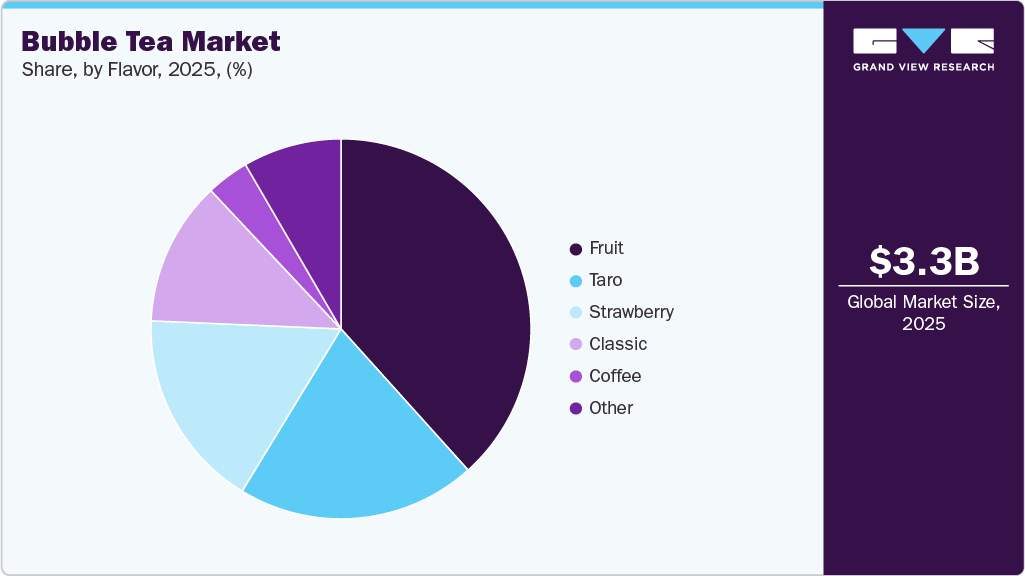
The taro flavor segment is anticipated to grow at the fastest CAGR of 13.9% from 2026 to 2033, owing to the purple color, sweet taste like vanilla, creamy and starchy texture, of taro bubble tea attracts many bubble tea lovers, is the key factor driving the taro flavor segment growth. It is usually one of the best-selling items at the bubble tea cafes. In addition, the mild sweetness of the flavor makes it a perfect drink for all ages. The taro milk tea does not come with caffeine, which is one of the major factors for the fastest growth among all the flavors available in the market.
Regional Insights
North America dominated the global bubble tea market with the largest revenue share of 35.61% in 2025. The bubble tea is gaining popularity in the North American region due to the presence of fruity flavor-based tea, which is highly consumed in this region. The U.S. has seen an increasing number of bubble tea shops opening across the country in recent years. The bubble tea has risen strong in its ever-growing popularity in this region. This factor is driving the fruit-flavor bubble tea industry, and it is expected to capture the dominant market share during the forecast period as well.
U.S. Bubble Tea Market Trends
The bubble tea market in the U.S. accounted for the largest market revenue share in North America in 2025. The U.S. has been propelled by youthful consumer preferences and cultural diversification. Millennials and Gen Z consumers increasingly favor unique, customizable beverages that differ from traditional soft drinks and café staples, driving demand for bubble tea’s array of flavors, toppings, and personalization options. The influence of Asian cuisine and street-food culture, through immigrant communities and global food trends, has introduced bubble tea to a broad American audience, making it a mainstream specialty beverage rather than a niche offering.
Europe Bubble Tea Market Trends
The bubble tea market in Europe is anticipated to grow at a significant CAGR during the forecast period. In Europe, bubble tea growth is driven by expanding café culture and experiential consumption patterns among urban youth. Major metropolitan regions such as London, Paris, and Berlin have seen an influx of specialized bubble tea cafés and chains, as well as increased visibility of Asian food and drink trends, catalyzing broader acceptance and experimentation with the beverage. The rising preference for customizable and innovative flavor profiles, including fruit-based teas and plant-based milk options, aligns with European consumers’ growing emphasis on choice and novelty.
The UK bubble tea market has been notably influenced by rapid adoption among Gen Z and millennials, who see bubble tea as both an Instagram-worthy lifestyle drink and a social beverage choice. This demographic’s strong engagement with social media platforms has amplified visibility and trend momentum, prompting café operators and chains like Gong Cha, Chatime, and local independents to expand quickly in high-footfall areas such as shopping districts and university hubs. The integration of health-conscious innovations, including low-sugar options and eco-friendly packaging, has further broadened appeal, aligning bubble tea with broader consumer trends in the UK food and beverage space.
Asia Pacific Bubble Tea Market Trends
The bubble tea market in the Asia Pacific is anticipated to grow at the fastest CAGR from 2026 to 2033, owing to increasing demand for healthy hot beverages. Bubble tea was first served and introduced in Taiwan. Thailand is one of the major consumers, and according to the ASEAN Post, each citizen in the nation drank an average of 6 cups of bubble tea per month. Bubble tea has gradually swept up the online foodies and become a worldwide fad. The desire for bubble tea in this region has been fueled by social media influencers and users who routinely share colorful beverages.
The India bubble tea market emerged as a popular beverage, has been underpinned by rapid urbanization and the expansion of café culture in Tier I and Tier II cities, fueled by rising disposable incomes and consumer openness to global food trends. Young consumers, particularly millennials and Gen Z, have driven demand through their experimental tastes and desire for novel, customizable drinks that align with café lifestyle experiences. The integration of local flavor innovations and health-oriented variants, such as low-sugar formulations, vegan milk alternatives, and regional taste infusions, has made bubble tea relevant to Indian palates while differentiating it from traditional tea and soft drink categories.
Key Bubble Tea Company Insights
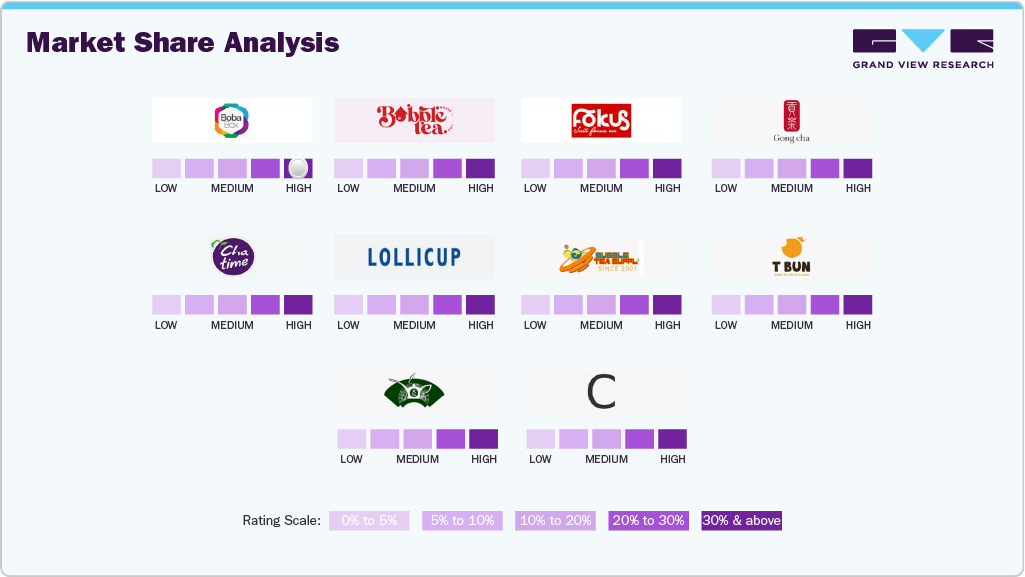
The competitive landscape of the global bubble tea industry is marked by high fragmentation and intense rivalry among both legacy brands and emerging challengers, each striving for consumer attention through innovation, geographic expansion, and differentiated offerings. Established Taiwanese and East Asian chains such as Gong Cha, Chatime, CoCo Fresh Tea & Juice, ShareTea, and Tiger Sugar leverage extensive franchise networks and strong brand recall to secure a significant portion of global market share, while U.S.-based players like Kung Fu Tea and Boba Guys have built loyal followings through quality ingredients and urban lifestyle positioning.
In addition to these major franchises, a diverse set of regional competitors, niche brands, and local specialty cafés compete on product innovation (unique flavors, health-oriented variants), customer experience, and digital engagement, intensifying competition particularly in urban centers where multiple outlets co-exist.
Key Bubble Tea Companies:
The following key companies have been profiled for this study on the bubble tea market.
- Bobabox Ltd.
- Bubble Tea House Company
- Fokus, Inc.
- Gong Cha
- ChaTime
- Lollicup USA, Inc.
- Bubble Tea Supply, Inc.
- T Bun International
- Ten Ren's Tea Time
- Troika JC
Recent Developments
-
In June 2025, Gong Cha Korea introduced two innovative taro-flavored milk teas, the Taro Jewelry Signature Milk Tea and Taro Jewelry Signature Smoothie, featuring chewy pearls and rich taro foam.
-
In April 2025, Chatime Australia broadened its product lineup by adding espresso-based drinks (like lattes and iced long blacks) that can be customized with boba pearls and cream mousse, targeting older millennial consumers and diversifying beyond traditional bubble tea.
Bubble Tea Market Report Scope
|
Report Attribute
|
Details
|
|
Market size value in 2026
|
USD 3,597.4 million
|
|
Revenue forecast in 2033
|
USD 8,322.1 million
|
|
Growth rate
|
CAGR of 12.7% from 2026 to 2033
|
|
Base year for estimation
|
2025
|
|
Historical data
|
2021 - 2024
|
|
Forecast period
|
2026 - 2033
|
|
Quantitative units
|
Revenue in USD million/billion, and CAGR from 2026 to 2033
|
|
Report coverage
|
Revenue forecast, company ranking, competitive landscape, growth factors, and trends
|
|
Segments covered
|
Type, flavor, and region
|
|
Regional scope
|
North America; Europe; Asia Pacific; Central & South America; Middle East & Africa
|
|
Country scope
|
U.S.; Canada; Mexico; Germany; UK; France; Italy; Spain; China; India; Japan; Australia; Taiwan; Brazil; South Africa
|
|
Key companies profiled
|
Bobabox Ltd.; Bubble Tea House Company; Fokus, Inc.; Gong Cha; ChaTime; Lollicup USA, Inc.; Bubble Tea Supply, Inc.; T Bun International; Ten Ren's Tea Time; Troika JC
|
|
Customization scope
|
Free report customization (equivalent up to 8 analysts’ working days) with purchase. Addition or alteration to country, regional & segment scope.
|
|
Pricing and purchase options
|
Avail customized purchase options to meet your exact research needs. Explore purchase options |
Global Bubble Tea Market Report Segmentation
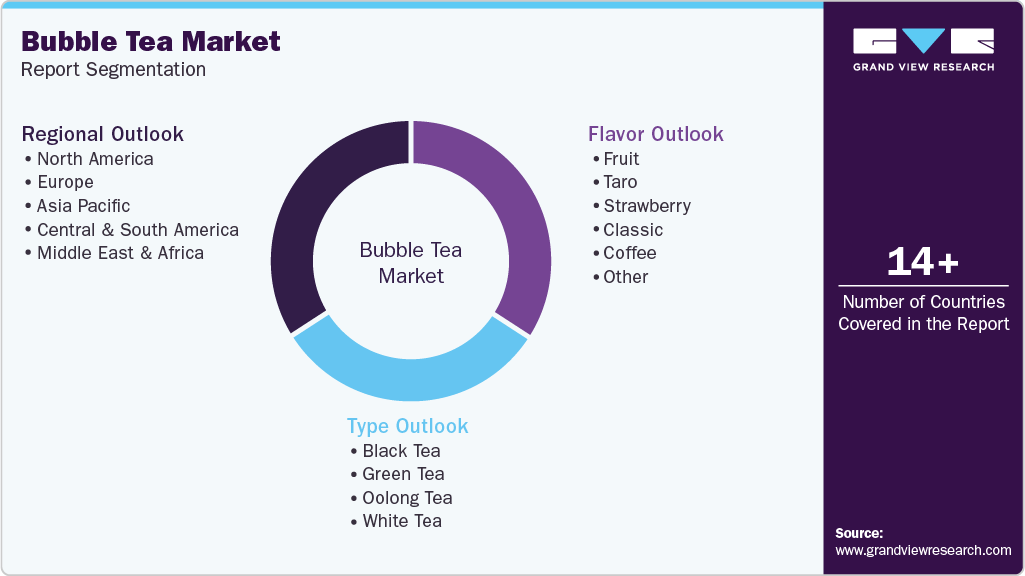
This report forecasts revenue growth at global, regional & country levels and provides an analysis on the latest trends and opportunities in each of the sub-segment from 2021 to 2033. For this study, Grand View Research has segmented the global bubble tea market report based on the type, flavor, and region:
-
Type Outlook (Revenue, USD Million, 2021 - 2033)
-
Black Tea
-
Green Tea
-
Oolong Tea
-
White Tea
-
Flavor Outlook (Revenue, USD Million, 2021 - 2033)
-
Fruit
-
Taro
-
Strawberry
-
Classic
-
Coffee
-
Other
-
Regional Outlook (Revenue, USD Million, 2021 - 2033)
-
North America
-
Europe
-
UK
-
Germany
-
France
-
Italy
-
Spain
-
Asia Pacific
-
China
-
India
-
Japan
-
Australia
-
Taiwan
-
Central & South America
-
Middle East & Africa
Frequently Asked Questions About This Report
b. The global bubble tea market size was estimated at USD 3,326.7 million in 2025 and is expected to reach USD 3,597.4 million in 2026.
b. The global bubble tea market is expected to witness 12.7% revenue growth from 2026 to 2033 to reach USD 8,322.1 million by 2033.
b. The black tea segment accounted for the largest share of 43.10% of the revenue in 2025 due to the authentic natural flavor of black tea. Moreover, the drink helps reduce the blood sugar level and bad cholesterol and improve gut health.
b. The key market players in the bubble tea market include Bobabox Ltd.; Bubble Tea House Company; Fokus, Inc.; Gong Cha; ChaTime; Lollicup USA, Inc.; Bubble Tea Supply, Inc.; T Bun International; Ten Ren's Tea Time; Troika JC
b. Growth in the bubble tea market is being primarily driven by increasing intake of tea and coffee as nootropic drinks among the working-class and student population.

 Download Sample Report














