
- Home
- »
- Homecare & Decor
- »
-
Birdwatching Tourism Market Size, Industry Report, 2033GVR Report cover
![Birdwatching Tourism Market Size, Share & Trends By Traveler Type (Hard Core, Casual, Enthusiastic), By Age Group (18-34 Years, 35-54 Years, 55-64 Years) By Group (Solo, Couples, Family, Groups), By Region, And Segment Forecasts, 2026 - 2033Report]()
Birdwatching Tourism Market (2026 - 2033) Size, Share & Trends By Traveler Type (Hard Core, Casual, Enthusiastic), By Age Group (18-34 Years, 35-54 Years, 55-64 Years) By Group (Solo, Couples, Family, Groups), By Region, And Segment Forecasts
- Report ID: GVR-4-68040-444-3
- Number of Report Pages: 100
- Format: PDF
- Historical Range: 2021 - 2025
- Forecast Period: 2026 - 2033
- Industry: Consumer Goods
- Report Summary
- Table of Contents
- Segmentation
- Methodology
- Download FREE Sample
-
 Download Sample Report
Birdwatching Tourism Market Summary
The global birdwatching tourism market size was estimated at USD 70.04 billion in 2025 and is expected to reach USD 117.16 billion by 2033, growing at a CAGR of 6.7% from 2026 to 2033. Birdwatching tourism, also known as avitourism, a niche segment within the broader ecotourism industry, has experienced significant growth in recent years, driven by increasing environmental awareness and a desire for sustainable travel experiences.
Key Market Trends & Insights
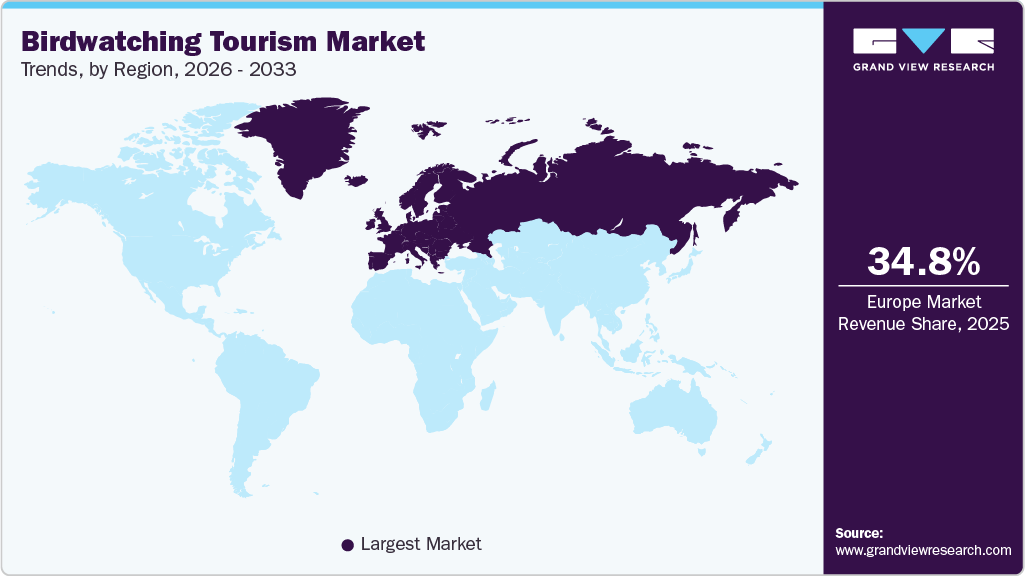
- Europe held the largest market share of 34.75% in 2025
- By traveller type, the enthusiastic birders held the largest market share of 56.31% in 2025.
- By age group, the 35-54 years held the largest market share of 41.62% in 2025.
- By group, couples held the largest market share of 37.59% in 2025.
Market Size & Forecast
- 2025 Market Size: USD 70.04 Billion
- 2033 Projected Market Size: USD 117.16 Billion
- CAGR (2026-2033): 6.7%
- Europe: Largest market in 2025
This form of tourism appeals to a diverse demographic, ranging from avid birdwatchers to casual nature enthusiasts, who seek to explore the natural habitats of various bird species.The rise of birdwatching tourism can be attributed to several factors, including enhanced global connectivity, which has made remote birding hotspots more accessible, and the proliferation of information through digital platforms, enabling travelers to discover and plan birdwatching trips more efficiently.
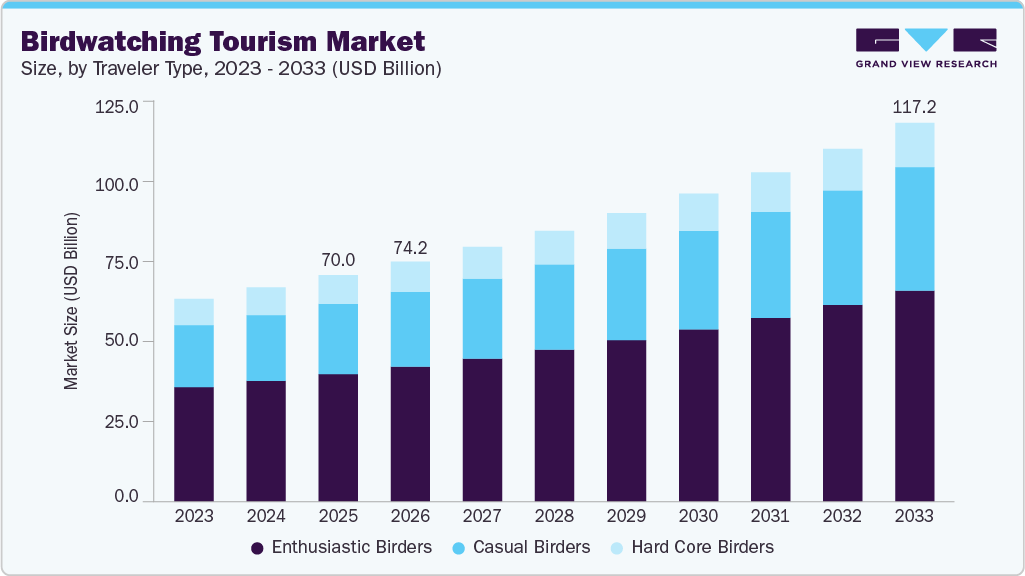
The economic impact of birdwatching tourism is substantial, contributing to local economies by creating demand for guided tours, accommodations, and related services in often underdeveloped or rural areas. Communities near key birdwatching sites have capitalized on this growing interest by developing infrastructure and offering tailored services that cater to birdwatchers. This includes the establishment of birding lodges, guided bird tours, and the creation of birdwatching trails, which not only generate income but also promote conservation efforts by highlighting the importance of preserving natural habitats. As a result, birdwatching tourism has become a critical component of sustainable tourism strategies in many regions.
Another significant driver of growth in birdwatching tourism is the increasing participation of women and younger travelers, diversifying the demographic profile of birdwatchers. This shift has expanded the market, encouraging the development of products and services that appeal to a broader audience. In addition, the growing popularity of birdwatching festivals and events has further fueled interest in this form of tourism, providing opportunities for enthusiasts to gather, share experiences, and learn from experts. These events also serve as a platform for promoting bird conservation initiatives, which resonate with the values of the modern traveler who seeks meaningful and responsible travel experiences.
Technology has played a pivotal role in the expansion of birdwatching tourism, with the advent of bird identification apps, online birdwatching communities, and social media platforms that allow birdwatchers to connect, share sightings, and plan trips. Apps, birdwatching platforms such as Fatbirder.com and eBird, along with social media platforms like TripAdvisor and Instagram, have become increasingly influential, particularly among younger tourists. Positive reviews and reported bird sightings on these platforms are crucial for attracting birdwatching tourists. Birding enthusiasts utilize these tools for inspiration when selecting travel destinations, often influenced by recommendations from friends and family on social media. Platforms like Fatbirder, eBird, and social media have made birdwatching more accessible and engaging, particularly for novice birdwatchers who may have previously found the activity daunting. Moreover, the integration of technology in birdwatching tourism has enabled tour operators to offer more customized and interactive experiences, such as virtual birding tours and augmented reality bird identification, further enhancing the appeal of this niche market.
The conservation aspect of birdwatching tourism cannot be overstated, as the activity inherently promotes the protection of bird species and their habitats. Birdwatchers, driven by a passion for avian life, often contribute to conservation efforts through donations, participation in citizen science projects, and support for local conservation organizations. This symbiotic relationship between birdwatching tourism and conservation has led to the preservation of critical bird habitats and the protection of endangered species, which in turn sustains the growth of the industry. As environmental concerns continue to rise, the demand for conservation-focused tourism experiences, such as birdwatching, is expected to grow.
Consumer Insights
Birdwatching tourists primarily prioritize destinations that offer high bird diversity, endemic or rare species, and well-preserved natural habitats. The opportunity to observe unique species in biodiverse ecosystems is often the primary driver of travel decisions, especially for experienced birders. Beyond species counts, many travelers value the emotional and cognitive rewards of birding, such as immersion in nature, tranquility, and the satisfaction of spotting a target species.
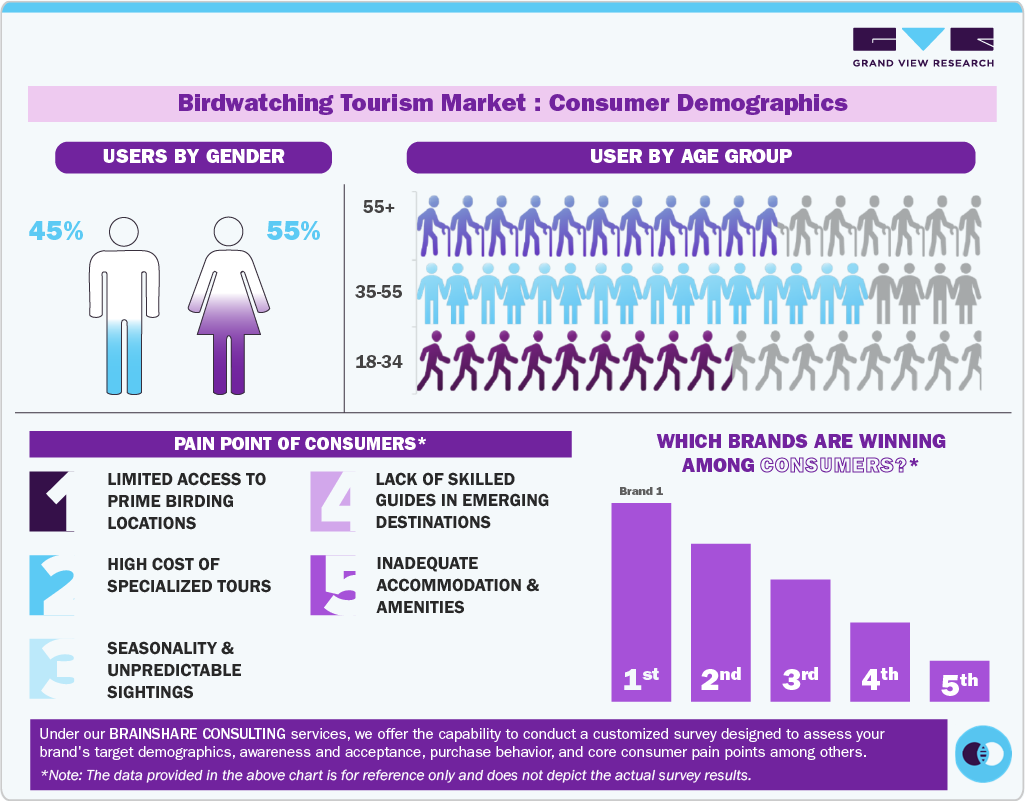
Consumers strongly prefer well-organized itineraries, knowledgeable local guides, and efficient planning that maximizes sighting opportunities. Expert guides enhance both learning and success rates, which is particularly important for intermediate and serious birders. At the same time, practical factors like safety, accessibility, quality accommodation, and transportation infrastructure significantly influence booking decisions, especially among older travelers and casual participants who prioritize comfort and convenience alongside the birding experience.
Hardcore birdwatchers focus on rare species, life-list achievements, and specialized tours in remote or biodiversity-rich regions. Enthusiastic or intermediate birders prefer a balanced experience that combines strong birding opportunities with structured tours and comfortable logistics. Casual birdwatchers, on the other hand, treat birdwatching as part of a broader nature or leisure trip, placing greater emphasis on accessibility, scenic value, and complementary activities beyond birding alone.
Traveler Type Insights
The enthusiastic birders held the largest revenue share of the birdwatching industry in 2025, accounting for a share of 56.31%. Heightened global awareness of biodiversity and conservation has sparked greater interest in observing avian species in their natural environments. Birdwatching offers a unique and immersive experience that appeals to travelers seeking meaningful interactions with nature.
Advancements in birdwatching technology, such as improved optics and digital tools, have enhanced accessibility and overall experience. In addition, the emphasis on eco-friendly and sustainable travel has fueled demand for avitourism, as birders increasingly seek destinations that align with their environmental values.
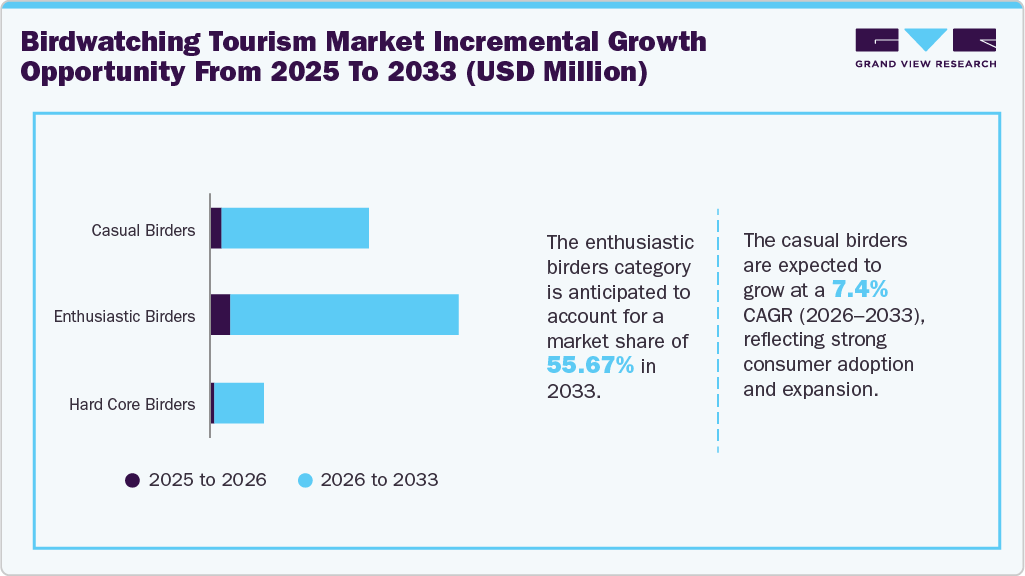
The participation of casual birders in birdwatching-related tours is anticipated to witness a CAGR of 7.4% from 2026 to 2033. The growing appeal of outdoor recreational activities has led to a wider interest in birdwatching as an accessible and enriching experience. In addition, the rise in eco-consciousness has prompted more casual travelers to seek nature-based activities that align with sustainable tourism practices. The availability of guided tours and educational resources tailored to beginners has also made birdwatching more approachable for those with limited experience, further driving demand in this segment.
Age Group Insights
Travelers aged 35 to 54 held the largest revenue share of the birdwatching tourism industry in 2025, accounting for a share of 41.62%. The growth is mainly driven by a blend of economic stability, lifestyle preferences, and evolving travel behaviors. This demographic typically enjoys higher disposable income and greater flexibility in managing work-life balance, enabling them to invest in specialized travel experiences such as birdwatching. Behaviorally, this age group is characterized by a strong preference for meaningful and enriching activities during their travels. They seek experiences that offer both relaxation and intellectual stimulation, making birdwatching an ideal pursuit. Moreover, the growing awareness of environmental sustainability within this cohort has led to a heightened interest in eco-friendly tourism options, where birdwatching serves as a perfect intersection of nature appreciation and responsible travel practices.
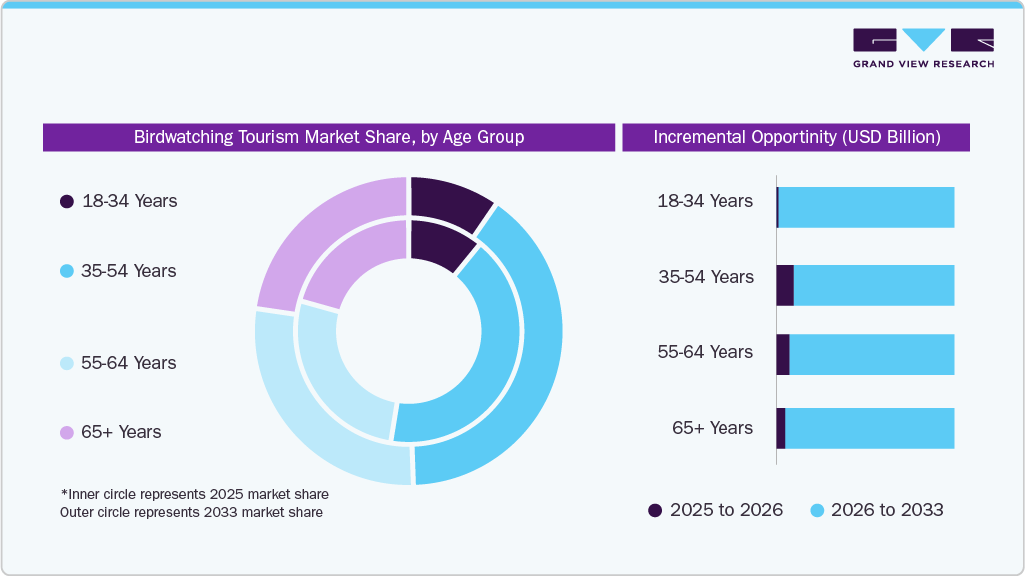
The participation of travelers aged 65 and older is anticipated to witness a CAGR of 8.0% from 2026 to 2033. Travelers in this age group often exhibit a desire to connect with nature in a way that provides a deeper understanding and appreciation of biodiversity. Their travel behavior increasingly reflects a shift from conventional leisure activities towards those that offer a sense of purpose and fulfillment. This trend is further supported by the availability of sophisticated birdwatching tours and tailored experiences that cater to their specific needs, such as guided excursions with expert ornithologists and comfortable accommodations that balance adventure with luxury.
Group Insights
Couples held the largest revenue share of the birdwatching tourism industry in 2025, accounting for a share of 37.59%. The growing trend towards experiential travel has led couples to seek unique and meaningful activities that foster connection and shared experiences. Birdwatching offers an opportunity for couples to engage in a peaceful, immersive environment that enhances their appreciation of nature while strengthening their bond.
The rise in eco-consciousness has prompted many couples to prioritize sustainable travel options that align with their values. Birdwatching aligns with these principles, as it promotes wildlife conservation and environmental stewardship. In addition, the availability of tailored birdwatching packages that cater to couples, such as guided tours, romantic accommodations, and exclusive experiences, has made it more appealing for them to participate.
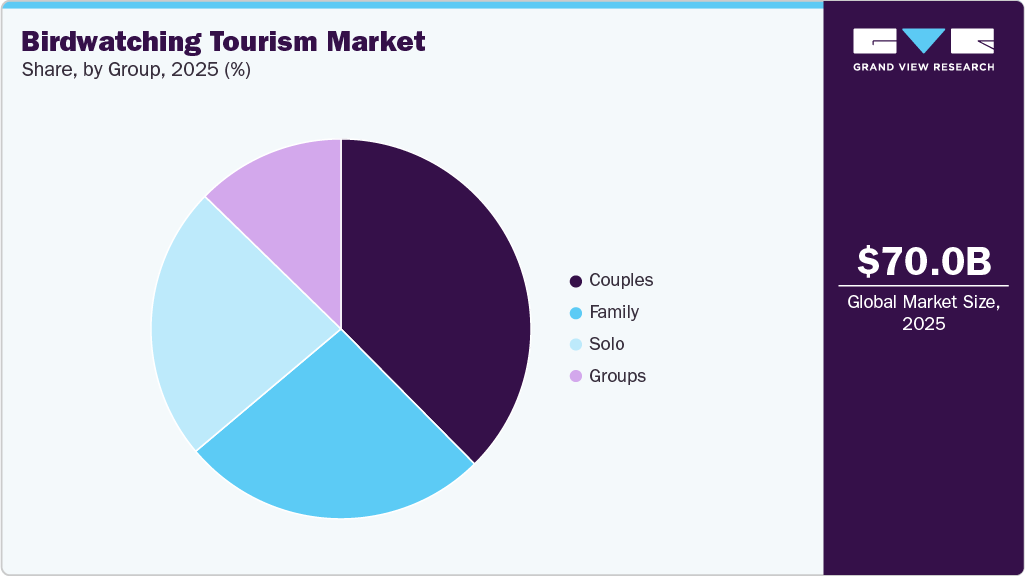
Solo birdwatching tourism is anticipated to witness a CAGR of 7.7% from 2026 to 2033. Solo travelers are increasingly seeking immersive and enriching experiences that allow for personal exploration and connection with nature. Birdwatching provides a unique opportunity for individuals to engage in a tranquil environment, fostering mindfulness and enhancing overall well-being. In addition, the rise of the digital nomad lifestyle and remote work arrangements has enabled more individuals to travel independently, often prioritizing experiences that align with their interests in sustainability and wildlife conservation. Solo travelers are drawn to the flexibility of birdwatching tours, which offer tailored itineraries and opportunities for self-discovery. Furthermore, the growing availability of resources such as guided tours, mobile apps, and online communities has made birdwatching more accessible and appealing to solo adventurers. These factors collectively contribute to the projected increase in participation among solo birdwatching tourists.
Regional Insights
The birdwatching tourism market in Europe held the revenue share of the birdwatching tourism industry in 2025, accounting for a share of 34.75%. Strong international participation is a defining trend in Europe’s market, with a significant proportion of visitors traveling across borders to experience renowned migratory routes, wetlands, and protected reserves. International birders, often experienced and high-spending travelers, typically plan longer stays to maximize species sightings, particularly during migration seasons, which increases accommodation demand, guided tour bookings, and local spending in rural areas. This cross-border movement not only strengthens regional tourism revenues but also supports conservation funding and community-based eco-tourism initiatives in key European birding destinations.
UK Birdwatching Tourism Market Trends
The birdwatching tourism market in the UK is anticipated to witness a CAGR of 6.8% from 2026 to 2033. Niche and value-added offerings are emerging as a key growth driver in the UK market, as operators increasingly design premium, experience-led packages such as photography-focused birding tours, small-group expeditions led by expert naturalists, and immersive stays near wetlands and coastal reserves. These curated experiences appeal to both serious birders and affluent leisure travelers seeking educational and skill-enhancing trips, allowing providers to command higher price points while differentiating from standard wildlife tours.
Asia Pacific Birdwatching Tourism Market Trends
The birdwatching tourism market in the Asia Pacific is anticipated to witness a CAGR of 7.6% from 2026 to 2033. The region hosts some of the world’s highest concentrations of endemic and migratory bird species across tropical rainforests, wetlands, mangroves, and mountain ecosystems. Countries such as Indonesia, India, and China, along with other Southeast Asian nations, offer rare and exotic sightings that attract both serious international birders and a growing base of domestic nature enthusiasts. For instance, Indonesia alone is home to over 1,700 bird species (nearly 17% of the world's birds), making it a prime destination for birding enthusiasts.
China birdwatching tourism market is anticipated to witness a CAGR of 7.8% from 2026 to 2033. Younger generations in cities increasingly embrace nature-based hobbies for relaxation, photography, and lifestyle expression. Platforms such as Douyin and Xiaohongshu have popularized bird photography, species-spotting challenges, and eco-travel content, making birdwatching appear trendy and accessible. This digital influence is expanding the demographic base beyond traditional middle-aged enthusiasts and positioning birding as a fashionable, community-driven leisure activity.
Biodiversity and rare species attraction further strengthen China’s appeal as a birdwatching destination, with the country hosting nearly 1,400 bird species across diverse ecosystems ranging from subtropical wetlands to alpine forests. Its strategic location along the East Asian-Australasian Flyway enhances seasonal migration spectacles, drawing both domestic and international birders seeking endemic and rare sightings. This ecological richness provides China with a strong competitive advantage in developing high-value, conservation-linked avitourism experiences.
The birdwatching tourism market in Japan is anticipated to witness a CAGR of 8.3% from 2026 to 2033. Birding activities are increasingly aligned with habitat protection, national park initiatives, and community-based conservation programs. Protected wetlands and reserves such as Kushiro Shitsugen National Park attract visitors while promoting sustainable travel practices and environmental education. This alignment between tourism and conservation enhances Japan’s appeal among responsible travelers and strengthens long-term ecological preservation efforts.
North America Birdwatching Tourism Market Trends
The birdwatching tourism market in North America held the revenue share of the birdwatching tourism industry in 2025, accounting for a share of 28.07%. The region's diverse ecosystems and rich avifauna provide a unique and attractive setting for birdwatching enthusiasts. North America is home to a wide variety of bird species, which draws both domestic and international travelers seeking immersive nature experiences. In addition, there has been a significant increase in environmental awareness and conservation efforts among the general public. As more individuals recognize the importance of preserving biodiversity, birdwatching serves as an engaging way to promote environmental stewardship and appreciation for wildlife.
The U.S. birdwatching tourism market is anticipated to witness a CAGR of 6.8% from 2026 to 2033. The birdwatching industry extends far beyond a niche hobby, emerging as a substantial economic driver in the U.S. According to the National Oceanic and Atmospheric Administration (NOAA), more than 45 million individuals in the U.S. participate in birdwatching activities. Birdwatching not only captivates individuals but also supports a wide array of related businesses, including equipment suppliers and tourism service providers. This demonstrates a dynamic market with multiple revenue streams, underscoring the industry's significant and growing economic contribution.
Central & South America Birdwatching Tourism Market Trends
The birdwatching tourism market in Central & South America is anticipated to witness a CAGR of 5.5% from 2026 to 2033. Annual gatherings like the South American Bird Fair rotate among countries across Latin America and attract birding enthusiasts, tour operators, and conservation experts from around the world. These events enhance the region’s global visibility as a premier avitourism destination, promote knowledge sharing and sustainable tourism practices, and generate economic benefits for host communities through increased visitation, partnerships, and long-term tourism investment.
Middle East & Africa Birdwatching Tourism Market Trends
The birdwatching tourism market in the Middle East & Africa is anticipated to witness a CAGR of 4.8% from 2026 to 2033. Iconic birding destinations and specialty routes are key growth drivers in the Middle East & Africa market, as globally recognized ecosystems attract dedicated international birders seeking rare and endemic species. Areas such as the Okavango Delta, Rift Valley lakes, and South Africa’s KwaZulu-Natal coastline offer structured birding circuits and seasonal migration spectacles. These curated routes, often led by expert local guides, enhance visitor experiences, extend travel itineraries, and support conservation-linked tourism development across the region.
Key Birdwatching Tourism Company Insights
The competitive landscape of the market is characterized by a diverse array of stakeholders, including tour operators, eco-lodges, conservation organizations, and local communities. This sector is evolving rapidly, driven by increasing consumer demand for unique and sustainable travel experiences. Prominent tour operators and agencies specializing in birdwatching are at the forefront, offering tailored packages that cater to varying skill levels and interests. These operators often collaborate with local guides who possess in-depth knowledge of avian habitats and species, enhancing the overall experience for travelers. Companies such as Birding Ecotours and Field Guides are recognized leaders in this niche, providing specialized itineraries that emphasize both education and enjoyment.
The integration of technology in the birdwatching tourism sector has led to increased competition. Mobile applications and online platforms facilitate trip planning, species identification, and community engagement, allowing businesses to reach a broader audience. Social media has become a powerful tool for marketing, enabling companies to showcase unique birdwatching experiences and engage with potential customers effectively.
Key Birdwatching Tourism Companies:
The following key companies have been profiled for this study on the birdwatching tourism market.
- Hurtigruten Group
- Eagle-Eye Tours
- Birding Ecotours
- Tropical Birding
- Rockjumper Birding Tours
- Sabrewing Nature Tours
- High Lonesome Bird Tours
- Field Guides Incorporated
- Wildlife Worldwide Holidays
- Wings Birding Tours
Recent Developments
-
In September 2025, the South Rupununi Conservation Society launched a Bird Guide Accreditation Programme in partnership with the Guyana Tourism Authority, marking the first structured initiative in the country to certify and standardize bird-guiding expertise formally; the programme establishes clear accreditation pathways at local, regional, and national levels, enabling tourists to identify qualified guides, enhancing visitor experiences, and strengthening Guyana’s avitourism sector while creating professional development opportunities for local communities.
-
In July 2025, the Andaman and Nicobar Islands administration launched a dedicated birdwatching tourism initiative to attract nature lovers and eco-travel enthusiasts by showcasing the region’s rich avian biodiversity, including many endemic and rare bird species, and to promote responsible, sustainable travel experiences in the archipelago’s forests, wetlands and mangrove ecosystems; the programme includes awareness campaigns, birding trails and support for eco-friendly tourism as part of a broader effort to diversify tourism offerings beyond beaches and water sports.
Birdwatching Tourism Market Report Scope
Report Attribute
Details
Market size in 2026
USD 74.20 billion
Revenue forecast in 2033
USD 117.16 billion
Growth rate
CAGR of 6.7% from 2026 to 2033
Actuals
2021 - 2025
Forecast period
2026 - 2033
Quantitative units
Revenue in USD million/billion and CAGR from 2026 to 2033
Report coverage
Revenue forecast, company ranking, competitive landscape, growth factors, and trends
Segments covered
Traveler type, age group, group, region
Regional scope
North America; Europe; Asia Pacific; CSA; MEA
Country scope
U.S.; Canada; Mexico; UK; Germany; France; Italy; Spain; China; India; Japan Australia & New Zealand; South Korea; Brazil; South Africa
Key companies profiled
Hurtigruten Group; Eagle-Eye Tours; Birding Ecotours; Tropical Birding; Rockjumper Birding Tours; Sabrewing Nature Tours; High Lonesome Bird Tours; Field Guides Incorporated; Wildlife Worldwide Holidays; Wings Birding Tours
Customization scope
Free report customization (equivalent up to 8 analysts working days) with purchase. Addition or alteration to country, regional & segment scope.
Pricing and purchase options
Avail customized purchase options to meet your exact research needs. Explore purchase options Global Birdwatching Tourism Market Report Segmentation
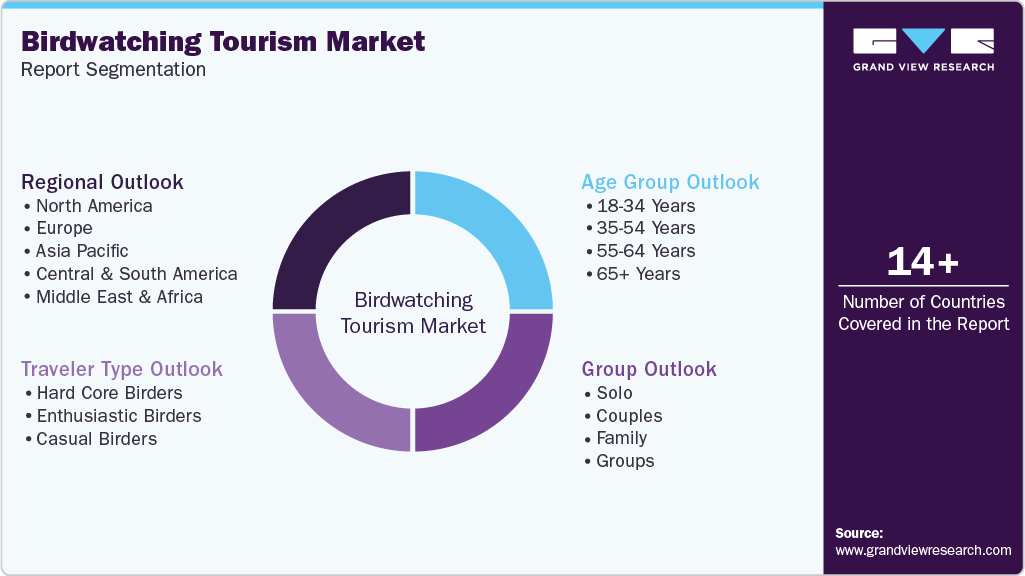
This report forecasts revenue growth at global, regional & country levels and provides an analysis of the latest trends and opportunities in each of the sub-segments from 2021 to 2033. For this study, Grand View Research has segmented the global birdwatching tourism market based on traveler type, age group, and region:
-
Traveler Type Outlook (Revenue, USD Billion, 2021 - 2033)
-
Hard Core Birders
-
Enthusiastic Birders
-
Casual Birders
-
-
Age Group Outlook (Revenue, USD Billion, 2021 - 2033)
-
18-34 Years
-
35-54 Years
-
55-64 Years
-
65+ Years
-
-
Group Outlook (Revenue, USD Billion, 2021 - 2033)
-
Solo
-
Couples
-
Family
-
Groups
-
-
Regional Outlook (Revenue, USD Billion, 2021 - 2033)
-
North America
-
U.S.
-
Canada
-
Mexico
-
-
Europe
-
UK
-
Germany
-
France
-
Italy
-
Spain
-
-
Asia Pacific
-
China
-
India
-
Japan
-
Australia & New Zealand
-
South Korea
-
-
Central & South America
-
Brazil
-
-
Middle East & Africa (MEA)
-
South Africa
-
-
Frequently Asked Questions About This Report
b. Some of the key players operating in the birdwatching tourism market include Hurtigruten Group, Eagle-Eye Tours, Birding Ecotours, Tropical Birding, Rockjumper Birding Tours, Sabrewing Nature Tours, High Lonesome Bird Tours, Field Guides Incorporated, Wildlife Worldwide Holidays, and Wings Birding Tours.
b. The growth of the global birdwatching tourism market is majorly driven by increasing environmental awareness and a desire for sustainable travel experiences, backed by government initiatives to promote conservation efforts by highlighting the importance of preserving natural habitats.
b. Europe dominated the birdwatching tourism market, with a share of 34.75% in 2025. The regional growth is driven by the rising number of eco-tourists and the ever-growing interest in tourism activities that offer engagement in a tranquil environment.
b. The global birdwatching tourism market was estimated at USD 70.04 billion in 2025 and is expected to reach USD 74.20 billion in 2026.
b. The global birdwatching tourism market is expected to grow at a compound annual growth rate of 6.7% from 2026 to 2033 to reach USD 117.16 billion by 2033.


Share this report with your colleague or friend.
Need a Tailored Report?
Customize this report to your needs — add regions, segments, or data points, with 20% free customization.


ISO 9001:2015 & 27001:2022 Certified
We are GDPR and CCPA compliant! Your transaction & personal information is safe and secure. For more details, please read our privacy policy.
Trusted market insights - try a free sample
See how our reports are structured and why industry leaders rely on Grand View Research. Get a free sample or ask us to tailor this report to your needs.












