
- Home
- »
- Power Generation & Storage
- »
-
AI In Energy Market Size And Share, Industry Report, 2033GVR Report cover
![AI In Energy Market Size, Share & Trends Report]()
AI In Energy Market (2026 - 2033) Size, Share & Trends Analysis Report By Type (Solutions, Services), By Application (Robotics, Renewable Energy Management, Demand Forecasting, Safety Security & Infrastructure), By Region, And Segment Forecasts
- Report ID: GVR-4-68040-477-7
- Number of Report Pages: 110
- Format: PDF
- Historical Range: 2021 - 2024
- Forecast Period: 2026 - 2033
- Industry: Energy & Power
- Report Summary
- Table of Contents
- Segmentation
- Methodology
- Download FREE Sample
-
 Download Sample Report
AI In Energy Market Summary
The global AI in energy market size was estimated at USD 5.1 billion in 2025 and is projected to reach USD 22.2 billion by 2033, growing at a CAGR of 20.4% from 2026 to 2033. The market is primarily driven by the increasing digitalization of energy infrastructure and the rising need for efficient energy management across generation, transmission, and distribution networks.
Key Market Trends & Insights
- North America AI in Energy market held the largest share of 38.2% of the global market in 2025.
- The AI in Energy market in the U.S. is expected to grow with a CAGR of over 21.8% during the forecast period.
- By type, solutions held the largest market share of 69.2% in 2025.
- In 2025, the renewable energy management application held the largest share of 33.0% in the global AI in Energy market.
Market Size & Forecast
- 2025 Market Size: USD 5.1 Billion
- 2033 Projected Market Size: USD 22.2 Billion
- CAGR (2026-2033): 20.4%
- North America: Largest market in 2025
- Asia Pacific: Fastest-growing market
Utilities and energy companies are increasingly adopting AI-powered solutions to analyze large volumes of operational data generated by smart grids, sensors, and connected energy assets. These technologies enable predictive maintenance, real-time grid monitoring, and automated fault detection, thereby reducing operational costs and improving system reliability. In addition, AI supports better decision-making in energy trading, load forecasting, and asset optimization, enabling operators to manage complex energy systems more efficiently and maintain a stable power supply.Utilities and energy companies are generating vast amounts of data from smart meters, sensors, and advanced grid monitoring systems, which can be analyzed using artificial intelligence to enhance operational efficiency. AI-based solutions enable predictive maintenance, early fault detection, and real-time monitoring of energy assets, helping operators minimize downtime and reduce maintenance expenses. These capabilities are particularly valuable for aging energy infrastructure, where proactive monitoring and timely maintenance can improve system reliability and operational safety.
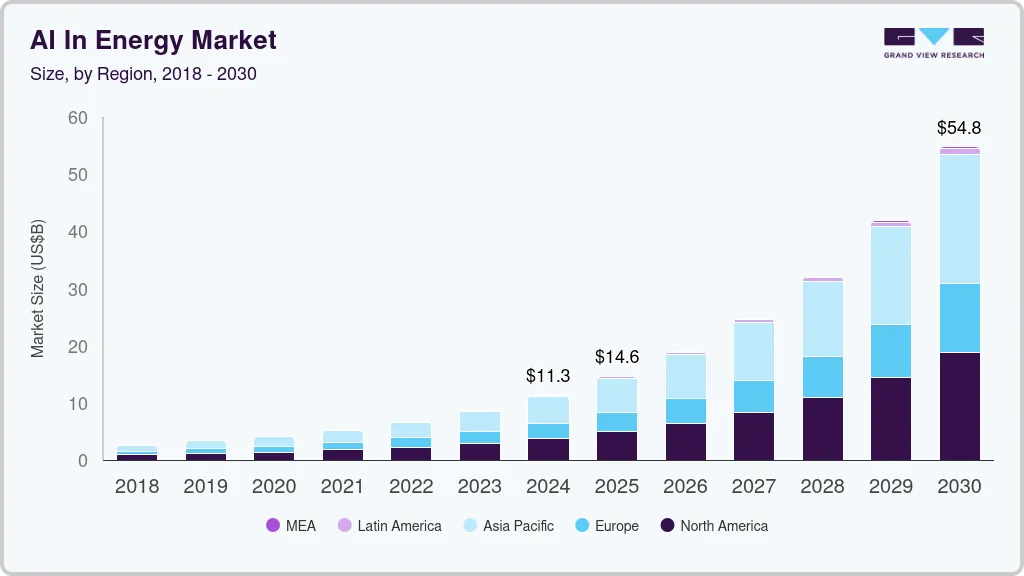
Also, the rising integration of renewable energy sources and distributed energy resources into power grids is driving market growth. Since renewable generation from solar and wind is highly dependent on weather conditions, AI technologies play a critical role in forecasting energy production and balancing electricity supply and demand. By analyzing weather data, historical generation patterns, and real-time grid conditions, AI helps utilities optimize energy dispatch and grid operations. Furthermore, the growing deployment of smart grids, energy storage systems, and electric vehicles is increasing the demand for intelligent energy management platforms. As governments and utilities focus on strengthening grid resilience and advancing the transition to cleaner energy systems, the adoption of AI-based solutions across the energy sector is expected to continue to expand.
Drivers, Opportunities & Restraints
The growth of the AI in energy market is primarily driven by the increasing digitalization of energy infrastructure and the need for more efficient management of complex power systems. Energy companies are deploying artificial intelligence to analyze large volumes of operational data generated from smart meters, sensors, and grid monitoring systems. AI technologies enable predictive maintenance, real-time monitoring, and automated fault detection, helping utilities reduce operational costs and improve grid reliability. Additionally, the growing adoption of smart grids, distributed energy resources, and advanced analytics platforms is further accelerating the implementation of AI solutions across generation, transmission, and distribution networks.
Significant opportunities in the industry are emerging from the rapid expansion of renewable energy capacity and the increasing integration of decentralized energy resources. Renewable power generation from solar and wind requires advanced forecasting and grid balancing capabilities due to its variable nature. AI technologies help utilities predict energy generation patterns, optimize storage systems, and manage electricity demand more effectively. Furthermore, the increasing deployment of electric vehicles, battery energy storage systems, and digital energy management platforms is creating new opportunities for AI applications in energy forecasting, energy trading optimization, and intelligent grid management.
Despite strong growth potential, the AI in Energy market faces several challenges, including high implementation costs and integration complexities with existing energy infrastructure. Deploying AI-based solutions requires significant investment in digital technologies, data infrastructure, and advanced analytics platforms, which may limit adoption among smaller utilities and energy companies. In addition, concerns about data security, system interoperability, and regulatory compliance can slow the deployment of AI systems in critical energy infrastructure. The shortage of skilled professionals capable of managing advanced AI and data analytics technologies may also act as a barrier to widespread adoption in the energy sector.
Type Insights
The solutions segment accounted for the largest market share of 69.2% in 2025, driven by the increasing deployment of AI-powered software platforms and analytics tools across energy generation, transmission, and distribution operations. Energy companies are adopting AI solutions to enable predictive maintenance, demand forecasting, grid optimization, and renewable energy management, allowing them to process large volumes of operational data generated from smart grids and connected energy infrastructure. These solutions support real-time monitoring, anomaly detection, and automated decision-making, helping utilities improve operational efficiency, reduce downtime, and enhance grid reliability. Additionally, the growing digital transformation of energy systems and investments in smart grid technologies are further accelerating the adoption of AI-based solutions across the energy sector.
The services segment is projected to register the fastest CAGR of 22.0% during the forecast period, supported by the increasing demand for consulting, system integration, and maintenance services associated with AI-based energy management platforms. As utilities and energy companies adopt advanced AI solutions for grid optimization, predictive maintenance, and renewable energy forecasting, they require specialized services for implementation, customization, and integration with existing infrastructure. In addition, the growing complexity of smart grid systems and distributed energy resources is driving the need for ongoing technical support, data analytics services, and performance monitoring, further accelerating the growth of AI-related services across the energy sector.
Application Insights
Based on application, the renewable energy management segment accounted for the largest market share of 33% in 2025, driven by the rapid expansion of renewable energy capacity and the increasing need to efficiently manage variable power generation from sources such as solar and wind. Artificial intelligence technologies are being widely adopted to improve renewable energy forecasting, optimize power generation, and balance electricity supply with demand across power grids. AI-enabled platforms analyze weather patterns, historical generation data, and real-time grid conditions to enhance the performance of renewable assets and reduce energy curtailment. In addition, the growing deployment of smart grids, energy storage systems, and distributed energy resources is further supporting the adoption of AI-based renewable energy management solutions.
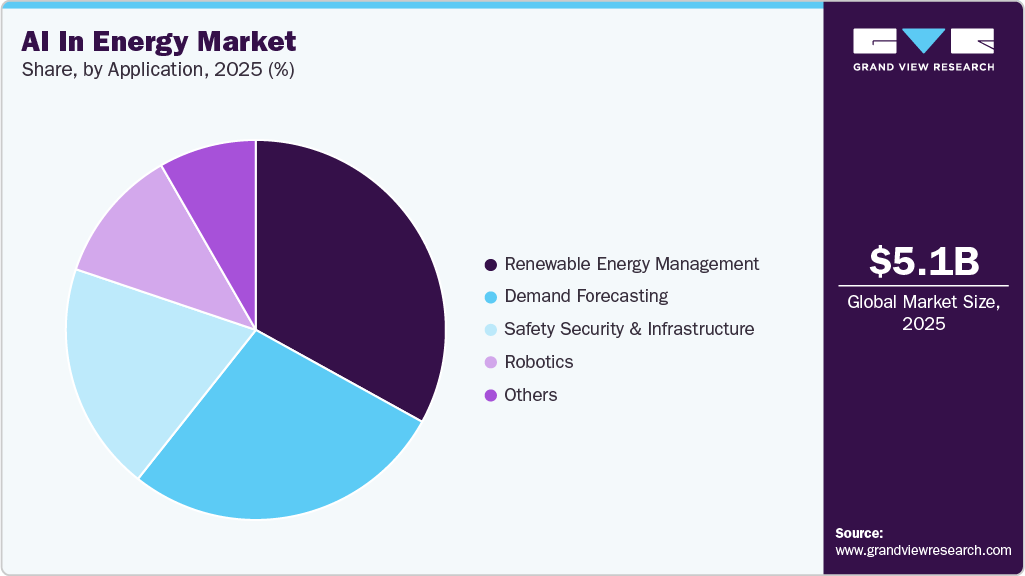
The robotics segment is projected to register the fastest CAGR of 24.1% during the forecast period, driven by the increasing adoption of autonomous inspection and maintenance technologies across energy infrastructure. AI-enabled robots and drones are being deployed for pipeline monitoring, power plant inspection, and maintenance of renewable energy assets such as wind turbines and solar farms. These robotic systems enhance operational safety by performing tasks in hazardous or remote environments while enabling real-time data collection and predictive maintenance. As energy companies focus on improving asset reliability, reducing operational risks, and optimizing maintenance activities, the demand for AI-powered robotic solutions in the energy sector is expected to grow significantly.
Regional Insights
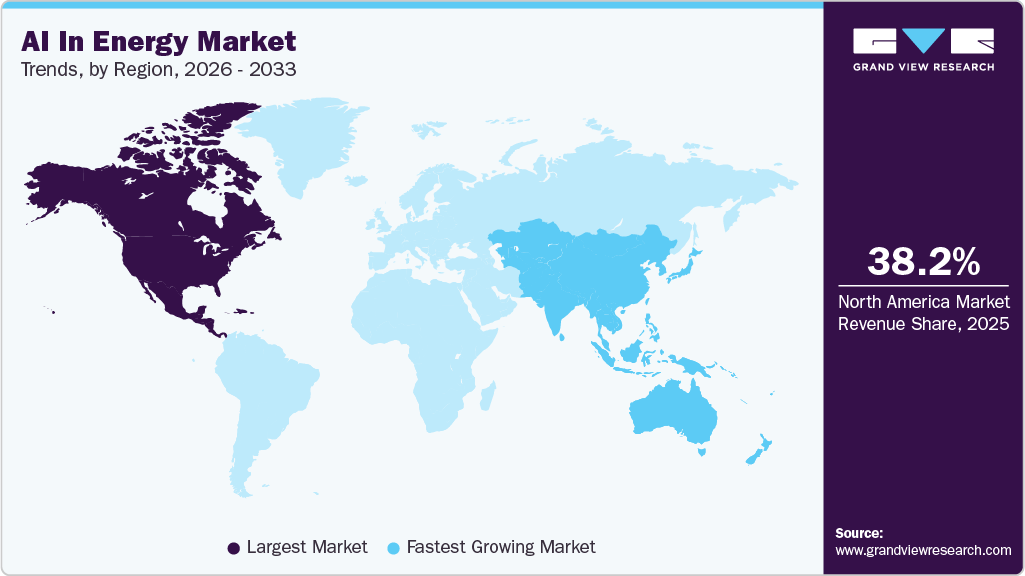
The AI in energy industry in North America accounted for the largest revenue share of 38.2% in 2025, driven by strong adoption of advanced digital technologies and significant investments in artificial intelligence across the energy sector. Utilities and energy companies in the region are increasingly implementing AI-based solutions for applications such as predictive maintenance, demand forecasting, renewable energy integration, and grid optimization. In addition, the presence of major technology providers, well-established energy infrastructure, and supportive government initiatives promoting smart grid development and energy digitalization are further contributing to the region’s leading market position.
U.S. AI In Energy Market Trends
The AI in Energy market in the U.S. is expected to grow with a CAGR of over 21.8% during the forecast period. The U.S. AI in energy industry is witnessing significant growth due to increasing investments in grid modernization, renewable energy integration, and digital energy management solutions. Utilities and energy companies in the United States are increasingly deploying AI technologies for applications such as predictive maintenance, demand forecasting, grid optimization, and energy trading analytics to improve operational efficiency and reliability. The rapid expansion of renewable energy sources, rising electricity demand from data centers and electrification of various sectors, and the growing adoption of smart grid technologies are further accelerating the implementation of AI-driven platforms across the U.S. energy sector. Additionally, supportive government initiatives and investments in advanced energy infrastructure are contributing to the strong adoption of AI solutions in energy management and grid operations.
Europe AI In Energy Market Trends
The AI in energy industry in Europe is expanding steadily due to strong policy support for energy transition, increasing renewable energy deployment, and ongoing grid digitalization initiatives across the region. European utilities are increasingly adopting AI technologies for applications such as renewable energy forecasting, grid optimization, predictive maintenance, and energy demand management to enhance operational efficiency and ensure grid stability. The rapid growth of wind and solar power capacity, along with the integration of distributed energy resources and energy storage systems, is driving the demand for advanced analytics and automation platforms. Additionally, government initiatives focused on smart grid development, carbon-reduction targets, and energy-efficiency improvements are further encouraging the adoption of AI-driven solutions across the European energy sector.
Asia Pacific AI In Energy Market Trends
The AI in energy industry in Asia Pacific is projected to register fastest CAGR of 23.0% during the forecast period, driven by the rapid expansion of renewable energy capacity, increasing electricity demand, and growing investments in smart grid infrastructure across countries such as China, India, Japan, and South Korea. Governments and utilities in the region are increasingly adopting AI technologies to enhance grid reliability, improve renewable energy forecasting, and optimize power generation and distribution systems. Besides, the rising deployment of distributed energy resources, large-scale solar and wind projects, and the digital transformation of energy infrastructure are further accelerating the adoption of AI-powered energy management solutions across the Asia Pacific region.
Latin America AI In Energy Market Trends
The AI in energy industry in Latin America is gradually expanding due to increasing investments in renewable energy development, grid modernization, and digital energy management across countries such as Brazil, Mexico, and Chile. Utilities and energy companies in the region are adopting artificial intelligence solutions to improve energy forecasting, optimize power generation, and enhance grid reliability. The growing deployment of solar and wind projects, along with the need to efficiently manage distributed energy resources and electricity demand, is further supporting the adoption of AI-driven analytics and automation technologies in the regional energy sector.
Middle East & Africa AI In Energy Market Trends
The AI in energy industry in the Middle East & Africa is gaining traction due to increasing investments in digital transformation, smart grid development, and renewable energy projects across the region. Countries such as the UAE, Saudi Arabia, and South Africa are adopting artificial intelligence technologies to optimize energy production, improve grid reliability, and enhance operational efficiency in power and oil & gas infrastructure. The growing deployment of solar and wind projects, along with initiatives aimed at improving energy efficiency and modernizing power networks, is driving the adoption of AI-based solutions for demand forecasting, predictive maintenance, and energy management.
Key AI In Energy Company Insights
The global AI in energy market is characterized by the presence of several technology providers, industrial automation companies, and specialized AI software firms that are actively developing advanced analytics and digital energy management solutions. Key participants such as Siemens AG, ABB, General Electric, and Atos SE play a significant role in the market by offering AI-powered platforms for grid optimization, predictive maintenance, and energy asset performance management. These companies leverage their strong industrial expertise and global presence to integrate artificial intelligence with smart grid infrastructure, industrial automation systems, and renewable energy management platforms. Their solutions help utilities and energy operators improve operational efficiency, enhance grid reliability, and optimize power generation and distribution processes.
In addition, several specialized AI and digital technology companies are contributing to the development of innovative energy analytics and optimization solutions. Firms such as C3.ai, Flex Ltd., AppOrchid Inc., Uptake Technologies, Origami Energy Ltd., Alpiq, and SmartCloud Inc. focus on developing AI-driven platforms for applications such as demand forecasting, energy trading optimization, and distributed energy resource management. The market is highly competitive, with companies investing heavily in research and development, strategic partnerships, and digital innovation to strengthen their technology capabilities and expand their presence in the rapidly evolving AI-driven energy ecosystem.
Key AI In Energy Companies:
The following key companies have been profiled for this study on the AI in energy market.
- Siemens AG
- ABB
- General Electric
- C3.ai
- Atos SE
- Flex Ltd.
- AppOrchid Inc.
- Uptake Technologies
- Origami Energy Ltd.
- Alpiq
- SmartCloud Inc.
Recent Developments
-
In February 2026, Siemens AG announced an investment of approximately USD 1 billion to expand power-grid manufacturing capacity in the United States to address increasing electricity demand from digital infrastructure and AI data centers.
-
In May 2025, C3.ai expanded enterprise AI applications designed for predictive maintenance and operational optimization across energy and industrial infrastructure.
AI In Energy Market Report Scope
Report Attribute
Details
Market size value in 2026
USD 6.0 billion
Revenue forecast in 2033
USD 22.2 billion
Growth rate
CAGR of 20.4% from 2026 to 2033
Base year for estimation
2025
Historical data
2021 - 2024
Forecast period
2026-2033
Quantitative Units
Revenue in USD million/billion and CAGR from 2026 to 2033
Report coverage
Revenue forecast, competitive landscape, growth factors, and trends
Segments covered
Type, application, region
Regional scope
North America; Europe; Asia Pacific; Latin America; Middle East & Africa
Country scope
U.S.; Canada; Mexico; Germany; UK; France; Italy; Spain; Russia; China; India; Japan; Australia; Brazil; Argentina; Saudi Arabia; UAE; South Africa
Key companies profiled
Siemens AG; ABB; General Electric; C3.ai; Atos SE; Flex Ltd.; AppOrchid Inc.; Uptake Technologies; Origami Energy Ltd.; Alpiq; SmartCloud Inc.
Customization scope
Free report customization (equivalent up to 8 analysts working days) with purchase. Addition or alteration to country, regional & segment scope.
Pricing and purchase options
Avail customized purchase options to meet your exact research needs. Explore purchase options
AI In Energy Market Report Segmentation
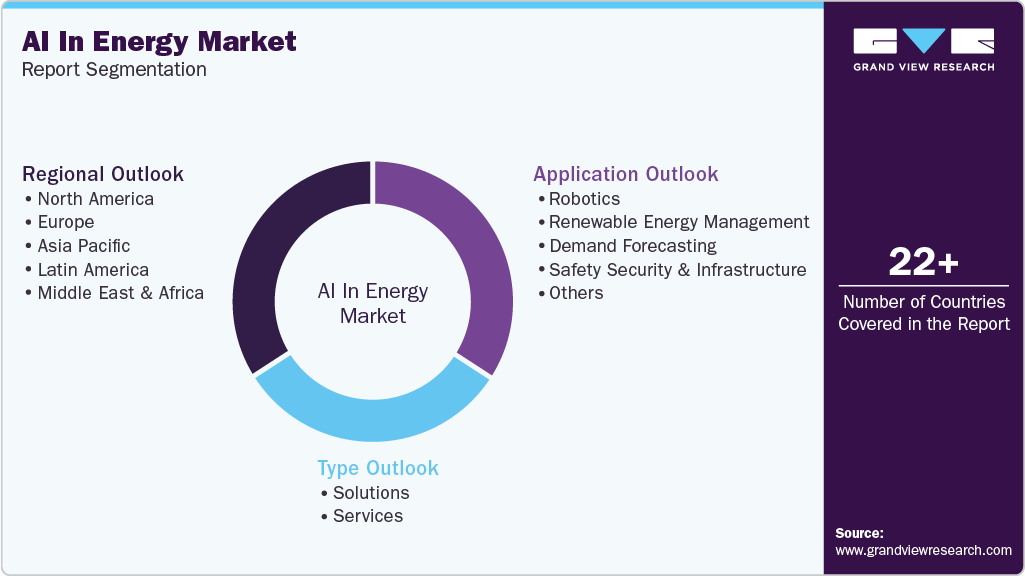
This report forecasts revenue growth at global, regional, and country levels and provides an analysis of the latest industry trends in each of the sub-segments from 2021 to 2033. For this study, Grand View Research has segmented the global AI in energy market report on the basis of type, application, and region.
-
Type Outlook (Revenue, USD Million, 2021 - 2033)
-
Solutions
-
Services
-
-
Application Outlook (Revenue, USD Million, 2021 - 2033)
-
Robotics
-
Renewable Energy Management
-
Demand Forecasting
-
Safety Security & Infrastructure
-
Others
-
-
Regional Outlook (Revenue, USD Million, 2021 - 2033)
-
North America
-
U.S.
-
Canada
- Mexico
-
-
Europe
-
Germany
-
UK
-
France
-
Italy
-
Spain
-
Russia
-
-
Asia Pacific
-
China
-
India
-
Japan
-
Australia
-
-
Latin America
-
Brazil
-
Argentina
-
-
Middle East & Africa
-
Saudi Arabia
-
UAE
-
South Africa
-
-
Frequently Asked Questions About This Report
b. The global AI in energy market was estimated at USD 5.1 billion in 2025 and is expected to reach USD 6.0 billion in 2026.
b. The global AI in energy market is expected to grow at a compound annual growth rate of 20.4% from 2026 to 2033 to reach USD 22.2 billion by 2033.
b. Based on the type segment, solutions held the largest revenue share of more than 69% in 2025.
b. Some of the key players operating in the global AI in energy market include Siemens AG, ABB, General Electric, C3.ai, Atos SE, Flex Ltd., AppOrchid Inc., among others.
b. The key factors driving the growth of the AI in Energy market include the increasing digitalization of energy infrastructure, the rising deployment of renewable energy sources, and the growing need for efficient energy management across power generation, transmission, and distribution systems.


Share this report with your colleague or friend.
Need a Tailored Report?
Customize this report to your needs — add regions, segments, or data points, with 20% free customization.


ISO 9001:2015 & 27001:2022 Certified
We are GDPR and CCPA compliant! Your transaction & personal information is safe and secure. For more details, please read our privacy policy.
Trusted market insights - try a free sample
See how our reports are structured and why industry leaders rely on Grand View Research. Get a free sample or ask us to tailor this report to your needs.












